Aprobación de color en tejido de punto: lab dips, Pantone y coincidencia de color en producción
Actualizado 19/9/202612 min readPor Simon Liu · Licheng Knitwear
Evite que la producción en masa llegue con un tono distinto. Una guía práctica sobre la aprobación de color en tejido de punto — desde la referencia Pantone hasta los lab dips y una producción consistente — que cubre metamerismo, tolerancia entre lotes de tintura, solidez del color y cómo aprobar el color para que los suéteres entregados coincidan.
El color es una de las razones más frecuentes por las que un pedido de tejido de punto decepciona al comprador: la producción en masa llega con un tono distinto al de la muestra, o dos colores que deberían coincidir no lo hacen. Casi todo esto se puede evitar con un proceso adecuado de aprobación de color. Esta guía explica cómo funciona en la práctica el color en el tejido de punto, desde una referencia Pantone hasta los lab dips aprobados y una producción en masa consistente, para que los suéteres entregados coincidan con lo que usted aprobó.
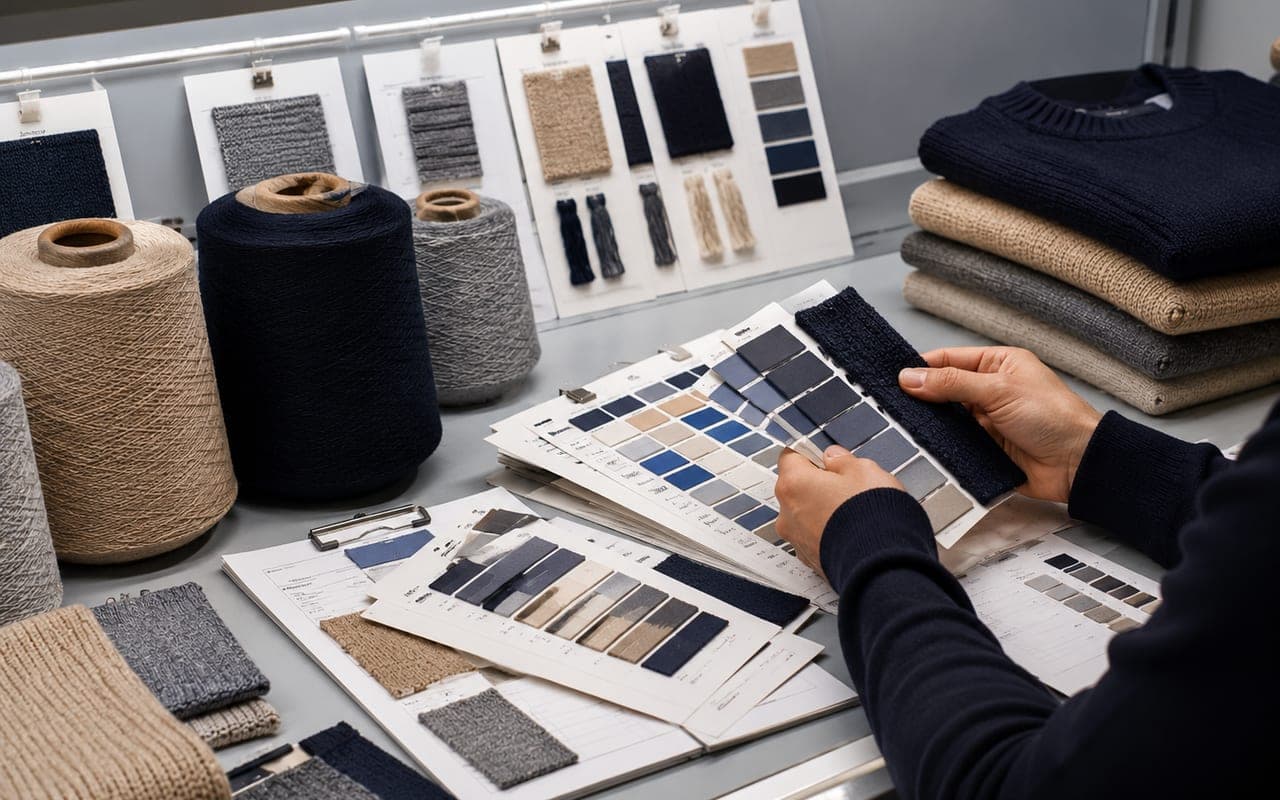
Apruebe el color sobre el hilado real, bajo la iluminación acordada y por escrito. Un color aprobado a la ligera en la pantalla de un teléfono es la fuente número uno de disputas del tipo "la producción se ve mal".
Apruebe el color sobre hilado teñido bajo iluminación estándar — nunca en una pantalla.
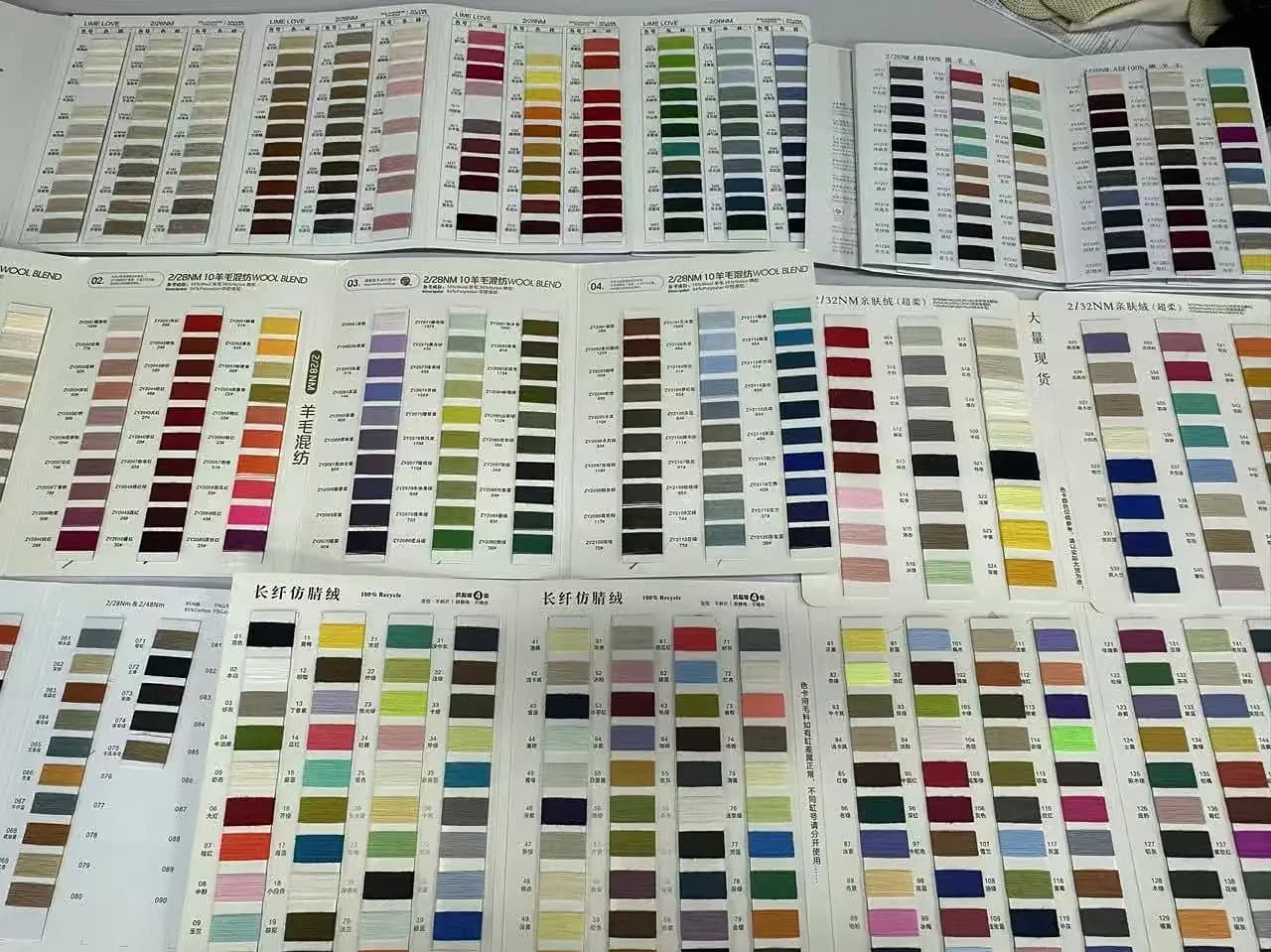
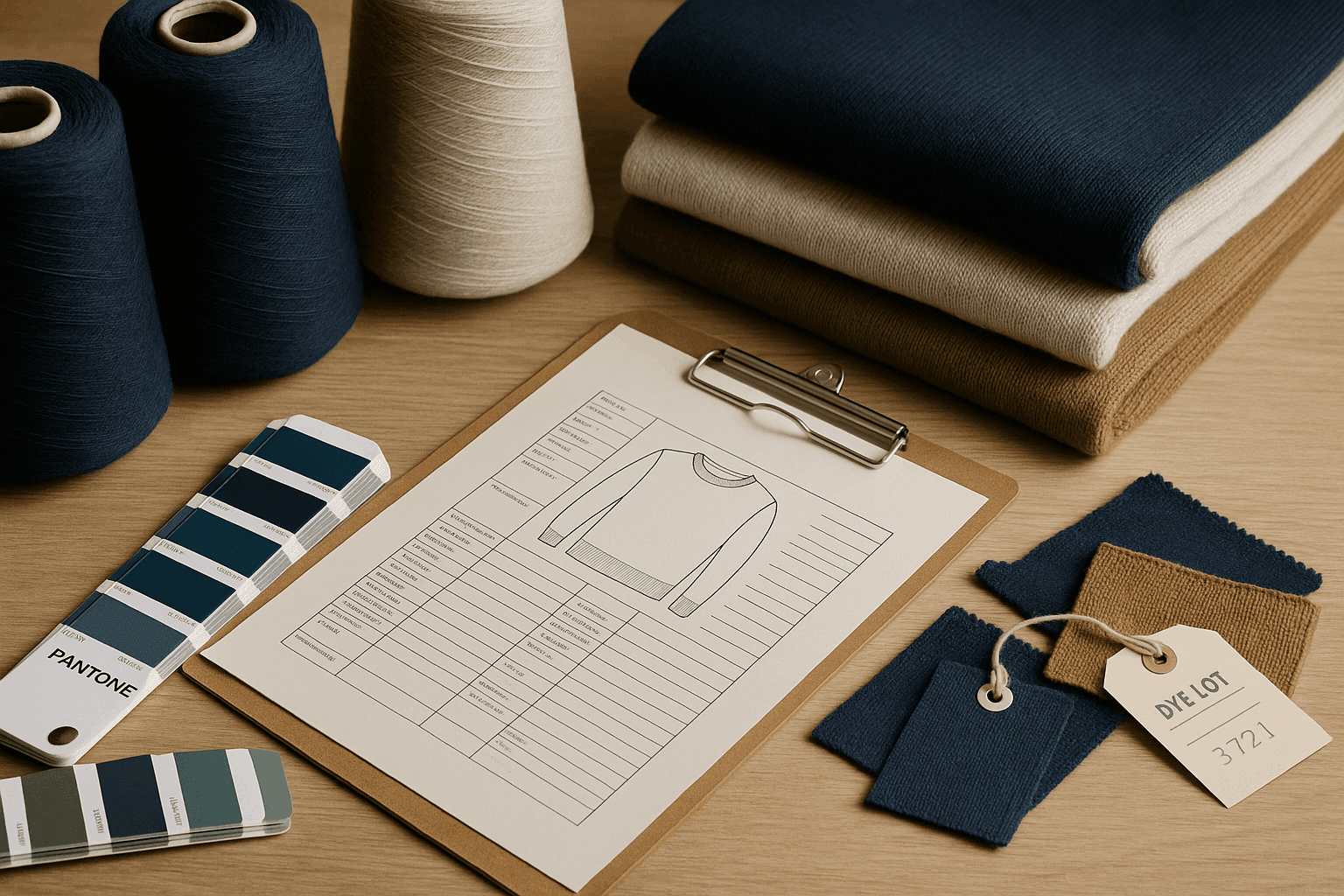
1. Referencia — usted proporciona un objetivo: un número Pantone TCX, una muestra física de color o una prenda existente. Las referencias Pantone TCX (textil) son más fiables para el hilado que los colores de pantalla.
2. Lab dip — la fábrica tiñe pequeñas muestras de hilado para igualar su referencia y las envía para su aprobación.
3. Aprobación (o revisión) — usted compara bajo la iluminación acordada y aprueba, o solicita una coincidencia más cercana. Cuente con una o dos rondas.
4. Teñido de la producción en masa — el hilado de producción se tiñe conforme al estándar aprobado.
5. Control de color de la producción — confirme que la producción coincide con el lab dip aprobado dentro de la tolerancia.
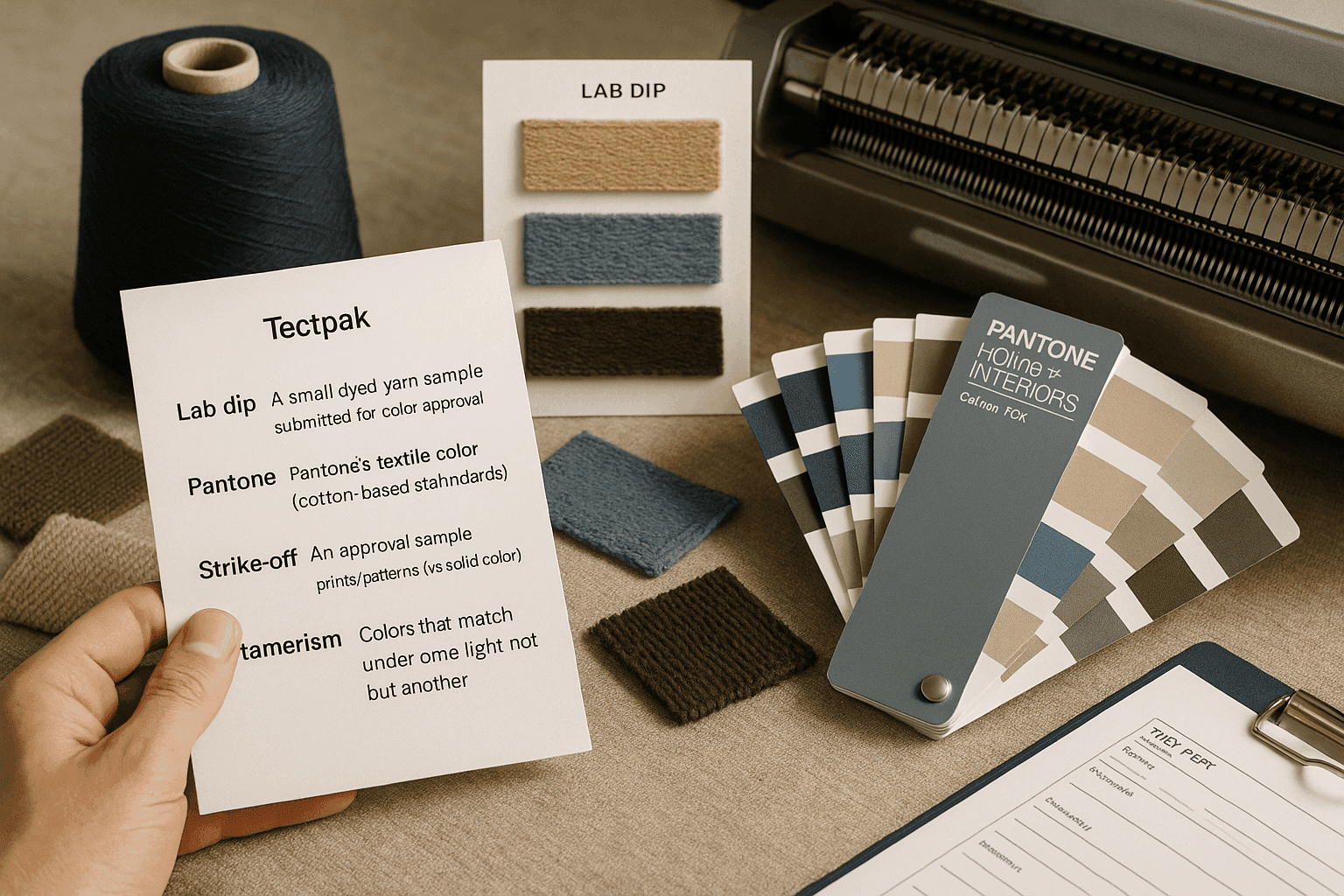
Términos clave que los compradores deben conocer
Términos clave que los compradores deben conocer
Término
Significado
Lab dip
Una pequeña muestra de hilado teñido presentada para la aprobación de color
Pantone TCX
El sistema de color textil de Pantone (estándares sobre base de algodón)
Strike-off
Una muestra de aprobación para estampados/motivos (frente al color liso)
Metamerismo
Colores que coinciden bajo una luz pero no bajo otra
Variación de lote / lote de tintura
Ligeras diferencias de color entre tandas de teñido separadas
Escala de grises
Una escala de 1–5 utilizada para calificar la diferencia de color y la solidez
Por qué la producción en masa puede desviarse — y cómo evitarlo
La iluminación importa. Apruebe bajo una fuente de luz acordada (p. ej., luz diurna D65). El metamerismo significa que una coincidencia bajo luz de tienda puede fallar bajo luz diurna — verifique bajo más de una.
Los lotes de tintura varían. Los pedidos grandes pueden teñirse en varios lotes; especifique una tolerancia aceptable y que todos los lotes coincidan con el estándar aprobado.
El sustrato del hilado afecta al tono. El mismo tinte se ve diferente sobre lana, algodón o acrílico, así que apruebe siempre sobre su hilado real — consulte la guía de materiales de hilado.
Solidez del color. Pregunte por la solidez al lavado y al frote para que el color se mantenga; intégrelo en su plan de cuidado y etiquetado.
Los tejidos de punto multicolor requieren aprobar cada tono y verificar la coincidencia cruzada entre ellos.
Incorpore el color a su ficha técnica y al control de calidad
Aprobar el color en una pantalla en lugar de sobre hilado teñido
Verificar bajo una sola fuente de luz
No especificar la tolerancia entre lotes de tintura en pedidos grandes
Olvidar la solidez del color, de modo que la prenda se decolora o destiñe por frote
Aprobar verbalmente sin ningún registro escrito
Acierte con el color a la primera
Licheng Knitwear realiza la aprobación de lab dips frente a su referencia Pantone o física, tiñe la producción en masa conforme al estándar aprobado y verifica el color de la producción antes del envío. Comparta sus objetivos de color y solicite una cotización, o explore las líneas de productos para empezar a partir de un estilo y una paleta que le gusten.
---
Hable con nuestro equipo sobre este tema
Si está planificando un proyecto real en torno a cualquiera de los puntos anteriores, estaremos encantados de echarle un vistazo. Envíenos un briefing breve y le responderemos en un día hábil con una orientación práctica, una estimación de MOQ y plazos de entrega, y un plan de muestras si tiene sentido.
You send a Pantone or physical standard; the mill dyes a lab dip; you approve it; then bulk yarn is dyed to the approved lab dip. Stock colours skip dyeing.
Often 1-2 rounds to hit the standard. Tight or unusual shades may need more. We send lab dips for sign-off before bulk dyeing.
Yes - a small-lot dyeing surcharge below 100-300 pieces per colour, and 7-15 extra days for the lab dip. The MOQ stays at 30 pieces per colour; in-stock colours keep cost and lead time lowest.
Nos especializamos en suéteres de hombre, cárdigans, chaquetas de punto, prendas de punto jacquard y prendas de punto de marca privada. Apoyamos a compradores B2B con desarrollo OEM/ODM, desarrollo de muestras y planificación de producción en serie.
Los modelos de muestra disponibles y determinados programas personalizados permiten realizar pedidos de prueba de menor riesgo antes de los pedidos estacionales de mayor volumen.
Sí. Las marcas, incluidas las nuevas que preparan su primera colección, pueden pagar una muestra y verla antes de hacer un pedido de producción. Dos opciones: una muestra lista de un modelo publicado por USD 60 la pieza en unos 7 días, o una muestra de desarrollo a partir de su ficha técnica por USD 150 por modelo (incluye abastecimiento de hilo, programación de tejido, un prototipo y una ronda de ajustes) en 15-25 días. Los modelos de cachemira y mohair se cotizan aparte y el envío se cobra a coste. La producción comienza solo después de aprobar la muestra física, con un mínimo de 30 piezas por color y tallas combinables dentro de las 30. Una muestra no le compromete a producir; no fabricamos prendas para uso personal.
Ready to Start Your Project?
Get a free catalog or submit an RFQ today. Our team will respond within 24 hours.
Gratis: Informe comparativo de sourcing de punto 2026
MOQ, plazos, rangos de coste, elección de galga y puntos de control de calidad en los programas OEM/ODM habituales para Norteamérica y Europa. Deje su correo y le enviamos el enlace en 30 segundos.
Sin spam. Cancele la suscripción con una sola respuesta. Usamos su correo únicamente para enviarle el informe y, si lo desea, continuar la conversación de sourcing.
Las marcas mostradas son socios OEM/ODM a los que hemos prestado servicio anteriormente. Los logotipos son decorativos y no implican ningún respaldo actual.