12 costos ocultos en la producción de suéteres personalizados (más allá del precio unitario FOB)
Actualizado 19/9/202612 min readPor Simon Liu · Licheng Knitwear
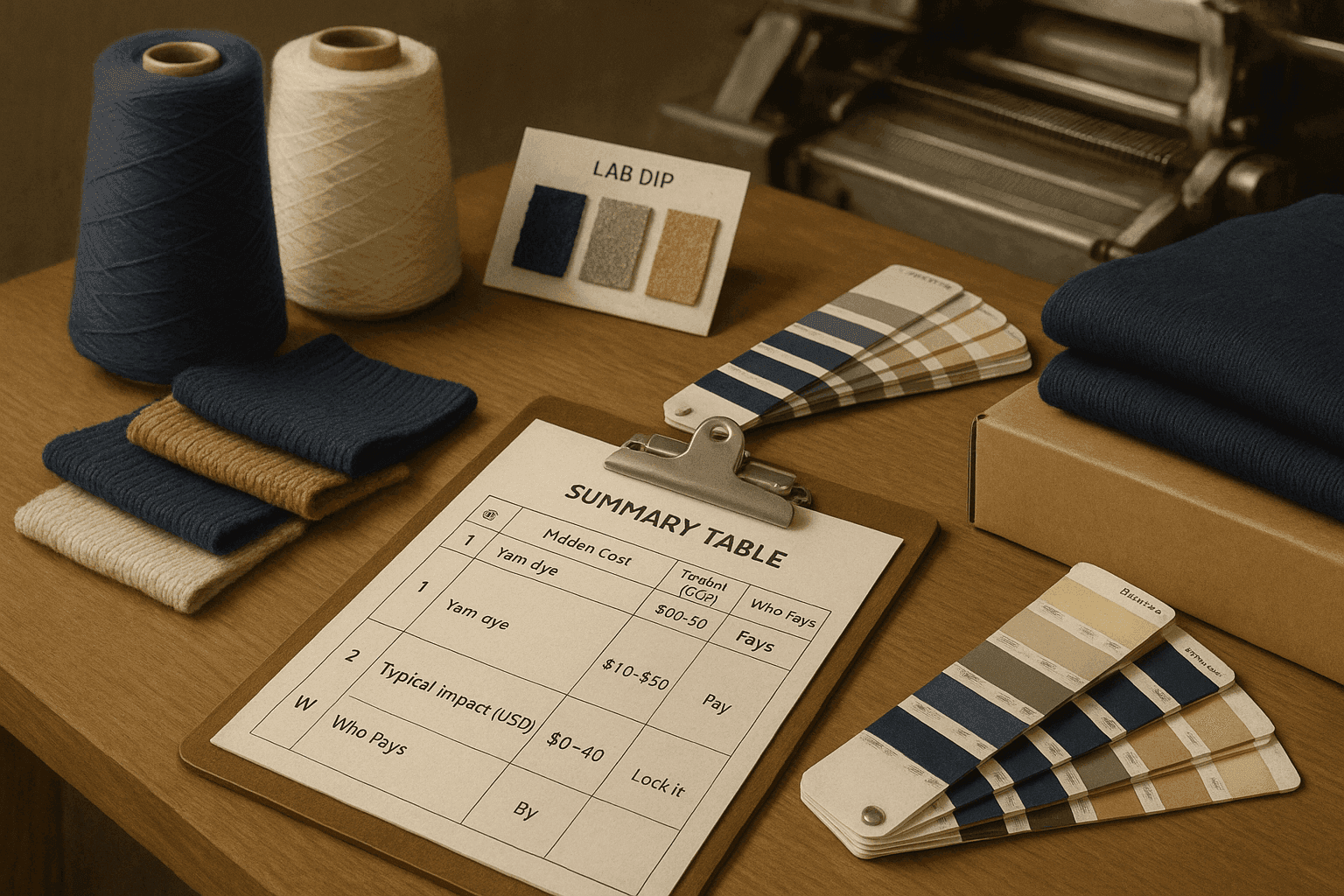
El precio unitario FOB es la cifra protagonista de toda cotización de suéteres, pero rara vez es la cifra que un socio financiero termina anotando en la columna de costo de las mercancías. Para cuando las cajas salen de la fábrica y despachan en el puerto de destino, una marca pequeña que realiza su primer pedido de punto suele haber pagado una docena de partidas que nunca se desglosaron en la etapa de cotización: lab dips, cargos por muestras, mínimos de tintorería, desarrollo de avíos, recargos de flete, demoras, deriva de divisas. Esta guía recorre doce de los costos ocultos más comunes que vemos absorber a los compradores durante un programa de suéteres personalizados, con rangos típicos de impacto en USD, qué parte suele pagar y el lenguaje de negociación que fija la cifra antes de emitir la orden de compra. Está escrita para el socio financiero de una marca pequeña que presupuesta un primer programa de punto, pero la misma lista de verificación sirve para los equipos de compras que renegocian con un proveedor existente.
Ready to Start Your Project?
Get a free catalog or submit an RFQ today. Our team will respond within 24 hours.
El precio unitario FOB es la cifra protagonista de toda cotización de suéteres. También es la cifra que menos probabilidades tiene de coincidir con lo que termina reflejado en el extracto bancario una vez que el pedido se embarca. En Licheng hemos trabajado con suficientes compradores de punto primerizos como para conocer el patrón: la marca aprueba una cotización de, digamos, 14,20 USD FOB Shenzhen, el socio financiero construye un modelo de costo de importación a partir de esa cifra, y tres meses después el COGS real resulta entre un 18 y un 28 por ciento más alto. Nada de esa diferencia es un precio deshonesto. Casi toda corresponde a partidas que, o bien no estaban en la cotización original, o estaban enterradas como "TBD según diseño".
Esta guía enumera los doce costos ocultos que vemos con más frecuencia durante un programa de suéteres personalizados. Cada partida explica en qué consiste el cargo, el rango típico en USD que observamos (trátelos como rangos del sector, no como cotizaciones específicas de Licheng), quién suele pagarlo y cómo negociar la partida por adelantado para que deje de estar oculta. La lista está orientada hacia los primeros programas de marcas pequeñas porque ahí es donde el factor sorpresa es más alto. Las marcas más grandes con equipos de abastecimiento establecidos suelen anticiparse a la mayoría de estos puntos en su plantilla de RFQ.
Si aún no la ha leído, nuestra guía complementaria sobre cómo leer una cotización de punto repasa lo que *debería* estar dentro de la cifra FOB. Este artículo cubre lo que casi siempre queda fuera de ella.
FOB — Free On Board — es un Incoterm que define que la responsabilidad del vendedor termina en el momento en que la carga se sube a bordo del buque en el puerto chino designado. Por convención internacional, todo lo anterior a ese punto (hilo, tejido, remallado, avíos, embalaje, transporte interior por carretera hasta el puerto, despacho de exportación) está incluido en el precio del vendedor, y todo lo posterior (flete marítimo, cargos del puerto de destino, aranceles, entrega de última milla) es problema del comprador.
Eso es lo que dice el manual. La realidad es más complicada. Muchos de los costos que enumeramos a continuación están técnicamente dentro del alcance del FOB —son actividades del lado de la fábrica— pero no están en el precio unitario FOB porque se cobran por separado como tarifas de desarrollo, recargos o repercusiones. Otros se sitúan claramente del lado del comprador respecto a la línea FOB, pero es fácil olvidarlos al modelar el costo. Una buena RFQ pide ambas cosas: un precio unitario FOB ajustado *y* un calendario separado de desarrollo y recargos. Una RFQ débil pide solo el precio unitario y se lleva la sorpresa más tarde.
Los 12 costos ocultos, partida por partida
1. Tarifa de teñido del hilo
Qué es. Cuando el color de hilo que desea no está ya en la paleta de stock de la hilandería, esta tiene que teñir su hilo a su tono. Esa tanda de teñido tiene un costo fijo y una cantidad mínima en kilogramos, independientemente de cuántos suéteres produzca realmente.
Impacto típico. Vemos tarifas de teñido en el rango de 1,50 a 4,50 USD por kilogramo de hilo, más una cantidad mínima de partida de teñido que suele ser de 50 a 200 kg según la fibra. En un pedido inicial pequeño, ese mínimo puede significar que pague por más hilo teñido del que consume su pedido.
Quién paga. El comprador, casi siempre, como repercusión dentro del precio unitario o como partida separada.
Cómo negociar. Pida a la fábrica por escrito el mínimo de la tintorería para cada color antes de comprometerse con su número de colores. Si su pedido no alcanza el mínimo, consolide colores, aumente el MOQ o acepte un color de stock y evite el cargo por completo.
2. Cargo por muestras
Qué es. La fábrica cobra por las muestras prototipo, las muestras de calce y las muestras de preproducción producidas antes de la aprobación del volumen. El muestreo consume hilo, horas de máquina de tejer y tiempo de técnico que no pueden amortizarse en una tirada de volumen.
Impacto típico. De 50 a 150 USD por muestra en la mayoría de las fábricas de punto, a veces más para trabajos complejos de jacquard o intarsia. De tres a cinco muestras es lo normal para un estilo nuevo.
Quién paga. El comprador, a menudo con un abono parcial o total si se realiza el pedido de volumen.
Cómo negociar. Confirme el calendario de tarifas de muestra en la RFQ, pregunte si las tarifas son reembolsables contra el volumen y aclare el costo de mensajería (DHL/FedEx a su dirección suele correr también a cargo del comprador y cuesta de 35 a 80 USD por envío desde China a Norteamérica o Europa).
3. Aprobación de lab dip
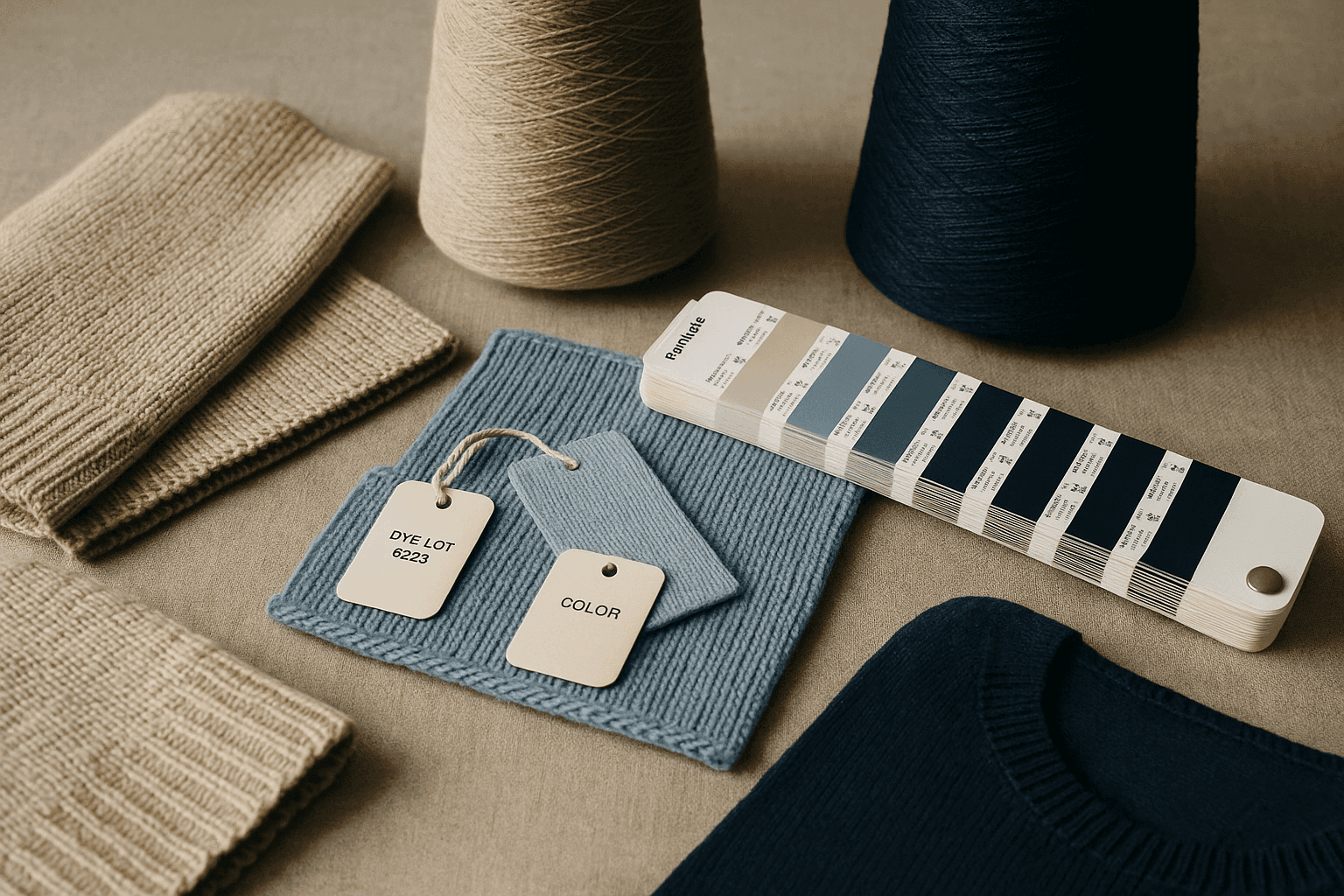
Qué es. Un lab dip es una pequeña muestra de hilo teñida a su color objetivo (normalmente una referencia Pantone) para su aprobación antes del teñido de volumen. Cada ronda de lab dip es una pequeña prueba de teñido en el laboratorio.
Impacto típico. De 15 a 40 USD por color y por ronda. De dos a tres rondas por color es lo normal antes de la aprobación. Una marca con seis colores podría terminar en 200 a 500 USD solo en lab dips.
Quién paga. El comprador.
Cómo negociar. Proporcione una referencia Pantone TCX, no un color de pantalla, y apruebe bajo luz controlada (cabina de luz día D65). Aprobar en la primera o segunda ronda ahorra dinero real. Nuestra guía de aprobación de color en punto explica el flujo de trabajo del lab dip con más profundidad.
4. Desarrollo de avíos y etiquetas
Qué es. Etiquetas tejidas, etiquetas de cuidado, etiquetas colgantes, bolsas de polietileno con su logotipo, pines o botones personalizados — cada avío que no sea estándar de fábrica necesita ser muestreado y matrizado.
Impacto típico. Configuración de etiqueta tejida de 30 a 80 USD, configuración de etiqueta colgante personalizada de 50 a 150 USD, molde de botón personalizado de 150 a 400 USD. Los costos de avío por pieza suelen estar dentro del precio unitario, pero la configuración única no lo está.
Quién paga. El comprador para la configuración; el costo por pieza está dentro del FOB.
Cómo negociar. Pida a la fábrica una hoja de costos de desarrollo de avíos junto con la cotización del precio unitario. Si va apurado de tiempo para un primer pedido, aceptar una etiqueta colgante estándar de cartón con su logotipo impreso (en lugar de un troquelado personalizado) ahorra la tarifa de configuración. Nuestra guía de embalaje de punto de marca propia detalla las partidas de avíos.
5. Costo de cambio de galga
Qué es. Las máquinas industriales de tejido rectilíneo se ajustan a una galga específica (agujas por pulgada). Cambiar las máquinas de 7GG a 12GG o viceversa para su pedido —y el tejido de prueba necesario para confirmar la tensión— añade tiempo de configuración que la fábrica absorbe en grandes volúmenes pero repercute en volúmenes bajos.
Impacto típico. Normalmente invisible con un MOQ de 300+ por color. Por debajo del MOQ, espere una prima en el precio unitario de 0,50 a 1,50 USD o una configuración fija de 100 a 300 USD.
Quién paga. El comprador, normalmente incorporado en el precio unitario como recargo por cantidad pequeña.
Cómo negociar. Si está por debajo del MOQ de catálogo de 30 piezas por color y presiona por un pedido de prueba, pregunte explícitamente a la fábrica si el precio unitario incluye la prima de cambio o si se añade después. Nuestra guía de galgas sobre 5GG, 7GG y 12GG explica por qué esto importa.
6. Mínimo de color (partida de teñido)
Qué es. A diferencia de la tarifa de teñido del hilo de la partida 1, este es la cantidad mínima de suéteres terminados por color que la fábrica producirá en una sola partida de teñido. Por debajo de ese mínimo, o bien sube el precio unitario o bien el comprador paga por hilo teñido no utilizado.
Impacto típico. El MOQ de catálogo en la mayoría de las fábricas de punto chinas es de 30 piezas por color (Licheng incluida). Por debajo de eso, espere una prima de 1,00 a 3,00 USD por unidad, o una factura por hilo sobrante.
Quién paga. El comprador.
Cómo negociar. Planifique su número de colores de forma realista frente a su curva de tallas. Tres colores a 100 piezas cada uno es más sencillo y a menudo más barato por unidad que seis colores a 50 piezas cada uno, debido a la economía de la tintorería.
7. Cargos por revisión de embalaje
Qué es. Tras la aprobación de la muestra PP, las marcas a menudo quieren ajustar la impresión de la bolsa de polietileno, el cordón de la etiqueta colgante o la marca de la caja. Cada revisión implica un nuevo arte, un nuevo fotolito y a veces una nueva muestra.
Impacto típico. De 30 a 120 USD por revisión, más el retraso en el calendario de producción (que es el costo real — véase la brecha de flete, partida 11).
Quién paga. El comprador.
Cómo negociar. Fije el arte del embalaje en la misma etapa de aprobación que la muestra PP. Trate las revisiones de embalaje posteriores a ese punto como una orden de cambio con su propia factura.
8. Tarifa diaria del inspector de QC externo
Qué es. Si contrata una inspección de terceros (SGS, Bureau Veritas, Intertek, QIMA), el inspector cobra una tarifa diaria por visitar la fábrica y aplicar el muestreo AQL. Esto es independiente del propio QC interno de la fábrica, que ya está dentro del FOB.
Impacto típico. De 280 a 380 USD por día de inspector en China. La mayoría de las inspecciones de punto toman un día para pedidos de hasta unos pocos miles de piezas.
Quién paga. El comprador.
Cómo negociar. Decida antes de firmar la orden de compra si quiere una inspección de terceros o si confía en el AQL de la fábrica con evidencia de fotos/vídeo. Nuestra guía de inspección de terceros ayuda a sopesar esa disyuntiva.
9. Tarifas de manejo en puerto y de documentación
Qué es. Una vez que la carga llega al puerto de destino, el transportista y la terminal de destino cobran tarifas que no forman parte de la cotización del flete marítimo: cargos de manejo en terminal (THC), tarifas de documentos, presentación de ISF (EE. UU.), tarifa de entrada aduanera, recargo de seguridad ISPS y cargos del agente.
Impacto típico. De 350 a 900 USD por envío para LCL (carga inferior a un contenedor) en un pedido inicial pequeño, independientemente de cuántos suéteres haya dentro. Por pieza, esto es enorme si embarca 200 piezas; trivial si embarca 5.000.
Quién paga. El comprador, siempre, bajo Incoterms FOB.
Cómo negociar. Obtenga una cotización *puerta a puerta* de al menos dos transitarios para que los cargos de destino estén desglosados. Compárela con una cotización DAP (Delivered At Place) comparable de la fábrica, si está disponible.
10. Demoras y detención (demurrage y detention)
Qué es. La demora (demurrage) es la tarifa diaria que cobra un puerto cuando su contenedor permanece en la terminal pasados los días libres. La detención (detention) es lo que cobra la línea naviera cuando su contenedor se retiene fuera de la terminal pasados los días libres. Son tarifas diferentes y ambas se acumulan diariamente.
Impacto típico. De 75 a 200 USD por contenedor y día tras el periodo libre (típicamente de 4 a 7 días libres en el puerto de destino). Un retraso de dos semanas en el despacho aduanero por una cuestión de código HS o un certificado faltante puede convertirse fácilmente en 1.500 a 3.000 USD.
Quién paga. El comprador.
Cómo negociar. Haga que su agente aduanero despache por adelantado su código HS y cualquier documento requerido (certificados de alcance RWS o GRS si los reclama, OEKO-TEX, país de origen) antes de que llegue el buque. La demora no es un cargo de punto en sí, pero es una de las facturas sorpresa más comunes en las primeras importaciones.
11. Brecha entre flete marítimo y aéreo
Qué es. La cotización de muestra a menudo asume flete marítimo (de 1,50 a 3,50 USD por kg en equivalente de contenedor completo), pero si la producción se retrasa y la fecha de lanzamiento del comprador es fija, el pedido se embarca en flete aéreo en su lugar (de 5 a 9 USD por kg). En un suéter que pesa alrededor de 500 g embalado, eso son de 1,75 a 4,50 USD por pieza — un golpe sustancial al costo unitario invisible en la etapa de cotización.
Impacto típico. Diferencial aéreo frente a marítimo de 1,50 a 4,50 USD por suéter.
Quién paga. El comprador, siempre.
Cómo negociar. Construya su calendario de lanzamiento frente a los plazos de producción de punto por temporada con un margen de dos a tres semanas. Si ya va con retraso en la etapa de orden de compra, fije el precio del programa con flete aéreo en su modelo, no marítimo, y trate el ahorro como ganancia adicional.
12. Deriva de conversión de divisas (FX)
Qué es. Las cotizaciones están en USD, pero si su moneda local es EUR, GBP, CAD u otra, la tasa a la que su banco convierte cuando paga el depósito del 30 por ciento, el saldo del 70 por ciento y cualquier cargo posterior no coincidirá con su previsión. A lo largo de un ciclo de producción de 90 días, una deriva de FX del 2 al 4 por ciento es común.
Impacto típico. Del 2 al 4 por ciento del valor total del pedido, ocasionalmente más en periodos volátiles.
Quién paga. El comprador.
Cómo negociar. Si el pedido es lo suficientemente grande como para importar, pregunte a su banco sobre un contrato FX a plazo que fije la tasa USD en la fecha de la orden de compra. Si no, simplemente incorpore un margen de FX del 3 por ciento en su modelo de costo de importación.
Tabla resumen
Tabla resumen
La siguiente tabla reúne las doce partidas como una sola referencia. Trate los rangos en USD como observaciones típicas del sector a partir de nuestro trabajo con programas de marcas pequeñas, no como cotizaciones exactas.
#
Costo oculto
Impacto típico (USD)
Quién paga
Cómo fijarlo
1
Tarifa de teñido del hilo
USD 1,50–4,50/kg + mín. 50–200 kg
Comprador
Confirme el mínimo de la tintorería por color en la RFQ
2
Cargo por muestras
USD 50–150 por muestra
Comprador
Pida una cláusula de reembolso contra volumen
3
Aprobación de lab dip
USD 15–40 por color y ronda
Comprador
Apruebe en la ronda 1–2 con Pantone TCX
4
Desarrollo de avíos y etiquetas
USD 30–400 configuración única
Comprador
Solicite una hoja de costos de avíos junto a la cotización
5
Cambio de galga
USD 0,50–1,50/unidad o 100–300 fijo
Comprador
Cómo anticiparse a estos costos en su RFQ
Lo más útil que un socio financiero puede hacer antes de la primera orden de compra es reconstruir la plantilla de RFQ para que los proveedores se vean obligados a cotizar frente a estas partidas, no solo el precio unitario. Una RFQ práctica pide:
Precio unitario FOB (por estilo, por color, por nivel de cantidad).
Un calendario separado de costos de desarrollo: tarifa de muestra, tarifa de lab dip, configuración de avíos, configuración de embalaje.
El mínimo de la tintorería y el precio por kilogramo para cada color solicitado.
Un calendario de recargos por cantidad pequeña si el pedido cae por debajo del MOQ de catálogo.
Confirmación de que la inspección AQL interna y la detección de agujas/metales están incluidas (estas son estándar en Licheng y en la mayoría de las fábricas de punto chinas de buena reputación).
Nombres de transitarios preaprobados si la fábrica consolida habitualmente con uno, para que pueda compararlos con los suyos.
Esto convierte 8 de los 12 costos ocultos anteriores en partidas cotizadas antes de que se emita la orden de compra. Los 4 restantes —manejo en puerto, demora, brecha de flete y deriva de FX— se sitúan del lado del comprador respecto a la línea FOB y necesitan una capa de modelo de costos separada que reside en su sistema financiero, no en la cotización de la fábrica.
Un modelo realista de costo de importación para un primer programa de punto
Solemos sugerir que los compradores primerizos construyan una hoja de trabajo de costo de importación con tres capas apiladas. La capa uno es el precio unitario FOB de la cotización de la fábrica. La capa dos es la capa de desarrollo y recargos por pedido —muestra, lab dips, configuración de avíos, embalaje— dividida entre la cantidad del pedido. La capa tres es la capa de importación: flete, tarifas de puerto, aranceles, agente, FX. La suma de esas tres capas es el costo real por suéter, y normalmente está entre un 15 y un 30 por ciento por encima de la cifra protagonista FOB en un pedido inicial pequeño. La brecha se estrecha rápidamente con la escala porque la mayoría de las partidas de la capa dos y la capa tres son fijas o semifijas.
Para una visión más profunda de cómo funciona el costo de importación una vez que la carga está en tránsito, nuestra guía de costo de importación de punto cubre el flete, los aranceles y las tarifas de agente con más detalle. Para las decisiones de la etapa de abastecimiento que afectan a cuán altos o bajos resultan estos costos ocultos, nuestra guía de factores de costo en la fabricación de suéteres personalizados es una lectura complementaria útil.
Dónde se sitúa Licheng en estas partidas
Intentamos publicar las tarifas de desarrollo y los mínimos de tintorería a los compradores en la etapa de cotización en lugar de esperar a que surjan durante el muestreo, porque hemos comprobado que acorta el tiempo hasta una orden de compra real. Somos honestos en que esta no es una práctica exclusiva — la mayoría de los OEM de punto establecidos en Guangdong, Jiangsu y Zhejiang pueden hacer lo mismo cuando se les pide. Lo que importa mucho más es que la plantilla de RFQ del comprador haga la pregunta. Una vez que la pregunta está en el documento, las respuestas tienden a ser similares entre fábricas; cuando no lo está, cada fábrica deja el costo al acecho.
Para las marcas que construyen un primer programa de punto desde cero, la combinación de nuestro manual de abastecimiento de punto para marcas DTC y emergentes y la guía de condiciones de pago en punto cubre la mayor parte de lo que un socio financiero necesita para presupuestar el programa con confianza. El precio unitario es la cifra más visible de la cotización. Rara vez es la más importante.
---
Hable con nuestro equipo sobre esto
Si está planeando un proyecto real en torno a cualquiera de los puntos anteriores, estaremos encantados de echarle un vistazo rápido. Envíe un breve resumen y le responderemos en un día hábil con una dirección práctica, una estimación de MOQ + plazo de entrega y un plan de muestras si tiene sentido.
Según nuestra observación de los primeros programas de pequeñas marcas, el coste total de llegada suele situarse entre un 15 y un 30 por ciento por encima del precio unitario FOB. La diferencia es mayor en envíos LCL pequeños donde la manipulación portuaria, el riesgo de demoras y el muestreo por pieza se amortizan entre pocas unidades. Para el segundo o tercer pedido de reposición con mayor volumen, la diferencia suele estrecharse a entre el 8 y el 15 por ciento. Incorpore el extremo superior de ese rango en el modelo de su primer programa y trate cualquier ahorro como ganancia adicional.
Negociables: tarifa de muestra (a menudo reembolsable contra el bulk), preparación de avíos (a veces exonerada para clientes recurrentes), cargos por revisión de embalaje (evitables con una aprobación disciplinada). Semi-negociables: rondas de lab dip (se pueden acordar topes), cambio de galga (depende de la cantidad). Mayoritariamente fijos: mínimos de tintorería del hilo, mínimos de lote de tintura por color, manipulación portuaria, tarifas diarias de demoras, tipos de cambio. Las partidas no negociables siguen siendo controlables mediante planificación: elija menos colores, pre-despache documentos, bloquee el tipo de cambio.
Las demoras llegan cuando el contenedor permanece en la terminal de destino pasados los días libres, normalmente porque aduanas está esperando un documento. La respuesta es el pre-despacho: haga que su agente confirme el código HS, el certificado de origen, cualquier reivindicación de sostenibilidad que haga (RWS, GRS, OEKO-TEX) y la factura comercial antes de que llegue el buque. La mayoría de las demoras en las primeras importaciones se deben a documentos faltantes o contradictorios, no al volumen de importación. Los días libres son normalmente de 4 a 7; la mayoría de los envíos despachan cómodamente dentro de esa ventana cuando los documentos están listos.
DDP (Delivered Duty Paid) traslada el flete, las tasas portuarias, los derechos arancelarios y la entrega de última milla al lado del vendedor, por lo que aparecen dentro del precio unitario en lugar de como facturas separadas. Para un primer programa en el que el responsable financiero quiere una sola cifra contra la que presupuestar, DDP suele ser más fácil. Las contrapartidas son que los precios unitarios DDP son más altos, menos transparentes, y se tiene menos control sobre el transitario. La mayoría de las pequeñas marcas consolidadas pasan de DDP en el primer pedido a FOB o FCA una vez que han construido relaciones con su propio transitario y agente.
Las categorías son universales —tintura del hilo, muestreo, lab dips, avíos, manipulación portuaria, flete, tipo de cambio— pero los rangos típicos en USD difieren. Bangladés tiende a tener partidas más bajas impulsadas por mano de obra (tarifas de muestra, tarifas diarias de QC) pero mayor complejidad logística y mayores pass-throughs de derechos arancelarios de importación de hilo porque la mayor parte del hilo fino se aprovisiona de China de todos modos. Vietnam se sitúa entre los dos en coste pero con mayor capacidad en galga alta para mezclas sintéticas. Nuestra [guía de aprovisionamiento China vs Vietnam vs Bangladés](/resources/china-vs-vietnam-vs-bangladesh-knitwear-sourcing) compara el coste total en lugar del precio unitario titular precisamente por esta razón.
Nos especializamos en suéteres de hombre, cárdigans, chaquetas de punto, prendas de punto jacquard y prendas de punto de marca privada. Apoyamos a compradores B2B con desarrollo OEM/ODM, desarrollo de muestras y planificación de producción en serie.
Fabricante B2B de knitwear | OEM/ODM y marca privada | Exportacion a Norteamérica y EuropaEmail: info@lcgarment.cn | Tel: +86 151 7024 4792
Gratis: Informe comparativo de sourcing de punto 2026
MOQ, plazos, rangos de coste, elección de galga y puntos de control de calidad en los programas OEM/ODM habituales para Norteamérica y Europa. Deje su correo y le enviamos el enlace en 30 segundos.
Sin spam. Cancele la suscripción con una sola respuesta. Usamos su correo únicamente para enviarle el informe y, si lo desea, continuar la conversación de sourcing.
Las marcas mostradas son socios OEM/ODM a los que hemos prestado servicio anteriormente. Los logotipos son decorativos y no implican ningún respaldo actual.