Why Sweaters Pill — and How to Specify Anti-Pill Knitwear
Aktualisiert 31.5.202612 min readLicheng Knitwear Team
Pilling is the most common knitwear complaint. Learn why sweaters pill, which fibre, yarn-twist, gauge and finishing factors you control, and how to specify and test for pill resistance before bulk production.
Pilling is the most common knitwear complaint. Learn why sweaters pill, which fibre, yarn-twist, gauge and finishing factors you control, and how to specify and test for pill resistance before bulk production. This guide walks you through the manufacturing journey with Licheng Knitwear.
Buyer Guide Content
Pilling — those small balls of tangled fibre on the surface of a sweater — is the single most common complaint buyers and their customers raise about knitwear. The frustrating part is that some pilling is normal and unavoidable, while excessive pilling signals a fibre, yarn or construction choice that could have been specified differently. This guide explains why sweaters pill, which factors you actually control, and how to specify a program that resists it.
You can't make a knit garment 100% pill-proof, but you can dramatically reduce pilling through fibre choice, yarn twist, gauge and finishing. Specify for it up front — it's far cheaper than handling returns later.
Pilling is largely designed in at the fibre and yarn stage — specify against it early.
Why pilling happens
Pills form when short fibres on the yarn surface work loose through abrasion (wear, washing, friction at cuffs and sides), tangle together, and don't break away. Whether they then shed or stay depends largely on fibre strength:
Weak/short fibres (many acrylics, short-staple wool, some cotton) pill and the pills cling.
Strong/long fibres (long-staple, higher-grade wool, nylon-reinforced blends) either pill less or the pills break off.
The factors you control
Factor
Lower pilling
Higher pilling
Fibre
Long-staple, higher-grade wool; nylon-blended
Short-staple, low-grade, loose acrylic
Yarn twist
Tighter twist
Loose, soft-spun
Ply
Plied yarns
Single, low-twist
Gauge / density
Finer, denser knit
Very loose, open knit
Finishing
Anti-pill finish, proper washing/setting
Skipped finishing
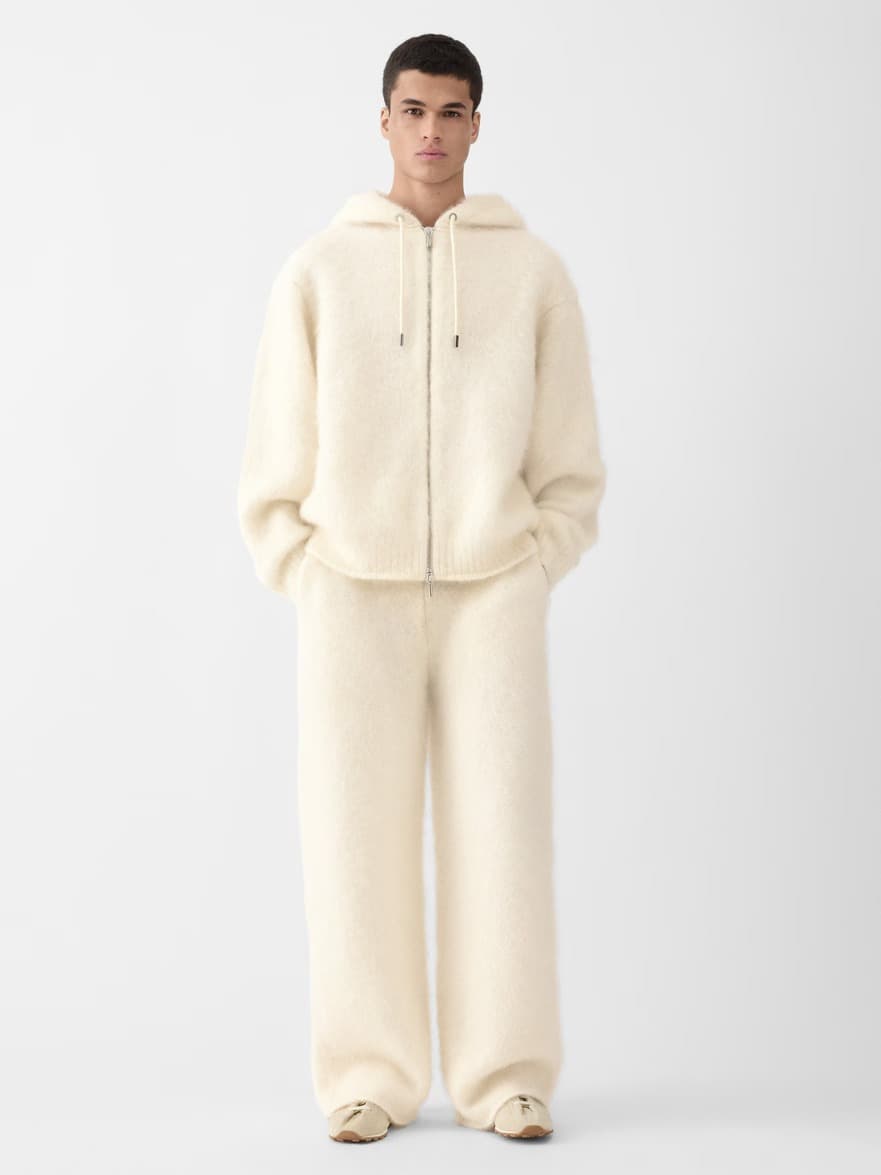
Fibre and yarn choices are the biggest levers — see the yarn material guide and how to choose yarn for men's sweaters. The trade-off: the softest, fuzziest hands (loose, brushed, low-twist) tend to pill more, while tighter, plied yarns resist it. Brushed styles like mohair are expected to shed initially by nature.
Tighter twist, plied yarns and a denser gauge all reduce pilling.
How to specify against pilling
1. Choose the fibre with pilling in mind — if durability matters more than maximum softness, lean toward longer-staple wool or a nylon-reinforced blend.
2. Ask for a tighter-twist, plied yarn where the look allows.
3. Specify an anti-pill finish and proper washing/setting in production.
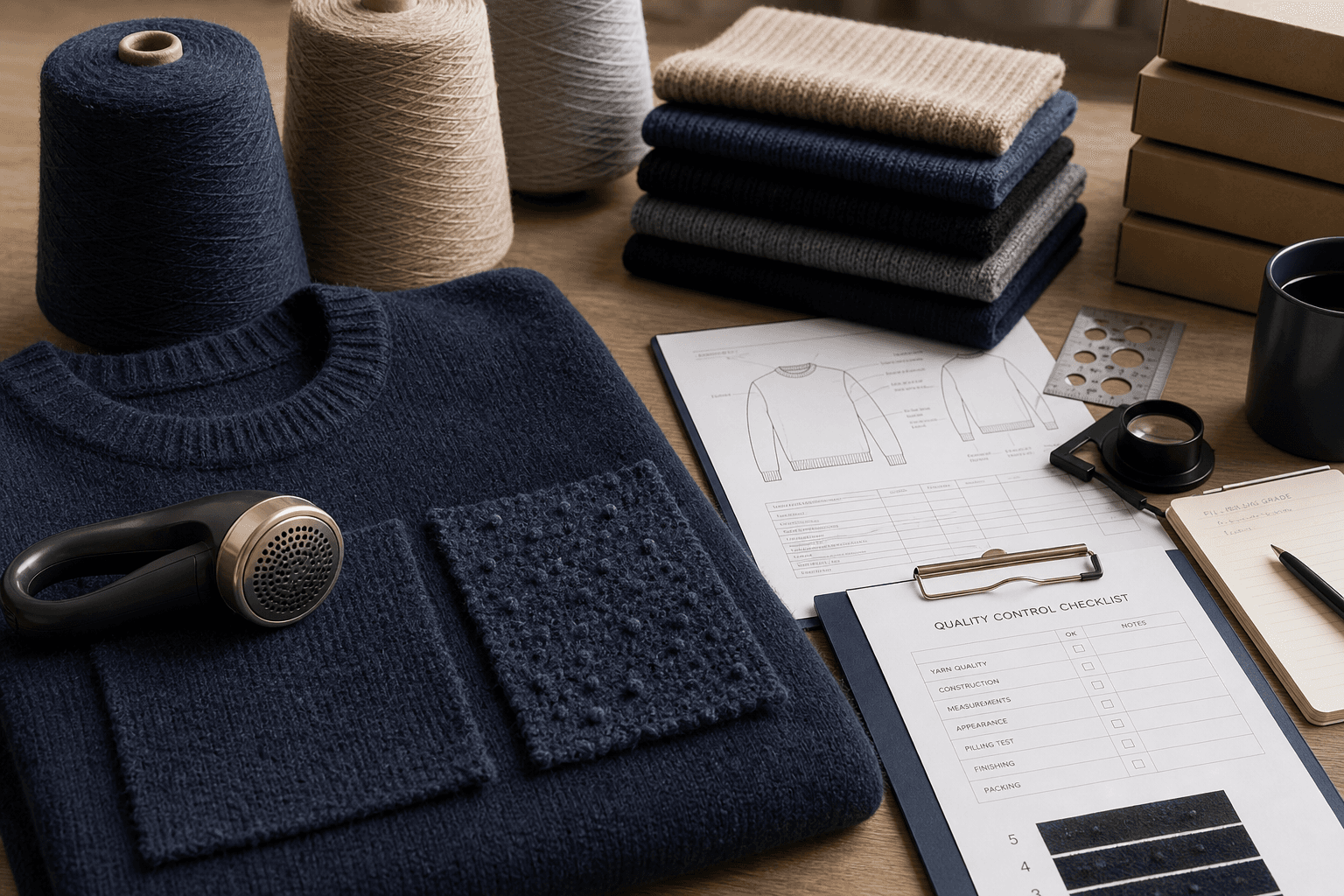
4. Test it — ask for a pilling test (Martindale or ICI pilling box, rated 1–5; aim for an agreed minimum grade) on a knit-down or sample before bulk.
5. Set expectations in your care label — gentle wash, turn inside out — see knitwear care, washing and labeling.
Licheng Knitwear can recommend fibre, yarn twist and finishing choices that balance the hand-feel you want against pilling resistance, and arrange pilling tests on samples before bulk. Tell us your target feel and price point and request a quote, or browse product directions to start from a construction you like.