Landed Cost bei Strickwaren: Zoll, Fracht und die wahren Kosten des Pulloverimports
Aktualisiert 19.9.202612 min readVon Simon Liu · Licheng Knitwear
FOB ist nicht Ihr tatsächlicher Kostenwert. Erfahren Sie, was die Landed Cost bei importierten Strickwaren umfasst — Fracht, Einfuhrzoll, Zollgebühren und Binnenlieferung — wie Sie sie vor der Bestellung abschätzen und warum die Kosten pro Einheit mit dem Volumen sinken.
Der FOB-Preis auf Ihrem Strickwaren-Angebot ist nicht das, was Ihre Pullover Sie tatsächlich kosten. Bis die Ware Ihr Lager erreicht, haben Sie außerdem Fracht, Versicherung, Einfuhrzoll, Zollgebühren und eine Reihe kleinerer Posten bezahlt. Diese All-in-Zahl sind Ihre Landed Cost (Gesamtkosten frei Lager) — und sie ist die einzige Kennzahl, die Sie zur Festlegung von Verkaufspreisen und Margen verwenden sollten. Dieser Leitfaden zeigt, was bei importierten Strickwaren in die Landed Cost einfließt und wie Sie sie abschätzen, bevor Sie sich festlegen.
Marken, die ihre Preise allein auf Basis der FOB-Zahl kalkulieren, kalkulieren ihre Produkte regelmäßig zu niedrig und schmälern ihre Marge. Bauen Sie Ihren Verkaufspreis stets auf der Landed Cost auf, nicht auf den Fabrikkosten.
Ihre tatsächlichen Kosten pro Pullover umfassen Fracht, Zoll und Gebühren — nicht nur FOB.
Kosten des Kleidungsstücks, verladen auf das Schiff im Ausfuhrhafen
Fracht
See- oder Luftfracht zu Ihrem Bestimmungshafen
Versicherung
Transportversicherung (gering, aber lohnenswert)
Einfuhrzoll / Tarif
Erhoben auf den Zollwert; der Satz hängt von Produkt + Land ab
Zoll- / Speditionsgebühren
Verzollung, Abfertigung, Dokumentation
Binnenfracht
Vom Hafen zu Ihrem Lager
Sonstiges
Bankgebühren, Standgeld bei Verzögerung usw.
Der Zoll ist die Variable, die Menschen überrascht
Der Zoll ist die Variable, die Menschen überrascht
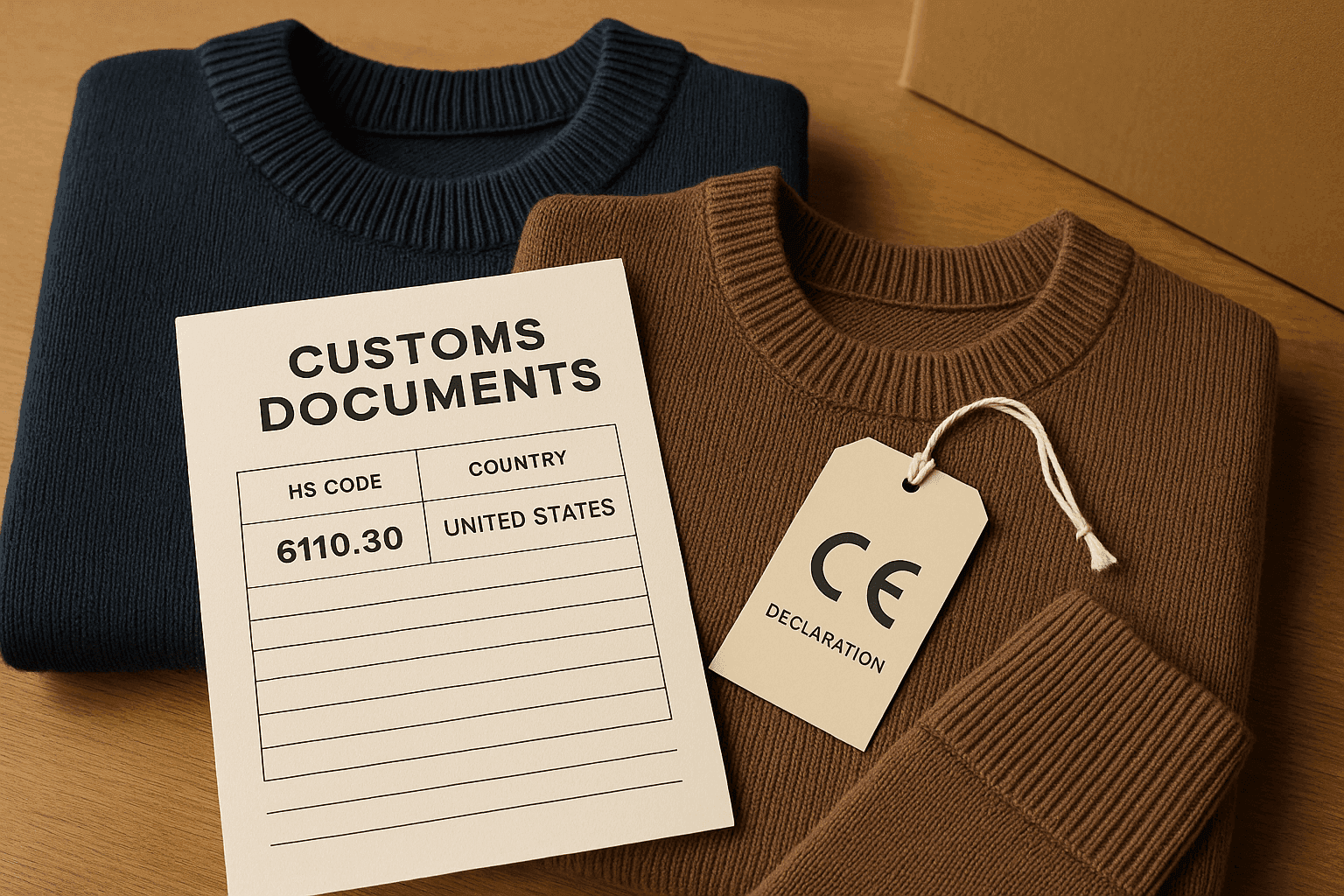
Der Einfuhrzoll hängt von der Einreihung der Strickware (HS-Code) und vom Zolltarif sowie den Handelsabkommen Ihres Bestimmungslandes ab. Zwei Marken, die ähnliche Pullover in unterschiedliche Länder importieren, können sehr unterschiedliche Sätze zahlen. Bevor Sie sich festlegen:
Ermitteln Sie den voraussichtlichen HS-Code für Ihr Strickkleidungsstück (Ihr Zollagent kann ihn bestätigen).
Prüfen Sie den Zollsatz für diesen Code in Ihren Markt — und ob ein Handelsabkommen ihn senkt.
Denken Sie daran, dass der Zoll in der Regel auf den Zollwert erhoben wird, nicht nur auf den FOB.
Für eine grobe Landed Cost pro Einheit, bevor Sie eine Bestellung aufgeben:
1. Beginnen Sie mit dem FOB-Stückpreis (lesen Sie ihn zuerst richtig — siehe wie man ein Strickwaren-Angebot liest).
2. Addieren Sie die Fracht pro Einheit = Gesamtfracht ÷ Einheiten in der Sendung. (Volle Container sind pro Einheit weit günstiger als kleine LCL- oder Luftfrachtsendungen.)
3. Addieren Sie den Zoll = Zollsatz × Zollwert.
4. Addieren Sie Gebühren + Binnenfracht pro Einheit.
5. Die Summe ist Ihre Landed Cost — kalkulieren Sie Ihre Marge auf dieser Basis.
Die Fracht pro Einheit sinkt stark, sobald die Bestellmenge einen Container füllt.
Wie die Menge die Landed Cost verändert
Fracht und feste Importkosten verteilen sich auf die Einheiten einer Sendung, sodass die Landed Cost pro Einheit sinkt, je höher das Volumen ist. Eine winzige Erstbestellung trägt hohe Frachtkosten pro Einheit; eine Bestellung in Containergröße verteilt sie dünn. Das ist mit ein Grund, warum es MOQs gibt und warum Nachbestellungen pro Stück günstiger werden — siehe den Leitfaden zur MOQ für individuelle Pullover und Strickwaren-Nachbestellungen und Skalierung. Überprüfen Sie Ihre Annahmen anhand des Beschaffungs-Benchmark-Berichts 2026.
Häufige Fehler bei der Landed Cost
Häufige Fehler bei der Landed Cost
Den Verkaufspreis auf Basis des FOB festlegen und dann feststellen, dass die Marge nicht da ist
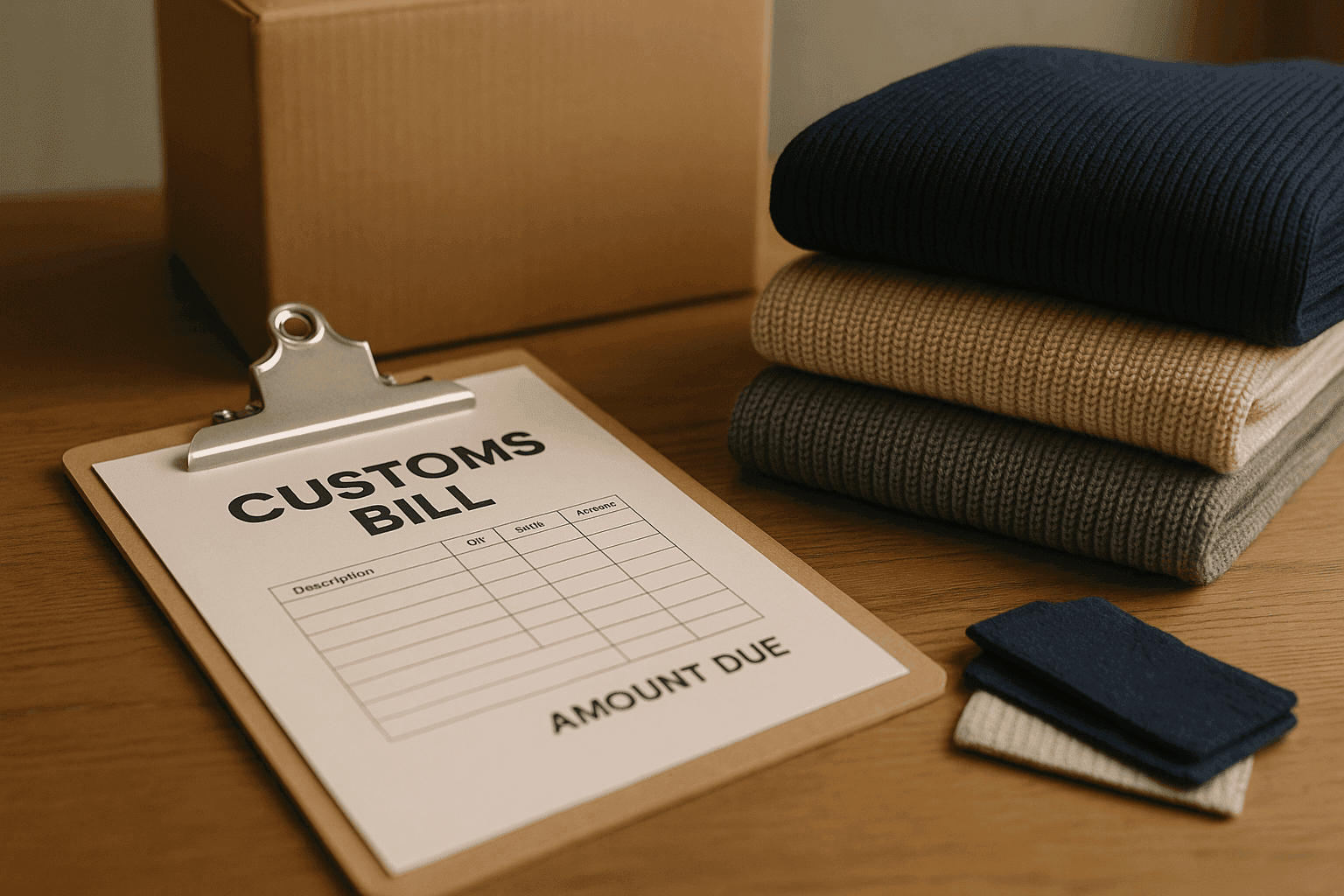
Den Zoll völlig vergessen, bis die Zollrechnung eintrifft
Unter Termindruck Luftfracht wählen (schnell, aber pro Einheit teuer)
Die Fracht pro Einheit bei kleinen Erstbestellungen ignorieren
Keinen Puffer für Gebühren und Verzögerungen einplanen
Planen Sie Ihre Kosten mit einem klaren Angebot
Licheng Knitwear erstellt ein transparentes FOB-Angebot mit Angabe von Feinheit, Garn, Gewicht und Incoterm, sodass Sie darauf eine genaue Landed Cost aufbauen können. Nennen Sie uns Ihr Produkt, Ihre Zielmenge und Ihren Zielmarkt und fordern Sie ein Angebot an — oder stöbern Sie durch Produktrichtungen, um von einem Stil aus zu starten. Ihre wahre Landed Cost im Voraus zu kennen, macht den Unterschied zwischen einer gesunden Marge und einer bösen Überraschung aus.
---
Sprechen Sie mit unserem Team darüber
Wenn Sie ein konkretes Projekt rund um einen der oben genannten Punkte planen, schauen wir uns das gerne kurz an. Senden Sie uns ein kurzes Briefing und wir melden uns innerhalb eines Geschäftstages mit einer praktischen Empfehlung, einer Schätzung von MOQ + Lieferzeit und, falls sinnvoll, einem Musterplan zurück.
FOB unit price + freight + insurance + import duty + customs/broker fees + inland delivery. Budget all of these, not just the FOB price.
It varies by country, fibre and HS code (e.g. US and EU knitwear duties differ by material). Check your HS classification; we provide accurate fibre composition for it.
Consolidate orders for FCL, optimise packaging/volume, confirm the correct HS code, and use duty-free routes where eligible.
Wir konzentrieren uns auf Herrenpullover, Cardigans, Strickjacken, Jacquard-Strickwaren und Private-Label-Strickwaren. Wir unterstützen B2B-Käufer bei OEM/ODM-Entwicklung, Mustererstellung und Serienproduktionsplanung.
Verfügbare Musterstile und ausgewählte kundenspezifische Programme ermöglichen risikoärmere Testläufe vor größeren Saisonaufträgen.
Ja. Marken, auch neue Labels vor ihrer ersten Kollektion, können ein Muster bezahlen und es ansehen, bevor sie einen Produktionsauftrag erteilen. Zwei Wege: ein Ready-Sample eines veröffentlichten Modells für USD 60 pro Stück in etwa 7 Tagen, oder ein Entwicklungsmuster nach Ihrem Tech-Pack für USD 150 pro Modell – inklusive Garnbeschaffung, Strickprogrammierung, einem Prototyp und einer Korrekturrunde – in 15-25 Tagen. Kaschmir- und Mohair-Modelle werden einzeln kalkuliert, der Versand wird zum Selbstkostenpreis berechnet. Die Produktion startet erst nach Freigabe des physischen Musters, ab 30 Stück pro Farbe, Größen innerhalb der 30 mischbar. Ein Muster verpflichtet Sie nicht zur Produktion; Kleidung für den privaten Gebrauch fertigen wir nicht.
Bereit, Ihr Projekt zu starten?
Fordern Sie einen Katalog an oder senden Sie heute eine Anfrage. Unser Team antwortet innerhalb von 24 Stunden.
MOQ, Lieferzeiten, Kostenspannen, Feinheitenwahl und Qualitätsprüfpunkte typischer OEM/ODM-Strickprogramme für Nordamerika und Europa. E-Mail eintragen — den Link schicken wir in 30 Sekunden.
Kein Spam. Abmeldung mit einer einzigen Antwort. Wir nutzen Ihre E-Mail ausschließlich, um Ihnen den Report zu senden und auf Wunsch das Sourcing-Gespräch fortzusetzen.
Die gezeigten Marken sind zuvor betreute OEM/ODM-Partner. Die Logos sind dekorativ und bedeuten keine aktuelle Empfehlung.