So lesen Sie ein Strickwaren-Angebot: FOB-Preisaufschlüsselung für Einkäufer
Aktualisiert 19.9.202612 min readVon Simon Liu · Licheng Knitwear
Lernen Sie, ein Pullover-Angebot Zeile für Zeile zu lesen – Garn, Stricken, Verbinden, Zutaten, Gemeinkosten und Marge – samt Incoterms, was nicht enthalten ist, und den Warnsignalen, die ein echtes Angebot von einer Zahl unterscheiden, die nur darauf ausgelegt ist, den Auftrag zu gewinnen.
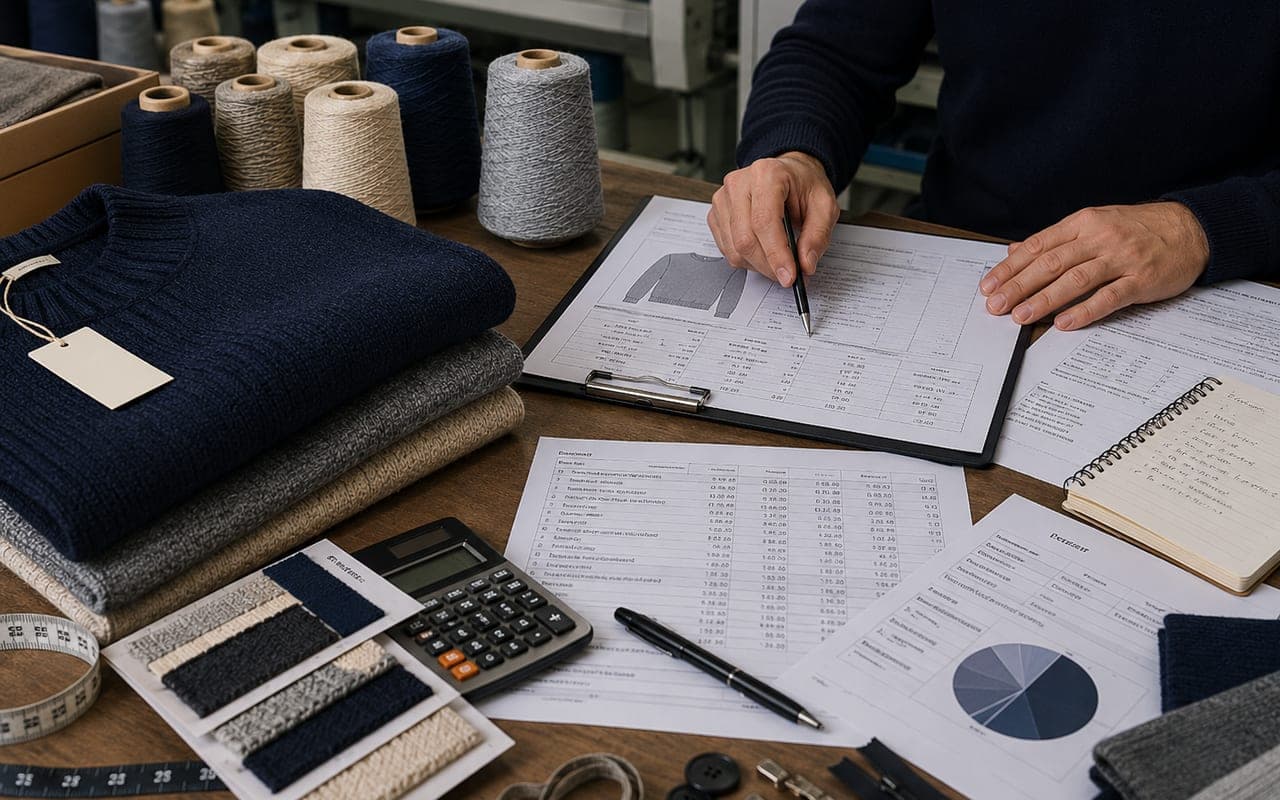
Wenn eine Fabrik ein Angebot zurückschickt, schauen die meisten Einkäufer nur auf eine Zahl: den FOB-Preis. Doch ein Strickwaren-Angebot erzählt eine Geschichte darüber, wie Ihr Produkt aufgebaut ist – und zu lernen, es Zeile für Zeile zu lesen, ist der Unterschied zwischen Verhandeln aus Wissen heraus und bloßem Raten. Dieser Leitfaden schlüsselt auf, was in einem Pullover-Angebot steckt, was jede Zeile bedeutet und welche Warnsignale ein echtes Angebot von einer Zahl unterscheiden, die nur darauf ausgelegt ist, Ihren Auftrag zu gewinnen und später nachzuverhandeln.
Ein Angebot, dem seine Grundannahmen fehlen – Gauge, Garnstärke, Gewicht pro Stück, Incoterm, MOQ –, ist kein Angebot, sondern ein Lockmittel. Fragen Sie immer nach der Aufschlüsselung. Eine transparente Fabrik wird sie Ihnen geben.
Lesen Sie ein Angebot Zeile für Zeile, nicht nur die FOB-Endsumme.
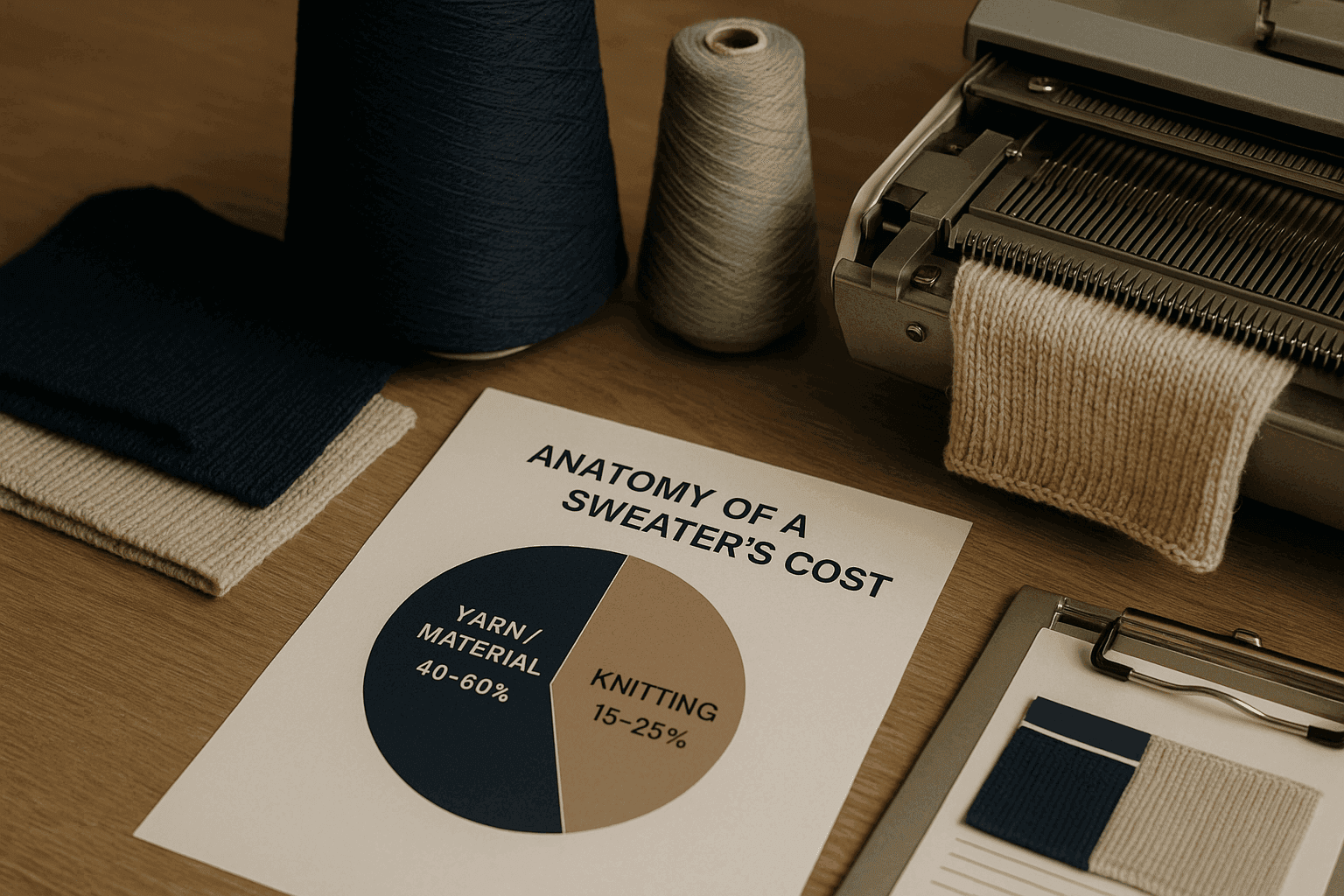
Grob gesagt setzt sich der FOB-Preis eines Strickteils aus diesen Komponenten zusammen. Die Anteile variieren je nach Gauge und Garn, aber dies ist ein nützliches Denkmodell:
Incoterms: was der Preis einschließt und was nicht
EXW (Ex Works) – Preis ab Werkstor; alles Weitere organisieren und bezahlen Sie selbst.
FOB (Free On Board) – am häufigsten bei Strickwaren; der Preis umfasst das Verbringen der Ware an Bord des Schiffes im Exporthafen. Fracht und Einfuhrzoll übernehmen Sie.
CIF – fügt Seefracht und Versicherung bis zum Bestimmungshafen hinzu.
Zwei Angebote sind nur dann vergleichbar, wenn sie denselben Incoterm verwenden. Ein „EXW“-Preis wird für dasselbe Kleidungsstück immer günstiger aussehen als ein „FOB“-Preis – das ist kein Rabatt, sondern ein anderer Leistungsumfang.
Vergleichen Sie Angebote auf Basis desselben Incoterms, Gauges und Gewichts – sonst vergleichen Sie nichts.
Warnsignale in einem Angebot
Kein Gewicht pro Stück angegeben. Garn macht 40–60% der Kosten aus; ist das Gewicht vage, ist es auch der Preis.
Ein Preis, der weit unter den anderen liegt. Oft steckt dahinter ein dünneres Garn, eine niedrigere Stärke, eine lockerere Konstruktion oder eine Zahl, die steigt, sobald Sie sich gebunden haben. Gleichen Sie ihn mit dem Beschaffungs-Benchmark-Bericht 2026 ab.
Ein MOQ, das zu gut erscheint, dabei aber Mindestmengen pro Farbe ignoriert.
Keine Musterkosten oder -lieferzeit – ein Zeichen dafür, dass das Entwicklungsgespräch nicht wirklich stattgefunden hat.
1. Vereinheitlichen Sie Incoterm und MOQ über alle Angebote hinweg.
2. Vergleichen Sie Garnzusammensetzung, -stärke und -gewicht – nicht nur den Preis.
3. Berücksichtigen Sie Bemusterungsgeschwindigkeit und Ausschussrisiko, die sich auf die Landungskosten und Ihre Saison auswirken.
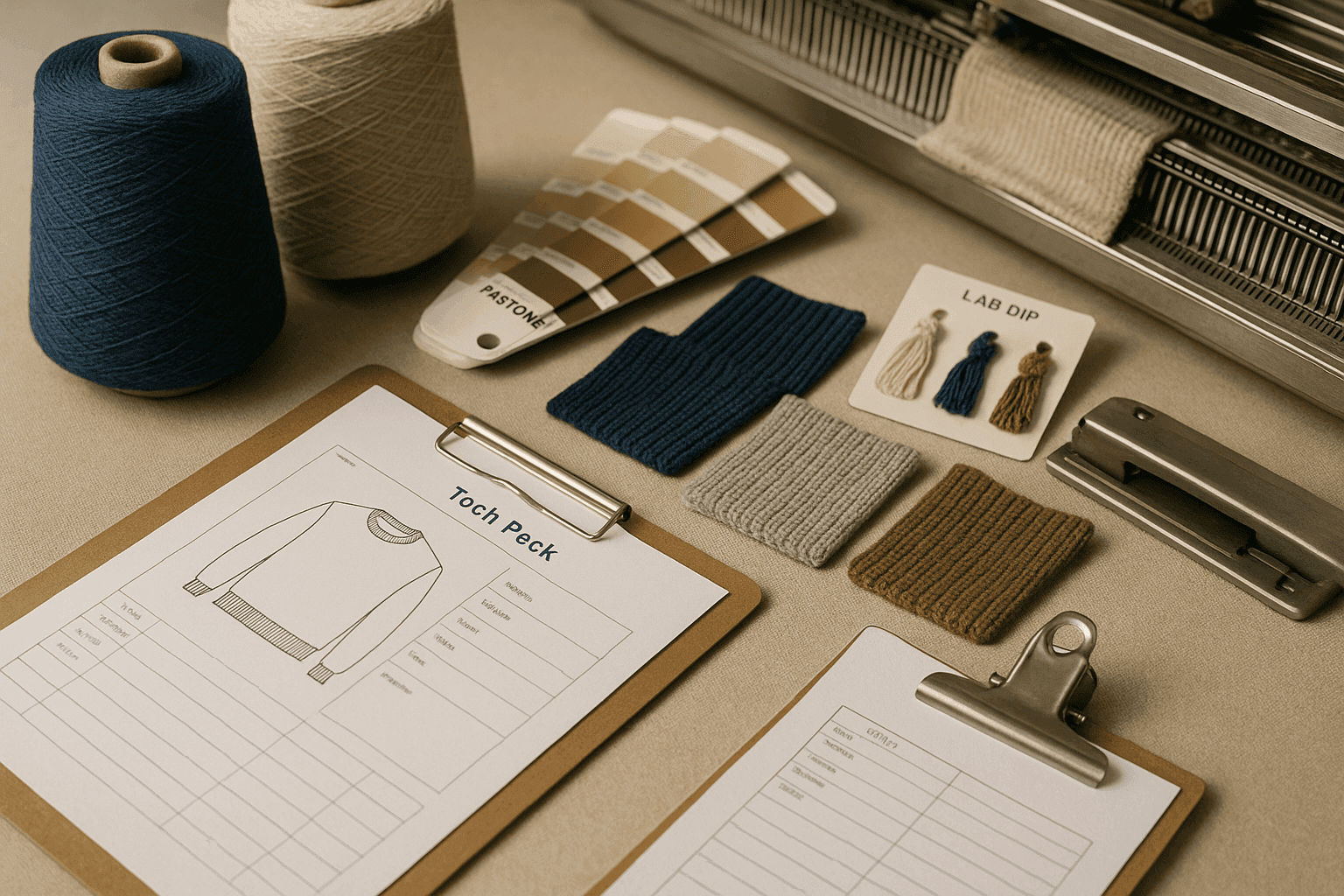
4. Bitten Sie jede Fabrik, dasselbe Tech-Pack zu kalkulieren – siehe wie man ein Pullover-Tech-Pack vorbereitet.
Holen Sie sich ein transparentes Angebot
Licheng Knitwear kalkuliert mit ausgewiesener Aufschlüsselung – Gauge, Garn, Gewicht, Incoterm, MOQ, Muster- und Produktionslieferzeit –, damit Sie Äpfel mit Äpfeln vergleichen können. Senden Sie uns Ihre Produktidee, ein Referenzfoto oder ein Tech-Pack und Ihre Zielmenge und fordern Sie ein Angebot an. Wir melden uns mit einem klaren, aufgeschlüsselten Vorschlag zurück – oder stöbern Sie durch Produktrichtungen, um von einem Stil auszugehen, der Ihnen gefällt.
---
Sprechen Sie mit unserem Team darüber
Wenn Sie ein konkretes Projekt rund um einen der oben genannten Punkte planen, schauen wir gern kurz darauf. Senden Sie uns einen kurzen Brief, und wir melden uns innerhalb eines Geschäftstages mit einer praktischen Richtung, einer MOQ- und Lieferzeitschätzung sowie einem Musterplan zurück, sofern das sinnvoll ist.
FOB unit price, yarn and gauge, MOQ, sample and bulk lead times, customisation and trims, packaging, and payment terms.
Yarn choice, gauge and complexity, order quantity (MOQ spreads setup cost), trims and finishing, and whether the colour is stock or custom-dyed.
Yarn dye-lot minimums, custom trim and hardware minimums, lab dip and sample fees, special finishing, and packaging. Ask for each as a line item.
Wir konzentrieren uns auf Herrenpullover, Cardigans, Strickjacken, Jacquard-Strickwaren und Private-Label-Strickwaren. Wir unterstützen B2B-Käufer bei OEM/ODM-Entwicklung, Mustererstellung und Serienproduktionsplanung.
Verfügbare Musterstile und ausgewählte kundenspezifische Programme ermöglichen risikoärmere Testläufe vor größeren Saisonaufträgen.
Ja. Marken, auch neue Labels vor ihrer ersten Kollektion, können ein Muster bezahlen und es ansehen, bevor sie einen Produktionsauftrag erteilen. Zwei Wege: ein Ready-Sample eines veröffentlichten Modells für USD 60 pro Stück in etwa 7 Tagen, oder ein Entwicklungsmuster nach Ihrem Tech-Pack für USD 150 pro Modell – inklusive Garnbeschaffung, Strickprogrammierung, einem Prototyp und einer Korrekturrunde – in 15-25 Tagen. Kaschmir- und Mohair-Modelle werden einzeln kalkuliert, der Versand wird zum Selbstkostenpreis berechnet. Die Produktion startet erst nach Freigabe des physischen Musters, ab 30 Stück pro Farbe, Größen innerhalb der 30 mischbar. Ein Muster verpflichtet Sie nicht zur Produktion; Kleidung für den privaten Gebrauch fertigen wir nicht.
Bereit, Ihr Projekt zu starten?
Fordern Sie einen Katalog an oder senden Sie heute eine Anfrage. Unser Team antwortet innerhalb von 24 Stunden.
MOQ, Lieferzeiten, Kostenspannen, Feinheitenwahl und Qualitätsprüfpunkte typischer OEM/ODM-Strickprogramme für Nordamerika und Europa. E-Mail eintragen — den Link schicken wir in 30 Sekunden.
Kein Spam. Abmeldung mit einer einzigen Antwort. Wir nutzen Ihre E-Mail ausschließlich, um Ihnen den Report zu senden und auf Wunsch das Sourcing-Gespräch fortzusetzen.
Die gezeigten Marken sind zuvor betreute OEM/ODM-Partner. Die Logos sind dekorativ und bedeuten keine aktuelle Empfehlung.