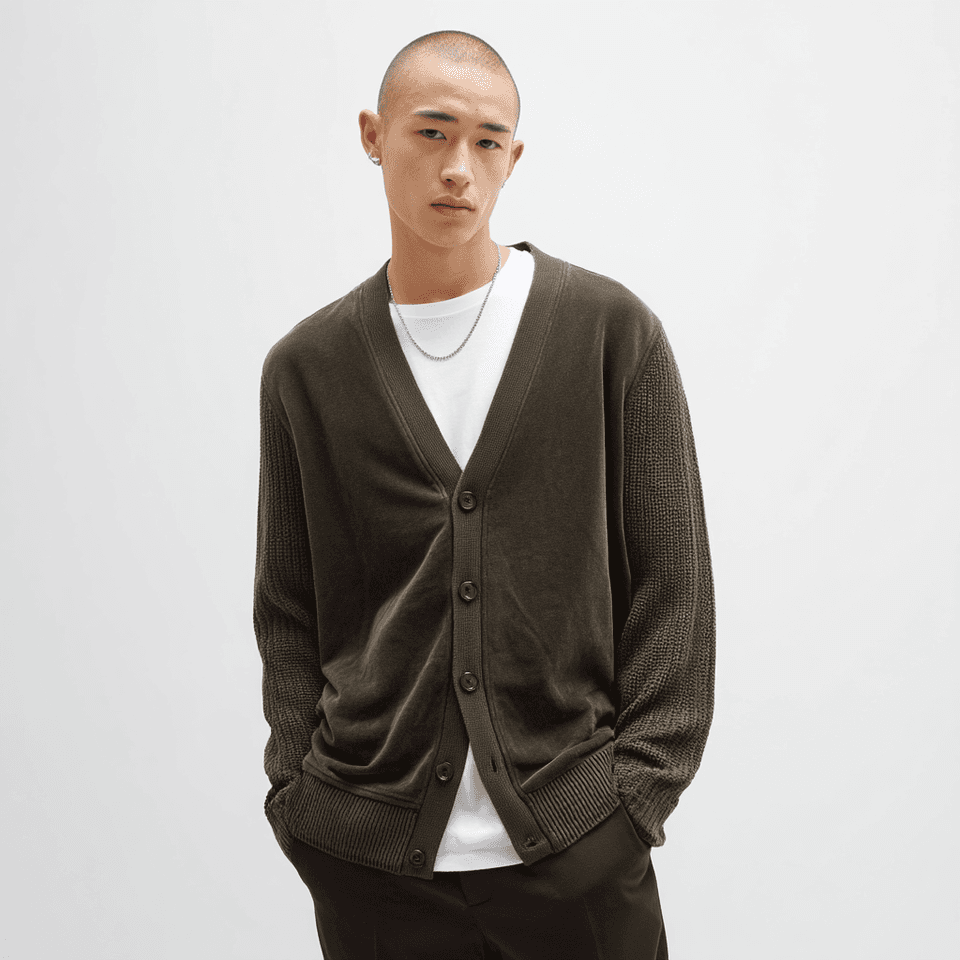
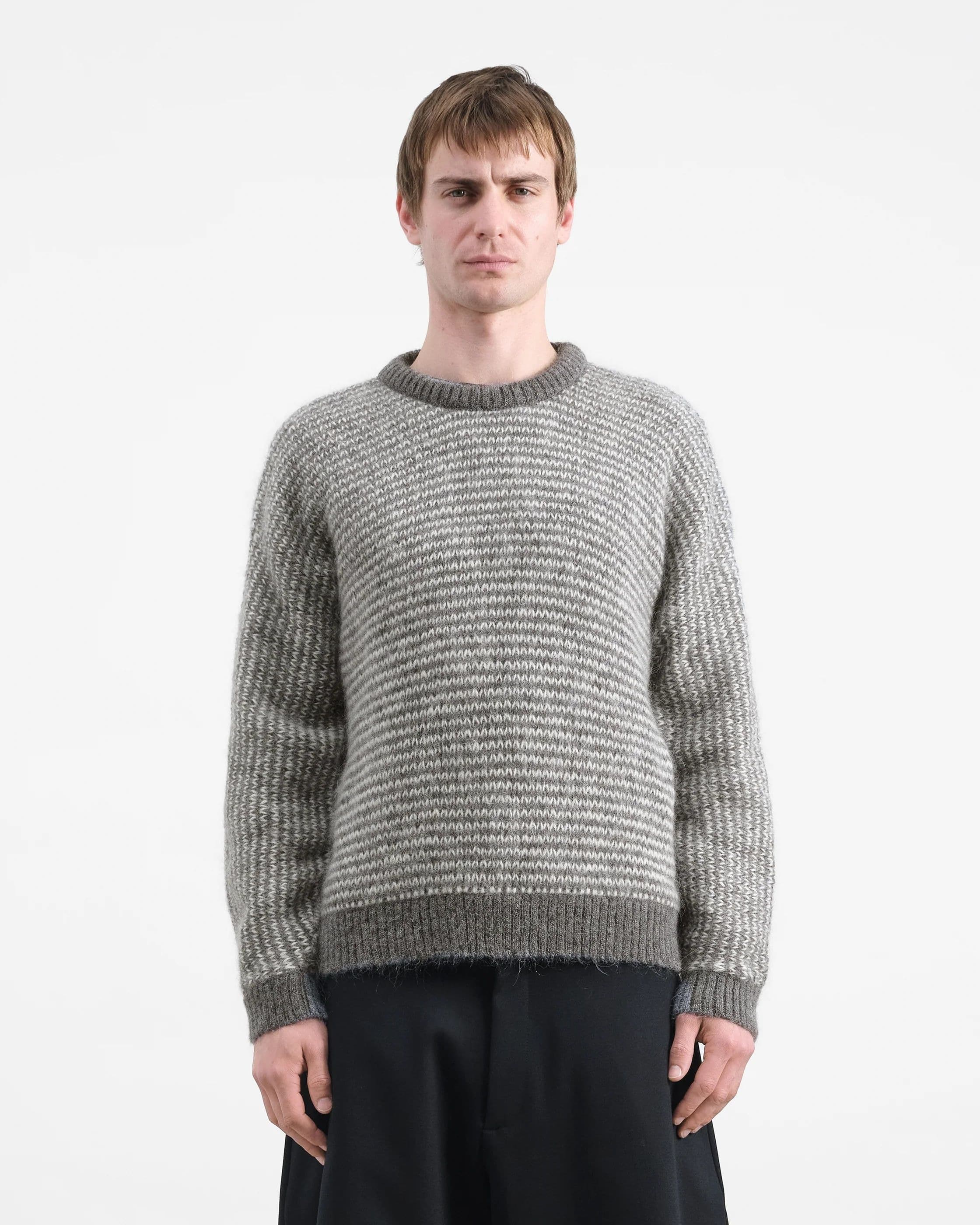
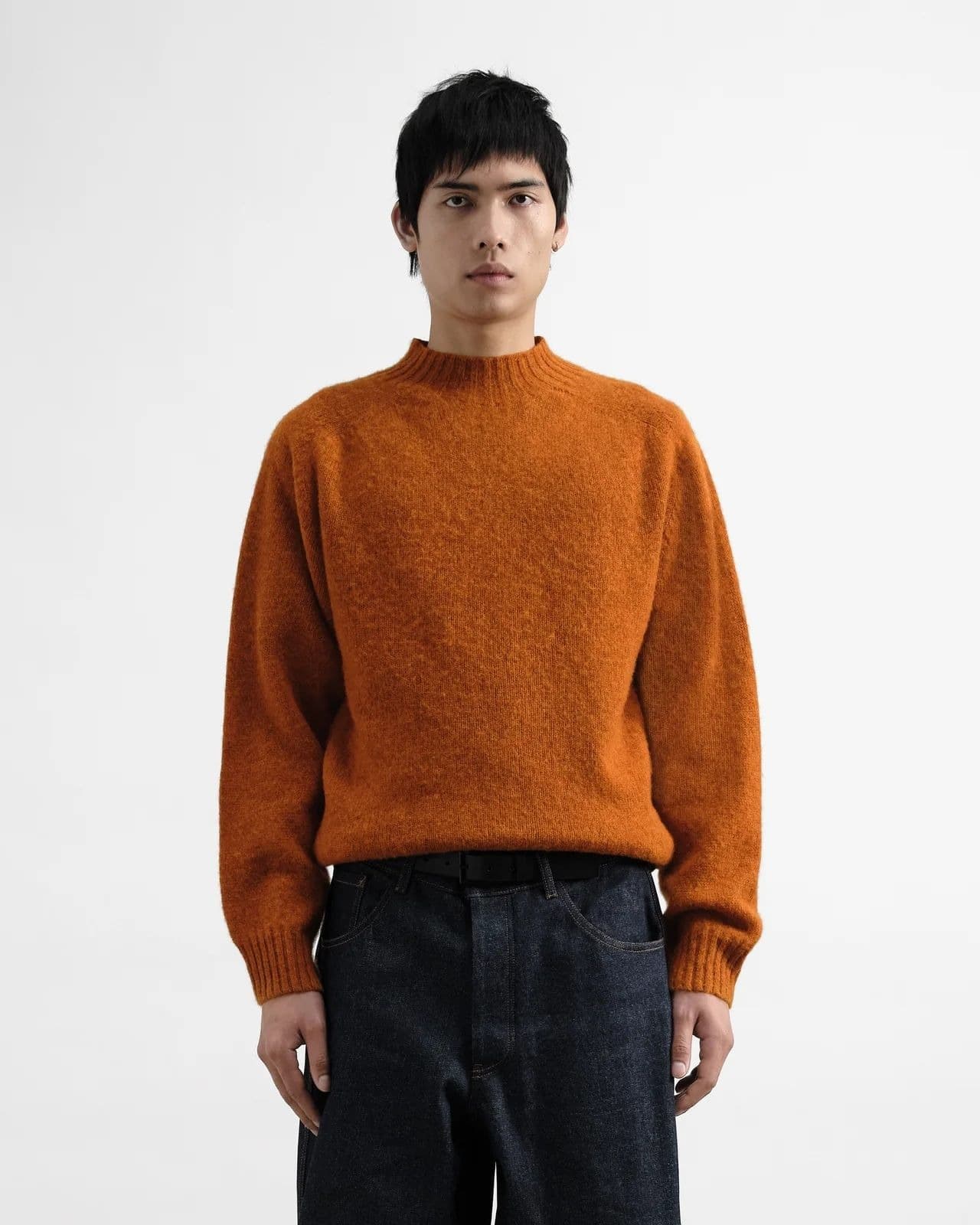
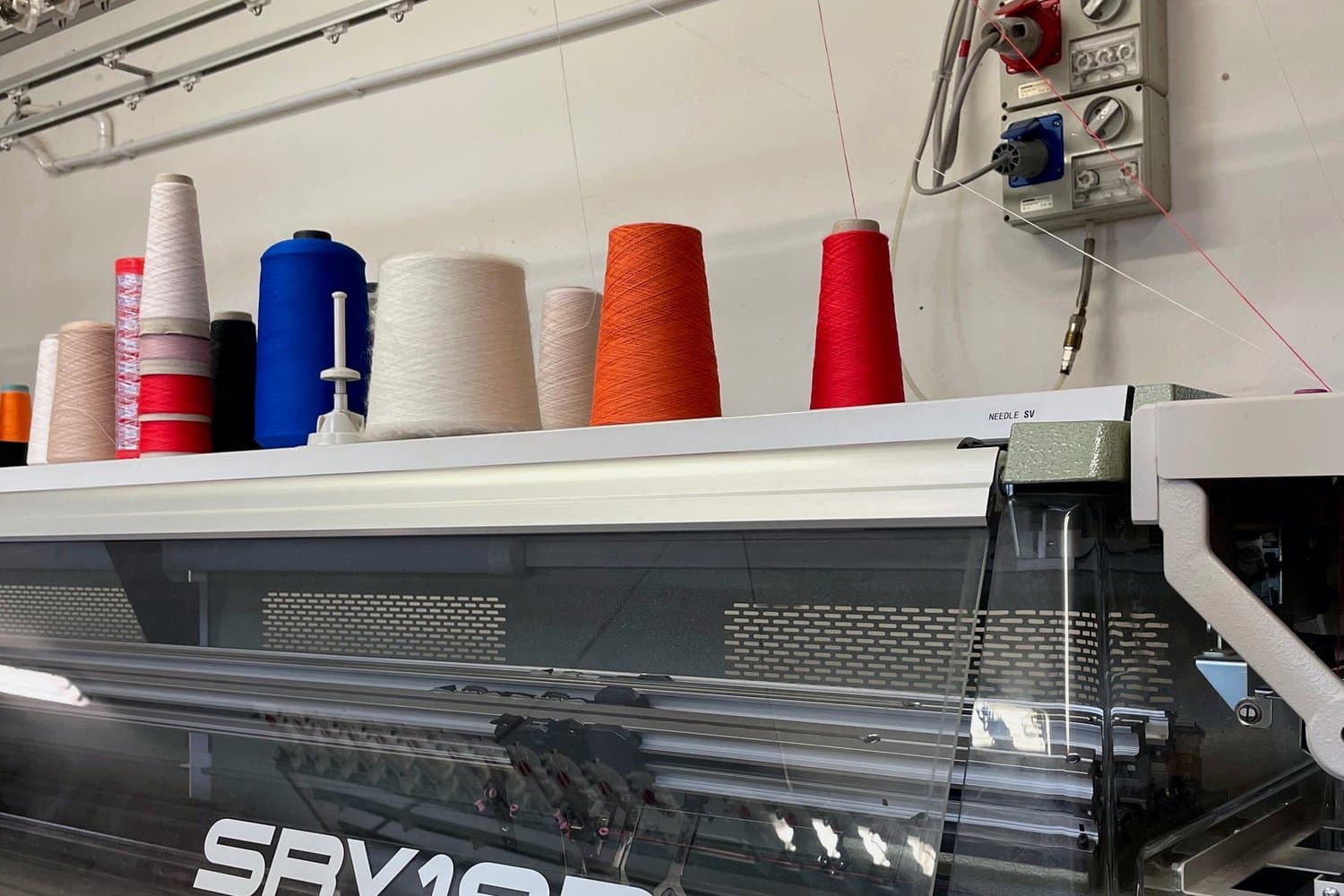
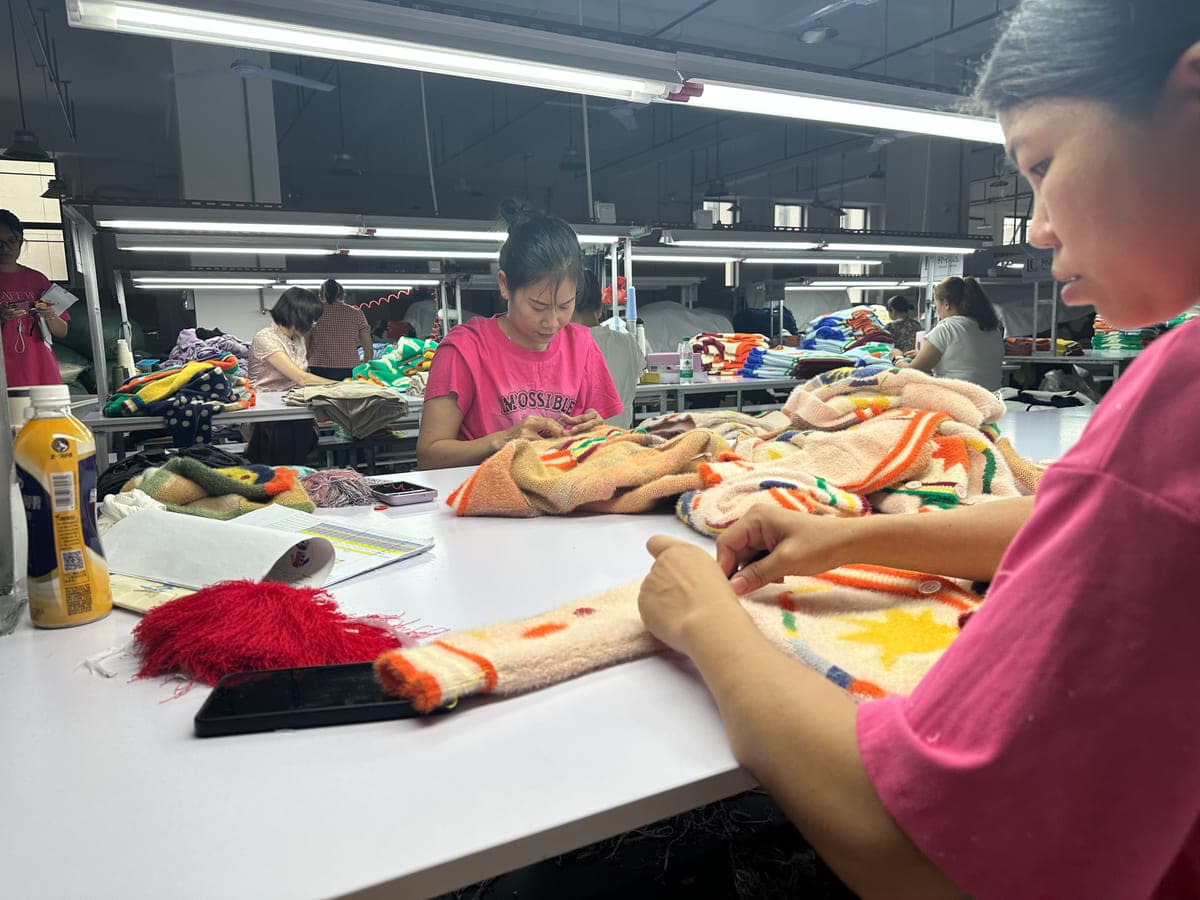
The short answer. Two brands wrote to us in the same fortnight this September asking for the same thing in different words: one wanted a microsuede body with rib-knit sleeves and a stand collar, the other a ribbed pullover with a technical panel across the shoulders. Neither said "hybrid". Both were describing a garment that is knitted in some places and not in others — and in every one of them the hard part is not the material, it is the join. Knit stretches; suede, nylon and shearling do not. Across the 410 styles published on this site, 46 carry some form of contrast or hybrid construction, and they resolve into five buildable routes.
|
| Suede front, knit sleeves | Woven or microsuede front panel | Seam allowance at the stretch mismatch | An operation, not yarn |
| Shearling / faux-fur collar | Bought trim on a 3GG–7GG body | Neckline stretching under collar weight | Trim minimum + its own lead time |
| Nylon panel or pocket | Yoke, chest panel, pocket bag | Unsupported pocket mouth grows | Sampling rounds, not material |
| Rib trim on a woven shell | Knit doing structural work | Rib depth and recovery | Labour, not yardage |
| Applied patches | Backing chosen per gauge | Coarse gauge cannot hold fine detail | Artwork colour count |
How we count the 46. A style counts as hybrid or contrast here if suede, shearling, faux fur, nylon or a named contrast panel appears in the product name, the knit-structure field or the description. On that definition: nylon on 16, faux fur or shearling on 17, suede on 9, a named contrast trim or panel on 9. Styles overlap, because a bomber can carry two at once.
The cardigan-jacket. A woven or microsuede front carries the closure and the pockets; sleeves, back and all trims are knitted. It reads as outerwear from the front and as a cardigan from behind, so it sells into a warmer indoor season than a real jacket does.
The engineering problem. Every seam where the two meet is a seam where one side wants to move and the other cannot. Set the seam allowance for the knit and the suede puckers; set it for the suede and the knit ripples after the first wash.
Fix on the sealed sample: seam allowance, the stabiliser tape at the join, and rib depth around it — a deeper rib at cuff and hem absorbs the difference in recovery. Re-check all three on the first bulk panel, because the knit relaxes between those two moments and the woven does not.
Cost. The suede front removes knitting time and adds cutting and joining time, so it lands close to a straight knit jacket rather than below it. Our published index median for knit jackets is USD 21.61 per piece at MOQ 30 per colour.
2. Shearling or faux-fur collar on a knit body
Seventeen of the 46. A heavier-gauge body, usually 3GG–7GG, with a separate collar that is often removable. It is the single change that moves a knit jacket from "sweater" to "coat" in a customer's mind, and a removable collar lets one body serve two price points.
The engineering problem. Weight. A fur or shearling collar hangs, and a knit neckline stretches under load. A collar that looks right on the sample sags on the tenth wearing if the neckline was not built to carry it.
Fix on the sealed sample: whether the collar is fixed or removable, decided *before* the neckline is knitted — the two need different neckline constructions. If removable, the hardware carries the weight and needs the same nickel-release checks as any other metal in prolonged skin contact.
Cost. The collar is bought, not knitted, so it prices as a trim with its own minimum and lead time. A nominated fur or shearling supplier can add days before anything is knitted. Ask in the first quotation round, not after approval — see trims and hardware.
Sixteen styles. Usually a shoulder yoke, a chest panel, or a pocket bag and welt. It is the most current of the five: technical-looking without being technical, and a nylon shoulder makes a plain knit look designed at almost no yarn cost.
The engineering problem. The same stretch mismatch as suede, but worse at the pocket, because a pocket mouth carries load every time it is used. An unsupported opening on a knitted ground will grow, and it will keep growing.
Fix on the sealed sample: stabilise the pocket opening, and on a zip pocket set the tape so the zip does not ripple the fabric around it. Twenty-seven published styles carry pockets — patch, chest, kangaroo, zip and flap — and the mouth is the failure point in every one.
The inverse of the first: the body is not knitted at all, and the knit does collar, cuffs and hem. It is how a bomber gets its shape — the rib is doing structural work, not decoration.
The engineering problem. Rib depth and recovery. Too shallow and the hem flares; too soft a trim yarn and it goes slack by the end of a season. This is where a cheap trim yarn shows fastest.
Fix on the sealed sample: rib depth in centimetres, and trim yarn twist specified separately from the body. Test the intended care cycle — dimensional stability after domestic washing to ISO 6330 — because trim and shell will not shrink at the same rate. More on construction routes in linking and knit construction.
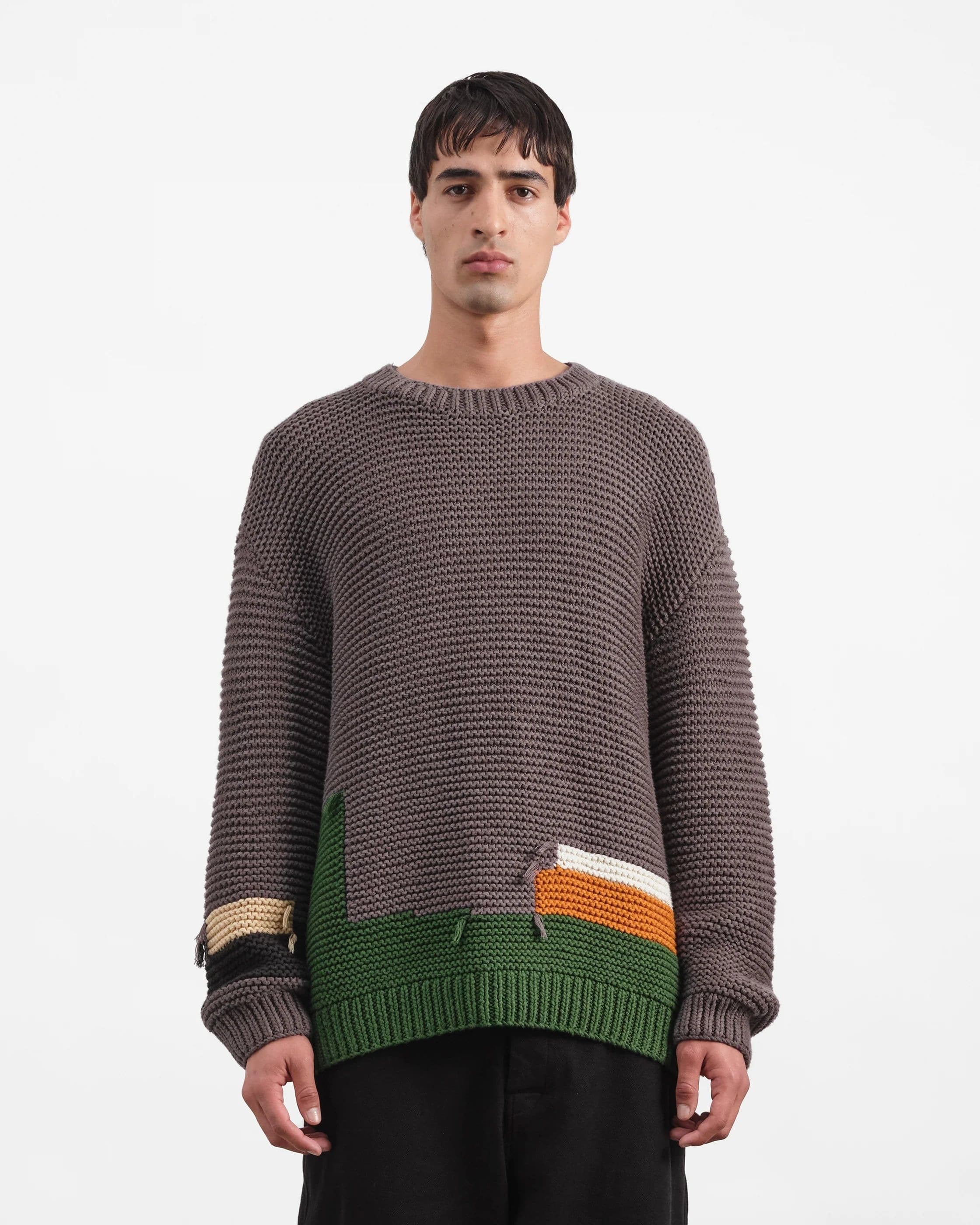
Elbow patches, chest patches, applied varsity shapes. The cheapest way to put a story on a plain body, and it works on a blank without changing the knitting programme.
The engineering problem. Backing. Anything stitched onto a knit needs a backing chosen against gauge and fibre, or the stitching pulls the ground. A 3GG–5GG ground needs a simplified, bolder version of the same artwork; 12GG–18GG carries a detailed crest.
Fix on the sealed sample: prove the artwork on a swatch at the actual gauge before it goes into a tech pack. Fine text, thin outlines and gradients lose definition first, because the stitch is the resolution limit. See embroidery and branding.
- Minimum order stays 30 pieces per colour per style, sizes mixed inside those 30. A hybrid build does not raise it — see low-MOQ production.
- Sampling runs about 15–25 days from a confirmed tech pack and confirmed yarn; bulk runs 30–45 days depending on quantity and complexity. A nominated trim can add days *before* that clock starts.
- Trims carry their own compliance. Metal in prolonged skin contact is controlled for nickel release under REACH Annex XVII entry 27, tested to EN 1811. Ask the trim supplier for that declaration at the same time as the price.
Do not decide the second material before the gauge. The order matters: the gauge sets how much the knit will move, and how much it moves decides what the join has to absorb. Buyers who pick the suede first and the gauge second spend an extra sampling round almost every time.
Do not put a hybrid construction into a first production run alongside a new colour and new artwork. Each of those is its own approval. Thirty pieces is enough to prove one new thing well; it is not enough to prove three.
A reference photo is enough to start — a sketch, a photo of a garment you already own, or a full tech pack. We will come back with what is buildable, what needs redrawing, and which of the five gets you the handfeel you are after.