30 pieces per colour using stock yarn. Custom-dyed yarn raises the minimum because the dye lot itself has a mill minimum - we confirm the practical number after seeing your colour card.
Käufer FAQ
Klare Antworten vor der Anfrage.
Find practical answers about MOQ, sampling, yarn, gauge, OEM/ODM, private label, shipping, quality control and catalog requests.
Sourcing Topics
Organized by buyer questions.
Manual Review
Send details if your case is specific.
No False Claims
Compliance is confirmed by real documents.
MOQ
30 pieces per colour using stock yarn. Custom-dyed yarn raises the minimum because the dye lot itself has a mill minimum - we confirm the practical number after seeing your colour card.
30 pieces per colour on stock yarn. Across our 41 published polo styles the index price band runs USD 8.97-66.05 per piece at that minimum, depending on fibre and gauge.
30 pieces per colour on stock yarn - the same minimum as our menswear programs. Our 37 published women's sweater styles sit in a USD 11.97-44.27 index band at that quantity.
30 pieces per colour using stock yarn. That figure is the same across all 63 published men's cardigans, including chunky and pattern-led styles. Custom-dyed colours carry a mill minimum on the yarn itself, which we quote separately.
30 pieces per colour using stock yarn, the same across all 8 published women's cardigans. Custom-dyed colours carry a separate yarn mill minimum.
30 pieces per colour using stock yarn, the same across all 6 published women's knit jackets.
30 pieces per colour using stock yarn, the same across all 10 published styles in this category.
30 pieces per colour using stock yarn, the same as any other garment in our range. A vest is not treated as a filler style with a different minimum.
30 pieces per colour. That is per style and colour, not per size - the full Newborn-12y run is covered by the one minimum.
30 pieces per colour. Maternity and baby use two different size systems - 12 published styles are graded XS-XL and 6 are graded 0-24m - and the minimum applies to each separately.
30 pieces per colour, the same minimum as our human garment range. We grade in two separate runs - XS/S/M for small dogs and L/XL/2XL for larger breeds - and the minimum applies to each.
30 pieces per colour, the same as our garment range, even though the unit value is far lower.
30 pieces per colour, the same minimum as our human garment range. Pet product is not treated as a side line with a different floor. The two size runs - XS/S/M and L/XL/2XL - are graded separately, so a style offered in both is two styles.
30 pieces per colour, the same as our garment range, even though the unit value is far lower. 18 of our 30 published accessory styles are one size, so that minimum covers the whole style rather than being split across a size run.
30 pieces per colour, applied to each size system separately. Our published range uses two: XS-XL on 12 maternity styles and 0-24m on 6 baby styles. A matching mother-and-baby set is therefore two styles and two minimums, which is the thing brands most often under-budget.
From 30-100 pieces per colour with specialist factories using in-stock yarns, versus 300-1,000+ at most factories.
Most factories set 300-1,000 pieces per style, often per colour. Small-brand specialists can go to 30-100 pieces per colour using in-stock yarns.
A real 30-100 pc/colour minimum, stock-yarn programmes, fast samples (15-25 days), transparent line-item costing, and a factory that treats a small first order as a relationship.
For custom knitwear a low MOQ is around 30-100 pieces per colour. Most factories want 300-1,000+; specialists that work with small brands go as low as 30 using in-stock yarns.
Design around stock yarn colours, share one yarn across styles, and limit colour count. Custom dyeing raises the minimum.
Design around in-stock yarn colours, share one yarn across several styles, and limit your colour count. Custom Pantone dyeing raises the minimum.
They can be. Check certifications (OEKO-TEX, ISO 9001), real production photos or video, and order a paid sample before bulk.
Yes. Factories set up for small brands accept from 30 pcs per colour, especially when you design around stock yarns. Custom Pantone dyeing usually raises the minimum.
The 30 is per colour; sizes inside one colour are yours to split. A second colour is a second 30.
From 30 pieces per colour using in-stock yarns; a custom-dyed colour adds a small-lot dyeing surcharge rather than a higher minimum, while nominated speciality yarns may raise it.
Yes, with a factory set up for small brands - check certs, real photos and order a sample first. We treat a 30-piece first order as the start of a relationship.
Yes, modestly - fixed setup and yarn dye-lot costs spread over fewer pieces. The trade-off is far lower upfront inventory risk.
Modestly. Fixed setup and yarn dye-lot costs spread over fewer pieces, so unit cost is higher. The trade-off is far lower upfront inventory risk.
Verfügbare Musterstile und ausgewählte kundenspezifische Programme ermöglichen risikoärmere Testläufe vor größeren Saisonaufträgen.
Einfarbige und gestreifte Modelle aus demselben Garn in derselben Farbe können gemeinsam die Mindestmenge von 30 Stück erreichen; Größen können gemischt werden. Beispielsweise ergeben vier einfarbige Modelle mit jeweils 25 Stück aus demselben Garn in derselben Farbe insgesamt 100 Stück und erfüllen diese Mindestmenge. Unterschiedliche Garne oder Farben werden getrennt gezählt. Für Jacquard und Intarsien gelten 30 Stück pro Muster; Mengen verschiedener Muster können nicht zusammengezählt werden. Senden Sie uns Ihre Modelle, Garne, Farben und Mengen, damit wir die Mindestmenge für Ihr Projekt bestätigen können.
30 pieces per colour is the catalogue minimum, and a trial order can be discussed separately. Sampling is 15-25 days from a confirmed tech pack.
Ein üblicher Ausgangspunkt sind 100 Stück pro Stil für die kundenspezifische Entwicklung; die endgültige Mindestbestellmenge hängt jedoch von Garn, Feinheit, Artwork, Besatzteilen und Auftragsplanung ab. Verfügbare Muster oder Testaufträge können separat besprochen werden.
Verfügbare Musterstile ermöglichen oft flexiblere Gespräche über Testläufe, da die Entwicklungsrichtung bereits klarer ist. Die endgültige Menge hängt weiterhin von der Materialverfügbarkeit und dem Anpassungsbedarf ab.
Ja. Die Feinheit kann den Garnverbrauch, die Produktionsplanung und die Maschinenbelegung beeinflussen. Grobe Feinheiten oder spezielle Musterstile erfordern unter Umständen eine andere MOQ-Abstimmung als einfache feine Styles.
Private-Label-Verpackung kann für kleinere Aufträge besprochen werden, allerdings können einige Verpackungsmaterialien eine eigene Mindestbestellmenge haben. Käufer sollten Etiketten, Hangtags und Verpackung frühzeitig festlegen.
Die Mindestbestellmenge hängt von Garn, Feinheit, Farbanzahl, Stilkomplexität, Größenspektrum und Verpackungsbedarf ab. Wir prüfen diese Details, bevor wir eine praktikable Auftragsrichtung vorschlagen.
Gespräche über Testaufträge sind möglich, wenn Garn, Stil und Menge passen. Die endgültige Mindestbestellmenge wird nach Prüfung der Anforderungen bestätigt.
Custom colors can increase MOQ because Garn dyeing oder sourcing may require minimums. Available Garn colors may allow more flexible discussion.
Nein. Jacquard und Intarsia beginnen bei 30 Stück pro Muster; Größen können innerhalb der 30 gemischt werden, verschiedene Muster lassen sich nicht zusammenzählen. Mehr Aufwand entsteht in der Entwicklung: Ihr Artwork wird als Strickvorlage auf Farbanzahl, Feinheit und Flottierungslänge geprüft und das Strickprogramm danach geschrieben – das deckt das Entwicklungsmuster ab.
Halten Sie Zielmenge, Farbplan, Größenspektrum und Marktanforderungen bereit. Das hilft dem Lieferanten, realistische Optionen zu bewerten.
Most factories set 300-1,000 pieces per style, often per colour. Small-brand specialists can go down to 30-100 pieces per colour when you design around in-stock yarns.
Yes. Designing around in-stock yarn colours lets some factories accept orders from 30 pieces per colour. Asking for a custom Pantone dye usually raises the minimum because the mill must dye a full batch.
Usually per colour, per style, because each colour needs its own yarn dye lot. Using stock colours is the main way to keep the per-colour minimum low.
Sampling
Most programmes reach approval in two to three rounds. A clean tech pack with confirmed measurements, a yarn spec and a physical colour reference often gets there in two; vague briefs and late design changes push a programme into a fourth or fifth.
A fit or revised-proto round usually takes 7-10 days per cycle, after the first round inside the standard 15-25 day window. Each extra cycle delays the start of the 30-45 day bulk window by about a week.
Yes. Measure it first, launder it to your care instructions, then measure again. Twisting and shrinkage often appear only after washing, and a body that relaxes from 68 cm to 71 cm is a finishing problem to fix before bulk, not after.
Ja. Marken, auch neue Labels vor ihrer ersten Kollektion, können ein Muster bezahlen und es ansehen, bevor sie einen Produktionsauftrag erteilen. Zwei Wege: ein Ready-Sample eines veröffentlichten Modells für USD 60 pro Stück in etwa 7 Tagen, oder ein Entwicklungsmuster nach Ihrem Tech-Pack für USD 150 pro Modell – inklusive Garnbeschaffung, Strickprogrammierung, einem Prototyp und einer Korrekturrunde – in 15-25 Tagen. Kaschmir- und Mohair-Modelle werden einzeln kalkuliert, der Versand wird zum Selbstkostenpreis berechnet. Die Produktion startet erst nach Freigabe des physischen Musters, ab 30 Stück pro Farbe, Größen innerhalb der 30 mischbar. Ein Muster verpflichtet Sie nicht zur Produktion; Kleidung für den privaten Gebrauch fertigen wir nicht.
Ja, für Marken, die ein Modell entwickeln. Ein einzelnes Entwicklungsstück ist möglich, ohne Verpflichtung zur Serie: Ein Entwicklungsmuster kostet 150 USD pro Modell und umfasst Garnbeschaffung, Strickprogrammierung, einen Prototyp und eine Korrekturrunde, in 15–25 Tagen (Kaschmir und Mohair werden einzeln kalkuliert). Gehen Sie danach in Produktion, gilt ein Minimum von 30 Stück pro Farbe, Größen innerhalb der 30 mischbar, und die 150 USD werden vollständig auf eine Erstbestellung angerechnet, die innerhalb von sechs Monaten nach Musterfreigabe erfolgt. Kleidung für den privaten Gebrauch fertigen wir nicht.
In daylight, next to the physical Pantone TCX chip or swatch, for example beside a window. Approving a colour under warm shop lighting is how the wrong shade reaches bulk.
Precisely and in one structured batch: "shorten body by 2 cm" rather than "a bit shorter", referenced to the tech pack measurement, with must-fix items separated from nice-to-have, and confirmed in writing.
Yes. Fit, Gauge, Garn, Farbe, Besatzteile und construction details can be adjusted vor Serienproduktion.
Die Mustererstellung dauert in der Regel 15–25 Tage, nachdem Garn, Feinheit, Artwork und Maße bestätigt sind. Komplexe Jacquard-, Stickerei- oder Besatzanforderungen können mehr Prüfzeit erfordern.
Der Zeitbedarf für Muster hängt von Garnverfügbarkeit, Feinheit, Maschenkomplexität, Artwork, Besatzteilen, Etiketten und der Klarheit der Käuferkommentare ab. Klare Vorgaben verkürzen in der Regel die Überarbeitungszeit.
Ein vollständiges Tech Pack ist hilfreich, aber für das erste Gespräch nicht zwingend erforderlich. Referenzfotos, Zielmaterial, Größenvorgaben und Mengenplan können ebenfalls einen frühen Mustervorschlag unterstützen.
Ja. Die Mustererstellung dient häufig dazu, Passform, Garn, Feinheit, Maschenbild und Besatzteile zu prüfen. Konkrete Hinweise wie Maßänderungen oder Garnanpassungen lassen sich leichter umsetzen als allgemeines Feedback.
Ein Referenzfoto kann ein Ausgangspunkt sein, doch für Material, Größe, Feinheit und Passform sind zusätzliche Angaben erforderlich. Das erste Muster sollte als Entwicklungsmuster und nicht als endgültiger Produktionsstandard betrachtet werden.
Yes, brands can develop one piece without committing to bulk production. A development sample costs USD 150 per style and covers yarn sourcing, writing the knitting program from your artwork, one prototype and one revision round, in 15–25 days; cashmere and mohair styles are quoted individually. If you place a bulk order within six months of approving the sample, the full USD 150 is credited against it. Jacquard and intarsia bulk orders start at 30 pieces per pattern, with mixed sizes; different patterns cannot be combined to reach that minimum. We do not make garments for personal wear.
Die Dauer der Mustererstellung hängt von der Vollständigkeit des Tech Packs, der Garnverfügbarkeit, der Feinheit und der Anpassungskomplexität ab. Die endgültige Vorlaufzeit wird nach der Prüfung bestätigt.
Ja, Referenzfotos können geprüft werden. Der Lieferant benötigt unter Umständen weitere Abstimmung, um Material, Feinheit, Maße und Konstruktion zu bestätigen.
Sample revision can be discussed nach buyer feedback. Revision scope depends on design complexity, Material availability und agreed Muster terms.
We develop a first proto from your spec in 15-25 days from confirmed tech pack and yarn, you review fit, hand and colour, we revise as needed, then you approve before bulk.
Es werden öffentlich keine festen Musterkosten zugesichert. Die Kosten hängen von Garn, Feinheit, Artwork, Besatzteilen und Entwicklungskomplexität ab.
Typically a proto plus one or two revisions to reach approval; complex styles may need more. We confirm per project.
Ein Tech Pack, ein Referenzfoto, eine Größentabelle, eine Garnpräferenz, eine Zielmenge und ein Termin können die Prüfung effizienter machen.
Samples are usually paid (often credited against a bulk order). They confirm quality before you commit.
Die Serienproduktion sollte erst nach Käuferprüfung und Vorserienfreigabe beginnen. Die Details werden im Einzelfall festgelegt.
Materials
A Scope Certificate shows that a company is certified for a standard and scope. A Transaction Certificate documents a specific shipment of certified material, and it is what substantiates a claim such as "recycled" or "organic" on your order.
7GG covers 93 of our 129 published men's sweater styles - it is the four-season default. 3GG-5GG is chunky winter, 12GG-18GG is fine-gauge and layering.
Through brushing/raising the surface of mohair or brushed-yarn knits, creating a soft halo. We control the brush level so it survives wash and wear.
Merino (soft, fine), lambswool (classic warmth), and wool blends with acrylic or cotton for value and durability. Each suits a different price point and hand.
It depends on positioning: merino for soft year-round knits, lambswool for classic warmth, cotton for spring-summer, cashmere blends for premium, acrylic blends for value. Match yarn to season and price point.
Match the fibre to season, price point and hand: cotton/linen for spring-summer, merino and wool for year-round, cashmere blends for luxury, acrylic and recycled for value. Tell us your season and target price and we recommend.
Merino is soft, breathable, warm year-round and naturally odour-resistant - a versatile premium fibre for sweaters across seasons.
Decide on pure vs cashmere-blend, set quality grade and ply, request lab dips and a sample, and verify fibre content. We offer cashmere-blend programmes.
Bei den direkten Landed Costs ja — Acrylgarn zu 4-6 $/kg FOB gegenüber Wolle zu 9-14 $/kg treibt ein reales FOB-Delta von 3-7 $ pro Pullover, das mit Ausrüstung kaum auszugleichen ist. Die schwierigere Frage sind die Gesamtkosten über den Lebenszyklus. Wenn Sie Acryl in einen Premium-Kanal verkaufen, in dem der Verbraucher Wolle erwartet, können Retourenquoten und Bewertungsergebnisse die Einsparungen innerhalb einer Saison auffressen. Wenn Sie es in einen Value-Kanal verkaufen, in dem der Verbraucher Preis und Waschbarkeit erwartet, ist Acryl von vorne bis hinten klar billiger. Die Entscheidung wird vom Kanal getrieben, nicht nur von den Kosten.
Nur wenn die Rueckverfolgbarkeitsgeschichte fuer Ihren Kunden wichtig ist. Supima ist eine lizenzierte Marke mit einer dokumentierten Kette vom US-Anbauer bis zum fertigen Kleidungsstueck, was fuer Marken, die einen Made-in-USA-Faser- oder vollstaendigen Rueckverfolgbarkeitsanspruch erheben, wirklich nuetzlich ist. Die Faser selbst ist ausgezeichnet, aber nicht kategorisch ueberlegen gegenueber peruanischer Spitzen-Pima oder echter Giza-aegyptischer Baumwolle, die beide in der Regel 15-25 % guenstiger auf Garnebene angeboten werden. Wenn Sie die Marke nicht auf dem Etikett benoetigen, bitten Sie Ihre Strickerei, gekaemmte peruanische Pima als preisattraktive Alternative fuer denselben Griff und Glanz anzubieten.
Fordern Sie zwei Dokumente bei jeder Sendung: ein Spinnerei-Spezifikationsblatt, das Faserursprung, durchschnittliche Faserlaenge und durchschnittlichen Faserdurchmesser angibt; sowie einen unabhaengigen Drittlabor-Pruefbericht von Intertek, SGS, Bureau Veritas oder gleichwertig, der Faseranteil und durchschnittlichen Faserdurchmesser (Mikron) abdeckt. Die Pruefberichte sollten auf Ihre Bestellnummer Bezug nehmen. Ziehen Sie Rueckstellmuster bei der Wareneingangspruefung und wiegen Sie sie gegen das Zielgewicht des Tech Packs. Bei laufenden Programmen senden Sie gelegentlich ein Rueckstellmuster an ein anderes Labor als das vom Lieferanten genutzte. Die Kosten der Pruefung pro Sendung sind gering im Vergleich zu den Kosten einer Retourenwelle durch minderwertige Ware, die zum Kunden gelangt.
Fuer Marken, die gegenueber Verbrauchern oder Einzelhaendlern Aussagen zum Tierwohl oder zur Rueckverfolgbarkeit machen, ja — RWS ist derzeit der am besten verteidigbare Standard fuer die Rueckverfolgbarkeit durch Dritte, und die Transaktionszertifikats-Spur ist das, womit Sie eine Aussage im Falle einer Anfechtung untermauern koennen. Fuer Marken, die in aller Stille mulesingfreie Wolle einkaufen, ohne die Aussage oeffentlich zu machen, kann eine saubere National Wool Declaration oder eine Zuechterbescheinigung ausreichen. Der Aufpreis fuer RWS gegenueber vergleichbarem nicht zertifiziertem Merino ist auf Garnebene in der Regel moderat (oft 10-20 Prozent), und der Grossteil der Kosten liegt in der Dokumentationsarbeit und nicht in der Faser selbst. Kaufen Sie die Zertifizierung, die Sie kommerziell nutzen wollen.
Yes. The Responsible Wool Standard covers animal welfare and land management in the wool supply chain, and it is the standard behind welfare-style claims on wool products.
Acrylic leads our published range at 12 of 17 styles, and that is a functional choice rather than a cost one: pet product is washed far more often than human knitwear and needs to hold colour and shape through it. Several of our acrylic styles are specified anti-pilling. Wool appears on 5 styles and merino on 2 for premium programmes where the owner buys on fibre.
Cotton or bamboo appears on 12 of our 18 published styles - cotton on 11, bamboo on 4 - because for baby product skin contact is the entry requirement rather than a preference. Where warmth is needed next to skin we specify merino rather than coarse wool; our baby hooded sweater is 100% merino for that reason. Organic cotton appears on several styles, and GOTS and OEKO-TEX Standard 100 documentation is available.
44 of our 63 published cardigans sit at 7GG-12GG, and that is where a cardigan programme normally belongs. Only 9 are chunky 3GG-5GG - those photograph well but weigh more per piece and cost more to ship. We run 3GG to 18GG in house and confirm the band once the yarn and target fabric weight are fixed.
6 of our 8 published styles sit at 7GG-12GG. One is chunky 3GG-5GG for a cardigan-as-outerwear direction, and one is 12GG and finer for layering. We run 3GG to 18GG in house.
All 6 published styles are 3GG-5GG, and that is deliberate. A knit jacket has to hold structure that a cardigan does not, and at this gauge the structure comes from the fabric itself rather than from interlining. Finer-gauge pieces sit in our cardigan range instead.
Every one of our 10 published styles sits at 7GG-12GG. Coarser gauges seat out quickly in a bottom, and finer ones lack the body to hold a shape. This is the narrowest gauge band of any category in our range, and that is a construction decision rather than a styling one.
Cotton leads the range, appearing in 11 of our 18 published kids' styles, with 3 of those in 100% cotton for the most skin-sensitive programmes. Wool appears in 5 styles for winter outerwear pieces. The yarn list for kidswear is chosen for skin contact first.
Cotton appears in 11 of our 18 published styles and bamboo in 4, both chosen for next-to-skin softness rather than price. Wool appears in 4 and merino in 3 where warmth is needed. Cotton blend indexes at USD 14.98 per piece and wool blend at USD 17.36, both at MOQ 30 FOB.
Acrylic leads our range at 12 of 17 published styles, and that is a functional choice rather than a cost one: pet product is washed far more often than human knitwear and needs to stay colour-stable and in shape. Wool appears in 5 styles and merino in 2 for premium pet programmes where the owner buys on fibre.
7GG is where most of our jacket work sits - 16 of our 18 published jacket styles - because it holds structure without becoming coat-heavy. Go to 3GG-5GG when you want a genuine outerwear weight, and 12GG-18GG for zip-through layers worn under a coat.
Cotton is the summer standard and covers 16 of our 22 polo styles. Cotton-wool holds the collar better over a season and suits four-season ranges - it costs roughly USD 2-3 more per piece at the same gauge.
Merino for next-to-skin shape retention, cashmere blend where hand feel leads. Both hold a fitted line better than cotton, which relaxes with wear - that is why our fitted styles use them.
Merino works across gauges: 12-14GG for fine layering knits, 7GG for mid-weight. We knit 3GG-18GG.
Wool, merino, cashmere blends, cotton, linen, acrylic, recycled/GRS, mohair and alpaca, across 3GG-18GG gauges.
No - brushed acrylic or wool blends can achieve a similar fuzzy hand at lower cost; real mohair gives a finer, longer halo. We offer both.
Yes - merino is soft, breathable, warm year-round and naturally odour-resistant, making it versatile across seasons.
Yes - blends (e.g. wool/acrylic, cotton/cashmere) balance cost, hand and durability. We advise the blend ratio for your target price and feel.
Yes. Cashmere blends (with merino, wool or cotton) cut cost while keeping a soft hand, and suit accessible-luxury positioning.
Eine vernünftige Massenmarkt-Messlatte ist ISO 12945-2 (Martindale) Pilling-Note 3-4 Minimum nach 2.000 Zyklen oder ASTM D3512 (Random Tumble) Note 3 Minimum nach 30 Minuten. Halten Sie die Strickerei daran am Produktionsgarn, nicht nur am Entwicklungsmuster. Hochbauschiges Acryl mit korrekter Drehung und einer Anti-Pilling-Ausrüstung kann Note 4 zuverlässig erreichen; billiges kurzstapeliges Acryl wird innerhalb der ersten zwei Heimwäschen bei Note 2 versagen. Die Festlegung des Schwellenwerts und die Prüfung an der Bulk-Produktion ist der größte einzelne Hebel, den Sie gegen Pilling-Beschwerden haben.
Visuell ja — mercerisierte Baumwolle hat einen ausgepraegten weichen Glanz, besonders in tiefen Unifarben, und Faerbungen wirken gesaettigter und weniger kreidig. Vom Griff her ist sie glatter und einen Hauch kuehler. Der zuverlaessige Test besteht darin, zwei Stueckproben nebeneinander bei Tageslicht zu vergleichen; der Glanzunterschied ist auf glattflaechigen Strickware wie Pikee oder Interlock unverkennbar. Bei texturierten Konstruktionen ist der Effekt gedaempft, weshalb das Mercerisieren rustikaler oder Slub-Garne selten Sinn ergibt. Bitten Sie Ihre Strickerei vor der Zusage um eine mercerisierte und eine nicht mercerisierte Stueckprobe in derselben Farbe.
Ja, sofern offengelegt und entsprechend bepreist. Recycelter Kaschmir hat eine echte Nachhaltigkeitsgeschichte, und die besseren Spinnereien produzieren mittlerweile Garn mit akzeptablem Griff. Der Haken ist die Faserlaenge: Mechanisch zurueckgewonnene Faser ist fast immer kuerzer als Neuware, was mehr Pilling und eine kuerzere Kleidungsstueck-Lebensdauer bedeutet, sofern sie nicht mit Neuware-Langfasern gemischt wird. Wenn Sie diesen Weg gehen, spezifizieren Sie den Anteil des recycelten Materials, fordern Sie Rueckverfolgbarkeit bis zum Recycler und passen Sie die Akzeptanzkriterien fuer den Pilling-Test realistisch an. Vermarkten Sie es nicht als "identisch mit Neuware Grade A". Kunden, denen Nachhaltigkeit wichtig ist, sind tendenziell auch informierte Einkaeufer; die ehrliche Darstellung schneidet besser ab als die Marketing-Spin-Version.
Drei Kontrollen. Erstens, verlangen Sie vor der Bulk-Produktion das IWTO-12-Pruefzertifikat fuer die spezifische Wollkammzug-Partie — dies ist ein Standarddokument, das jeder echte Spinner vorlegen kann. Zweitens, senden Sie ein PP-Muster an ein unabhaengiges Labor (SGS, Intertek, Bureau Veritas) fuer eine OFDA- oder Laserscan-Mikron-Messung plus eine Faserzusammensetzungs-Analyse nach ISO 1833. Drittens, fragen Sie die Fabrik, welchen Spinner sie verwendet, und verifizieren Sie direkt beim Spinner, dass die Partie existiert. Wenn einer dieser drei Schritte Widerstand hervorruft, ist die Partie wahrscheinlich nicht das, was Ihnen gesagt wurde. Die kombinierten Kosten aller drei sind im Vergleich zu einer Bulk-Ablehnung gering.
Fuer ein kundenspezifisches 100 %-Kaschmirprogramm mit einer bestimmten Garnnummer, Fachzahl und Farbe sollten Sie mit Mindestmengen rechnen, die eher von der Spinnerei als vom Stricker bestimmt werden. Gefaerbtes Kaschmirgarn erfordert typischerweise eine Mindestfaerbepartie im Bereich von 30-50 kg pro Farbe von der Spinnerei. Das entspricht je nach Modellgewicht etwa 80-150 Fertigteilen pro Farbe. Wenn Sie mit Lagerfarben aus dem Standardsortiment der Spinnerei arbeiten, koennen die MOQs sinken. Lichengs Standard-Strickwaren-MOQ von 30 Stueck pro Farbe (unifarbene und gestreifte Modelle in gleichem Garn und gleicher Farbe können zusammengelegt werden) gilt fuer die meisten Garne, aber die kaschmir-spezifische Faerbepartie-Oekonomie verschiebt die realistische Untergrenze oft nach oben, sofern Sie nicht eine Lagergarnfarbe akzeptieren.
In September 2026, cotton or cotton blends came up in about one in five enquiries. Wool, merino, cashmere, mohair and alpaca combined came up in about one in six.
Better Cotton is a mass-balance sustainable cotton sourcing scheme, usually specified for cotton programmes at a retailer's request.
Finer than our garments. 13 of 30 published accessory styles are 12GG or above - every sock in the range is 12GG, along with fine scarves and liner gloves. 10 styles are chunky 3GG-5GG for beanies, wrap scarves and blankets, and 7 sit at 7GG-12GG. For comparison, fine gauge is only about 4% of our menswear range.
All 8 published vests carry wool in the composition, and 6 of those also carry cotton - the transitional build that keeps selling past autumn. The 3 priced styles sit on a wool-blend fibre median of USD 17.36. Any vest can be re-quoted in merino or cashmere on the same construction.
3-5GG for chunky AW knits, 7GG for mid-weight, 12-14GG for fine and fashion knits. We knit the full 3GG-18GG range.
Brushed surfaces can pill more; we pair them with anti-pill treatment and yarn selection to keep the hand without excessive shedding.
From 30 pieces per colour using stock wool yarns; custom-dyed colours may raise the minimum.
Yes. Acrylic and cotton blends are the most economical; merino, alpaca and cashmere raise the unit cost most.
From 30 pcs per colour using stock merino; custom-dyed colours may raise the minimum.
From 30 pcs per colour for small brands using available yarns; pure cashmere and custom colours may carry higher yarn minimums.
Nylon verdient seinen Platz in drei spezifischen Situationen: Rippstrukturen, die elastische Erholung benötigen (Bündchen, Säume, Kragen an körpernahen oder athletischen Styles), stark beanspruchte Zonen (Ellenbogen, Ferse/Zehen in Socken- oder Beinbekleidungs-Strick) und jeder Produktgeschichte, die Haltbarkeit oder athletische Performance betont. Es verbessert weder Griff, Wärme noch Fall, sodass die Beimischung in einem locker geschnittenen Body-Stoff verschwendete Kosten sind. Die klassische produktive Anwendung ist ein 88/7/5 Baumwolle/Nylon/Elasthan 1x1-Rippenabschluss an einem athletischen Polo-Pullover, wo Nylon und Elasthan zusammen verhindern, dass die Rippe nach einer Saison ausleiert.
Fuer grobgestrickte Basics, bei denen die Konstruktion die visuelle Identitaet liefert und das Preisziel eng ist — denken Sie an 5GG Baumwoll-Cardigans fuer den Value-Einzelhandel, stueckgefaerbte T-Shirts oder jedes Programm, das unter etwa 25 USD Grosshandels-VK landet. Open-End spart 15-25 % auf Garnebene und verarbeitet sich schneller, was sich bei Skalierung summiert. Es ist eine schlechte Wahl ueberall dort, wo die Stoffseite sauber und glatt wirken muss, besonders bei feingestrickten Polos und leichten Rundhalsausschnitten, weil die inhaerente Haarigkeit und die geringere Faserausrichtung sich auf einer glatten Oberflaeche sofort zeigen und beim Tragen schneller pillen.
Ja, und die meisten Strickpullover-Programme tun das. Ein gaengiges Muster ist australisches Merino fuer Superfein-Baselayer-Styles, bei denen die Feinheit nicht verhandelbar ist, und suedamerikanisches oder suedafrikanisches RWS-zertifiziertes Merino bei 19,5-21 Mikron fuer mittelschwere Strickpullover, bei denen der vom Verbraucher wahrgenommene Unterschied gering ist. Das Risiko liegt in der Kennzeichnung und der Aussage — wenn Ihr Hangtag 'australisches Merino' sagt und die Bulk-Ware uruguayisch ist, haben Sie ein Problem, egal wie gut die Faser ist. Halten Sie die Aussagen entweder generisch ('100 % Merino-Wolle, RWS-zertifiziert') oder fuehren Sie separate SKUs nach Herkunft.
Unsere Standard-MOQ betraegt 30 Stueck pro Farbe pro Style, was auch fuer Merino-Programme gilt. Die Einschraenkung fuer RWS-Programme ist in der Regel das Mindestabnahmevolumen auf der Garnseite beim Spinner — RWS-zertifiziertes Garn in einer bestimmten Mikronzahl, Farbe und Fachzahl traegt oft sein eigenes Minimum (haeufig 50-100 kg pro Farbton fuer gefaerbte Partien). Fuer Erstsaison-Einkaeufer empfehlen wir in der Regel, fuer den ersten Drop ungefaerbtes Naturweiss oder ein bis zwei lagerverfuegbare RWS-Farbtoene zu fahren, um gestrandeten Garnbestand zu vermeiden, und dann die Farbpalette zu erweitern, sobald sich der Sell-Through bewiesen hat. Wir koennen Garneinkaeufe auch ueber SKUs hinweg buendeln, um das Spinner-Minimum zu erreichen.
No. For GRS, RWS and GOTS the claim is valid only if the yarn is certified and the chain-of-custody documentation flows through every link to your order. The knitter specifies and passes through the certificates rather than owning the claim.
Merino is softer against the skin and costs considerably more: our published yarn index medians are USD 44.27 for 100% merino against USD 17.36 for wool blend. Whichever you choose, ask for pilling results to ISO 12945-2 and check the zip placket after a wash test to ISO 6330.
Accessories run finer than our garments: 13 of 30 published styles are 12GG and above, which covers socks, fine scarves and liner gloves. 10 styles are chunky 3GG-5GG for beanies and blankets, and 7 sit in the middle at 7GG-12GG.
30 % Wolle in einer Mischung verschieben Griff, Wärme und Atmungsaktivität gegenüber reinem Acryl spürbar — Ihr QC-Team kann das mit einem Handgelenk-Wärmetest an konkurrierenden Mustern bestätigen. Übertreiben Sie es jedoch nicht. Es als warm, weich und pflegeleichter als reine Wolle zu vermarkten, ist vertretbar. Es als Wollpullover zu vermarkten, ist es nicht. Der sauberste Textansatz ist, mit dem Mischungsverhältnis zu führen („70 % Acryl, 30 % Wolle") und den Verbraucher sein eigenes Urteil bilden zu lassen. Sperren Sie das tatsächliche Verhältnis am Produktionsgarn mit einem Drittpartei-Faserzusammensetzungstest, bevor die Bulk-Ware versendet wird.
Garn macht typischerweise 25-40 % der FOB-Kosten eines feingestrickten Baumwollteils aus, sodass der Wechsel von gekaemmter Upland bei etwa 6 USD/kg auf mercerisierte Supima bei etwa 15 USD/kg bei einem 400-g-Kleidungsstueck etwa 3,60 USD an Faserkosten hinzufuegt, was nach Handhabung in der Regel 4-5 USD beim FOB ausmacht. Das kann den Unterschied zwischen 14 und 19 USD FOB bei derselben Silhouette ausmachen. Der Hebel ist real, aber begrenzt — ein Luxusgarn wird schlechtes Stricken oder schlechte Veredelung nicht retten, und ein generisches, gut gestricktes und gut veredeltes Garn wird teures, nachlaessig verarbeitetes Garn uebertreffen.
Jeder Kaschmir pillt anfangs. Das ist eine Eigenschaft der Faser, kein Mangel. Kurze lose Fasern an der Garnoberflaeche ballen sich durch Reibung zusammen und werden in den ersten drei bis fuenf Tragen abgestossen. Was guten Kaschmir von schlechtem unterscheidet, ist, was danach passiert. Grade A 2-faedig, korrekt veredelt, setzt sich nach der anfaenglichen Abstossphase zu einer glatten Oberflaeche und pillt selbst bei starkem Tragen nur leicht. Sub-Grade- oder kurzfasergemischtes Garn pillt unbegrenzt weiter, weil sich immer eine weitere Kurzfaser an die Oberflaeche arbeitet. Spezifizieren Sie Martindale-Pillingpruefung Note 3-4 mindestens nach 2000 Zyklen als Ihre Akzeptanzschwelle.
OEKO-TEX Standard 100 on the material is a common, practical baseline for chemical-safety reassurance on garments worn against the skin.
6 of our 8 published styles sit at 7GG-12GG, the classic over-shirt weight. 2 are 5GG-7GG for heavier cable and argyle vests worn as a mid-layer. Pattern work should be costed as its own line - 3 of our 8 vests carry cable or argyle.
Acryl und andere Synthetikfasern setzen beim häuslichen Waschen Mikrofasern frei, und dies steht zunehmend im regulatorischen Fokus in der EU und Kalifornien. Die ehrlichen Beschaffungshebel sind: Spezifizieren Sie langstapeliges, eng gedrehtes Garn (setzt weniger frei als kurzstapeliges), wenden Sie eine Seng- und Bürstausrüstung an, die Fasern in der Struktur fixiert, und empfehlen Sie Kaltwaschpflege, die den Faserbruch reduziert. Einige Einkäufer nehmen auch eine Empfehlung zur Verwendung eines Guppyfriend-Beutels oder ähnlichen Filters auf. Es gibt derzeit keinen Standard für eine Zertifizierung emissionsarmer Synthetik, sodass das Gespräch über eine vernünftige Best Practice und nicht über einen überprüfbaren Anspruch geführt wird. Versprechen Sie keine Null-Freisetzung.
Fuer ein Premium-Polo oder einen feingestrickten Rundhalsausschnitt im mittleren bis oberen Preissegment: "100 % gekaemmte Pima-Baumwolle, ringgesponnen, 30/2, mercerisiert." Das gibt der Strickerei eine klare, gaengige Spezifikation, die ueber alle Lieferanten hinweg konsistent angeboten wird, ohne Sie auf den Supima-Markenaufschlag festzulegen. Fuer einen mittelschweren Cardigan oder Rundhalsausschnitt zu einem zugaenglicheren Preis: "100 % gekaemmte Baumwolle, ringgesponnen, 24/2." Fuegen Sie nur dann eine Zertifizierungszeile hinzu, wenn Sie den Anspruch tatsaechlich nachgelagert verifizieren werden. Vage Spezifikationen laden zu billigen Substitutionen ein; ueberspezifizierte begrenzen Ihren Lieferantenpool und treiben Ihr Angebot unnoetig in die Hoehe.
Innermongolische und mongolische Faser erzielt den hoechsten Marktpreis aufgrund von Feinheit, Laenge und der ueber Jahrzehnte aufgebauten Markenbekanntheit durch die Belieferung europaeischer Luxushaeuser. Afghanische und iranische Faser kann absolut gesehen von ausgezeichneter Qualitaet sein, wird aber aufgrund geringerer Vertrautheit der Einkaeufer und weniger konsistenter Versorgungsinfrastruktur mit einem Abschlag gehandelt. Chinesisch gesponnenes Garn dominiert die weltweite Lieferkette auch dann, wenn die Rohfaser anderswo bezogen wird, weil die Enthaarungs- und Spinnexpertise in der Inneren Mongolei und Hebei konzentriert ist. Konzentrieren Sie sich bei Sourcing-Entscheidungen auf Faserlaenge, Mikron und Spinnereiruf statt allein auf das Land — eine gut klassifizierte mongolische Faser, in der Inneren Mongolei versponnen, ist oft ein besserer Kauf als eine marketinggetriebene Innere-Mongolei-Behauptung mit schwacher Dokumentation.
Die Bemusterungs-Vorlaufzeiten bei Licheng betragen fuer beide 15-25 Tage, aber die Merino-Sourcing-Seite fuegt im Vorfeld Zeit hinzu, wenn eine RWS-Dokumentation erforderlich ist. Planen Sie 1-2 zusaetzliche Wochen ein, bevor die Bemusterung beginnt, um die Garnverfuegbarkeit zu bestaetigen, den Spinner zu fixieren und das Transaktionszertifikat zu leiten. Die Bulk-Produktion laeuft als Standard 30-45 Tage, sobald das Garn vorhanden ist. Die zu beobachtende Variable ist die Vorlaufzeit fuer gefaerbtes Garn — RWS-Garn in einer kundenspezifischen Farbe braucht beim Spinner oft 4-6 Wochen, bevor es uns ueberhaupt erreicht. Die Garnbestellung bei der PP-Freigabe und nicht beim PO ist der wichtigste einzelne Zeitplanhebel.
Wool, merino, cashmere blends, cotton, linen, acrylic, recycled/GRS, mohair and alpaca, across 3GG-18GG gauges.
Yes - tell us the season, price point and hand you want and we recommend the fibre and blend, with stock options to keep MOQ low.
Yes - recycled and GRS-certified yarn options are available for a sustainability story.
Cotton (and cotton blends) for breathable spring-summer knits; wool and merino for warmth and year-round wear. Many brands run both by season.
It depends on grade - basic cotton is economical; merino and fine wool cost more than standard cotton but less than cashmere.
Yes - across 3GG-18GG gauges, in your colours and trims, from 30 pieces per colour.
Gauge
3GG ist schwerer, 5GG eignet sich für Winter-Cardigans und -Jacken, 7GG ist ausgewogen und 12GG eignet sich besser für feine, leichte Styles.
Die Inhalte der Website orientieren sich an einer Kapazität von 3GG-18GG, wobei Käufer häufig 3GG, 5GG, 7GG und 12GG wählen. Die Feinheit sollte zusammen mit Garn und dem Gewicht des Kleidungsstücks gewählt werden.
5GG ergibt in der Regel ein schwereres, strukturierteres Kleidungsstück, während 7GG eine ausgewogene, mittelschwere Option für viele kommerzielle Pullover- und Cardigan-Programme ist. Die richtige Wahl hängt von Stil und Markt ab.
7GG und 12GG sind praktische Ausgangspunkte für viele deutsche Programme, da sie eine saubere Struktur und eine kommerzielle Passform ermöglichen. Schwereres 5GG kann für winterliche Texturen verwendet werden.
Oft ja, aber das Ergebnis ändert sich in Gewicht, Textur, Fall und Kosten. Beim Wechsel der Feinheit wird ein Muster oder eine Strickprobe empfohlen.
Nein. Eine gröbere Feinheit bedeutet eine kräftigere Struktur, nicht automatisch eine bessere Qualität. Die Qualität hängt von Garn, Strickung, Maßen, Finish und der Eignung für das Zielprodukt ab.
Gauge is the number of needles per inch - lower GG (3-5) is chunky, higher GG (12-14) is fine. We knit 3GG-18GG.
3-5GG for chunky winter knits, 7GG for mid-weight, 12-14GG for fine and fashion knits. Tell us the season and we will recommend.
Yes. We run 3GG to 18GG, so chunky cables and fine-gauge fashion knits are both in range.
Die Feinheit bezieht sich auf die Feinheit der Strickmaschine und beeinflusst Textur, Gewicht, Griff und Kosten. Eine niedrigere Feinheit ist meist schwerer, eine höhere Feinheit meist feiner.
5GG wird häufig für schwerere Texturen, grobe Maschen und Strickwaren der kühleren Saison verwendet. Die endgültige Eignung hängt von Garn und Design ab.
7GG ist eine ausgewogene mittlere Feinheit für viele Pullover und Cardigans. Sie eignet sich für kommerzielle Saisonprogramme.
12GG ermöglicht feinere, glattere und leichtere Strickwaren. Sie eignet sich oft für edle Layering-Styles.
Ein Stil kann in einer anderen Feinheit geprüft werden, doch Passform, Gewicht, Textur und Kosten können sich ändern. Eine Mustererstellung wird empfohlen.
Yes. Gauge affects Garn count, Produktion time, weight und machine planning, which can influence Kosten direction.
OEM/ODM
Ja. Wir können Tech Packs, Referenzfotos, Maße und Zielpreisvorgaben prüfen.
OEM richtet sich in der Regel nach dem Tech Pack oder dem konkreten Design des Käufers. ODM kann von Fabrik-Musterrichtungen oder Entwicklungsvorschlägen ausgehen und anschließend an Marke und Markt des Käufers angepasst werden.
Ja, ein Foto kann das Gespräch eröffnen. Für die Mustererstellung sollten Käufer zusätzlich Material, Feinheit, Größe und Zielmarkt sowie festlegen, welche Teile des Fotos übernommen oder geändert werden sollen.
Ja. Käufer aus Nordamerika können mit Private-Label-Pullovern, -Cardigans oder -Strickjacken beginnen. Etiketten, Hangtags, Größensticker und Verpackung können besprochen werden, sobald die Produktrichtung feststeht.
Ja. Ein Käufer kann mit einer ODM-Musterrichtung beginnen und sie nach dem Feedback zu einem spezifischeren OEM-Produkt weiterentwickeln. Das ist üblich, wenn die erste Richtung schneller geprüft werden muss.
OEM makes to your own design and spec; ODM develops designs you can brand. We offer both, plus private label.
A tech pack or reference plus yarn, colour, quantity and target price. We develop a sample, then bulk.
From 30 pieces per colour using in-stock yarns.
Artwork-Komplexität, Farbanzahl, Feinheit, Garnzusammensetzung und Platzierung beeinflussen allesamt die Jacquard-Kosten. Das Artwork sollte vor der Mustererstellung als Strickdiagramm geprüft werden.
OEM if you have your own designs or tech packs; ODM if you want us to develop styles you brand. Many buyers mix both.
Yes - OEM, ODM and private label with your labels, hangtags and packaging, from 30 pcs per colour.
Private Label
Wir unterstützen Markenetiketten, Hangtags, Polybeutel, Kartonmarkierungen und Verpackungskonzepte für Private-Label-Programme.
Ja. Cardigan-Programme für das Vereinigte Königreich können Webetiketten, Hangtags, Pflegeetiketten, Größensticker und Kartonanforderungen umfassen. Artwork und Platzierung sollten frühzeitig festgelegt werden.
Ja. Stickereien können anhand von Logogröße, Stichdichte, Platzierung und Garnoberfläche geprüft werden. Für eine genaue Mustererstellung werden Artwork-Dateien und Farbreferenzen benötigt.
Bereiten Sie Artwork für Webetiketten, Pflegeetikettentexte, Hangtag-Artwork, Vorgaben für Größensticker und Verpackungsanweisungen vor. Klare Dateien helfen, Verzögerungen bei Mustererstellung und Verpackung zu vermeiden.
Ja. Private-Label-Verpackung kann einbezogen werden, sobald die Produktrichtung feststeht. Käufer sollten Etiketten-Artwork, Hangtags, Pflegeetiketten und Kartonanforderungen vor der Serienproduktion festlegen.
Woven Labels, care Labels, size Labels, hangtags, Polybags, size stickers und carton marks can be discussed.
Finales Artwork ist für das erste Gespräch nicht immer erforderlich, doch Etikettengröße, Platzierung und sprachliche Anforderungen sollten frühzeitig geprüft werden.
Buyer-specific Verpackung can be discussed according to quantity, destination, carton details und brand requirements.
It can. Labels, hangtags und Verpackung Materialien may require additional confirmation und sourcing time.
Technique
Jacquard is a useful starting point for repeating patterns, and intarsia for separate colour areas or placed graphics. Confirm the actual yarn arrangement, backing, weight and reverse-side requirements through technical review and a swatch showing both sides.
Intarsia can be a suitable route for large placed colour areas, and jacquard for repeating motifs. Confirm the construction using the actual artwork, yarn, gauge and reverse-side requirements.
Cost and weight depend on the yarn, structure, programming and finishing. Ask for an itemised development and production quotation.
Jacquard knits multiple colours per row carrying yarns on the back (repeating patterns); intarsia uses separate colour blocks with no floats (clean large graphics and logos).
Intarsia for large solid colour blocks and logos; jacquard for detailed repeating motifs. We advise from your artwork.
Yes - both add complexity versus a plain knit; we quote per design and gauge.
Product
Yes. We offer full OEM/ODM private-label production — custom colours, sizing (XS–3XL), yarn and gauge, plus woven main labels, care labels, hangtags and custom packaging for your own brand.
Yes. We run full OEM/ODM private-label production - custom colours, sizing (XS–3XL), yarn and gauge, plus woven main labels, care labels, hangtags and custom packaging under your own brand. Dongguan Licheng Garment holds OEKO-TEX STANDARD 100, ISO 9001, GRS and GOTS.
Yes. We run full OEM/ODM private-label production - custom colours, sizing (XS–3XL), yarn and gauge, plus woven main labels, care labels, hangtags and custom packaging under your own brand. Dongguan Licheng Garment holds OEKO-TEX STANDARD 100, ISO 9001, GRS and GOTS.
A cropped boxy crew sweater with shaped shoulder volume and long sleeves. The concept gives brands a starting point for a structured silhouette without prescribing a proven shoulder method. Agree shoulder construction, sleeve-head ease, shoulder width and body length from the tech pack. Assess shape retention, comfort, seam bulk and dimensional stability on a physical sample before approving the structure. AI concepts are not proof of a completed or tested sample.
A short-sleeve fine-knit top with vertical pleated-effect detail across the front and a plain back. The images describe the intended silhouette; the pleat method is developed through a swatch. Confirm whether the required effect uses knitted shaping, tuck structure or an agreed finishing method. Review pleat depth, stretch recovery, hem level, opacity and wash stability before sample approval; no permanent-pleat performance is claimed. AI concepts are not proof of a completed or tested sample.
A long-sleeve sweater with a scarf collar and an extended panel for wrapping or draping. This combines the sweater and scarf design direction in a single development brief. Confirm scarf length, attachment position, neck opening and whether the panel is integrated or separately linked. Check drape, weight at the neckline and wash behaviour on the sample; images do not establish a tested one-piece manufacturing method. AI concepts are not proof of a completed or tested sample.
A summer bucket-hat development reference with an openwork crown and a denser brim. Intended for B2B accessory collections with buyer-defined head size, brim width and yarn. Confirm crown shaping, brim reinforcement or finishing route, head circumference and wash-care requirements. Inspect brim recovery and dimensional stability on a physical sample. No UV-protection, waterproof or tested shape-retention claim is made. AI concepts are not proof of a completed or tested sample.
A relaxed long-sleeve hooded knit dress with pastel colour blocks, developed as a separate one-piece garment for B2B brands. Confirm the cotton blend, hem length, hood and drawcord construction, colour placement and wash stability on the sample. Stripe colour changes and intarsia panels require different development review; jacquard/intarsia follow the per-pattern MOQ rule. AI concepts are not proof of a completed or tested sample.
This reference is a hooded knit top and separate trousers. The images are digitally rendered from factory sample photographs. The pastel one-piece dress is a separate development reference, LC27-W35.
A plain-knit zip jacket developed with a separate fleece lining, ribbed hem and cuffs. The lined construction offers a distinct option for brands sourcing knitted outer layers. Specify fleece composition, weight, lining coverage and seam attachment before quotation. Check shell/lining shrinkage, bulk at the zipper, sleeve movement and wash compatibility on the sample; warmth ratings and tested performance are not supplied by these concept images. AI design references show a development direction; the physical sample determines the final specification.
A fine-gauge crew sweater with a narrow metallic-effect stripe running from the right shoulder down the sleeve. This responds to requests for subtle shimmer with a defined stripe position. Confirm metallic-effect yarn supplier, actual fibre composition, shade, availability and stripe width before sampling. The 95/5 ratio describes the proposed body yarn only, not the finished garment including the stripe. Review skin-side feel, snagging, colourfastness, wash shrinkage and seam placement on a sample. AI design references show a development direction; the physical sample determines the final specification.
A Nordic-inspired small-dot and patterned-yoke cardigan with a full zipper and a separate lining development route. This addresses lined jacquard outer-layer sourcing rather than a standard unlined sweater. Approve original or buyer-authorized artwork, lining material, lining attachment, zipper specification and wearing ease. Review shell/lining shrinkage compatibility, colourfastness and seam movement on a physical sample; no thermal or weatherproof performance is claimed. AI design references show a development direction; the physical sample determines the final specification.
The original product specification remains unchanged. A hybrid bomber combines faux-suede front panels with a knitted back and sleeves. The material join, zipper and rib edges require coordinated sampling. Proposed yarn: 50% wool / 50% acrylic knit; polyester faux-suede front; gauge direction: 7GG. Approve separate woven and knitted swatches, panel placement, seam compatibility and differential shrinkage; confirm the front material is faux suede. The additional images are AI development references, not proof of an approved sample.
The original product specification remains unchanged. A full-zip jacket with patch pockets and a detachable faux-fur collar direction. Snap attachment and collar coverage are proposed construction options. Proposed yarn: 60% wool / 40% acrylic knit; polyester faux-fur collar; gauge direction: 7GG. Confirm faux-fur specification, collar pattern, snap placement and attachment strength; approve the appearance both with and without the trim. The additional images are AI development references, not proof of an approved sample.
The original product specification remains unchanged. A sleeveless V-neck layer with front cables and ribbed armholes. Proposed yarn: 50% wool / 50% acrylic; gauge direction: 7GG. Approve armhole depth, shoulder width and V opening over the intended shirt; check cable-panel dimensions. The additional images are AI development references, not proof of an approved sample.
The original product specification remains unchanged. A cotton crew using narrower front cable columns for a lighter seasonal development direction. Proposed yarn: 100% cotton; gauge direction: 9GG. Confirm cable scale, finished weight and neckline recovery; approve wash measurements. The additional images are AI development references, not proof of an approved sample.
The original product specification remains unchanged. A classic crew offered as a recycled-cotton yarn development programme. Proposed yarn: 50% recycled cotton / 50% cotton, subject to sourcing confirmation; gauge direction: 12GG. Confirm recycled content, supplier evidence and any required transaction documents before making product-level GRS claims. The additional images are AI development references, not proof of an approved sample.
The original product specification remains unchanged. A fine-yarn Fair Isle quarter-zip direction using a patterned yoke without cartoon motifs. Proposed yarn: 70% merino wool / 30% nylon; gauge direction: 7GG. Confirm original yoke artwork, zipper backing and motif alignment at the opening; assess wash stability. The additional images are AI development references, not proof of an approved sample.
The original product specification remains unchanged. A quarter-zip direction with a central cable and narrower side cables. The plain back concentrates the texture on the front and sleeves. Proposed yarn: 50% wool / 50% acrylic; gauge direction: 7GG. Specify cable width, crossing direction, neck height and zipper length; approve zipper backing and neck comfort on the sample. The additional images are AI development references, not proof of an approved sample.
The original product specification remains unchanged. A cricket-style V-neck combining vertical cable panels and contrast neck and cuff tipping. Stripe colours and cable placement can be adapted to a private-label collection. Proposed yarn: 50% wool / 50% cotton; gauge direction: 7GG. Approve V-depth, border stripe order and cable chart; review front/back texture and finished body length. The additional images are AI development references, not proof of an approved sample.
The original product specification remains unchanged. An argyle dog sweater development intended for a coordinated owner-and-pet colour story. The human garment is a separate specification and quotation. Proposed yarn: 100% acrylic; gauge direction: 12GG. Grade the diamond chart to dog back length, chest and neck measurements; approve leg clearance and reverse yarn joins. The additional images are AI development references, not proof of an approved sample.
The original product specification remains unchanged. A fine-gauge balaclava direction with a rib-edged face opening and extended neck section. Fit around the face and under outerwear must be checked on a sample. Proposed yarn: 100% merino wool; wool-blend alternative; gauge direction: 12GG. Specify face aperture, neck length and head circumference; confirm visibility, breathing clearance and stretch recovery. No protective-equipment claim is made. The additional images are AI development references, not proof of an approved sample.
The original product specification remains unchanged. Fingerless knit gloves with a thumb opening and optional cable panels. Wrist length and hand coverage can be adjusted for an accessory collection. Proposed yarn: 60% wool / 40% acrylic; gauge direction: 7GG. Specify palm circumference, thumb opening and wrist length; check left/right fit and edge stretch on a sample. The additional images are AI development references, not proof of an approved sample.
The original product specification remains unchanged. An oversized rectangular wrap that can be draped over the shoulders or used as a travel layer. Edge finish and yarn weight determine the final drape. Proposed yarn: 50% wool / 50% acrylic; cashmere-blend alternative; gauge direction: 5GG. Approve finished dimensions, stitch choice and edge treatment; compare yarn alternatives and garment weight before setting a price. The additional images are AI development references, not proof of an approved sample.
The original product specification remains unchanged. A fine-rib merino scarf direction for a private-label gift programme. Box, label and care-card choices are separate packaging specifications. Proposed yarn: 100% merino wool; gauge direction: 12GG. Approve dimensions, edge finish, yarn softness and packing requirements; RWS yarn sourcing is optional and requires supplier documentation. The additional images are AI development references, not proof of an approved sample.
The original product specification remains unchanged. A fine-knit crew with narrow vertical chalk stripes inspired by tailored fabric. Proposed yarn: 50% wool / 50% cotton; gauge direction: 12GG. Confirm stripe spacing and jacquard construction; use per-pattern MOQ when the stripes are knitted as jacquard. The additional images are AI development references, not proof of an approved sample.
The original product specification remains unchanged. An Aran development combining diamonds, ropes and textured infill. A wool/cotton yarn is proposed; garment weight must be measured rather than inferred from the image. Proposed yarn: 60% wool / 40% cotton; gauge direction: 5GG. Approve a stitch map for front, back and sleeves, including whether the back is simplified; confirm weight, wash stability and cable definition. The additional images are AI development references, not proof of an approved sample.
The original product specification remains unchanged. A button-front knit overshirt with two flap chest pockets. Its collar and pocket architecture provide a shacket direction for layering over a base garment. Proposed yarn: 70% wool / 30% nylon; gauge direction: 12GG. Agree the double-knit structure, collar shape and pocket-flap dimensions; review reinforcement at buttons and pocket corners. The additional images are AI development references, not proof of an approved sample.
The original product specification remains unchanged. A snap-front varsity bomber with contrasting sleeves and tipped collar, hem and cuffs. Buyer-owned patches can be positioned during artwork review. Proposed yarn: 70% acrylic / 30% wool; gauge direction: 7GG. Confirm snap spacing, sleeve/body colour layout and badge attachment; approve rib stripe order and metal trim specification. The additional images are AI development references, not proof of an approved sample.
The original product specification remains unchanged. A baby cardigan with an opening planned for easy dressing, proposed in fine organic-cotton yarn. Proposed yarn: 100% organic cotton, subject to yarn documentation; gauge direction: 12GG. Confirm age-specific sizing, neck opening and fastening attachment; verify fibre documents and product testing scope before certification claims. The additional images are AI development references, not proof of an approved sample.
The original product specification remains unchanged. A knit romper with a crotch fastening and sleeve options developed to the buyer size chart. Proposed yarn: Bamboo-derived fibre/cotton blend or organic cotton; exact fibre names and ratios by approval; gauge direction: 12GG. Confirm fibre identification, crotch dimensions and fastening attachment; assess skin-contact trims and washing on a physical sample. The additional images are AI development references, not proof of an approved sample.
The original product specification remains unchanged. A baby cardigan and elastic-waist footed-trouser direction developed as two coordinated pieces. Proposed yarn: 100% organic cotton, subject to documentation; gauge direction: 12GG. Confirm separate measurements and quantities, foot length, waistband and fastening attachment; verify yarn documents and intended-use testing. The additional images are AI development references, not proof of an approved sample.
The original product specification remains unchanged. A front-opening baby jacket with a hood and proposed knitted-in ear details. Proposed yarn: Merino wool or documented organic-cotton option; gauge direction: 7GG. Confirm integral ear construction, fastening attachment and hood fit; no hood cords, detachable trim or tested-compliance claim. The additional images are AI development references, not proof of an approved sample.
The original product specification remains unchanged. A ribbed maternity dress with additional abdominal ease and a knee or midi length. Proposed yarn: Organic cotton with elastane; composition and sourcing by approval; gauge direction: 12GG. Confirm actual stretch recovery, belly allowance and dress length; verify fibre documentation and wash measurements. The additional images are AI development references, not proof of an approved sample.
The original product specification remains unchanged. A child-sized holiday crew using knitted-in seasonal motifs without added pom-poms or other loose decorations. Proposed yarn: 60% cotton / 40% acrylic; gauge direction: 7GG. Approve age-specific measurements, original artwork and reverse floats; the final product needs a destination-specific testing review. The additional images are AI development references, not proof of an approved sample.
The original product specification remains unchanged. A zip-front knit jacket with two contrasting woven chest pockets. The fabric combination makes pocket attachment and shrinkage compatibility central to the sample review. Proposed yarn: 50% wool / 50% acrylic knit; nylon woven pockets; gauge direction: 9GG. Define pocket size, flap closure and seam position; compare nylon and knit wash behaviour before approving bulk construction. The additional images are AI development references, not proof of an approved sample.
The original product specification remains unchanged. A heather-body crew sweater with a multicolour Fair Isle yoke. The proposed colour map uses up to five yarn colours. Proposed yarn: 70% wool / 30% nylon; gauge direction: 7GG. Approve original yoke artwork, colour placement and reverse floats; check the pattern scale across the size range. The additional images are AI development references, not proof of an approved sample.
The original product specification remains unchanged. A dropped-shoulder crew with a loose-knit mohair-blend direction and brushed surface. Proposed yarn: 30% mohair / 40% acrylic / 30% nylon; gauge direction: 5GG. Approve density and brushing level; compare finished measurements, surface shedding and opacity before bulk approval. The additional images are AI development references, not proof of an approved sample.
The original product specification remains unchanged. A crew sweater using irregular front colour blocks, with optional plain, rib and moss-stitch panels. Proposed yarn: 50% wool / 50% acrylic; gauge direction: 7GG. Approve original block artwork, joining tension and panel dimensions; each pattern retains its own MOQ. The additional images are AI development references, not proof of an approved sample.
The original product specification remains unchanged. A fine-gauge V-neck vest with oversized tonal front diamonds. Proposed yarn: 70% merino wool / 30% nylon; gauge direction: 12GG. Develop buyer-owned diamond artwork and colour arrangement; approve motif scale, joins and armhole grading. The additional images are AI development references, not proof of an approved sample.
The original product specification remains unchanged. A pullover with an overlapping shawl collar and a textured pearl-stitch body. Proposed yarn: 60% wool / 40% acrylic; gauge direction: 5GG. Approve collar overlap and opening ease; confirm front length, weight and texture recovery. The additional images are AI development references, not proof of an approved sample.
The original product specification remains unchanged. A pullover knit hoodie with a kangaroo pocket and a proposed double-layer hood. Proposed yarn: 60% cotton / 40% wool; gauge direction: 7GG. Specify hood volume, pocket reinforcement and adult cord details; approve garment weight and wash results. The additional images are AI development references, not proof of an approved sample.
A short-sleeve maxi dress with repeated vertical openwork and a round neckline. Its long straight silhouette and sleeves differ from the existing sleeveless flared midi reference. Approve openwork repeat, finished length, opacity, garment weight and growth after washing or hanging. Agree a slip or underlayer separately. This is a machine-knit crochet-look direction; hand crochet is not included in the standard proposal. AI design references show a development direction; the physical sample determines the final specification.
A fitted roll-neck sweater combining an opaque body with semi-transparent long sleeves. The mesh-panel direction adds a distinct layering option to the existing solid turtleneck range. Confirm mesh yarn and stitch density separately from the body, sleeve opacity, seam strength and wash stability. Discuss an underlayer for the sheer areas; no lining is implied. AI design references show a development direction; the physical sample determines the final specification.
A two-piece resort development combining a tied halter top with an open back and a straight midi skirt. The set addresses halter and coordinated-knit sourcing requests. Provide separate top and skirt measurements, quantities and size ratios; confirm neck-tie length, support, waistband recovery and skirt opacity. Each garment is one MOQ piece; a two-piece set is not one piece. Metal charms are optional buyer-supplied details subject to review, not included in the reference. AI design references show a development direction; the physical sample determines the final specification.
An adult nursing set pairing a wrap-front top with high-waisted wide-leg trousers. Approve wrap coverage, access overlap and waistband ease; each garment requires separate measurements and quantities. AI design references show a development direction; the physical sample determines the final specification.
A round-neck holiday cardigan with snowflake jacquard and a metal-look button direction. Approve motif placement across the opening, reverse finish and button specification; hardware and yarn are confirmed during sampling. AI design references show a development direction; the physical sample determines the final specification.
An adult holiday sweater programme that combines buyer-authorised company branding with seasonal artwork. Supply authorised logo files and original motif artwork; approve colour separation, placement and size grading. AI design references show a development direction; the physical sample determines the final specification.
A folded-cuff adult beanie and matching scarf proposed at approximately 25 x 160 cm. Specify separate dimensions and quantities for the two items; each jacquard pattern keeps its own MOQ. AI design references show a development direction; the physical sample determines the final specification.
A decorative holiday stocking with a hanging loop and a cuff area for buyer-defined name embroidery. Confirm dimensions, loop attachment and embroidery placement; this is a decorative item, not a garment or toy. AI design references show a development direction; the physical sample determines the final specification.
A round-neck cotton pullover with small all-over honeycomb texture. Confirm tuck-stitch density, finished width and wash recovery; compare body texture with the rib edges. AI design references show a development direction; the physical sample determines the final specification.
A close-fitting long-sleeve knit tee proposed in fine-gauge cotton-silk yarn. Confirm current yarn composition and availability, opacity and seam stability; quote only after yarn selection. AI design references show a development direction; the physical sample determines the final specification.
A dropped-shoulder crew with openwork throughout the body and sleeves. Specify mesh repeat, transparency and rib width; check garment dimensions after laundering. AI design references show a development direction; the physical sample determines the final specification.
A wide-rib crew with a slightly dropped shoulder and a proposed wool-cashmere yarn. Verify actual cashmere content, yarn weight and rib recovery; approve finished measurements before bulk. AI design references show a development direction; the physical sample determines the final specification.
A stand-collar half-zip sweater whose body uses waffle texture throughout. Confirm waffle depth, zipper length and backing; check neck height and dimensional change after washing. AI design references show a development direction; the physical sample determines the final specification.
A child-sized cable half-zip direction coordinated with the adult M01 option. Confirm age-specific grading, zipper backing and neck clearance; assess component attachment and laundering on the sample. AI design references show a development direction; the physical sample determines the final specification.
A child-sized Nordic star-yoke crew coordinated with the adult M05 direction. Approve original motifs and reverse floats, neck opening and age-specific measurements; washing performance requires testing. AI design references show a development direction; the physical sample determines the final specification.
A button-front cardigan with a patterned round yoke and plain lower body. Review button attachment, placket backing and reverse floats; grade yoke placement for each child size. AI design references show a development direction; the physical sample determines the final specification.
A V-neck school sweater with narrow colour tipping at the neck, cuffs and hem. Specify school size chart and colour standards; any crest requires buyer authorisation, and wash performance must be checked. AI design references show a development direction; the physical sample determines the final specification.
A youth cardigan with a five-button opening and a designated chest patch position. Use buyer-authorised artwork; confirm youth measurements, patch and button attachment, and wash recovery. AI design references show a development direction; the physical sample determines the final specification.
A child-sized cotton crew with an original fox artwork direction knitted into the front. Use buyer-approved original artwork; confirm intarsia joins, reverse floats, neck clearance and age-specific grading. AI design references show a development direction; the physical sample determines the final specification.
A coordinated crew sweater and elastic-waist jogger set, with separate garment measurements and quantities. Develop the waistband without an exposed drawcord; review age-specific fit, rib recovery and destination requirements. This is a daywear development reference, not a sleepwear certification. AI design references show a development direction; the physical sample determines the final specification.
A short-sleeve child-sized polo with a knitted collar and reinforced button opening. Approve collar dimensions, button attachment and size grading; verify yarn documents before using organic labels. AI design references show a development direction; the physical sample determines the final specification.
A round-neck cotton cardigan with small openwork motifs and ruffled edges. Specify aperture size, ruffle fullness and button attachment; check snagging and wash dimensions in sample review. AI design references show a development direction; the physical sample determines the final specification.
A chunky shawl-collar cardigan with a proposed toggle opening and patch pockets. Confirm intended age group and assess toggle and loop dimensions, attachment and snagging; hardware approval is required before production. AI design references show a development direction; the physical sample determines the final specification.
A child-sized sleeveless layer with front cables and a V-shaped opening. Confirm armhole depth and neck opening over the intended shirt; assess cable-panel width and wash recovery. AI design references show a development direction; the physical sample determines the final specification.
A long-sleeve A-line dress with a Fair Isle pattern placement at the yoke or lower body. Approve dress length, motif position and reverse floats for each size; review neck clearance and wash dimensions. AI design references show a development direction; the physical sample determines the final specification.
Coordinated adult and baby cardigans share a yarn-colour direction while using separate blocks and fastenings. Specify separate quantities, size charts and hardware; baby fastening attachment requires review. If jacquard is selected, each pattern requires its own MOQ. AI design references show a development direction; the physical sample determines the final specification.
A V-neck cardigan with proposed concealed chest-access zippers and additional body ease. Specify access-opening position, zipper backing and abdominal ease; assess comfort and access with a physical fit sample. AI design references show a development direction; the physical sample determines the final specification.
A relaxed drop-shoulder crew whose surface comes from chenille yarn rather than a raised stitch pattern. Confirm chenille composition and yarn stability; assess shedding, pilling and wash results on the physical sample. AI design references show a development direction; the physical sample determines the final specification.
A crew sweater with a fine all-over herringbone pattern using two closely related yarn colours. Confirm herringbone scale, colour contrast and reverse construction; assess distortion after washing. AI design references show a development direction; the physical sample determines the final specification.
A slim mock-neck pullover with a compact half-Milano body and proposed side slits. The short standing collar is separate from a roll-neck construction. Confirm collar height, slit length, fabric weight and recovery; assess drape before finalising the stitch density. AI design references show a development direction; the physical sample determines the final specification.
A chunky crew developed around a saddle-shoulder construction. The shoulder strip and sleeve join define the block. Provide shoulder and sleeve measurements; approve yarn weight, seam position and packed volume on the sample. AI design references show a development direction; the physical sample determines the final specification.
A short-sleeve fine-knit polo with a buttonless V opening and ribbed sleeve ends. Approve opening depth, collar recovery and cotton yarn finish; any organic option requires separate fibre documentation. AI design references show a development direction; the physical sample determines the final specification.
A polo with an all-over honeycomb texture and a two-button opening. The cellular stitch is distinct from fine vertical rib. Approve texture depth, stitch density and collar firmness; define sleeve length and finished garment weight. AI design references show a development direction; the physical sample determines the final specification.
A retro polo direction combining broad and narrow horizontal chest stripes with a buttonless collar. Confirm stripe sequence at front, back and sleeves; approve collar opening, sleeve length and colour matching. AI design references show a development direction; the physical sample determines the final specification.
A short-sleeve fine-knit polo using a short zipper in place of a button placket. Confirm zipper length, backing and collar proportions; check puckering and stretch around the opening. AI design references show a development direction; the physical sample determines the final specification.
A long-sleeve polo sweater with a central front cable panel and a knitted collar. Approve cable width, placket termination and panel alignment; check how the cable affects front length. AI design references show a development direction; the physical sample determines the final specification.
A cotton-linen polo with narrow contrast edges on the collar and cuffs. Specify tipping width, yarn colours and sleeve length; review laundering and care instructions for the selected linen blend. AI design references show a development direction; the physical sample determines the final specification.
A short crew-neck vest with wide ribs and a brushed-yarn direction. Confirm body length, armhole size and brushing level; assess stretch recovery and shedding on a sample. AI design references show a development direction; the physical sample determines the final specification.
A fine-knit V-neck waistcoat with five front buttons and two small pockets. Specify pocket position, button spacing and hem shape; check opening reinforcement and layering ease. AI design references show a development direction; the physical sample determines the final specification.
An oversized cotton vest with openwork across the body and broad rib edges. Approve mesh size, opacity and shoulder width; assess shape change after washing and hanging. AI design references show a development direction; the physical sample determines the final specification.
A short-sleeve polo with vertical openwork panels and a three-button placket. This uses the revised open-knit design references. Confirm pointelle spacing, opacity and placket support; test dimensional change after washing. AI design references show a development direction; the physical sample determines the final specification.
A sleeveless V-neck vest carrying Fair Isle bands across the body. Confirm original artwork, reverse-float management and motif placement around the V opening. AI design references show a development direction; the physical sample determines the final specification.
A full-zip knit hoodie developed with no hood drawstring and two side pockets. Confirm age group, zipper guard and hood dimensions; component and destination-market requirements need a product-specific review. No compliance certification is implied. AI design references show a development direction; the physical sample determines the final specification.
A square pointelle blanket development direction with ribbed or scalloped edges. Confirm finished size, openings, edge stability and intended use; obtain product-specific testing and labelling review. No infant sleep-safety claim is made. AI design references show a development direction; the physical sample determines the final specification.
A folded-cuff beanie direction using a proposed recycled-fibre yarn. Recycled content and product-level certification claims depend on the selected supply chain. Confirm recycled percentages, fibre documents and any required transaction records before approving labels or a GRS product claim. Approve cuff depth and stretch recovery. AI design references show a development direction; the physical sample determines the final specification.
A cotton Harrington-style knit jacket with a short stand collar, full zipper and slanted pockets. Rib cuffs and hem frame the compact body. Confirm collar height, pocket angle and knit density; test zipper balance and shrinkage in the approved sample. AI design references show a development direction; the physical sample determines the final specification.
An all-over snowflake jacket with a full zipper and stand collar. The chunky 5GG pattern direction differs from a narrow patterned chest band. Approve original artwork, repeat scale and matching across the zipper; control reverse floats and confirm garment weight. AI design references show a development direction; the physical sample determines the final specification.
A knit zip jacket with faux-suede placement concentrated on the collar and shoulder yoke. Most of the body remains knitted rather than using a full woven front. Map the yoke seams and collar material; approve fabric compatibility, seam puckering and zipper support. AI design references show a development direction; the physical sample determines the final specification.
A compact button-front knit trucker with two flap chest pockets and a proposed waist-tab detail. The knit construction needs reinforcement at the hardware. Approve pocket-flap shape, button positions and waist-tab function; confirm dense-knit stability after washing. AI design references show a development direction; the physical sample determines the final specification.
A collared dog sweater with broad rugby-style stripes. Stripe placement and collar scale should be adjusted to each animal size. Confirm neck and chest ease, back length, collar comfort and stripe grading; test wash colourfastness on the chosen yarn. AI design references show a development direction; the physical sample determines the final specification.
A pearl-stitch dog sweater styled with a shawl collar and decorative chest buttons. The button detail is proposed as non-functional rather than a full opening. Confirm button attachment, collar depth and leg clearance; assess trim security and comfort on the intended dog sizes. AI design references show a development direction; the physical sample determines the final specification.
A rib-knit bodysuit covering the torso and upper legs with an open belly area. Stretch and leg placement must be established through a dog-specific pattern. Specify neck, chest, back and leg measurements, belly opening and recovery; validate movement and fit without making a medical or protective claim. AI design references show a development direction; the physical sample determines the final specification.
A cotton mesh-knit dog tee direction with short-sleeve or sleeveless options. Mesh scale and body coverage are developed to the intended breed and climate. Approve hole size, leg opening, belly clearance and snag resistance; confirm fit and yarn comfort on a physical sample. AI design references show a development direction; the physical sample determines the final specification.
A coordinated rib-knit dog snood and adult beanie direction. The pieces share a colour concept but require separate measurements and quantities. Measure the dog head, neck and snood length independently from the adult hat; keep eyes and breathing unobstructed. Each item is counted separately for MOQ. AI design references show a development direction; the physical sample determines the final specification.
A ribbed fisherman beanie available as a shorter fitted direction or a longer folded-cuff development. Both versions need their own height and circumference. Specify finished height, cuff depth, head circumference and stretch recovery; verify ear coverage for the selected version. AI design references show a development direction; the physical sample determines the final specification.
A cable beanie paired with a rectangular cable scarf for a coordinated accessory collection. The proposed scarf is approximately 25 by 180 cm, subject to approval. Approve separate hat and scarf measurement sheets and cable placement; each accessory counts separately for MOQ and costing. AI design references show a development direction; the physical sample determines the final specification.
An adult earflap hat with Nordic-inspired patterning and an optional pom-pom. A fleece lining or double-knit interior can be evaluated during sampling. Approve original artwork, earflap coverage, lining choice and pom-pom attachment; this is an adult accessory brief. AI design references show a development direction; the physical sample determines the final specification.
A tubular snood designed to sit around the neck or be raised over the head. Its convertible proportions differ from a scarf with long ends. Approve tube circumference, height and rib recovery in both wearing positions; confirm yarn handfeel against the neck. AI design references show a development direction; the physical sample determines the final specification.
A wide chunky scarf direction with an optional fringe finish. The proposed size gives brands a substantial cold-season accessory to develop. Confirm finished width, length, fringe length and stitch choice; check weight and dimensional stability after washing. AI design references show a development direction; the physical sample determines the final specification.
A Fair Isle scarf direction using a double-layer construction to manage the reverse of the pattern. Motifs can be coordinated with a separately specified sweater collection. Approve original colour chart, reverse finish, layer joining and edge construction; different garment patterns retain separate MOQ requirements. AI design references show a development direction; the physical sample determines the final specification.
A compact full-zip bomber with angled pockets and a proposed dense Milano-rib body. The 5GG development targets a more substantial knit than fine-gauge cardigan constructions. Approve fabric density, garment weight, pocket construction and zipper stability; specify body length relative to rib depth. AI design references show a development direction; the physical sample determines the final specification.
A full-zip jacket with vertical front cables and a raised funnel neck. The back remains plain so the design emphasis stays on the opening and cable panels. Specify funnel height, cable chart, zipper length and the transition into rib hems; approve neck comfort when fully zipped. AI design references show a development direction; the physical sample determines the final specification.
A boxy knit chore jacket with one chest pocket and two lower patch pockets. A button opening and dense knit body translate workwear proportions into a knitwear development. Specify all three pocket positions, collar shape and body ease; assess pocket sag and button reinforcement on the sample. AI design references show a development direction; the physical sample determines the final specification.
Horizontal ottoman ridges define this full-zip jacket. The texture runs across the body and sleeves, creating a different surface from vertical rib or cable jackets. Specify ridge width, stitch repeat and zipper finish; review fabric recovery and seam alignment after washing. AI design references show a development direction; the physical sample determines the final specification.
A short-sleeve knit tee with a cotton/linen yarn direction and a close-fitting crew-neck silhouette. The fine-gauge body is intended for warm-season collections. Confirm yarn handfeel, opacity, sleeve length and dimensional stability; establish finished garment weight on the sample. AI design references show a development direction; the physical sample determines the final specification.
A Nordic-inspired sweater with small scattered motifs across the body and wider yoke and cuff borders. The pattern needs buyer-approved original artwork. Map dot spacing, yoke borders and reverse floats across sizes; certified yarn options require separate documentation. AI design references show a development direction; the physical sample determines the final specification.
A half-zip wool sweater direction with a patterned band across the chest. The design is winter-inspired; it carries no tested ski-performance claim. Approve an original snowflake chart, band height, zipper length and collar shape; assess pattern placement across sizes. AI design references show a development direction; the physical sample determines the final specification.
A cotton/linen V-neck cardigan with a simple button opening and fine-gauge body. The yarn direction is intended for warm-season layering rather than a heavy winter cardigan. Specify body ease and button spacing; approve placket stability, yarn handfeel and wash dimensions. AI design references show a development direction; the physical sample determines the final specification.
A round-neck button cardigan with repeated openwork across the body and sleeves. Pointelle scale and opacity can be adjusted to the buyer collection. Approve the needle-transfer pattern, hole size and button-band reinforcement; review snagging and intended layering opacity. AI design references show a development direction; the physical sample determines the final specification.
A Nordic cardigan direction with a dotted body, patterned yoke and decorative metal-clasp opening. The placket can use an agreed backing tape for stability. Approve original motif artwork, clasp material and positions, placket tape and reverse floats; do not assume a particular metal alloy. AI design references show a development direction; the physical sample determines the final specification.
A shawl-collar cardigan using a full zipper instead of a button opening. Patch pockets and pearl-stitch texture create a substantial layering direction. Confirm the zipper termination at the shawl collar, pocket dimensions and stitch density; assess collar roll and front balance. AI design references show a development direction; the physical sample determines the final specification.
A short-sleeve button-through knit shirt with an open camp collar. The body can use a plain knit or buyer-approved subtle texture. Specify collar spread, button spacing, sleeve opening and hem shape; approve opacity and wash dimensions on the selected yarn. AI design references show a development direction; the physical sample determines the final specification.
A wool-rich cashmere-blend crew cardigan with a full button opening. Its round neckline offers a different layering shape from a V-neck cashmere cardigan. Confirm fibre composition, button spacing and finished chest measurements; approve handfeel and rib recovery on the actual yarn. AI design references show a development direction; the physical sample determines the final specification.
Large front diamonds and a plain back define this fine-gauge argyle direction. Buyers can specify their own restrained or contrasting colour arrangement. Approve diamond scale, diagonal-line technique, yarn joins and colour chart before knitting. A pure-merino alternative needs separate yarn costing. AI design references show a development direction; the physical sample determines the final specification.
A star-pattern yoke sits above a plain body, with narrow patterned bands near the cuffs and hem. The artwork is a development direction for a buyer-defined winter collection. Approve original pattern artwork, yoke depth, reverse floats and border alignment. Any requested certified yarn requires sourcing documentation. AI design references show a development direction; the physical sample determines the final specification.
A fine-gauge roll-neck layering brief with a close-fitting body and set-in sleeves. The folded neck and body length can be developed for wearing under tailored layers. Specify folded and unfolded neck height, neck stretch, fibre fineness and finished measurements; validate handfeel and wash behaviour on the chosen yarn. AI design references show a development direction; the physical sample determines the final specification.
A long-sleeve cotton knit with an open collar and broad chest stripe. The colour layout gives brands a football-inspired direction without team logos or licensed badges. Specify stripe heights, colour sequence and collar opening; test contrast-colour washfastness on the proposed yarn. AI design references show a development direction; the physical sample determines the final specification.
A chunky button cardigan with a broad shawl collar and two patch pockets. Pearl-stitch texture is the main development feature rather than a plain fine-gauge body. Confirm stitch construction, collar width, button spacing and pocket dimensions; assess bulk at the collar and pocket joins. AI design references show a development direction; the physical sample determines the final specification.
A full-zip cardigan using a three-zone graduated colour direction and a proposed mohair blend. The brushing level and yarn-change method determine the final transition. Map the gradient heights and yarn transitions; approve brushing, shedding and zipper reinforcement on a sample. AI design references show a development direction; the physical sample determines the final specification.
A button cardigan framed by contrast bands at the neck, placket and cuffs. An optional chest badge position can carry buyer-owned branding. Specify stripe widths, badge dimensions and button spacing; review applied badge attachment without assuming the reference patch is supplied. AI design references show a development direction; the physical sample determines the final specification.
A fine-gauge merino V-neck cardigan intended for light layering. Pocket inclusion and body length are buyer options within the development brief. Approve button spacing, neckline depth, pocket choice and yarn fineness; check placket stability and finished measurements. AI design references show a development direction; the physical sample determines the final specification.
A dropped-shoulder cardigan with a loose-knit alpaca-blend direction and large front buttons. The proposed yarn and stitch density control the drape and surface halo. Approve density, shedding, body width and button reinforcement; confirm fibre content with the actual yarn supplier. AI design references show a development direction; the physical sample determines the final specification.
A full-zip cotton cardigan with a small waffle texture throughout the body. Its stand collar and textured surface provide a structured layering direction. Confirm waffle scale, zipper length and finished shrinkage; review placket reinforcement so the zipper hangs evenly. AI design references show a development direction; the physical sample determines the final specification.
A fine-gauge V-neck cardigan with diamonds across the front and a plain back. Pattern alignment across the button opening is a key part of the development. Approve the intarsia colour chart, diamond placement, button positions and reverse yarn joins. AI design references show a development direction; the physical sample determines the final specification.
A round-neck button cardigan with one cable column on each side of the opening. This menswear brief uses a wool blend and a heavier gauge than the womenswear cotton version. Confirm cable width, button spacing and the balance of the two front panels; approve rib tension at the round neckline. AI design references show a development direction; the physical sample determines the final specification.
A sleeveless knit gilet with a full zipper and side pockets. The armhole and shoulder proportions require a separate block from a sleeved jacket. Specify armhole depth, shoulder width and pocket construction; select Milano rib or cable structure through swatch review. AI design references show a development direction; the physical sample determines the final specification.
A dog hoodie with a proposed dorsal zipper to assist dressing. The opening position and protective backing need a physical fit review. Specify zipper length and backing, hood fit and belly clearance; ensure the closure does not catch fur or restrict movement during sample assessment. AI design references show a development direction; the physical sample determines the final specification.
A wide knit headband with a front twist joining the two sides. The seam and twist volume affect how it sits across the forehead and ears. Approve circumference, width, twist construction and seam comfort; confirm stretch recovery after repeated wear. AI design references show a development direction; the physical sample determines the final specification.
Approve the feasible machine-knit motif, opening size, button-band stability and finished measurements before sampling. Buyer-owned artwork, yarn preferences and a tech pack guide OEM/ODM development. The images are AI design references; final construction and fit require physical sample approval.
Approve fringe security, shedding, skirt length including trim and waist recovery. Confirm the final yarn composition. Buyer-owned artwork, yarn preferences and a tech pack guide OEM/ODM development. The images are AI design references; final construction and fit require physical sample approval.
Choose sleeve length, yarn colour mix and whether metallic yarn is included. Review surface snagging, edge stability and each jacquard pattern. Buyer-owned artwork, yarn preferences and a tech pack guide OEM/ODM development. The images are AI design references; final construction and fit require physical sample approval.
Specify front length, back length and slit height independently. Check hem balance, drape and wash shrinkage on the fitting sample. Buyer-owned artwork, yarn preferences and a tech pack guide OEM/ODM development. The images are AI design references; final construction and fit require physical sample approval.
Confirm back-slit length, hip ease, waistband tension and seated recovery. Approve opacity and final skirt length after washing. Buyer-owned artwork, yarn preferences and a tech pack guide OEM/ODM development. The images are AI design references; final construction and fit require physical sample approval.
Approve shedding, brushing level, wash behaviour and neckline recovery on a sample. A lower-mohair blend is a separately costed alternative. Buyer-owned artwork, yarn preferences and a tech pack guide OEM/ODM development. The images are AI design references; final construction and fit require physical sample approval.
Confirm fibre composition, swatch handfeel, rib recovery and shrinkage before approving the cotton/cashmere yarn. Buyer-owned artwork, yarn preferences and a tech pack guide OEM/ODM development. The images are AI design references; final construction and fit require physical sample approval.
Review yoke depth, pattern alignment, colour count and reverse floats. Confirm the linking and shaping method through the sample. Buyer-owned artwork, yarn preferences and a tech pack guide OEM/ODM development. The images are AI design references; final construction and fit require physical sample approval.
Specify both hem lengths, V-neck depth and side balance on the tech pack; assess drape on a body as well as flat measurements. Buyer-owned artwork, yarn preferences and a tech pack guide OEM/ODM development. The images are AI design references; final construction and fit require physical sample approval.
Confirm stripe repeat at the shoulder, placket spacing and collar recovery after washing. Plain and stripe MOQ grouping requires the same yarn and colour. Buyer-owned artwork, yarn preferences and a tech pack guide OEM/ODM development. The images are AI design references; final construction and fit require physical sample approval.
Select knitted pointelle or ruffled edging, confirm edge stretch and review opacity. Modal and silk alternatives require separate swatches. Buyer-owned artwork, yarn preferences and a tech pack guide OEM/ODM development. The images are AI design references; final construction and fit require physical sample approval.
Approve cable repeat, washed width and shoulder balance. Confirm finished weight after sampling instead of treating worksheet weight as a measured result. Buyer-owned artwork, yarn preferences and a tech pack guide OEM/ODM development. The images are AI design references; final construction and fit require physical sample approval.
Confirm toggle attachment, collar shape, pocket loading and under-layer ease. A zipped alternative requires separate hardware and placket review. Buyer-owned artwork, yarn preferences and a tech pack guide OEM/ODM development. The images are AI design references; final construction and fit require physical sample approval.
Check snap placement, trim compatibility, closure security and separate care instructions. The collar and cuffs are proposed synthetic faux fur. Buyer-owned artwork, yarn preferences and a tech pack guide OEM/ODM development. The images are AI design references; final construction and fit require physical sample approval.
Review the final button count and spacing, brushing level, shedding and cropped length. Reference views illustrate a direction and do not fix production measurements. Buyer-owned artwork, yarn preferences and a tech pack guide OEM/ODM development. The images are AI design references; final construction and fit require physical sample approval.
Approve hole size, pattern repeat, button-band stability and opacity over the intended base layer. Buyer-owned artwork, yarn preferences and a tech pack guide OEM/ODM development. The images are AI design references; final construction and fit require physical sample approval.
Confirm cable width, placket tension and button alignment after washing. This womenswear development has its own fit and grading. Buyer-owned artwork, yarn preferences and a tech pack guide OEM/ODM development. The images are AI design references; final construction and fit require physical sample approval.
Review motif continuity across the button bands, yoke placement and reverse floats. Confirm each artwork pattern separately. Buyer-owned artwork, yarn preferences and a tech pack guide OEM/ODM development. The images are AI design references; final construction and fit require physical sample approval.
Compare the 95/5 swatch, button-band stability and wash shrinkage; confirm fibre declaration and finished measurements. Buyer-owned artwork, yarn preferences and a tech pack guide OEM/ODM development. The images are AI design references; final construction and fit require physical sample approval.
Specify quantities for each garment rather than assuming one set is one MOQ piece. Review cable draw-in, waist recovery and matching yarn lots. Buyer-owned artwork, yarn preferences and a tech pack guide OEM/ODM development. The images are AI design references; final construction and fit require physical sample approval.
Confirm rise, inseam, waistband construction, opacity and knee recovery after wear and washing. Buyer-owned artwork, yarn preferences and a tech pack guide OEM/ODM development. The images are AI design references; final construction and fit require physical sample approval.
Specify knee position, flare width, rise and inseam; test recovery and opacity on the approved yarn. Buyer-owned artwork, yarn preferences and a tech pack guide OEM/ODM development. The images are AI design references; final construction and fit require physical sample approval.
Confirm tee and shorts quantities separately, shorts rise and waistband tension. Review opacity, shrinkage and the approved size mix. Buyer-owned artwork, yarn preferences and a tech pack guide OEM/ODM development. The images are AI design references; final construction and fit require physical sample approval.
Approve hood weight, drawcord specification, cuff stretch and knee recovery. Each garment has its own quantity and measurement chart. Buyer-owned artwork, yarn preferences and a tech pack guide OEM/ODM development. The images are AI design references; final construction and fit require physical sample approval.
Confirm pleat opening, waist stretch, skirt length and recovery after hanging and washing. Buyer-owned artwork, yarn preferences and a tech pack guide OEM/ODM development. The images are AI design references; final construction and fit require physical sample approval.
Approve stretch allowance, opacity, movement ease and length after hanging. A wool-blend option changes drape and needs a separate sample. Buyer-owned artwork, yarn preferences and a tech pack guide OEM/ODM development. The images are AI design references; final construction and fit require physical sample approval.
Confirm body ease, neckline height and finished dress length. Select plain or cable construction before quoting yarn consumption. Buyer-owned artwork, yarn preferences and a tech pack guide OEM/ODM development. The images are AI design references; final construction and fit require physical sample approval.
Approve yarn composition, loop snagging, binding stability and button weight. Confirm the final number and position of buttons through the tech pack. Buyer-owned artwork, yarn preferences and a tech pack guide OEM/ODM development. The images are AI design references; final construction and fit require physical sample approval.
Review zip length, rib recovery, shoulder shape and ease over a base layer. Confirm density and finished weight on the sample. Buyer-owned artwork, yarn preferences and a tech pack guide OEM/ODM development. The images are AI design references; final construction and fit require physical sample approval.
Confirm cape dimensions, opening positions and fringe attachment. Select a high neck or hood and approve buyer artwork before sampling. Buyer-owned artwork, yarn preferences and a tech pack guide OEM/ODM development. The images are AI design references; final construction and fit require physical sample approval.
Provide neck, chest and back measurements; approve belly clearance and harness access. Matching plain-texture garments can combine MOQ only when yarn and colour are identical. Pilling and washing performance require testing. Buyer-owned artwork, yarn preferences and a tech pack guide OEM/ODM development. The images are AI design references; final construction and fit require physical sample approval.
Confirm strap length, lace attachment, edge recovery and opacity. Quote the cami and cardigan separately with their own quantities and size ratios. Buyer-owned artwork, yarn preferences and a tech pack guide OEM/ODM development. The images are AI design references; final construction and fit require physical sample approval.
Review hole size, vertical repeat, seam alignment and the intended underlayer. Confirm opacity and stretch on a physical swatch. Buyer-owned artwork, yarn preferences and a tech pack guide OEM/ODM development. The images are AI design references; final construction and fit require physical sample approval.
Confirm neck stretch, next-to-skin handfeel and finished body measurements. RWS-certified yarn is an optional sourcing request requiring documentary confirmation. Buyer-owned artwork, yarn preferences and a tech pack guide OEM/ODM development. The images are AI design references; final construction and fit require physical sample approval.
Quote the cardigan and skirt as separate garments with individual quantities and size ratios. Confirm colour match, waistband stretch and skirt recovery. Buyer-owned artwork, yarn preferences and a tech pack guide OEM/ODM development. The images are AI design references; final construction and fit require physical sample approval.
Confirm collar structure, pocket reinforcement, button spacing and room for an under-layer. Review garment weight on the sample. Buyer-owned artwork, yarn preferences and a tech pack guide OEM/ODM development. The images are AI design references; final construction and fit require physical sample approval.
Approve reverse floats, claw clearance, neck stretch and actual breed measurements. Different human and dog artwork patterns cannot be combined toward the 30-piece pattern MOQ. Buyer-owned artwork, yarn preferences and a tech pack guide OEM/ODM development. The images are AI design references; final construction and fit require physical sample approval.
Approve diamond scale, yarn joins and colour placement on a knitted sample. Buyer artwork must replace or explicitly approve the reference pattern. Buyer-owned artwork, yarn preferences and a tech pack guide OEM/ODM development. The images are AI design references; final construction and fit require physical sample approval.
Review back coverage, belly clearance and neck stretch on the target breed. Approve size grading from actual measurements; anti-pilling and washability remain test requirements, not verified claims. Buyer-owned artwork, yarn preferences and a tech pack guide OEM/ODM development. The images are AI design references; final construction and fit require physical sample approval.
This is a scarf without a hood. Approve brushing level, shedding, dimensional change and handfeel on a sample; the image cannot verify fibre composition or test results. Buyer-owned artwork, yarn preferences and a tech pack guide OEM/ODM development. The images are AI design references; final construction and fit require physical sample approval.
Choose embroidery, a woven label or knitted-in jacquard after reviewing artwork scale and rib stretch. A jacquard logo pattern requires its own 30-piece pattern MOQ; embroidered plain bases follow the confirmed yarn/colour grouping policy. Buyer-owned artwork, yarn preferences and a tech pack guide OEM/ODM development. The images are AI design references; final construction and fit require physical sample approval.
Review rib recovery, collar height, zip backing and washing shrinkage together. The suggested mercerized cotton yarn and its finish must be confirmed before sampling. Buyer-owned artwork, yarn preferences and a tech pack guide OEM/ODM development. The images are AI design references; final construction and fit require physical sample approval.
The images illustrate the silhouette. Confirm both zip sliders, hood construction, pocket depth and garment weight on the physical development sample. Buyer-owned artwork, yarn preferences and a tech pack guide OEM/ODM development. The images are AI design references; final construction and fit require physical sample approval.
Review pattern alignment across the zip, yarn-colour count and floats on the reverse. The reference pattern can guide a new brand design but is not evidence of an available stocked garment. Buyer-owned artwork, yarn preferences and a tech pack guide OEM/ODM development. The images are AI design references; final construction and fit require physical sample approval.
Confirm button spacing, collar shape, body length and the final number of buttons against the tech pack. Brand labels or small embroidery can be specified separately. Buyer-owned artwork, yarn preferences and a tech pack guide OEM/ODM development. The images are AI design references; final construction and fit require physical sample approval.
This reference is not a confirmed merino oversized Henley or a mother-of-pearl-button specification. Different yarns, fit and button materials require a separate development review. Buyer-owned artwork, yarn preferences and a tech pack guide OEM/ODM development. The images are AI design references; final construction and fit require physical sample approval.
Check body length on the intended size range, hem recovery and zip waviness after finishing. Final stitch choice and yarn are agreed through sampling. Buyer-owned artwork, yarn preferences and a tech pack guide OEM/ODM development. The images are AI design references; final construction and fit require physical sample approval.
Review overlap depth, inner fastening, belt length and drape. A merino-based alternative needs its own swatch because it changes weight and recovery from the viscose/nylon direction. Buyer-owned artwork, yarn preferences and a tech pack guide OEM/ODM development. The images are AI design references; final construction and fit require physical sample approval.
The flower is a reference design. Buyers can provide original artwork, placement dimensions and colour references; yarn joins and the reverse side must be approved on a knitted sample. Buyer-owned artwork, yarn preferences and a tech pack guide OEM/ODM development. The images are AI design references; final construction and fit require physical sample approval.
Supply the original artwork, dog measurements and intended size mix. Review the reverse floats, belly opening and neck stretch before approving a sample; wash and pilling performance must be tested. Buyer-owned artwork, yarn preferences and a tech pack guide OEM/ODM development. The images are AI design references; final construction and fit require physical sample approval.
Provide breed and actual neck, chest and back measurements. Confirm leg mobility, belly clearance and any harness opening on a fitting sample; generic XS-XL labels alone are not a fit guarantee. Buyer-owned artwork, yarn preferences and a tech pack guide OEM/ODM development. The images are AI design references; final construction and fit require physical sample approval.
Confirm zip length, lower-slider travel and pocket placement against the approved sample; the two-way opening is a development specification, not a hardware performance claim. Buyer-owned artwork, yarn preferences and a tech pack guide OEM/ODM development. The images are AI design references; final construction and fit require physical sample approval.
Letter width, stitch resolution and reverse-side floats are reviewed before sampling. This is yarn-colour jacquard, not a printed logo. Different artwork patterns are quoted separately. Buyer-owned artwork, yarn preferences and a tech pack guide OEM/ODM development. The images are AI design references; final construction and fit require physical sample approval.
Quote both garments and size ratios explicitly: a jacket and a pair of trousers are separate pieces, not an assumed single unit for MOQ. Confirm yarn/colour grouping, zip length and trouser recovery before sampling. Buyer-owned artwork, yarn preferences and a tech pack guide OEM/ODM development. The images are AI design references; final construction and fit require physical sample approval.
Provide the cat neck, chest and back measurements and the intended size grading. Fit, seam comfort, fibre suitability and washing behaviour require physical samples; no hypoallergenic or non-irritating performance is asserted. Buyer-owned artwork, yarn preferences and a tech pack guide OEM/ODM development. The images are AI design references; final construction and fit require physical sample approval.
Specify hood depth, face opening and scarf-panel length. This reference uses a wool/acrylic direction; a mohair hooded scarf would be a separate material development. Buyer-owned artwork, yarn preferences and a tech pack guide OEM/ODM development. The images are AI design references; final construction and fit require physical sample approval.
Yes. We run full OEM/ODM private-label production - custom colours, sizing (One size (custom sizing on request)), yarn and gauge, plus woven main labels, care labels, hangtags and custom packaging under your own brand. Dongguan Licheng Garment holds OEKO-TEX STANDARD 100, ISO 9001, GRS and GOTS.
Yes. We run full OEM/ODM private-label production - custom colours, sizing (Adult S/M/L), yarn and gauge, plus woven main labels, care labels, hangtags and custom packaging under your own brand. Dongguan Licheng Garment holds OEKO-TEX STANDARD 100, ISO 9001, GRS and GOTS.
Yes. We run full OEM/ODM private-label production - custom colours, sizing (Standard 120×150 cm (custom on request)), yarn and gauge, plus woven main labels, care labels, hangtags and custom packaging under your own brand. Dongguan Licheng Garment holds OEKO-TEX STANDARD 100, ISO 9001, GRS and GOTS.
Yes. We run full OEM/ODM private-label production - custom colours, sizing (0–24m), yarn and gauge, plus woven main labels, care labels, hangtags and custom packaging under your own brand. Dongguan Licheng Garment holds OEKO-TEX STANDARD 100, ISO 9001, GRS and GOTS.
Yes. We run full OEM/ODM private-label production - custom colours, sizing (0–24m), yarn and gauge, plus woven main labels, care labels, hangtags and custom packaging under your own brand. Dongguan Licheng Garment holds OEKO-TEX STANDARD 100, ISO 9001, GRS and GOTS.
Yes. We run full OEM/ODM private-label production - custom colours, sizing (One size (custom sizing on request)), yarn and gauge, plus woven main labels, care labels, hangtags and custom packaging under your own brand. Dongguan Licheng Garment holds OEKO-TEX STANDARD 100, ISO 9001, GRS and GOTS.
Yes. We run full OEM/ODM private-label production - custom colours, sizing (One size (custom sizing on request)), yarn and gauge, plus woven main labels, care labels, hangtags and custom packaging under your own brand. Dongguan Licheng Garment holds OEKO-TEX STANDARD 100, ISO 9001, GRS and GOTS.
Yes. We run full OEM/ODM private-label production - custom colours, sizing (One size (custom sizing on request)), yarn and gauge, plus woven main labels, care labels, hangtags and custom packaging under your own brand. Dongguan Licheng Garment holds OEKO-TEX STANDARD 100, ISO 9001, GRS and GOTS.
Yes. We run full OEM/ODM private-label production - custom colours, sizing (Newborn–12y), yarn and gauge, plus woven main labels, care labels, hangtags and custom packaging under your own brand. Dongguan Licheng Garment holds OEKO-TEX STANDARD 100, ISO 9001, GRS and GOTS.
Yes. We run full OEM/ODM private-label production - custom colours, sizing (Newborn–12y), yarn and gauge, plus woven main labels, care labels, hangtags and custom packaging under your own brand. Dongguan Licheng Garment holds OEKO-TEX STANDARD 100, ISO 9001, GRS and GOTS.
Yes. We run full OEM/ODM private-label production - custom colours, sizing (Newborn–12y), yarn and gauge, plus woven main labels, care labels, hangtags and custom packaging under your own brand. Dongguan Licheng Garment holds OEKO-TEX STANDARD 100, ISO 9001, GRS and GOTS.
Yes. We run full OEM/ODM private-label production - custom colours, sizing (Newborn–12y), yarn and gauge, plus woven main labels, care labels, hangtags and custom packaging under your own brand. Dongguan Licheng Garment holds OEKO-TEX STANDARD 100, ISO 9001, GRS and GOTS.
Yes. We run full OEM/ODM private-label production - custom colours, sizing (XS–XL), yarn and gauge, plus woven main labels, care labels, hangtags and custom packaging under your own brand. Dongguan Licheng Garment holds OEKO-TEX STANDARD 100, ISO 9001, GRS and GOTS.
Yes. We run full OEM/ODM private-label production - custom colours, sizing (XS–XL), yarn and gauge, plus woven main labels, care labels, hangtags and custom packaging under your own brand. Dongguan Licheng Garment holds OEKO-TEX STANDARD 100, ISO 9001, GRS and GOTS.
Yes. We run full OEM/ODM private-label production - custom colours, sizing (XS–XL), yarn and gauge, plus woven main labels, care labels, hangtags and custom packaging under your own brand. Dongguan Licheng Garment holds OEKO-TEX STANDARD 100, ISO 9001, GRS and GOTS.
Yes. We run full OEM/ODM private-label production - custom colours, sizing (XS–XL), yarn and gauge, plus woven main labels, care labels, hangtags and custom packaging under your own brand. Dongguan Licheng Garment holds OEKO-TEX STANDARD 100, ISO 9001, GRS and GOTS.
Yes. We run full OEM/ODM private-label production - custom colours, sizing (XS–XL), yarn and gauge, plus woven main labels, care labels, hangtags and custom packaging under your own brand. Dongguan Licheng Garment holds OEKO-TEX STANDARD 100, ISO 9001, GRS and GOTS.
Yes. We run full OEM/ODM private-label production - custom colours, sizing (XS–XL), yarn and gauge, plus woven main labels, care labels, hangtags and custom packaging under your own brand. Dongguan Licheng Garment holds OEKO-TEX STANDARD 100, ISO 9001, GRS and GOTS.
Yes. We run full OEM/ODM private-label production - custom colours, sizing (XS-3XL), yarn and gauge, plus woven main labels, care labels, hangtags and custom packaging under your own brand. Dongguan Licheng Garment holds OEKO-TEX STANDARD 100, ISO 9001, GRS and GOTS.
Yes. We run full OEM/ODM private-label production - custom colours, sizing (XS–3XL), yarn and gauge, plus woven main labels, care labels, hangtags and custom packaging under your own brand. Dongguan Licheng Garment holds OEKO-TEX STANDARD 100, ISO 9001, GRS and GOTS.
Yes. We run full OEM/ODM private-label production - custom colours, sizing (XS–3XL), yarn and gauge, plus woven main labels, care labels, hangtags and custom packaging under your own brand. Dongguan Licheng Garment holds OEKO-TEX STANDARD 100, ISO 9001, GRS and GOTS.
Yes. We run full OEM/ODM private-label production - custom colours, sizing (XS–3XL), yarn and gauge, plus woven main labels, care labels, hangtags and custom packaging under your own brand. Dongguan Licheng Garment holds OEKO-TEX STANDARD 100, ISO 9001, GRS and GOTS.
Yes. We run full OEM/ODM private-label production - custom colours, sizing (XS–3XL), yarn and gauge, plus woven main labels, care labels, hangtags and custom packaging under your own brand. Dongguan Licheng Garment holds OEKO-TEX STANDARD 100, ISO 9001, GRS and GOTS.
Yes. We run full OEM/ODM private-label production - custom colours, sizing (XS–3XL), yarn and gauge, plus woven main labels, care labels, hangtags and custom packaging under your own brand. Dongguan Licheng Garment holds OEKO-TEX STANDARD 100, ISO 9001, GRS and GOTS.
Yes. We run full OEM/ODM private-label production - custom colours, sizing (XS–3XL), yarn and gauge, plus woven main labels, care labels, hangtags and custom packaging under your own brand. Dongguan Licheng Garment holds OEKO-TEX STANDARD 100, ISO 9001, GRS and GOTS.
Yes. We run full OEM/ODM private-label production - custom colours, sizing (XS–3XL), yarn and gauge, plus woven main labels, care labels, hangtags and custom packaging under your own brand. Dongguan Licheng Garment holds OEKO-TEX STANDARD 100, ISO 9001, GRS and GOTS.
Yes. We run full OEM/ODM private-label production - custom colours, sizing (XS-3XL), yarn and gauge, plus woven main labels, care labels, hangtags and custom packaging under your own brand. Dongguan Licheng Garment holds OEKO-TEX STANDARD 100, ISO 9001, GRS and GOTS.
Yes. We run full OEM/ODM private-label production - custom colours, sizing (XS-3XL), yarn and gauge, plus woven main labels, care labels, hangtags and custom packaging under your own brand. Dongguan Licheng Garment holds OEKO-TEX STANDARD 100, ISO 9001, GRS and GOTS.
Yes. We run full OEM/ODM private-label production - custom colours, sizing (XS-3XL), yarn and gauge, plus woven main labels, care labels, hangtags and custom packaging under your own brand. Dongguan Licheng Garment holds OEKO-TEX STANDARD 100, ISO 9001, GRS and GOTS.
Yes. We run full OEM/ODM private-label production - custom colours, sizing (XS-3XL), yarn and gauge, plus woven main labels, care labels, hangtags and custom packaging under your own brand. Dongguan Licheng Garment holds OEKO-TEX STANDARD 100, ISO 9001, GRS and GOTS.
Yes. We run full OEM/ODM private-label production - custom colours, sizing (XS-3XL), yarn and gauge, plus woven main labels, care labels, hangtags and custom packaging under your own brand. Dongguan Licheng Garment holds OEKO-TEX STANDARD 100, ISO 9001, GRS and GOTS.
Yes. We run full OEM/ODM private-label production - custom colours, sizing (XS-3XL), yarn and gauge, plus woven main labels, care labels, hangtags and custom packaging under your own brand. Dongguan Licheng Garment holds OEKO-TEX STANDARD 100, ISO 9001, GRS and GOTS.
Yes. We run full OEM/ODM private-label production - custom colours, sizing (XS-3XL), yarn and gauge, plus woven main labels, care labels, hangtags and custom packaging under your own brand. Dongguan Licheng Garment holds OEKO-TEX STANDARD 100, ISO 9001, GRS and GOTS.
Yes. We run full OEM/ODM private-label production - custom colours, sizing (XS–3XL), yarn and gauge, plus woven main labels, care labels, hangtags and custom packaging under your own brand. Dongguan Licheng Garment holds OEKO-TEX STANDARD 100, ISO 9001, GRS and GOTS.
Yes. We run full OEM/ODM private-label production - custom colours, sizing (XS, S, M (custom on request)), yarn and gauge, plus woven main labels, care labels, hangtags and custom packaging under your own brand. Dongguan Licheng Garment holds OEKO-TEX STANDARD 100, ISO 9001, GRS and GOTS.
Yes. We run full OEM/ODM private-label production - custom colours, sizing (L, XL, 2XL (custom on request)), yarn and gauge, plus woven main labels, care labels, hangtags and custom packaging under your own brand. Dongguan Licheng Garment holds OEKO-TEX STANDARD 100, ISO 9001, GRS and GOTS.
Yes. We run full OEM/ODM private-label production - custom colours, sizing (XS, S, M (custom on request)), yarn and gauge, plus woven main labels, care labels, hangtags and custom packaging under your own brand. Dongguan Licheng Garment holds OEKO-TEX STANDARD 100, ISO 9001, GRS and GOTS.
Yes. We run full OEM/ODM private-label production - custom colours, sizing (XS–XL), yarn and gauge, plus woven main labels, care labels, hangtags and custom packaging under your own brand. Dongguan Licheng Garment holds OEKO-TEX STANDARD 100, ISO 9001, GRS and GOTS.
Yes. We run full OEM/ODM private-label production - custom colours, sizing (XS–XL), yarn and gauge, plus woven main labels, care labels, hangtags and custom packaging under your own brand. Dongguan Licheng Garment holds OEKO-TEX STANDARD 100, ISO 9001, GRS and GOTS.
Yes. We run full OEM/ODM private-label production - custom colours, sizing (XS–XL), yarn and gauge, plus woven main labels, care labels, hangtags and custom packaging under your own brand. Dongguan Licheng Garment holds OEKO-TEX STANDARD 100, ISO 9001, GRS and GOTS.
Yes. We run full OEM/ODM private-label production - custom colours, sizing (XS–XL), yarn and gauge, plus woven main labels, care labels, hangtags and custom packaging under your own brand. Dongguan Licheng Garment holds OEKO-TEX STANDARD 100, ISO 9001, GRS and GOTS.
Yes. We run full OEM/ODM private-label production - custom colours, sizing (XS–XL), yarn and gauge, plus woven main labels, care labels, hangtags and custom packaging under your own brand. Dongguan Licheng Garment holds OEKO-TEX STANDARD 100, ISO 9001, GRS and GOTS.
Yes. We offer full OEM/ODM private-label production - custom colours, sizing (XS–3XL), yarn and gauge, plus woven main labels, care labels, hangtags and custom packaging for your own brand. Dongguan Licheng Garment is an OEKO-TEX STANDARD 100, ISO 9001, GRS and GOTS certified knitwear factory.
Yes. We offer full OEM/ODM private-label production - custom colours, sizing (XS–3XL), yarn and gauge, plus woven main labels, care labels, hangtags and custom packaging for your own brand. Dongguan Licheng Garment is an OEKO-TEX STANDARD 100, ISO 9001, GRS and GOTS certified knitwear factory.
Yes. We offer full OEM/ODM private-label production - custom colours, sizing (XS–3XL), yarn and gauge, plus woven main labels, care labels, hangtags and custom packaging for your own brand. Dongguan Licheng Garment is an OEKO-TEX STANDARD 100, ISO 9001, GRS and GOTS certified knitwear factory.
Yes. We offer full OEM/ODM private-label production - custom colours, sizing (XS–3XL), yarn and gauge, plus woven main labels, care labels, hangtags and custom packaging for your own brand. Dongguan Licheng Garment is an OEKO-TEX STANDARD 100, ISO 9001, GRS and GOTS certified knitwear factory.
Kids' sweaters, cardigans, hoodies and sets, with child-safe trims and compliant labelling, in soft yarns and your colours and branding.
Women's sweaters, cardigans, knit jackets, knit dresses and bottoms, in any yarn and gauge, with custom fit, colours, trims and labels.
Knit bomber jackets, shackets (shirt-jackets), hybrid knit jackets and heavyweight cardigans, with zippers, woven panels, faux-fur trims and custom hardware.
A turtleneck has a tall collar that folds over; a mock neck has a shorter, unfolded stand collar. Both are warm, smart-casual styles we produce to spec.
V-neck, crew, argyle, ribbed and button or zip knit vests and gilets, in wool, cotton, merino and blends, with your colours and labels.
Johnny-collar, button-placket, zip and long- or short-sleeve knit polos in cotton, cotton-silk, merino and blends, with custom collars, trims and labels.
A cardigan opens at the front with buttons or a zipper; a pullover is closed and pulled over the head. Cardigans suit layering and trims; pullovers are simpler and faster to produce.
Crew necks are casual and versatile for layering; V-necks read smarter and pair with collared shirts. Many brands offer both - we develop either from your spec.
A quarter-zip opens about a quarter of the way down for a small placket; a half-zip opens further for more ventilation and a deeper collar. Both are popular smart-casual styles.
Full-zip, button-front, shawl collar, bomber-style and mock-neck cardigans, in cotton, wool, merino, cashmere blend and acrylic, with custom trims and labels.
Yes. We offer full OEM/ODM private-label production — custom colours, sizing (XS–3XL), yarn and gauge, plus woven main labels, care labels, hangtags and custom packaging for your own brand.
Yes. We offer full OEM/ODM private-label production — custom colours, sizing (XS–3XL), yarn and gauge, plus woven main labels, care labels, hangtags and custom packaging for your own brand.
Yes. We offer full OEM/ODM private-label production — custom colours, sizing (XS–3XL), yarn and gauge, plus woven main labels, care labels, hangtags and custom packaging for your own brand.
Yes. We offer full OEM/ODM private-label production — custom colours, sizing (XS–3XL), yarn and gauge, plus woven main labels, care labels, hangtags and custom packaging for your own brand.
MOQ is 30 pieces per colour (plain and striped styles in the same yarn and colour can be combined), and sizes may be mixed within that 30 - so a first collection or a test drop is workable. We publish an indicative median of about USD 17.36 per piece for this type at MOQ 30 per colour - a figure from our own yarn cost index, not a quote. Send your target quantity and yarn and we price it exactly.
MOQ is 30 pieces per colour (plain and striped styles in the same yarn and colour can be combined), and sizes may be mixed within that 30 - so a first collection or a test drop is workable. We publish an indicative median of about USD 45.77 per piece for this type at MOQ 30 per colour - a figure from our own yarn cost index, not a quote. Send your target quantity and yarn and we price it exactly.
MOQ is 30 pieces per colour (plain and striped styles in the same yarn and colour can be combined), and sizes may be mixed within that 30 - so a first collection or a test drop is workable. We publish an indicative median of about USD 66.05 per piece for this type at MOQ 30 per colour - a figure from our own yarn cost index, not a quote. Send your target quantity and yarn and we price it exactly.
30 pieces per colour. Plain and striped styles using the same yarn and colour may be combined; sizes may be mixed. Jacquard/intarsia: 30 pieces per pattern, with no combining different patterns.
30 pieces per colour. Plain and striped styles using the same yarn and colour may be combined; sizes may be mixed. Jacquard/intarsia: 30 pieces per pattern, with no combining different patterns.
30 pieces per colour. Plain and striped styles using the same yarn and colour may be combined; sizes may be mixed. Jacquard/intarsia: 30 pieces per pattern, with no combining different patterns.
30 pieces per colour. Plain and striped styles using the same yarn and colour may be combined; sizes may be mixed. Jacquard/intarsia: 30 pieces per pattern, with no combining different patterns.
30 pieces per colour. Plain and striped styles using the same yarn and colour may be combined; sizes may be mixed. Jacquard/intarsia: 30 pieces per pattern, with no combining different patterns.
Confirm top and trouser measurements, hood and drawcord construction, pocket trims, side stripes, fibre content, gauge and wash stability. Source-sheet cotton composition is a direction for swatch confirmation. Current sample availability and price require review.
30 pieces per colour. Plain and striped styles using the same yarn and colour may be combined; sizes may be mixed. Jacquard/intarsia: 30 pieces per pattern, with no combining different patterns.
30 pieces per colour. Plain and striped styles using the same yarn and colour may be combined; sizes may be mixed. Jacquard/intarsia: 30 pieces per pattern, with no combining different patterns.
30 pieces per pattern for jacquard or intarsia; different patterns cannot be combined. Confirm yarn colours and size mix during quotation.
30 pieces per colour. Plain and striped styles using the same yarn and colour may be combined; sizes may be mixed. Jacquard/intarsia: 30 pieces per pattern, with no combining different patterns.
30 pieces per colour. Plain and striped styles using the same yarn and colour may be combined; sizes may be mixed. Jacquard/intarsia: 30 pieces per pattern, with no combining different patterns.
30 pieces per colour. Plain and striped styles using the same yarn and colour may be combined; sizes may be mixed. Jacquard/intarsia: 30 pieces per pattern, with no combining different patterns.
30 pieces per colour. Plain and striped styles using the same yarn and colour may be combined; sizes may be mixed. Jacquard/intarsia: 30 pieces per pattern, with no combining different patterns.
30 pieces per colour. Plain and striped styles using the same yarn and colour may be combined; sizes may be mixed. Jacquard/intarsia: 30 pieces per pattern, with no combining different patterns.
30 pieces per pattern for jacquard or intarsia; different patterns cannot be combined. Confirm yarn colours and size mix during quotation.
Plain and striped styles using the same yarn and colour may combine quantities to reach 30 pieces; sizes may be mixed. Jacquard/intarsia require 30 pieces per pattern, and different patterns cannot be combined. We publish an indicative median of about USD 17.36 per piece for this type at MOQ 30 per colour - a figure from our own yarn cost index, not a quote. Send your target quantity and yarn and we price it exactly.
30 pieces per colour. Plain and striped styles using the same yarn and colour may be combined; sizes may be mixed. Jacquard/intarsia: 30 pieces per pattern, with no combining different patterns.
30 pieces per colour. Plain and striped styles using the same yarn and colour may be combined; sizes may be mixed. Jacquard/intarsia: 30 pieces per pattern, with no combining different patterns.
30 pieces per pattern for jacquard or intarsia; different patterns cannot be combined. Confirm yarn colours and size mix during quotation.
30 pieces per colour. Plain and striped styles using the same yarn and colour may be combined; sizes may be mixed. Jacquard/intarsia: 30 pieces per pattern, with no combining different patterns.
30 pieces per colour. Plain and striped styles using the same yarn and colour may be combined; sizes may be mixed. Jacquard/intarsia: 30 pieces per pattern, with no combining different patterns.
30 pieces per colour. Plain and striped styles using the same yarn and colour may be combined; sizes may be mixed. Jacquard/intarsia: 30 pieces per pattern, with no combining different patterns.
30 pieces per colour. Plain and striped styles using the same yarn and colour may be combined; sizes may be mixed. Jacquard/intarsia: 30 pieces per pattern, with no combining different patterns.
30 pieces per pattern for jacquard or intarsia; different patterns cannot be combined. Confirm yarn colours and size mix during quotation.
30 pieces per colour. Plain and striped styles using the same yarn and colour may be combined; sizes may be mixed. Jacquard/intarsia: 30 pieces per pattern, with no combining different patterns.
Plain and striped styles using the same yarn and colour may combine quantities to reach 30 pieces; sizes may be mixed. Jacquard/intarsia require 30 pieces per pattern, and different patterns cannot be combined. We publish an indicative median of about USD 66.05 per piece for this type at MOQ 30 per colour - a figure from our own yarn cost index, not a quote. Send your target quantity and yarn and we price it exactly.
30 pieces per colour. Plain and striped styles using the same yarn and colour may be combined; sizes may be mixed. Jacquard/intarsia: 30 pieces per pattern, with no combining different patterns.
30 pieces per colour. Plain and striped styles using the same yarn and colour may be combined; sizes may be mixed. Jacquard/intarsia: 30 pieces per pattern, with no combining different patterns.
30 pieces per colour. Plain and striped styles using the same yarn and colour may be combined; sizes may be mixed. Jacquard/intarsia: 30 pieces per pattern, with no combining different patterns.
30 pieces per colour. Plain and striped styles using the same yarn and colour may be combined; sizes may be mixed. Jacquard/intarsia: 30 pieces per pattern, with no combining different patterns.
30 pieces per colour. Plain and striped styles using the same yarn and colour may be combined; sizes may be mixed. Jacquard/intarsia: 30 pieces per pattern, with no combining different patterns.
30 pieces per colour. Plain and striped styles using the same yarn and colour may be combined; sizes may be mixed. Jacquard/intarsia: 30 pieces per pattern, with no combining different patterns. Each component is counted as a separate piece; confirm quantities per item, yarn, colour and pattern. Each component requires its own quantity and measurements; a set is not counted as a single MOQ piece.
30 pieces per colour. Plain and striped styles using the same yarn and colour may be combined; sizes may be mixed. Jacquard/intarsia: 30 pieces per pattern, with no combining different patterns.
30 pieces per pattern for jacquard or intarsia; different patterns cannot be combined. Confirm yarn colours and size mix during quotation.
30 pieces per colour. Plain and striped styles using the same yarn and colour may be combined; sizes may be mixed. Jacquard/intarsia: 30 pieces per pattern, with no combining different patterns.
30 pieces per pattern for jacquard or intarsia; different patterns cannot be combined. Confirm yarn colours and size mix during quotation.
30 pieces per pattern for jacquard or intarsia; different patterns cannot be combined. Confirm yarn colours and size mix during quotation.
30 pieces per colour. Plain and striped styles using the same yarn and colour may be combined; sizes may be mixed. Jacquard/intarsia: 30 pieces per pattern, with no combining different patterns.
30 pieces per colour. Plain and striped styles using the same yarn and colour may be combined; sizes may be mixed. Jacquard/intarsia: 30 pieces per pattern, with no combining different patterns.
30 pieces per colour. Plain and striped styles using the same yarn and colour may be combined; sizes may be mixed. Jacquard/intarsia: 30 pieces per pattern, with no combining different patterns.
30 pieces per colour. Plain and striped styles using the same yarn and colour may be combined; sizes may be mixed. Jacquard/intarsia: 30 pieces per pattern, with no combining different patterns.
30 pieces per colour. Plain and striped styles using the same yarn and colour may be combined; sizes may be mixed. Jacquard/intarsia: 30 pieces per pattern, with no combining different patterns. Each component is counted as a separate piece; confirm quantities per item, yarn, colour and pattern. Each component requires its own quantity and measurements; a set is not counted as a single MOQ piece.
30 pieces per colour. Plain and striped styles using the same yarn and colour may be combined; sizes may be mixed. Jacquard/intarsia: 30 pieces per pattern, with no combining different patterns. Each component is counted as a separate piece; confirm quantities per item, yarn, colour and pattern. Each component requires its own quantity and measurements; a set is not counted as a single MOQ piece.
30 pieces per pattern for jacquard or intarsia; different patterns cannot be combined. Confirm yarn colours and size mix during quotation.
30 pieces per pattern for jacquard or intarsia; different patterns cannot be combined. Confirm yarn colours and size mix during quotation.
30 pieces per pattern for jacquard or intarsia; different patterns cannot be combined. Confirm yarn colours and size mix during quotation. Each component is counted as a separate piece; confirm quantities per item, yarn, colour and pattern. Each component requires its own quantity and measurements; a set is not counted as a single MOQ piece.
30 pieces per pattern for jacquard or intarsia; different patterns cannot be combined. Confirm yarn colours and size mix during quotation.
30 pieces per colour. Plain and striped styles using the same yarn and colour may be combined; sizes may be mixed. Jacquard/intarsia: 30 pieces per pattern, with no combining different patterns.
30 pieces per colour. Plain and striped styles using the same yarn and colour may be combined; sizes may be mixed. Jacquard/intarsia: 30 pieces per pattern, with no combining different patterns.
30 pieces per colour. Plain and striped styles using the same yarn and colour may be combined; sizes may be mixed. Jacquard/intarsia: 30 pieces per pattern, with no combining different patterns.
30 pieces per colour. Plain and striped styles using the same yarn and colour may be combined; sizes may be mixed. Jacquard/intarsia: 30 pieces per pattern, with no combining different patterns.
30 pieces per colour. Plain and striped styles using the same yarn and colour may be combined; sizes may be mixed. Jacquard/intarsia: 30 pieces per pattern, with no combining different patterns.
30 pieces per colour. Plain and striped styles using the same yarn and colour may be combined; sizes may be mixed. Jacquard/intarsia: 30 pieces per pattern, with no combining different patterns.
30 pieces per colour. Plain and striped styles using the same yarn and colour may be combined; sizes may be mixed. Jacquard/intarsia: 30 pieces per pattern, with no combining different patterns.
30 pieces per pattern for jacquard or intarsia; different patterns cannot be combined. Confirm yarn colours and size mix during quotation.
30 pieces per pattern for jacquard or intarsia; different patterns cannot be combined. Confirm yarn colours and size mix during quotation.
30 pieces per colour. Plain and striped styles using the same yarn and colour may be combined; sizes may be mixed. Jacquard/intarsia: 30 pieces per pattern, with no combining different patterns.
30 pieces per colour. Plain and striped styles using the same yarn and colour may be combined; sizes may be mixed. Jacquard/intarsia: 30 pieces per pattern, with no combining different patterns.
30 pieces per pattern for jacquard or intarsia; different patterns cannot be combined. Confirm yarn colours and size mix during quotation.
30 pieces per colour. Plain and striped styles using the same yarn and colour may be combined; sizes may be mixed. Jacquard/intarsia: 30 pieces per pattern, with no combining different patterns. Each component is counted as a separate piece; confirm quantities per item, yarn, colour and pattern. Each component requires its own quantity and measurements; a set is not counted as a single MOQ piece.
30 pieces per colour. Plain and striped styles using the same yarn and colour may be combined; sizes may be mixed. Jacquard/intarsia: 30 pieces per pattern, with no combining different patterns.
30 pieces per colour. Plain and striped styles using the same yarn and colour may be combined; sizes may be mixed. Jacquard/intarsia: 30 pieces per pattern, with no combining different patterns.
30 pieces per colour. Plain and striped styles using the same yarn and colour may be combined; sizes may be mixed. Jacquard/intarsia: 30 pieces per pattern, with no combining different patterns.
30 pieces per colour. Plain and striped styles using the same yarn and colour may be combined; sizes may be mixed. Jacquard/intarsia: 30 pieces per pattern, with no combining different patterns.
30 pieces per pattern for jacquard or intarsia; different patterns cannot be combined. Confirm yarn colours and size mix during quotation.
30 pieces per colour. Plain and striped styles using the same yarn and colour may be combined; sizes may be mixed. Jacquard/intarsia: 30 pieces per pattern, with no combining different patterns. Each component is counted as a separate piece; confirm quantities per item, yarn, colour and pattern. Each component requires its own quantity and measurements; a set is not counted as a single MOQ piece.
30 pieces per colour. Plain and striped styles using the same yarn and colour may be combined; sizes may be mixed. Jacquard/intarsia: 30 pieces per pattern, with no combining different patterns.
30 pieces per colour. Plain and striped styles using the same yarn and colour may be combined; sizes may be mixed. Jacquard/intarsia: 30 pieces per pattern, with no combining different patterns.
30 pieces per pattern for jacquard or intarsia; different patterns cannot be combined. Confirm yarn colours and size mix during quotation.
30 pieces per colour. Plain and striped styles using the same yarn and colour may be combined; sizes may be mixed. Jacquard/intarsia: 30 pieces per pattern, with no combining different patterns.
30 pieces per colour. Plain and striped styles using the same yarn and colour may be combined; sizes may be mixed. Jacquard/intarsia: 30 pieces per pattern, with no combining different patterns.
30 pieces per colour. Plain and striped styles using the same yarn and colour may be combined; sizes may be mixed. Jacquard/intarsia: 30 pieces per pattern, with no combining different patterns.
30 pieces per colour. Plain and striped styles using the same yarn and colour may be combined; sizes may be mixed. Jacquard/intarsia: 30 pieces per pattern, with no combining different patterns.
30 pieces per colour. Plain and striped styles using the same yarn and colour may be combined; sizes may be mixed. Jacquard/intarsia: 30 pieces per pattern, with no combining different patterns.
30 pieces per colour. Plain and striped styles using the same yarn and colour may be combined; sizes may be mixed. Jacquard/intarsia: 30 pieces per pattern, with no combining different patterns.
30 pieces per colour. Plain and striped styles using the same yarn and colour may be combined; sizes may be mixed. Jacquard/intarsia: 30 pieces per pattern, with no combining different patterns.
30 pieces per colour. Plain and striped styles using the same yarn and colour may be combined; sizes may be mixed. Jacquard/intarsia: 30 pieces per pattern, with no combining different patterns.
30 pieces per colour. Plain and striped styles using the same yarn and colour may be combined; sizes may be mixed. Jacquard/intarsia: 30 pieces per pattern, with no combining different patterns.
30 pieces per colour. Plain and striped styles using the same yarn and colour may be combined; sizes may be mixed. Jacquard/intarsia: 30 pieces per pattern, with no combining different patterns.
30 pieces per colour. Plain and striped styles using the same yarn and colour may be combined; sizes may be mixed. Jacquard/intarsia: 30 pieces per pattern, with no combining different patterns.
30 pieces per pattern for jacquard or intarsia; different patterns cannot be combined. Confirm yarn colours and size mix during quotation.
30 pieces per colour. Plain and striped styles using the same yarn and colour may be combined; sizes may be mixed. Jacquard/intarsia: 30 pieces per pattern, with no combining different patterns.
30 pieces per colour. Plain and striped styles using the same yarn and colour may be combined; sizes may be mixed. Jacquard/intarsia: 30 pieces per pattern, with no combining different patterns.
30 pieces per colour. Plain and striped styles using the same yarn and colour may be combined; sizes may be mixed. Jacquard/intarsia: 30 pieces per pattern, with no combining different patterns.
30 pieces per colour. Plain and striped styles using the same yarn and colour may be combined; sizes may be mixed. Jacquard/intarsia: 30 pieces per pattern, with no combining different patterns.
30 pieces per colour. Plain and striped styles using the same yarn and colour may be combined; sizes may be mixed. Jacquard/intarsia: 30 pieces per pattern, with no combining different patterns.
30 pieces per colour. Plain and striped styles using the same yarn and colour may be combined; sizes may be mixed. Jacquard/intarsia: 30 pieces per pattern, with no combining different patterns.
30 pieces per colour. Plain and striped styles using the same yarn and colour may be combined; sizes may be mixed. Jacquard/intarsia: 30 pieces per pattern, with no combining different patterns. Each component requires its own quantity and measurements; a set is not counted as a single MOQ piece.
30 pieces per pattern for jacquard or intarsia; different patterns cannot be combined. Confirm yarn colours and size mix during quotation.
30 pieces per colour. Plain and striped styles using the same yarn and colour may be combined; sizes may be mixed. Jacquard/intarsia: 30 pieces per pattern, with no combining different patterns.
30 pieces per colour. Plain and striped styles using the same yarn and colour may be combined; sizes may be mixed. Jacquard/intarsia: 30 pieces per pattern, with no combining different patterns.
30 pieces per colour. Plain and striped styles using the same yarn and colour may be combined; sizes may be mixed. Jacquard/intarsia: 30 pieces per pattern, with no combining different patterns.
30 pieces per colour. Plain and striped styles using the same yarn and colour may be combined; sizes may be mixed. Jacquard/intarsia: 30 pieces per pattern, with no combining different patterns.
30 pieces per colour. Plain and striped styles using the same yarn and colour may be combined; sizes may be mixed. Jacquard/intarsia: 30 pieces per pattern, with no combining different patterns.
30 pieces per pattern for jacquard or intarsia; different patterns cannot be combined. Confirm yarn colours and size mix during quotation.
30 pieces per pattern for jacquard or intarsia; different patterns cannot be combined. Confirm yarn colours and size mix during quotation.
30 pieces per colour. Plain and striped styles using the same yarn and colour may be combined; sizes may be mixed. Jacquard/intarsia: 30 pieces per pattern, with no combining different patterns.
30 pieces per colour. Plain and striped styles using the same yarn and colour may be combined; sizes may be mixed. Jacquard/intarsia: 30 pieces per pattern, with no combining different patterns.
30 pieces per pattern for jacquard or intarsia; different patterns cannot be combined. Confirm yarn colours and size mix during quotation.
30 pieces per pattern for jacquard or intarsia; different patterns cannot be combined. Confirm yarn colours and size mix during quotation.
30 pieces per colour. Plain and striped styles using the same yarn and colour may be combined; sizes may be mixed. Jacquard/intarsia: 30 pieces per pattern, with no combining different patterns.
30 pieces per colour. Plain and striped styles using the same yarn and colour may be combined; sizes may be mixed. Jacquard/intarsia: 30 pieces per pattern, with no combining different patterns.
30 pieces per colour. Plain and striped styles using the same yarn and colour may be combined; sizes may be mixed. Jacquard/intarsia: 30 pieces per pattern, with no combining different patterns.
30 pieces per colour. Plain and striped styles using the same yarn and colour may be combined; sizes may be mixed. Jacquard/intarsia: 30 pieces per pattern, with no combining different patterns.
30 pieces per colour. Plain and striped styles using the same yarn and colour may be combined; sizes may be mixed. Jacquard/intarsia: 30 pieces per pattern, with no combining different patterns.
30 pieces per colour. Plain and striped styles using the same yarn and colour may be combined; sizes may be mixed. Jacquard/intarsia: 30 pieces per pattern, with no combining different patterns.
30 pieces per colour. Plain and striped styles using the same yarn and colour may be combined; sizes may be mixed. Jacquard/intarsia: 30 pieces per pattern, with no combining different patterns.
30 pieces per colour. Plain and striped styles using the same yarn and colour may be combined; sizes may be mixed. Jacquard/intarsia: 30 pieces per pattern, with no combining different patterns.
30 pieces per pattern for jacquard or intarsia; different patterns cannot be combined. Confirm yarn colours and size mix during quotation.
30 pieces per colour. Plain and striped styles using the same yarn and colour may be combined; sizes may be mixed. Jacquard/intarsia: 30 pieces per pattern, with no combining different patterns.
30 pieces per colour. Plain and striped styles using the same yarn and colour may be combined; sizes may be mixed. Jacquard/intarsia: 30 pieces per pattern, with no combining different patterns.
30 pieces per colour. Plain and striped styles using the same yarn and colour may be combined; sizes may be mixed. Jacquard/intarsia: 30 pieces per pattern, with no combining different patterns.
30 pieces per colour. Plain and striped styles using the same yarn and colour may be combined; sizes may be mixed. Jacquard/intarsia: 30 pieces per pattern, with no combining different patterns.
30 pieces per colour. Plain and striped styles using the same yarn and colour may be combined; sizes may be mixed. Jacquard/intarsia: 30 pieces per pattern, with no combining different patterns.
30 pieces per colour. Plain and striped styles using the same yarn and colour may be combined; sizes may be mixed. Jacquard/intarsia: 30 pieces per pattern, with no combining different patterns.
30 pieces per pattern for jacquard or intarsia; different patterns cannot be combined. Confirm yarn colours and size mix during quotation.
30 pieces per colour. Plain and striped styles using the same yarn and colour may be combined; sizes may be mixed. Jacquard/intarsia: 30 pieces per pattern, with no combining different patterns.
30 pieces per colour. Plain and striped styles using the same yarn and colour may be combined; sizes may be mixed. Jacquard/intarsia: 30 pieces per pattern, with no combining different patterns.
30 pieces per colour. Plain and striped styles using the same yarn and colour may be combined; sizes may be mixed. Jacquard/intarsia: 30 pieces per pattern, with no combining different patterns.
30 pieces per colour. Plain and striped styles using the same yarn and colour may be combined; sizes may be mixed. Jacquard/intarsia: 30 pieces per pattern, with no combining different patterns.
30 pieces per colour. Plain and striped styles using the same yarn and colour may be combined; sizes may be mixed. Jacquard/intarsia: 30 pieces per pattern, with no combining different patterns.
30 pieces per colour. Plain and striped styles using the same yarn and colour may be combined; sizes may be mixed. Jacquard/intarsia: 30 pieces per pattern, with no combining different patterns.
30 pieces per colour. Plain and striped styles using the same yarn and colour may be combined; sizes may be mixed. Jacquard/intarsia: 30 pieces per pattern, with no combining different patterns.
30 pieces per colour. Plain and striped styles using the same yarn and colour may be combined; sizes may be mixed. Jacquard/intarsia: 30 pieces per pattern, with no combining different patterns.
30 pieces per colour. Plain and striped styles using the same yarn and colour may be combined; sizes may be mixed. Jacquard/intarsia: 30 pieces per pattern, with no combining different patterns.
30 pieces per colour. Plain and striped styles using the same yarn and colour may be combined; sizes may be mixed. Jacquard/intarsia: 30 pieces per pattern, with no combining different patterns.
30 pieces per colour. Plain and striped styles using the same yarn and colour may be combined; sizes may be mixed. Jacquard/intarsia: 30 pieces per pattern, with no combining different patterns.
30 pieces per pattern for jacquard or intarsia; different patterns cannot be combined. Confirm yarn colours and size mix during quotation.
30 pieces per colour. Plain and striped styles using the same yarn and colour may be combined; sizes may be mixed. Jacquard/intarsia: 30 pieces per pattern, with no combining different patterns.
30 pieces per colour. Plain and striped styles using the same yarn and colour may be combined; sizes may be mixed. Jacquard/intarsia: 30 pieces per pattern, with no combining different patterns.
30 pieces per colour. Plain and striped styles using the same yarn and colour may be combined; sizes may be mixed. Jacquard/intarsia: 30 pieces per pattern, with no combining different patterns.
30 pieces per colour. Plain and striped styles using the same yarn and colour may be combined; sizes may be mixed. Jacquard/intarsia: 30 pieces per pattern, with no combining different patterns.
30 pieces per pattern for jacquard or intarsia; different patterns cannot be combined. Confirm yarn colours and size mix during quotation.
30 pieces per colour. Plain and striped styles using the same yarn and colour may be combined; sizes may be mixed. Jacquard/intarsia: 30 pieces per pattern, with no combining different patterns.
30 pieces per colour. Plain and striped styles using the same yarn and colour may be combined; sizes may be mixed. Jacquard/intarsia: 30 pieces per pattern, with no combining different patterns.
30 pieces per colour. Plain and striped styles using the same yarn and colour may be combined; sizes may be mixed. Jacquard/intarsia: 30 pieces per pattern, with no combining different patterns.
30 pieces per colour. Plain and striped styles using the same yarn and colour may be combined; sizes may be mixed. Jacquard/intarsia: 30 pieces per pattern, with no combining different patterns.
30 pieces per colour. Plain and striped styles using the same yarn and colour may be combined; sizes may be mixed. Jacquard/intarsia: 30 pieces per pattern, with no combining different patterns.
30 pieces per colour. Plain and striped styles using the same yarn and colour may be combined; sizes may be mixed. Jacquard/intarsia: 30 pieces per pattern, with no combining different patterns.
30 pieces per pattern for jacquard or intarsia; different patterns cannot be combined. Confirm yarn colours and size mix during quotation.
30 pieces per colour. Plain and striped styles using the same yarn and colour may be combined; sizes may be mixed. Jacquard/intarsia: 30 pieces per pattern, with no combining different patterns.
30 pieces per colour. Plain and striped styles using the same yarn and colour may be combined; sizes may be mixed. Jacquard/intarsia: 30 pieces per pattern, with no combining different patterns.
30 pieces per colour. Plain and striped styles using the same yarn and colour may be combined; sizes may be mixed. Jacquard/intarsia: 30 pieces per pattern, with no combining different patterns.
30 pieces per colour. Plain and striped styles using the same yarn and colour may be combined; sizes may be mixed. Jacquard/intarsia: 30 pieces per pattern, with no combining different patterns.
30 pieces per pattern for jacquard or intarsia; different patterns cannot be combined. Confirm yarn colours and size mix during quotation.
30 pieces per pattern for jacquard or intarsia; different patterns cannot be combined. Confirm yarn colours and size mix during quotation.
30 pieces per colour. Plain and striped styles using the same yarn and colour may be combined; sizes may be mixed. Jacquard/intarsia: 30 pieces per pattern, with no combining different patterns.
30 pieces per pattern for jacquard or intarsia; different patterns cannot be combined. Confirm yarn colours and size mix during quotation.
30 pieces per colour. Plain and striped styles using the same yarn and colour may be combined; sizes may be mixed. Jacquard/intarsia: 30 pieces per pattern, with no combining different patterns. A jacket and a pair of trousers are counted as separate pieces; confirm each garment quantity and size ratio when requesting a set quotation.
30 pieces per colour. Plain and striped styles using the same yarn and colour may be combined; sizes may be mixed. Jacquard/intarsia: 30 pieces per pattern, with no combining different patterns.
30 pieces per colour. Plain and striped styles using the same yarn and colour may be combined; sizes may be mixed. Jacquard/intarsia: 30 pieces per pattern, with no combining different patterns.
MOQ is 30 pieces per colour (plain and striped styles in the same yarn and colour can be combined), and sizes may be mixed within that 30. Indicative FOB is USD 12.80-18.80 per piece at MOQ 30 per colour, depending on yarn, gauge, colour count and quantity. That is a published range from our own yarn cost index, not a quote - send your target quantity and we will price it exactly.
MOQ is 30 pieces per colour (plain and striped styles in the same yarn and colour can be combined), and sizes may be mixed within that 30. Indicative FOB is USD 9.98-13.98 per piece at MOQ 30 per colour, depending on yarn, gauge, colour count and quantity. That is a published range from our own yarn cost index, not a quote - send your target quantity and we will price it exactly.
MOQ is 30 pieces per colour (plain and striped styles in the same yarn and colour can be combined), and sizes may be mixed within that 30. Pricing for this style is quoted on request because it varies by yarn, gauge, colour count and quantity. MOQ is 30 pieces per colour and sizes may be mixed within that 30 - send your target quantity and we will price it.
MOQ is 30 pieces per colour (plain and striped styles in the same yarn and colour can be combined), and sizes may be mixed within that 30. Indicative FOB is USD 51.97-59.99 per piece at MOQ 30 per colour, depending on yarn, gauge, colour count and quantity. That is a published range from our own yarn cost index, not a quote - send your target quantity and we will price it exactly.
MOQ is 30 pieces per colour (plain and striped styles in the same yarn and colour can be combined), and sizes may be mixed within that 30. Indicative FOB is USD 19.65-28.98 per piece at MOQ 30 per colour, depending on yarn, gauge, colour count and quantity. That is a published range from our own yarn cost index, not a quote - send your target quantity and we will price it exactly.
MOQ is 30 pieces per colour (plain and striped styles in the same yarn and colour can be combined), and sizes may be mixed within that 30. Indicative FOB is USD 22.98-26.98 per piece at MOQ 30 per colour, depending on yarn, gauge, colour count and quantity. That is a published range from our own yarn cost index, not a quote - send your target quantity and we will price it exactly.
MOQ is 30 pieces per colour (plain and striped styles in the same yarn and colour can be combined), and sizes may be mixed within that 30. Indicative FOB is USD 17.98-23.98 per piece at MOQ 30 per colour, depending on yarn, gauge, colour count and quantity. That is a published range from our own yarn cost index, not a quote - send your target quantity and we will price it exactly.
MOQ is 30 pieces per colour (plain and striped styles in the same yarn and colour can be combined), and sizes may be mixed within that 30. Indicative FOB is USD 16.97-25.99 per piece at MOQ 30 per colour, depending on yarn, gauge, colour count and quantity. That is a published range from our own yarn cost index, not a quote - send your target quantity and we will price it exactly.
MOQ is 30 pieces per colour (plain and striped styles in the same yarn and colour can be combined), and sizes may be mixed within that 30. Indicative FOB is USD 52.48-59.62 per piece at MOQ 30 per colour, depending on yarn, gauge, colour count and quantity. That is a published range from our own yarn cost index, not a quote - send your target quantity and we will price it exactly.
MOQ is 30 pieces per colour (plain and striped styles in the same yarn and colour can be combined), and sizes may be mixed within that 30 - so a first collection or a test drop is workable. Scarves, wraps, throws and premium-yarn accessories are quoted per style - our published accessories median is driven by hats and socks, and the garment medians do not fit them either. Send your target quantity and yarn and we price it exactly.
MOQ is 30 pieces per colour (plain and striped styles in the same yarn and colour can be combined), and sizes may be mixed within that 30 - so a first collection or a test drop is workable. We publish an indicative median of about USD 2.83 per piece for small knit accessories such as hats, gloves and socks at MOQ 30 per colour - a figure from our own yarn cost index, not a quote. Send your target quantity and yarn and we price it exactly.
MOQ is 30 pieces per colour (plain and striped styles in the same yarn and colour can be combined), and sizes may be mixed within that 30 - so a first collection or a test drop is workable. Scarves, wraps, throws and premium-yarn accessories are quoted per style - our published accessories median is driven by hats and socks, and the garment medians do not fit them either. Send your target quantity and yarn and we price it exactly.
MOQ is 30 pieces per colour (plain and striped styles in the same yarn and colour can be combined), and sizes may be mixed within that 30 - so a first collection or a test drop is workable. Babywear is quoted per style and size range - baby sizes use far less yarn than the adult garments our published cost index is built on, so those medians do not apply here. Send your target quantity and yarn and we price it exactly.
MOQ is 30 pieces per colour (plain and striped styles in the same yarn and colour can be combined), and sizes may be mixed within that 30 - so a first collection or a test drop is workable. Pricing is quoted on request for this style because it varies by yarn, gauge, colour count and quantity. Send your target quantity and we price it.
MOQ is 30 pieces per colour (plain and striped styles in the same yarn and colour can be combined), and sizes may be mixed within that 30 - so a first collection or a test drop is workable. Pricing is quoted on request for this style because it varies by yarn, gauge, colour count and quantity. Send your target quantity and we price it.
MOQ is 30 pieces per colour (plain and striped styles in the same yarn and colour can be combined), and sizes may be mixed within that 30 - so a first collection or a test drop is workable. We publish an indicative median of about USD 2.83 per piece for small knit accessories such as hats, gloves and socks at MOQ 30 per colour - a figure from our own yarn cost index, not a quote. Send your target quantity and yarn and we price it exactly.
MOQ is 30 pieces per colour (plain and striped styles in the same yarn and colour can be combined), and sizes may be mixed within that 30 - so a first collection or a test drop is workable. Scarves, wraps, throws and premium-yarn accessories are quoted per style - our published accessories median is driven by hats and socks, and the garment medians do not fit them either. Send your target quantity and yarn and we price it exactly.
MOQ is 30 pieces per colour (plain and striped styles in the same yarn and colour can be combined), and sizes may be mixed within that 30 - so a first collection or a test drop is workable. We publish an indicative median of about USD 2.83 per piece for small knit accessories such as hats, gloves and socks at MOQ 30 per colour - a figure from our own yarn cost index, not a quote. Send your target quantity and yarn and we price it exactly.
MOQ is 30 pieces per colour (plain and striped styles in the same yarn and colour can be combined), and sizes may be mixed within that 30 - so a first collection or a test drop is workable. Pricing is quoted on request for this style because it varies by yarn, gauge, colour count and quantity. Send your target quantity and we price it.
MOQ is 30 pieces per colour (plain and striped styles in the same yarn and colour can be combined), and sizes may be mixed within that 30 - so a first collection or a test drop is workable. Scarves, wraps, throws and premium-yarn accessories are quoted per style - our published accessories median is driven by hats and socks, and the garment medians do not fit them either. Send your target quantity and yarn and we price it exactly.
MOQ is 30 pieces per colour (plain and striped styles in the same yarn and colour can be combined), and sizes may be mixed within that 30 - so a first collection or a test drop is workable. Kidswear is quoted per style and size range - children's sizes use less yarn than the adult garments our published cost index is built on, so those medians do not apply here. Send your target quantity and yarn and we price it exactly.
MOQ is 30 pieces per colour (plain and striped styles in the same yarn and colour can be combined), and sizes may be mixed within that 30 - so a first collection or a test drop is workable. Kidswear is quoted per style and size range - children's sizes use less yarn than the adult garments our published cost index is built on, so those medians do not apply here. Send your target quantity and yarn and we price it exactly.
MOQ is 30 pieces per colour (plain and striped styles in the same yarn and colour can be combined), and sizes may be mixed within that 30 - so a first collection or a test drop is workable. Kidswear is quoted per style and size range - children's sizes use less yarn than the adult garments our published cost index is built on, so those medians do not apply here. Send your target quantity and yarn and we price it exactly.
MOQ is 30 pieces per colour (plain and striped styles in the same yarn and colour can be combined), and sizes may be mixed within that 30 - so a first collection or a test drop is workable. Kidswear is quoted per style and size range - children's sizes use less yarn than the adult garments our published cost index is built on, so those medians do not apply here. Send your target quantity and yarn and we price it exactly.
MOQ is 30 pieces per colour (plain and striped styles in the same yarn and colour can be combined), and sizes may be mixed within that 30 - so a first collection or a test drop is workable. We publish an indicative median of about USD 14.98 per piece for this type at MOQ 30 per colour - a figure from our own yarn cost index, not a quote. Send your target quantity and yarn and we price it exactly.
MOQ is 30 pieces per colour (plain and striped styles in the same yarn and colour can be combined), and sizes may be mixed within that 30 - so a first collection or a test drop is workable. We publish an indicative median of about USD 66.05 per piece for this type at MOQ 30 per colour - a figure from our own yarn cost index, not a quote. Send your target quantity and yarn and we price it exactly.
MOQ is 30 pieces per colour (plain and striped styles in the same yarn and colour can be combined), and sizes may be mixed within that 30 - so a first collection or a test drop is workable. Pricing is quoted on request for this style because it varies by yarn, gauge, colour count and quantity. Send your target quantity and we price it.
MOQ is 30 pieces per colour (plain and striped styles in the same yarn and colour can be combined), and sizes may be mixed within that 30 - so a first collection or a test drop is workable. We publish an indicative median of about USD 14.98 per piece for this type at MOQ 30 per colour - a figure from our own yarn cost index, not a quote. Send your target quantity and yarn and we price it exactly.
MOQ is 30 pieces per colour (plain and striped styles in the same yarn and colour can be combined), and sizes may be mixed within that 30 - so a first collection or a test drop is workable. We publish an indicative median of about USD 17.36 per piece for this type at MOQ 30 per colour - a figure from our own yarn cost index, not a quote. Send your target quantity and yarn and we price it exactly.
MOQ is 30 pieces per colour (plain and striped styles in the same yarn and colour can be combined), and sizes may be mixed within that 30 - so a first collection or a test drop is workable. We publish an indicative median of about USD 17.36 per piece for this type at MOQ 30 per colour - a figure from our own yarn cost index, not a quote. Send your target quantity and yarn and we price it exactly.
MOQ is 30 pieces per colour (plain and striped styles in the same yarn and colour can be combined), and sizes may be mixed within that 30 - so a first collection or a test drop is workable. We publish an indicative median of about USD 14.98 per piece for this type at MOQ 30 per colour - a figure from our own yarn cost index, not a quote. Send your target quantity and yarn and we price it exactly.
MOQ is 30 pieces per colour (plain and striped styles in the same yarn and colour can be combined), and sizes may be mixed within that 30 - so a first collection or a test drop is workable. Pricing is quoted on request for this style because it varies by yarn, gauge, colour count and quantity. Send your target quantity and we price it.
MOQ is 30 pieces per colour (plain and striped styles in the same yarn and colour can be combined), and sizes may be mixed within that 30 - so a first collection or a test drop is workable. Pricing is quoted on request for this style because it varies by yarn, gauge, colour count and quantity. Send your target quantity and we price it.
MOQ is 30 pieces per colour (plain and striped styles in the same yarn and colour can be combined), and sizes may be mixed within that 30 - so a first collection or a test drop is workable. Indicative FOB is USD 59.97-68.99 per piece at MOQ 30 per colour, tiered by quantity and dependent on yarn, gauge and colour count. Send your target quantity and we price it exactly.
MOQ is 30 pieces per colour (plain and striped styles in the same yarn and colour can be combined), and sizes may be mixed within that 30 - so a first collection or a test drop is workable. Indicative FOB is USD 16.99-28.99 per piece at MOQ 30 per colour, tiered by quantity and dependent on yarn, gauge and colour count. Send your target quantity and we price it exactly.
MOQ is 30 pieces per colour (plain and striped styles in the same yarn and colour can be combined), and sizes may be mixed within that 30 - so a first collection or a test drop is workable. We publish an indicative median of about USD 17.36 per piece for this type at MOQ 30 per colour - a figure from our own yarn cost index, not a quote. Send your target quantity and yarn and we price it exactly.
MOQ is 30 pieces per colour (plain and striped styles in the same yarn and colour can be combined), and sizes may be mixed within that 30 - so a first collection or a test drop is workable. Indicative FOB is USD 49.97-58.99 per piece at MOQ 30 per colour, tiered by quantity and dependent on yarn, gauge and colour count. Send your target quantity and we price it exactly.
MOQ is 30 pieces per colour (plain and striped styles in the same yarn and colour can be combined), and sizes may be mixed within that 30 - so a first collection or a test drop is workable. We publish an indicative median of about USD 45.77 per piece for this type at MOQ 30 per colour - a figure from our own yarn cost index, not a quote. Send your target quantity and yarn and we price it exactly.
MOQ is 30 pieces per colour (plain and striped styles in the same yarn and colour can be combined), and sizes may be mixed within that 30 - so a first collection or a test drop is workable. We publish an indicative median of about USD 31.48 per piece for this type at MOQ 30 per colour - a figure from our own yarn cost index, not a quote. Send your target quantity and yarn and we price it exactly.
MOQ is 30 pieces per colour (plain and striped styles in the same yarn and colour can be combined), and sizes may be mixed within that 30 - so a first collection or a test drop is workable. We publish an indicative median of about USD 44.27 per piece for this type at MOQ 30 per colour - a figure from our own yarn cost index, not a quote. Send your target quantity and yarn and we price it exactly.
MOQ is 30 pieces per colour (plain and striped styles in the same yarn and colour can be combined), and sizes may be mixed within that 30 - so a first collection or a test drop is workable. Indicative FOB is USD 26.88-35.88 per piece at MOQ 30 per colour, tiered by quantity and dependent on yarn, gauge and colour count. Send your target quantity and we price it exactly.
MOQ is 30 pieces per colour (plain and striped styles in the same yarn and colour can be combined), and sizes may be mixed within that 30 - so a first collection or a test drop is workable. Indicative FOB is USD 24.97-33.99 per piece at MOQ 30 per colour, tiered by quantity and dependent on yarn, gauge and colour count. Send your target quantity and we price it exactly.
MOQ is 30 pieces per colour (plain and striped styles in the same yarn and colour can be combined), and sizes may be mixed within that 30 - so a first collection or a test drop is workable. Indicative FOB is USD 58.97-66.99 per piece at MOQ 30 per colour, tiered by quantity and dependent on yarn, gauge and colour count. Send your target quantity and we price it exactly.
MOQ is 30 pieces per colour (plain and striped styles in the same yarn and colour can be combined), and sizes may be mixed within that 30 - so a first collection or a test drop is workable. Indicative FOB is USD 17.88-26.99 per piece at MOQ 30 per colour, tiered by quantity and dependent on yarn, gauge and colour count. Send your target quantity and we price it exactly.
MOQ is 30 pieces per colour (plain and striped styles in the same yarn and colour can be combined), and sizes may be mixed within that 30 - so a first collection or a test drop is workable. We publish an indicative median of about USD 45.77 per piece for this type at MOQ 30 per colour - a figure from our own yarn cost index, not a quote. Send your target quantity and yarn and we price it exactly.
MOQ is 30 pieces per colour (plain and striped styles in the same yarn and colour can be combined), and sizes may be mixed within that 30 - so a first collection or a test drop is workable. We publish an indicative median of about USD 45.77 per piece for this type at MOQ 30 per colour - a figure from our own yarn cost index, not a quote. Send your target quantity and yarn and we price it exactly.
MOQ is 30 pieces per colour (plain and striped styles in the same yarn and colour can be combined), and sizes may be mixed within that 30 - so a first collection or a test drop is workable. We publish an indicative median of about USD 14.98 per piece for this type at MOQ 30 per colour - a figure from our own yarn cost index, not a quote. Send your target quantity and yarn and we price it exactly.
MOQ is 30 pieces per colour (plain and striped styles in the same yarn and colour can be combined), and sizes may be mixed within that 30 - so a first collection or a test drop is workable. We publish an indicative median of about USD 17.36 per piece for this type at MOQ 30 per colour - a figure from our own yarn cost index, not a quote. Send your target quantity and yarn and we price it exactly.
MOQ is 30 pieces per colour (plain and striped styles in the same yarn and colour can be combined), and sizes may be mixed within that 30 - so a first collection or a test drop is workable. Indicative FOB is USD 29.97-38.99 per piece at MOQ 30 per colour, tiered by quantity and dependent on yarn, gauge and colour count. Send your target quantity and we price it exactly.
MOQ is 30 pieces per colour (plain and striped styles in the same yarn and colour can be combined), and sizes may be mixed within that 30 - so a first collection or a test drop is workable. Indicative FOB is USD 16.97-24.99 per piece at MOQ 30 per colour, tiered by quantity and dependent on yarn, gauge and colour count. Send your target quantity and we price it exactly.
MOQ is 30 pieces per colour (plain and striped styles in the same yarn and colour can be combined), and sizes may be mixed within that 30 - so a first collection or a test drop is workable. Indicative FOB is USD 36.99-45.99 per piece at MOQ 30 per colour, tiered by quantity and dependent on yarn, gauge and colour count. Send your target quantity and we price it exactly.
MOQ is 30 pieces per colour (plain and striped styles in the same yarn and colour can be combined), and sizes may be mixed within that 30 - so a first collection or a test drop is workable. Indicative FOB is USD 25.88-35.99 per piece at MOQ 30 per colour, tiered by quantity and dependent on yarn, gauge and colour count. Send your target quantity and we price it exactly.
MOQ is 30 pieces per colour (plain and striped styles in the same yarn and colour can be combined), and sizes may be mixed within that 30 - so a first collection or a test drop is workable. We publish an indicative median of about USD 44.27 per piece for this type at MOQ 30 per colour - a figure from our own yarn cost index, not a quote. Send your target quantity and yarn and we price it exactly.
MOQ is 30 pieces per colour (plain and striped styles in the same yarn and colour can be combined), and sizes may be mixed within that 30 - so a first collection or a test drop is workable. Indicative FOB is USD 25.99-55.00 per piece at MOQ 30 per colour, tiered by quantity and dependent on yarn, gauge and colour count. Send your target quantity and we price it exactly.
MOQ is 30 pieces per colour (plain and striped styles in the same yarn and colour can be combined), and sizes may be mixed within that 30 - so a first collection or a test drop is workable. Indicative FOB is USD 19.97-31.99 per piece at MOQ 30 per colour, tiered by quantity and dependent on yarn, gauge and colour count. Send your target quantity and we price it exactly.
MOQ is 30 pieces per colour (plain and striped styles in the same yarn and colour can be combined), and sizes may be mixed within that 30 - so a first collection or a test drop is workable. Indicative FOB is USD 29.88-37.99 per piece at MOQ 30 per colour, tiered by quantity and dependent on yarn, gauge and colour count. Send your target quantity and we price it exactly.
MOQ is 30 pieces per colour (plain and striped styles in the same yarn and colour can be combined), and sizes may be mixed within that 30 - so a first collection or a test drop is workable. Indicative FOB is USD 41.97-54.99 per piece at MOQ 30 per colour, tiered by quantity and dependent on yarn, gauge and colour count. Send your target quantity and we price it exactly.
MOQ is 30 pieces per colour (plain and striped styles in the same yarn and colour can be combined), and sizes may be mixed within that 30 - so a first collection or a test drop is workable. Indicative FOB is USD 41.97-53.89 per piece at MOQ 30 per colour, tiered by quantity and dependent on yarn, gauge and colour count. Send your target quantity and we price it exactly.
MOQ is 30 pieces per colour (plain and striped styles in the same yarn and colour can be combined), and sizes may be mixed within that 30 - so a first collection or a test drop is workable. Indicative FOB is USD 53.42-57.99 per piece at MOQ 30 per colour, tiered by quantity and dependent on yarn, gauge and colour count. Send your target quantity and we price it exactly.
MOQ is 30 pieces per colour (plain and striped styles in the same yarn and colour can be combined), and sizes may be mixed within that 30 - so a first collection or a test drop is workable. Indicative FOB is USD 20.88-32.66 per piece at MOQ 30 per colour, tiered by quantity and dependent on yarn, gauge and colour count. Send your target quantity and we price it exactly.
MOQ is 30 pieces per colour (plain and striped styles in the same yarn and colour can be combined), and sizes may be mixed within that 30 - so a first collection or a test drop is workable. We publish an indicative median of about USD 17.36 per piece for this type at MOQ 30 per colour - a figure from our own yarn cost index, not a quote. Send your target quantity and yarn and we price it exactly.
MOQ is 30 pieces per colour (plain and striped styles in the same yarn and colour can be combined), and sizes may be mixed within that 30 - so a first collection or a test drop is workable. Indicative FOB is USD 18.95-27.85 per piece at MOQ 30 per colour, tiered by quantity and dependent on yarn, gauge and colour count. Send your target quantity and we price it exactly.
MOQ is 30 pieces per colour (plain and striped styles in the same yarn and colour can be combined), and sizes may be mixed within that 30 - so a first collection or a test drop is workable. Indicative FOB is USD 21.97-29.99 per piece at MOQ 30 per colour, tiered by quantity and dependent on yarn, gauge and colour count. Send your target quantity and we price it exactly.
MOQ is 30 pieces per colour (plain and striped styles in the same yarn and colour can be combined), and sizes may be mixed within that 30 - so a first collection or a test drop is workable. We publish an indicative median of about USD 66.05 per piece for this type at MOQ 30 per colour - a figure from our own yarn cost index, not a quote. Send your target quantity and yarn and we price it exactly.
MOQ is 30 pieces per colour (plain and striped styles in the same yarn and colour can be combined), and sizes may be mixed within that 30 - so a first collection or a test drop is workable. We publish an indicative median of about USD 66.05 per piece for this type at MOQ 30 per colour - a figure from our own yarn cost index, not a quote. Send your target quantity and yarn and we price it exactly.
MOQ is 30 pieces per colour (plain and striped styles in the same yarn and colour can be combined), and sizes may be mixed within that 30 - so a first collection or a test drop is workable. Indicative FOB is USD 26.66-35.99 per piece at MOQ 30 per colour, tiered by quantity and dependent on yarn, gauge and colour count. Send your target quantity and we price it exactly.
MOQ is 30 pieces per colour (plain and striped styles in the same yarn and colour can be combined), and sizes may be mixed within that 30 - so a first collection or a test drop is workable. We publish an indicative median of about USD 14.98 per piece for this type at MOQ 30 per colour - a figure from our own yarn cost index, not a quote. Send your target quantity and yarn and we price it exactly.
MOQ is 30 pieces per colour (plain and striped styles in the same yarn and colour can be combined), and sizes may be mixed within that 30 - so a first collection or a test drop is workable. We publish an indicative median of about USD 17.36 per piece for this type at MOQ 30 per colour - a figure from our own yarn cost index, not a quote. Send your target quantity and yarn and we price it exactly.
MOQ is 30 pieces per colour (plain and striped styles in the same yarn and colour can be combined), and sizes may be mixed within that 30 - so a first collection or a test drop is workable. Scarves, wraps, throws and premium-yarn accessories are quoted per style - our published accessories median is driven by hats and socks, and the garment medians do not fit them either. Send your target quantity and yarn and we price it exactly.
MOQ is 30 pieces per colour (plain and striped styles in the same yarn and colour can be combined), and sizes may be mixed within that 30 - so a first collection or a test drop is workable. Scarves, wraps, throws and premium-yarn accessories are quoted per style - our published accessories median is driven by hats and socks, and the garment medians do not fit them either. Send your target quantity and yarn and we price it exactly.
MOQ is 30 pieces per colour (plain and striped styles in the same yarn and colour can be combined), and sizes may be mixed within that 30 - so a first collection or a test drop is workable. Pricing is quoted on request for this style because it varies by yarn, gauge, colour count and quantity. Send your target quantity and we price it.
MOQ is 30 pieces per colour (plain and striped styles in the same yarn and colour can be combined), and sizes may be mixed within that 30 - so a first collection or a test drop is workable. Pet knitwear is quoted per style and size - a dog or cat sweater uses far less yarn than the adult garments our published cost index is built on, so those medians do not apply here. Send your target quantity and yarn and we price it exactly.
MOQ is 30 pieces per colour (plain and striped styles in the same yarn and colour can be combined), and sizes may be mixed within that 30 - so a first collection or a test drop is workable. Pet knitwear is quoted per style and size - a dog or cat sweater uses far less yarn than the adult garments our published cost index is built on, so those medians do not apply here. Send your target quantity and yarn and we price it exactly.
MOQ is 30 pieces per colour (plain and striped styles in the same yarn and colour can be combined), and sizes may be mixed within that 30 - so a first collection or a test drop is workable. Pricing is quoted on request for this style because it varies by yarn, gauge, colour count and quantity. Send your target quantity and we price it.
MOQ is 30 pieces per colour (plain and striped styles in the same yarn and colour can be combined), and sizes may be mixed within that 30 - so a first collection or a test drop is workable. Pricing is quoted on request for this style because it varies by yarn, gauge, colour count and quantity. Send your target quantity and we price it.
MOQ is 30 pieces per colour (plain and striped styles in the same yarn and colour can be combined), and sizes may be mixed within that 30 - so a first collection or a test drop is workable. Pricing is quoted on request for this style because it varies by yarn, gauge, colour count and quantity. Send your target quantity and we price it.
MOQ is 30 pieces per colour (plain and striped styles in the same yarn and colour can be combined), and sizes may be mixed within that 30 - so a first collection or a test drop is workable. We publish an indicative median of about USD 26.48 per piece for this type at MOQ 30 per colour - a figure from our own yarn cost index, not a quote. Send your target quantity and yarn and we price it exactly.
MOQ is 30 pieces per colour (plain and striped styles in the same yarn and colour can be combined), and sizes may be mixed within that 30 - so a first collection or a test drop is workable. We publish an indicative median of about USD 14.98 per piece for this type at MOQ 30 per colour - a figure from our own yarn cost index, not a quote. Send your target quantity and yarn and we price it exactly.
MOQ is 30 pieces per colour (plain and striped styles in the same yarn and colour can be combined), and sizes may be mixed within that 30 - so a first collection or a test drop is workable. We publish an indicative median of about USD 66.05 per piece for this type at MOQ 30 per colour - a figure from our own yarn cost index, not a quote. Send your target quantity and yarn and we price it exactly.
MOQ is 30 pieces per colour (plain and striped styles in the same yarn and colour can be combined), and sizes may be mixed within that 30 - so a first collection or a test drop is workable. We publish an indicative median of about USD 17.36 per piece for this type at MOQ 30 per colour - a figure from our own yarn cost index, not a quote. Send your target quantity and yarn and we price it exactly.
MOQ is 30 pieces per colour (plain and striped styles in the same yarn and colour can be combined), and sizes may be mixed within that 30 - so a first collection or a test drop is workable. We publish an indicative median of about USD 13.98 per piece for this type at MOQ 30 per colour - a figure from our own yarn cost index, not a quote. Send your target quantity and yarn and we price it exactly.
MOQ is 30 pieces per colour (plain and striped styles in the same yarn and colour can be combined), and sizes may be mixed within that 30 - so a first collection or a test drop is workable. We publish an indicative median of about USD 14.98 per piece for this type at MOQ 30 per colour - a figure from our own yarn cost index, not a quote. Send your target quantity and yarn and we price it exactly.
MOQ is 30 pieces per colour (plain and striped styles in the same yarn and colour can be combined), and sizes may be mixed within that 30 - so a first collection or a test drop is workable. We publish an indicative median of about USD 14.98 per piece for this type at MOQ 30 per colour - a figure from our own yarn cost index, not a quote. Send your target quantity and yarn and we price it exactly.
MOQ is 30 pieces per colour (plain and striped styles in the same yarn and colour can be combined), and sizes may be mixed within that 30 - so a first collection or a test drop is workable. Pricing is quoted on request for this style because it varies by yarn, gauge, colour count and quantity. Send your target quantity and we price it.
MOQ is 30 pieces per colour (plain and striped styles in the same yarn and colour can be combined), and sizes may be mixed within that 30 - so a first collection or a test drop is workable. We publish an indicative median of about USD 44.27 per piece for this type at MOQ 30 per colour - a figure from our own yarn cost index, not a quote. Send your target quantity and yarn and we price it exactly.
MOQ is 30 pieces per colour (plain and striped styles in the same yarn and colour can be combined), and sizes may be mixed within that 30 - so a first collection or a test drop is workable. Pricing is quoted on request for this style because it varies by yarn, gauge, colour count and quantity. Send your target quantity and we price it.
MOQ is 30 pieces per colour (plain and striped styles in the same yarn and colour can be combined), and sizes may be mixed within that 30 - so a first collection or a test drop is workable. We publish an indicative median of about USD 31.48 per piece for this type at MOQ 30 per colour - a figure from our own yarn cost index, not a quote. Send your target quantity and yarn and we price it exactly.
MOQ is 30 pieces per colour (plain and striped styles in the same yarn and colour can be combined), and sizes may be mixed within that 30 - so a first collection or a test drop is workable. Pricing is quoted on request for this style because it varies by yarn, gauge, colour count and quantity. Send your target quantity and we price it.
MOQ is 30 pieces per colour (plain and striped styles in the same yarn and colour can be combined), and sizes may be mixed within that 30 - so a first collection or a test drop is workable. We publish an indicative median of about USD 17.36 per piece for this type at MOQ 30 per colour - a figure from our own yarn cost index, not a quote. Send your target quantity and yarn and we price it exactly.
MOQ is 30 pieces per colour (plain and striped styles in the same yarn and colour can be combined), and sizes may be mixed within that 30 - so a first collection or a test drop is workable. We publish an indicative median of about USD 31.48 per piece for this type at MOQ 30 per colour - a figure from our own yarn cost index, not a quote. Send your target quantity and yarn and we price it exactly.
MOQ is 30 pieces per colour (plain and striped styles in the same yarn and colour can be combined), and sizes may be mixed within that 30 - so a first collection or a test drop is workable. Pricing is quoted on request for this style because it varies by yarn, gauge, colour count and quantity. Send your target quantity and we price it.
MOQ is 30 pieces per colour (plain and striped styles in the same yarn and colour can be combined), and sizes may be mixed within that 30 - so a first collection or a test drop is workable. We publish an indicative median of about USD 26.48 per piece for this type at MOQ 30 per colour - a figure from our own yarn cost index, not a quote. Send your target quantity and yarn and we price it exactly.
MOQ is 30 pieces per colour (plain and striped styles in the same yarn and colour can be combined), and sizes may be mixed within that 30 - so a first collection or a test drop is workable. We publish an indicative median of about USD 31.48 per piece for this type at MOQ 30 per colour - a figure from our own yarn cost index, not a quote. Send your target quantity and yarn and we price it exactly.
MOQ is 30 pieces per colour (plain and striped styles in the same yarn and colour can be combined), and sizes may be mixed within that 30 - so a first collection or a test drop is workable. We publish an indicative median of about USD 31.48 per piece for this type at MOQ 30 per colour - a figure from our own yarn cost index, not a quote. Send your target quantity and yarn and we price it exactly.
Yes - both are standard constructions across our 3GG-18GG gauge range, in any yarn, with your colours and labels.
Yes - markets like the US (CPSIA) and EU have child-safety requirements on trims, drawcords and labelling. We produce to the applicable standards.
From 30 pieces per colour, samples 15-25 days, bulk 30-45 days.
Yes - hybrid construction (knit body with woven or faux-suede front panels) is a specialty; we source and apply the panels and trims to spec.
Merino, lambswool and cashmere blends for softness against the neck; fine gauges (12-14GG) for a sleek look. We advise by season and price point.
Yes - vests are a strong layering and trans-seasonal piece; they use less yarn than a full sweater, which can help cost and MOQ.
Cotton and cotton-silk for breathable spring-summer polos; merino for year-round. We knit fine gauges (12-14GG) for a clean polo surface.
Usually slightly - the front opening, plackets, buttons or zippers and extra finishing add labour and trims cost.
Yes - YKK or metal zippers with branded or custom pulls, plus collar height, fabric and labels to your spec.
From 30 pieces per colour, samples in 15-25 days and bulk in 30-45 days.
It is knitted in wool / cotton blend at Confirmed per design (3GG–18GG in-house range), with intarsia, turtleneck. We can also review merino wool, cotton-cashmere, organic cotton, linen blends and recycled yarns, and adjust gauge, colour, fit and trims to your target season and price.
It is knitted in cotton / cashmere blend at Confirmed per design (3GG–18GG in-house range), with a stand collar, full zip and side pockets. We can also review merino wool, cotton-cashmere, organic cotton, linen blends and recycled yarns, and adjust gauge, colour, fit and trims to your target season and price.
It is knitted in wool / cashmere blend at Confirmed per design (3GG–18GG in-house range), with a stand collar and full zip. We can also review merino wool, cotton-cashmere, organic cotton, linen blends and recycled yarns, and adjust gauge, colour, fit and trims to your target season and price.
It is knitted in wool / cashmere blend at Confirmed per design (3GG–18GG in-house range), with zip pocket. We can also review merino wool, cotton-cashmere, organic cotton, linen blends and recycled yarns, and adjust gauge, colour, fit and trims to your target season and price.
Yes. A paid B2B development sample can be reviewed before committing to bulk. Suggested: 50% wool / 50% acrylic; final yarn selected with buyer. Indicative 15-25 days after specification and yarn confirmation. Sample fees and final specifications are confirmed after requirement review.
Yes. A paid B2B development sample can be reviewed before committing to bulk. Suggested: Cotton / viscose blend; exact ratio selected at sampling. Indicative 15-25 days after specification and yarn confirmation. Sample fees and final specifications are confirmed after requirement review.
Yes. A paid B2B development sample can be reviewed before committing to bulk. Suggested: 60% wool / 40% acrylic; final yarn selected with buyer. Indicative 15-25 days after specification and yarn confirmation. Sample fees and final specifications are confirmed after requirement review.
Yes. A paid B2B development sample can be reviewed before committing to bulk. Suggested: Cotton; optional paper/cotton yarn reviewed separately. Indicative 15-25 days after specification and yarn confirmation. Sample fees and final specifications are confirmed after requirement review.
Yes. A paid B2B development sample can be reviewed before committing to bulk. Suggested: Mercerized cotton blend; final blend to be selected. Indicative 15-25 days after specification and yarn confirmation. Sample fees and final specifications are confirmed after requirement review.
30 pieces per colour. Plain and striped styles using the same yarn and colour may be combined; sizes may be mixed. Jacquard/intarsia: 30 pieces per pattern, with no combining different patterns. Each top and each pair of trousers counts as a separate piece; agree quantities per component.
Yes. Licheng handles in-house production for this development direction. The displayed images are AI design references, not evidence of a completed sample. Final yarn sourcing, construction, price and lead time are confirmed with the buyer before sampling and production.
Yes. Licheng handles in-house production for this development direction. The displayed images are AI design references, not evidence of a completed sample. Final yarn sourcing, construction, price and lead time are confirmed with the buyer before sampling and production.
Yes. Licheng handles in-house production for this development direction. The displayed images are AI design references, not evidence of a completed sample. Final yarn sourcing, construction, price and lead time are confirmed with the buyer before sampling and production.
Yes. We run full OEM/ODM private-label production - custom colours, sizing (XS-3XL), yarn and gauge, plus woven main labels, care labels, hangtags and custom packaging under your own brand. Dongguan Licheng Garment holds OEKO-TEX STANDARD 100, ISO 9001, GRS and GOTS.
Yes. We run full OEM/ODM private-label production - custom colours, sizing (0–24m), yarn and gauge, plus woven main labels, care labels, hangtags and custom packaging under your own brand. Dongguan Licheng Garment holds OEKO-TEX STANDARD 100, ISO 9001, GRS and GOTS.
Yes. We run full OEM/ODM private-label production - custom colours, sizing (0–24m), yarn and gauge, plus woven main labels, care labels, hangtags and custom packaging under your own brand. Dongguan Licheng Garment holds OEKO-TEX STANDARD 100, ISO 9001, GRS and GOTS.
Yes. We run full OEM/ODM private-label production - custom colours, sizing (0–24m), yarn and gauge, plus woven main labels, care labels, hangtags and custom packaging under your own brand. Dongguan Licheng Garment holds OEKO-TEX STANDARD 100, ISO 9001, GRS and GOTS.
Yes. We run full OEM/ODM private-label production - custom colours, sizing (0–24m), yarn and gauge, plus woven main labels, care labels, hangtags and custom packaging under your own brand. Dongguan Licheng Garment holds OEKO-TEX STANDARD 100, ISO 9001, GRS and GOTS.
Yes. B2B brands can request a paid development sample without committing to bulk. Suggested: 70% wool / 30% nylon. 12GG (development direction). Adult sizes developed to your tech pack; size grading confirmed through sampling. Indicative 15-25 days after specification and yarn confirmation. Sample fees and production prices require a quotation after specification review.
Yes. B2B brands can request a paid development sample without committing to bulk. Suggested: 100% cotton. 7GG (development direction). Adult sizes developed to your tech pack; size grading confirmed through sampling. Indicative 15-25 days after specification and yarn confirmation. Sample fees and production prices require a quotation after specification review.
Yes. B2B brands can request a paid development sample without committing to bulk. Suggested: 70% viscose / 30% nylon; cotton alternative. 12GG (development direction). Adult sizes developed to your tech pack; size grading confirmed through sampling; separate measurements and quantities for each component, counted as individual pieces for MOQ. Indicative 15-25 days after specification and yarn confirmation. Sample fees and production prices require a quotation after specification review.
Yes. B2B brands can request a paid development sample without committing to bulk. Suggested: 95% cotton / 5% cashmere; cotton-blend alternative. 12GG (development direction). Adult maternity or nursing size chart; body ease and access checked on a fit sample. Indicative 15-25 days after specification and yarn confirmation. Sample fees and production prices require a quotation after specification review.
Yes. B2B brands can request a paid development sample without committing to bulk. Suggested: 70% modal / 30% cotton. 12GG (development direction). Adult maternity or nursing size chart; body ease and access checked on a fit sample; separate measurements and quantities for each component, counted as individual pieces for MOQ. Indicative 15-25 days after specification and yarn confirmation. Sample fees and production prices require a quotation after specification review.
Yes. B2B brands can request a paid development sample without committing to bulk. Suggested: 70% wool / 30% acrylic. 7GG (development direction). Adult sizes developed to your tech pack; size grading confirmed through sampling. Indicative 15-25 days after specification and yarn confirmation. Sample fees and production prices require a quotation after specification review.
Yes. B2B brands can request a paid development sample without committing to bulk. Suggested: 100% acrylic or 60% acrylic / 40% wool. 7GG (development direction). Adult sizes developed to your tech pack; size grading confirmed through sampling. Indicative 15-25 days after specification and yarn confirmation. Sample fees and production prices require a quotation after specification review.
Yes. B2B brands can request a paid development sample without committing to bulk. Suggested: 60% acrylic / 40% wool. 7GG (development direction). Separate adult accessory dimensions; separate measurements and quantities for each component, counted as individual pieces for MOQ. Indicative 15-25 days after specification and yarn confirmation. Sample fees and production prices require a quotation after specification review.
Yes. B2B brands can request a paid development sample without committing to bulk. Suggested: 100% acrylic or wool-blend alternative. 7GG (development direction). Proposed 45 cm length; confirm size. Indicative 15-25 days after specification and yarn confirmation. Sample fees and production prices require a quotation after specification review.
Yes. B2B brands can request a paid development sample without committing to bulk. Suggested: 100% cotton. 5GG (development direction). Adult sizes developed to your tech pack; size grading confirmed through sampling. Indicative 15-25 days after specification and yarn confirmation. Sample fees and production prices require a quotation after specification review.
Yes. B2B brands can request a paid development sample without committing to bulk. Suggested: 100% cotton. 12GG (development direction). Adult sizes developed to your tech pack; size grading confirmed through sampling. Indicative 15-25 days after specification and yarn confirmation. Sample fees and production prices require a quotation after specification review.
Yes. B2B brands can request a paid development sample without committing to bulk. Suggested: 70% cotton / 30% silk. 16GG (development direction). Adult sizes developed to your tech pack; size grading confirmed through sampling. Indicative 15-25 days after specification and yarn confirmation. Sample fees and production prices require a quotation after specification review.
Yes. B2B brands can request a paid development sample without committing to bulk. Suggested: 55% cotton / 45% linen. 7GG (development direction). Adult sizes developed to your tech pack; size grading confirmed through sampling. Indicative 15-25 days after specification and yarn confirmation. Sample fees and production prices require a quotation after specification review.
Yes. B2B brands can request a paid development sample without committing to bulk. Suggested: 90% wool / 10% cashmere. 7GG (development direction). Adult sizes developed to your tech pack; size grading confirmed through sampling. Indicative 15-25 days after specification and yarn confirmation. Sample fees and production prices require a quotation after specification review.
Yes. B2B brands can request a paid development sample without committing to bulk. Suggested: 60% cotton / 40% wool. 9GG (development direction). Adult sizes developed to your tech pack; size grading confirmed through sampling. Indicative 15-25 days after specification and yarn confirmation. Sample fees and production prices require a quotation after specification review.
Yes. B2B brands can request a paid development sample without committing to bulk. Suggested: 60% cotton / 40% acrylic. 7GG (development direction). Child age group and size chart agreed with buyer; age-specific grading confirmed through sampling. Indicative 15-25 days after specification and yarn confirmation. Sample fees and production prices require a quotation after specification review.
Yes. B2B brands can request a paid development sample without committing to bulk. Suggested: 50% wool / 50% acrylic. 7GG (development direction). Child age group and size chart agreed with buyer; age-specific grading confirmed through sampling. Indicative 15-25 days after specification and yarn confirmation. Sample fees and production prices require a quotation after specification review.
Yes. B2B brands can request a paid development sample without committing to bulk. Suggested: 50% wool / 50% acrylic. 7GG (development direction). Child age group and size chart agreed with buyer; age-specific grading confirmed through sampling. Indicative 15-25 days after specification and yarn confirmation. Sample fees and production prices require a quotation after specification review.
Yes. B2B brands can request a paid development sample without committing to bulk. Suggested: 50% cotton / 50% acrylic. 12GG (development direction). Child age group and size chart agreed with buyer; age-specific grading confirmed through sampling. Indicative 15-25 days after specification and yarn confirmation. Sample fees and production prices require a quotation after specification review.
Yes. B2B brands can request a paid development sample without committing to bulk. Suggested: 70% acrylic / 30% wool. 7GG (development direction). Child age group and size chart agreed with buyer; age-specific grading confirmed through sampling. Indicative 15-25 days after specification and yarn confirmation. Sample fees and production prices require a quotation after specification review.
Yes. B2B brands can request a paid development sample without committing to bulk. Suggested: 100% cotton; cotton/acrylic alternative. 7GG (development direction). Child age group and size chart agreed with buyer; age-specific grading confirmed through sampling. Indicative 15-25 days after specification and yarn confirmation. Sample fees and production prices require a quotation after specification review.
Yes. B2B brands can request a paid development sample without committing to bulk. Suggested: 70% cotton / 30% acrylic. 9GG (development direction). Child age group and size chart agreed with buyer; age-specific grading confirmed through sampling; separate measurements and quantities for each component, counted as individual pieces for MOQ. Indicative 15-25 days after specification and yarn confirmation. Sample fees and production prices require a quotation after specification review.
Yes. B2B brands can request a paid development sample without committing to bulk. Suggested: 100% cotton; organic option subject to documentation. 12GG (development direction). Child age group and size chart agreed with buyer; age-specific grading confirmed through sampling. Indicative 15-25 days after specification and yarn confirmation. Sample fees and production prices require a quotation after specification review.
Yes. B2B brands can request a paid development sample without committing to bulk. Suggested: 100% cotton; organic option subject to documentation. 12GG (development direction). Child age group and size chart agreed with buyer; age-specific grading confirmed through sampling. Indicative 15-25 days after specification and yarn confirmation. Sample fees and production prices require a quotation after specification review.
Yes. B2B brands can request a paid development sample without committing to bulk. Suggested: 60% wool / 40% acrylic. 5GG (development direction). Child age group and size chart agreed with buyer; age-specific grading confirmed through sampling. Indicative 15-25 days after specification and yarn confirmation. Sample fees and production prices require a quotation after specification review.
Yes. B2B brands can request a paid development sample without committing to bulk. Suggested: 60% cotton / 40% acrylic. 7GG (development direction). Child age group and size chart agreed with buyer; age-specific grading confirmed through sampling. Indicative 15-25 days after specification and yarn confirmation. Sample fees and production prices require a quotation after specification review.
Yes. B2B brands can request a paid development sample without committing to bulk. Suggested: 60% cotton / 40% acrylic. 7GG (development direction). Child age group and size chart agreed with buyer; age-specific grading confirmed through sampling. Indicative 15-25 days after specification and yarn confirmation. Sample fees and production prices require a quotation after specification review.
Yes. B2B brands can request a paid development sample without committing to bulk. Suggested: 60% cotton / 40% acrylic. 7GG adult; 12GG baby option (development direction). Separate adult and baby size charts, measurements and quantities; each garment counted separately. Indicative 15-25 days after specification and yarn confirmation. Sample fees and production prices require a quotation after specification review.
Yes. B2B brands can request a paid development sample without committing to bulk. Suggested: Polyester chenille; cotton/polyester alternative. 5GG (development direction). Adult sizes developed to your tech pack; size grading confirmed through sampling. Indicative 15-25 days after specification and yarn confirmation. Sample fees and production prices require a quotation after specification review.
Yes. B2B brands can request a paid development sample without committing to bulk. Suggested: 50% wool / 50% acrylic. 12GG (development direction). Adult sizes developed to your tech pack; size grading confirmed through sampling. Indicative 15-25 days after specification and yarn confirmation. Sample fees and production prices require a quotation after specification review.
Yes. B2B brands can request a paid development sample without committing to bulk. Suggested: 70% wool / 30% nylon. 12GG (development direction). Adult sizes developed to your tech pack; size grading confirmed through sampling. Indicative 15-25 days after specification and yarn confirmation. Sample fees and production prices require a quotation after specification review.
Yes. B2B brands can request a paid development sample without committing to bulk. Suggested: 60% wool / 40% acrylic. 3GG (development direction). Adult sizes developed to your tech pack; size grading confirmed through sampling. Indicative 15-25 days after specification and yarn confirmation. Sample fees and production prices require a quotation after specification review.
Yes. B2B brands can request a paid development sample without committing to bulk. Suggested: 100% mercerized cotton. 14GG (development direction). Adult sizes developed to your tech pack; size grading confirmed through sampling. Indicative 15-25 days after specification and yarn confirmation. Sample fees and production prices require a quotation after specification review.
Yes. B2B brands can request a paid development sample without committing to bulk. Suggested: 100% cotton. 12GG (development direction). Adult sizes developed to your tech pack; size grading confirmed through sampling. Indicative 15-25 days after specification and yarn confirmation. Sample fees and production prices require a quotation after specification review.
Yes. B2B brands can request a paid development sample without committing to bulk. Suggested: 100% cotton. 12GG (development direction). Adult sizes developed to your tech pack; size grading confirmed through sampling. Indicative 15-25 days after specification and yarn confirmation. Sample fees and production prices require a quotation after specification review.
Yes. B2B brands can request a paid development sample without committing to bulk. Suggested: 100% mercerized cotton. 14GG (development direction). Adult sizes developed to your tech pack; size grading confirmed through sampling. Indicative 15-25 days after specification and yarn confirmation. Sample fees and production prices require a quotation after specification review.
Yes. B2B brands can request a paid development sample without committing to bulk. Suggested: 50% wool / 50% acrylic. 7GG (development direction). Adult sizes developed to your tech pack; size grading confirmed through sampling. Indicative 15-25 days after specification and yarn confirmation. Sample fees and production prices require a quotation after specification review.
Yes. B2B brands can request a paid development sample without committing to bulk. Suggested: 60% cotton / 40% linen. 12GG (development direction). Adult sizes developed to your tech pack; size grading confirmed through sampling. Indicative 15-25 days after specification and yarn confirmation. Sample fees and production prices require a quotation after specification review.
Yes. B2B brands can request a paid development sample without committing to bulk. Suggested: 30% mohair / 40% acrylic / 30% nylon. 5GG (development direction). Adult sizes developed to your tech pack; size grading confirmed through sampling. Indicative 15-25 days after specification and yarn confirmation. Sample fees and production prices require a quotation after specification review.
Yes. B2B brands can request a paid development sample without committing to bulk. Suggested: 70% wool / 30% nylon. 12GG (development direction). Adult sizes developed to your tech pack; size grading confirmed through sampling. Indicative 15-25 days after specification and yarn confirmation. Sample fees and production prices require a quotation after specification review.
Yes. B2B brands can request a paid development sample without committing to bulk. Suggested: 55% cotton / 45% linen. 12GG (development direction). Adult sizes developed to your tech pack; size grading confirmed through sampling. Indicative 15-25 days after specification and yarn confirmation. Sample fees and production prices require a quotation after specification review.
Yes. B2B brands can request a paid development sample without committing to bulk. Suggested: 70% wool / 30% nylon. 7GG (development direction). Adult sizes developed to your tech pack; size grading confirmed through sampling. Indicative 15-25 days after specification and yarn confirmation. Sample fees and production prices require a quotation after specification review.
Yes. B2B brands can request a paid development sample without committing to bulk. Suggested: 60% cotton / 40% acrylic; organic-cotton option subject to documentation. 7GG (development direction). Child age group and size chart agreed with buyer; age-specific grading confirmed through sampling. Indicative 15-25 days after specification and yarn confirmation. Sample fees and production prices require a quotation after specification review.
Yes. B2B brands can request a paid development sample without committing to bulk. Suggested: 100% organic cotton, subject to documentation. 7GG (development direction). Proposed 80 x 80 cm; confirm finished size. Indicative 15-25 days after specification and yarn confirmation. Sample fees and production prices require a quotation after specification review.
Yes. B2B brands can request a paid development sample without committing to bulk. Suggested: Recycled cotton / recycled polyester; proportions to be confirmed. 7GG (development direction). Adult head dimensions by approval. Indicative 15-25 days after specification and yarn confirmation. Sample fees and production prices require a quotation after specification review.
Yes. B2B brands can request a paid development sample without committing to bulk. Suggested: 90% wool / 10% cashmere. 12GG (development direction). Adult sizes developed to your tech pack; size grading confirmed through sampling. Indicative 15-25 days after specification and yarn confirmation. Sample fees and production prices require a quotation after specification review.
Yes. B2B brands can request a paid development sample without committing to bulk. Suggested: 100% cotton. 9GG (development direction). Adult sizes developed to your tech pack; size grading confirmed through sampling. Indicative 15-25 days after specification and yarn confirmation. Sample fees and production prices require a quotation after specification review.
Yes. B2B brands can request a paid development sample without committing to bulk. Suggested: 100% wool. 5GG (development direction). Adult sizes developed to your tech pack; size grading confirmed through sampling. Indicative 15-25 days after specification and yarn confirmation. Sample fees and production prices require a quotation after specification review.
Yes. B2B brands can request a paid development sample without committing to bulk. Suggested: 50% wool / 50% acrylic knit; polyester faux suede. 7GG (development direction). Adult sizes developed to your tech pack; size grading confirmed through sampling. Indicative 15-25 days after specification and yarn confirmation. Sample fees and production prices require a quotation after specification review.
Yes. B2B brands can request a paid development sample without committing to bulk. Suggested: 100% cotton. 12GG (development direction). Adult sizes developed to your tech pack; size grading confirmed through sampling. Indicative 15-25 days after specification and yarn confirmation. Sample fees and production prices require a quotation after specification review.
Yes. B2B brands can request a paid development sample without committing to bulk. Suggested: 100% cotton; acrylic alternative. 7GG (development direction). Dog breed, neck, chest and back measurements; grading by approval. Indicative 15-25 days after specification and yarn confirmation. Sample fees and production prices require a quotation after specification review.
Yes. B2B brands can request a paid development sample without committing to bulk. Suggested: 70% acrylic / 30% wool. 5GG (development direction). Dog breed, neck, chest and back measurements; grading by approval. Indicative 15-25 days after specification and yarn confirmation. Sample fees and production prices require a quotation after specification review.
Yes. B2B brands can request a paid development sample without committing to bulk. Suggested: Cotton with elastane; proportions to be confirmed. 12GG (development direction). Dog breed, neck, chest and back measurements; grading by approval. Indicative 15-25 days after specification and yarn confirmation. Sample fees and production prices require a quotation after specification review.
Yes. B2B brands can request a paid development sample without committing to bulk. Suggested: 100% cotton. 12GG (development direction). Dog breed, neck, chest and back measurements; grading by approval. Indicative 15-25 days after specification and yarn confirmation. Sample fees and production prices require a quotation after specification review.
Yes. B2B brands can request a paid development sample without committing to bulk. Suggested: 100% acrylic. 7GG (development direction). Separate measurements and quantities for each item; each piece is counted separately for MOQ; dog head/neck circumference and snood length, adult hat circumference and height. Indicative 15-25 days after specification and yarn confirmation. Sample fees and production prices require a quotation after specification review.
Yes. B2B brands can request a paid development sample without committing to bulk. Suggested: 100% wool; merino alternative. 7GG (development direction). Adult dimensions by approval. Indicative 15-25 days after specification and yarn confirmation. Sample fees and production prices require a quotation after specification review.
Yes. B2B brands can request a paid development sample without committing to bulk. Suggested: 60% wool / 40% acrylic. 7GG (development direction). Separate measurements and quantities for each item; each piece is counted separately for MOQ. Indicative 15-25 days after specification and yarn confirmation. Sample fees and production prices require a quotation after specification review.
Yes. B2B brands can request a paid development sample without committing to bulk. Suggested: 70% wool / 30% acrylic. 7GG (development direction). Adult head dimensions by approval. Indicative 15-25 days after specification and yarn confirmation. Sample fees and production prices require a quotation after specification review.
Yes. B2B brands can request a paid development sample without committing to bulk. Suggested: 60% wool / 40% acrylic. 7GG (development direction). Circumference and height by approval. Indicative 15-25 days after specification and yarn confirmation. Sample fees and production prices require a quotation after specification review.
Yes. B2B brands can request a paid development sample without committing to bulk. Suggested: 50% wool / 50% acrylic. 3GG (development direction). Proposed 35 x 200 cm; confirm finished size. Indicative 15-25 days after specification and yarn confirmation. Sample fees and production prices require a quotation after specification review.
Yes. B2B brands can request a paid development sample without committing to bulk. Suggested: 70% wool / 30% acrylic. 7GG (development direction). Proposed 25 x 170 cm; confirm finished size. Indicative 15-25 days after specification and yarn confirmation. Sample fees and production prices require a quotation after specification review.
Yes. B2B brands can request a paid development sample without committing to bulk. Suggested: 70% merino wool / 30% nylon. 12GG (development direction). Adult sizes developed to your tech pack; size grading confirmed through sampling. Indicative 15-25 days after specification and yarn confirmation. Sample fees and production prices require a quotation after specification review.
Yes. B2B brands can request a paid development sample without committing to bulk. Suggested: 60% wool / 40% acrylic. 5GG (development direction). Adult sizes developed to your tech pack; size grading confirmed through sampling. Indicative 15-25 days after specification and yarn confirmation. Sample fees and production prices require a quotation after specification review.
Yes. B2B brands can request a paid development sample without committing to bulk. Suggested: 60% wool / 40% acrylic. 5GG (development direction). Adult sizes developed to your tech pack; size grading confirmed through sampling. Indicative 15-25 days after specification and yarn confirmation. Sample fees and production prices require a quotation after specification review.
Yes. B2B brands can request a paid development sample without committing to bulk. Suggested: 70% cotton / 30% wool. 12GG (development direction). Adult sizes developed to your tech pack; size grading confirmed through sampling. Indicative 15-25 days after specification and yarn confirmation. Sample fees and production prices require a quotation after specification review.
Yes. B2B brands can request a paid development sample without committing to bulk. Suggested: 50% wool / 50% acrylic. 7GG (development direction). Adult sizes developed to your tech pack; size grading confirmed through sampling. Indicative 15-25 days after specification and yarn confirmation. Sample fees and production prices require a quotation after specification review.
Yes. B2B brands can request a paid development sample without committing to bulk. Suggested: 55% cotton / 45% linen. 14GG (development direction). Adult sizes developed to your tech pack; size grading confirmed through sampling. Indicative 15-25 days after specification and yarn confirmation. Sample fees and production prices require a quotation after specification review.
Yes. B2B brands can request a paid development sample without committing to bulk. Suggested: 100% wool. 7GG (development direction). Adult sizes developed to your tech pack; size grading confirmed through sampling. Indicative 15-25 days after specification and yarn confirmation. Sample fees and production prices require a quotation after specification review.
Yes. B2B brands can request a paid development sample without committing to bulk. Suggested: 100% wool. 7GG (development direction). Adult sizes developed to your tech pack; size grading confirmed through sampling. Indicative 15-25 days after specification and yarn confirmation. Sample fees and production prices require a quotation after specification review.
Yes. B2B brands can request a paid development sample without committing to bulk. Suggested: 55% cotton / 45% linen. 12GG (development direction). Adult sizes developed to your tech pack; size grading confirmed through sampling. Indicative 15-25 days after specification and yarn confirmation. Sample fees and production prices require a quotation after specification review.
Yes. B2B brands can request a paid development sample without committing to bulk. Suggested: 100% cotton. 12GG (development direction). Adult sizes developed to your tech pack; size grading confirmed through sampling. Indicative 15-25 days after specification and yarn confirmation. Sample fees and production prices require a quotation after specification review.
Yes. B2B brands can request a paid development sample without committing to bulk. Suggested: 100% wool. 7GG (development direction). Adult sizes developed to your tech pack; size grading confirmed through sampling. Indicative 15-25 days after specification and yarn confirmation. Sample fees and production prices require a quotation after specification review.
Yes. B2B brands can request a paid development sample without committing to bulk. Suggested: 60% wool / 40% acrylic. 5GG (development direction). Adult sizes developed to your tech pack; size grading confirmed through sampling. Indicative 15-25 days after specification and yarn confirmation. Sample fees and production prices require a quotation after specification review.
Yes. B2B brands can request a paid development sample without committing to bulk. Suggested: 100% cotton; cotton/linen alternative. 12GG (development direction). Adult sizes developed to your tech pack; size grading confirmed through sampling. Indicative 15-25 days after specification and yarn confirmation. Sample fees and production prices require a quotation after specification review.
Yes. B2B brands can request a paid development sample without committing to bulk. Suggested: 70% merino wool / 30% nylon. 12GG (development direction). Adult sizes developed to your tech pack; size grading confirmed through sampling. Indicative 15-25 days after specification and yarn confirmation. Sample fees and production prices require a quotation after specification review.
Yes. B2B brands can request a paid development sample without committing to bulk. Suggested: 100% wool. 7GG (development direction). Adult sizes developed to your tech pack; size grading confirmed through sampling. Indicative 15-25 days after specification and yarn confirmation. Sample fees and production prices require a quotation after specification review.
Yes. B2B brands can request a paid development sample without committing to bulk. Suggested: 100% extra-fine merino wool. 14GG (development direction). Adult sizes developed to your tech pack; size grading confirmed through sampling. Indicative 15-25 days after specification and yarn confirmation. Sample fees and production prices require a quotation after specification review.
Yes. B2B brands can request a paid development sample without committing to bulk. Suggested: 100% cotton; cotton/acrylic alternative. 12GG (development direction). Adult sizes developed to your tech pack; size grading confirmed through sampling. Indicative 15-25 days after specification and yarn confirmation. Sample fees and production prices require a quotation after specification review.
Yes. B2B brands can request a paid development sample without committing to bulk. Suggested: 60% wool / 40% acrylic. 3GG (development direction). Adult sizes developed to your tech pack; size grading confirmed through sampling. Indicative 15-25 days after specification and yarn confirmation. Sample fees and production prices require a quotation after specification review.
Yes. B2B brands can request a paid development sample without committing to bulk. Suggested: 30% mohair / 40% acrylic / 30% nylon. 5GG (development direction). Adult sizes developed to your tech pack; size grading confirmed through sampling. Indicative 15-25 days after specification and yarn confirmation. Sample fees and production prices require a quotation after specification review.
Yes. B2B brands can request a paid development sample without committing to bulk. Suggested: 70% acrylic / 30% wool. 7GG (development direction). Adult sizes developed to your tech pack; size grading confirmed through sampling. Indicative 15-25 days after specification and yarn confirmation. Sample fees and production prices require a quotation after specification review.
Yes. B2B brands can request a paid development sample without committing to bulk. Suggested: 100% extra-fine merino wool. 14GG (development direction). Adult sizes developed to your tech pack; size grading confirmed through sampling. Indicative 15-25 days after specification and yarn confirmation. Sample fees and production prices require a quotation after specification review.
Yes. B2B brands can request a paid development sample without committing to bulk. Suggested: 30% alpaca / 40% acrylic / 30% nylon. 5GG (development direction). Adult sizes developed to your tech pack; size grading confirmed through sampling. Indicative 15-25 days after specification and yarn confirmation. Sample fees and production prices require a quotation after specification review.
Yes. B2B brands can request a paid development sample without committing to bulk. Suggested: 100% cotton. 9GG (development direction). Adult sizes developed to your tech pack; size grading confirmed through sampling. Indicative 15-25 days after specification and yarn confirmation. Sample fees and production prices require a quotation after specification review.
Yes. B2B brands can request a paid development sample without committing to bulk. Suggested: 50% wool / 50% acrylic. 7GG (development direction). Adult sizes developed to your tech pack; size grading confirmed through sampling. Indicative 15-25 days after specification and yarn confirmation. Sample fees and production prices require a quotation after specification review.
Yes. B2B brands can request a paid development sample without committing to bulk. Suggested: 60% wool / 40% acrylic. 5GG (development direction). Adult sizes developed to your tech pack; size grading confirmed through sampling. Indicative 15-25 days after specification and yarn confirmation. Sample fees and production prices require a quotation after specification review.
Yes. B2B brands can request a paid development sample without committing to bulk. Suggested: 70% cotton / 30% acrylic. 7GG (development direction). Dog breed, neck, chest and back measurements; grading by approval. Indicative 15-25 days after specification and yarn confirmation. Sample fees and production prices require a quotation after specification review.
Yes. B2B brands can request a paid development sample without committing to bulk. Suggested: 60% wool / 40% acrylic. 7GG (development direction). Proposed 10 cm width; circumference by approval. Indicative 15-25 days after specification and yarn confirmation. Sample fees and production prices require a quotation after specification review.
Suggested: 100% cotton; cotton/linen alternative. 7GG (development direction). Adult sizes developed to your tech pack; size grading confirmed through sampling. Indicative 15-25 days after specification and yarn confirmation. Sample cost and the final production quote are confirmed after specification review. B2B brands can commission a paid development sample without committing to bulk.
Suggested: Cotton / viscose blend; proportions to be confirmed. 7GG (development direction). Adult sizes developed to your tech pack; size grading confirmed through sampling. Indicative 15-25 days after specification and yarn confirmation. Sample cost and the final production quote are confirmed after specification review. B2B brands can commission a paid development sample without committing to bulk.
Suggested: Cotton / viscose blend with optional metallic yarn; proportions to be confirmed. 12GG (development direction). Adult sizes developed to your tech pack; size grading confirmed through sampling. Indicative 15-25 days after specification and yarn confirmation. Sample cost and the final production quote are confirmed after specification review. B2B brands can commission a paid development sample without committing to bulk.
Suggested: 50% wool / 50% acrylic. 7GG (development direction). Adult sizes developed to your tech pack; size grading confirmed through sampling. Indicative 15-25 days after specification and yarn confirmation. Sample cost and the final production quote are confirmed after specification review. B2B brands can commission a paid development sample without committing to bulk.
Suggested: Viscose / nylon blend; proportions to be confirmed. 12GG (development direction). Adult sizes developed to your tech pack; size grading confirmed through sampling. Indicative 15-25 days after specification and yarn confirmation. Sample cost and the final production quote are confirmed after specification review. B2B brands can commission a paid development sample without committing to bulk.
Suggested: 50% mohair / 25% nylon / 25% wool. 7GG (development direction). Adult sizes developed to your tech pack; size grading confirmed through sampling. Indicative 15-25 days after specification and yarn confirmation. Sample cost and the final production quote are confirmed after specification review. B2B brands can commission a paid development sample without committing to bulk.
Suggested: 95% cotton / 5% cashmere. 12GG (development direction). Adult sizes developed to your tech pack; size grading confirmed through sampling. Indicative 15-25 days after specification and yarn confirmation. Sample cost and the final production quote are confirmed after specification review. B2B brands can commission a paid development sample without committing to bulk.
Suggested: 70% wool / 30% nylon. 7GG (development direction). Adult sizes developed to your tech pack; size grading confirmed through sampling. Indicative 15-25 days after specification and yarn confirmation. Sample cost and the final production quote are confirmed after specification review. B2B brands can commission a paid development sample without committing to bulk.
Suggested: 50% wool / 50% acrylic. 7GG (development direction). Adult sizes developed to your tech pack; size grading confirmed through sampling. Indicative 15-25 days after specification and yarn confirmation. Sample cost and the final production quote are confirmed after specification review. B2B brands can commission a paid development sample without committing to bulk.
Suggested: 100% cotton. 7GG (development direction). Adult sizes developed to your tech pack; size grading confirmed through sampling. Indicative 15-25 days after specification and yarn confirmation. Sample cost and the final production quote are confirmed after specification review. B2B brands can commission a paid development sample without committing to bulk.
Suggested: 70% cotton / 30% modal; cotton/silk option subject to yarn review. 14GG (development direction). Adult sizes developed to your tech pack; size grading confirmed through sampling. Indicative 15-25 days after specification and yarn confirmation. Sample cost and the final production quote are confirmed after specification review. B2B brands can commission a paid development sample without committing to bulk.
Suggested: 60% wool / 40% acrylic. 5GG (development direction). Adult sizes developed to your tech pack; size grading confirmed through sampling. Indicative 15-25 days after specification and yarn confirmation. Sample cost and the final production quote are confirmed after specification review. B2B brands can commission a paid development sample without committing to bulk.
Suggested: 60% wool / 40% acrylic. 5GG (development direction). Adult sizes developed to your tech pack; size grading confirmed through sampling. Indicative 15-25 days after specification and yarn confirmation. Sample cost and the final production quote are confirmed after specification review. B2B brands can commission a paid development sample without committing to bulk.
Suggested: 50% wool / 50% acrylic body; polyester faux-fur trims. 7GG (development direction). Adult sizes developed to your tech pack; size grading confirmed through sampling. Indicative 15-25 days after specification and yarn confirmation. Sample cost and the final production quote are confirmed after specification review. B2B brands can commission a paid development sample without committing to bulk.
Suggested: 50% mohair / 25% nylon / 25% wool. 7GG (development direction). Adult sizes developed to your tech pack; size grading confirmed through sampling. Indicative 15-25 days after specification and yarn confirmation. Sample cost and the final production quote are confirmed after specification review. B2B brands can commission a paid development sample without committing to bulk.
Suggested: 100% cotton; cotton/modal alternative. 14GG (development direction). Adult sizes developed to your tech pack; size grading confirmed through sampling. Indicative 15-25 days after specification and yarn confirmation. Sample cost and the final production quote are confirmed after specification review. B2B brands can commission a paid development sample without committing to bulk.
Suggested: 100% cotton. 12GG (development direction). Adult sizes developed to your tech pack; size grading confirmed through sampling. Indicative 15-25 days after specification and yarn confirmation. Sample cost and the final production quote are confirmed after specification review. B2B brands can commission a paid development sample without committing to bulk.
Suggested: 70% wool / 30% nylon. 7GG (development direction). Adult sizes developed to your tech pack; size grading confirmed through sampling. Indicative 15-25 days after specification and yarn confirmation. Sample cost and the final production quote are confirmed after specification review. B2B brands can commission a paid development sample without committing to bulk.
Suggested: 95% cotton / 5% cashmere. 12GG (development direction). Adult sizes developed to your tech pack; size grading confirmed through sampling. Indicative 15-25 days after specification and yarn confirmation. Sample cost and the final production quote are confirmed after specification review. B2B brands can commission a paid development sample without committing to bulk.
Suggested: 60% wool / 40% acrylic. 7GG (development direction). Each garment needs a separate measurement chart, quantity and size ratio; a two-piece set is not counted as one MOQ piece. Indicative 15-25 days after specification and yarn confirmation. Sample cost and the final production quote are confirmed after specification review. B2B brands can commission a paid development sample without committing to bulk.
Suggested: 70% viscose / 30% nylon. 12GG (development direction). Adult sizes developed to your tech pack; size grading confirmed through sampling. Indicative 15-25 days after specification and yarn confirmation. Sample cost and the final production quote are confirmed after specification review. B2B brands can commission a paid development sample without committing to bulk.
Suggested: 70% viscose / 30% nylon. 12GG (development direction). Adult sizes developed to your tech pack; size grading confirmed through sampling. Indicative 15-25 days after specification and yarn confirmation. Sample cost and the final production quote are confirmed after specification review. B2B brands can commission a paid development sample without committing to bulk.
Suggested: 100% cotton. 12GG (development direction). Each garment needs a separate measurement chart, quantity and size ratio; a two-piece set is not counted as one MOQ piece. Indicative 15-25 days after specification and yarn confirmation. Sample cost and the final production quote are confirmed after specification review. B2B brands can commission a paid development sample without committing to bulk.
Suggested: 70% cotton / 30% acrylic. 9GG (development direction). Each garment needs a separate measurement chart, quantity and size ratio; a two-piece set is not counted as one MOQ piece. Indicative 15-25 days after specification and yarn confirmation. Sample cost and the final production quote are confirmed after specification review. B2B brands can commission a paid development sample without committing to bulk.
Suggested: 50% wool / 50% acrylic. 7GG (development direction). Adult sizes developed to your tech pack; size grading confirmed through sampling. Indicative 15-25 days after specification and yarn confirmation. Sample cost and the final production quote are confirmed after specification review. B2B brands can commission a paid development sample without committing to bulk.
Suggested: 70% viscose / 30% nylon; wool-blend alternative. 12GG (development direction). Adult sizes developed to your tech pack; size grading confirmed through sampling. Indicative 15-25 days after specification and yarn confirmation. Sample cost and the final production quote are confirmed after specification review. B2B brands can commission a paid development sample without committing to bulk.
Suggested: 50% wool / 50% acrylic. 7GG (development direction). Adult sizes developed to your tech pack; size grading confirmed through sampling. Indicative 15-25 days after specification and yarn confirmation. Sample cost and the final production quote are confirmed after specification review. B2B brands can commission a paid development sample without committing to bulk.
Suggested: Acrylic / wool / polyester boucle blend; proportions to be confirmed. 7GG (development direction). Adult sizes developed to your tech pack; size grading confirmed through sampling. Indicative 15-25 days after specification and yarn confirmation. Sample cost and the final production quote are confirmed after specification review. B2B brands can commission a paid development sample without committing to bulk.
Suggested: 60% wool / 40% acrylic. 7GG (development direction). Adult sizes developed to your tech pack; size grading confirmed through sampling. Indicative 15-25 days after specification and yarn confirmation. Sample cost and the final production quote are confirmed after specification review. B2B brands can commission a paid development sample without committing to bulk.
Suggested: 70% wool / 30% nylon. 7GG (development direction). One-size development direction; neck, length and cape span require approval. Indicative 15-25 days after specification and yarn confirmation. Sample cost and the final production quote are confirmed after specification review. B2B brands can commission a paid development sample without committing to bulk.
Suggested: 100% acrylic. 7GG (development direction). Dog breed, neck, chest and back measurements; grading by approval. Indicative 15-25 days after specification and yarn confirmation. Sample cost and the final production quote are confirmed after specification review. B2B brands can commission a paid development sample without committing to bulk.
Suggested: 70% viscose / 30% nylon; cotton/modal alternative. 14GG (development direction). Each garment needs a separate measurement chart, quantity and size ratio; a two-piece set is not counted as one MOQ piece. Indicative 15-25 days after specification and yarn confirmation. Sample cost and the final production quote are confirmed after specification review. B2B brands can commission a paid development sample without committing to bulk.
Suggested: 100% cotton; cotton/modal alternative. 14GG (development direction). Adult sizes developed to your tech pack; size grading confirmed through sampling. Indicative 15-25 days after specification and yarn confirmation. Sample cost and the final production quote are confirmed after specification review. B2B brands can commission a paid development sample without committing to bulk.
Suggested: 100% extra-fine merino wool. 12GG (development direction). Adult sizes developed to your tech pack; size grading confirmed through sampling. Indicative 15-25 days after specification and yarn confirmation. Sample cost and the final production quote are confirmed after specification review. B2B brands can commission a paid development sample without committing to bulk.
Suggested: 60% wool / 40% acrylic. 5GG (development direction). Adult sizes developed to your tech pack; size grading confirmed through sampling. Indicative 15-25 days after specification and yarn confirmation. Sample cost and the final production quote are confirmed after specification review. B2B brands can commission a paid development sample without committing to bulk.
Suggested: 50% wool / 50% acrylic; viscose-blend alternative. 7GG (development direction). Each garment needs a separate measurement chart, quantity and size ratio; a two-piece set is not counted as one MOQ piece. Indicative 15-25 days after specification and yarn confirmation. Sample cost and the final production quote are confirmed after specification review. B2B brands can commission a paid development sample without committing to bulk.
Suggested: 70% cotton / 30% wool. 9GG (development direction). Adult sizes developed to your tech pack; size grading confirmed through sampling. Indicative 15-25 days after specification and yarn confirmation. Sample cost and the final production quote are confirmed after specification review. B2B brands can commission a paid development sample without committing to bulk.
Suggested: 70% acrylic / 30% wool. 7GG (development direction). Dog breed, neck, chest and back measurements; grading by approval. Indicative 15-25 days after specification and yarn confirmation. Sample cost and the final production quote are confirmed after specification review. B2B brands can commission a paid development sample without committing to bulk.
Suggested: 70% acrylic / 30% merino wool (proposed). 7GG (development direction). Dog breed, neck, chest and back measurements; grading by approval. Indicative 15-25 days after specification and yarn confirmation. Sample cost and the final production quote are confirmed after specification review. B2B brands can commission a paid development sample without committing to bulk.
Suggested: 100% acrylic (proposed). 7GG (development direction). Dog breed, neck, chest and back measurements; grading by approval. Indicative 15-25 days after specification and yarn confirmation. Sample cost and the final production quote are confirmed after specification review. B2B brands can commission a paid development sample without committing to bulk.
Suggested: 50% mohair / 25% nylon / 25% wool. 7GG (development direction). Approx. 30 x 180 cm development target. Indicative 15-25 days after specification and yarn confirmation. Sample cost and the final production quote are confirmed after specification review. B2B brands can commission a paid development sample without committing to bulk.
Suggested: 100% acrylic; wool-blend alternative. 7GG (development direction). Adult circumference to be specified. Indicative 15-25 days after specification and yarn confirmation. Sample cost and the final production quote are confirmed after specification review. B2B brands can commission a paid development sample without committing to bulk.
Suggested: 100% mercerized cotton. 12GG (development direction). Adult sizes developed to your tech pack; size grading confirmed through sampling. Indicative 15-25 days after specification and yarn confirmation. Sample cost and the final production quote are confirmed after specification review. B2B brands can commission a paid development sample without committing to bulk.
Suggested: 50% wool / 50% acrylic; cotton/acrylic alternative on request. 7GG (development direction). Adult sizes developed to your tech pack; size grading confirmed through sampling. Indicative 15-25 days after specification and yarn confirmation. Sample cost and the final production quote are confirmed after specification review. B2B brands can commission a paid development sample without committing to bulk.
Suggested: 70% wool / 30% nylon. 7GG (development direction). Adult sizes developed to your tech pack; size grading confirmed through sampling. Indicative 15-25 days after specification and yarn confirmation. Sample cost and the final production quote are confirmed after specification review. B2B brands can commission a paid development sample without committing to bulk.
Suggested: 70% cotton / 30% wool. 12GG (development direction). Adult sizes developed to your tech pack; size grading confirmed through sampling. Indicative 15-25 days after specification and yarn confirmation. Sample cost and the final production quote are confirmed after specification review. B2B brands can commission a paid development sample without committing to bulk.
Suggested: 60% cotton / 40% wool. 9GG (development direction). Adult sizes developed to your tech pack; size grading confirmed through sampling. Indicative 15-25 days after specification and yarn confirmation. Sample cost and the final production quote are confirmed after specification review. B2B brands can commission a paid development sample without committing to bulk.
Suggested: 70% wool / 30% nylon. 12GG (development direction). Adult sizes developed to your tech pack; size grading confirmed through sampling. Indicative 15-25 days after specification and yarn confirmation. Sample cost and the final production quote are confirmed after specification review. B2B brands can commission a paid development sample without committing to bulk.
Suggested: 70% viscose / 30% nylon; merino-blend alternative. 12GG (development direction). Adult sizes developed to your tech pack; size grading confirmed through sampling. Indicative 15-25 days after specification and yarn confirmation. Sample cost and the final production quote are confirmed after specification review. B2B brands can commission a paid development sample without committing to bulk.
Suggested: 50% wool / 50% acrylic; cotton alternative. 7GG (development direction). Adult sizes developed to your tech pack; size grading confirmed through sampling. Indicative 15-25 days after specification and yarn confirmation. Sample cost and the final production quote are confirmed after specification review. B2B brands can commission a paid development sample without committing to bulk.
Suggested: 100% acrylic (proposed). 7GG (development direction). Dog breed, neck, chest and back measurements; grading by approval. Indicative 15-25 days after specification and yarn confirmation. Sample cost and the final production quote are confirmed after specification review. B2B brands can commission a paid development sample without committing to bulk.
Suggested: 50% wool / 50% acrylic. 7GG (development direction). Adult sizes developed to your tech pack; size grading confirmed through sampling. Indicative 15-25 days after specification and yarn confirmation. Sample cost and the final production quote are confirmed after specification review. B2B brands can commission a paid development sample without committing to bulk.
Suggested: 100% cotton. 12GG (development direction). Adult sizes developed to your tech pack; size grading confirmed through sampling. Indicative 15-25 days after specification and yarn confirmation. Sample cost and the final production quote are confirmed after specification review. B2B brands can commission a paid development sample without committing to bulk.
Suggested: 70% cotton / 30% acrylic. 9GG (development direction). Jacket and trouser measurements and size ratios confirmed separately. Indicative 15-25 days after specification and yarn confirmation. Sample cost and the final production quote are confirmed after specification review. B2B brands can commission a paid development sample without committing to bulk.
Suggested: 100% merino wool (proposed). 12GG (development direction). Cat-specific neck, chest and back measurements; grading by approval. Indicative 15-25 days after specification and yarn confirmation. Sample cost and the final production quote are confirmed after specification review. B2B brands can commission a paid development sample without committing to bulk.
Suggested: 60% wool / 40% acrylic. 7GG (development direction). Adult dimensions to be specified. Indicative 15-25 days after specification and yarn confirmation. Sample cost and the final production quote are confirmed after specification review. B2B brands can commission a paid development sample without committing to bulk.
It is knitted in 70% merino wool, 30% acrylic at 3GG, with a cable design that is machine-knitted and hand-finished. We can also review merino wool, cotton-cashmere, organic cotton, linen blends and recycled yarns, and adjust gauge, colour, fit and trims to your target season and price.
Our published motif styles run from 3GG to 12GG, most often 7GG–12GG. Lower gauges give a chunkier, more graphic look; higher gauges hold finer detail. Fine points and small text need 12GG; at 5GG a motif has to be drawn bolder. Prove it on a swatch at the actual gauge before the tech pack is final.
It is knitted in 80% alpaca wool, 20% nylon at 5GG, with Textured knit pattern adds depth and visual interest; alpaca wool provides exceptional warmth without bulk.. We can also review merino wool, cotton-cashmere, organic cotton, linen blends and recycled yarns, and adjust gauge, colour, fit and trims to your target season and price.
It is knitted in wool blend yarn at 12GG, with socks construction. We can also review merino wool, cotton-cashmere, organic cotton, linen blends and recycled yarns, and adjust gauge, colour, fit and trims to your target season and price.
It is knitted in 75% combed cotton, 22% polyamide, 3% elastane at 12GG, with socks construction. We can also review merino wool, cotton-cashmere, organic cotton, linen blends and recycled yarns, and adjust gauge, colour, fit and trims to your target season and price.
It is knitted in 60% cotton, 40% acrylic at 3GG, with Intricate jacquard patterns inspired by indigenous motifs; reversible design; fringed edges. We can also review merino wool, cotton-cashmere, organic cotton, linen blends and recycled yarns, and adjust gauge, colour, fit and trims to your target season and price.
It is knitted in organic cotton and cashmere blend at 3GG, with Classic cable knit pattern, contrasting elbow patches, buttoned shoulder. We can also review merino wool, cotton-cashmere, organic cotton, linen blends and recycled yarns, and adjust gauge, colour, fit and trims to your target season and price.
It is knitted in bamboo and organic cotton blend at 7GG, with Classic Peter Pan collar, flared skirt, back button closure. We can also review merino wool, cotton-cashmere, organic cotton, linen blends and recycled yarns, and adjust gauge, colour, fit and trims to your target season and price.
It is knitted in 100% chenille polyester at 3GG, with Oversized cable knit pattern; plush texture; available in various sizes. We can also review merino wool, cotton-cashmere, organic cotton, linen blends and recycled yarns, and adjust gauge, colour, fit and trims to your target season and price.
It is knitted in wool blend yarn at 3GG, with Classic cable knit, ribbed cuff, timeless style. We can also review merino wool, cotton-cashmere, organic cotton, linen blends and recycled yarns, and adjust gauge, colour, fit and trims to your target season and price.
It is knitted in cashmere yarn at 7GG, with Touchscreen-compatible fingertips, sleek style, subtle decoration. We can also review merino wool, cotton-cashmere, organic cotton, linen blends and recycled yarns, and adjust gauge, colour, fit and trims to your target season and price.
It is knitted in 50% wool, 50% acrylic at 3GG, with Prominent cable-knit patterns with a large, fluffy pom-pom; ribbed cuff for secure fit. We can also review merino wool, cotton-cashmere, organic cotton, linen blends and recycled yarns, and adjust gauge, colour, fit and trims to your target season and price.
It is knitted in wool blend yarn at 7GG, with Fold-over mitten flap, button-secured, switch between mitten & fingerless. We can also review merino wool, cotton-cashmere, organic cotton, linen blends and recycled yarns, and adjust gauge, colour, fit and trims to your target season and price.
It is knitted in bamboo viscose blend at 12GG, with socks construction. We can also review merino wool, cotton-cashmere, organic cotton, linen blends and recycled yarns, and adjust gauge, colour, fit and trims to your target season and price.
It is knitted in organic cotton yarn at 12GG, with Waffle weave for breathability; lightweight and versatile; machine washable. We can also review merino wool, cotton-cashmere, organic cotton, linen blends and recycled yarns, and adjust gauge, colour, fit and trims to your target season and price.
It is knitted in 100% extra-fine merino wool at 12GG, with Classic beret shape with a modern knit texture; lightweight and breathable. We can also review merino wool, cotton-cashmere, organic cotton, linen blends and recycled yarns, and adjust gauge, colour, fit and trims to your target season and price.
It is knitted in cashmere yarn at 3GG, with Intricate cable-knit patterns; ribbed cuffs and hem; snug-fitting hood. We can also review merino wool, cotton-cashmere, organic cotton, linen blends and recycled yarns, and adjust gauge, colour, fit and trims to your target season and price.
It is knitted in 100% combed cotton at 7GG, with Playful cherry print with round neckline and button closure. We can also review merino wool, cotton-cashmere, organic cotton, linen blends and recycled yarns, and adjust gauge, colour, fit and trims to your target season and price.
It is knitted in 70% cotton, 30% acrylic at 7GG, with Elegant patterns with classic button-down front. We can also review merino wool, cotton-cashmere, organic cotton, linen blends and recycled yarns, and adjust gauge, colour, fit and trims to your target season and price.
It is knitted in 100% organic cotton with brushed interior at 3GG, with Classic cable knit pattern with ribbed cuffs and hem for durability and snug fit. We can also review merino wool, cotton-cashmere, organic cotton, linen blends and recycled yarns, and adjust gauge, colour, fit and trims to your target season and price.
It is knitted in organic cotton yarn at Confirmed per design (3GG-18GG in-house range), with Minimalist design with ribbed cuffs and hem; front kangaroo pocket; no drawstrings for safety. We can also review merino wool, cotton-cashmere, organic cotton, linen blends and recycled yarns, and adjust gauge, colour, fit and trims to your target season and price.
It is knitted in mohair / alpaca yarn at 7GG, with Textured knit with shawl collar and toggle buttons. We can also review merino wool, cotton-cashmere, organic cotton, linen blends and recycled yarns, and adjust gauge, colour, fit and trims to your target season and price.
It is knitted in 70% wool, 30% recycled polyester blend at 7GG, with Horizontal stripes inspired by the Fisherman's aesthetic, relaxed fit with drop shoulders. We can also review merino wool, cotton-cashmere, organic cotton, linen blends and recycled yarns, and adjust gauge, colour, fit and trims to your target season and price.
It is knitted in 100% cotton yarn at 7GG, with Hand-knit with intricate patterns and sleeveless design. We can also review merino wool, cotton-cashmere, organic cotton, linen blends and recycled yarns, and adjust gauge, colour, fit and trims to your target season and price.
It is knitted in 100% combed cotton at Confirmed per design (3GG-18GG in-house range), with Front button closure; ribbed detailing; relaxed fit for layering. We can also review merino wool, cotton-cashmere, organic cotton, linen blends and recycled yarns, and adjust gauge, colour, fit and trims to your target season and price.
It is knitted in fine-knit merino wool at 7GG, with Clean lines with single-tone design, subtle texture variations for visual interest. We can also review merino wool, cotton-cashmere, organic cotton, linen blends and recycled yarns, and adjust gauge, colour, fit and trims to your target season and price.
It is knitted in wool blend yarn at 5GG, with Traditional Nordic patterns; front zipper; lined hood for warmth. We can also review merino wool, cotton-cashmere, organic cotton, linen blends and recycled yarns, and adjust gauge, colour, fit and trims to your target season and price.
It is knitted in organic cotton yarn at 7GG, with Color-block pattern with relaxed fit and ribbed cuffs. We can also review merino wool, cotton-cashmere, organic cotton, linen blends and recycled yarns, and adjust gauge, colour, fit and trims to your target season and price.
It is knitted in 80% organic cotton, 20% recycled polyester blend at 12GG, with Delicate floral embroidery on the front, ribbed neckline, cuffs, and hem. We can also review merino wool, cotton-cashmere, organic cotton, linen blends and recycled yarns, and adjust gauge, colour, fit and trims to your target season and price.
It is knitted in 60% cotton, 40% acrylic at 5GG, with Animal ears on hood; front pouch pocket; playful embroidered details. We can also review merino wool, cotton-cashmere, organic cotton, linen blends and recycled yarns, and adjust gauge, colour, fit and trims to your target season and price.
It is knitted in 80% cotton, 20% polyester at Confirmed per design (3GG-18GG in-house range), with Bold horizontal stripes; ribbed cuffs and hem; comfortable hood. We can also review merino wool, cotton-cashmere, organic cotton, linen blends and recycled yarns, and adjust gauge, colour, fit and trims to your target season and price.
It is knitted in 60% organic cotton, 40% recycled polyester blend at 3GG, with Chunky knit texture with playful patterns like geometric shapes or subtle animal motifs. We can also review merino wool, cotton-cashmere, organic cotton, linen blends and recycled yarns, and adjust gauge, colour, fit and trims to your target season and price.
It is knitted in wool blend yarn at 7GG, with Classic button-down with V-neck and front pockets. We can also review merino wool, cotton-cashmere, organic cotton, linen blends and recycled yarns, and adjust gauge, colour, fit and trims to your target season and price.
It is knitted in 100% lambswool at 3GG, with Traditional cable knit pattern offers a timeless look; lambswool ensures softness and warmth.. We can also review merino wool, cotton-cashmere, organic cotton, linen blends and recycled yarns, and adjust gauge, colour, fit and trims to your target season and price.
It is knitted in cashmere yarn at 12GG, with Ultra-soft texture; compact and lightweight; comes with a matching travel pouch. We can also review merino wool, cotton-cashmere, organic cotton, linen blends and recycled yarns, and adjust gauge, colour, fit and trims to your target season and price.
It is knitted in 100% organic cotton at 3GG, with Classic cable-knit patterns with front buttons serving as nursing access points; timeless design ensuring versatility.. We can also review merino wool, cotton-cashmere, organic cotton, linen blends and recycled yarns, and adjust gauge, colour, fit and trims to your target season and price.
It is knitted in 70% merino wool, 30% cashmere at 7GG, with Adjustable tie waist; longline silhouette; soft, luxurious feel. We can also review merino wool, cotton-cashmere, organic cotton, linen blends and recycled yarns, and adjust gauge, colour, fit and trims to your target season and price.
It is knitted in 100% recycled acrylic at 3GG, with High-low hem for back coverage; chunky knit for warmth; drop shoulders for relaxed fit. We can also review merino wool, cotton-cashmere, organic cotton, linen blends and recycled yarns, and adjust gauge, colour, fit and trims to your target season and price.
It is knitted in 95% cotton, 5% spandex at Confirmed per design (3GG-18GG in-house range), with Hidden vertical zippers along colorblock lines for easy nursing access; tunic length and oversized fit align with the athleisure trend.. We can also review merino wool, cotton-cashmere, organic cotton, linen blends and recycled yarns, and adjust gauge, colour, fit and trims to your target season and price.
It is knitted in 70% wool, 30% recycled polyester at 7GG, with Classic Fair Isle patterns with hidden zippers along the chest for nursing; taps into the "fisherman aesthetic" trend.. We can also review merino wool, cotton-cashmere, organic cotton, linen blends and recycled yarns, and adjust gauge, colour, fit and trims to your target season and price.
It is knitted in 60% bamboo viscose, 40% organic cotton at 7GG, with Side ruching for growth; breathable and moisture-wicking fabric; relaxed fit with flattering drape. We can also review merino wool, cotton-cashmere, organic cotton, linen blends and recycled yarns, and adjust gauge, colour, fit and trims to your target season and price.
It is knitted in 80% merino wool, 20% organic cotton at 7GG, with Hidden side zippers for discreet nursing access, relaxed fit, crew neckline; embodies the "quiet luxury" trend focusing on quality and understated elegance.. We can also review merino wool, cotton-cashmere, organic cotton, linen blends and recycled yarns, and adjust gauge, colour, fit and trims to your target season and price.
It is knitted in 95% modal, 5% spandex at 12GG, with Seamless construction; delicate lace trim on neckline and cuffs; stretchable fabric accommodating all trimesters. We can also review merino wool, cotton-cashmere, organic cotton, linen blends and recycled yarns, and adjust gauge, colour, fit and trims to your target season and price.
It is knitted in 80% organic cotton, 20% recycled polyester at 7GG, with Button detailing on shoulders for nursing access; textured knit pattern; extended length for coverage. We can also review merino wool, cotton-cashmere, organic cotton, linen blends and recycled yarns, and adjust gauge, colour, fit and trims to your target season and price.
It is knitted in french terry with fleece lining at 7GG, with Hidden 2-way zipper across the chest for easy nursing; fleece lining over the bust area provides additional warmth, ideal for colder climates.. We can also review merino wool, cotton-cashmere, organic cotton, linen blends and recycled yarns, and adjust gauge, colour, fit and trims to your target season and price.
It is knitted in 60% bamboo, 40% organic cotton at 7GG, with Adjustable front wrap for easy nursing access; soft, breathable fabric offers comfort and a flattering silhouette.. We can also review merino wool, cotton-cashmere, organic cotton, linen blends and recycled yarns, and adjust gauge, colour, fit and trims to your target season and price.
It is knitted in wool blend knit body / woven nylon sleeves at 7GG–12GG (confirmed per design), with Ribbed knit body with woven nylon sleeves, stand collar and full-zip front. We can also review merino wool, cotton-cashmere, organic cotton, linen blends and recycled yarns, and adjust gauge, colour, fit and trims to your target season and price.
It is knitted in cotton / acrylic at 7GG–12GG (confirmed per design), with intarsia, crew neck, sweater silhouette. We can also review merino wool, cotton-cashmere, organic cotton, linen blends and recycled yarns, and adjust gauge, colour, fit and trims to your target season and price.
It is knitted in wool / cotton blend at Confirmed per design (3GG–18GG in-house range), with textured, crew neck. We can also review merino wool, cotton-cashmere, organic cotton, linen blends and recycled yarns, and adjust gauge, colour, fit and trims to your target season and price.
It is knitted in wool / cotton blend at Confirmed per design (3GG–18GG in-house range), with fair isle, turtleneck. We can also review merino wool, cotton-cashmere, organic cotton, linen blends and recycled yarns, and adjust gauge, colour, fit and trims to your target season and price.
It is knitted in faux suede shell / wool blend rib knit trim at 7GG–12GG (confirmed per design), with Faux-suede shell finished with rib-knit collar, cuffs and hem. We can also review merino wool, cotton-cashmere, organic cotton, linen blends and recycled yarns, and adjust gauge, colour, fit and trims to your target season and price.
It is knitted in cotton / cashmere blend at Confirmed per design (3GG–18GG in-house range), with crew neck. We can also review merino wool, cotton-cashmere, organic cotton, linen blends and recycled yarns, and adjust gauge, colour, fit and trims to your target season and price.
It is knitted in cashmere blend at Confirmed per design (3GG–18GG in-house range), with pattern, mock neck. We can also review merino wool, cotton-cashmere, organic cotton, linen blends and recycled yarns, and adjust gauge, colour, fit and trims to your target season and price.
It is knitted in merino wool at Confirmed per design (3GG–18GG in-house range), with crew neck. We can also review merino wool, cotton-cashmere, organic cotton, linen blends and recycled yarns, and adjust gauge, colour, fit and trims to your target season and price.
It is knitted in wool / acrylic at 7GG–12GG (confirmed per design), with argyle, crew neck, sweater silhouette. We can also review merino wool, cotton-cashmere, organic cotton, linen blends and recycled yarns, and adjust gauge, colour, fit and trims to your target season and price.
It is knitted in wool / nylon blend at 7GG–12GG (confirmed per design), with Chunky knit body with a removable faux-fur collar, button front and patch pockets. We can also review merino wool, cotton-cashmere, organic cotton, linen blends and recycled yarns, and adjust gauge, colour, fit and trims to your target season and price.
It is knitted in wool / acrylic blend knit with woven sleeve panels at 7GG–12GG (confirmed per design), with Ribbed knit body with woven sleeve panels, crew-neck funnel collar and full-zip front. We can also review merino wool, cotton-cashmere, organic cotton, linen blends and recycled yarns, and adjust gauge, colour, fit and trims to your target season and price.
It is knitted in wool blend at 7GG–12GG (confirmed per design), with intarsia, crew neck, sweater silhouette. We can also review merino wool, cotton-cashmere, organic cotton, linen blends and recycled yarns, and adjust gauge, colour, fit and trims to your target season and price.
It is knitted in wool / cotton blend at Confirmed per design (3GG–18GG in-house range), with contrast, crew neck. We can also review merino wool, cotton-cashmere, organic cotton, linen blends and recycled yarns, and adjust gauge, colour, fit and trims to your target season and price.
It is knitted in cotton / cashmere blend at Confirmed per design (3GG–18GG in-house range), with drawstring. We can also review merino wool, cotton-cashmere, organic cotton, linen blends and recycled yarns, and adjust gauge, colour, fit and trims to your target season and price.
It is knitted in cotton / cashmere blend at Confirmed per design (3GG–18GG in-house range), with hooded, zip pocket. We can also review merino wool, cotton-cashmere, organic cotton, linen blends and recycled yarns, and adjust gauge, colour, fit and trims to your target season and price.
It is knitted in cotton / nylon / silk blend at Confirmed per design (3GG–18GG in-house range), with pattern, v neck. We can also review merino wool, cotton-cashmere, organic cotton, linen blends and recycled yarns, and adjust gauge, colour, fit and trims to your target season and price.
It is knitted in wool / cotton blend at Confirmed per design (3GG–18GG in-house range), with fair isle. We can also review merino wool, cotton-cashmere, organic cotton, linen blends and recycled yarns, and adjust gauge, colour, fit and trims to your target season and price.
It is knitted in 50% wool / 50% acrylic at 7GG–12GG (confirmed per design), with Ribbed knit body with a removable faux-fur collar and full-zip front. We can also review merino wool, cotton-cashmere, organic cotton, linen blends and recycled yarns, and adjust gauge, colour, fit and trims to your target season and price.
It is knitted in wool / cotton blend at Confirmed per design (3GG–18GG in-house range), with ribbed, mock neck, full zip. We can also review merino wool, cotton-cashmere, organic cotton, linen blends and recycled yarns, and adjust gauge, colour, fit and trims to your target season and price.
It is knitted in faux suede front / wool knit sleeves at 7GG–12GG (confirmed per design), with V-neck cardigan-jacket with a faux-suede front panel, wool knit sleeves and a covered button placket. We can also review merino wool, cotton-cashmere, organic cotton, linen blends and recycled yarns, and adjust gauge, colour, fit and trims to your target season and price.
It is knitted in cotton at 12GG–14GG (confirmed per design), with ribbed, polo collar, knit polo silhouette. We can also review merino wool, cotton-cashmere, organic cotton, linen blends and recycled yarns, and adjust gauge, colour, fit and trims to your target season and price.
It is knitted in mohair / acrylic at 5GG–7GG (confirmed per design), with brushed fuzzy, crew neck, sweater silhouette. We can also review merino wool, cotton-cashmere, organic cotton, linen blends and recycled yarns, and adjust gauge, colour, fit and trims to your target season and price.
It is knitted in cotton / wool blend at 5GG–7GG (confirmed per design), with textured, full-zip, knit jacket silhouette. We can also review merino wool, cotton-cashmere, organic cotton, linen blends and recycled yarns, and adjust gauge, colour, fit and trims to your target season and price.
It is knitted in wool / cotton blend at Confirmed per design (3GG–18GG in-house range), with v neck, button down. We can also review merino wool, cotton-cashmere, organic cotton, linen blends and recycled yarns, and adjust gauge, colour, fit and trims to your target season and price.
It is knitted in merino wool at Confirmed per design (3GG–18GG in-house range), with heavy gauge. We can also review merino wool, cotton-cashmere, organic cotton, linen blends and recycled yarns, and adjust gauge, colour, fit and trims to your target season and price.
It is knitted in wool blend at 5GG–7GG (confirmed per design), with fair isle, turtleneck, sweater silhouette. We can also review merino wool, cotton-cashmere, organic cotton, linen blends and recycled yarns, and adjust gauge, colour, fit and trims to your target season and price.
It is knitted in faux suede shell / wool blend rib knit trim at 7GG–12GG (confirmed per design), with Faux-suede shell finished with contrast rib-knit collar, cuffs and hem. We can also review merino wool, cotton-cashmere, organic cotton, linen blends and recycled yarns, and adjust gauge, colour, fit and trims to your target season and price.
It is knitted in merino wool at Confirmed per design (3GG–18GG in-house range), with button placket. We can also review merino wool, cotton-cashmere, organic cotton, linen blends and recycled yarns, and adjust gauge, colour, fit and trims to your target season and price.
It is knitted in merino wool at Confirmed per design (3GG–18GG in-house range), with pattern, crew neck. We can also review merino wool, cotton-cashmere, organic cotton, linen blends and recycled yarns, and adjust gauge, colour, fit and trims to your target season and price.
It is knitted in merino wool at Confirmed per design (3GG–18GG in-house range), with rolled edge, v neck. We can also review merino wool, cotton-cashmere, organic cotton, linen blends and recycled yarns, and adjust gauge, colour, fit and trims to your target season and price.
It is knitted in merino wool at Confirmed per design (3GG–18GG in-house range), with striped, crew neck. We can also review merino wool, cotton-cashmere, organic cotton, linen blends and recycled yarns, and adjust gauge, colour, fit and trims to your target season and price.
It is knitted in merino wool at Confirmed per design (3GG–18GG in-house range), with striped, half placket. We can also review merino wool, cotton-cashmere, organic cotton, linen blends and recycled yarns, and adjust gauge, colour, fit and trims to your target season and price.
It is knitted in modal / cotton at 12GG–14GG (confirmed per design), with fine gauge, crew neck, knit set silhouette. We can also review merino wool, cotton-cashmere, organic cotton, linen blends and recycled yarns, and adjust gauge, colour, fit and trims to your target season and price.
It is knitted in wool / acrylic at 5GG–7GG (confirmed per design), with fair isle, polo collar, knit polo silhouette. We can also review merino wool, cotton-cashmere, organic cotton, linen blends and recycled yarns, and adjust gauge, colour, fit and trims to your target season and price.
It is knitted in cotton / wool at 7GG–12GG (confirmed per design), with striped, crew neck, sweater silhouette. We can also review merino wool, cotton-cashmere, organic cotton, linen blends and recycled yarns, and adjust gauge, colour, fit and trims to your target season and price.
It is knitted in wool / polyester blend at 7GG–12GG (confirmed per design), with Heavyweight knit body with a cream faux-shearling collar, dual zip and button closure and patch pockets. We can also review merino wool, cotton-cashmere, organic cotton, linen blends and recycled yarns, and adjust gauge, colour, fit and trims to your target season and price.
It is knitted in wool blend knit body / woven nylon sleeves at 7GG–12GG (confirmed per design), with Ribbed knit body with woven nylon sleeves, funnel collar and full-zip front. We can also review merino wool, cotton-cashmere, organic cotton, linen blends and recycled yarns, and adjust gauge, colour, fit and trims to your target season and price.
It is knitted in wool at 7GG–12GG (confirmed per design), with Heavyweight knit body with a black faux-fur collar, dual zip and button closure and patch pockets. We can also review merino wool, cotton-cashmere, organic cotton, linen blends and recycled yarns, and adjust gauge, colour, fit and trims to your target season and price.
It is knitted in wool / polyester blend at 7GG–12GG (confirmed per design), with Reversible build: ribbed knit on one face, quilted water-resistant panel on the other, with a hood and full-zip front. We can also review merino wool, cotton-cashmere, organic cotton, linen blends and recycled yarns, and adjust gauge, colour, fit and trims to your target season and price.
It is knitted in wool blend knit with nylon panelling at 7GG–12GG (confirmed per design), with Ribbed knit body and sleeves with a lined turn-down collar and full-zip front. We can also review merino wool, cotton-cashmere, organic cotton, linen blends and recycled yarns, and adjust gauge, colour, fit and trims to your target season and price.
It is knitted in merino wool blend at 7GG–12GG (confirmed per design), with textured, V-neck, sweater silhouette. We can also review merino wool, cotton-cashmere, organic cotton, linen blends and recycled yarns, and adjust gauge, colour, fit and trims to your target season and price.
It is knitted in wool / cotton blend at Confirmed per design (3GG–18GG in-house range), with patchwork, stand collar, full zip. We can also review merino wool, cotton-cashmere, organic cotton, linen blends and recycled yarns, and adjust gauge, colour, fit and trims to your target season and price.
It is knitted in wool / cotton blend at Confirmed per design (3GG–18GG in-house range), with pattern, v neck. We can also review merino wool, cotton-cashmere, organic cotton, linen blends and recycled yarns, and adjust gauge, colour, fit and trims to your target season and price.
It is knitted in wool / cotton blend at Confirmed per design (3GG–18GG in-house range), with ribbed, turtleneck. We can also review merino wool, cotton-cashmere, organic cotton, linen blends and recycled yarns, and adjust gauge, colour, fit and trims to your target season and price.
It is knitted in wool / nylon at 7GG–12GG (confirmed per design), with textured, stand collar, half-zip, sweater silhouette. We can also review merino wool, cotton-cashmere, organic cotton, linen blends and recycled yarns, and adjust gauge, colour, fit and trims to your target season and price.
It is knitted in wool / cotton blend at Confirmed per design (3GG–18GG in-house range), with striped, short sleeve, crew neck. We can also review merino wool, cotton-cashmere, organic cotton, linen blends and recycled yarns, and adjust gauge, colour, fit and trims to your target season and price.
It is knitted in faux suede front / wool blend knit sleeves at 7GG–12GG (confirmed per design), with Tall ribbed funnel collar, textured knit sleeves, welt pockets and a faux-suede front panel. We can also review merino wool, cotton-cashmere, organic cotton, linen blends and recycled yarns, and adjust gauge, colour, fit and trims to your target season and price.
It is knitted in faux suede front / wool blend knit sleeves at 7GG–12GG (confirmed per design), with Rib-knit stand collar, cuffs and hem, textured knit sleeves and a faux-suede front panel. We can also review merino wool, cotton-cashmere, organic cotton, linen blends and recycled yarns, and adjust gauge, colour, fit and trims to your target season and price.
It is knitted in wool / acrylic at 5GG–7GG (confirmed per design), with fair isle, button-front, cardigan silhouette. We can also review merino wool, cotton-cashmere, organic cotton, linen blends and recycled yarns, and adjust gauge, colour, fit and trims to your target season and price.
It is knitted in wool / cashmere blend at Confirmed per design (3GG–18GG in-house range), with buttonless. We can also review merino wool, cotton-cashmere, organic cotton, linen blends and recycled yarns, and adjust gauge, colour, fit and trims to your target season and price.
It is knitted in acrylic / mohair at 5GG–7GG (confirmed per design), with brushed fuzzy, polo collar, knit polo silhouette. We can also review merino wool, cotton-cashmere, organic cotton, linen blends and recycled yarns, and adjust gauge, colour, fit and trims to your target season and price.
It is knitted in cotton / polyamide blend at Confirmed per design (3GG–18GG in-house range), with crew neck. We can also review merino wool, cotton-cashmere, organic cotton, linen blends and recycled yarns, and adjust gauge, colour, fit and trims to your target season and price.
It is knitted in wool / cotton blend at Confirmed per design (3GG–18GG in-house range), with ribbed, full zip. We can also review merino wool, cotton-cashmere, organic cotton, linen blends and recycled yarns, and adjust gauge, colour, fit and trims to your target season and price.
It is knitted in cashmere yarn at 7GG, with Sleek, unadorned silhouette with a snug fit; double-layered for added warmth. We can also review merino wool, cotton-cashmere, organic cotton, linen blends and recycled yarns, and adjust gauge, colour, fit and trims to your target season and price.
It is knitted in wool blend yarn at 12GG, with Clean lines with subtle ribbed texture; lightweight yet warm; fringed edges for added elegance. We can also review merino wool, cotton-cashmere, organic cotton, linen blends and recycled yarns, and adjust gauge, colour, fit and trims to your target season and price.
It is knitted in organic cotton yarn at 12GG, with Lightweight, ribbed cuff, optional decorative stitching, hypoallergenic. We can also review merino wool, cotton-cashmere, organic cotton, linen blends and recycled yarns, and adjust gauge, colour, fit and trims to your target season and price.
It is knitted in 100% certified organic cotton at 12GG, with Lightweight and breathable fine knit; eco-friendly material appeals to sustainability-conscious consumers; suitable for transitional weather.. We can also review merino wool, cotton-cashmere, organic cotton, linen blends and recycled yarns, and adjust gauge, colour, fit and trims to your target season and price.
It is knitted in 72% merino wool, 25% polyamide, 3% elastane at 12GG, with socks construction. We can also review merino wool, cotton-cashmere, organic cotton, linen blends and recycled yarns, and adjust gauge, colour, fit and trims to your target season and price.
It is knitted in 100% acrylic (anti-pilling) at 7GG, with pullover with stylish ombre effect. We can also review merino wool, cotton-cashmere, organic cotton, linen blends and recycled yarns, and adjust gauge, colour, fit and trims to your target season and price.
It is knitted in 70% acrylic, 30% cotton at 5GG, with Boho-inspired fringe along the hem, loose knit for breathability, side slits for enhanced mobility. We can also review merino wool, cotton-cashmere, organic cotton, linen blends and recycled yarns, and adjust gauge, colour, fit and trims to your target season and price.
It is knitted in 50% wool, 50% acrylic at 3GG, with Traditional cable-knit pattern, turtleneck design for neck warmth, reinforced stitching for longevity. We can also review merino wool, cotton-cashmere, organic cotton, linen blends and recycled yarns, and adjust gauge, colour, fit and trims to your target season and price.
It is knitted in 100% acrylic (anti-pilling) at 7GG, with small-dog sweater construction. We can also review merino wool, cotton-cashmere, organic cotton, linen blends and recycled yarns, and adjust gauge, colour, fit and trims to your target season and price.
It is knitted in 60% cotton, 40% acrylic at 7GG, with Hoodie style offering a casual look. We can also review merino wool, cotton-cashmere, organic cotton, linen blends and recycled yarns, and adjust gauge, colour, fit and trims to your target season and price.
It is knitted in organic cotton yarn at Confirmed per design (3GG-18GG in-house range), with Attached hood for added style and warmth, front pocket detail, breathable and hypoallergenic material. We can also review merino wool, cotton-cashmere, organic cotton, linen blends and recycled yarns, and adjust gauge, colour, fit and trims to your target season and price.
It is knitted in 70% merino wool, 30% acrylic at 7GG, with small-dog sweater construction. We can also review merino wool, cotton-cashmere, organic cotton, linen blends and recycled yarns, and adjust gauge, colour, fit and trims to your target season and price.
It is knitted in wool blend yarn at 5GG, with Traditional Nordic patterns, ribbed cuffs and hem, high collar for added warmth. We can also review merino wool, cotton-cashmere, organic cotton, linen blends and recycled yarns, and adjust gauge, colour, fit and trims to your target season and price.
It is knitted in 85% polyester, 15% nylon at 7GG, with small-dog sweater construction. We can also review merino wool, cotton-cashmere, organic cotton, linen blends and recycled yarns, and adjust gauge, colour, fit and trims to your target season and price.
It is knitted in 100% acrylic (anti-pilling) at 7GG, with Pullover vest style allowing freedom of movement. We can also review merino wool, cotton-cashmere, organic cotton, linen blends and recycled yarns, and adjust gauge, colour, fit and trims to your target season and price.
It is knitted in 88% polyester, 12% elastane at 12GG, with Bold horizontal stripes for a sporty look, lightweight and quick-drying material, elasticated cuffs for secure fit. We can also review merino wool, cotton-cashmere, organic cotton, linen blends and recycled yarns, and adjust gauge, colour, fit and trims to your target season and price.
It is knitted in cashmere yarn at 5GG, with Minimalist design with a sleek silhouette, stretchable fabric, easy-to-wear pullover style. We can also review merino wool, cotton-cashmere, organic cotton, linen blends and recycled yarns, and adjust gauge, colour, fit and trims to your target season and price.
It is knitted in 60% cotton, 40% acrylic at 7GG, with small-dog sweater construction. We can also review merino wool, cotton-cashmere, organic cotton, linen blends and recycled yarns, and adjust gauge, colour, fit and trims to your target season and price.
It is knitted in 50% wool, 50% acrylic at 7GG, with Turtleneck design providing warmth and comfort. We can also review merino wool, cotton-cashmere, organic cotton, linen blends and recycled yarns, and adjust gauge, colour, fit and trims to your target season and price.
It is knitted in 100% acrylic (anti-pilling) at 7GG, with Features subtle animal ears (e.g., cat, bear) for a whimsical touch; snug fit with a ribbed edge. We can also review merino wool, cotton-cashmere, organic cotton, linen blends and recycled yarns, and adjust gauge, colour, fit and trims to your target season and price.
It is knitted in 60% recycled wool, 30% polyester, 10% nylon at 5GG, with Bold color-blocking design aligns with current fashion trends; use of recycled materials emphasizes sustainability.. We can also review merino wool, cotton-cashmere, organic cotton, linen blends and recycled yarns, and adjust gauge, colour, fit and trims to your target season and price.
It is knitted in 50% cotton, 50% acrylic at 12GG, with Loose, slouchy fit with bold horizontal stripes; lightweight knit for transitional seasons. We can also review merino wool, cotton-cashmere, organic cotton, linen blends and recycled yarns, and adjust gauge, colour, fit and trims to your target season and price.
It is knitted in 85% acrylic, 12% nylon, 3% conductive fibre at 7GG, with Conductive fingertips for devices, warm, modern design. We can also review merino wool, cotton-cashmere, organic cotton, linen blends and recycled yarns, and adjust gauge, colour, fit and trims to your target season and price.
It is knitted in cashmere yarn at 12GG, with socks construction. We can also review merino wool, cotton-cashmere, organic cotton, linen blends and recycled yarns, and adjust gauge, colour, fit and trims to your target season and price.
It is knitted in acrylic yarn at 3GG, with Bold color blocks; fade-resistant; quick-drying; machine washable. We can also review merino wool, cotton-cashmere, organic cotton, linen blends and recycled yarns, and adjust gauge, colour, fit and trims to your target season and price.
It is knitted in 80% cotton, 17% polyamide, 3% elastane at 12GG, with socks construction. We can also review merino wool, cotton-cashmere, organic cotton, linen blends and recycled yarns, and adjust gauge, colour, fit and trims to your target season and price.
It is knitted in alpaca and synthetic fiber blend at 12GG, with Delicate lace knit patterns integrated into the sweater, offering a feminine touch. We can also review merino wool, cotton-cashmere, organic cotton, linen blends and recycled yarns, and adjust gauge, colour, fit and trims to your target season and price.
It is knitted in organic cotton and modal blend at 7GG, with Boat neckline, three-quarter sleeves, and an asymmetrical hemline. We can also review merino wool, cotton-cashmere, organic cotton, linen blends and recycled yarns, and adjust gauge, colour, fit and trims to your target season and price.
It is knitted in 55% cotton, 40% polyester, 5% elastane at Confirmed per design (3GG-18GG in-house range), with Quarter-zip front, stand-up collar, ribbed cuffs & hem. We can also review merino wool, cotton-cashmere, organic cotton, linen blends and recycled yarns, and adjust gauge, colour, fit and trims to your target season and price.
It is knitted in cashmere and wool blend at 7GG, with Turtleneck, long sleeves, belted waist, and a straight silhouette. We can also review merino wool, cotton-cashmere, organic cotton, linen blends and recycled yarns, and adjust gauge, colour, fit and trims to your target season and price.
It is knitted in 50% wool, 50% acrylic at 5GG, with Zip front, hood, subtle embroidery details. We can also review merino wool, cotton-cashmere, organic cotton, linen blends and recycled yarns, and adjust gauge, colour, fit and trims to your target season and price.
It is knitted in 100% cotton at 12GG, with Cable-knit texture for a timeless appeal; ribbed cuffs and hem for added structure; embroidered logo on the chest. We can also review merino wool, cotton-cashmere, organic cotton, linen blends and recycled yarns, and adjust gauge, colour, fit and trims to your target season and price.
It is knitted in 100% combed cotton at 12GG, with Classic cable-knit texture; ribbed cuffs and hem. We can also review merino wool, cotton-cashmere, organic cotton, linen blends and recycled yarns, and adjust gauge, colour, fit and trims to your target season and price.
It is knitted in cotton blend at Confirmed per design (3GG-18GG in-house range), with Classic hoodie design, relaxed fit, front pocket, drawstring hood. We can also review merino wool, cotton-cashmere, organic cotton, linen blends and recycled yarns, and adjust gauge, colour, fit and trims to your target season and price.
It is knitted in organic cotton & merino wool blend at 12GG, with Slim fit, fine ribbed texture, extended cuffs and hem for layering. We can also review merino wool, cotton-cashmere, organic cotton, linen blends and recycled yarns, and adjust gauge, colour, fit and trims to your target season and price.
It is knitted in organic cotton blended with recycled polyester at 7GG, with Timeless ribbed texture with a flattering V-neckline; slim fit. We can also review merino wool, cotton-cashmere, organic cotton, linen blends and recycled yarns, and adjust gauge, colour, fit and trims to your target season and price.
It is knitted in organic cotton with crochet-style knit at 7GG, with Sleeveless design with intricate crochet patterns, midi length, and a flared hem. We can also review merino wool, cotton-cashmere, organic cotton, linen blends and recycled yarns, and adjust gauge, colour, fit and trims to your target season and price.
It is knitted in tencel & recycled cotton blend at 12GG, with Lightweight knit, breathable fabric, slim fit, roll neck. We can also review merino wool, cotton-cashmere, organic cotton, linen blends and recycled yarns, and adjust gauge, colour, fit and trims to your target season and price.
It is knitted in 80% lambswool, 20% nylon at 5GG, with Full-zip front, traditional Fair Isle pattern, ribbed cuffs & hem. We can also review merino wool, cotton-cashmere, organic cotton, linen blends and recycled yarns, and adjust gauge, colour, fit and trims to your target season and price.
It is knitted in modal & spandex blend at Confirmed per design (3GG-18GG in-house range), with Body-hugging fit, decorative buttons on cuffs or shoulder, smooth finish. We can also review merino wool, cotton-cashmere, organic cotton, linen blends and recycled yarns, and adjust gauge, colour, fit and trims to your target season and price.
It is knitted in modal and cashmere blend at 7GG, with Form-fitting sweater with a classic V-neckline, adorned with subtle embellishments such as small beads or embroidery near the neckline.. We can also review merino wool, cotton-cashmere, organic cotton, linen blends and recycled yarns, and adjust gauge, colour, fit and trims to your target season and price.
It is knitted in bamboo viscose & organic cotton blend at Confirmed per design (3GG-18GG in-house range), with Relaxed fit, side slits for ease of movement, extended back hem, minimalist design. We can also review merino wool, cotton-cashmere, organic cotton, linen blends and recycled yarns, and adjust gauge, colour, fit and trims to your target season and price.
It is knitted in organic cotton and recycled polyester blend at 7GG, with High-rise waist with wide elastic band; ribbed texture; subtle side slits at hem. We can also review merino wool, cotton-cashmere, organic cotton, linen blends and recycled yarns, and adjust gauge, colour, fit and trims to your target season and price.
It is knitted in lightweight knit at Confirmed per design (3GG-18GG in-house range), with Longline design, low sleeves, open front, relaxed hood. We can also review merino wool, cotton-cashmere, organic cotton, linen blends and recycled yarns, and adjust gauge, colour, fit and trims to your target season and price.
It is knitted in 100% extra fine non-mulesed merino wool at 5GG, with Wide raglan detailing, front neck detail, elongated ribbed cuffs, signature yellow intarsia tab on back neck. We can also review merino wool, cotton-cashmere, organic cotton, linen blends and recycled yarns, and adjust gauge, colour, fit and trims to your target season and price.
It is knitted in wool and synthetic blend at 7GG, with Intricate jacquard patterns inspired by traditional motifs, adding visual interest. We can also review merino wool, cotton-cashmere, organic cotton, linen blends and recycled yarns, and adjust gauge, colour, fit and trims to your target season and price.
It is knitted in modal and recycled polyester blend at 7GG, with Athleisure-inspired jogger cut; contrasting side stripes; ribbed cuffs. We can also review merino wool, cotton-cashmere, organic cotton, linen blends and recycled yarns, and adjust gauge, colour, fit and trims to your target season and price.
It is knitted in organic cotton at Confirmed per design (3GG-18GG in-house range), with Open-front design, relaxed fit, front pockets, soft hood. We can also review merino wool, cotton-cashmere, organic cotton, linen blends and recycled yarns, and adjust gauge, colour, fit and trims to your target season and price.
It is knitted in 100% cashmere at 12GG, with Fine-gauge knit with a smooth finish, luxurious feel, elegant drape. We can also review merino wool, cotton-cashmere, organic cotton, linen blends and recycled yarns, and adjust gauge, colour, fit and trims to your target season and price.
It is knitted in 65% viscose, 35% acrylic at 12GG, with V-neckline with classic polo collar; ribbed knit for a flattering fit; short sleeves suitable for layering. We can also review merino wool, cotton-cashmere, organic cotton, linen blends and recycled yarns, and adjust gauge, colour, fit and trims to your target season and price.
It is knitted in 55% linen, 45% cotton at 7GG, with cardigan construction. We can also review merino wool, cotton-cashmere, organic cotton, linen blends and recycled yarns, and adjust gauge, colour, fit and trims to your target season and price.
It is knitted in bamboo viscose with elastane at 12GG, with Breathable, lightweight knit with a subtle V-neck, offering a sleek and minimalist design.. We can also review merino wool, cotton-cashmere, organic cotton, linen blends and recycled yarns, and adjust gauge, colour, fit and trims to your target season and price.
It is knitted in 100% acrylic at 12GG, with Bold color-block stripes for a modern look; ribbed cuffs and hem for a snug fit; relaxed fit for comfort. We can also review merino wool, cotton-cashmere, organic cotton, linen blends and recycled yarns, and adjust gauge, colour, fit and trims to your target season and price.
It is knitted in 80% merino wool, 20% cashmere at 5GG, with Half-zip collar, relaxed fit, ribbed hem & cuffs. We can also review merino wool, cotton-cashmere, organic cotton, linen blends and recycled yarns, and adjust gauge, colour, fit and trims to your target season and price.
It is knitted in organic cotton and recycled wool blend at 7GG, with Sleek, body-skimming silhouette with a high neckline and subtle ribbed texture. We can also review merino wool, cotton-cashmere, organic cotton, linen blends and recycled yarns, and adjust gauge, colour, fit and trims to your target season and price.
It is knitted in 80% merino wool, 20% cashmere at 7GG, with cardigan construction. We can also review merino wool, cotton-cashmere, organic cotton, linen blends and recycled yarns, and adjust gauge, colour, fit and trims to your target season and price.
It is knitted in wool blend at 5GG, with Adjustable waist channels, button closure, cozy hood. We can also review merino wool, cotton-cashmere, organic cotton, linen blends and recycled yarns, and adjust gauge, colour, fit and trims to your target season and price.
It is knitted in cashmere blend at 5GG, with Slim fit with kangaroo pocket, ribbed detailing, cozy hood. We can also review merino wool, cotton-cashmere, organic cotton, linen blends and recycled yarns, and adjust gauge, colour, fit and trims to your target season and price.
It is knitted in 100% certified organic cotton at 7GG, with cardigan construction. We can also review merino wool, cotton-cashmere, organic cotton, linen blends and recycled yarns, and adjust gauge, colour, fit and trims to your target season and price.
It is knitted in 100% organic cotton at 7GG, with Relaxed fit with dropped shoulders, minimalistic design emphasizing comfort. We can also review merino wool, cotton-cashmere, organic cotton, linen blends and recycled yarns, and adjust gauge, colour, fit and trims to your target season and price.
It is knitted in 100% merino wool at 5GG, with Oversized silhouette with intricate cable knit patterns. We can also review merino wool, cotton-cashmere, organic cotton, linen blends and recycled yarns, and adjust gauge, colour, fit and trims to your target season and price.
It is knitted in 60% acrylic, 20% wool, 20% polyester at 7GG, with cardigan construction. We can also review merino wool, cotton-cashmere, organic cotton, linen blends and recycled yarns, and adjust gauge, colour, fit and trims to your target season and price.
It is knitted in alpaca & recycled polyester blend at 3GG, with Loose fit, chunky cable knit pattern, dropped shoulders, high fold-over neck. We can also review merino wool, cotton-cashmere, organic cotton, linen blends and recycled yarns, and adjust gauge, colour, fit and trims to your target season and price.
It is knitted in soft knit blend (exact composition varies) at 12GG, with Classic polo collar with button placket; soft knit fabric for all-day comfort; tailored fit to enhance silhouette. We can also review merino wool, cotton-cashmere, organic cotton, linen blends and recycled yarns, and adjust gauge, colour, fit and trims to your target season and price.
It is knitted in 100% merino wool at 7GG, with All-over ribbed texture providing elasticity and a snug fit, enhancing warmth. We can also review merino wool, cotton-cashmere, organic cotton, linen blends and recycled yarns, and adjust gauge, colour, fit and trims to your target season and price.
It is knitted in qu matte beads yarn (stretchy and breathable) at 12GG, with Lightweight and breathable fabric; classic polo collar with button placket; versatile design suitable for various occasions. We can also review merino wool, cotton-cashmere, organic cotton, linen blends and recycled yarns, and adjust gauge, colour, fit and trims to your target season and price.
It is knitted in bamboo viscose and elastane blend at 7GG, with Tapered leg with ribbed ankle cuffs; mid-rise waist; discreet side pockets. We can also review merino wool, cotton-cashmere, organic cotton, linen blends and recycled yarns, and adjust gauge, colour, fit and trims to your target season and price.
It is knitted in 65% viscose, 35% nylon at 7GG, with cardigan construction. We can also review merino wool, cotton-cashmere, organic cotton, linen blends and recycled yarns, and adjust gauge, colour, fit and trims to your target season and price.
It is knitted in 60% wool, 40% acrylic at 5GG, with Full-zip front, structured silhouette, stand-up collar. We can also review merino wool, cotton-cashmere, organic cotton, linen blends and recycled yarns, and adjust gauge, colour, fit and trims to your target season and price.
It is knitted in 70% wool, 30% acrylic at 7GG, with cardigan construction. We can also review merino wool, cotton-cashmere, organic cotton, linen blends and recycled yarns, and adjust gauge, colour, fit and trims to your target season and price.
It is knitted in 70% lambswool, 30% nylon at 5GG, with Full-zip front, cable-knit pattern, high collar. We can also review merino wool, cotton-cashmere, organic cotton, linen blends and recycled yarns, and adjust gauge, colour, fit and trims to your target season and price.
It is knitted in recycled wool with jacquard knit pattern at 7GG, with A-line cut with intricate jacquard patterns, long sleeves, and a modest V-neck. We can also review merino wool, cotton-cashmere, organic cotton, linen blends and recycled yarns, and adjust gauge, colour, fit and trims to your target season and price.
It is knitted in organic cotton with a hint of linen at 7GG, with Cropped wide-leg silhouette; elastic waistband; subtle knit patterns for added depth. We can also review merino wool, cotton-cashmere, organic cotton, linen blends and recycled yarns, and adjust gauge, colour, fit and trims to your target season and price.
It is knitted in cashmere & silk blend at 5GG, with Intricate knit patterns, fitted silhouette, soft drape. We can also review merino wool, cotton-cashmere, organic cotton, linen blends and recycled yarns, and adjust gauge, colour, fit and trims to your target season and price.
It is knitted in linen and cotton blend at 7GG, with Textured knit pattern with side slits and a relaxed V-neck, combining style with ease of movement.. We can also review merino wool, cotton-cashmere, organic cotton, linen blends and recycled yarns, and adjust gauge, colour, fit and trims to your target season and price.
It is knitted in wool and organic cotton blend at 7GG, with Subtle textured knit pattern with ribbed cuffs and hem. We can also review merino wool, cotton-cashmere, organic cotton, linen blends and recycled yarns, and adjust gauge, colour, fit and trims to your target season and price.
It is knitted in cashmere and silk blend at 12GG, with Refined V-neckline with delicate buttons and a slightly cropped fit. We can also review merino wool, cotton-cashmere, organic cotton, linen blends and recycled yarns, and adjust gauge, colour, fit and trims to your target season and price.
It is knitted in cashmere and merino wool blend at 7GG, with Relaxed wide-leg cut; adjustable drawstring waistband; minimalistic design for timeless appeal. We can also review merino wool, cotton-cashmere, organic cotton, linen blends and recycled yarns, and adjust gauge, colour, fit and trims to your target season and price.
This style is knitted in viscose / cotton blend at 12GG (fine), with block stripe intarsia, camp collar, short sleeve. We can also review alternatives such as merino wool, cotton-cashmere, organic cotton and recycled blends, and adjust gauge, colour, fit and trims to match your target season and price.
This style is knitted in cotton at 12GG (fine), with houndstooth jacquard, open placket, short sleeve. We can also review alternatives such as merino wool, cotton-cashmere, organic cotton and recycled blends, and adjust gauge, colour, fit and trims to match your target season and price.
This style is knitted in 100% cotton at 12GG (fine), with moss-stitch texture, open collar, short sleeve. We can also review alternatives such as merino wool, cotton-cashmere, organic cotton and recycled blends, and adjust gauge, colour, fit and trims to match your target season and price.
This style is knitted in cotton / polyester blend at 7GG, with chunky rib, mock neck, button placket. We can also review alternatives such as merino wool, cotton-cashmere, organic cotton and recycled blends, and adjust gauge, colour, fit and trims to match your target season and price.
This style is knitted in cotton / acrylic blend at 12GG (fine), with open pointelle texture, distressed hem, crew neck. We can also review alternatives such as merino wool, cotton-cashmere, organic cotton and recycled blends, and adjust gauge, colour, fit and trims to match your target season and price.
This style is knitted in cotton / linen blend at 12GG (fine), with fine multi-colour stripe, open knit, short sleeve. We can also review alternatives such as merino wool, cotton-cashmere, organic cotton and recycled blends, and adjust gauge, colour, fit and trims to match your target season and price.
This style is knitted in 100% cotton at 12GG (fine), with honeycomb open-work, shirt collar, button front. We can also review alternatives such as merino wool, cotton-cashmere, organic cotton and recycled blends, and adjust gauge, colour, fit and trims to match your target season and price.
This style is knitted in 100% mercerized cotton at 12GG (fine), with ikat diamond intarsia, V neck, button front. We can also review alternatives such as merino wool, cotton-cashmere, organic cotton and recycled blends, and adjust gauge, colour, fit and trims to match your target season and price.
This style is knitted in 100% combed cotton at 12GG (fine), with fine rib, two-button placket, long sleeve. We can also review alternatives such as merino wool, cotton-cashmere, organic cotton and recycled blends, and adjust gauge, colour, fit and trims to match your target season and price.
This style is knitted in 100% combed cotton at 12GG (fine), with plain jersey knit, ribbed trims, crew neck. We can also review alternatives such as merino wool, cotton-cashmere, organic cotton and recycled blends, and adjust gauge, colour, fit and trims to match your target season and price.
This style is knitted in 60% cotton 40% cashmere at 12GG (fine), with vertical pinstripe, V neck, button front. We can also review alternatives such as merino wool, cotton-cashmere, organic cotton and recycled blends, and adjust gauge, colour, fit and trims to match your target season and price.
This style is knitted in 95% cotton 5% elastane at 12GG (fine), with fine rib, four-button henley placket, slim fit. We can also review alternatives such as merino wool, cotton-cashmere, organic cotton and recycled blends, and adjust gauge, colour, fit and trims to match your target season and price.
This style is knitted in 100% combed cotton at 12GG (fine), with cable knit, marl yarn, crew neck. We can also review alternatives such as merino wool, cotton-cashmere, organic cotton and recycled blends, and adjust gauge, colour, fit and trims to match your target season and price.
This style is knitted in 100% combed cotton at 12GG (fine), with herringbone texture, three-button placket, long sleeve. We can also review alternatives such as merino wool, cotton-cashmere, organic cotton and recycled blends, and adjust gauge, colour, fit and trims to match your target season and price.
This style is knitted in 100% combed cotton at 12GG (fine), with cable knit, V neck, button front with patch pockets. We can also review alternatives such as merino wool, cotton-cashmere, organic cotton and recycled blends, and adjust gauge, colour, fit and trims to match your target season and price.
This style is knitted in 100% mercerized cotton at 12GG (fine), with windowpane check jacquard, shirt collar, button front. We can also review alternatives such as merino wool, cotton-cashmere, organic cotton and recycled blends, and adjust gauge, colour, fit and trims to match your target season and price.
This style is knitted in cotton at 7GG, with ribbed knit, funnel neck, full-length zip with side pockets. We can also review alternatives such as merino wool, cotton-cashmere, organic cotton and recycled blends, and adjust gauge, colour, fit and trims to match your target season and price.
With two separate graded runs rather than one chart stretched from XS to 2XL - 11 published styles are graded XS/S/M for small breeds and cats, 6 are L/XL/2XL for larger dogs. A dachshund and a French bulldog can share a chest measurement and still need different back lengths. Both runs carry custom sizing on request, and your tech pack should state back length and chest girth, not chest alone.
Yes, and it must be on the tech pack before knitting. Seven of our 12 published maternity styles carry nursing access - wrap, hidden zip, side zip and button placket are all represented - and each solves the problem differently, which changes the panel shaping. A zip added to a finished knitted panel will ripple, and the opening sits across the bust where it shows.
Yes, and it should be specified on the tech pack before knitting. Feeding openings and closures are a construction decision that affects panel shaping and rib placement, not a styling detail that can be added at sampling.
With two separate graded runs rather than one stretched chart - 11 published styles are graded XS/S/M and 6 are graded L/XL/2XL. Breed shape varies more than human body shape, so we develop fit on breed-shape blocks rather than scaling down a human pattern.
Hats, scarves, gloves, socks, blankets and boxed sets sit in our 30 published accessory styles. 18 of those are one size, 6 are graded adult S/M/L, and blankets run to a standard 120x150 cm with custom sizes on request.
Yes. Nominate the zip brand and size on the tech pack and we book it alongside the yarn, so trims and knitting run on one lead-time clock rather than two.
Yes - jacquard and argyle are knitted in, not printed. Colour count drives cost and knitting time far more than pattern complexity does, so tell us the colour count early.
Yes. Cropped lengths are fixed against a body measurement rather than a garment measurement, because that is where 2-3 cm of drift between sample and bulk usually comes from.
From 30 pieces per colour, samples 15-25 days, bulk 30-45 days.
Yes - we develop and grade the size run to your measurements and target fit during sampling.
From 30 pieces per colour; nominated hardware (YKK, custom buttons) may add a small minimum and lead time.
From 30 pieces per colour.
From 30 pieces per colour using in-stock yarns.
From 30 pieces per colour, samples 15-25 days, bulk 30-45 days.
Yes - both in any yarn, gauge and colour, with custom trims, labels and packaging, from 30 pieces per colour.
From 30 pieces per colour using in-stock yarns.
From 30 pieces per colour; nominated branded zippers may add a small minimum and lead time.
Yes - corozo, metal or horn buttons and YKK or metal zippers, sourced to spec or buyer-nominated.
Yes. B2B brands can request a paid development sample without committing to bulk. Suggested: Proposed shell: 50% wool / 50% acrylic; proposed lining: polyester fleece. 7GG (development direction). Adult sizes developed to your tech pack; size grading confirmed through sampling. Indicative 15-25 days after specification and yarn confirmation. Sample fees and production prices require a quotation after specification review.
Yes. B2B brands can request a paid development sample without committing to bulk. Suggested: Proposed body yarn: 95% cotton / 5% cashmere; metallic-effect stripe yarn specified separately. 14GG (development direction). Adult sizes developed to your tech pack; size grading confirmed through sampling. Indicative 15-25 days after specification and yarn confirmation. Sample fees and production prices require a quotation after specification review.
Yes. B2B brands can request a paid development sample without committing to bulk. Suggested: Merino wool or wool shell; lining fibre and weight agreed with buyer. 7GG (development direction). Adult sizes developed to your tech pack; size grading confirmed through sampling. Indicative 15-25 days after specification and yarn confirmation. Sample fees and production prices require a quotation after specification review.
Plain and striped styles using the same yarn and colour may combine quantities to reach 30 pieces; sizes may be mixed. Jacquard/intarsia require 30 pieces per pattern, and different patterns cannot be combined. Indicative FOB is USD 24.97-33.99 per piece at MOQ 30 per colour, tiered by quantity and dependent on yarn, gauge and colour count. Send your target quantity and we price it exactly.
Plain and striped styles using the same yarn and colour may combine quantities to reach 30 pieces; sizes may be mixed. Jacquard/intarsia require 30 pieces per pattern, and different patterns cannot be combined. We publish an indicative median of about USD 13.98 per piece for this type at MOQ 30 per colour - a figure from our own yarn cost index, not a quote. Send your target quantity and yarn and we price it exactly.
Plain and striped styles using the same yarn and colour may combine quantities to reach 30 pieces; sizes may be mixed. Jacquard/intarsia require 30 pieces per pattern, and different patterns cannot be combined. Indicative FOB is USD 25.88-35.99 per piece at MOQ 30 per colour, tiered by quantity and dependent on yarn, gauge and colour count. Send your target quantity and we price it exactly.
Plain and striped styles using the same yarn and colour may combine quantities to reach 30 pieces; sizes may be mixed. Jacquard/intarsia require 30 pieces per pattern, and different patterns cannot be combined. Indicative FOB is USD 49.97-58.99 per piece at MOQ 30 per colour, tiered by quantity and dependent on yarn, gauge and colour count. Send your target quantity and we price it exactly.
Plain and striped styles using the same yarn and colour may combine quantities to reach 30 pieces; sizes may be mixed. Jacquard/intarsia require 30 pieces per pattern, and different patterns cannot be combined. Indicative FOB is USD 8.97-14.59 per piece at MOQ 30 per colour, tiered by quantity and dependent on yarn, gauge and colour count. Send your target quantity and we price it exactly.
Plain and striped styles using the same yarn and colour may combine quantities to reach 30 pieces; sizes may be mixed. Jacquard/intarsia require 30 pieces per pattern, and different patterns cannot be combined. We publish an indicative median of about USD 17.36 per piece for this type at MOQ 30 per colour - a figure from our own yarn cost index, not a quote. Send your target quantity and yarn and we price it exactly.
Plain and striped styles using the same yarn and colour may combine quantities to reach 30 pieces; sizes may be mixed. Jacquard/intarsia require 30 pieces per pattern, and different patterns cannot be combined. FOB pricing is tiered by quantity and depends on yarn, gauge and customization — request a quote with your target quantity for exact pricing.
Plain and striped styles using the same yarn and colour may combine quantities to reach 30 pieces; sizes may be mixed. Jacquard/intarsia require 30 pieces per pattern, and different patterns cannot be combined. Scarves, wraps, throws and premium-yarn accessories are quoted per style - our published accessories median is driven by hats and socks, and the garment medians do not fit them either. Send your target quantity and yarn and we price it exactly.
Plain and striped styles using the same yarn and colour may combine quantities to reach 30 pieces; sizes may be mixed. Jacquard/intarsia require 30 pieces per pattern, and different patterns cannot be combined. Scarves, wraps, throws and premium-yarn accessories are quoted per style - our published accessories median is driven by hats and socks, and the garment medians do not fit them either. Send your target quantity and yarn and we price it exactly.
Plain and striped styles using the same yarn and colour may combine quantities to reach 30 pieces; sizes may be mixed. Jacquard/intarsia require 30 pieces per pattern, and different patterns cannot be combined. Scarves, wraps, throws and premium-yarn accessories are quoted per style - our published accessories median is driven by hats and socks, and the garment medians do not fit them either. Send your target quantity and yarn and we price it exactly.
Plain and striped styles using the same yarn and colour may combine quantities to reach 30 pieces; sizes may be mixed. Jacquard/intarsia require 30 pieces per pattern, and different patterns cannot be combined. We publish an indicative median of about USD 14.98 per piece for this type at MOQ 30 per colour - a figure from our own yarn cost index, not a quote. Send your target quantity and yarn and we price it exactly.
Plain and striped styles using the same yarn and colour may combine quantities to reach 30 pieces; sizes may be mixed. Jacquard/intarsia require 30 pieces per pattern, and different patterns cannot be combined. Pet knitwear is quoted per style and size - a dog or cat sweater uses far less yarn than the adult garments our published cost index is built on, so those medians do not apply here. Send your target quantity and yarn and we price it exactly.
Plain and striped styles using the same yarn and colour may combine quantities to reach 30 pieces; sizes may be mixed. Jacquard/intarsia require 30 pieces per pattern, and different patterns cannot be combined. Pricing is quoted on request for this style because it varies by yarn, gauge, colour count and quantity. Send your target quantity and we price it.
Plain and striped styles using the same yarn and colour may combine quantities to reach 30 pieces; sizes may be mixed. Jacquard/intarsia require 30 pieces per pattern, and different patterns cannot be combined. Babywear is quoted per style and size range - baby sizes use far less yarn than the adult garments our published cost index is built on, so those medians do not apply here. Send your target quantity and yarn and we price it exactly.
Plain and striped styles using the same yarn and colour may combine quantities to reach 30 pieces; sizes may be mixed. Jacquard/intarsia require 30 pieces per pattern, and different patterns cannot be combined. Babywear is quoted per style and size range - baby sizes use far less yarn than the adult garments our published cost index is built on, so those medians do not apply here. Send your target quantity and yarn and we price it exactly.
Plain and striped styles using the same yarn and colour may combine quantities to reach 30 pieces; sizes may be mixed. Jacquard/intarsia require 30 pieces per pattern, and different patterns cannot be combined. Babywear is quoted per style and size range - baby sizes use far less yarn than the adult garments our published cost index is built on, so those medians do not apply here. Send your target quantity and yarn and we price it exactly.
Plain and striped styles using the same yarn and colour may combine quantities to reach 30 pieces; sizes may be mixed. Jacquard/intarsia require 30 pieces per pattern, and different patterns cannot be combined. Kidswear is quoted per style and size range - children's sizes use less yarn than the adult garments our published cost index is built on, so those medians do not apply here. Send your target quantity and yarn and we price it exactly.
At Licheng it is 30 pieces per colour, the same as plain knits, and sizes can be mixed within the 30. Samples take 15–25 days and bulk 30–45 days.
Development samples run about 15-25 days from a confirmed tech pack and yarn. Bulk is typically 30-45 days depending on quantity, yarn availability and how much customization the style carries.
Development samples take about 15-25 days from confirmed tech pack and yarn. Bulk production typically runs 30-45 days depending on quantity, yarn availability and customization complexity.
Yes, and it has to be specified on the tech pack before knitting because it changes the panel shaping. Six of our published styles use a dedicated small-dog sweater construction built around exactly these openings. Cutting a hole into a finished knitted panel is how a garment ladders on the first walk.
Hats and berets, scarves and wraps, gloves and mittens, socks, blankets and throws, plus hybrids such as a convertible balaclava-hood. Blankets run to a standard 120x150 cm with custom sizes on request. Socks and gloves are graded Adult S/M/L and should be planned like garments rather than like accessories, because a sock a size out is unwearable.
Through construction rather than grading. Our published range uses high-low hems, side ruching and releasing side seams, and wrap or tie constructions that adjust. Grading a standard women's block up a size does not work, because bust, waist and hip do not move together - the result is tight where it matters and loose everywhere else.
The zip. A metal zip in a custom length or with a branded puller needs its own sourcing window, and that window sits before knitting rather than after. The zip also changes the front band construction, which is the hardest part of a cardigan to get right. Across our 63 published men's cardigans, 28 name a zip and 23 name a button, with 4 shawl-front styles - no style carries both.
Because the band was knitted at the wrong width or tension for the body fabric. It is the most common reason an otherwise good cardigan sample reads as wrong, and it shows up after washing rather than on the machine. We specify band width and tension on the tech pack and wash-test the first sample.
The collar and cuff rib is specified for width, tension and rib structure on the tech pack, then wash-tested on the first sample rather than assumed. 2 of our 6 published jackets use a stand-up collar, which is the construction most exposed to this.
Recovery is specified, not assumed. The rib structure, blend and finishing are chosen for recovery and then tested before bulk, and the waistband construction and elastic channel are specified on the tech pack. Knit bottoms lose shape faster than any other knit garment when this is left open.
At the armhole and neckline. Those edges take the most handling and are the most visible, so we link the rib rather than overlocking it. It is the single clearest difference between a developed vest and a filler one.
Trim, button and cord placement are reviewed against children's-wear norms before sampling rather than after. Requirements differ by market, so tell us where the product ships at the tech pack stage and we work to that market's rules.
Yes. Booking both on one yarn lot is how the two pieces actually match on the retail floor - splitting them across lots is the usual reason a matched set reads as two different colours.
Yes. Harness openings and leg placement are specified on the tech pack before knitting, because they change panel shaping. 6 of our published styles use a dedicated small-dog sweater construction built around exactly these openings.
15-25 days from a confirmed tech pack and yarn. Dyed-to-order yarn or a fine 18GG gauge sits at the longer end.
This style is knitted in cotton blend. We can also review alternatives such as merino wool, cotton-cashmere, acrylic-wool and recycled blends, and adjust gauge, colour, fit and trims to match your target season and price.
This style is knitted in wool blend. We can also review alternatives such as merino wool, cotton-cashmere, acrylic-wool and recycled blends, and adjust gauge, colour, fit and trims to match your target season and price.
This style is knitted in cashmere. We can also review alternatives such as merino wool, cotton-cashmere, acrylic-wool and recycled blends, and adjust gauge, colour, fit and trims to match your target season and price.
This style is knitted in wool / cotton blend. We can also review alternatives such as merino wool, cotton-cashmere, acrylic-wool and recycled blends, and adjust gauge, colour, fit and trims to match your target season and price.
This style is knitted in mohair. We can also review alternatives such as merino wool, cotton-cashmere, acrylic-wool and recycled blends, and adjust gauge, colour, fit and trims to match your target season and price.
This style is knitted in merino blend. We can also review alternatives such as merino wool, cotton-cashmere, acrylic-wool and recycled blends, and adjust gauge, colour, fit and trims to match your target season and price.
Yes. We knit on our own flat-bed machines across 3GG-18GG, so intarsia, turtleneck can be re-scaled, re-coloured or replaced with your artwork, and the neckline, fit, trims and length adjusted to your tech pack. We also add embroidery, appliqué and custom branding. This style is developed for B2B apparel brands and private-label buyers in North America and Europe.
Yes. We knit on our own flat-bed machines across 3GG-18GG, so the stand collar and pockets can be re-scaled, re-coloured or replaced with your artwork, and the neckline, fit, trims and length adjusted to your tech pack. We also add embroidery, appliqué and custom branding. This style is developed for B2B apparel brands and private-label buyers in North America and Europe.
Yes. We knit on our own flat-bed machines across 3GG-18GG, so the stand collar and textured bands can be re-scaled, re-coloured or replaced with your artwork, and the neckline, fit, trims and length adjusted to your tech pack. We also add embroidery, appliqué and custom branding. This style is developed for B2B apparel brands and private-label buyers in North America and Europe.
The original reference uses an alpaca / merino blend direction at 7GG; the exact blend ratio is confirmed at sampling. LC27-A11 is a separate proposed 60% wool / 40% acrylic cable or rib development option. Confirm palm circumference, thumb opening, wrist length, yarn handle and wash results on the physical sample.
It is knitted in merino wool blend at 7GG–12GG (confirmed per design), with Ribbed knit body with a removable faux-fur collar and full-zip front. We can also review merino wool, cotton-cashmere, organic cotton, linen blends and recycled yarns, and adjust gauge, colour, fit and trims to your target season and price.
It is knitted in cotton blend at Confirmed per design (3GG–18GG in-house range), with crew neck. We can also review merino wool, cotton-cashmere, organic cotton, linen blends and recycled yarns, and adjust gauge, colour, fit and trims to your target season and price.
It is knitted in wool blend at 5GG–7GG (confirmed per design), with fair isle, quarter-zip, sweater silhouette. We can also review merino wool, cotton-cashmere, organic cotton, linen blends and recycled yarns, and adjust gauge, colour, fit and trims to your target season and price.
It is knitted in wool / acrylic at 5GG–7GG (confirmed per design), with cable-knit, crew neck, sweater vest silhouette. We can also review merino wool, cotton-cashmere, organic cotton, linen blends and recycled yarns, and adjust gauge, colour, fit and trims to your target season and price.
It is knitted in wool / cotton blend at Confirmed per design (3GG–18GG in-house range), with cable knit, crew neck. We can also review merino wool, cotton-cashmere, organic cotton, linen blends and recycled yarns, and adjust gauge, colour, fit and trims to your target season and price.
It is knitted in 70% wool, 30% cashmere at 3GG, with Oversized dimensions allow multiple styling options (shawl, wrap); soft texture with subtle sheen adds elegance.. We can also review merino wool, cotton-cashmere, organic cotton, linen blends and recycled yarns, and adjust gauge, colour, fit and trims to your target season and price.
It is knitted in 70% merino wool, 30% nylon at 7GG, with Versatile design that can be worn as a balaclava or hood; adjustable drawstrings for customization. We can also review merino wool, cotton-cashmere, organic cotton, linen blends and recycled yarns, and adjust gauge, colour, fit and trims to your target season and price.
It is knitted in 100% organic cotton at 7GG, with Mid-length with side slits; ribbed texture for stretch; crew neckline; long sleeves. We can also review merino wool, cotton-cashmere, organic cotton, linen blends and recycled yarns, and adjust gauge, colour, fit and trims to your target season and price.
It is knitted in 100% extra-fine merino wool at 5GG, with Classic ribbed knit pattern offering elasticity and texture; provides warmth and breathability; minimalist design ensures versatility across different outfits.. We can also review merino wool, cotton-cashmere, organic cotton, linen blends and recycled yarns, and adjust gauge, colour, fit and trims to your target season and price.
It is knitted in bamboo fiber blend at 12GG, with Delicate chest embroidery, button closures, adjustable shoulder straps. We can also review merino wool, cotton-cashmere, organic cotton, linen blends and recycled yarns, and adjust gauge, colour, fit and trims to your target season and price.
It is knitted in 100% merino wool at 7GG, with Attached hood with ear details, front zipper, ribbed hem. We can also review merino wool, cotton-cashmere, organic cotton, linen blends and recycled yarns, and adjust gauge, colour, fit and trims to your target season and price.
It is knitted in 100% organic cotton at 3GG, with Chunky knit texture, natural wooden buttons, ribbed cuffs. We can also review merino wool, cotton-cashmere, organic cotton, linen blends and recycled yarns, and adjust gauge, colour, fit and trims to your target season and price.
It is knitted in organic cotton and recycled polyester blend at 7GG, with Matching top and bottom, subtle geometric patterns, elastic waistband, buttoned neckline. We can also review merino wool, cotton-cashmere, organic cotton, linen blends and recycled yarns, and adjust gauge, colour, fit and trims to your target season and price.
It is knitted in 50% wool, 50% acrylic blend at 7GG, with Intricate Fair Isle knitting across the chest and sleeves, ribbed trims for a snug fit. We can also review merino wool, cotton-cashmere, organic cotton, linen blends and recycled yarns, and adjust gauge, colour, fit and trims to your target season and price.
Yes. We knit on our own flat-bed machines across 3GG-18GG, so Textured knit pattern adds depth and visual interest; alpaca wool provides exceptional warmth without bulk. can be re-scaled, re-coloured or replaced with your artwork, and the neckline, fit, trims and length adjusted to your tech pack. We also add embroidery, appliqué and custom branding. This style is developed for B2B apparel brands and private-label buyers in North America and Europe.
Yes. We knit on our own flat-bed machines across 3GG-18GG, so socks construction can be re-scaled, re-coloured or replaced with your artwork, and the neckline, fit, trims and length adjusted to your tech pack. We also add embroidery, appliqué and custom branding. This style is developed for B2B apparel brands and private-label buyers in North America and Europe.
Yes. We knit on our own flat-bed machines across 3GG-18GG, so jacquard can be re-scaled, re-coloured or replaced with your artwork, and the neckline, fit, trims and length adjusted to your tech pack. We also add embroidery, appliqué and custom branding. This style is developed for B2B apparel brands and private-label buyers in North America and Europe.
Yes. We knit on our own flat-bed machines across 3GG-18GG, so cable can be re-scaled, re-coloured or replaced with your artwork, and the neckline, fit, trims and length adjusted to your tech pack. We also add embroidery, appliqué and custom branding. This style is developed for B2B apparel brands and private-label buyers in North America and Europe.
Yes. We knit on our own flat-bed machines across 3GG-18GG, so Classic Peter Pan collar, flared skirt, back button closure can be re-scaled, re-coloured or replaced with your artwork, and the neckline, fit, trims and length adjusted to your tech pack. We also add embroidery, appliqué and custom branding. This style is developed for B2B apparel brands and private-label buyers in North America and Europe.
Yes. We knit on our own flat-bed machines across 3GG-18GG, so cable, rib can be re-scaled, re-coloured or replaced with your artwork, and the neckline, fit, trims and length adjusted to your tech pack. We also add embroidery, appliqué and custom branding. This style is developed for B2B apparel brands and private-label buyers in North America and Europe.
Yes. We knit on our own flat-bed machines across 3GG-18GG, so Touchscreen-compatible fingertips, sleek style, subtle decoration can be re-scaled, re-coloured or replaced with your artwork, and the neckline, fit, trims and length adjusted to your tech pack. We also add embroidery, appliqué and custom branding. This style is developed for B2B apparel brands and private-label buyers in North America and Europe.
Yes. We knit on our own flat-bed machines across 3GG-18GG, so Fold-over mitten flap, button-secured, switch between mitten & fingerless can be re-scaled, re-coloured or replaced with your artwork, and the neckline, fit, trims and length adjusted to your tech pack. We also add embroidery, appliqué and custom branding. This style is developed for B2B apparel brands and private-label buyers in North America and Europe.
Yes. We knit on our own flat-bed machines across 3GG-18GG, so waffle can be re-scaled, re-coloured or replaced with your artwork, and the neckline, fit, trims and length adjusted to your tech pack. We also add embroidery, appliqué and custom branding. This style is developed for B2B apparel brands and private-label buyers in North America and Europe.
Yes. We knit on our own flat-bed machines across 3GG-18GG, so Classic beret shape with a modern knit texture; lightweight and breathable can be re-scaled, re-coloured or replaced with your artwork, and the neckline, fit, trims and length adjusted to your tech pack. We also add embroidery, appliqué and custom branding. This style is developed for B2B apparel brands and private-label buyers in North America and Europe.
Yes. We knit on our own flat-bed machines across 3GG-18GG, so Playful cherry print with round neckline and button closure can be re-scaled, re-coloured or replaced with your artwork, and the neckline, fit, trims and length adjusted to your tech pack. We also add embroidery, appliqué and custom branding. This style is developed for B2B apparel brands and private-label buyers in North America and Europe.
Yes. We knit on our own flat-bed machines across 3GG-18GG, so Elegant patterns with classic button-down front can be re-scaled, re-coloured or replaced with your artwork, and the neckline, fit, trims and length adjusted to your tech pack. We also add embroidery, appliqué and custom branding. This style is developed for B2B apparel brands and private-label buyers in North America and Europe.
Yes. We knit on our own flat-bed machines across 3GG-18GG, so rib can be re-scaled, re-coloured or replaced with your artwork, and the neckline, fit, trims and length adjusted to your tech pack. We also add embroidery, appliqué and custom branding. This style is developed for B2B apparel brands and private-label buyers in North America and Europe.
Yes. We knit on our own flat-bed machines across 3GG-18GG, so Textured knit with shawl collar and toggle buttons can be re-scaled, re-coloured or replaced with your artwork, and the neckline, fit, trims and length adjusted to your tech pack. We also add embroidery, appliqué and custom branding. This style is developed for B2B apparel brands and private-label buyers in North America and Europe.
Yes. We knit on our own flat-bed machines across 3GG-18GG, so stripe can be re-scaled, re-coloured or replaced with your artwork, and the neckline, fit, trims and length adjusted to your tech pack. We also add embroidery, appliqué and custom branding. This style is developed for B2B apparel brands and private-label buyers in North America and Europe.
Yes. We knit on our own flat-bed machines across 3GG-18GG, so Hand-knit with intricate patterns and sleeveless design can be re-scaled, re-coloured or replaced with your artwork, and the neckline, fit, trims and length adjusted to your tech pack. We also add embroidery, appliqué and custom branding. This style is developed for B2B apparel brands and private-label buyers in North America and Europe.
Yes. We knit on our own flat-bed machines across 3GG-18GG, so Clean lines with single-tone design, subtle texture variations for visual interest can be re-scaled, re-coloured or replaced with your artwork, and the neckline, fit, trims and length adjusted to your tech pack. We also add embroidery, appliqué and custom branding. This style is developed for B2B apparel brands and private-label buyers in North America and Europe.
Yes. We knit on our own flat-bed machines across 3GG-18GG, so Traditional Nordic patterns; front zipper; lined hood for warmth can be re-scaled, re-coloured or replaced with your artwork, and the neckline, fit, trims and length adjusted to your tech pack. We also add embroidery, appliqué and custom branding. This style is developed for B2B apparel brands and private-label buyers in North America and Europe.
Yes. We knit on our own flat-bed machines across 3GG-18GG, so rib, color block can be re-scaled, re-coloured or replaced with your artwork, and the neckline, fit, trims and length adjusted to your tech pack. We also add embroidery, appliqué and custom branding. This style is developed for B2B apparel brands and private-label buyers in North America and Europe.
Yes. We knit on our own flat-bed machines across 3GG-18GG, so rib, embroider can be re-scaled, re-coloured or replaced with your artwork, and the neckline, fit, trims and length adjusted to your tech pack. We also add embroidery, appliqué and custom branding. This style is developed for B2B apparel brands and private-label buyers in North America and Europe.
Yes. We knit on our own flat-bed machines across 3GG-18GG, so embroider can be re-scaled, re-coloured or replaced with your artwork, and the neckline, fit, trims and length adjusted to your tech pack. We also add embroidery, appliqué and custom branding. This style is developed for B2B apparel brands and private-label buyers in North America and Europe.
Yes. We knit on our own flat-bed machines across 3GG-18GG, so rib, stripe can be re-scaled, re-coloured or replaced with your artwork, and the neckline, fit, trims and length adjusted to your tech pack. We also add embroidery, appliqué and custom branding. This style is developed for B2B apparel brands and private-label buyers in North America and Europe.
Yes. We knit on our own flat-bed machines across 3GG-18GG, so Chunky knit texture with playful patterns like geometric shapes or subtle animal motifs can be re-scaled, re-coloured or replaced with your artwork, and the neckline, fit, trims and length adjusted to your tech pack. We also add embroidery, appliqué and custom branding. This style is developed for B2B apparel brands and private-label buyers in North America and Europe.
Yes. We knit on our own flat-bed machines across 3GG-18GG, so Classic button-down with V-neck and front pockets can be re-scaled, re-coloured or replaced with your artwork, and the neckline, fit, trims and length adjusted to your tech pack. We also add embroidery, appliqué and custom branding. This style is developed for B2B apparel brands and private-label buyers in North America and Europe.
Yes. We knit on our own flat-bed machines across 3GG-18GG, so Ultra-soft texture; compact and lightweight; comes with a matching travel pouch can be re-scaled, re-coloured or replaced with your artwork, and the neckline, fit, trims and length adjusted to your tech pack. We also add embroidery, appliqué and custom branding. This style is developed for B2B apparel brands and private-label buyers in North America and Europe.
Yes. We knit on our own flat-bed machines across 3GG-18GG, so Adjustable tie waist; longline silhouette; soft, luxurious feel can be re-scaled, re-coloured or replaced with your artwork, and the neckline, fit, trims and length adjusted to your tech pack. We also add embroidery, appliqué and custom branding. This style is developed for B2B apparel brands and private-label buyers in North America and Europe.
Yes. We knit on our own flat-bed machines across 3GG-18GG, so High-low hem for back coverage; chunky knit for warmth; drop shoulders for relaxed fit can be re-scaled, re-coloured or replaced with your artwork, and the neckline, fit, trims and length adjusted to your tech pack. We also add embroidery, appliqué and custom branding. This style is developed for B2B apparel brands and private-label buyers in North America and Europe.
Yes. We knit on our own flat-bed machines across 3GG-18GG, so Hidden vertical zippers along colorblock lines for easy nursing access; tunic length and oversized fit align with the athleisure trend. can be re-scaled, re-coloured or replaced with your artwork, and the neckline, fit, trims and length adjusted to your tech pack. We also add embroidery, appliqué and custom branding. This style is developed for B2B apparel brands and private-label buyers in North America and Europe.
Yes. We knit on our own flat-bed machines across 3GG-18GG, so fair isle can be re-scaled, re-coloured or replaced with your artwork, and the neckline, fit, trims and length adjusted to your tech pack. We also add embroidery, appliqué and custom branding. This style is developed for B2B apparel brands and private-label buyers in North America and Europe.
Yes. We knit on our own flat-bed machines across 3GG-18GG, so Side ruching for growth; breathable and moisture-wicking fabric; relaxed fit with flattering drape can be re-scaled, re-coloured or replaced with your artwork, and the neckline, fit, trims and length adjusted to your tech pack. We also add embroidery, appliqué and custom branding. This style is developed for B2B apparel brands and private-label buyers in North America and Europe.
Yes. We knit on our own flat-bed machines across 3GG-18GG, so Hidden side zippers for discreet nursing access, relaxed fit, crew neckline; embodies the "quiet luxury" trend focusing on quality and understated elegance. can be re-scaled, re-coloured or replaced with your artwork, and the neckline, fit, trims and length adjusted to your tech pack. We also add embroidery, appliqué and custom branding. This style is developed for B2B apparel brands and private-label buyers in North America and Europe.
Yes. We knit on our own flat-bed machines across 3GG-18GG, so Seamless construction; delicate lace trim on neckline and cuffs; stretchable fabric accommodating all trimesters can be re-scaled, re-coloured or replaced with your artwork, and the neckline, fit, trims and length adjusted to your tech pack. We also add embroidery, appliqué and custom branding. This style is developed for B2B apparel brands and private-label buyers in North America and Europe.
Yes. We knit on our own flat-bed machines across 3GG-18GG, so Button detailing on shoulders for nursing access; textured knit pattern; extended length for coverage can be re-scaled, re-coloured or replaced with your artwork, and the neckline, fit, trims and length adjusted to your tech pack. We also add embroidery, appliqué and custom branding. This style is developed for B2B apparel brands and private-label buyers in North America and Europe.
Yes. We knit on our own flat-bed machines across 3GG-18GG, so turtleneck can be re-scaled, re-coloured or replaced with your artwork, and the neckline, fit, trims and length adjusted to your tech pack. We also add embroidery, appliqué and custom branding. This style is developed for B2B apparel brands and private-label buyers in North America and Europe.
Yes. We knit on our own flat-bed machines across 3GG-18GG, so Adjustable front wrap for easy nursing access; soft, breathable fabric offers comfort and a flattering silhouette. can be re-scaled, re-coloured or replaced with your artwork, and the neckline, fit, trims and length adjusted to your tech pack. We also add embroidery, appliqué and custom branding. This style is developed for B2B apparel brands and private-label buyers in North America and Europe.
Yes. We knit on our own flat-bed machines across 3GG-18GG, so intarsia can be re-scaled, re-coloured or replaced with your artwork, and the neckline, fit, trims and length adjusted to your tech pack. We also add embroidery, appliqué and custom branding. This style is developed for B2B apparel brands and private-label buyers in North America and Europe.
Yes. We knit on our own flat-bed machines across 3GG-18GG, so textured, crew neck can be re-scaled, re-coloured or replaced with your artwork, and the neckline, fit, trims and length adjusted to your tech pack. We also add embroidery, appliqué and custom branding. This style is developed for B2B apparel brands and private-label buyers in North America and Europe.
Yes. We knit on our own flat-bed machines across 3GG-18GG, so fair isle, turtleneck can be re-scaled, re-coloured or replaced with your artwork, and the neckline, fit, trims and length adjusted to your tech pack. We also add embroidery, appliqué and custom branding. This style is developed for B2B apparel brands and private-label buyers in North America and Europe.
Yes. We knit on our own flat-bed machines across 3GG-18GG, so crew neck can be re-scaled, re-coloured or replaced with your artwork, and the neckline, fit, trims and length adjusted to your tech pack. We also add embroidery, appliqué and custom branding. This style is developed for B2B apparel brands and private-label buyers in North America and Europe.
Yes. We knit on our own flat-bed machines across 3GG-18GG, so mock neck can be re-scaled, re-coloured or replaced with your artwork, and the neckline, fit, trims and length adjusted to your tech pack. We also add embroidery, appliqué and custom branding. This style is developed for B2B apparel brands and private-label buyers in North America and Europe.
Yes. We knit on our own flat-bed machines across 3GG-18GG, so argyle can be re-scaled, re-coloured or replaced with your artwork, and the neckline, fit, trims and length adjusted to your tech pack. We also add embroidery, appliqué and custom branding. This style is developed for B2B apparel brands and private-label buyers in North America and Europe.
Yes. We knit on our own flat-bed machines across 3GG-18GG, so Chunky knit body with a removable faux-fur collar, button front and patch pockets can be re-scaled, re-coloured or replaced with your artwork, and the neckline, fit, trims and length adjusted to your tech pack. We also add embroidery, appliqué and custom branding. This style is developed for B2B apparel brands and private-label buyers in North America and Europe.
Yes. We knit on our own flat-bed machines across 3GG-18GG, so rib, full zip can be re-scaled, re-coloured or replaced with your artwork, and the neckline, fit, trims and length adjusted to your tech pack. We also add embroidery, appliqué and custom branding. This style is developed for B2B apparel brands and private-label buyers in North America and Europe.
Yes. We knit on our own flat-bed machines across 3GG-18GG, so contrast, crew neck can be re-scaled, re-coloured or replaced with your artwork, and the neckline, fit, trims and length adjusted to your tech pack. We also add embroidery, appliqué and custom branding. This style is developed for B2B apparel brands and private-label buyers in North America and Europe.
Yes. We knit on our own flat-bed machines across 3GG-18GG, so drawstring can be re-scaled, re-coloured or replaced with your artwork, and the neckline, fit, trims and length adjusted to your tech pack. We also add embroidery, appliqué and custom branding. This style is developed for B2B apparel brands and private-label buyers in North America and Europe.
Yes. We knit on our own flat-bed machines across 3GG-18GG, so hooded, zip pocket can be re-scaled, re-coloured or replaced with your artwork, and the neckline, fit, trims and length adjusted to your tech pack. We also add embroidery, appliqué and custom branding. This style is developed for B2B apparel brands and private-label buyers in North America and Europe.
Yes. We knit on our own flat-bed machines across 3GG-18GG, so pattern, v neck can be re-scaled, re-coloured or replaced with your artwork, and the neckline, fit, trims and length adjusted to your tech pack. We also add embroidery, appliqué and custom branding. This style is developed for B2B apparel brands and private-label buyers in North America and Europe.
Yes. We knit on our own flat-bed machines across 3GG-18GG, so rib, full zip, mock neck can be re-scaled, re-coloured or replaced with your artwork, and the neckline, fit, trims and length adjusted to your tech pack. We also add embroidery, appliqué and custom branding. This style is developed for B2B apparel brands and private-label buyers in North America and Europe.
Yes. We knit on our own flat-bed machines across 3GG-18GG, so V-neck cardigan-jacket with a faux-suede front panel, wool knit sleeves and a covered button placket can be re-scaled, re-coloured or replaced with your artwork, and the neckline, fit, trims and length adjusted to your tech pack. We also add embroidery, appliqué and custom branding. This style is developed for B2B apparel brands and private-label buyers in North America and Europe.
Yes. We knit on our own flat-bed machines across 3GG-18GG, so mohair, brushed can be re-scaled, re-coloured or replaced with your artwork, and the neckline, fit, trims and length adjusted to your tech pack. We also add embroidery, appliqué and custom branding. This style is developed for B2B apparel brands and private-label buyers in North America and Europe.
Yes. We knit on our own flat-bed machines across 3GG-18GG, so full zip can be re-scaled, re-coloured or replaced with your artwork, and the neckline, fit, trims and length adjusted to your tech pack. We also add embroidery, appliqué and custom branding. This style is developed for B2B apparel brands and private-label buyers in North America and Europe.
Yes. We knit on our own flat-bed machines across 3GG-18GG, so v neck, button down can be re-scaled, re-coloured or replaced with your artwork, and the neckline, fit, trims and length adjusted to your tech pack. We also add embroidery, appliqué and custom branding. This style is developed for B2B apparel brands and private-label buyers in North America and Europe.
Yes. We knit on our own flat-bed machines across 3GG-18GG, so heavy gauge can be re-scaled, re-coloured or replaced with your artwork, and the neckline, fit, trims and length adjusted to your tech pack. We also add embroidery, appliqué and custom branding. This style is developed for B2B apparel brands and private-label buyers in North America and Europe.
Yes. We knit on our own flat-bed machines across 3GG-18GG, so button placket can be re-scaled, re-coloured or replaced with your artwork, and the neckline, fit, trims and length adjusted to your tech pack. We also add embroidery, appliqué and custom branding. This style is developed for B2B apparel brands and private-label buyers in North America and Europe.
Yes. We knit on our own flat-bed machines across 3GG-18GG, so pattern, crew neck can be re-scaled, re-coloured or replaced with your artwork, and the neckline, fit, trims and length adjusted to your tech pack. We also add embroidery, appliqué and custom branding. This style is developed for B2B apparel brands and private-label buyers in North America and Europe.
Yes. We knit on our own flat-bed machines across 3GG-18GG, so rolled edge, v neck can be re-scaled, re-coloured or replaced with your artwork, and the neckline, fit, trims and length adjusted to your tech pack. We also add embroidery, appliqué and custom branding. This style is developed for B2B apparel brands and private-label buyers in North America and Europe.
Yes. We knit on our own flat-bed machines across 3GG-18GG, so fine gauge, crew neck, knit set silhouette can be re-scaled, re-coloured or replaced with your artwork, and the neckline, fit, trims and length adjusted to your tech pack. We also add embroidery, appliqué and custom branding. This style is developed for B2B apparel brands and private-label buyers in North America and Europe.
Yes. We knit on our own flat-bed machines across 3GG-18GG, so fair isle, stripe can be re-scaled, re-coloured or replaced with your artwork, and the neckline, fit, trims and length adjusted to your tech pack. We also add embroidery, appliqué and custom branding. This style is developed for B2B apparel brands and private-label buyers in North America and Europe.
Yes. We knit on our own flat-bed machines across 3GG-18GG, so Heavyweight knit body with a cream faux-shearling collar, dual zip and button closure and patch pockets can be re-scaled, re-coloured or replaced with your artwork, and the neckline, fit, trims and length adjusted to your tech pack. We also add embroidery, appliqué and custom branding. This style is developed for B2B apparel brands and private-label buyers in North America and Europe.
Yes. We knit on our own flat-bed machines across 3GG-18GG, so Heavyweight knit body with a black faux-fur collar, dual zip and button closure and patch pockets can be re-scaled, re-coloured or replaced with your artwork, and the neckline, fit, trims and length adjusted to your tech pack. We also add embroidery, appliqué and custom branding. This style is developed for B2B apparel brands and private-label buyers in North America and Europe.
Yes. We knit on our own flat-bed machines across 3GG-18GG, so textured, V-neck, sweater silhouette can be re-scaled, re-coloured or replaced with your artwork, and the neckline, fit, trims and length adjusted to your tech pack. We also add embroidery, appliqué and custom branding. This style is developed for B2B apparel brands and private-label buyers in North America and Europe.
Yes. We knit on our own flat-bed machines across 3GG-18GG, so patchwork, full zip can be re-scaled, re-coloured or replaced with your artwork, and the neckline, fit, trims and length adjusted to your tech pack. We also add embroidery, appliqué and custom branding. This style is developed for B2B apparel brands and private-label buyers in North America and Europe.
Yes. We knit on our own flat-bed machines across 3GG-18GG, so rib, turtleneck can be re-scaled, re-coloured or replaced with your artwork, and the neckline, fit, trims and length adjusted to your tech pack. We also add embroidery, appliqué and custom branding. This style is developed for B2B apparel brands and private-label buyers in North America and Europe.
Yes. We knit on our own flat-bed machines across 3GG-18GG, so half zip can be re-scaled, re-coloured or replaced with your artwork, and the neckline, fit, trims and length adjusted to your tech pack. We also add embroidery, appliqué and custom branding. This style is developed for B2B apparel brands and private-label buyers in North America and Europe.
Yes. We knit on our own flat-bed machines across 3GG-18GG, so buttonless can be re-scaled, re-coloured or replaced with your artwork, and the neckline, fit, trims and length adjusted to your tech pack. We also add embroidery, appliqué and custom branding. This style is developed for B2B apparel brands and private-label buyers in North America and Europe.
Yes. We knit on our own flat-bed machines across 3GG-18GG, so zip pocket can be re-scaled, re-coloured or replaced with your artwork, and the neckline, fit, trims and length adjusted to your tech pack. We also add embroidery, appliqué and custom branding. This style is developed for B2B apparel brands and private-label buyers in North America and Europe.
Yes. We knit on our own flat-bed machines across 3GG-18GG, so Sleek, unadorned silhouette with a snug fit; double-layered for added warmth can be re-scaled, re-coloured or replaced with your artwork, and the neckline, fit, trims and length adjusted to your tech pack. We also add embroidery, appliqué and custom branding. This style is developed for B2B apparel brands and private-label buyers in North America and Europe.
Yes. We knit on our own flat-bed machines across 3GG-18GG, so Lightweight and breathable fine knit; eco-friendly material appeals to sustainability-conscious consumers; suitable for transitional weather. can be re-scaled, re-coloured or replaced with your artwork, and the neckline, fit, trims and length adjusted to your tech pack. We also add embroidery, appliqué and custom branding. This style is developed for B2B apparel brands and private-label buyers in North America and Europe.
Yes. We knit on our own flat-bed machines across 3GG-18GG, so ombre can be re-scaled, re-coloured or replaced with your artwork, and the neckline, fit, trims and length adjusted to your tech pack. We also add embroidery, appliqué and custom branding. This style is developed for B2B apparel brands and private-label buyers in North America and Europe.
Yes. We knit on our own flat-bed machines across 3GG-18GG, so Boho-inspired fringe along the hem, loose knit for breathability, side slits for enhanced mobility can be re-scaled, re-coloured or replaced with your artwork, and the neckline, fit, trims and length adjusted to your tech pack. We also add embroidery, appliqué and custom branding. This style is developed for B2B apparel brands and private-label buyers in North America and Europe.
Yes. We knit on our own flat-bed machines across 3GG-18GG, so cable, turtleneck can be re-scaled, re-coloured or replaced with your artwork, and the neckline, fit, trims and length adjusted to your tech pack. We also add embroidery, appliqué and custom branding. This style is developed for B2B apparel brands and private-label buyers in North America and Europe.
Yes. We knit on our own flat-bed machines across 3GG-18GG, so Hoodie style offering a casual look can be re-scaled, re-coloured or replaced with your artwork, and the neckline, fit, trims and length adjusted to your tech pack. We also add embroidery, appliqué and custom branding. This style is developed for B2B apparel brands and private-label buyers in North America and Europe.
Yes. We knit on our own flat-bed machines across 3GG-18GG, so Attached hood for added style and warmth, front pocket detail, breathable and hypoallergenic material can be re-scaled, re-coloured or replaced with your artwork, and the neckline, fit, trims and length adjusted to your tech pack. We also add embroidery, appliqué and custom branding. This style is developed for B2B apparel brands and private-label buyers in North America and Europe.
Yes. We knit on our own flat-bed machines across 3GG-18GG, so small-dog sweater construction can be re-scaled, re-coloured or replaced with your artwork, and the neckline, fit, trims and length adjusted to your tech pack. We also add embroidery, appliqué and custom branding. This style is developed for B2B apparel brands and private-label buyers in North America and Europe.
Yes. We knit on our own flat-bed machines across 3GG-18GG, so Pullover vest style allowing freedom of movement can be re-scaled, re-coloured or replaced with your artwork, and the neckline, fit, trims and length adjusted to your tech pack. We also add embroidery, appliqué and custom branding. This style is developed for B2B apparel brands and private-label buyers in North America and Europe.
Yes. We knit on our own flat-bed machines across 3GG-18GG, so Minimalist design with a sleek silhouette, stretchable fabric, easy-to-wear pullover style can be re-scaled, re-coloured or replaced with your artwork, and the neckline, fit, trims and length adjusted to your tech pack. We also add embroidery, appliqué and custom branding. This style is developed for B2B apparel brands and private-label buyers in North America and Europe.
Yes. We knit on our own flat-bed machines across 3GG-18GG, so Bold color-blocking design aligns with current fashion trends; use of recycled materials emphasizes sustainability. can be re-scaled, re-coloured or replaced with your artwork, and the neckline, fit, trims and length adjusted to your tech pack. We also add embroidery, appliqué and custom branding. This style is developed for B2B apparel brands and private-label buyers in North America and Europe.
Yes. We knit on our own flat-bed machines across 3GG-18GG, so Conductive fingertips for devices, warm, modern design can be re-scaled, re-coloured or replaced with your artwork, and the neckline, fit, trims and length adjusted to your tech pack. We also add embroidery, appliqué and custom branding. This style is developed for B2B apparel brands and private-label buyers in North America and Europe.
Yes. We knit on our own flat-bed machines across 3GG-18GG, so color block can be re-scaled, re-coloured or replaced with your artwork, and the neckline, fit, trims and length adjusted to your tech pack. We also add embroidery, appliqué and custom branding. This style is developed for B2B apparel brands and private-label buyers in North America and Europe.
Yes. We knit on our own flat-bed machines across 3GG-18GG, so Delicate lace knit patterns integrated into the sweater, offering a feminine touch can be re-scaled, re-coloured or replaced with your artwork, and the neckline, fit, trims and length adjusted to your tech pack. We also add embroidery, appliqué and custom branding. This style is developed for B2B apparel brands and private-label buyers in North America and Europe.
Yes. We knit on our own flat-bed machines across 3GG-18GG, so Boat neckline, three-quarter sleeves, and an asymmetrical hemline can be re-scaled, re-coloured or replaced with your artwork, and the neckline, fit, trims and length adjusted to your tech pack. We also add embroidery, appliqué and custom branding. This style is developed for B2B apparel brands and private-label buyers in North America and Europe.
Yes. We knit on our own flat-bed machines across 3GG-18GG, so cable, rib, embroider can be re-scaled, re-coloured or replaced with your artwork, and the neckline, fit, trims and length adjusted to your tech pack. We also add embroidery, appliqué and custom branding. This style is developed for B2B apparel brands and private-label buyers in North America and Europe.
Yes. We knit on our own flat-bed machines across 3GG-18GG, so Classic hoodie design, relaxed fit, front pocket, drawstring hood can be re-scaled, re-coloured or replaced with your artwork, and the neckline, fit, trims and length adjusted to your tech pack. We also add embroidery, appliqué and custom branding. This style is developed for B2B apparel brands and private-label buyers in North America and Europe.
Yes. We knit on our own flat-bed machines across 3GG-18GG, so crochet can be re-scaled, re-coloured or replaced with your artwork, and the neckline, fit, trims and length adjusted to your tech pack. We also add embroidery, appliqué and custom branding. This style is developed for B2B apparel brands and private-label buyers in North America and Europe.
Yes. We knit on our own flat-bed machines across 3GG-18GG, so fair isle, rib can be re-scaled, re-coloured or replaced with your artwork, and the neckline, fit, trims and length adjusted to your tech pack. We also add embroidery, appliqué and custom branding. This style is developed for B2B apparel brands and private-label buyers in North America and Europe.
Yes. We knit on our own flat-bed machines across 3GG-18GG, so Relaxed fit, side slits for ease of movement, extended back hem, minimalist design can be re-scaled, re-coloured or replaced with your artwork, and the neckline, fit, trims and length adjusted to your tech pack. We also add embroidery, appliqué and custom branding. This style is developed for B2B apparel brands and private-label buyers in North America and Europe.
Yes. We knit on our own flat-bed machines across 3GG-18GG, so Longline design, low sleeves, open front, relaxed hood can be re-scaled, re-coloured or replaced with your artwork, and the neckline, fit, trims and length adjusted to your tech pack. We also add embroidery, appliqué and custom branding. This style is developed for B2B apparel brands and private-label buyers in North America and Europe.
Yes. We knit on our own flat-bed machines across 3GG-18GG, so intarsia, rib can be re-scaled, re-coloured or replaced with your artwork, and the neckline, fit, trims and length adjusted to your tech pack. We also add embroidery, appliqué and custom branding. This style is developed for B2B apparel brands and private-label buyers in North America and Europe.
Yes. We knit on our own flat-bed machines across 3GG-18GG, so Open-front design, relaxed fit, front pockets, soft hood can be re-scaled, re-coloured or replaced with your artwork, and the neckline, fit, trims and length adjusted to your tech pack. We also add embroidery, appliqué and custom branding. This style is developed for B2B apparel brands and private-label buyers in North America and Europe.
Yes. We knit on our own flat-bed machines across 3GG-18GG, so Fine-gauge knit with a smooth finish, luxurious feel, elegant drape can be re-scaled, re-coloured or replaced with your artwork, and the neckline, fit, trims and length adjusted to your tech pack. We also add embroidery, appliqué and custom branding. This style is developed for B2B apparel brands and private-label buyers in North America and Europe.
Yes. We knit on our own flat-bed machines across 3GG-18GG, so cardigan construction can be re-scaled, re-coloured or replaced with your artwork, and the neckline, fit, trims and length adjusted to your tech pack. We also add embroidery, appliqué and custom branding. This style is developed for B2B apparel brands and private-label buyers in North America and Europe.
Yes. We knit on our own flat-bed machines across 3GG-18GG, so Breathable, lightweight knit with a subtle V-neck, offering a sleek and minimalist design. can be re-scaled, re-coloured or replaced with your artwork, and the neckline, fit, trims and length adjusted to your tech pack. We also add embroidery, appliqué and custom branding. This style is developed for B2B apparel brands and private-label buyers in North America and Europe.
Yes. We knit on our own flat-bed machines across 3GG-18GG, so rib, color block, stripe can be re-scaled, re-coloured or replaced with your artwork, and the neckline, fit, trims and length adjusted to your tech pack. We also add embroidery, appliqué and custom branding. This style is developed for B2B apparel brands and private-label buyers in North America and Europe.
Yes. We knit on our own flat-bed machines across 3GG-18GG, so Adjustable waist channels, button closure, cozy hood can be re-scaled, re-coloured or replaced with your artwork, and the neckline, fit, trims and length adjusted to your tech pack. We also add embroidery, appliqué and custom branding. This style is developed for B2B apparel brands and private-label buyers in North America and Europe.
Yes. We knit on our own flat-bed machines across 3GG-18GG, so Relaxed fit with dropped shoulders, minimalistic design emphasizing comfort can be re-scaled, re-coloured or replaced with your artwork, and the neckline, fit, trims and length adjusted to your tech pack. We also add embroidery, appliqué and custom branding. This style is developed for B2B apparel brands and private-label buyers in North America and Europe.
Yes. We knit on our own flat-bed machines across 3GG-18GG, so Classic polo collar with button placket; soft knit fabric for all-day comfort; tailored fit to enhance silhouette can be re-scaled, re-coloured or replaced with your artwork, and the neckline, fit, trims and length adjusted to your tech pack. We also add embroidery, appliqué and custom branding. This style is developed for B2B apparel brands and private-label buyers in North America and Europe.
Yes. We knit on our own flat-bed machines across 3GG-18GG, so Lightweight and breathable fabric; classic polo collar with button placket; versatile design suitable for various occasions can be re-scaled, re-coloured or replaced with your artwork, and the neckline, fit, trims and length adjusted to your tech pack. We also add embroidery, appliqué and custom branding. This style is developed for B2B apparel brands and private-label buyers in North America and Europe.
Yes. We knit on our own flat-bed machines across 3GG-18GG, so Full-zip front, structured silhouette, stand-up collar can be re-scaled, re-coloured or replaced with your artwork, and the neckline, fit, trims and length adjusted to your tech pack. We also add embroidery, appliqué and custom branding. This style is developed for B2B apparel brands and private-label buyers in North America and Europe.
Yes. We knit on our own flat-bed machines across 3GG-18GG, so Cropped wide-leg silhouette; elastic waistband; subtle knit patterns for added depth can be re-scaled, re-coloured or replaced with your artwork, and the neckline, fit, trims and length adjusted to your tech pack. We also add embroidery, appliqué and custom branding. This style is developed for B2B apparel brands and private-label buyers in North America and Europe.
Yes. We knit on our own flat-bed machines across 3GG-18GG, so Textured knit pattern with side slits and a relaxed V-neck, combining style with ease of movement. can be re-scaled, re-coloured or replaced with your artwork, and the neckline, fit, trims and length adjusted to your tech pack. We also add embroidery, appliqué and custom branding. This style is developed for B2B apparel brands and private-label buyers in North America and Europe.
Yes. We knit on our own flat-bed machines across 3GG-18GG, so Refined V-neckline with delicate buttons and a slightly cropped fit can be re-scaled, re-coloured or replaced with your artwork, and the neckline, fit, trims and length adjusted to your tech pack. We also add embroidery, appliqué and custom branding. This style is developed for B2B apparel brands and private-label buyers in North America and Europe.
Yes. We knit on our own flat-bed machines across 3GG-18GG, so Relaxed wide-leg cut; adjustable drawstring waistband; minimalistic design for timeless appeal can be re-scaled, re-coloured or replaced with your artwork, and the neckline, fit, trims and length adjusted to your tech pack. We also add embroidery, appliqué and custom branding. This style is developed for B2B apparel brands and private-label buyers in North America and Europe.
Yes. The block stripe intarsia, camp collar, short sleeve is developed on our own flat-bed machines (3GG-18GG in house), so the intarsia, camp collar, short sleeve can be re-scaled, re-coloured or replaced with your artwork, and the collar, placket, trims and fit adjusted to your tech pack. This style is developed for B2B apparel brands and private-label buyers in North America and Europe.
Yes. The houndstooth jacquard, open placket, short sleeve is developed on our own flat-bed machines (3GG-18GG in house), so the houndstooth, short sleeve can be re-scaled, re-coloured or replaced with your artwork, and the collar, placket, trims and fit adjusted to your tech pack. This style is developed for B2B apparel brands and private-label buyers in North America and Europe.
Yes. The moss-stitch texture, open collar, short sleeve is developed on our own flat-bed machines (3GG-18GG in house), so the short sleeve can be re-scaled, re-coloured or replaced with your artwork, and the collar, placket, trims and fit adjusted to your tech pack. This style is developed for B2B apparel brands and private-label buyers in North America and Europe.
Yes. The chunky rib, mock neck, button placket is developed on our own flat-bed machines (3GG-18GG in house), so the mock neck, ribbed can be re-scaled, re-coloured or replaced with your artwork, and the collar, placket, trims and fit adjusted to your tech pack. This style is developed for B2B apparel brands and private-label buyers in North America and Europe.
Yes. The open pointelle texture, distressed hem, crew neck is developed on our own flat-bed machines (3GG-18GG in house), so the distressed, crew neck can be re-scaled, re-coloured or replaced with your artwork, and the collar, placket, trims and fit adjusted to your tech pack. This style is developed for B2B apparel brands and private-label buyers in North America and Europe.
Yes. The fine multi-colour stripe, open knit, short sleeve is developed on our own flat-bed machines (3GG-18GG in house), so the short sleeve, multi stripe can be re-scaled, re-coloured or replaced with your artwork, and the collar, placket, trims and fit adjusted to your tech pack. This style is developed for B2B apparel brands and private-label buyers in North America and Europe.
Yes. The honeycomb open-work, shirt collar, button front is developed on our own flat-bed machines (3GG-18GG in house), so the honeycomb, shirt collar, open-work can be re-scaled, re-coloured or replaced with your artwork, and the collar, placket, trims and fit adjusted to your tech pack. This style is developed for B2B apparel brands and private-label buyers in North America and Europe.
Yes. The ikat diamond intarsia, V neck, button front is developed on our own flat-bed machines (3GG-18GG in house), so the intarsia, ikat, v neck can be re-scaled, re-coloured or replaced with your artwork, and the collar, placket, trims and fit adjusted to your tech pack. This style is developed for B2B apparel brands and private-label buyers in North America and Europe.
Yes. The fine rib, two-button placket, long sleeve is developed on our own flat-bed machines (3GG-18GG in house), so the ribbed can be re-scaled, re-coloured or replaced with your artwork, and the collar, placket, trims and fit adjusted to your tech pack. This style is developed for B2B apparel brands and private-label buyers in North America and Europe.
Yes. The plain jersey knit, ribbed trims, crew neck is developed on our own flat-bed machines (3GG-18GG in house), so the ribbed, crew neck can be re-scaled, re-coloured or replaced with your artwork, and the collar, placket, trims and fit adjusted to your tech pack. This style is developed for B2B apparel brands and private-label buyers in North America and Europe.
Yes. The vertical pinstripe, V neck, button front is developed on our own flat-bed machines (3GG-18GG in house), so the pinstripe, v neck can be re-scaled, re-coloured or replaced with your artwork, and the collar, placket, trims and fit adjusted to your tech pack. This style is developed for B2B apparel brands and private-label buyers in North America and Europe.
Yes. The lightweight plain knit, oversized fit, crew neck is developed on our own flat-bed machines (3GG-18GG in house), so the crew neck, oversized can be re-scaled, re-coloured or replaced with your artwork, and the collar, placket, trims and fit adjusted to your tech pack. This style is developed for B2B apparel brands and private-label buyers in North America and Europe.
Yes. The fine rib, four-button henley placket, slim fit is developed on our own flat-bed machines (3GG-18GG in house), so the henley, ribbed can be re-scaled, re-coloured or replaced with your artwork, and the collar, placket, trims and fit adjusted to your tech pack. This style is developed for B2B apparel brands and private-label buyers in North America and Europe.
Yes. The cable knit, marl yarn, crew neck is developed on our own flat-bed machines (3GG-18GG in house), so the marl, cable knit, crew neck can be re-scaled, re-coloured or replaced with your artwork, and the collar, placket, trims and fit adjusted to your tech pack. This style is developed for B2B apparel brands and private-label buyers in North America and Europe.
Yes. The herringbone texture, three-button placket, long sleeve is developed on our own flat-bed machines (3GG-18GG in house), so the herringbone can be re-scaled, re-coloured or replaced with your artwork, and the collar, placket, trims and fit adjusted to your tech pack. This style is developed for B2B apparel brands and private-label buyers in North America and Europe.
Yes. The cable knit, V neck, button front with patch pockets is developed on our own flat-bed machines (3GG-18GG in house), so the cable knit, v neck can be re-scaled, re-coloured or replaced with your artwork, and the collar, placket, trims and fit adjusted to your tech pack. This style is developed for B2B apparel brands and private-label buyers in North America and Europe.
Yes. The windowpane check jacquard, shirt collar, button front is developed on our own flat-bed machines (3GG-18GG in house), so the windowpane, shirt collar can be re-scaled, re-coloured or replaced with your artwork, and the collar, placket, trims and fit adjusted to your tech pack. This style is developed for B2B apparel brands and private-label buyers in North America and Europe.
Yes. The ribbed knit, funnel neck, full-length zip with side pockets is developed on our own flat-bed machines (3GG-18GG in house), so the funnel neck, full zip, ribbed can be re-scaled, re-coloured or replaced with your artwork, and the collar, placket, trims and fit adjusted to your tech pack. This style is developed for B2B apparel brands and private-label buyers in North America and Europe.
Yes, and they should be booked on the same yarn and the same lab dips. Running the accessory separately is the most common reason a matching hat and sweater read as two different shades on the shop floor, and it is usually noticed only once the product is on the rail.
All 18 published styles are graded on one Newborn-12y chart, so a range keeps a consistent fit as the customer's child grows. Grading rules are applied across the full run rather than per size block.
Yes, and they should be booked on the same yarn and the same lab dips. Running the accessory separately is the usual reason a matching hat and sweater read as two different shades on the shop floor.
It is developed for B2B apparel brands, wholesalers and private-label buyers in North America and Europe (USA, Canada and the EU).
Yes. We knit on our own flat-bed machines across 3GG-18GG, so fair isle, quarter zip can be re-scaled, re-coloured or replaced with your artwork, and the neckline, fit, trims and length adjusted to your tech pack. We also add embroidery, appliqué and custom branding. This style is developed for B2B apparel brands and private-label buyers in North America and Europe.
Yes. We knit on our own flat-bed machines across 3GG-18GG, so Oversized dimensions allow multiple styling options (shawl, wrap); soft texture with subtle sheen adds elegance. can be re-scaled, re-coloured or replaced with your artwork, and the neckline, fit, trims and length adjusted to your tech pack. We also add embroidery, appliqué and custom branding. This style is developed for B2B apparel brands and private-label buyers in North America and Europe.
Yes. We knit on our own flat-bed machines across 3GG-18GG, so Versatile design that can be worn as a balaclava or hood; adjustable drawstrings for customization can be re-scaled, re-coloured or replaced with your artwork, and the neckline, fit, trims and length adjusted to your tech pack. We also add embroidery, appliqué and custom branding. This style is developed for B2B apparel brands and private-label buyers in North America and Europe.
Yes. We knit on our own flat-bed machines across 3GG-18GG, so Matching top and bottom, subtle geometric patterns, elastic waistband, buttoned neckline can be re-scaled, re-coloured or replaced with your artwork, and the neckline, fit, trims and length adjusted to your tech pack. We also add embroidery, appliqué and custom branding. This style is developed for B2B apparel brands and private-label buyers in North America and Europe.
Yes. Regular is the sampled fit, not a limit. We re-calculate the panel for a dropped shoulder, a wider body and a deeper armhole. A sleeveless body takes unisex sizing unusually well, because there is no sleeve length to reconcile between a men's and a women's block. MOQ stays 30 pieces per colour, with sizes mixed inside that 30.
Yes, and it is worth specifying deliberately. An opened tension gives the airy, slightly under-knitted handle of the current relaxed direction, but it changes the measurements - a fitted block cannot simply be graded up and slackened, the panel is re-calculated. We confirm the handle on a knitted swatch before the graded sample. Best results at 5GG-7GG.
Yes. Wool / acrylic is the sampled build because it launders hard. For a softer, hairier handle we use wool/alpaca blends, mohair blends or brushed lambswool. Alpaca gives drape and a soft halo with less prickle than mohair; mohair gives a longer, more visible halo; brushed lambswool is the most economical of the three and the easiest to repeat in bulk. Send a target handle or a reference garment and we will propose a spec.
The original product specification remains unchanged. A coordinated holiday pattern programme across adult, child and dog garments. Each body needs its own pattern grading. Proposed yarn: 60% acrylic / 40% wool; gauge direction: 7GG. Approve original artwork and quantities per pattern; measure adult, child and dog pieces separately. Review child trims and animal belly and harness clearance. The additional images are AI development references, not proof of an approved sample.
The original product specification remains unchanged. An adult novelty holiday sweater combining knitted seasonal motifs with optional applied pom-poms. Proposed yarn: 100% acrylic; decorative yarn by approval; gauge direction: 7GG. Specify attachment and decorative yarn; this direction is adult-only, with no LED or battery elements. Review trim durability before production. The additional images are AI development references, not proof of an approved sample.
The original product specification remains unchanged. A dog holiday sweater direction with a belly opening and proposed lead-access opening. Proposed yarn: 100% acrylic; gauge direction: 7GG. Provide breed, neck, chest and back measurements; approve motif grading and harness compatibility on a sample. The additional images are AI development references, not proof of an approved sample.
The original product specification remains unchanged. A child-sized crew with three-colour blocks across the body and sleeves. Proposed yarn: 60% cotton / 40% acrylic; gauge direction: 7GG. Approve original block layout, joining tension and age-specific grading; review laundering and colourfastness. The additional images are AI development references, not proof of an approved sample.
The original product specification remains unchanged. A long-sleeve plain-knit polo proposed in a merino blend for lightweight layering. Proposed yarn: 70% merino wool / 30% nylon; gauge direction: 12GG. Confirm collar dimensions, button spacing and yarn handle; approve wash and measurement results before ordering. The additional images are AI development references, not proof of an approved sample.
The original product specification remains unchanged. An adult holiday crew with a reindeer-and-snowflake artwork direction. Proposed yarn: 60% acrylic / 40% wool; gauge direction: 7GG. Use buyer-approved original artwork; confirm motif scale, reverse finish and colourfastness. The additional images are AI development references, not proof of an approved sample.
The original product specification remains unchanged. Ribbed leg warmers developed as a pair, with independently specified upper and lower openings. Length and compression are fit decisions to confirm through sampling. Proposed yarn: 60% wool / 40% acrylic; gauge direction: 7GG. Specify finished length, both opening circumferences and rib recovery; make no medical compression or circulation claim. The additional images are AI development references, not proof of an approved sample.
The original product specification remains unchanged. A chunky dog turtleneck with a simplified Aran cable map. The proposed yarn and 5GG structure provide an alternative to finer cable petwear. Proposed yarn: 70% acrylic / 30% wool; gauge direction: 5GG. Reduce cable repeats to suit smaller sizes; confirm neck stretch, chest ease and wash behaviour. Anti-pilling performance is not established by the reference image. The additional images are AI development references, not proof of an approved sample.
Development reference LC27-W14. Suggested yarn: 70% wool / 30% nylon; merino-blend alternative. Gauge direction: 7GG. Stitch direction: Two-colour landscape jacquard with fringe. Final composition, gauge and measurements depend on the approved sample. It is an additional AI design direction, not a replacement for the original product specification or a photo of an approved sample. Jacquard artwork requires 30 pieces per pattern; different patterns cannot be combined.
Development reference LC27-J04. Suggested yarn: 50% wool / 50% acrylic. Gauge direction: 7GG. Stitch direction: Intarsia colour blocks with mixed stitch textures. Final composition, gauge and measurements depend on the approved sample. It is an additional AI design direction, not a replacement for the original product specification or a photo of an approved sample. Intarsia colour-block artwork requires 30 pieces per pattern; different patterns cannot be combined.
Development reference LC27-W23. Suggested yarn: 90% wool / 10% cashmere; 95% cotton / 5% cashmere alternative. Gauge direction: 12GG. Stitch direction: Plain knit or fine rib. Final composition, gauge and measurements depend on the approved sample. It is an additional AI design direction, not a replacement for the original product specification or a photo of an approved sample. Compare the finer-gauge yarn options through a swatch and fit sample before selecting the production specification.
30 pieces per pattern for jacquard or intarsia; different patterns cannot be combined. Confirm yarn colours and size mix during quotation. Each component is counted as a separate piece; confirm quantities per item, yarn, colour and pattern. Each component requires its own quantity and measurements; a set is not counted as a single MOQ piece.
30 pieces per pattern for jacquard or intarsia; different patterns cannot be combined. Confirm yarn colours and size mix during quotation.
30 pieces per pattern for jacquard or intarsia; different patterns cannot be combined. Confirm yarn colours and size mix during quotation.
30 pieces per pattern for jacquard or intarsia; different patterns cannot be combined. Confirm yarn colours and size mix during quotation.
30 pieces per colour. Plain and striped styles using the same yarn and colour may be combined; sizes may be mixed. Jacquard/intarsia: 30 pieces per pattern, with no combining different patterns.
30 pieces per colour. Plain and striped styles using the same yarn and colour may be combined; sizes may be mixed. Jacquard/intarsia: 30 pieces per pattern, with no combining different patterns.
Sourcing
30 pieces per colour, with sizes mixed inside those 30. The minimum applies to each style and colour separately, so a sweater, beanie and scarf in two colours is six style-colours, or 180 pieces.
No. Our minimum is 30 pieces per colour and it does not move. Below that, the fixed costs of the knitting programme, the yarn lot and the sample push the unit price up steeply rather than gently.
No. In our September 2026 enquiries, about one in three buyers started with reference photos and fewer than one in ten had a finished tech pack. A photo plus your size range and target fibre is enough to start sampling.
Mid-to-chunky gauges of 3GG-7GG, which trap warmth and hold structure. All six of our published women's knit jackets are 3GG-5GG for that reason.
When anything changes - a new colour, a yarn swap or a gauge change - treat it as fresh development and approve a sample again. An identical reorder against the approved PP sample usually skips sampling.
Fine gauge needs fine yarn, around 2/48Nm or finer, which has little tolerance for tension error and breaks easily. It also needs separate fine-gauge machines, knitting time climbs steeply, and linking the small, tight loops takes an operator who does it regularly.
They are level. On the construction field alone it is 25 zip and 25 button; counting garment names as well it is 29 zip and 26 button, with the balance shawl-collar or open-front.
7GG and coarser. Nine of our 18 published children's styles are 7GG, with 3GG and 5GG for chunky and patterned pieces. Children's knits are judged on warmth and durability through repeated washing, and a fine-gauge children's sweater disappoints after ten washes.
Fit is the intended silhouette - slim, regular or relaxed. Size spec is the exact measurements for each size. Grading is how those measurements step up or down between sizes. A range fits predictably only when all three are right and consistent.
Sampling over two to three rounds takes 3-6 weeks, yarn sourcing 1-3 weeks (longer for custom dye), bulk production 30-45 days, sea shipping 3-6 weeks, and customs and delivery 1-2 weeks.
About two to three months: roughly 15-25 days of sampling once the specification is confirmed, 30-45 days of bulk production, plus freight. For a November event, start the conversation in August or September.
A measure of yarn thickness, written for example as 2/26 or 2/48. A lower count means a thicker yarn, which usually means a heavier, lower-gauge knit; it drives hand-feel, warmth and price.
Vector artwork - AI, EPS or a PDF with live paths - is best, because it scales to the exact size without losing definition. A clean high-resolution image is workable and often enough to quote from, though it may need redrawing before production.
In our index, 100% merino has a median of USD 44.27 per piece against USD 13.98 for 100% cotton - about 3.2 times - for the same factory at the same MOQ of 30 pieces per colour. Moving a style from a cotton blend to merino roughly triples the FOB.
Around 30,000 to 50,000 pieces a month, or roughly 1,000 to 1,800 pieces a day depending on gauge, yarn, stitch structure and order complexity. On-time delivery on planned production runs above 95%.
For larger orders, where a bank guarantee of payment adds security for both sides. Deposit plus balance by bank transfer remains the most common arrangement for custom knitwear.
Strictly, Fair Isle is the Shetland tradition of no more than two colours in any row. Nordic covers Norwegian and Icelandic traditions such as the lusekofte, Setesdal, selburose and lopapeysa. On the machine they are all the same technique: two-colour jacquard.
12GG fine gives a flat, shirt-like surface and a collar that holds its shape without bulk. At 5GG-7GG a polo reads as knitwear - effectively a sweater with a collar - so it suits autumn/winter layering instead.
Across our 241 published men's styles, 57 name a zip and 33 name a button, out of the 92 that carry a front closure at all. Strip out the 13 quarter- and half-zip pullovers and it is 44 full-length zips to 33 buttons. In a cardigan-only range the two are effectively level, so the answer depends on whether your range is layering-led or cardigan-led.
MOQ ranges, sample and bulk lead times, cost drivers and compliance by sourcing country - so buyers can match supplier to order type.
Europe needs specific compliance (GPSR, packaging EPR, EU fibre labelling); North America focuses on customs, duties and CPSIA for kids. We handle full NA and EU compliance and labelling.
Ready-made (stock) styles ship faster with low risk but limited differentiation; custom (OEM/ODM) is built to your design, yarn, colour and trims for a unique product. Many brands start with ready samples then move to custom.
There is no single best - it depends on order size and product. China for low-MOQ fashion knitwear and variety; Bangladesh for low-cost volume; Vietnam for premium fine-gauge at scale; Turkiye for EU near-shore speed.
China for low-MOQ fashion knitwear and the widest yarn/gauge range; Vietnam for premium fine-gauge at scale; Bangladesh for low-cost high volume with large MOQs.
Look for verifiable certificates, a real factory walkthrough, a gauge and yarn range that fits your product, a reasonable MOQ (from 30/colour for small brands), and responsive sampling.
Three: writing and proving the knitting programme for that body, size set and gauge; the yarn lot, taken from our stock yarn colours (an exact colour dyed to order is also possible at 30 pieces, for a small-lot dyeing surcharge that falls away at the mill's 100-300-piece dye lot); and one properly made sample approved before bulk. None of them gets smaller if you order fewer pieces.
In September 2026, about four in ten raised sampling in their first message. Roughly one in five asked for zip-front pieces, the same share asked for motifs knitted in through jacquard or intarsia, and cardigans were the most-requested garment.
A knit jacket has to work as an outer layer: it holds its structure when worn open, has a functional zip or button closure, and usually carries working pockets. A sweater is a mid-layer, often at a finer gauge and with no closure.
Work backwards from the date stock is needed: allow for yarn confirmation and any sample change of 15-25 days, bulk production of 30-45 days, and sea freight and customs of around 30 days. For stock on the shelf by 1 October, that means placing the PO in early July.
Four things, roughly in order: knitting time, because panels need more courses; yarn cost, because finer counts cost more per kilogram; a higher reject rate until the style is dialled in; and linking labour, because a fine seam carries roughly twice the stitches per inch.
44 of our 71 published cardigans sit in the 7GG-12GG band. Chunky 3GG-5GG cardigans dominate mood boards but are only 9 of 71 in the actual range.
Cotton appears in 11 of our 18 published children's styles and wool in 6. Five use organic cotton and three recycled fibre, a higher share than our adult shelf, with alpaca, cashmere and merino on one style each.
In the article's illustrative regular-fit example: half chest grows 2.5 cm per size, body length 2 cm, and sleeve length and shoulder width 1.5 cm each. Your own fit block sets the actual base.
For a January-February in-store date, around August-September of the prior year. The spring/summer runway is shorter than it feels because in-store dates arrive soon after the holidays.
When the specification is confirmed - garment, colour, size range, artwork and quantity. Everything before that is negotiation time, and on a group order it is usually longer than people expect.
A small swatch dyed to match your target colour and approved before bulk dyeing. Lab-dip rounds are a common source of timeline slippage, so they belong in the calendar from the start.
Because the smallest mark a stitch can make is one stitch. A letter needs its strokes and its counters - the spaces inside letters like a, e and o - to each be more than one stitch wide; below that the word fills in and becomes a shape.
Not meaningfully. The published median for knit jackets and outerwear is USD 21.61 against USD 22.73 for sweaters and pullovers. Construction adds far less than yarn does, so a cotton knit jacket typically lands below a merino crew-neck.
The published planning ranges are USD 15-35 for cardigans and USD 20-45 for zip cardigans and knit jackets. Merino and premium wool styles sit at USD 28-55, and cashmere or premium blends at USD 45-95 and above. They are planning ranges, not quotations.
The sample fee covers pattern, knit-down and fit; the 30% deposit at order confirmation buys yarn and books machine time; the 70% balance is paid after a passed pre-shipment inspection and releases the goods at FOB handover.
Traditionally unspun lopi wool - light, airy and noticeably rougher than merino. If a brief says "Icelandic" and the sample comes back in merino it will feel wrong, so name the handfeel you want in the brief.
Four constructions: a two- or three-button placket, a Johnny or open collar with no placket, a camp collar, and a quarter- or half-zip front. Each needs something different at sampling - a square placket, a separately specified collar rib, or a zip tape matched to gauge.
63.1% of our published men's range sits at 7GG-12GG. Chunky 3GG-5GG is only 5.8% and fine 12GG and above only 4.1%, despite chunky knits dominating autumn mood boards. We run 3GG to 18GG in house, and the band is confirmed once the yarn count and target fabric weight are fixed.
For small brands: from 30 pieces per colour, samples in 15-25 days and bulk in 30-45 days is competitive for custom knitwear.
Yes - we produce for both markets with the correct labelling, certifications and packaging for each, from one development process.
Custom adds development and sampling (15-25 days) plus bulk (30-45 days); ready styles skip development. Custom is worth it for brand differentiation.
China specialists go lowest (from 30 pieces per colour). Bangladesh typically needs 1,000-5,000+ and long lead times.
China specialists go lowest (from 30 per colour). Bangladesh typically needs 1,000-5,000+ pieces and long lead times.
Yes. Not the cheapest, but the most flexible: low MOQ, the widest yarn and gauge range, fast samples and full EU/NA compliance.
Keep one body colour and tell the groups apart by the crest, by a trim colour on the collar and cuffs, or by where the mark is placed. Two body colours means two yarn lots, and for a group smaller than sixty that usually settles the question.
Wool and wool blends for natural warmth and resilience, and brushed or boucle yarns for loft and texture. A hybrid construction can pair the knit body with a woven or fleece lining for extra wind resistance.
Keep the approved PP sample as the reference standard, specify dye-lot matching, reorder enough to use a full dye lot where possible, and stay with the same factory so the programme and know-how carry over.
Barely. 12GG uses less yarn, but the yarn is finer and dearer and the panels take longer, so the two roughly cancel and fibre and structure move the price more than gauge. Above 12GG that stops being true.
Zip styles and their trims, any patterned yarn for Fair Isle, jacquard or intarsia, and cashmere or cashmere-blend base yarn. Solid-body colours beyond the pattern colours can be confirmed later without moving the critical path.
Published index medians at MOQ 30 per colour run from USD 13.98 for 100% cotton and USD 14.98 for a cotton blend to USD 22.73 for sweaters and USD 44.27 for 100% merino - nearly four times from low to high, so choose the fibre first.
Because knit fabric stretches and recovers. A grade that looks tidy on a spec sheet can still feel off on the body, which is why a size-run sample is used to confirm the grading at the chosen gauge and fibre.
Fall/winter leans on 3GG-7GG chunky to mid gauges in wool, merino, cashmere and blends. Spring/summer leans on 12GG-18GG fine gauges in cotton, merino, recycled yarns and acrylic.
Three things: artwork that needs redrawing, colour approval by committee, and collecting sizes from every member. The most common cause of a stalled group order is waiting for people to confirm their size.
Yarn-dye colours the yarn before knitting; piece-dye and garment-dye colour after knitting. Each affects colour consistency, hand-feel and cost differently.
Not as a smooth gradient. Knitting and embroidery build colour from discrete threads, so a gradient is reproduced as bands. That can be kept deliberately, but it is a decision to make at artwork stage, not a surprise at sampling.
No. A 95/5 cashmere blend on a cotton base has a median of USD 45.77, while the same 5% on a wool base is USD 66.05. The base yarn, not the cashmere percentage, drives most of the difference.
North America accounts for about 40-45% of exports and Europe 30-35%, with South America at 10-15% and the Middle East and other regions at 5-10%. Nordic and premium European knitwear are active development markets.
EXW: you collect from the factory and handle everything. FOB: the factory delivers to the port. CIF: the factory arranges freight and insurance to your port. DDP: the factory delivers to your door with duties paid - simplest for the buyer, and the highest quoted price.
Yes. A yoke-only design concentrates the pattern around the shoulders on a plain body, so it is lighter, cleaner and more affordable to produce. All-over pattern uses the most yarn, the longest sampling and carries the highest price.
Published index medians at MOQ 30 per colour run from USD 14.98 for a cotton blend and USD 17.36 for a wool blend to USD 19.48 for the polo category, USD 26.48 for mohair or alpaca and USD 66.05 for cashmere on a wool base. Pick the fibre first; the price follows.
Published index medians per piece FOB at MOQ 30 per colour: USD 14.98 cotton blend, USD 17.36 wool blend, USD 26.48 mohair or alpaca, USD 31.48 cashmere blend, USD 44.27 100% merino, USD 66.05 cashmere on a wool base. 136 of 185 priced men's styles sit on the wool-blend median, so USD 17.36 is the most useful planning anchor. These move with yarn prices and are not a quotation.
Compare quotes against typical ranges to spot red flags (e.g. unrealistic 3-day samples) and negotiate from a realistic baseline.
Samples 15-25 days, bulk 30-45 days, plus 25-35 days sea freight. Plan backwards from your in-store date.
Yes - review our ready sample directions to validate fit and quality, then move to custom yarn, colour, trims and labels for your own line.
China - low MOQ, fast samples (15-25 days), the widest yarn and gauge range, and full EU/NA compliance suit small and growing brands.
China - low MOQ, fast samples (15-25 days), wide variety and EU/NA compliance suit small and growing brands.
From 30 pcs per colour for small-brand specialists, samples in 15-25 days and bulk in 30-45 days.
Knit jacket is the broad category. A knit bomber is one silhouette within it - cropped body, ribbed hem and cuffs, sporty - while shackets and overshirts sit at the shirt-jacket end. Bomber suits streetwear, shacket smart-casual, and a structured hybrid outdoor and heritage.
Usually. Fixed costs such as set-up and sampling spread across more units, and larger yarn purchases unlock better rates. Scale can also be used to move from stock to custom yarn, and a growing relationship tends to bring more favourable payment terms.
Ask whether its minimum is the same at 18GG as at 12GG. A factory that quotes 3GG-18GG either owns dedicated fine-gauge machinery or plans to subcontract, and the answer separates the two.
Because it is the one that surfaces problems. A custom zip has its own sourcing window before knitting, the front band has to be knitted to a stable width and tension so the zip does not ripple after washing, and zip lengths are discrete, so size runs have to be rounded somewhere.
Per style, and in a first programme across two or three age bands rather than the full Newborn-12 years. Neck opening, sleeve-to-body proportion and ease all change between a newborn and a 10-year block, and not in a straight line.
At 12GG and above there is far less yarn and proportionally more machine time and finishing, so the fixed set-up weighs more heavily per piece. On a 3GG-5GG chunky body the garment is mostly yarn and the set-up is a smaller share of the total.
A stated tolerance such as plus or minus 1 cm on each point of measure, with the measuring method written down, so production and QC have a clear pass or fail.
In sampling rounds and in yarn sourcing for custom dye lots. For fall/winter the pressure sits upstream in yarn; for spring/summer it is the calendar itself. Build explicit buffer into both rather than planning on the best case.
No. A rush can compress the gaps between stages, prioritise the job in the queue and use faster freight, but it cannot remove sampling - without an approved sample, the first time anyone sees the garment is when the whole order arrives.
Fully-fashioned panels are knitted to the exact garment shape and linked together - cleaner, more premium and with less waste. Cut-and-sew garments are cut from knitted fabric and sewn.
Left chest is the default and safest position: it is where a crest is expected, the flattest area on most bodies and the least affected by movement. Larger centre-chest crests work, but must be planned around any placket, zip line or cable panel.
112 styles priced by one factory at the same MOQ tier of 30 pieces per colour, collected on 30 July 2026 from our published storefront listings. Groups with fewer than three styles are withheld, and listings with no stated composition are excluded from the fibre table.
Peak-season loading in the autumn/winter buying window, and lab-dip or colour-approval rounds. Lead times start only after sample approval and yarn confirmation, so both belong in the calendar from the start.
The Incoterm, the deposit percentage and its trigger, a balance tied to a passed inspection rather than a date, how the sample fee is treated, fibre, gauge and measurement tolerances locked to the approved sample, and any certifications you need named.
A cardigan - historically clasped with pewter fasteners, today more often buttoned or zipped. A "Norwegian sweater" brief should state pullover, button-through or full zip, because a zip through an all-over jacquard changes the pattern planning.
Less than most knits. Of our 28 published knit polos, 12 are spring/summer and 16 are all-season, which is why the polo is worth building a programme around rather than treating as a seasonal add-on.
Our polo median is USD 19.48 against USD 22.73 for sweaters and pullovers, even though a polo adds a collar and placket. The category median mostly reports which fibres get used in that category rather than construction difficulty: our pullovers skew to heavier wool-rich builds and our polos to lighter cotton-rich ones. Budget by fibre first, then adjust for construction.
Confirm the silhouette and closure first, then a proto to check structure and warmth, then a fit sample across sizes. Allow slightly longer sampling than for a sweater, because a knit jacket uses more yarn and a more complex construction.
On an identical reorder, shade drift between dye lots. On a modified one, differences in fit and hand-feel - which is why a modified reorder is re-sampled and re-quoted if the yarn or gauge changes.
A reference garment or clear photos of the front, back, collar and cuff; the target yarn, or ask us to recommend one; the colours and approximate quantity per colour; and your target landed cost if you have one. A full tech pack is not required.
Wool blend: 46 of the 58 priced cardigans in our range, at a published index median of USD 17.36. That is a more useful planning anchor than the all-cardigan median of USD 19.73.
A cardigan, a hoodie and a pullover cover the wardrobe - our 18 published children's styles split evenly, six of each. Adding a fourth silhouette usually adds tooling and grading work before it adds sales.
Order 30 and keep the spares. They cover a late joiner, a wrong size or a garment damaged before the event, and the five extra pieces are the lowest-cost insurance in the whole project.
Yes. The fit sample confirms the base size on a real body or form; the size-run confirms the grading across the whole range. Skipping the size run is a common and expensive mistake.
Group styles on shared yarn to streamline sourcing, stagger development so sampling capacity is not overwhelmed, and plan reorder windows too - a mid-season reorder needs the same lead time as the original.
The date, the rough quantity, the garment type or a reference photo, the crest artwork and your colours if they are fixed. Missing pieces do not block a first response; the date is the one item that changes the answer.
Your true per-unit cost: the FOB price plus freight, duty and clearance. It is the number to budget on, not FOB.
Only slightly, and we tell you before sampling: thickening a keyline, simplifying an internal element, or resetting a motto in a face with more open counters. That is a normal part of putting a mark on knitwear, not a redesign.
Yes. The figures are published under CC BY 4.0, so they can be quoted and reused, including commercially, with attribution to Licheng Knitwear and a link to the index page. New editions are published quarterly rather than edited in place.
Inquiries are answered within 3 hours, regular styles usually get a same-day initial quote, and complex styles are quoted within 24 hours of a complete tech pack. Stating quantity, gauge and yarn up front avoids a back-and-forth.
They often do. As trust builds over repeat orders, terms usually become more favourable, alongside a steadier order rhythm. A smaller first trial order with milestone payments is the usual way to start.
Merino for soft, next-to-skin contemporary ranges; unspun lopi for a true Icelandic handle; wool-cashmere blends for a premium price point; and wool-acrylic for stability and price in volume programmes, with pilling expectations agreed to ISO 12945-2.
A button placket that pulls. The placket has to be knitted or linked square, and it is the first thing to check on a polo sample.
Sampling runs about 15–25 days from a confirmed tech pack and yarn, and bulk 30–45 days after approval. Add time for lab dips, nominated trims and shipping, and work backwards from the date the collection has to be in store.
AW2027 yarn is normally committed between October 2026 and January 2027. Because 225 of our 241 men's styles are tagged all-season, the same yarn booking often serves both a transitional programme and the AW programme, so booking once at a slightly larger quantity usually beats splitting it across two windows at two prices.
30 pieces per colour, the same across all 241 published men's styles including chunky and Fair Isle. Samples take 15-25 days from a confirmed tech pack and yarn; bulk runs 30-45 days after sample approval depending on quantity.
Check certifications with scope, a real factory walkthrough, a gauge/yarn range that fits your product, a reasonable MOQ (from 30/colour for small brands), and responsive sampling.
Yes - a paid sample (15-25 days) confirms quality, fit and yarn before you commit to bulk.
Samples 15-25 days, bulk 30-45 days, plus 25-35 days sea freight to NA/EU.
Compliance
Yes. We have an appointed EU Authorized Representative under the EU GPSR, are registered for German packaging EPR via the LUCID register (registration DE4680505763138), and produce to OEKO-TEX Standard 100, GRS, GOTS and ISO 9001 processes. Compliance documents are available for buyer review before bulk.
Yes. We have an appointed EU Authorized Representative under the GPSR, German packaging EPR registration via LUCID (DE4680505763138), and OEKO-TEX Standard 100, GRS, GOTS and ISO 9001 processes — so product-safety responsibility and packaging EPR are covered before goods are placed on the EU market.
The Ecodesign for Sustainable Products Regulation, Regulation (EU) 2024/1781, known as ESPR. The framework is in force, and its recital 49 names textiles, in particular garments and footwear, as a priority for the first working plan.
The transitional registration submission dates have been extended twice and now sit at 27 October 2029, 2030 and 2031. For brands importing finished knitwear they are usually irrelevant, because registration binds substances imported at one tonne a year or more, not articles.
75 mg/kg of content under REACH Annex XVII entry 72, in force since 1 November 2020. The entry 77 emission limit that applied from 6 August 2026 excludes articles covered by entry 72, so it does not apply to consumer clothing.
Fibre-content and care labelling, GPSR safety/traceability, packaging EPR (LUCID and others, PPWR coming), and REACH chemical limits. We support the full set.
REACH restricts hazardous substances (SVHCs, azo dyes, certain chemicals) in textiles sold in the EU. Compliant knitwear stays within these limits.
Extended Producer Responsibility makes whoever places packaging on a market register and pay for its recovery (e.g. Germany's LUCID/VerpackG, France, others). It covers polybags, hangtags and cartons.
Fibre-composition labelling, care information, GPSR safety/traceability, packaging EPR (e.g. Germany's LUCID), and REACH chemical limits. We support all of these.
Fibre composition by percentage in EU languages, plus care information; GPSR also requires traceability and safety information. We apply compliant labels to your spec.
Nein. amfori BSCI ist ein Auditprogramm. Eine Fabrik erhält einen Auditbericht mit einer Bewertung (typischerweise A bis E), kein Zertifikat. Einkäufer, die sagen, ein Lieferant sei „BSCI-zertifiziert“, verwenden eine Kurzform für „verfügt über ein aktuelles amfori-BSCI-Audit auf der Plattform“. Das Audit ist je nach Bewertung ein oder zwei Jahre gültig und wird auf der amfori Sustainability Platform gehostet.
Nicht an sich. Die EU regelt die chemische Sicherheit von Textilien in erster Linie über REACH, das gesetzliche Substanzgrenzwerte festlegt. OEKO-TEX Standard 100 ist eine freiwillige Zertifizierung, die die Konformität mit REACH und darüber hinaus strengere Grenzwerte nachweist. Viele EU-Einzelhändler und Marktplätze verlangen sie kommerziell, obwohl sie keine gesetzliche Pflicht ist, und für Produkte, die auf Kinder unter 36 Monaten abzielen (Klasse I), ist sie eine nahezu universelle Käuferanforderung.
Recital 36 of the ESPR links the passport to a unique product identifier, a unique operator identifier and a unique facility identifier. The facility identifier means a brand must know, and be able to evidence, which factory made the garment.
Only when a Candidate List substance is above 0.1% w/w and totals more than one tonne a year per importer. Both thresholds must be met for notification.
Not yet. From 19 July 2026 the ban under Article 25 of the Ecodesign Regulation binds large companies - those exceeding two of three thresholds: 250 employees, EUR 50 million turnover or EUR 25 million balance sheet. Medium-sized companies follow from 19 July 2030.
On your own brand order we knit artwork you hold the rights to. Resort and mountain names can be registered trademarks, and under Switzerland's Swissness rules the Swiss cross signals Swiss origin, which a garment made in China does not have. Public-domain alpine motifs — snowflakes, peaks, pines, chalets, edelweiss — carry no such restriction.
No. They are separate registrations with separate fees and separate registers. Your polybag and carton obligations do not cover the garment.
Yes - we provide compliant labelling, OEKO-TEX/GRS materials and documentation; the importer remains the EU economic operator.
Use tested materials (e.g. OEKO-TEX Standard 100), compliant dyes and finishing, and keep documentation. We produce to these standards.
Yes if you sell into EPR markets - register and report packaging volumes. We can adjust packaging (recyclable, minimal) to ease compliance.
Yes - with compliant labels, OEKO-TEX tested materials, and documentation for GPSR, packaging and REACH.
Origin marking rules vary, but fibre composition labelling is mandatory in the EU. We provide accurate composition for your labels and customs.
Yes. Since the EU General Product Safety Regulation (GPSR) applied on 13 December 2024, products sold to EU consumers — including knitwear — need an EU-based Responsible Person whose contact appears on the product, packaging and online listing. We have one appointed, so the obligation does not fall back on you as the importer.
SEDEX ist die Mitgliedsplattform, auf der Lieferanten und Einkäufer ethische Daten austauschen. SMETA (Sedex Members Ethical Trade Audit) ist die Auditmethodik – verfügbar als 2-Säulen (Arbeit sowie Arbeits- und Gesundheitsschutz) oder 4-Säulen (ergänzt um Umwelt und Geschäftsethik) –, die den eigentlichen Auditbericht erzeugt, der auf der SEDEX-Plattform gespeichert wird. „Wir sind bei SEDEX“ allein bedeutet nicht, dass eine Fabrik auditiert wurde; verlangen Sie den SMETA-Bericht und die SEDEX-Site-Nummer.
Wir stellen selbst keine OEKO-TEX-Zertifikate aus — nur akkreditierte Prüfinstitute können diese ausstellen, und sie werden von der zertifizierten Partei gehalten (typischerweise die Spinnerei, Färberei, der Veredelungsbetrieb oder der Bekleidungshersteller). Wir arbeiten mit Garnspinnereien und Färbereien zusammen, die eigene Standard-100-Scope-Zertifikate für die von uns bezogenen Materialien halten, und wir leiten diese Zertifikate als Teil der Produktionsdokumentation an Einkäufer weiter, wenn die PO entsprechend strukturiert ist. Wenn ein Zertifikat für ein fertiges Kleidungsstück erforderlich ist, werden wir dies als separates Projekt mit dem Prüfinstitut definieren.
Not yet law, but the working plan points to durability such as pilling and dimensional stability, fibre composition disclosure, recycled content, microfibre release, end-of-life handling, and substances of concern carried through the passport.
No. It is assessed per component article, so a zip pull, a button and a knitted panel are assessed separately. A substance that looks negligible across a whole sweater can sit above 0.1% in a trim alone.
The revised Waste Framework Directive entered into force on 16 October 2025. Member States must transpose it by mid-2027 and have national schemes operating by April 2028. Some countries, France in particular, already run textile EPR, so check country by country.
Directive (EU) 2025/1892 requires Member States to transpose it by 17 June 2027, and to ensure extended producer responsibility schemes are established by 17 April 2028. Four countries already charge today: France, the Netherlands, Hungary and Latvia.
Packaging rules are tightening (PPWR) and GPSR is in force. Plan compliant labelling and packaging into development from the start.
No, but OEKO-TEX Standard 100 tests for many of the same harmful substances and helps demonstrate chemical safety alongside REACH.
Yes - recyclable polybags, biodegradable options and minimised packaging to support EPR and PPWR direction.
Both - we provide compliant product and documentation; the importer is the EU economic operator responsible for placing it on the market. We help you meet the requirements.
Yes - we support EU compliance including GPSR traceability, fibre labelling and packaging EPR considerations.
OEKO-TEX Standard 100 (harmful-substance testing), GRS scope and transaction certificates for recycled-content claims, REACH/SVHC test reports, and accurate EU fibre-composition labelling — all available for buyer review.
Yes — LUCID registration DE4680505763138. Registering before the first shipment avoids German market holds, because retailers and marketplaces check it.
SA8000 ist eine vollständige Management-System-Zertifizierung – in der Strenge mit ISO 9001 vergleichbar – und sie erfordert dokumentierte Richtlinien, interne Audits, Management-Review, Schulung und Korrekturmaßnahmensysteme, die über einen dreijährigen Zertifizierungszyklus mit jährlicher Überwachung aufrechterhalten werden. Die Kosten und der laufende Aufwand sind deutlich höher als bei einem einmaligen BSCI- oder SMETA-Audit, sodass Fabriken sie in der Regel nur dann anstreben, wenn ein wichtiger Kunde oder eine Konzerngruppe sie verlangt.
Standard 100 ist eine Produktzertifizierung — sie prüft einen fertigen Textilartikel auf Schadstoffgrenzwerte. STeP (Sustainable Textile and Leather Production) ist eine Betriebszertifizierung — sie auditiert eine Produktionsstätte hinsichtlich Umweltmanagement, Chemikalienmanagement, Arbeitsschutz und -sicherheit, sozialer Verantwortung und Qualitätsmanagement. Ein Produkt kann nach Standard 100 zertifiziert sein, ohne in einem STeP-Betrieb hergestellt zu werden, und ein STeP-Betrieb kann nicht zertifizierte Produkte herstellen. EU-Einkäufer mit Fokus auf Nachhaltigkeit fragen mitunter nach beiden.
Because the passport has to identify the facility that made the garment. A brand buying through an agent that keeps the factory confidential cannot declare a facility it has never been told, and that is the requirement with the longest lead time.
No. The GPSR applies in Northern Ireland but not in Great Britain, which still runs on the older product-safety framework. The same sweater sold in London follows GB rules; sold in Belfast it follows EU rules, including the EU-established Responsible Person requirement.
No. CBAM's definitive phase covers iron and steel, aluminium, cement, fertilisers, electricity and hydrogen - not textiles or garments. The only realistic exposure is the metal content of trims such as zips, and textiles are not due for formal review until 2030.
No. The obligation attaches to whoever first makes the product available on the market in that country, which is the importer or the brand. A factory outside the EU is not the producer in a standard OEM arrangement.
Ja, BSCI: Unser Werk in Dongguan verfügt über ein aktuelles amfori-BSCI-Audit und ist außerdem WRAP-zertifiziert. SEDEX (SMETA) und SA8000 haben wir derzeit nicht. Auditberichte stellen wir Einkäufern auf Anfrage zur Verfügung; Auditnummern veröffentlichen wir nicht auf der Website. Für materialbezogene Aussagen wie Recycled Content leiten wir die Zertifikate der Lieferanten (Spinnereien) weiter und verknüpfen sie nachvollziehbar mit dem Auftrag, statt sie unter eigenem Namen neu auszustellen.
Gehen Sie auf oeko-tex.com und nutzen Sie das Tool Label Check oder Certificate Validity Check. Geben Sie die Zertifikatsnummer und den Namen des Inhabers genau so ein, wie sie auf dem Dokument erscheinen. Die Website gibt den aktuellen Status zurück — gültig, abgelaufen oder nicht gefunden — zusammen mit der hinterlegten Artikelbeschreibung. Prüfen Sie gegen, ob der Inhabername mit dem tatsächlichen Lieferanten übereinstimmt, ob die Produktklasse zu Ihrer Endverwendung passt und ob die Artikelbeschreibung das abdeckt, was Sie kaufen. Eine PDF allein ist kein Nachweis; der Live-Registerdatensatz ist es.
Whether it will name the facility in writing; whether fibre composition can be traced to the yarn lot; whether recycled content comes with transaction certificates rather than a statement; and what durability testing it already runs, and by which method.
Which restriction entry the test report covers and what figure it shows; whether SVHC screening covered the components, not just the fabric; whether the documentation works for both GB and Northern Ireland shipments; and who the Responsible Person is for Northern Ireland and EU sales.
Entry 72 by number, with its substance list: formaldehyde at 75 mg/kg, the listed PAHs, extractable metals, azo dye precursors, disperse dyes, phthalates and solvents. Asking a lab for "REACH testing" without naming entry 72 tends to buy a broad SVHC screen that does not answer the retailer's question.
It depends on the member state. The directive says Member States shall ensure a producer established in another Member State appoints one, but only that Member States may provide that a producer established in a third country does. For a UK, US or Chinese seller that means checking each national implementing law rather than relying on the directive.
Für die meisten aufstrebenden Bekleidungsmarken, die aus China, Vietnam oder Bangladesch beschaffen, ist ein aktuelles 4-Säulen-SMETA-Audit oder ein aktuelles amfori-BSCI-Audit mit Bewertung B oder höher eine sinnvolle Grundlage – es gibt Drittparteien-Einblick in Arbeit, Arbeits- und Gesundheitsschutz, Umwelt und Geschäftsethik, ohne den Großteil der KMU-Fabrikbasis auszuschließen. Reservieren Sie SA8000 als Anforderung für volumenstärkere Programme oder spezifische Markenverpflichtungen, und kombinieren Sie jedes Audit stets mit eigenen Fabrikbesuchen oder einem einkäufergeführten Audit.
Nein. Standard 100 ist eine Norm zur chemischen Sicherheit — sie bescheinigt, dass der fertige Artikel keine regulierten Schadstoffe oberhalb definierter Grenzwerte enthält. Sie sagt nichts über Bio-Anteil, Recycling-Anteil, Tierwohl, Wasserverbrauch, Energieverbrauch oder Arbeitsbedingungen aus. Wenn eine Marke Nachhaltigkeitsaussagen treffen möchte, sind separate Zertifizierungen erforderlich: GOTS oder OCS für Bio-Anteil, GRS oder RCS für Recycling-Anteil, RWS für verantwortungsvolle Wolle und auditierte Sozialstandards wie BSCI oder SEDEX für Arbeitspraktiken.
Reported fees across the live schemes run roughly EUR 0.006 to EUR 0.20 per item. On a 5,000-piece drop that is between EUR 30 and EUR 1,000 per market. Eco-modulation can move it materially, which is why composition and durability are worth deciding at development.
Net weight per garment, exact fibre composition as it will appear on the label, a category classification consistent with Annex IVc, and durability or recyclability attributes where you want the eco-modulation discount.
Market
Unsere Katalog-MOQ liegt typischerweise bei 30 Stück pro Farbe, was eine fokussierte erste Capsule für eine unabhängige nordische Marke realistisch macht. Fair-Isle- und Intarsia-Muster bleiben bei 30 Stück pro Farbe, und eine für die Bestellung gefärbte Farbe ist ab 30 Stück mit einem Kleinpartie-Färbezuschlag möglich, der ab der Färbepartie der Spinnerei von 100–300 Stück entfällt. Nur vollständig kundenspezifisches Garn (eigene Mikronstärke, exklusive Mischung oder Melange) erfordert meist 100–300 Stück pro Farbe, wegen der Abnahmepflicht der Spinnerei. Planen Sie die Farbanzahl bei der ersten Bestellung eng, um die Gesamtverpflichtung überschaubar zu halten.
Unsere Katalog-MOQ betraegt typischerweise 30 Stueck pro Farbe fuer Styles und Garne, die bereits in unserer Entwicklungsbibliothek vorhanden sind. Bei voellig kundenspezifischem Garn, das fuer Ihre Bestellung gefaerbt werden muss, liegt die praktische Untergrenze hoeher, weil die Garnspinnerei ihre eigene Mindest-Faerbepartie festlegt. UK-Independents landen am haeufigsten bei 30-50 Stueck pro Farbe fuer eine Trial-Capsule und 100-300 Stueck pro Farbe fuer eine etablierte AW-Range, ab der kundenspezifisch gefaerbtes Garn machbar wird.
Unsere Katalog-MOQ bei Licheng beträgt 30 Stück pro Farbe, pro Style für katalogbasierte Entwicklung. Für vollständig maßgeschneidertes OEM mit kundenspezifischem Garn liegt das praktische Minimum höher, da Garneinkauf und Färbelos-Minima greifen. Die meisten Benelux-DTC-Erstbestellungen liegen bei 30-100 Stück pro Farbe über ein bis drei Styles hinweg.
Für eine AW-Kollektion, die Ende September bis Anfang Oktober auf spanischen oder portugiesischen Einzelhandelsflächen eintrifft, empfehlen wir, Garn bis Anfang Februar zu bestätigen, das Verkaufsmuster bis Mitte März zu sperren und die Bulk-Bestellung spätestens in der ersten Maiwoche zu platzieren. Dieses Timing absorbiert Lichengs 30-45-tägiges Bulk-Fenster plus 28-35 Tage Seetransit nach Algeciras, Valencia, Barcelona oder Leixões und lässt vor dem Flächentermin Spielraum für Zoll und Last Mile.
Nein. Unser FOB-Preis wird am Werkstor in China festgelegt und ändert sich nicht je nach US-Bestimmungsort des Käufers. Was sich ändert, sind die nachgelagerten Fracht- und Inlandstransportkosten des Käufers. Wir bieten FOB Shenzhen oder FOB Yantian an, und der Spediteur des Käufers übernimmt die Weiterleitung von dort – LA/Long Beach für Westküsten-Käufer, NY/NJ, Norfolk oder Savannah für Ostküsten-Käufer.
Unser Katalog-MOQ beträgt 30 Stück pro Farbe. Die meisten französischen Marken, die wir an Bord holen, platzieren eine Erstbestellung von 4-8 Styles in jeweils 2-3 Farben mit 30-80 Stück pro Farbe, je nachdem, ob die Farbe ein Kernfarbton oder eine Story-Farbe ist. Unter 30 Stück pro Farbe beim selben Garn zu gehen, ist manchmal möglich, wenn mehrere SKUs die Garnreferenz teilen, fügt aber in der Regel einen Aufpreis pro Stück hinzu.
Die meisten gestrickten Pullover fallen unter die HS-Position 6110 und unterliegen dem kanadischen MFN-Satz (Most-Favoured-Nation) von 18 % auf Importe aus China. China ist kein Freihandelspartner unter CUSMA, CPTPP oder CETA, sodass kein Praeferenzsatz auf Strickware mit Ursprung in China verfuegbar ist. Anschliessend faellt eine GST von 5 % auf den verzollten Wert an. Einkaeufer sollten die genaue HS-Unterposition fuer jeden Style mit ihrem lizenzierten kanadischen Zollagenten bestaetigen — Faserzusammensetzung, Geschlecht und Konstruktion koennen die Klassifizierung innerhalb der Position 6110 verschieben.
Planen Sie 30 bis 45 Tage Bulk-Produktion ab freigegebenem Verkaufsmuster und bestätigter PO ein, plus einige Tage für AQL-Inspektion und Kartonieren vor FOB. Ein erstes Proto-Muster läuft 7 bis 25 Tage, abhängig von Garnverfügbarkeit und Konstruktionskomplexität. Für eine typische 5-Style-HW-Kapsel budgetieren Sie 16 bis 18 Wochen ab Tech-Pack-Freigabe bis zum Verladehafen.
Katalog-Styles starten bei 30 Stück pro Farbe, was zum typischen iberischen unabhängigen Händler oder zur wachsenden Private-Label-Marke passt, die 200-800 Stück pro Style über drei oder vier Farbvarianten hinweg einkauft. Vollständige OEM-Entwicklung mit Standardgarn bleibt bei 30 Stück pro Farbe; eine für die Bestellung gefärbte Farbe ist ab 30 Stück mit einem Kleinpartie-Färbezuschlag möglich, der ab der vollen Färbepartie der Spinnerei von 100-300 Stück pro Farbe entfällt.
FCL-Seefracht von Yantian oder Shenzhen läuft typischerweise 30-38 Tage Hafen-zu-Hafen nach Rotterdam oder Antwerpen, plus Zollabfertigung und Inlandszustellung. LCL verlängert die Konsolidierungszeit. Luftfracht nach Schiphol oder Lüttich ist schneller, aber selten kosteneffizient, außer für Muster oder dringende Nachschub-Drops.
Planen Sie 7-25 Tage für die Musterentwicklung ein, dann 30-45 Tage für Bulk nach Auftragsbestätigung und Materialbereitschaft. Hinzu kommt ein Seetransit von etwa 2-3 Wochen zu US-Westküsten-Häfen oder 4-5 Wochen zu US-Ostküsten-Häfen über Panama. Für ein Fall/Winter-Programm bedeutet das, dass eine Tech-Pack-Bestätigung bis zum späten Winter realistisch ist, und früher für enge Westküsten-Filialtermine.
Planen Sie End-to-End mit grob 4-6 Monaten. Die Musterung läuft 7-25 Tage pro Runde und umfasst typischerweise zwei bis drei Runden (Proto, Passform, PP). Die Serienproduktion beträgt 30-45 Tage nach Bestellung und PP-Freigabe. Die Seefracht von China zu einem französischen Hafen dauert grob 30-40 Tage. Für eine FW-Saison, die bis Spätsommer im EU-3PL landen soll, bedeutet das, dass die Musterung im Februar starten und die Bestellung bis spätestens Ende Mai platziert werden muss.
Realistisch bis Februar. Die Mustervorlaufzeit beträgt 7–25 Tage pro Runde, und die meisten nordischen FW-Programme benötigen mindestens Proto-, Passform- und Pre-Production-Muster. Hinzu kommen eine Bulk-Vorlaufzeit von 30–45 Tagen ab freigegebenem PP und Bestellung sowie 30–40 Tage Seefracht nach Göteborg oder Aarhus, und jede Verzögerung bei der Freigabe beginnt, das Launch-Fenster zu fressen. Beginnen Sie zwei Saisons im Voraus, wenn möglich.
Der Seetransit von den Containerhaefen Yantian oder Shenzhen nach Vancouver dauert etwa 14-18 Tage von Hafen zu Hafen, plus 3-5 Tage fuer Zollabwicklung und Inland-Trucking zu einem 3PL im Grossraum Vancouver. Toronto via die reine Wasserroute Halifax oder via Vancouver plus Bahn landet typischerweise 28-35 Tage von Hafen zu Hafen. Rechnen Sie unsere 30-45 Tage Bulk-Produktionslieferzeit vor ab Werk hinzu, und ein kanadischer Einkaeufer sollte ein Fenster von 75-90 Tagen von der PO-Bestaetigung bis zu den Kartons-am-Dock fuer eine Seesendung einplanen.
Unsere Musterlieferzeit betraegt 7-25 Tage. Das untere Ende (7-12 Tage) ist erreichbar, wenn Garn auf Lager ist und die Konstruktion unkompliziert ist; das obere Ende (20-25 Tage) ist normal, wenn Garn von einer Spinnerei bezogen werden muss, eine kundenspezifische Farbe erforderlich ist oder das Design Intarsia, Jacquard oder spezielle Veredelung umfasst. Planen Sie in Ihrem Gesamtkalender mindestens eine Revisionsrunde ein.
Unsere Katalog-MOQ beträgt typischerweise 30 Stück pro Farbe, pro Style. Ein Dreifarbenprogramm auf einem einzelnen Style sind 90 Stück. Bei Multi-Style-Kapseln ist die bindende Einschränkung üblicherweise die Garneinkaufsökonomie statt der MOQ pro Style — die Konsolidierung von Garnfarbtönen über Styles innerhalb desselben Drops hinweg ist der effektivste Weg, dies zu managen.
100 % Merino in 7GG und 12GG, Lambswool-Mischungen in 5GG und 7GG sowie Kaschmirmischungen in 12GG decken den Großteil des deutschen HW-Sortiments ab, das wir produzieren. Baumwoll-Merino-Mischungen in 12GG und 14GG tauchen bei Übergangs-Styles auf. Feinheiten von 3GG bis 18GG sind alle verfügbar, wobei 5GG, 7GG und 12GG die am häufigsten spezifizierten sind.
Es kommt auf den Anwendungsfall an. Für ein traditionelles Fischer- oder Aran-inspiriertes Hero-Stück empfehlen wir meist 3GG–5GG in einer Wolle- oder Wolle/Alpaka-Mischung – dort liegen die thermische Leistung und das visuelle Gewicht. Für eine Layering-Crew, die unter eine Shell-Jacke kommt, ist 7GG Merinomischung bei 18,5 Mikron ein sinnvollerer Standard. Wir fahren 3GG bis 18GG im Haus, sodass wir das Briefing erfüllen können und nicht umgekehrt.
Für Herbst-Winter neigen niederländische und belgische Briefings zu 5GG-7GG-Mittelgewicht-Pullovern und 3GG-5GG-groben Cardigans und Strickjacken. Für Smart-Casual-Workwear-Strickwaren sehen wir viele 7GG-12GG-Half-Zips und Mock Necks. Frühling-Sommer-Briefings sind üblicherweise 12GG-Feinstrick-Polos, Rundhalsausschnitte und leichte Cardigans.
Spanische Einkäufer, besonders für das kalte Landesinnere, neigen zu 5GG- und 7GG-Grobstrick- und Mittelfeinheit-AW-Stücken aus recycelter Wolle, Lambswool, Alpakamischungen und gebürsteten Garnen. Portugiesische Einkäufer tendieren oft zu feineren Feinheiten, wobei 12GG Merino, baumwollreiche Übergangsstrickware und leichte Strickjacken sich die Fläche mit schwereren AW-Styles teilen, und einem längeren SS-Fenster für Leinen- und Baumwollmischungen.
Ja, und viele unserer US-Käufer machen genau das. Wir planen den Kalender in der Regel nach der engeren Westküsten-Filialdeadline und nutzen das längere Ostküsten-In-Season-Fenster als nachsichtigeres Back-End. Die Produktion erfolgt einmal; der Spediteur des Käufers übernimmt die Aufteilung zwischen den US-Häfen.
Französische Herrenmode-Marken tendieren zu Feinkonstruktionen in 7GG und 12GG für Premium-Everyday-Teile sowie zu 3GG-5GG für grobe Herbst- und Wintercardigans. Die häufigsten Garne sind Merinowolle, Baumwoll-Kaschmir-Mischungen, gebürstetes Mohair für Modeteile und schwerere Wollmischungen für Cable Knits. Baumwolle und Leinen-Baumwolle kommen in SS-Programmen vor.
Unsere Katalog-MOQ betraegt typischerweise 30 Stueck pro Farbe, was gut fuer die kleineren kanadischen Markengroessen funktioniert, die wir sehen. Eine Vier-Style-Capsule mit zwei Farbvarianten pro Style bei 60-100 Stueck pro Farbe erreicht komfortabel die MOQ und liefert genug Groessen-Tiefe fuer eine DTC- oder Boutique-Einfuehrung. Massgefertigte Garnfaerbung treibt die Mindestmenge pro Farbe nach oben, weil Garnspinnereien Mindest-Faerbungschargen fahren, sodass Erstbestellungen oft einfacher rund um unsere Lager-gefaerbten Garnoptionen zu planen sind.
Briefing und Tech Pack an die Fabrik bis Anfang Maerz 2026. Proto-Muster freigegeben Ende Maerz bis Mitte April, Passform-Muster im Groessenset Ende April, PP-Muster freigegeben Mitte Mai, Bulk-PO bestaetigt Ende Mai. Bulk laeuft 30-45 Tage, dann 28-35 Tage Seefracht zu einem UK-Hafen plus Zollabfertigung. Damit erreichen Sie eine Lagerlandung Mitte September mit einem vernuenftigen Puffer.
In unserem US-Käufermix dominieren 7GG und 12GG die Programme im fein- und mittelmaschigen Bereich (eher westküstenlastig), während 5GG und 3GG-5GG grob die schwereren Fall/Winter-Teile antreiben (eher ostküstenlastig). Wir unterstützen 3GG bis 18GG und bestätigen die Feinheit pro Design im Musterstadium.
Die Muster-Lieferzeit bei Licheng beträgt 7-25 Tage, je nach Garnverfügbarkeit und Komplexität. Die Serienproduktion dauert 30-45 Tage ab genehmigtem PP-Muster und bestätigter Bestellung, gerechnet ab Garneingang in unserer Dongguan-Fabrik. Rechnen Sie 30-38 Tage Seefracht obendrauf, um die Türankunft im Benelux abzuschätzen.
Ja. Wir setzen Pflegeetiketten mit Faserzusammensetzung und Pflegesymbolen in der Landessprache in der Verkaufsmuster-Phase, sodass sie vor dem Bulk fixiert sind. REACH-Dokumentation für Garn und Trim ist auf Anfrage über unsere Garnlieferanten erhältlich und wird dem Kunden bei Bestätigung bereitgestellt, statt als öffentliches Zertifizierungsabzeichen angezeigt zu werden. Drittparteien-Inspektion durch SGS, Intertek, Bureau Veritas oder einen vom Einkäufer benannten Agenten kann vor Versand geplant werden.
Ja, wir können DDP-Versand an eine benannte französische Adresse über einen Partnerspediteur strukturieren. Um DDP anzubieten, benötigen wir die endgültige Lieferadresse, die EORI-Nummer des Käufers und die Bestätigung, welche Kostenzeilen der Käufer separat ausgewiesen haben möchte (FOB-äquivalenter Wert, Fracht, Zoll und USt.). Für Marken mit eigenem Spediteur bleibt FOB ab einem südchinesischen Hafen die transparenteste Option.
Ja, sofern der Einkäufer ein Garn nominiert, das dieses Zertifikat trägt, und den entsprechenden Chain-of-Custody- und Transaktionszertifikatsfluss akzeptiert. Wir sind ein Hersteller, keine Garnspinnerei, daher liegt das Zertifikat beim Garn – wir unterstützen die produktionsseitige Dokumentation und Rückverfolgbarkeit. Wir veröffentlichen keine Zertifizierungslogos, die nicht aktiv in einem Programm gehalten werden; Dokumente sind auf Anfrage verfügbar und nicht öffentlich angezeigt.
Ja. Die kanadischen Textiletikettierungsregeln verlangen, dass Pflegehinweise und Faserzusammensetzung sowohl in Englisch als auch in Franzoesisch auf Waren erscheinen, die im kanadischen Einzelhandel verkauft werden. Wir produzieren zweisprachige gewebte Pflegeetiketten und zweisprachige Hangtags im Werk, anstatt die Marke zu bitten, Kartons in Kanada umzuetikettieren — es ist schneller und guenstiger, beim ersten Mal korrekt zu drucken. Einkaeufer senden die franzoesische Uebersetzung mit dem Tech Pack; wenn sie fehlt, weisen wir darauf hin, bevor die PP-Muster-Freigabe erfolgt, damit Bulk nicht mit dem falschen Etikett startet.
FOB ist die haeufigste Wahl, sobald Sie eine Beziehung zu einem UK-Spediteur haben — Sie kontrollieren den Carrier und absorbieren Zoll und MwSt. sauber. CIF funktioniert fuer Erstkaeufer, ist aber weniger transparent bei der Frachtmarge. DDP ist fuer Marken ohne Import-Infrastruktur verfuegbar, kostet aber typischerweise insgesamt mehr, sobald Sie wachsen.
Wir führen AQL-Inspektion plus Nadel- und Metalldetektion bei jeder Bulk-Sendung standardmäßig durch. Faserzusammensetzungs-, Formaldehyd- und Azofarbstoff-Prüfberichte werden pro Sendung arrangiert, wenn dies in der PO spezifiziert ist. Auditzusammenfassungen und andere Compliance-Dokumente können auf Anfrage unter NDA geteilt werden — wir veröffentlichen keine Zertifizierungslogos, weil Umfang und Gültigkeit gegen die spezifische PO bestätigt werden sollten.
Wir führen intern AQL-Inspektion sowie Nadel- und Metalldetektion durch und begrüßen Drittinspektionen durch SGS, Intertek, Bureau Veritas oder eine vom Einkäufer benannte Agentur. Materialprüfberichte und unterstützende Dokumentation, abgestimmt auf gängige Anforderungen europäischer Einzelhändler, sind auf Anfrage statt öffentlich verfügbar. Spezifische Zertifizierungsbedürfnisse werden während der Bemusterung im Vorfeld bestätigt.
FOB Yantian oder FOB Shenzhen ist unser Standard für jeden iberischen Einkäufer mit einem etablierten europäischen Spediteur, weil es dem Einkäufer die Kontrolle über Routing, Konsolidierung und Zollabwicklung gibt. CIF ist praktikabel für Einkäufer, die eine einzige landed-to-port-Zahl bevorzugen. Wir fahren typischerweise kein DDP nach Spanien oder Portugal für neue Accounts, weil iberische MwSt. und Zoll besser von einem lokalen Makler gehandhabt werden.
Ja. Wir produzieren Pflegeetiketten im vom Käufer geforderten Inhalt und in der geforderten Sprache, einschließlich der Faserzusammensetzungsangabe, die nach den US-FTC-Regeln erwartet wird. Die Etikettierung wird im Tech-Pack-Stadium gebrieft und im PP-Muster bestätigt. Compliance-Dokumente sind auf Anfrage verfügbar und werden nicht öffentlich angezeigt.
Französischsprachige Pflegelabels mit den korrekten Faserprozentsätzen, Ursprungsland und Pflegesymbolen sind Teil der Standard-Private-Label-Produktion für Programme mit Ziel Frankreich und verursachen keine nennenswerten Mehrkosten. Sie müssen jedoch in der PP-Musterphase festgelegt werden. Der Kostentreiber ist die Komplexität der gewebten Labels, nicht die Sprache.
Die meisten nordischen Kunden arbeiten auf Basis von FOB Shenzhen oder FOB Yantian, wobei ihr eigener Spediteur Fracht und Zoll in die EU/EWR abwickelt. Standardzahlungsbedingungen bei einem neuen Konto sind 30 % T/T-Anzahlung bei Bestellbestätigung und 70 % T/T gegen Kopie des Konnossements vor dem Auslaufen des Schiffes. Nettozahlungsziele werden fallweise besprochen, sobald einige Saisons mit sauberer Lieferhistorie vorliegen.
Die meisten kanadischen Einkaeufer mit etablierter Broker-Beziehung sind mit FOB Yantian oder FOB Shenzhen am besten bedient — sie behalten die Kontrolle ueber Frachtkosten, Zollabwicklung und Duty-Drawback-Moeglichkeiten. DDP eignet sich fuer Erstimporteure, die einen einzigen Landed-Preis wollen und bereit sind, einen moderaten Aufschlag fuer Einfachheit zu zahlen. CIF oder DAP liegt dazwischen: Wir uebernehmen Seefracht und Versicherung bis zum Hafen oder genannten Bestimmungsort, der Broker des Einkaeufers uebernimmt Verzollung und Zoll. Wir koennen jede dieser Optionen auf Anfrage quotieren.
Ja. Wir produzieren gegen vereinbarte REACH-Erklaerungen zu Substanzen wie Azofarbstoffen, Nickelfreisetzung und Phthalaten. Wir koennen Materialzusammensetzungserklaerungen und Inspektionsberichte auf Anfrage liefern. Fuer Kinder-Strickware arbeiten wir nach den Kordel- und Zugschnur-Erwartungen, die UK-Einzelhaendler ueblicherweise spezifizieren. Konformitaetsdokumente werden direkt mit Einkaeufern geteilt, statt oeffentlich angezeigt zu werden.
Die meisten Programme verschiffen FOB Yantian oder FOB Shenzhen, wobei der Spediteur des Käufers die Seefracht nach Hamburg oder Bremerhaven abwickelt (typischerweise 32 bis 40 Tage Hafen-zu-Hafen). Die Zahlung erfolgt standardmäßig per T/T: 30 % Anzahlung bei PO, 70 % gegen B/L-Kopie. L/C at sight ist für Erstprogramme verfügbar. Die Preisgestaltung wird in USD quotiert; EUR-denominierte POs (ca. Umrechnung zum PO-Datum) werden als kommerzielle Annehmlichkeit akzeptiert.
Construction
30 pieces per colour, and sizes can be mixed within the 30.
Hand-linking joins panels stitch-by-stitch for cleaner, flatter seams (premium); machine/overlock linking is faster and lower-cost. We offer both.
Each panel is knitted to its final shape and linked together, giving clean, flat seams and minimal yarn waste - the hallmark of quality sweaters.
Fully-fashioned knits each panel to shape and links them with minimal waste and cleaner seams; cut-and-sew cuts pieces from knit fabric and sews them, which is faster but wastes more yarn.
Yes. We can source metal, nylon coil or moulded zips, one-way or two-way, with a standard or branded puller, or fit zips you supply.
For premium sweaters and fine gauges where seam quality matters. We advise per product and price point.
For some lightweight jersey or fleece-like knit styles where speed matters more than the fully-fashioned finish. We advise per product.
Fully-fashioned is generally higher quality and more durable for sweaters; cut-and-sew suits certain jersey or lightweight styles. We advise by product.
The knitted front stretches and the zip does not, so a badly joined placket waves after the first wash. We tape and stabilise the placket before setting the zip and wash-test the pre-production sample.
Full-fashioned shaping, plain/rib/cable/jacquard/intarsia structures, and hand or machine linking across 3GG-18GG.
Full-fashion for classic, durable sweaters and premium positioning; cut-and-sew for certain casual jersey knits. We can do both.
Yes - fully-fashioned uses more skilled labour and linking; cut-and-sew can be cheaper at volume but wastes more material.
Across the zip styles we publish, the entry price per style has a median of USD 17.36, from USD 12.97 for a cotton-linen quarter-zip polo to USD 66.05 for wool-cashmere pieces. Yarn and construction decide where yours lands.
Trend
If the artwork covers more than roughly a hand's width, knit it in with jacquard or intarsia. If it is smaller, or has fine internal detail, apply it with embroidery or appliqué. A large embroidered motif stiffens the panel; a small knitted-in crest at 7GG becomes a blur.
The join. Knit stretches and suede, nylon and shearling do not, so every seam where they meet has to be engineered - the seam allowance, the stabiliser tape and the rib depth around it.
Volume from yarn weight, knitted at 3GG-5GG, where a thick yarn on a coarse machine holds the shape; and volume from opened tension at 7GG, where the stitch density is programmed looser so the same yarn occupies more space.
12GG is the dominant gauge across our published men's spring/summer styles, with 16GG at the finest end. Keeping a winter gauge with a thinner yarn gives a garment that is lighter but still reads as winter; gauge plus structure is what makes a knit wearable in May.
Für die meisten gemusterten Holiday-Strickwaren aus China ist der praktische Cutoff Mitte Juli. Das setzt voraus, dass Proto- und Fit-Muster bereits freigegeben sind, das Garn qualifiziert ist und das PP-Muster Ende Juli unterzeichnet werden kann. Eine im August erteilte PO zwingt die Marke entweder zur Luftfracht oder zu einer Verschiebung des Store-Datums — es gibt keinen realistischen Weg, acht Wochen gemustertes Bulk-Stricken und Seetransit weiter zu komprimieren.
12GG und 14GG sind die SS-geeigneten Feinheiten. 12GG eignet sich für Mesh, Pointelle und entspannte Rundhalsausschnitte, bei denen etwas Gewicht den Fall unterstützt. 14GG ist die Polo- und Refined-Crew-Feinheit mit einer dichteren Oberfläche, die Pastellfärbungen sauberer aufnimmt. Gröbere Feinheiten gehören zu AW-Programmen.
Januar oder Februar 2026. Dann öffnen die AW-Garnbücher in den Spinnereien, und Hersteller können Ihnen die Qualitäten zeigen, die für die Saison tatsächlich verfügbar sein werden. Wenn Sie bis April warten, arbeiten Sie mit Restposten oder Ersatzgarnen.
Die Rueckkehr von wirklich schwerer Heritage-Strickware in 3GG-5GG-Strickfeinheit — Zopf-, Fischer- und Shetland-Pullover in echtem groben Gewicht, verankert in Creme und Hafer, aber sich erstreckend bis in Denim-Blau und Dunkelbraun. Dies ist der Trend mit der laengsten Lieferzeit-Exposition, denn grobes Garn in Naturtoenen ist die erste Kategorie, die in den Spinnereien ausgebucht wird.
A few extra days inside the normal 15-25 day sampling window for the first artwork approval, because embroidery and appliqué are done through a partner workshop. It does not change the minimum.
About the same as a straight knit jacket: the suede front removes knitting time but adds cutting and joining. Our published index median for knit jackets is USD 21.61 per piece at MOQ 30 per colour.
Because the pattern was graded up instead of the tension being opened. A standard-density fabric cut to a bigger block is larger but not fuller: it hangs off the shoulder without body and the hem collapses.
Cellulosics. Across 49 published spring/summer styles, cotton appears in 40, viscose in 9, bamboo in 7 and linen in 5, while wool and cashmere appear in 2 each as blend components for transitional weights.
In our book it is - 32 of 65 women's styles run at 7GG. Chunky gauges dominate seasonal imagery and a much smaller share of actual orders. Build the range around 7GG and treat 3GG as the accent.
Luftfracht aus Südchina in die USA oder EU kostet etwa fünfmal so viel wie Seefracht pro Kilogramm, und das Vielfache vergrössert sich im Peak Q4, wenn die Luftkapazität knapper wird. Bei einem 400-Gramm-Pullover in Retail-Verpackung kann allein die Frachtdifferenz die Marge der Bestellung auslöschen. Luftfracht kann ein Launch-Datum retten, sollte aber als Margenentscheidung modelliert werden, nicht als Standard-Rückfalloption.
Garn sollte bis Dezember 2026 gebucht werden für jedes Volumen, das von einer spezifischen Garnstärke, Farbe oder Faserzusammensetzung abhängt — insbesondere Leinen-Baumwolle in feinen Garnstärken und gewaschene Pastell-Färbepartien. Eine späte Bestätigung im Februar 2027 bedeutet oft, dass Garn oder Farbe ersetzt werden müssen, was den Premium-Charakter des Kleidungsstücks beeinträchtigt.
Planen Sie rund 90–110 Tage von der Bestellung bis ab Werk: Garnfärbung 4–8 Wochen (oft parallel zur PP-Freigabe laufend), Bulk-Stricken 30–45 Tage, dann Ketteln, Waschen, Finishing und AQL-Inspektion. Die Seefracht kommt dann je nach Ziel mit 18–35 Tagen hinzu.
Nicht vorbei, aber reifend. Die rohe Oversized-Form von 2022-2025 wird zu einer 'entspannt, aber tailliert'-Passform verfeinert, mit korrigierter Schulterlinie, kontrolliertem Aermel und verankerter Korpuslaenge. Tech Packs, die den aelteren Oversized-Grundschnitt tragen, werden Muster produzieren, die fuer AW26 veraltet aussehen. Planen Sie, Ihre Kern-Grundschnitte als Teil der Entwicklungskosten der Saison neu zu gradieren.
Yes. On a knitted ground a pocket is structural: an unsupported pocket mouth grows with wear and does not come back, so the opening is stabilised, and a zip pocket's tape is set so it does not ripple the fabric.
Decide before the neckline is knitted, because the two need different neckline constructions. A removable collar lets one body serve two price points; its hardware then carries the weight and needs nickel-release checks.
A drop shoulder, an extended armhole, and a body length shortened in proportion to the width. These are pattern and programming decisions to name in the tech pack; a garment graded two sizes up has none of them.
Published index medians at MOQ 30 per colour run from USD 13.98 for 100% cotton and USD 14.98 for a cotton blend to USD 19.48 for knit polos, USD 19.73 for cardigans and USD 22.73 for sweaters. The full spread is about 1.6 times.
More than the word "mohair" suggests. We are asked for anything from 30% to 75% mohair content, and both hand-feel and cost track the percentage closely. Specify the percentage rather than leaving it to the factory.
Gemusterte Konstruktion ist langsamer auf der Maschine — ein mehrfarbiges Fair-Isle-Panel kann 30–50 % langsamer stricken als ein glattes Panel desselben Gewichts — und jede zusätzliche Farbe fügt eine zu qualifizierende Garnpartie, einen freizugebenden Lab-Dip und ein Faerbepartie-Risiko hinzu. Schwerere Holiday-Feinheiten (3GG–5GG Chunky) verbrauchen ausserdem mehr Gramm pro Stück, was die Faerbe- und Strickzeit verlängert. Der kumulative Effekt sind zwei bis vier zusätzliche Wochen gegenüber einem einfachen Rundhalsausschnitt im gleichen Kalender.
Rückwärts gerechnet: Verkauf im Geschäft März bis April 2027 erfordert Ab-Werk Januar bis Februar 2027. Die Hauptproduktion läuft bei unserer typischen Lieferzeit 30-45 Tage, sodass die PO bestätigt und das Hauptgarn bis Mitte November 2026 bis Anfang Januar 2027 gefärbt sein muss. Die Musterlieferzeit beträgt 7-25 Tage, wobei Vorproduktionsmuster Oktober bis November 2026 bestätigt werden.
Nur bei einem Katalogprogramm, das wir bereits entwickelt und getestet haben. Bei neuen Konstruktionen oder neuen Feinheiten schiebt das Überspringen des Prototypings das Risiko ins PP-Muster oder, schlimmer, in den Bulk. Zwei Prototyprunden im März–April sind der sicherere Plan.
Vier bis sechs Wochen frueher als fuer einen 12GG-Basisartikel. Grobes 3GG-5GG-Garn in Creme, Hafer, Camel und Naturtoenen hat eine enge Spinnerei-Zuteilung und einen langen Nachfuellzyklus. Fruehzeitige Garnbestaetigung schuetzt sowohl Ihren Preis als auch Ihr Liefertermin — spaete Buchung bei Heritage-Programmen ist der haeufigste Grund, warum grobe AW26-Auftraege hinter Plan ausliefern.
No. The minimum stays 30 pieces per colour, with sizes mixed inside those 30. A nominated trim such as a fur collar can add days before the production clock starts.
A rib variant, also called half-brioche or fisherman rib, where alternate rows tuck to give a fuller, softer fabric. It uses more yarn per centimetre than plain rib, and loose tension changes the measurements, so it needs a swatch round before the graded sample.
Mohair blends give the longest, most visible halo at the highest yarn cost; wool-alpaca blends give a softer, shorter halo with less prickle and more drape; brushed lambswool is the most economical route to a similar look, produced by finishing.
It replaces a woven shirt in a wardrobe rather than a sweater, so it keeps selling when the weather warms. Thirteen of our 37 published men's spring/summer styles are knit polos - more than a third.
Because it is two garments, and knit bottoms need more linking and finishing than a body does. Median FOB is $40.03 for knit bottoms and two-piece sets against $21.73 for a knit dress or skirt, from our own published price bands at MOQ 30 per colour.
Manchmal, und wir sagen Ihnen ehrlich, ob wir es können. Wir prüfen Kapazität, Produktkomplexität und ob die Freigabekette ein strafferes SLA einhalten kann. Wir überspringen das PP-Muster bei gemustertem Holiday-Produkt nicht und versprechen kein Ab-Werk-Datum, an das wir nicht glauben. Wenn die Mathematik nicht aufgeht, sagen wir das vor der Anzahlung, nicht danach.
Baumwoll-T-Shirts konkurrieren preislich mit Fast Fashion und grafisch mit Streetwear, und die meisten Heritage- und zeitgenössischen Marken können auf keiner dieser Achsen gewinnen. Ein feinmaschiges Strick-Polo gewinnt durch Griff und Verarbeitung, trägt einen höheren AUR und sitzt in der Garderobe zwischen einem T-Shirt und einem Hemd, wo der Wettbewerbsdruck geringer ist.
Unsere Katalog-MOQ liegt bei 30 Stück pro Farbe. Bespoke Entwicklungen – neue Garne, neue Konstruktionen – laufen in der Regel höher, weil die Mindestmengen der Garnspinnerei (oft 100 kg+ für auftragsgefärbt) den Boden bestimmen. Farbvarianten und Styles auf demselben Garn zu kombinieren hilft, Mindestmengen effizient zu erreichen.
Spaet im AW26-Entwicklungszyklus — typischerweise bis Anfang bis Mitte AW26-Bemusterung. Strick-Polos sind feine Stuecke (ueblicherweise 12GG), bei denen Plackett-Konstruktion, Kragenform und Garnwahl oft mindestens eine Revisionsrunde benoetigen. Ein Start spaet in AW26 laesst Raum fuer Proto-, Fit- und PP-Muster, ohne das SS27-Bulk-Fenster zusammenzudruecken.
Gauge and yarn first, then structure, then colour with the structure in front of you, then applied detail, then mixed materials and pockets. Applied detail is the layer to cut first if the costing comes back high.
Choosing the second material before the gauge. The gauge sets how much the knit will move, and that decides what the join has to absorb. Adding a hybrid build, a new colour and new artwork in the same first run is the other one.
The target garment weight, or a reference garment the factory can weigh. It resolves by itself whether the volume should come from yarn weight or from opened tension.
Yes, as development rather than shelf selection. Only 2 of our 49 published spring/summer styles are relaxed fit, and 3 carry an open structure such as waffle, moss stitch or honeycomb open-work - pointelle, mesh and ajour are under-represented on the shelf.
It is the main price driver. A 95/5 cashmere blend on a cotton base has a median FOB of $45.77; the same 5% cashmere on a wool base is $66.05. Same cashmere content, about $20 apart. Specifying "5% cashmere" without specifying the base does not specify price.
Es ist eine legitime Option und wert, modelliert zu werden. Ein In-Store-Datum Ende November verschiebt die Bulk-Ab-Werk-Deadline auf Anfang Oktober, was über den Kalender hinweg etwa drei zusätzliche Wochen ergibt — genug, um eine langsame Proto-Runde oder einen späten Garntausch zu absorbieren. Der Kompromiss ist ein kürzeres Sell-Through-Fenster und weniger Zeit zum vollen Preis. Für Marken, die ihre erste Holiday-Kapsel laufen lassen, zahlt sich der längere Kalender meist durch reduziertes Luftfracht-Risiko aus.
Unsere Katalog-MOQ beträgt 30 pieces pro Farbe über das Standard-Größenset XS bis 3XL. Maßgeschneiderte Leinen-Baumwoll-Garnstärken oder kundenspezifische gewaschene Pastell-Lab-Dips erfordern eine höhere Festlegung pro Farbe, weil die Färbepartien der Spinnerei größer sind; wir führen Einkäufer im Erstangebot durch die spezifischen Mindestmengen.
PP-Muster zu spät freigeben. Jeder Tag Verzögerung zwischen PP-Freigabe und Bulk-Start geht entweder vom Bulk-Strickfenster ab (was die Qualität komprimiert) oder verschiebt das Versanddatum, was dann See-zu-Luft-Frachtupgrades von USD 4–8 pro Stück auf die Landed Cost erzwingt.
Erdtoene setzen sich stark in AW26 fort — Camel, Hafer, Creme, Taupe, Oliv, Dunkelbraun und Rost ziehen alle durch. Die Palette erweitert sich, statt ausgewechselt zu werden, mit tieferen Roettoenen (Bordeaux, Burgunder, Ziegelrot), die als Akzente eingeschichtet werden. Fuer SS27 wird die Erdton-Basis zu helleren Naturtoenen weicher, wobei Rot weiterhin als Akzent dient. Planen Sie das Faerbepartien-Management bei den Naturtoenen ein, da sie nachorder-sensibel sind.
Book 5GG cardigan yarn and any 3GG chunky first - they compete for the same machine time and yarn lots, and tighten 4-6 weeks before the rest. Fine-gauge 12GG merino and cashmere blends can be held later in the calendar.
Comparison
Jacquard carries every colour across the row as floats on the reverse, so colour count per row is the constraint. Intarsia uses a separate yarn carrier for each colour block and leaves no floats, so the fabric stays single-thickness and light, but it knits more slowly and costs more.
About 7 days, because the programme exists and the yarn is in house. From a confirmed tech pack and yarn, a new development takes about 15-25 days.
Portugal enters at 0% under intra-EU free movement, Turkey at 0% under the EU-Turkey Customs Union with an A.TR certificate, and China pays 12% MFN duty on most knitwear under HS 6110.
The machine knits body and sleeves as tubes and shapes them at the same time on multiple needle beds, so a three-dimensional garment comes off the machine in one piece. Both cutting and linking disappear.
Fehlende Zielmenge. Die Preisgestaltung von Strickware ist stark volumenabhängig – Garnfärbung, Besätze, Etiketten und Maschineneinrichtung amortisieren sich bei 30 Stück vs. 500 Stück pro Farbe alle unterschiedlich – sodass die Fabrik ohne eine Menge entweder zur MOQ anbieten oder raten muss. Eine einfache Zeile wie „Ziel 200 Stück/Farbe, 3 Farben“ schließt diese Lücke in Sekunden.
Nein. OEM beschreibt, wer das Produkt entworfen hat — der Einkaeufer hat es entworfen, die Fabrik hat es gefertigt. Private Label beschreibt, wessen Marke auf dem fertigen Produkt steht — die Etiketten, der Hangtag und die Verpackung des Einkaeufers werden verwendet. Ein Pullover kann gleichzeitig OEM und Private Label sein, er kann aber auch ODM und Private Label sein, wobei die Fabrik den Pullover entworfen hat und der Einkaeufer lediglich seine Etiketten hinzugefuegt hat. Private Label ist eine Verpackungs- und Brandingvereinbarung, kein Modell des Designeigentums.
In der Regel nicht. Jede Feinheit hat eine Garnnummer-Bandbreite, die durch den Nadelkanal vorgegeben ist. Eine 2/30 Nm Baumwolle laeuft auf 7GG und 12GG, ist aber fuer 14GG zu grob. Eine 2/72 Nm Baumwolle laeuft sauber auf 14GG, hat aber auf 7GG nicht genug Deckung. Planen Sie Garn und Feinheit zusammen, nicht getrennt.
An einer farbgleichen Naht unter normaler Betrachtung sehen handgelinkte und maschinengelinkte Nähte von außen nahezu identisch aus. Der Unterschied zeigt sich auf der Innenseite des Kleidungsstücks bei genauer Inspektion, an kontrastfarbigen Halsbündchen, wo der Kettenstich sichtbar ist, und an fein-Gauge-Stoff (12GG und darüber), wo Hand-Linking die Maschenausrichtung präziser hält. Overlock ist immer optisch von beiden Linking-Methoden zu unterscheiden, aufgrund der gefalteten Kante und des umwickelnden Fadens.
Aus unserer Beobachtung von ersten Programmen kleiner Marken liegen die gesamten Landed Costs typischerweise 15 bis 30 Prozent ueber dem FOB-Stueckpreis. Die Luecke ist am groessten bei kleinen LCL-Sendungen, bei denen Hafenabfertigung, Demurrage-Risiko und Stueck-Bemusterung sich auf wenige Einheiten amortisieren. Bei der zweiten oder dritten Nachbestellung mit hoeherem Volumen verengt sich die Luecke ueblicherweise auf 8 bis 15 Prozent. Bauen Sie das obere Ende dieses Bereichs in Ihr erstes Programmmodell ein und behandeln Sie alles Eingesparte als Upside.
Faerbepartien-Abweichungen werden bei der Endkontrolle am haeufigsten uebersehen, da die Fabrikbeleuchtung oft Farbtonabweichungen verbirgt, die unter Tageslicht oder D65-Ladenbeleuchtung offensichtlich werden. Eine Lichtbox-Pruefung bei der Endkontrolle und eine schriftliche Regel von "eine Partie pro Kleidungsstueck" ab Beginn der Bestellung sind die beiden guenstigsten Kontrollen. Linking-Inkonsistenz ist die am zweithaeufigsten uebersehene, da sie eine Sichtpruefung am Ende bestehen kann, aber nach der ersten Waesche des Verbrauchers versagt.
Sechzig Minuten reichen für ein Erstgespräch-Vetting, das entscheidet, ob in ein bezahltes Muster investiert wird, nicht für ein vollständiges Sozial-Compliance- oder Kapazitäts-Audit. Behandeln Sie es als das Tor, bevor Sie Geld ausgeben. Vollständige Audits — Fabrikbesuch, Sozial-Compliance, Kapazitätsverifizierung — kommen später, nur für Lieferanten, die diese Stufe bestehen.
Die Basis von 30 Stueck/Farbe gilt fuer Katalog-Style-Entwicklungen, die in unsere Standard-Garn- und Feinheitsbibliothek passen. Vollstaendig kundenspezifische Garnfaerbepartien, Spezialgarne oder komplexe Jacquards koennen hoehere Mindestmengen mit sich bringen, weil die Garnspinnerei selbst eine Untergrenze setzt. Wir dokumentieren die MOQ-Logik pro Projekt vor der Bestellung, sodass es keine Ueberraschungen gibt.
No. It is 30 pieces per colour, with sizes mixed inside the 30, on either route. Bulk lead time, labelling and the QC route are also the same.
Colourfastness to washing to ISO 105-C06 and to rubbing to ISO 105-X12, tested on the actual colour combination, because dye migration between adjacent colour blocks does not show on a solid ground.
It can be, at 0% under the EU-UK Trade and Cooperation Agreement, but only if the rules of origin are met - a real question when the yarn came from outside the EU.
Cut-and-sew, which loses yarn to pattern nesting and seam allowance. Fully-fashioned and whole-garment knit to shape and have no cutting waste. On a USD 44 merino that waste is worth arguing about; on a USD 14 cotton it usually is not.
Nicht immer. Wenn Sie sich in der Konzeptphase befinden, ist es ehrlich, das zu sagen und die Fabrik zu bitten, eine Spezifikation per ODM zu erstellen – das ist ein Entwicklungsangebot, kein Bulk-Angebot, und eine seriöse Fabrik wird das handhaben. Das Warnsignal ist, ein Mood-Bild zu senden und einen festen Bulk-Preis zu *erwarten*, denn das erfordert Annahmen, zu denen die Fabrik nicht autorisiert wurde.
Standardmaessig ja. Unter den ueblichen ODM-Bedingungen besitzt die Fabrik das Design und das zugrunde liegende Schnittmuster und kann denselben Koerper anderen Einkaeufern in unterschiedlichen Farben und Etiketten anbieten. Wenn Exklusivitaet fuer Ihre Marke wichtig ist, vereinbaren Sie diese separat — entweder als bezahlte Exklusivitaetsgebuehr auf dieses Schnittmuster, eine zeitlich befristete regionale Exklusivitaet oder einen vollstaendigen Design-Buyout. Lassen Sie sich die Exklusivitaet schriftlich auf der Bestellung bestaetigen; sie ergibt sich nicht aus der Bezahlung von Mustern.
In unserer typischen Industriebandbreite, ja — etwa 10–20% mehr fuer dasselbe Kleidungsstueck, hauptsaechlich durch Garnkosten, laengere Strickzeit und engere QC. Die Ausnahme ist, wenn 12GG in einem sehr hochwertigen Garn (extrafeine Merino, Seidenmischung) gefertigt wird und 14GG in mercerisierter Standardbaumwolle; in diesem Fall koennen die Garnkosten dominieren und den Vergleich umkehren.
Typische Branchen-Linking-Arbeit fällt in den Bereich von 0,10–0,25 USD pro Kleidungsstück für Overlock, 0,30–0,70 USD für Maschinen-Linking und 0,80–2,50 USD für vollständiges Hand-Linking, in USD FOB China. Der Wert hängt von Gauge, Nahtlänge, Garnverhalten und davon ab, wie viele Nähte gelinkt werden. Wir weisen Linking als eigene Zeile in Angeboten aus, damit Einkäufer die Kosten der Spezifikation sehen können.
Verhandelbar: Mustergebuehr (oft gegen Serienbestellung erstattbar), Zutatenaufsetzung (manchmal bei Stammkunden erlassen), Verpackungsaenderungsgebuehren (vermeidbar mit disziplinierter Freigabe). Halb verhandelbar: Lab-Dip-Runden (Obergrenzen koennen vereinbart werden), Feinheitswechsel (haengt von der Menge ab). Weitgehend fest: Garnfaerberei-Mindestmengen, Farb-Faerbelos-Mindestmengen, Hafenabfertigung, Demurrage-Tagessaetze, FX-Kurse. Die nicht verhandelbaren Punkte sind durch Planung dennoch kontrollierbar – waehlen Sie weniger Farben, klaeren Sie Dokumente vorab, sichern Sie FX.
Fuer eine neue Kombination aus Garn, Feinheit oder Ausruestung sind beide Tests vor der PP-Freigabe unerlaesslich. Fuer eine Wiederholungsbestellung an einem Garn, das bereits sauber versendet wurde und bei dem sich Faerber und Ausruester nicht geaendert haben, ist eine dokumentierte Schrumpfungspruefung am Bulk-Lauf normalerweise ausreichend; Pilling kann auf den vorherigen Test referenziert werden. Wenn sich etwas in der Lieferkette geaendert hat — neues Faerbehaus, neue Garnpartie aus einer anderen Spinnerei, neue Ausruestungslinie — behandeln Sie es als neues Garn und testen Sie es erneut.
Behandeln Sie es als Gelb, nicht als automatisches Rot. Manche Fabriken haben Einkäufer-NDAs, die das Teilen selbst anonymisierter Berichte verhindern. Fragen Sie stattdessen nach einer Beschreibung ihrer typischen AQL-Befunde: welche Mängel am häufigsten auftreten, wie hoch ihre interne Ausschussrate liegt und mit welchen Drittparteien-Inspektoren sie zusammengearbeitet haben. Spezifische Antworten sind in Ordnung; vage nicht.
Zwei Gruende. Erstens passen unsere Standard-Produktionsfeinheiten (5GG, 7GG, 12GG) zu der Art, wie wir unsere Inhouse-Kapazitaeten geplant haben, sodass die meisten Katalogprojekte nicht auf eine freie Strickmaschine warten muessen. Zweitens veroeffentlichen wir einen Hochsaison-Puffer schriftlich, bevor die Bestellung ausgestellt wird, sodass das von uns angegebene Fenster von 30–45 Tagen das widerspiegelt, was wir tatsaechlich einhalten koennen, und nicht das Best-Case-Szenario.
Nicht zwingend. Bei Licheng liegt die Katalog-MOQ fuer OEM und ODM gleichermassen bei 30 Stueck pro Farbe. Der Unterschied liegt darin, was die Untergrenze bestimmt: Die OEM-MOQ wird durch Mindestmengen der Garnfaerbung und die Strickprogrammierzeit festgelegt, die ODM-MOQ davon, ob die Fabrik das Garn bereits vorhaelt. Bei ungewoehnlichen Garnmischungen oder zertifizierten Fasern koennen die OEM-Mindestmengen auf 100-300 Stueck pro Farbe steigen; eine bestimmte Farbe auf Standardgarn bleibt bei 30 Stueck, mit einem Kleinpartie-Faerbezuschlag unterhalb der Faerbepartie der Spinnerei. ODM-Mindestmengen bleiben tendenziell naeher an der Katalogbasis, da das Garn im Haus ist.
On areas that lie flat during production - left chest, centre front, upper back and sleeve - because it is worked on the flat panel before the pieces are linked. Artwork that crosses a seam changes the order of operations.
A colour change or a label change does not touch the knitting programme. A gauge or fibre change, or grading to your own size chart, is development work and moves the timeline back toward 15-25 days.
For in-season replenishment, very small first runs where total outlay matters most, programmes that need face-to-face fit iteration, and very short lead-time luxury programmes. Proximity wins those before price does.
We run computerised flat knitting from 3GG to 18GG and build fully-fashioned and cut-and-sew knitwear. Whole-garment needs a specific machine class; if your style genuinely requires it, ask and we will say plainly whether we can knit it or you are better served elsewhere.
Weil FOB China, EXW Fabrik, CIF Bestimmungshafen und DDP alle sehr unterschiedliche Zahlen ergeben – der Unterschied kann je nach Volumen und Bestimmungsort 10–25 % des Stückpreises betragen. Ohne einen Incoterm werden zwei Fabriken auf zwei verschiedenen Grundlagen anbieten, und der Einkäufer kann nicht vergleichen. Die Angabe „FOB Shenzhen“ oder „CIF Hamburg“ in der RFQ entfernt dieses Rauschen.
14GG, mit deutlichem Abstand. Es ist die einzige kommerzielle Flachstrick-Feinheit, die sich im Einzelhandel konsistent als Feinstrick und nicht als Pullover liest. 12GG kommt mit einem feinen Garn nahe heran, aber die Maschen sind aus der Naehe immer noch sichtbar.
An internen verdeckten Nähten — Taschenbeutel, Futterbefestigung, Ärmelformung unter einem Jackenfutter — ist Overlock in Ordnung und die Standardwahl. An sichtbaren Nähten eines Premium-positionierten Produkts (Halsbündchen, Schulter, Manschette) empfehlen wir Overlock nicht, weil sich die Naht als Cut-and-Sew-Konstruktion liest und der Premium-Positionierung widerspricht, die der Rest des Kleidungsstücks zu signalisieren versucht.
Demurrage faellt an, wenn der Container nach den Freitagen am Bestimmungsterminal steht, ueblicherweise weil der Zoll auf ein Dokument wartet. Vorabklaerung ist die Antwort: Lassen Sie Ihren Makler den HS-Code, das Ursprungszeugnis, alle Nachhaltigkeitsangaben, die Sie machen (RWS, GRS, OEKO-TEX), und die Handelsrechnung bestaetigen, bevor das Schiff ankommt. Die meisten Demurrage-Faelle bei Erstimporten entstehen durch fehlende oder widerspruechliche Dokumente, nicht durch das Importvolumen. Freitage betragen typischerweise 4 bis 7; die meisten Sendungen werden bei vorbereiteten Dokumenten bequem innerhalb dieses Fensters abgefertigt.
Die Fully Fashioned-Konstruktion reduziert das Risiko verdrehter Seitennaehte (Risiko 3) und der Linking-Inkonsistenz an der Schulter (Risiko 8), da Panels in Form gestrickt und an festen Maschenpunkten verbunden werden. Cut-and-Sew auf Strickstoff erhoeht beide, plus ein geringes Mass an Schrumpfungsrisiko, da sich Schnittkanten unterschiedlich entspannen. Cut-and-Sew ist schneller und guenstiger, also hat es seinen Platz; der Kompromiss sollte eine bewusste Entscheidung im Tech Pack sein, nicht ein nachtraeglicher Gedanke.
Fordern Sie das Angebot vor dem Gespräch als Teil des Dokumentenpakets an und auditieren Sie dann im Gespräch. Das Angebot sagt Ihnen, ob sie sich die Mühe gemacht haben, Ihren Referenzstil zu lesen. Das Gespräch sagt Ihnen, ob das Angebot vertretbar ist. Ein Audit ohne ein Angebot auf dem Tisch macht das Gespräch abstrakt; Sie wollen konkrete Zahlen zum Sondieren.
Beides. Unser Katalog, unsere technischen Antworten und Bestelldokumentationen sind auf Englisch, Deutsch und Spanisch verfuegbar, und wir arbeiten mit Einkaeufern in diesen Sprachen direkt waehrend Bemusterung und Produktion. Das Fachvokabular in DE und ES wurde auf strickwarenspezifische Terminologie ueberprueft und nicht maschinell uebersetzt.
50 today, alongside 579 styles developed to customers' specifications. They run from USD 6.50 to USD 66.00 per piece by quantity; 33 are 12GG fine gauge, and by season 19 are spring/summer, 17 all-season and 14 autumn/winter.
Not reliably, and the two routes price and behave completely differently. Send the photo and we will say which it is and which route gets you closer.
When you need a wide gauge and technique range in one house, fibre access such as cashmere, merino, mohair and alpaca at 30 pieces a colour, unit cost at volume even after duty, or you plan on a normal seasonal calendar where sea freight costs nothing in time.
When the piece is jersey-weight, the volume is high and the silhouette is simple. Forcing fully-fashioned onto a basic tee-weight knit adds cost the customer cannot see.
Aus unserer Erfahrung bei Licheng erhält eine vollständige RFQ – eine, die alle 15 Felder in diesem Artikel abdeckt – typischerweise ein festes Angebot in 2–3 Werktagen. Eine unvollständige RFQ dauert in der Regel 7–10 Werktage aufgrund von Klärungsrunden. Der Engpass ist selten die Kalkulation selbst; es ist das Hin und Her bei fehlenden Informationen.
ODM mit Private-Label-Verpackung ist fast immer am schnellsten, da Design, Schnittmuster und Gradierung bereits existieren. Erwarten Sie bei Licheng eine Muster-Lieferzeit von 5-15 Tagen und eine Bulk-Lieferzeit von 30-40 Tagen. OEM fuegt darueber hinaus Entwicklungszeit hinzu, da jede Silhouette von Grund auf gemustert und bemustert wird — realistisch betraegt die Gesamtzeit vom Konzept bis zur gelieferten Bulk-Produktion zwei bis vier Monate. White Label ist am schnellsten, wenn das Produkt auf Lager existiert, aber die Optionen sind auf das beschraenkt, was die Fabrik bereits produziert.
Die MOQ bei Licheng betraegt im Katalog 30 Stueck pro Farbe, unabhaengig von der Feinheit. Die Bemusterungskosten sind bei 14GG typischerweise hoeher als bei 7GG, weil mehr Maschinenzeit und feineres Garn verbraucht werden und das Revisionsrisiko hoeher ist. Die Bemusterungs-Vorlaufzeit verlaengert sich ebenfalls von etwa 7–12 Tagen bei 7GG auf 14–25 Tage bei 14GG fuer ein durchschnittlich komplexes Teil.
Wir betreiben Maschinen-Linking komfortabel von 5GG bis 12GG. Bei 3GG-grob sind die Maschen zu groß und unregelmäßig, als dass der Lader sie zuverlässig einführen könnte, und bei 14GG sind die Maschen zu klein für das Standard-Linking-Setup. Für beide Enden des Gauge-Bereichs leiten wir die Arbeit stattdessen an Hand-Linking weiter.
DDP (Delivered Duty Paid) verschiebt Fracht, Hafengebuehren, Zoll und Last-Mile-Lieferung auf die Verkaeuferseite, sodass sie im Stueckpreis statt als separate Rechnungen erscheinen. Fuer ein erstes Programm, bei dem der Finanzpartner eine Zahl zur Budgetierung haben moechte, ist DDP oft einfacher. Die Kompromisse sind, dass DDP-Stueckpreise hoeher und weniger transparent sind und Sie weniger Kontrolle ueber den Spediteur haben. Die meisten etablierten kleinen Marken wechseln von DDP bei der Erstbestellung zu FOB oder FCA, sobald sie Beziehungen zu ihrem eigenen Spediteur und Makler aufgebaut haben.
Bevor Bulk-Garn festgelegt wird. Ein Groessensatz-Muster ist die einzige zuverlaessige Moeglichkeit, Fehlgradierung (Risiko 9) frueh zu erkennen, da Gradierregeln, die in M korrekt aussehen, sich ueber den Lauf akkumulieren und bei XS oder 3XL versagen koennen. Die zusaetzliche Musterzeit — typischerweise 5 bis 10 Tage innerhalb des 7- bis 25-Tage-Fensters — und das zusaetzliche fuer Muster verwendete Garn sind im Vergleich zu den Kosten einer fehlgradierten Bulk-Lieferung gering. Wir empfehlen Groessensatz-Freigabe, wann immer die Groessenrange mehr als drei Groessen umfasst oder wenn die Marke ein neuer Passformblock ist.
Sieben bis fünfundzwanzig Tage ist der ehrliche Bereich für ein nicht-triviales Strickmuster. Innerhalb dessen tendieren einfachere 7GG-Rundhalsausschnitte auf Lagergarn zum kürzeren Ende; Intarsia, Jacquard oder Stile, die Garnfärbung erfordern, tendieren länger. Wer unter fünf Tagen für einen neuen Stil nennt, nutzt bestehende Programme oder verspricht zu viel. Bulk nach Musterfreigabe läuft typischerweise 30-45 Tage.
Wir unterzeichnen auf Anfrage gegenseitige NDAs und haben eine schriftliche Richtlinie, dass Einkaeufer-Artwork, Tech Packs und entwickelte Konstruktionen nicht in unserem oeffentlichen Katalog veroeffentlicht werden. Die Konstruktionen in unserem Katalog sind entweder Hausdesigns oder vom Einkaeufer freigegebene veroeffentlichbare Artikel. Dies ist eine vertragliche Verpflichtung, keine muendliche.
AQL 2.5 under ISO 2859-1, with needle detection on every carton before packing, and colour worked to Pantone TCX references with lab dips approved before bulk.
Yes. Ordering an existing style, marking it up by hand and sending it back is faster and far less ambiguous than writing a spec from a drawing, and it removes most second sample rounds.
MOQ per colour rather than per style; gauge range in-house and what is outsourced; whether duty documentation such as an A.TR comes with the quote; and sampling time for a genuinely custom piece. Then compare landed cost per piece, not FOB.
Ask which machines would knit the style, how many of them the factory has, and for video of one running a whole-garment style. A factory on standard flat machines can make excellent fully-fashioned knitwear but cannot make whole-garment.
Ja, und wir empfehlen es für Erstaufträge. Wichtig ist, dass die RFQ bei allen Empfängern identisch ist – gleiche Menge, gleiche Feinheit, gleicher Incoterm, gleicher Liefertermin. Der häufigste Grund, warum Einkäufer wild unterschiedliche Angebote sehen, ist nicht die Preisstrategie der Fabrik, sondern inkonsistente RFQ-Inputs, die die Angebote unvergleichbar machen.
Ja, und das ist ein verbreiteter Weg. Viele aufstrebende Marken beginnen mit zwei oder drei ODM-Modellen in Private-Label-Verpackung, um die Kategorie zu validieren und Kundenfeedback zu sammeln, und beauftragen dann OEM-Entwicklungen fuer Modelle, die sie vollstaendig besitzen wollen. Die Fabrikbeziehung, Passformdaten, Etikettenkonfiguration und Qualitaetssysteme werden uebertragen, sodass der zweite Zyklus schneller laeuft als der erste. Der Schluessel liegt darin, ehrlich zu sich selbst und zur Fabrik zu sein, welche Modelle ausschliesslich Ihnen gehoeren muessen und welche als Kataloganpassungen voellig in Ordnung sind.
Die Feinheit als Veredlungsentscheidung statt als Designentscheidung zu behandeln. Die Feinheit wird festgelegt, bevor Garn und Struktur fixiert sind, nicht danach. Das teuerste Spaetphasen-Problem, das wir sehen, ist ein Tech Pack, das fuer 7GG-Griff und -Gewicht geschrieben ist und das die Marke dann "hochrueckt" auf 14GG haben moechte, ohne Garnnummer, Zielgewicht oder Preis zu aendern — das Ergebnis existiert auf keiner Maschine.
Spezifizieren Sie die Methode explizit pro Naht, nicht als einzelne Zeile oben auf der Konstruktionsseite. Schreiben Sie "Halsbündchen an Körper: Full-Needle-Hand-Linking, passendes Garn" und "Schulternaht: handgelinkt im Fadenlauf" anstatt nur "Linking". Fordern Sie während des Musterns eine beschriftete Naht-Querschnittsfotografie an und bestätigen Sie schriftlich, welche Methode in der Massenproduktion verwendet wird. Wir dokumentieren die vereinbarte Methode im Produktionsauftrag, damit sie nicht stillschweigend substituiert werden kann.
Die Kategorien sind universell – Garnfaerbung, Bemusterung, Lab Dips, Zutaten, Hafenabfertigung, Fracht, FX – aber die typischen USD-Bereiche unterscheiden sich. Bangladesch hat tendenziell niedrigere arbeitsgetriebene Posten (Mustergebuehren, QC-Tagessaetze), aber hoehere Logistikkomplexitaet und Garn-Importzoll-Pass-Throughs, weil die meisten Feingarne ohnehin aus China bezogen werden. Vietnam liegt kostenmaessig zwischen den beiden, jedoch mit staerkerer Hochfeinheits-Kapazitaet fuer Synthetikmischungen. Unser [Beschaffungsleitfaden China vs. Vietnam vs. Bangladesch](/resources/china-vs-vietnam-vs-bangladesh-knitwear-sourcing) vergleicht aus genau diesem Grund die Gesamtkosten statt des Schlagzeilen-Stueckpreises.
Nicht immer, aber sie wird dringend empfohlen fuer die erste Bestellung bei einer neuen Fabrik, fuer hochwertige Garne und fuer Bestellungen mit komplexem Artwork oder Gradierung. Auch wenn sie nicht genutzt wird, veraendert die Option der Drittpartei-Pruefung im Bestellvertrag den Anreiz der Fabrik, da sie weiss, dass ein unabhaengiger Pruefer geschickt werden koennte. Bei Wiederholungsbestellungen mit einem bekannten Lieferanten an einem stabilen Programm ist die eigene AQL-Pruefung der Fabrik plus die Pruefung des Pruefberichts durch den Einkaeufer normalerweise ausreichend. Die Entscheidung sollte im Risikoplan und nicht im Budget liegen.
Die Geschäftslizenz sagt es meistens — Fertigungslizenztypen unterscheiden sich vom Handel. Gleichen Sie auf gsxt.gov.cn ab. Bitten Sie während des Gesprächs um Video der Strickerei (nicht voraufgezeichnet). Stellen Sie gauge-spezifische Fragen zu ihrem Maschinenpark: wie viele 7GG-Flachstrickmaschinen, welche Marke, welcher Zustand. Eine Handelsgesellschaft vor einer Fabrik ist kein Problem, wenn offengelegt; eine, die sich als Fabrik ausgibt, schon.
FOB sind nicht Ihre tatsaechlichen Kosten. Weniger Revisionsrunden, weniger verspaetete Lieferungen, rueckverfolgbare Garnpartien, die Nachbestellungen tatsaechlich uebereinstimmen lassen, und ein dokumentierter After-Sales-Prozess reduzieren alle die Gesamtkosten des Eigentums. Bei einfachen Stilen mit hohem Volumen kann eine grosse generische Fabrik immer noch die richtige Antwort sein; bei kundenspezifischen oder mittelgrossen Programmen, bei denen jede Stoerung teuer ist, gehen die Einsparungen in die andere Richtung.
Cost
In the article's illustrative model, a USD 18 FOB sweater lands near USD 25 once sea freight, a 30% duty placeholder, clearance and inland delivery are added - about 39% above FOB. The duty line is the variable to confirm with a licensed customs broker for your HTS code.
Indicatively US$10-45 FOB per piece for most knitwear in 2026 - around $10-18 for acrylic/cotton blends, $18-36 for wool/merino, and $29-49 for cashmere blends. Pure cashmere and heavy knit jackets cost more. Yarn and order quantity are the biggest drivers; your exact price is confirmed by a quote.
FOB unit price + freight + insurance + import duty + customs/broker fees + inland delivery. Budget all of these, not just the FOB price.
Das Doppelte liegt am oberen Ende des Normalen, ist aber nicht automatisch ein Warnsignal. Fuer sehr komplexe Strickware — umfangreiche kundenspezifische Faerbung, Intarsia, Mehrgarn-Jacquard oder grobe handfertiggestellte Stuecke — kann ein 2x-Verhaeltnis legitim sein, weil die Ruestkosten ungewoehnlich hoch im Verhaeltnis zum Material sind. Fuer geradlinige feingestrickte Rundhalsausschnitte und Cardigans sollte die Luecke naeher bei 1,5-1,8x liegen. Wenn Ihr Lieferant ein 2x-Verhaeltnis fuer ein einfaches Stueck anbietet, bitten Sie ihn, die Kalkulationsblocks durchzugehen. Eine echte Fabrik kann erklaeren, wo das zusaetzliche Geld sitzt. Wenn sie es nicht koennen oder wollen, behandeln Sie das als Verhandlungssignal.
Weil der exakte Prozentsatz sowohl ihre Margenannahme als auch ihre Spinnereibeziehung offenlegt, und die meisten Fabriken werden weder das eine noch das andere mit einem Käufer teilen, mit dem sie keine langjährige Beziehung haben. Der Garnprozentsatz bei einem bestimmten Stil ist auch wirklich sensibel — er hängt von der genauen Garnnummer und der Verbrauchsannahme ab, was geistiges Eigentum ist, das die Fabrik über viele Programme aufgebaut hat. Eine vernünftige Fabrik wird Ihnen das angenommene Garngewicht pro Kleidungsstück und die grobe Faserspezifikation mitteilen, was ausreicht, damit Sie das Angebot selbst gegen die Marktgarnpreise auf Plausibilität prüfen können.
Sweaters, pullovers and cardigans sit under heading 6110, split by fibre: 6110.11 wool, 6110.12 cashmere, 6110.19 other fine animal hair, 6110.20 cotton, 6110.30 man-made fibres and 6110.90 other materials. The full 8-10 digit line and its rate come from the destination schedule.
Our published index band runs USD 13.97-66.05 per piece at MOQ 30 per colour, across 129 styles. Fibre drives most of it: cotton blend around USD 14.98, wool blend USD 17.36, 100% merino USD 44.27, cashmere blend USD 31.48.
Yarn is bought by weight in dye-lot minimums, and premium fibres (merino, cashmere, alpaca) cost far more than acrylic. A heavier, chunky knit also uses more yarn than a fine-gauge piece.
It varies by country, fibre and HS code (e.g. US and EU knitwear duties differ by material). Check your HS classification; we provide accurate fibre composition for it.
Viele werden sie gegen die Bulk-Rechnung gutschreiben. Eine direkte Rueckerstattung ist seltener, weil die Fabrik ihre Programmierer, Faerber und Linker bereits fuer die Musterarbeit bezahlt hat, aber die Gutschrift gegen den Bulk-Auftrag ist eine vernuenftige Forderung und wird haeufig gewaehrt, besonders bei Auftraegen komfortabel ueber MOQ. Holen Sie sich dies schriftlich, bevor das Muster in Rechnung gestellt wird. Eine typische Struktur ist "Mustergebuehren zu 50-100 Prozent gegen Bulk-Rechnung bei Auftragsbestaetigung gutgeschrieben". Lieferanten, die jegliche Mustergutschrift ablehnen, sind in der Regel kleine Betriebe, die es sich wirklich nicht leisten koennen, nicht zwangslaeufig solche, die Sie ausnutzen wollen.
Schauen Sie zuerst auf die Zutaten- und Verpackungsspezifikation, weil das wirklich verhandelbar ist, ohne die Bekleidungsqualität zu beeinträchtigen. Schauen Sie danach auf die Veredelung — leistet jede Behandlung in der Spezifikation tatsächlich Arbeit, oder ist Anti-Pilling standardmäßig dort gelandet? Schauen Sie dann auf die Auftragsgröße und die Farbanzahl, weil die Färbelosökonomie die Zahl bedeutsam bewegen kann. Garn, Maschinenzeit und Linking sind die falschen Stellen zum Beginnen; dort zu drücken bringt Ihnen in der Regel eine stille Herabstufung statt einer echten Einsparung. Die Marge ist der schlimmste Ort zum Drücken, weil dies die Beziehung über mehrere Saisons hinweg zerstört.
The global 10% Section 122 tariff expired on 23 July 2026, and Section 301 forced-labour tariffs took effect on 24 July at two tiers - 10% or 12.5% depending on a USTR determination for each economy. Your broker should confirm which tier applies before a season is costed.
Yes. Fixed costs - yarn dye-lot minimums, machine setup and line changeovers - are spread over fewer pieces, so the per-unit cost is higher at low volumes. The trade-off is far lower upfront inventory risk.
Consolidate orders for FCL, optimise packaging/volume, confirm the correct HS code, and use duty-free routes where eligible.
Ja, und viele etablierte Marken tun genau das, besonders wenn sie eine bestehende Beziehung zu einer Spinnerei haben, der sie vertrauen. Das Senden Ihres eigenen Garns beseitigt die Faerbelos-Einrichtung vollstaendig aus dem Angebot des Lieferanten und kann die Musterkosten je nach Stueck um 1-3 Dollar senken. Zwei Vorbehalte. Erstens wird die Fabrik die Leistung nicht in gleicher Weise garantieren, wenn Sie das Garn liefern — Pilling, Schrumpfung und Finish-Qualitaet werden teilweise Ihr Problem. Zweitens benoetigen Sie genug Garn auf Lager, um sowohl Muster als auch Bulk abzudecken, was bedeutet, dass Sie Bestandsrisiko uebernehmen, bevor das Design freigegeben ist.
Weil sich der Kostenstapel umkehrt. Der grobe 3GG verbraucht viel Garn, strickt aber in Minuten und linkt schnell, weil die Maschen groß sind. Der feine 14GG verbraucht weniger Garn, verbringt aber Stunden auf der Maschine und erfordert langsameres, geschickteres Linking, weil die Maschen winzig sind. Die Garnersparnis bei einem 14GG-Stil wird größtenteils durch die zusätzliche Maschinenzeit und Arbeit aufgezehrt. Dies ist auch der Grund, warum Feinfeinheitsfabriken tendenziell spezialisiert sind — sie haben in präzisere Maschinen und erfahrenere Linking-Operatoren investiert, die Grobstrickfabriken nicht benötigen.
Unsere Mustergebühr ist nicht erstattungsfähig. Garnbeschaffung, Strickprogrammierung, Maschineneinrichtung und Handkettelei kosten etwa gleich viel, ob ein Stück folgt oder fünfhundert - deshalb gibt es die Gebühr überhaupt. Sie wird auf Ihre erste Serienbestellung angerechnet, wenn diese innerhalb von sechs Monaten nach Musterfreigabe erfolgt: 100% einer Entwicklungsmustergebühr, 50% einer Ready-Sample-Gebühr.
Yes. Because the fibre selects the HTS subheading, the same style in wool (6110.11) and in acrylic (6110.30) can carry different duty rates. That makes fibre a commercial decision as well as a hand-feel one, and it is worth discussing with your factory and broker before sampling.
Our published index band for this category is USD 17.36-51.97 per piece at MOQ 30 per colour. Where a style lands depends on gauge, yarn, colour count and quantity - chunky 3GG bodies use several times the yarn of a 12GG layer.
Freight, insurance, import duty, customs/broker fees and inland delivery. Add these to the FOB price to estimate your landed cost.
Weil das Muster selbst ein Stueck ist — die Kosten fuer die Herstellung dieses einzelnen Stuecks aendern sich nicht basierend darauf, was Sie danach bestellen. Was sich aendert, ist der Bulk-Stueckpreis, der faellt, weil mehr Stuecke dieselben fixen Ruestkosten absorbieren. Ein haeufiges Missverstaendnis ist, dass die Verpflichtung zu einem groesseren Auftrag die Mustergebuehr reduzieren sollte. Das tut sie nicht direkt. Was sie tun kann, ist den Lieferanten zu bewegen, die Mustergebuehr gegen die Bulk-Rechnung gutzuschreiben oder die Kosten als Hoeflichkeit zu absorbieren, weil sie den groesseren Auftrag schaetzen. Das ist ein Beziehungshebel, kein Kostenstrukturhebel.
Direkt wissen Sie es nicht, und Sie sollten auch nicht danach fragen. Was Sie tun können, ist, den gesamten FOB gegen zwei oder drei andere Fabriken ähnlicher Stufe für dieselbe Spezifikation zu benchmarken. Wenn drei Fabriken bei derselben Spezifikation innerhalb eines Bandes von 5-8 Prozent voneinander liegen, liegt dieses Band ungefähr dort, wo ein nachhaltiger Preis sitzt. Wenn eine Fabrik 20 Prozent unter den anderen liegt, macht dieser Lieferant entweder Fehler in seiner Kalkulation, plant, etwas im PP-Stadium herabzustufen, oder arbeitet mit nicht nachhaltiger Marge. Keines davon ist gut für Sie über mehrere Produktionssaisons hinweg.
The article lists five levers: fibre and HTS choice, comparing FOB against DDP quotes, consolidating into full containers with fewer styles, larger runs that spread sampling and freight, and confirming the duty rate before sampling so the programme still works at target margin.
Use in-stock yarns and colours, share yarn across styles, simplify the pattern where possible, and keep trims standard on entry products - then scale proven styles to spread fixed costs.
Drei schnelle Pruefungen. Erstens, Verhaeltnis: Bulk sollte bei typischer Strickware bei Volumina von 300-1000 Stueck zwischen rund 55-65 Prozent des Musterpreises liegen. Ein Verhaeltnis unter 50 Prozent verdient Pruefung. Zweitens, Bereitschaft zur Aufschluesselung: Bitten Sie die Fabrik, die Kosten in Garn, Faerbung/Ruesten, Arbeit und Overhead aufzuteilen. Ein ehrlicher Lieferant teilt zumindest gerundete Kategorien. Drittens, Vergleich mit einem zweiten Lieferanten auf demselben Tech-Pack. Innerhalb einer Stufe sollten Mustergebuehren innerhalb von 20 Prozent voneinander liegen. Ein Ausreisser am oberen Ende mit einem verdaechtig niedrigen Bulk-Angebot ist das klassische Muster eines aufgeblasenen Musters. Gehen Sie die Kalkulation durch, bevor Sie sich verpflichten.
Nein, und das Bitten wird die Beziehung beschädigen, bevor sie beginnt. Keine Strickwarenfabrik in China oder anderswo wird ihr echtes internes Kostenblatt mit einem Kunden teilen, und jedes Kostenblatt, das sie übergeben, wird eine sanitisierte Version sein, die zusammengestellt wurde, um das Angebot zu rechtfertigen, anstatt es offenzulegen. Stellen Sie stattdessen die gezielten Fragen, die in diesem Artikel beschrieben werden — Garnlieferant und -verbrauch, Maschinentyp und Leistungsannahme, Linking-Punkte, Färbelosgröße, Zutatenspezifikation. Die Antworten auf diese Fragen sagen Ihnen, was Sie tatsächlich wissen müssen, ohne die Fabrik in eine Position zu zwingen, in der sie lügen muss.
Yarn type and weight, gauge and complexity, construction and linking, finishing, order quantity, and trims and packaging.
Use stock yarns, share yarn across styles, simplify construction, and scale quantity to spread fixed setup costs.
Yarn is bought by weight in dye-lot minimums; premium fibres like merino and cashmere and custom colours raise cost most.
Garnzusammensetzung, Feinheit, Stilkomplexität, Farbanzahl, Menge, Finish und Verpackung sind wesentliche Kostenfaktoren.
Fixed costs - yarn dye-lot minimums, machine setup and line changeovers - are spread over fewer pieces, so the per-unit cost is higher at low volumes. The trade-off is much lower upfront inventory risk.
Ein Endpreis sollte nicht bestätigt werden, bevor die Anforderungen geprüft sind. Öffentliche Inhalte dienen der Planung, nicht dem endgültigen Angebot.
Yes. Acrylic and cotton blends are the most economical; merino, alpaca and cashmere blends raise the unit cost significantly.
Reduzieren Sie die Farbanzahl, klären Sie Größenpläne, prüfen Sie alternative Garne und stimmen Sie Verpackungsanforderungen frühzeitig ab.
Yarn type and weight, gauge and complexity, construction and linking, finishing, order quantity, and trims/packaging.
Yes. Labels, hangtags, Polybags, stickers und carton marks can affect Kosten und coordination time.
Use stock yarns, share yarn across styles, simplify construction, and scale quantity to spread fixed costs. We advise on trade-offs.
Gauge can affect Garn count, weight, machine planning und Produktion time, so it may change Kosten direction.
Yes - we can break the quote into yarn, knitting, linking, finishing, trims and packaging so you see where cost sits.
Capability
We change three things together rather than just grading the pattern up: the stitch tension is opened so the fabric keeps drape instead of going limp, the shoulder is dropped and the armhole extended so the volume sits where it should, and the body is widened with a proportionally shortened length. Rib depth at neck, cuff and hem is then tuned so the garment holds its shape after wash. We confirm all of it on a knitted swatch before the graded sample.
7GG is the usual home for it - 276 of our published styles are knitted at 7GG - and we work across 3GG-18GG in house. Going chunkier (5GG or 3GG) gives more presence but less drape; going finer (12GG) keeps the drape but loses the airy look. We will knit the same yarn at two tensions so you can choose from fabric rather than from a description.
Three routes. A wool/alpaca blend gives drape and a soft halo with less prickle than mohair. A mohair blend gives a longer, more visible halo. A brushed lambswool is the most economical of the three and is the easiest to repeat in bulk. Melange, marl and multi-colour stripe effects are knitted in the yarn rather than printed. Tell us your target price, season weight and care requirement and we will name a specific composition.
A physical yarn or fabric swatch is the most reliable, TCX next, TPG last - not because TPG is wrong, but because it is a paper standard and paper and spun yarn reflect light differently, so a match that looks right on a chip can read a half-tone off in a knitted panel. Most seasonal colour cards quote TPG, so send it anyway: we convert it, tell you where the risk sits, and confirm on the first lab dip. Standard is 3 lab-dip rounds, checked in a D65 light box to a deltaE under 1.5.
Yes. We knit half-cardigan stitch (half-brioche / fisherman rib) and full-cardigan rib, plus plain jersey, 1x1 and 2x2 rib, cable, pointelle and open-work, jacquard and intarsia. Half-cardigan is usually developed at 5GG-7GG where the stitch has room to bloom.
Yes. We knit half-cardigan stitch (also called half-brioche or fisherman rib) and full-cardigan rib, alongside plain jersey, 1x1 and 2x2 rib, cable, pointelle and open-work, jacquard and intarsia. Half-cardigan is usually developed at 5GG-7GG where the stitch has room to bloom; send a reference or tech pack and we will knit a swatch before the full sample.
30 pieces per colour, and sizes may be mixed inside that 30 - so a first collection or a test drop is workable without committing to a full size run per colour. Development samples take about 15-25 days from a confirmed tech pack and yarn; bulk production runs 30-45 days depending on quantity and how much customization the style carries.
Less than you expect. Mid-tone warm neutrals - oatmeal, ecru, turtledove grey, camel - let cable, rib, pointelle and jacquard read clearly because the shadow inside the stitch has somewhere to fall. Very dark navy, charcoal and black flatten the same structure; at two metres a cable that reads beautifully in oatmeal can disappear in black. If the colourway has to be dark, we usually go a gauge heavier, deepen the cable, or add a contrast trim. Decide the structure and the shade together rather than in sequence.
Yes. We deliberately open the stitch density at 7GG to get a relaxed, airy handle for oversized silhouettes, and we can run it in hairy yarns such as mohair and alpaca blends or add a brushed finish. Because loose tension changes both the measurements and the yarn consumption, we confirm it on a knitted swatch first, then apply it to the graded sample.
Not by lab dip. A melange or marl is blended before spinning, so you approve the yarn itself and the approval sample must be knitted rather than wound on a card - the blend only resolves at fabric scale. Yarn-dyed stripes are approved colour by colour and then again as a knitted repeat, because the proportion changes how each colour reads. Allow one extra approval round in the schedule for either.
The usual routes are a wool/alpaca blend, a mohair blend, or a wool base with a brushed finish. Alpaca gives drape and a soft halo with less prickle than mohair; mohair gives a longer, more visible halo; a brushed lambswool is the most economical of the three. Melange, marl and multi-colour stripe effects are knitted in the yarn rather than printed. We will recommend a specific composition once we know your target price, season weight and care requirements.
Yes. Send us the code (TPG or TCX) or the card and we will lab-dip it in your chosen yarn and gauge, 3 rounds as standard, D65 light box, deltaE under 1.5. We will also tell you honestly if the shade will fight the stitch structure you have chosen, and what to change if it does. Minimum order stays 30 pieces per colour with sizes mixed inside that 30.
It depends on area and detail. Knitted-in (jacquard, intarsia, argyle) is built by the machine as the panel is made - no separate process step, it washes exactly like the ground fabric, and it is the right route for anything covering a large area. Embroidery or appliqué is stitched onto the finished flat panel and is the right route for a logo, a crest, a small placed motif, or artwork with detail finer than the stitch can resolve. We will tell you which one your artwork needs when we see it, and neither route changes the 30-piece-per-colour minimum.
Yes. Embroidery is applied to the flat panel before the garment is linked, so placement is limited to areas that lie flat in production - left chest, centre front, upper back, sleeve. Embroidery on a knit needs backing so the stitching does not pull the ground fabric, and we choose that backing against your gauge and fibre and confirm it on a swatch before the sample. Colour count in the artwork drives the cost more than the size does.
Yes, and it is knitted in, not stitched on. Argyle is a knitted-in diamond-and-overcheck pattern built with intarsia and a fine overcheck line, so it has no floats behind the diamonds and washes as one fabric. We knit it on vests, V necks, crew necks, cardigans and polos, in wool blends, wool/cotton and mohair. MOQ is 30 pieces per colour with sizes mixed inside that 30.
The minimum stays 30 pieces per colour either way. Embroidery and appliqué are commissioned through a partner workshop, so they add a step to the schedule rather than to the minimum - allow a few extra days inside the normal 15-25 day sampling window for the first artwork approval. Knitted-in patterning adds nothing to the schedule because the machine does it while the panel is being made.
Yes - 34 of our published styles carry contrast or hybrid construction: suede fronts and sleeve panels, shearling and faux-fur collars, shawl and shirt collars, nylon contrast panels and pockets, ribbed trims against a woven or suede shell, and applied varsity-style patches. The join is the engineering problem rather than the material: knit stretches and suede, nylon and shearling do not, so seam allowance, stabiliser and the rib depth around the join are set at sample stage and re-checked on the first bulk panel.
Yes. 27 of our published styles carry pockets - patch, chest, kangaroo, zip, flap and nylon-contrast. On a knitted ground a pocket is structural as well as decorative, because an unsupported pocket mouth will grow with wear, so we stabilise the opening; for zip pockets the tape is set so the zip does not ripple the fabric around it. Pockets are an economical way to lift a plain sweater into a designed piece without adding artwork.
Lead Time
Plan about 3-4 months from first sample to in-store: roughly 15-25 days for sampling, 30-45 days for bulk production, and 25-35 days for sea freight to North America or Europe. Reorders of an approved style are faster, around 30 days plus freight.
A proto sample typically takes 15-25 days, plus one or two revision rounds. Custom Pantone colours add about 5-10 days for lab dips; designing around in-stock yarn colours is faster.
Bulk production is usually 30-45 days after sample approval, depending on order size, gauge, yarn and how labour-intensive the details are (jacquard, intarsia, hand-linking and embroidery take longer).
Use stock yarns and colours, send a clear reference or tech pack up front, approve samples quickly in writing, keep construction simple for the first run, and order early for autumn/winter peak season.
Sea freight is about 25-35 days port-to-port to North America or Europe, plus inland delivery and customs. Air freight is 5-10 days at a much higher cost and is best for urgent or small shipments.
Work back from your in-store date by 3-4 months for a first order, and add buffer for autumn/winter when knitwear capacity is tight. Reorders need about 30 days plus freight.
Startups
Launch with two or three hero styles, design around in-stock yarn colours to keep MOQ low (from ~30 pieces per colour), order a sample before bulk, and place a small first run to validate demand before scaling.
Specialist factories accept from around 30 pieces per colour using in-stock yarns. Most large factories want 300-1,000+, which is why choosing a small-brand-focused manufacturer matters.
No. A reference photo and basic specs (yarn, colour, gauge, fit) are enough to begin; a tech pack improves accuracy and is worth building as you grow.
Plan about 3-4 months from first sample to in-store: 15-25 days for samples, 30-45 days for bulk, and 25-35 days sea freight to North America or Europe.
Reorder
Around 30 days when yarn and colour are already approved, versus 30-45 days for new development.
We hold approved yarn for repeat buyers so reorders skip dyeing and start faster, with lower colour-matching risk.
The standard 30 pieces per colour applies; repeat colours on stock yarn are quickest and lowest-risk.
Colour
You supply a Pantone or physical standard; the mill dyes a lab dip for your approval; then bulk yarn is dyed to the approved lab dip. Stock colours skip dyeing.
You send a Pantone or physical standard; the mill dyes a lab dip; you approve it; then bulk yarn is dyed to the approved lab dip. Stock colours skip dyeing.
You supply a Pantone (TCX/TPX) reference; the mill dyes a lab dip, we send it for approval, then dye the bulk yarn to the approved standard. Stock colours skip the dyeing step.
Often 1-2 rounds to hit the standard; unusual shades may need more.
Often 1-2 rounds to hit the standard. Tight or unusual shades may need more. We send lab dips for sign-off before bulk dyeing.
A lab dip is a small dyed yarn sample for colour sign-off before bulk. It prevents costly colour mismatches on the full order.
Not the MOQ - a custom-dyed colour still starts at 30 pieces per colour, with a small-lot dyeing surcharge below the mill's 100-300-piece dye lot, and the lab dip adds 7-15 days. Designing around in-stock colours keeps cost and lead time lowest.
Yes - a small-lot dyeing surcharge below 100-300 pieces per colour, and 7-15 extra days for the lab dip. The MOQ stays at 30 pieces per colour; in-stock colours keep cost and lead time lowest.
Yes - a small-lot dyeing surcharge below 100-300 pieces per colour, and 7-15 extra days for the lab dip. The MOQ stays at 30 pieces per colour; in-stock colours keep cost and lead time lowest.
Sustainability
Yes - recycled and GRS-certified yarns (rPET, recycled wool/cotton blends) for a verifiable sustainability story.
Nicht automatisch. GRS verlangt eine ununterbrochene Chain of Custody, was bedeutet, dass jede Einrichtung, die das Material handhabt — Spinnerei, Stricker, Faerberei, Ausruester, Bekleidungshersteller — ihre eigene GRS-Zertifizierung halten muss, und jeder Transfer zwischen ihnen erfordert ein Transaction Certificate, das von der Zertifizierungsstelle ausgestellt wird. Wenn ein Glied nicht zertifiziert ist, darf das Fertigkleidungsstueck die GRS-Auslobung rechtlich nicht tragen, selbst wenn das Input-Garn echt GRS ist. Planen Sie die zertifizierte Lieferkette vorab in die Beschaffungsentscheidung ein. Fuer Programme, die die Auslobung auf Fertigkleidungsstueck-Ebene benoetigen, leiten wir die Auftraege ueber GRS-zertifizierte Partnerfabriken und stellen die TC-Kette pro Partie auf Anfrage bereit.
Wir besitzen als CMT-Fabrik kein eigenes Scope-Zertifikat, und wir sind diesbezüglich direkt — etwas anderes zu behaupten wäre unzutreffend. Was wir tun, ist, Bestellungen an Spinnereien und Werke zu leiten, die die relevanten Scope-Zertifikate halten (GRS, RCS, GOTS, OCS, OEKO-TEX Standard 100), und die Transaktionszertifikate, die die Sendung begleiten, an den Käufer weiterzuleiten. Dokumentationsanfragen werden projektweise bearbeitet; strukturieren Sie die Bestellung um eine zertifizierte Spinnerei, und wir reichen die Unterlagen durch.
Licheng selbst haelt kein GOTS- oder OCS-Scope-Zertifikat. Fuer bio-deklarierte Auftraege arbeiten wir mit Spinnereien und Faerbereien zusammen, die ihre eigenen gueltigen Scope-Zertifikate halten, und leiten die finale Konfektion ueber eine Partnerfabrik, die die entsprechende Zertifizierung haelt, wenn der Einkaeufer die Bestellung darauf strukturiert. Wir leiten Transaktionszertifikate der zertifizierten Lieferanten weiter und koordinieren die Kette — der finale Anspruch haengt jedoch davon ab, dass der Einkaeufer den Standard vorab spezifiziert und die zusaetzlichen Kosten sowie die Vorlaufzeit des zertifizierten Wegs akzeptiert.
Nein. Wir halten derzeit kein eigenes GRS- oder RCS-Scope-Zertifikat und machen keine Aussagen zum Recyclinganteil über Licheng als Hersteller. Wenn Einkäufer Garn mit Recyclinganteil in der Bestellung spezifizieren, beziehen wir von Spinnereien, die ihre eigenen Scope-Zertifikate halten, und leiten das Lieferanten-Scope-Zertifikat sowie das Transaktionszertifikat pro Lieferung zur Prüfung durch den Einkäufer weiter. Wenn Ihr Programm das GRS- oder RCS-Logo auf der Verpackung erfordert, muss auch der Stricker der Fertigware Scope-zertifiziert sein – wir teilen Ihnen dies in der Angebotsphase mit, damit die Routing-Entscheidung vor der Bemusterung getroffen wird.
Recyclable polybags, biodegradable bags and minimised packaging to support EU EPR and PPWR direction.
Fuer die meisten kommerziellen Strickprogramme halten 25-30% Recyclinganteil, gemischt mit Neu- oder Naturfaser, den Griff nahe am Referenzswatch und die Pillingbestaendigkeit im normalen Bereich. Bei 50% sehen Sie nach dem Waschen mehr Oberflaechenfusseln und eine leicht reduzierte Farbtiefe bei dunkleren Toenen — handhabbar, aber es erfordert engere QS, und das Designteam sollte den tatsaechlichen Mischswatch freigeben, nicht die Neufaser-Referenz. Ueber 70% wird der Griff zu einer Designentscheidung statt zu einem Kompromiss. Chemisch recyceltes Polyester ist die Ausnahme und kann in hoeheren Prozentsaetzen ohne Griffeinbuszen verarbeitet werden, zu einem bedeutenden Preisaufschlag.
Die Garnauswahl, mit großem Abstand. Faser und Spinnerei dominieren typischerweise den Cradle-to-Gate-Fußabdruck eines Strickkleidungsstücks. Ein bedeutender Anteil der Stückliste, der von Primärfaser auf zertifiziert recycelten Rohstoff umgestellt wird, übertrifft jede operative Änderung weiter unten in der Kette. Die Feinheitsoptimierung ist der stärkste kostenfreie Hebel — sie senkt sowohl CO2 als auch Garnkosten, wenn sie auf überspezifizierte grobe Modelle angewendet wird.
Ein Scope-Zertifikat (SC) wird einer Anlage fuer ein Jahr ausgestellt und belegt, dass der Standort zur Verarbeitung von zertifiziertem Bio-Material zugelassen ist. Ein Transaktionszertifikat (TC) wird pro Sendung ausgestellt und belegt, dass eine spezifische Lieferung zertifiziertes Material ist, das vom Scope des Verkaeufers abgedeckt wird. Beide sind fuer einen rechtmaessigen Bio-Anspruch erforderlich — das SC allein reicht niemals aus. Das TC ist es, das den naechsten Verarbeiter oder die Marke tatsaechlich befaehigt, einen GOTS- oder OCS-Anspruch fuer das Material zu erheben.
Ein Scope-Zertifikat weist nach, dass eine bestimmte Einrichtung (z. B. eine Spinnerei) von einer anerkannten Zertifizierungsstelle zertifiziert ist, Recyclingmaterial unter GRS oder RCS für genannte Fasertypen zu verarbeiten. Es wird jährlich erneuert. Ein Transaktionszertifikat (TC) weist nach, dass eine bestimmte Lieferung zertifizierten Materials von einem zertifizierten Standort zum nächsten bewegt wurde, mit angegebenem Recyclinganteil und Gewicht. Das Scope-Zertifikat weist Fähigkeit nach; das TC weist Ihre spezifische Lieferung nach. Für eine verteidigbare Aussage zum Recyclinganteil benötigen Sie beides – das Scope-Zertifikat in der Akte und ein TC für die Garnpartie, die in Ihre Ware eingegangen ist.
Yes - GRS transaction certificates and OEKO-TEX documentation back recycled-content and chemical-safety claims, so you avoid greenwashing.
Die meisten als hochwertig geltenden kommerziellen Recyclingwollgarne werden von post-industriellem Input dominiert — Spinnereischrott, Spinnabfall und Zuschnittreste — weil die Faser sauberer, die Farbe sortierbar und die Stapellaenge brauchbar ist. Post-Consumer-recycelte Wolle, hergestellt aus geschredderten End-of-Life-Kleidungsstuecken, existiert und ist technisch die staerkere Nachhaltigkeitsstory, aber der Stapel ist kuerzer, die Basisfarbe grauer und die Neps sind sichtbarer. Viele "recycelte Woll"-Garne sind eine Mischung aus beiden. Fragen Sie die Spinnerei konkret, welcher Prozentsatz post-industriell versus post-Consumer ist, wenn die Unterscheidung fuer Ihre Auslobung wichtig ist.
Sie können es sein, wenn das Garn mit einem GRS- oder RCS-Transaktionszertifikat geliefert wird, das an einen scope-zertifizierten Spinner gebunden ist, und wenn Sie die Dokumentenkette vom Spinner bis zum Kleidungsstück führen. Sie sind nicht verteidigungsfähig allein aus einer Anhänger-Aussage oder aus einer unverifizierten Aussage einer Spinnerei. Der Mindest-Audit-Trail ist: Spinner-Scope-Zertifikat, Transaktionszertifikat pro Sendung und übereinstimmende Chargennummern auf der Bestellung.
An drei Stellen: einem fehlenden TC beim Spinner (das Garn war echt bio, aber fuer dieses Los wurde kein TC ausgestellt), einem TC, das zwar ausgestellt wurde, aber nie mit der Garnsendung zur Strickerei reiste, und einer Endfabrik, die nur das Spinner-TC haelt und annimmt, das decke das fertige Kleidungsstueck ab. Die Bekleidungsfabrik braucht ihr eigenes ausgehendes TC, das jedes vorhergehende TC der Kette zurueck bis zum Spinner referenziert.
Technisch möglich, aber in der Praxis selten. Mechanisches Recycling verkürzt die Faserlänge bei jedem Durchgang, sodass Garn aus 100 % recycelter Wolle tendenziell grob und farblich limitiert ist, und 100 % recycelte Baumwolle in feinen Strickfeinheiten (12GG und höher) ist ungewöhnlich. Das meiste heute verkaufte Garn aus recycelter Wolle ist eine Mischung mit 40-70 % recycelter Wolle und Neuwolle oder synthetischen Festigkeitsfasern. Das meiste Garn aus recycelter Baumwolle besteht zu 20-30 % aus recyceltem Material und zu 70-80 % aus Neumaterial. Wenn auf Ihrem Datenblatt 100 % recycelt steht, müssen Sie entweder ein gröberes Produkt in grober Feinheit akzeptieren oder die Spezifikation überarbeiten – und in beiden Fällen ist der Prozentsatz auf dem Transaktionszertifikat maßgeblich für die Aussage.
Ehrlicher, als die meisten Marken es derzeit sind. Alle synthetischen Strickwaren setzen beim Waschen Mikrofasern frei, einschlieszlich recyceltem Polyester — dies ist gut dokumentiert und engagierten Konsumenten zunehmend vertraut. Die vertretbare Position ist, die Konstruktion auf minimiertes Shedding zu spezifizieren (strafferer Zwirndrall, dichtere Strickstruktur, mercerisierte Baumwolle in Baumwollmischungen, reduzierte Buerstintensitaet, Enzymausruestung) und zu kommunizieren, dass das Kleidungsstueck zur Reduzierung der Faserfreisetzung konstruiert wurde, statt zu behaupten, es fasere nicht ab. Ueberzogene Auslobungen an diesem Punkt laden zu Pruefung und Reputationsrisiko ein, das der Marketingnutzen selten aufwiegt.
Auf Langstrecken von China nach Europa oder Nordamerika fügt Luftfracht typischerweise ungefähr 5-15 kg CO2e pro Kleidungsstück gegenüber See hinzu, abhängig von Route und Gewicht des Kleidungsstücks. Das ist oft größer als die gesamte Faserstufe. Der Großteil der Luftfracht in der Strickwarenbranche ist ein Rettungsschritt für einen verpassten Kalender — die kostengünstigste CO2-Reduktion im Programm besteht meist darin, die Saison ordentlich zu planen, sodass Seefracht machbar ist.
Planen Sie zwei bis vier Wochen ueber die uebliche Strick-Produktionszeit von 30 bis 45 Tagen hinaus ein. TCs werden nach dem Versand ausgestellt, und jede Luecke in der Kette erfordert eine Untersuchung durch die Zertifizierungsstelle vor der Freigabe. Ein Einkaeufer, der eine bio-deklarierte Bulk-Lieferung im gleichen 35-Tage-Fenster verlangt wie eine konventionelle Bestellung, wird fast immer feststellen, dass irgendwo in der Dokumentationskette etwas uebersprungen wurde.
Spezifizieren Sie den Prozentsatz und die Rohstoff-Aufteilung, nicht nur das Wort recycelt. Zum Beispiel: "50 % mechanisch recycelte Wolle (mindestens 30 % Post-Consumer) / 50 % Neuwolle, GRS-Scope-zertifizierte Spinnerei, Transaktionszertifikat pro Großlieferung vor Warenversand erforderlich." Verlangen Sie das Scope-Zertifikat der Spinnerei in der Musterphase und prüfen Sie dessen Nummer gegen die Textile-Exchange-Datenbank. Verlangen Sie, dass das Transaktionszertifikat vor dem Großversand vorliegt. Stimmen Sie den Wortlaut auf Ihrem Hangtag und Ihrer Produktseite exakt mit dem ab, was das TC ausweist – runden Sie die geprüfte Zahl, aber runden Sie sie nicht auf.
Planen Sie damit, dass sich die Musterlieferzeit von unseren standardmaeszigen 15-25 Tagen auf etwa 15-21 Tage verlaengert, weil zertifiziertes Garn typischerweise von einer bestimmten Spinnerei gegen ein Transaction Certificate verschickt wird, statt aus lokalem Lager zu kommen. Stueckgefaerbte Farben fuegen weitere zwei bis drei Wochen am Anfang des Kalenders hinzu und koennen Garnfaerbungs-Mindestmengen oberhalb Ihrer Stil-MOQ ausloesen. Die Bulk-Produktion mit 30-45 Tagen haelt im Allgemeinen. Budgetieren Sie zwei bis drei Runden Garnmischungs-Swatches vor der Freigabe ein, besonders wenn die Marke noch nie Recycling gefahren hat — wenn Mischungsverhaeltnis und Griff frueh vereinbart sind, vermeidet das eine zweite Runde Bulk-Garn-Bestellung mit eigener Lieferzeit.
Mindestens: (1) Garnprozentanteil und Zertifizierungsname mit Scope-Zertifikat-Referenz, (2) Ziel-Fertiggewicht des Kleidungsstücks in Gramm pro Größe mit Toleranz, (3) Färberei-Name und ZDHC-Konformitätsstufe, (4) Polybeutel-PCR-Anteil und FSC-Papier für Zubehör, (5) Incoterm und Frachtmodus mit Luftfracht-Eskalationsregel, (6) Martindale- oder ASTM-Pillingbeständigkeitsnote mit erforderlicher Vor-Bulk-Prüfung. Alles Geringere lässt die CO2-Aussage unbelegt.
OCS ist der praktische Einstieg, wenn Ihr Ziel eine glaubwuerdige Bio-Gehaltsaussage ist — er verifiziert, dass die zertifizierte Faser vorhanden und durch die Kette nachverfolgbar ist, reguliert aber weder Farbstoffe noch Arbeitsbedingungen. GOTS ist die staerkere Aussage und diejenige, an die die meisten Einkaeufer denken — sie erfordert jedoch, dass jeder Verarbeiter in der Kette GOTS-Scope haelt, der Chemie und Sozialkriterien abdeckt, was Ihre Lieferantenoptionen einengt und die Kosten erhoeht. Waehlen Sie den Standard, bevor Sie das Garn waehlen.
Pre-Consumer- (Pre-Industrial-)Rohstoff ist Abfall, der innerhalb des Textilsystems anfällt – Zuschnittreste, Färbepartie-Ausschuss, Stricktafel-Verschnitt. Er hat nie einen Konsumenten erreicht. Post-Consumer-Rohstoff sind tatsächlich getragene Kleidungsstücke, die gesammelt, sortiert und zurück zur Faser zerkleinert werden. Post-Consumer ist für eine an Konsumenten gerichtete Nachhaltigkeitsgeschichte glaubwürdiger (es ist, was sich die meisten DTC-Käufer vorstellen), teurer, geringer im Volumen und farblich limitiert. GRS führt die Aufteilung auf dem Transaktionszertifikat auf. Wenn Ihre Narrative darauf beruht, Kleidungsstücke vor der Deponie zu bewahren, benötigen Sie speziell Post-Consumer – das Scope-Zertifikat allein sagt Ihnen nicht, was in Ihrem Garn enthalten ist.
Wir können die Eingangsdaten zusammenstellen, die ein CO2-Bericht benötigt — Garn-Transaktionszertifikate, ZDHC-Stufe der Färberei, PCR-Zertifikat der Verpackung, Konnossement mit Modus und Route —, aber wir betreiben kein proprietäres LCA-Modell und geben keine markenbezogene CO2e-Zahl aus, die wir nicht verteidigen können. Wenn Ihr Nachhaltigkeitsteam ein Tool wie Higg MSI, Made2Flow oder einen vom Händler vorgeschriebenen Rechner verwendet, stellen wir die zeilenbezogenen Belege bereit, die diese Tools benötigen. Betrachten Sie uns als Datenquelle, nicht als Modellierer.
Trends
Texture and dimension (cable, brushed, boucle), tonal and melange colour, retro/preppy and streetwear graphics, and sustainable yarns. We develop to current trend direction.
Yes - send a moodboard or reference and we translate it into yarn, gauge, structure and colour for your line.
Plan 3-4 months from first sample to in-store: 15-25 days sampling, 30-45 days bulk, 25-35 days freight.
Lead time
Reorders are usually faster than a first order - around 30 days when yarn and colour are already approved, versus 30-45 days for new development.
Yes - keep yarn in our stock program, reuse approved colours, and forecast early so yarn can be reserved. We run a reorder and yarn-stock program for repeat buyers.
The standard 30 pieces per colour applies; repeat colours on stock yarn are quickest.
Typically 15-25 days for a first prototype plus one revision, depending on yarn availability and design complexity.
Usually 30-45 days for bulk, plus about 25-35 days sea freight to North America or Europe. Plan your calendar backwards from your in-store date.
Stock yarn removes dyeing time from the front end, but knitting, linking and finishing still set a floor of roughly 15-25 days for a sample.
Quality
Yes - we welcome third-party QC (e.g. AQL inspection before shipment) and provide access for inspectors. We also run our own multi-step QC.
Fuer unbehandelte Wolle in 5–7GG mit einem Nur-chemisch-reinigen-Etikett ist ±3 % Laenge und ±3 % Breite die Standardspezifikation. Fuer Superwash Merino in 12GG mit einem Maschinenwaesche-Etikett koennen Sie auf ±1,5 % Laenge und ±2,0 % Breite verengen – aber nur, wenn sich der Hersteller zur Nassvorbehandlung in der Finishing-Linie verpflichtet und Sie die Bulk-Freigabe an einen PP-Waschtest nach ISO 5077 oder AATCC 135 binden. Alles enger als ±1,5 % wird inspektorunfreundlich und neigt dazu, Streitigkeiten zu erzeugen.
Die Faserlaenge. Kurze Fasern haben mehr lose Enden, die an die Oberflaeche wandern und Fussel bilden koennen. Die Spezifikation gekaemmter Langstapelfasern — Langstapelbaumwolle, Kammgarn-Wolle, laengere Kaschmirqualitaeten — adressiert die Grundursache zuverlaessiger als jede nachgelagerte Veredlungsbehandlung.
AQL 2.5 for major defects is common for knitwear; we inspect fabric, workmanship, linking, measurements and finished goods, with needle detection.
Drei typische Ursachen. Erstens stammt das Bulk-Garn aus einer anderen Spinnerei-Charge als das PP-Muster, mit leicht abweichender Kutikulabehandlung oder Drehung. Zweitens wurde die Dampf-Verweildauer an den Panels im Bulk verkuerzt, um den Versandtermin einzuhalten. Drittens wurde das PP-Muster trocken vermessen, aber nie waschgetestet, sodass das Verbraucherwaschverhalten nie tatsaechlich geprueft wurde. Die Loesung besteht darin, den Auftrag an einen PP-Waschtest (nicht nur an eine Trockenmessung) zu binden und die Offenlegung der Bulk-Garncharge zu verlangen.
Sie funktionieren, aber mit einer Obergrenze. Enzym-/Cellulase-Waesche bei Baumwolle und harzartige Anti-Pilling-Veredlungen bei Wolle bringen Ihnen typischerweise etwa eine Note auf der Martindale- oder ICI-Skala. Sie sind nuetzlich, wenn sie auf gute Garnwahl und gekaemmte/gesengte Verarbeitung aufgesetzt werden — sie koennen ein grundsaetzlich kurzfaseriges oder schlecht gedrehtes Garn nicht retten.
Before shipment, on finished, packed goods - so any issue is caught before it leaves the factory.
Teilweise. Baumwolle schrumpft, weil die Fasern im Wasser quellen und das Garn beim Trocknen relaxiert. Die Relaxation kann teilweise rueckgaengig gemacht werden, indem das Kleidungsstueck beim Liegendtrocknen wieder in Form gezogen wird, doch Einkaeufer koennen nicht davon ausgehen, dass der Verbraucher dies tut. Die zuverlaessigen Kontrollen sind merzerisiertes Garn (in der Spinnerei in Natronlauge vorgespannt) und Nassvorbehandlung des Fertigteils vor der Endkontrolle. Die Wollverfilzung ist im Gegensatz dazu irreversibel.
Beides ist akzeptabel; die Wahl haengt von Ihrem Stoff und Ihrem Markt ab. Martindale (ISO 12945-2) eignet sich fuer Flachstrick- und Feinstrickwaren und ist der europaeische Standard. ICI-Pillbox (ISO 12945-1) oder ASTM D3512 Random Tumble belastet grobe und geloftete Strickwaren besser und ist bei nordamerikanischen Einkaeufern haeufiger. Spezifizieren Sie Methode, Zyklenzahl und Mindestnote ausdruecklich im Tech Pack.
We record the yarn lot against your style. Reorders are matched to it rather than re-sourced, which is where most hand-feel drift between runs comes from.
Nein. Maschenware ist anisotrop – sie schrumpft entlang der Maschenstaebchen (Laenge) anders als entlang der Maschenreihen (Breite), und die beiden Richtungen benoetigen separate Toleranzen. Eine einzige zusammengefasste Zahl erzeugt Mehrdeutigkeit bei der Inspektion. Standardpraxis ist, jede Richtung an jedem Messpunkt im Tech-Pack zu spezifizieren, z. B. Koerperlaenge ±2,0 %, Brustbreite ±2,5 %, Aermellaenge ±2,5 %.
Dampfpressen und Endveredlung koennen beginnenden Fussel maskieren, den die erste Heimwaesche freisetzt. Wir empfehlen, vor der Freigabe einen Wasch- und Trockentest am Muster durchzufuehren — Haushaltsbedingungen sind der echte Test, nicht der Inspektionstisch — und Ihre Fabrik zu bitten, die Abriebpruefung an gewaschenem Stoff durchzufuehren, nicht nur an as-finished Stoff.
Technisch ja, doch sollte dies eine Gegenzeichnung des Einkaeufers erfordern, da eine Aenderung des Etiketts die Zuweisung der Schrumpfungshaftung veraendert. Wenn Sie ein PP-Muster unter einem Nur-chemisch-reinigen-Etikett freigegeben haben und dann verlangen, dass der Bulk mit einem Maschinenwaesche-Etikett versendet wird, muss der Hersteller den PP-Waschtest unter der neuen Bedingung erneut durchfuehren. Andernfalls haben Sie ein Produkt freigegeben und ein anderes versandt. Wir blockieren Etikettenaenderungen auf unserer Seite, bis das Testergebnis schriftlich vorliegt.
Ja, mit kontrolliertem richtungsgebundenem Buersten und den richtigen Pruefschwellen kann gebuerstetes Mohair kommerziell akzeptable Noten erreichen — typischerweise etwa eine Note niedriger als glattflaechige Aequivalente. Die ehrliche Praxis ist jedoch, das erwartete Fusselverhalten dem Endverbraucher ueber den Pflegetext offenzulegen. Buersten erzeugt den Griff, fuer den der Kunde bezahlt, und ihn vollstaendig zu unterdruecken wuerde das Produkt zunichtemachen.
Material and colour checks, knitting workmanship, linking and seam strength, measurement/tolerance, needle (metal) detection, washing/finishing review, and AQL inspection before shipment.
AQL 2.5 for major defects is standard for knitwear; we can align to your AQL on request.
Yes - we welcome third-party QC before shipment in addition to our own multi-step checks.
Logistics
Typically 25-35 days port-to-port to North America or Europe, plus customs clearance and inland delivery. Air freight is faster for samples or urgent top-ups.
Fuer Strickpullover und Strickjacken, die aus Suedchina zur US-Ostkueste oder zu nordeuropaeischen Haefen transportiert werden, liegt der Break-even bei etwa 12-15 CBM, sobald die Zielhafengebuehren ehrlich eingerechnet werden. Unter 12 CBM ist LCL zuverlaessig guenstiger. Ueber 15 CBM zahlen Sie bei LCL mehr und warten laenger. Die Zone 12-15 ist der Bereich, in dem Sie beides anfragen und gegen Ihren Regaltermin vergleichen muessen. Steigen die Frachtmaerkte, verschiebt sich der Wendepunkt nach unten - manchmal auf 10 CBM - weil die LCL-Raten pro CBM schneller steigen als die FCL-All-in-Raten. Holen Sie bei Grenzfaellen immer ein frisches Angebot ein, anstatt sich auf die Mathematik vom letzten Quartal zu verlassen.
Sea (LCL or FCL) for bulk - far cheaper per piece; air for samples, small urgent orders or to hit a tight launch. We advise the mix.
Verwenden Sie 100 Stueck pro CBM als Planungszahl fuer Retail-gefaltete, im Polybeutel verpackte Mittelstrickware (7-12GG Rundhalspullover, Polos, leichte Strickjacken). Schwere 3-5GG Strickjacken und grobe Strickware liegen eher bei 70-90 Stueck pro CBM. Feinstrick-Fruehjahrspolos koennen 130-160 erreichen. Verschickt die Fabrik in Solid-Pack-Exportkartons ohne einzelne Polybeutel, passen 180-220 pro CBM, aber Sie verlieren die Retail-Tauglichkeit. Fragen Sie Ihre Fabrik frueh nach den tatsaechlichen Kartonmassen und Stueck pro Karton - die meisten koennen Ihnen Kartongroessen ab Woche drei der Produktion nennen. Multiplizieren Sie Kartons mit Kartonvolumen, um eine ehrliche CBM-Zahl fuer Spediteursangebote zu erhalten.
We provide FOB with export docs and commercial invoice/packing list; your freight forwarder handles ocean transport and import clearance.
Bitten Sie den Spediteur, alle Zielhafengebuehren vor der Buchung schriftlich aufzuschluesseln. Die Posten, die Sie sehen wollen, sind CFS-Ziel-Handling (pro CBM mit Minimum), Dekonsolidierungsgebuehr, ISF-Anmeldung, Zollabfertigung, Manifest/Dokumentation, demurragefreie Tage, Lagergebuehr nach Freizeit und Trucking vom CFS-Lager zu Ihrem endgueltigen Lieferpunkt. Eine saubere Ursprungsrate, die 800 Dollar Zielhafenrechnung verbirgt, ist die haeufigste LCL-Falle. Wenn ein Spediteur die Zielhafengebuehren nicht vorab aufschluesseln will, wechseln Sie den Spediteur. Serioese Konsolidatoren veroeffentlichen ihre CFS-Ratenkarten und teilen sie auf Anfrage.
Ja, in moderatem Mass. LCL-Fracht wird 3-5 Mal oefter angefasst als FCL: Verladung am Ursprungs-CFS, Konsolidierung in den Master-Container, Dekonsolidierung am Zielort, Sortierung auf der CFS-Flaeche und endgueltige Abholung. Jeder Kontakt ist eine Chance fuer Kartonquetschung, Gabelstaplerschaeden oder Feuchtigkeitsexposition, wenn das CFS schlecht gefuehrt ist. Typischerweise sehen wir 0,3-0,8 % der LCL-Kartons mit kosmetischen Kartonschaeden ankommend gegenueber nahezu null bei einem ordentlich beladenen FCL. Fuer Strickware in Polybeuteln in doppelwandigen Exportkartons fuehrt das selten zu Produktschaeden - aber es bedeutet, dass Sie den Kartonzustand bei der Annahme fotografieren und Anspruechen zuegig anmelden sollten, falls Sie gequetschte Ecken oder Wasserflecken sehen.
Wenn Ihre Bestellung zwischen 35 und 50 CBM kubiziert. Ein 40ft-Container hat etwa 58-60 CBM nutzbar, sodass eine 35-CBM-Ladung viel Luft verschwendet und Sie trotzdem die volle Boxfracht zahlen. Oft ist es guenstiger, einen 20ft-Container (mit 26-28 CBM nutzbar) plus ein LCL-Bein fuer die verbleibenden 7-22 CBM zu buchen. Der Kompromiss: Sie koordinieren nun zwei Verladungen und zwei B/L, und der LCL-Anteil trifft 5-10 Tage spaeter ein. Fuer Einkaeufer mit einem knappen Regaltermin lohnt sich diese Komplexitaet nicht. Fuer Einkaeufer mit einem flexiblen Fenster und einer sauberen Fabrik kann der Hybridansatz 600-1200 USD bei einer Grenzfall-Sendung sparen.
Private label
Pick your styles and yarns, set colours and trims, add your woven labels and hangtags, approve a sample, then run bulk. We support OEM, ODM and full private label from 30 pieces per colour.
Woven main and care labels, embroidery, jacquard logos, leather patches, hangtags and custom packaging.
From 30 pieces per colour, samples in 15-25 days and bulk in 30-45 days - roughly 3-4 months from first sample to in-store.
Care
Fibre composition and care symbols are required, and many markets need country of origin. The EU also requires specific fibre-content labelling. We apply compliant care labels to your spec.
Usually hand-wash or gentle cold machine wash and dry flat to avoid stretching and shrinkage. We set the care instructions based on the yarn and any treatments.
Yes - washes and treatments are tested on the approved sample for shrinkage, hand and colourfastness before bulk production.
Finishing
Garment, stone and enzyme washes for a worn-in hand, plus pigment and garment dye for vintage effects. Each is tested for shrinkage, hand and colourfastness before bulk.
Yes. Brushing and raising create a soft, fuzzy surface; we also offer anti-pill treatment and hand-feel softening.
Hand-linking joins knit panels with cleaner, flatter seams than machine overlock - preferred for premium knitwear. We offer both hand and machine linking.
Washes and special finishing add sampling and testing time and are confirmed on the approved sample before bulk production.
Trims
Yes - corozo, metal (with engraved logo), horn and resin buttons, plus YKK and metal/coil zippers with branded pulls. Send a reference or sample and we match it.
Yes. We apply buyer-nominated hardware (for example YKK or custom-engraved buttons) during production; nominated trims may carry their own minimums and a little extra lead time.
Buttons, zippers, drawcords and cord-stops, suede or knit elbow patches, contrast tipping on collars and cuffs, and custom rib trims.
Standard trims fit our 30 pcs per colour MOQ. Custom-engraved buttons or branded zippers may add a supplier minimum and a few days of sourcing.
Supplier vetting
Ask for certifications with their scope (OEKO-TEX, ISO 9001, GRS), real production photos or video, business registration, and references, then order a sample.
Check business registration, ask for certifications with their scope (OEKO-TEX, ISO 9001, GRS), request real production photos or video, and order a paid sample before committing to bulk.
No verifiable certificates, stock-photo-only galleries, vague MOQ or lead-time answers, refusal to sample, and prices far below market.
Common ones are OEKO-TEX Standard 100 (harmful-substance tested), ISO 9001 (quality management system) and GRS (recycled content). Always ask for the certificate and its exact scope, then verify it.
Yes. A paid sample (15-25 days) confirms quality, fit and yarn before bulk and exposes any capability gaps.
Yes. A paid sample - usually 15-25 days - confirms quality, fit and yarn hand before you commit capital to a full production run.
Quotation
FOB unit price, yarn and gauge, MOQ, sample and bulk lead times, customisation and trims, packaging, and payment terms.
Yarn choice, gauge and complexity, order quantity (MOQ spreads setup cost), trims and finishing, and whether the colour is stock or custom-dyed.
Yarn dye-lot minimums, custom trim and hardware minimums, lab dip and sample fees, special finishing, and packaging. Ask for each as a line item.
RFQ
Product type, a reference image or tech pack, target quantity and colours, yarn and gauge preference, target price, target market, and your timeline.
No. A reference photo and basic specs are enough to start. A tech pack improves accuracy, but a good factory can develop from a clear description.
A well-structured RFQ should get a first response within a few business hours to a day. We typically reply within 4 business hours.
Small brands
Yes. Specialist factories work with small and emerging brands from around 30-100 pieces per colour, so you can validate demand before scaling up.
Design around in-stock yarns to keep MOQ low, limit your colour count, and start with one or two proven styles before expanding the range.
Plan about 15-25 days for samples, 30-45 days for bulk, and 25-35 days freight to North America or Europe - roughly 3-4 months from first sample to in-store.
Case Study
Für die meisten Mid-Market-Marken ist sie realistisch, wenn die Designrichtung vor dem Beginn der Garnauswahl gesperrt wird, nicht parallel dazu. Die vier Wochen werden rückwärts gerechnet von der Tech-Pack-Übergabe an die Fabrik, nicht vom Konzept. In der Praxis bedeutet das: Die Designrichtung steht Ende Februar, die Auswahl der Garnbibliothek erfolgt bis Anfang März, und die Sperrung findet etwa vier Wochen vor dem Versand der Tech-Packs Ende März statt. Marken, die versuchen, Garnauswahl und Silhouettendesign parallel zu fahren, verpassen die Sperrung fast immer. Die Disziplin liegt in der Abfolge, nicht in der Geschwindigkeit.
Das koennen Sie, aber Sie erkaufen sich Tempo mit Risiko. Dreissig Tage passen fuer einen Musterzyklus und ein gehetztes PPS, was bedeutet, dass Sie Bulkvolumen zusagen, bevor Sie gesehen haben, wie der neue Lieferant auf Korrekturen reagiert. Wenn der Kalender wirklich keine 60 Tage erlaubt, ist der sicherere Weg meist, den alten Lieferanten fuer einen Teil der Saison zu behalten und den neuen parallel an einem der fruehesten Styles der naechsten Saison einzufuehren. Marken, die versuchen, eine volle Saison in 30 Tagen umzustellen, sind dieselben Marken, die sechs Monate spaeter auftauchen und fragen, wie sie eine schlechte Erstbestellung rueckabwickeln koennen.
Es ist erreichbar, aber nur unter bestimmten Bedingungen. Die Capsule muss 8-12 SKUs in einer einzigen Garnfamilie mit 2-3 Farben sein, in einem Standard-XS-3XL-Raster bemessen und auf ODM-Entwicklung aus einer Referenz aufgebaut, nicht von Grund auf Custom. Die Marke muss sich auch zu einem einwoechigen Briefing-Lock, 48-Stunden-Feedback-Durchlaufzeiten und einer eingefrorenen SKU-Liste nach Tag 21 verpflichten. Ausserhalb dieser Leitplanken beginnen 90 Tage schnell zu rutschen. Ein typischeres Strickware-Programm mit vollstaendiger Entwicklung laeuft 120-150 Tage, daher ist die 90-Tage-Version eine disziplinierte Ausnahme, nicht der Default.
Praktisch reicht eine starke volle Saison plus die fruehe Einschaetzung einer zweiten Saison, um zu beginnen. Wir haben Marken gesehen, die zu frueh gesperrt haben — etwas als Engine-SKU bezeichnet nach einem einzigen Launch-Monat, der von Presse oder einem Fachhaendler-Push profitierte, der sich nicht wiederholen wird. Das saubere Signal ist Abverkauf zur vollen Marge ueber das natuerliche Saisonfenster (acht bis zwoelf Wochen fuer AW-Strickware), plus Nachbestell-Nachfrage von mindestens zwei Fachhaendlern. Wenn beides vorhanden ist, frieren Sie das Tech Pack ein. Wenn Sie immer noch fragen, ob es ein Held ist, ist es noch keiner.
Die meisten neuen Marken, mit denen wir arbeiten, liegen beim Debüt zwischen 18 und 35 SKUs, wobei 25-30 der Sweet Spot ist. Unter 18 können Sie auf der Website keine kohärente Kollektionsgeschichte aufbauen; über 35 beginnen Sie, die Entscheidungsbandbreite einer einzelnen Gründerin zu strapazieren und Entwicklungswochen für Styles zu verbrennen, die ihren Platz im Einzelhandel nicht verdienen werden. Der zusammengesetzte Fall in diesem Artikel verwendete 30 SKUs über acht Basismuster und zwölf Farbstellungen, was am oberen Ende des Komfortbereichs für ein Debüt ohne dedizierten Produktionsmanager liegt. Wenn Sie allein arbeiten, ziehen Sie 20-25 SKUs für Runde eins in Betracht und nutzen Sie die zweite PO zur Erweiterung.
Ja, nach unserer Erfahrung, und die Rechnung spricht fast immer für eine Inspektion. Eine Single-Level-Normal-AQL-2.5-Inspektion bei einer Auflage von 300-500 Stück ist eine moderate Pauschalgebühr — weit weniger als die Kosten eines einzelnen Retouren-Events bei einem Defekt, der ins DC verschickt wird. Der Grund, warum Marken sie bei kleinen Styles überspringen, ist die Annahme, dass das Risiko proportional zum Volumen sei; das ist es nicht. Eine Ausschussrate von 15 Prozent bei einem Style mit 400 Stück sind immer noch 60 retournierte Einheiten, was bei einem Strickware-Preispunkt echtes Geld ist. Inspizieren Sie alles, was versandt wird.
Ja, offen. Kompetente Fabriken bevorzugen das, weil es ihnen ein konkretes Ziel und einen fairen Vergleich gibt. Diejenigen, die defensiv werden, wenn sie hoeren, dass es eine paarweise QC geben wird, sind genau die, von denen Sie es frueh wissen muessen. Es als „wir haben ein Referenzteil und wir vergleichen Seite an Seite" zu formulieren, ist normale Geschaeftssprache; das ist nicht konfrontativ. Das Einzige, was Sie nicht teilen sollten, ist der Preis des bestehenden Lieferanten — das verwandelt eine Qualitaetsvalidierung in einen Preiskrieg und Sie verlieren das Signal.
Wir arbeiten mit einem Minimum von 30 Stueck pro Farbe pro Style, was fuer die Branche wirklich niedrig ist. Eine typische D2C-Capsule landet bei 60-90 Stueck pro SKU ueber 2-3 Farben, sodass das Gesamtprogrammvolumen ueblicherweise 500-1.200 Stueck betraegt. Darunter frisst Ihre Pro-Stueck-Entwicklungskosten (Schnitte, Samples, Lab Dips) Ihre Marge auf. Ueber 1.500-2.000 Stueck insgesamt haben Sie Spielraum fuer eine leicht komplexere Capsule — zum Beispiel eine zweite Garnfamilie — ohne die 90-Tage-Uhr zu sprengen. Der MOQ-Leitfaden behandelt die Mathematik im Detail.
Direkte FOB-Neuverhandlung bei kleinvolumigen Nachbestellungen funktioniert selten und beschaedigt oft die Beziehung. Fabriken kalkulieren gegen die Zeit- und Materialrealitaet, und eine 200-Stueck-Wiederholung aendert ihre Realitaet nicht. Was funktioniert, ist strukturell: Garn gegen eine Prognose vorbuchen, POs in einen Kalender konsolidieren, den die Fabrik einplanen kann, das Tech Pack einfrieren, damit Sampling-Kosten verschwinden, und kommerzielle Konditionen stabilisieren, damit Verwaltungskosten sinken. Diese verdichten sich. Die acht Prozent, die wir typischerweise in unseren Komposit-Faellen sehen, kommen aus diesem Stapel, nicht daher, dass jemand das Angebotsblatt neu zeichnet.
Wenn Sie ODM mit einem Hersteller arbeiten, der ein eigenes Schnittteam hat, ist ein formales Tech Pack für den Entwicklungsbeginn nicht erforderlich. Referenzen, Garnauswahl, Passformpräferenzen und die Bereitschaft, physische Muster zu unterzeichnen, reichen aus, um zu beginnen. Wenn Sie OEM arbeiten, ist die Antwort umgekehrt — ohne Tech Pack kollabiert die OEM-Entwicklung in endlose Revisionen, weil es keine gemeinsame Quelle der Wahrheit gibt. Die ehrliche Antwort für die meisten neuen Marken lautet, dass ODM ohne Tech Packs für Runde eins schneller und günstiger ist und die Tech-Pack-Disziplin in PO zwei oder drei kommen kann, sobald Sie gelernt haben, wie Ihre Passform tatsächlich aussieht.
Das hängt mit der Färbelos-Ökonomie zusammen. Garnfaerbung hat Mindestlosgrößen, die durch den Färbekessel und die Kosten für das Aufsetzen des Färbeauftrags festgelegt sind, und für die Garngewichte, die bei mittel feinen Pullovern typisch sind, liegt diese Untergrenze bei etwa 30 Kleidungsstücken Garn pro Farbe pro Style. Darunter steigen entweder die Stückkosten stark an oder die Strickerei bündelt Ihre Farbe mit der Bestellung eines anderen Kunden, was die Lieferzeiten verlängert und die Kontrolle über den exakten Farbton verringert. Dreißig Stueck pro Farbstellung ist der kleinste Lauf, der einer neuen Marke erlaubt, sowohl Kosten- als auch Farbkonsistenz unter Kontrolle zu halten.
Etwa dann, wenn die Marke einen internen oder beauftragten Zollagenten hat und bei einem Style genug Volumen bewegt, sodass sich die Brokerage-Kosten pro Eingang gut amortisieren. Für die meisten Mid-Market-Marken bedeutet das, dass Hero-SKUs und jeder Style, der in Containermengen eingekauft wird, FOB läuft, während Long-Tail-Styles und kleine Nachbestellungen DDP bleiben. Der Break-even hängt nicht wirklich von den Pro-Stück-Kosten ab — es geht darum, ob das Ops-Team der Marke die Bandbreite hat, die Verzollung ohne Ablenkung zu managen. Wenn die Antwort nein lautet, ist DDP die richtige Wahl, unabhängig von der Pro-Stück-Differenz.
Standardpraxis ist eine gegenseitige Geheimhaltungsvereinbarung, die unterzeichnet wird, bevor das Tech-Pack uebermittelt wird, plus Wasserzeichen oder sichtbare Style-Codes auf jeder Seite des Packs. Vermeiden Sie das Senden von Gradierregeln, vollstaendigen Groessensaetzen oder proprietaeren Maschenprogrammen in der ersten Runde; das Referenzteil und eine einzelne gradierte Groesse reichen in der Regel aus, damit der neue Lieferant kalkulieren und bemustern kann. Wenn eine Fabrik sich in der Sondierungsphase gegen die Unterzeichnung einer NDA wehrt, ist das selbst ein Datenpunkt darueber, wie sie spaeter mit Ihrem geistigen Eigentum umgehen wird. Echter Schutz kommt aus der Zusammenarbeit mit etablierten Fabriken, die wiederkehrende westliche Kunden und Reputationsrisiken haben, nicht aus Papier allein.
Setzen Sie die Erwartungen frueh zurueck. Naturfasergarne, die auf Pantone-TCX-Referenzen gefaerbt sind, landen innerhalb einer kommerziellen Toleranz, nicht punktgenau, und Hi-Low- oder Melange-Konstruktionen tragen per Design sichtbare Variation. Reichen Sie Ihre TCX-Referenzen an Tag 7 ein und akzeptieren Sie den ersten Lab Dip, der unter Ladenbeleuchtung korrekt liest. Wenn Ihr Team auf exakten Treffer unter Tageslicht, Leuchtstoffroehre und Glueh besteht, brauchen Sie ein synthetisches Garn — das ist ein anderes Briefing und ein anderer Griff. Die meisten D2C-Kreativen akzeptieren den Tradeoff, sobald er anhand physischer Samples statt am Bildschirm erklaert wird.
Fuer eine kleine Marke bedeutet das im Allgemeinen, sich zu rund 60-70 Prozent des erwarteten Nachbestellvolumens fuer eine bestimmte SKU mit einer bestimmten Gauge in einem bestimmten Garn zu verpflichten, idealerweise drei bis vier Monate vor dem relevanten Faerbeblock. Die Verpflichtung ist selten eine bindende PO — es ist eine Prognose, die die Fabrik nutzt, um Garneinkaeufe ueber Kunden hinweg zu aggregieren. Die Marke traegt etwas Risiko, wenn Nachbestellungen unterperformen, aber der Vorteil ist Zugang zu besseren Partien und gesperrten Preisen. Ohne Prognose sitzt die Marke am Ende der Schlange und kauft, welches Garn die Spinnerei uebrig hat.
Die Spinnerei benötigt eine wirtschaftliche Mindestbatchgröße für eine kundenspezifische Färbepartie, üblicherweise größer als eine MOQ von 30 Stück. Wenn eine Marke mündlich Sub-MOQ bestellt, fährt die Spinnerei den Mindestbatch und verwendet den Überschuss anderswo — oft zur Aufstockung eines ähnlichen Tons für einen anderen Kunden. Wenn diese beiden Bestellungen an verschiedenen Tagen mit leicht unterschiedlichen Parametern durch dieselbe Veredelungslinie laufen, können die fertigen Stücke im Ton auseinanderdriften. Die schriftliche Version der MOQ-Flex spezifiziert die Partienzuteilung, den Veredelungsplan und die Akzeptanzkriterien für die Tontoleranz. Mündlich tut sie das nicht.
Es haengt von Feinheit und Komplexitaet ab, aber das Prinzip lautet: die Haelfte dessen, was Sie normalerweise fertigen lassen wuerden, gedeckelt durch den vom Lieferanten angegebenen Bulk-MOQ. Bei feineren Feinheiten, bei denen die Ruestkosten hoeher sind, ist eine Erstbestellung von 300-500 Stueck realistisch; bei groberen 3GG-7GG-Styles ist eine Erstbestellung von 150-300 Stueck machbar. Die Zahl ist weniger wichtig als die Logik: genug Volumen, um echtes Produktionsverhalten ueber den Groessenlauf XS-3XL und ueber mehrere Kartons hinweg sichtbar zu machen, aber nicht so viel, dass ein einzelner Qualitaetsfehler Sie die Saison kostet. Wenn der Lieferant nicht zur Haelfte Ihres normalen Volumens fertigen will, ist das fuer sich genommen ein nuetzlicher Datenpunkt.
Der Zeitplan rutscht um ungefaehr denselben Betrag. Es gibt keinen Spielraum, um eine einwoechige Briefing-Verzoegerung innerhalb eines 90-Tage-Plans aufzufangen — Sampling, Faerbung, Stricken und Inspektion haben alle Mindestdauern, die nicht komprimiert werden koennen. Die ehrliche Antwort ist, entweder das Regaldatum um eine Woche zu verschieben und Seefracht zu nutzen, oder das Datum zu halten und hoehere Luftfrachtkosten am hinteren Ende zu akzeptieren. Die am wenigsten gute Option, die wir manchmal sehen, ist, Sampling zu komprimieren oder eine Sample-Runde auszulassen, was sich ueblicherweise als Qualitaetsproblem in der Bulk zeigt.
Bauen Sie eine definierte saisonale Palette pro Engine-SKU — typischerweise vier bis sechs Farbstellungen, in denen die SKU laufen darf, mit versiegelten Lab Dips in der Akte. Farbrotation innerhalb dieser Palette ist Nachbestell-Track-Verhalten: kein neues Sampling, nur Bestaetigung der Partie gegen die bestehende Referenz. Hinzufuegen einer Farbe ausserhalb der Palette ist ein Entwicklungs-Track-Ereignis — es braucht frische Lab Dips und idealerweise einen Strike-Off in der tatsaechlichen Maschenstruktur. Die Disziplin besteht darin, die Palette jaehrlich zu planen statt ad-hoc, sodass die Laborarbeit der Fabrik begrenzt und vorhersehbar ist.
Manchmal, aber selten ohne Kompromiss. Echte Komprimierung bedeutet in der Regel, Musterrunden zu streichen (was das Risiko von Bulk-Problemen erhöht), aus bestehenden ODM-Schnitten zu schöpfen, anstatt neue Passformen zu entwickeln (was begrenzt, wie unverwechselbar sich die Kollektion anfühlt), oder die finale Sendung per Luftfracht zu drei- bis fünffachen Seefracht-Kosten zu versenden. Wir haben Debütkollektionen in 70-75 Tagen versandt, wenn sich eine Marke früh festlegte, eine einzelne PP-Runde durchlief und die Katalogmuster akzeptierte. Wenn Sie 60 Tage benötigen, sind Sie wahrscheinlich besser bedient, eine kleine Auflage bestehender ODM-Styles zu kaufen und die kundenspezifische Entwicklung für die folgende Saison aufzusparen.
Bauen Sie die Regel zu Beginn der Saison in das Entwicklungsbriefing ein, nicht am Verhandlungstisch. Die schriftliche Regel ist einfach: Jede Änderung an Konstruktion, Linking, Veredelung oder Fasermischung nach dem Gold-Seal-Sample erfordert eine schriftliche QA-Freigabe und einen überarbeiteten AQL-Inspektionsplan. Die Finanzabteilung muss der Regel nicht emotional zustimmen — sie muss nur anerkennen, dass die Einsparungen in der Tabelle von der QA-Freigabe abhängig sind. Meistens tötet die Bitte um eine schriftliche QA-Freigabe die schlechten Ideen, bevor sie die Fabrik erreichen.
Wenn das zweite Muster die erste Kommentarrunde nicht inhaltlich aufgreift, steigen Sie aus. Das ist das klarste Signal, dass der Lieferant entweder nicht korrigieren kann oder nicht will, und beides ist disqualifizierend. Andere saubere Ausstiegspunkte sind eine fehlgeschlagene dritte Laborfaerbung ohne glaubwuerdige Erklaerung, eine ploetzliche MOQ- oder Preisaenderung nach Mustergenehmigung oder die Entdeckung, dass das im Muster tatsaechlich verwendete Garn nicht dem entspricht, was spezifiziert war. Die Kosten eines Ausstiegs an Tag 30 sind ein bezahltes Muster und vier Wochen Merchandiser-Zeit. Die Kosten eines Ausstiegs an Tag 90, nachdem eine schlechte Bestellung verschifft wurde, sind eine Groessenordnung hoeher.
Nein, planen Sie Seefracht fuer den Grossteil des Volumens und Luftfracht nur fuer die Hero-SKUs und alle Einheiten, ohne die das Marketingfenster wirklich nicht auskommen kann. Luftfracht auf einem Pullover ist erhebliche Pro-Stueck-Kosten, und fuer Basics, die ueber die Saison verkauft werden, ist Seefracht in Ordnung, selbst wenn sie ein paar Wochen nach dem Launch ankommt. Die Ausnahme ist ein echtes hartes Datum — ein bezahlter Influencer-Launch, eine Collab-Ankuendigung, ein Pressefenster — bei dem die Kosten, eine Woche zu spaet zu sein, die Kosten des Flugverkehrs uebersteigen. Entscheiden Sie dies an Tag 7, nicht an Tag 80.
Behandeln Sie die Entwicklung als bewusst getrennten Workstream mit eigenem Briefing-Zyklus, eigenem Sample-Budget und eigener Produktionsslot-Zuteilung. Das haeufigste Versagen ist die Gruenderin, die reaktiv neue Ideen in Engine-Nachbestellungen quetscht, um Zeit zu sparen, was die Disziplin verseucht. Eine nuetzliche Regel: Entwicklungs-POs werden zu festen Zeitpunkten im Jahr geplant (typischerweise zwei Neu-Programm-Fenster pro Jahr fuer eine kleine Marke) und Engine-Nachbestellungen werden nie angepasst, um sie unterzubringen. Wenn ein neues Stueck rechtzeitig fuer das Fenster bereit ist, geht es raus; wenn nicht, wartet es.
Drei tauchen wiederholt auf. Erstens Neufärbegebühren bei schwer abzugleichenden Farben, insbesondere bei dunkleren Farbtönen und sehr gesättigten Helltönen, die 50-150 Dollar pro nicht spezifikationsgerechtem Lab Dip hinzufügen können. Zweitens die Verpackung — neue Marken vergessen oft, Polybeutel, Anhänger, Größenaufkleber und Innenkartons zu budgetieren, die zusammen selbst mit Standardoptionen üblicherweise etwa 0,80 bis 1,40 Dollar pro Stueck hinzufügen. Drittens Luftfracht-Rettungen bei Styles, die eine zusätzliche Musterrunde benötigten, die 1-2 Dollar pro Stueck bei den betroffenen SKUs hinzufügen können. Keine davon ist einzeln groß, aber zusammen erklären sie, warum die Landed Cost typischerweise 3-6 Prozent über dem ursprünglichen Angebot liegt.
Strategy
Bringen Sie zwei Zahlen mit, nicht eine. Belassen Sie den Stueck-FOB auf dem Dashboard, weil dieses Gespraech ohnehin nicht verschwinden wird, aber fuegen Sie eine zweite Zeile hinzu: rollierende Gesamtkosten pro Stueck ueber drei Jahre, einschliesslich amortisierter Bemusterung, Lab-Dip- und Farbentwicklung, interner Koordinationsstunden und Markdown-Exposure aus verpassten Nachorder-Fenstern. So formuliert wird selbst ein CFO, der noch nie einen Knit-down gesehen hat, erkennen, dass der Vergleich von Jahr-eins-Kosten bei einem neuen Lieferanten mit Jahr-drei-Kosten bei einem Stammlieferanten Aepfel mit Birnen vergleicht. Stellen Sie die Wechselentscheidung als Kapitalallokationsfrage dar, nicht als Beschaffungsfrage, und Sie erhalten meist eine ehrlichere Anhoerung.
Sowohl Kalenderzeit als auch Programmvolumen sind relevant. Eine Marke, die zwei Saisons pro Jahr mit 10-15 Styles pro Drop fertigt, erreicht die von uns beschriebene Effizienzkurve typischerweise um Monat 18-24, vorausgesetzt es besteht eine vernuenftige Kontinuitaet bei Konstruktionstypen und Garnqualitaeten. Marken, die ihre Konstruktionsgeschichte jede Saison zuruecksetzen – ein Jahr Strickjacken, im naechsten fully fashioned Strick-Polo, im uebernaechsten Mohair – kommen nie wirklich dorthin, weil der Lieferant bei jeder neuen Technik effektiv wieder in Jahr eins ist. Wenn Sie die TCO-Vorteile wollen, geben Sie dem Lieferanten Ueberschneidungen zwischen den Saisons, nicht jedes Mal eine neue Kategorie.
Sie gilt fuer Programme mit niedrigem MOQ sogar staerker, nicht schwaecher. Bei MOQs von rund 30 pieces pro Farbe (unifarbene und gestreifte Modelle in gleichem Garn und gleicher Farbe können zusammengelegt werden) machen Bemusterung und Farbentwicklung einen viel hoeheren Prozentsatz der Gesamtprogrammkosten aus als bei Laeufen von tausend Stueck, sodass die jaehrliche Kompression dieser Kosten eine groessere relative Wirkung hat. Auch der Vorteil bei der Nachorder-Vorlaufzeit ist im kleinen Massstab ueberproportional wichtig, weil kleine Marken Bestseller oft mitten in der Saison nachordern, um die Bruecke zum naechsten Drop zu schlagen. Wenn ueberhaupt, ist die Saison-Rotation fuer kleine Marken bestrafender als fuer grosse, weil sie weniger Verhandlungshebel haben, um die Reibung abzufedern.
Dual-Sourcing ist aus Risikogruenden sinnvoll, aber teilen Sie es nach Kategorie auf, nicht nach Style. Setzen Sie einen Lieferanten auf Ihre fully fashioned und komplexen Konstruktionen, bei denen sich die Jahr-drei-Vorteile am staerksten kumulieren, und den anderen auf eine klar abgegrenzte Nachbarkategorie – etwa einfache Flachstrick-Rundhalsausschnitte oder Reissverschluss-Strickjacken. Lassen Sie nicht denselben Style bei beiden Lieferanten ueber abwechselnde Saisons laufen; Sie werden dauerhaft Jahr-eins-Kosten in beiden Fabriken bezahlen. Das Ziel sind zwei langfristige Beziehungen in parallelen Bahnen, nicht eine Beziehung, die staendig gegen eine andere vortanzen muss.
Fuehren Sie den Test auf einem additiven Programm durch, nicht auf einem Ersatzprogramm. Geben Sie dem neuen Lieferanten einen klar umrissenen Trial – meist zwei bis drei Styles in einer Kategorie, in der Ihr Stammlieferant nicht stark ist, oder eine kleine Kapsel, die nicht in den Kalender Ihres Stammlieferanten passen wuerde – und bewerten Sie ihn ueber mindestens zwei volle Saisons, bevor Sie Schluesse ziehen. Seien Sie gegenueber dem Stammlieferanten transparent, dass Sie testen, eingeordnet als Kapazitaetserweiterung und nicht als Wettbewerbsvergleich. Die meisten reifen Lieferanten verstehen, dass Marken Backup-Optionen benoetigen, und eine ehrliche Reaktion vertieft tendenziell die primaere Beziehung, anstatt sie zu beschaedigen. Was Beziehungen verbrennt, sind verdeckte Parallel-Tests, von denen der Stammlieferant spaeter erfaehrt.
Commercial Terms
Fast immer ja — aber der Aufschlag variiert. Bei kleinen Bestellungen (unter 500 Stück) als LCL-Versand liegt DDP typischerweise 2-4 Prozent über den entsprechenden, selbst gemanagten FOB-plus-Fracht-plus-Zoll-Kosten, was eine faire Komfortgebühr ist. Bei größeren Bestellungen, die volle Container bewegen, weitet sich die Lücke auf 5-8 Prozent aus, weil die von einer Marke mit Jahresvolumen verhandelten Frachtraten besser sind als das, was der Spediteur eines Lieferanten zum Spotpreis anbietet. Die wahren Kosten von DDP sind nicht der Aufschlag selbst — es ist der Verlust der Sichtbarkeit über Fracht- und Zollkostenbewegungen, was zukünftige Verhandlungen erschwert. Marken, die über 5.000-8.000 Stück pro Jahr versenden, sparen üblicherweise, indem sie zu FOB wechseln.
Teilweise. Incoterms 2020 verpflichtet den Verkäufer nur, eine Mindestfrachtversicherung gemäß Institute Cargo Clause C bereitzustellen, die schwere katastrophale Gefahren wie Feuer, Sinken, Schiffskollision und Havarie-Grosse abdeckt — aber nicht Diebstahl, Wasserschäden durch Regen oder Kondensation, Kontamination oder Gabelstaplerschäden im Hafen. Für Strickware, bei der die realistischen Schadensarten Feuchtigkeit und unsachgemäße Handhabung statt das Sinken des Schiffes sind, ist die Klausel-C-Deckung wirklich dünn. Einkäufer, die umfassenden Schutz wünschen, sollten entweder die Klausel-A-Deckung (alle Gefahren) vom Lieferanten verhandeln, was den CIF-Preis erhöht, oder eine eigene ergänzende Police über einen Marine-Cargo-Broker abschließen. Die Jahresprämie für eine markenseitige offene Cargo-Police ist in der Regel moderat.
Manchmal, aber es ist kompliziert. Der US-Zoll erlaubt einem ausländischen Unternehmen, als Importer of Record (IOR) aufzutreten, aber der ausländische IOR benötigt eine vom CBP zugewiesene Kennung und beauftragt typischerweise einen US-Zollagenten mit den Anmeldungen. In der Praxis arbeiten die meisten chinesischen Strickwaren-Lieferanten, die DDP anbieten, mit einem in den USA ansässigen Spediteur zusammen, der im Namen des Lieferanten als IOR auftritt, wobei der Einkäufer als endgültiger Empfänger genannt wird. Das funktioniert gut bei Routine-Strickwarensendungen unter Standard-HTSUS-Klassifikationen. Es wird komplizierter, wenn das CBP die Sendung zur Überprüfung markiert, zusätzliche Dokumentation zum Fasergehalt verlangt oder Antidumpingzölle festsetzt. Einkäufer sollten schriftlich bestätigen, wer als IOR benannt ist und wer auf CBP-Anfragen reagiert.
Vier Dinge, idealerweise arrangiert, bevor Sie die erste FOB-Bestellung aufgeben. Erstens, eine Spediteurbeziehung am Ursprung — für Strickware aus dem Perlflussdelta ein Spediteur mit einem Büro in Shenzhen. Zweitens, einen Zollagenten am Bestimmungsort, der Ihre Anmeldungen einreicht und Sie bei der Klassifikation berät. Drittens, Importer-of-Record-Zugangsdaten — eine EIN und ein CBP-Konto für die USA, eine EORI-Nummer für die EU oder das Vereinigte Königreich. Viertens, ein aktuelles Verständnis der HTSUS- oder TARIC-Klassifikation für Ihre Produkte, einschließlich des Zollsatzes und etwaiger anwendbarer handelspolitischer Schutzzölle. Die gesamte Einrichtung dauert 3-5 Wochen. Führen Sie die erste FOB-Sendung als kleine Bestellung durch, damit etwaige Reibungen bei der Papierabwicklung mit geringem Einsatz zutage treten.
DAP liefert Waren an Ihren benannten Bestimmungsort entladebereit, aber der Einkäufer übernimmt die Importzollabfertigung und zahlt den Zoll. DDP macht dasselbe plus Zollabfertigung und Zollzahlung im Auftrag des Einkäufers. Wählen Sie DAP gegenüber DDP, wenn Sie einen kompetenten Zollagenten haben und Sichtbarkeit über die tatsächlichen Zollkosten und die Klassifikation wünschen — nützlich, wenn Ihre Produktpalette mehrere HTS-Linien überschreitet oder Artikel umfasst, die möglicherweise einer Antidumping-Überprüfung unterliegen. DAP ist auch in Märkten sinnvoll, in denen der lokale Zollagent des Einkäufers bessere Zollaussetzungs- oder Zolllagerkonditionen aushandelt als der Spediteur eines ausländischen Lieferanten. Wir sehen DAP häufiger in europäischen Programmen als in US-amerikanischen.
Production
Meist ja, aber nicht immer. Steifheit kann vom Garn kommen (Niedrigdrall-Versagen, harter Griff auf dem Konus), von der Strickstruktur (zu enge Maschenlänge) oder von der Veredelung (zu wenig gedämpft, zu wenig geweicht oder kein Enzym bei einer Baumwolle, die es braucht). Diagnostizieren Sie in dieser Reihenfolge: Bitten Sie die Fabrik um einen Rohgarn-Abschnitt und einen Stoffabschnitt vor der Veredelung. Fühlen sich beide steif an, liegt das Problem vor der Veredelung und Weichmacher löst es nicht. Fühlt sich nur das fertige Kleidungsstück steif an, handelt es sich um ein Veredelungsproblem und die Parameter von Dämpfen/Weichmacher sind der Hebel.
Technisch möglich, praktisch riskant. Selbst beim selben Pantone-Zielton erzeugen Garnfärbung und Stückfärbung auf demselben Garn eine leicht unterschiedliche Farbtiefe und Oberflächencharakteristik, und die meisten Augen sehen den Unterschied, wenn die Teile bei Tageslicht nebeneinander liegen. Wählen Sie für eine sechsteilige Kollektion, die als eine Markenfarbe gelesen werden soll, eine einzige Färberoute über die gesamte Farbgeschichte. Wenn die Vorlaufzeit Sie zum Mischen zwingt, beschränken Sie die abweichende Route auf Accessoires oder Besatzteile, bei denen die Farbe nicht direkt mit den Hauptkörpern verglichen wird.
Glatter Jersey, mit deutlichem Abstand. Er läuft mit der natürlichen Maschinengeschwindigkeit ohne Transferzyklen, verbraucht am wenigsten Garn und ist am tolerantesten bei Garnsubstitution. Für eine Volumen-Basics-Range ist ein glatter Body mit Rippabschlüssen fast immer die richtige Ausgangsbasis. Differenzieren Sie über den Garncharakter (Melange, Slub, recycelt, gebürstet) statt über Bindungskomplexität, um die Stückkosten wettbewerbsfähig zu halten.
Verwandt, aber nicht identisch. Bürsten ist mechanisch — Drahtbürstenwalzen richten Fasern auf einem trockenen oder leicht feuchten Kleidungsstück auf. Walken/Filzen ist ein Nassprozess, bei dem Wollfasern in warmem Wasser bewegt werden, um leicht zu verfilzen und an Volumen zu gewinnen. Beide erzeugen eine weichere Oberfläche, aber die Struktur unterscheidet sich: Gebürstete Strickwaren behalten ihre Maschendefinition; gewalkte Strickwaren wirken dichter und weniger definiert. Eine 5GG-Lammwolle kann gebürstet, gewalkt oder beides werden. Spezifizieren Sie an einer physischen Referenz, welches gewünscht ist.
Planen Sie 7-14 Tage für die erste Lab-Dip-Runde ein, zuzüglich 5-10 Tage für jede Revisionsrunde. Lab-Dips für Garnfärbung sind Stränge aus der Färbespinnerei. Lab-Dips für Stückfärbung und Kleidungsstückfärbung sind kleine Strickmusterstücke, die in der tatsächlichen Produktionsroute gefärbt werden. Wir empfehlen, Lab-Dips unter D65-Tageslicht und einer sekundären Lichtquelle wie Ladenleuchtstoff oder Glühlicht freizugeben, um Metamerie zu erkennen – Farben, die unter einem Licht übereinstimmen und unter einem anderen abweichen. Die meisten Ablehnungen erfolgen, weil Metamerie in der Lab-Dip-Phase nicht geprüft wurde.
Ja, aber mit Disziplin. Ein glatter Body mit einem 2x2-Rippkragen und einem 1x1-Rippsaum ist eine sehr verbreitete, gut funktionierende Kombination. Ein klassischer Zopf an der Vorderseite eines ansonsten glatten Bodys funktioniert sauber. Das Stapeln von zwei schweren Bindungen in einem Kleidungsstück — zum Beispiel ein Full-Aran-Body mit einer Double-Bed-Jacquard-Passe — verursacht echte Passform-, Gewichts- und Kostenprobleme. Unsere praktische Regel ist eine schwere Bindungsstory pro Kleidungsstück, mit leichten Begleittexturen an den Abschlüssen.
Wir stricken 3GG bis 18GG in Dongguan. Jede Bindungsfamilie hat einen Feinheits-Sweet-Spot. Zopf und Fisherman Rib sehen bei 3GG-7GG am besten aus; feiner als 7GG flacht die Textur ab. Jacquard liest sich bei 5GG-12GG sauber. Glatt funktioniert über den gesamten Bereich. Wir bestätigen Feinheit und Bindung gemeinsam in der Sample-Brief-Phase, weil das Ändern des einen meist auch das andere ändert.
Verwenden Sie eine veröffentlichte Testmethode und eine numerische Note. Üblich sind die ICI-Pilling-Box (typischerweise 5000 Zyklen) und Martindale (typischerweise 2000 bis 7000 Reibungen je nach Kleidungskategorie). Spezifizieren Sie die Zyklenzahl und eine Mindestnote auf der visuellen Skala 1–5 (3,5 ist ein sinnvolles Ziel für den Massenmarkt; 4 oder besser ist Premium). Schreiben Sie nicht „kein Pilling“ — das ist bei Strickware aus Naturfaser unerreichbar und erzeugt defensive Reaktionen statt messbarer Zusagen.
Andere Färbepartie. Jedes Mal, wenn die Spinnerei Garn färbt, landet das Ergebnis innerhalb eines Toleranzbereichs, aber nicht exakt am selben Punkt – typischerweise Grad 4 bis 4-5 auf der Graumaßstabsskala, was im direkten Vergleich sichtbar ist. Die Gegenmaßnahme besteht darin, vorab eine größere Partie zu färben und Garn für erwartete Nachbestellungen zu reservieren oder die Spinnerei zu bitten, auf die ursprüngliche Partiereferenz statt auf den ursprünglichen Pantone-Ton abzugleichen, was näher heranbringt, aber dennoch nicht identisch ist. Für Programme, bei denen Farbkonsistenz über mehrere Saisons hinweg kritisch ist, integrieren Sie die Färbepartienreservierung in die PO der ersten Saison.
Fast immer, ja. Garne in feiner Feinheit haben kürzere Fasern in ihrer Struktur und weniger Volumen, mit dem gearbeitet werden kann. Aggressives Bürsten bricht Fasern, erzeugt einen Halo an der Oberfläche und verursacht starkes Abfärben und Pilling im frühen Tragen. Will ein Einkäufer eine weiche Oberfläche bei 12GG, sind die besseren Hebel eine hochwertigere Fasereingabe (gekämmte Baumwolle, langstapelige Wolle) und eine weichmachergeführte Veredelung, nicht mechanisches Bürsten. Wir fertigen ein Seite-an-Seite-Muster, wenn ein Einkäufer darauf besteht, damit der Kompromiss sichtbar wird, bevor der Bulk freigegeben wird.
Nicht zwangsläufig. Kleidungsstückfärbung verwendet andere Anlagen und ein anderes Wasser-zu-Stoff-Verhältnis als Stückfärbung, und der Vergleich hängt von der konkreten Färberei ab. Manche Kleidungsstückfärberouten sind bei kleinen Chargen wassereffizienter, weil Sie nur die Größen färben können, für die Bestellungen vorliegen; manche sind weniger effizient, weil das niedrigere Stoff-zu-Bad-Verhältnis den Wasserverbrauch pro Kleidungsstück erhöht. Setzen Sie nicht voraus, dass eine Färberoute ohne Daten grüner ist. Wenn Nachhaltigkeit Teil des Briefings ist, fordern Sie von der Färberei Wasser- und Energiekennzahlen pro Kilo Stoff an und dokumentieren Sie die Antwort, statt sich auf eine kategoriale Aussage zu verlassen.
Erheblich. Ein glatter Pullover-Sample liegt am schnellen Ende unseres 7-25-tägigen Sample-Fensters; ein Full Aran oder ein Double-Bed-Jacquard liegt am langsamen Ende. In der Bulk-Produktion läuft Glatt mit der natürlichen Maschinengeschwindigkeit; Full Aran kann das 2-3-fache der Maschinenzeit pro Stück benötigen. Wir kalkulieren bindungsschwere Programme am längeren Ende unserer 30-45-tägigen Bulk-Lieferzeit, damit der Zeitplan realistisch ist. Wenn ein Launch-Termin eng ist, sind leichtere Bindungswahlen meist der bessere Weg.
Samples run 15-25 days from a confirmed tech pack and yarn. Bulk is 30-45 days after sample approval, depending on quantity. Yarn dyeing sits inside that and cannot be compressed - it is 4-8 weeks at the mill for a dyed-to-order colour.
Yes. Nominate the brand, size and finish on the tech pack and we source to it. Note that a custom zip carries its own lead time ahead of knitting, so it should be fixed before sampling rather than during.
Before knitting starts. 3 of our 6 published jackets carry a full-zip front, and a custom length, branded puller or colour-matched tape each carries its own sourcing window that sits ahead of production, not inside it.
Both pieces are knitted from one yarn lot. Splitting a set across lots is the usual reason two pieces that measured correctly still read as different colours on the retail floor.
Am häufigsten: starker Weichmacher, der ein zugrunde liegendes Griffproblem kaschiert hat. Silikon- und Fettsäure-Weichmacher umhüllen die Faser und fühlen sich am ersten Tag hervorragend an. Beim dritten Heimwaschen beginnen sie sich abzulösen und der wahre Griff des Kleidungsstücks tritt zutage. Die Lösung besteht darin, Muster nach drei beschleunigten Waschzyklen zu testen, bevor das Programm freigegeben wird, und Weichmacherkategorie sowie Griffstabilität zu spezifizieren statt einer einmaligen taktilen Freigabe. Die andere häufige Ursache: Bulk-Dämpfen wird schneller gefahren als Muster-Dämpfen — gleicher Vorgang, andere Parameter, anderes Ergebnis.
Üblicherweise Stückfärbung, weil Sie den Rohwarendurchlauf unterbrechungsfrei stricken und in einem Bad färben können, ohne sich vorab auf das Färben des Garns festlegen zu müssen. Garnfärbung funktioniert bei 300 Stück, aber die MOQ der Garnfärbespinnerei kann Sie dazu drängen, mehr Kilos zu färben als benötigt, sodass Überschuss übrig bleibt. Kleidungsstückfärbung funktioniert ebenfalls, aber die Bad-Ökonomie wird bei kleinen Stückzahlen unangenehm, sofern Sie nicht Größen kombinieren. Wir leiten 300-Stück-Custom-Uni-Bestellungen typischerweise über die Stückfärbung, es sei denn, der Einkäufer wünscht ausdrücklich die Farbtiefe einer Garnfärbung oder den Charakter einer Kleidungsstückfärbung.
Wenn das Design große Blöcke aus Vollfarbe mit harten Kanten und ohne Flottfäden auf der Rückseite hat, ist Intarsia in der Regel die richtige Antwort — keine Flottfäden auf der Innenseite, volle Farbsättigung, keine Flottfadenlängenbegrenzung. Jacquard gewinnt, wenn das Muster sich wiederholt, über das Panel verteilt ist und 2-3 Farben pro Reihe verwendet. Über 4-5 Farben pro Reihe schlägt Intarsia Jacquard fast immer in Qualität und Kosten. Wir behandeln diesen Trade-off ausführlich in unserem Jacquard-vs.-Intarsia-Leitfaden.
Produkt
Ja. Wir bieten eine vollständige OEM/ODM-Private-Label-Produktion an — individuelle Farben, Größen (XS–3XL), Garn und Feinheit sowie gewebte Hauptetiketten, Pflegeetiketten, Hangtags und individuelle Verpackungen für Ihre eigene Marke.
Die Mindestbestellmenge (MOQ) beträgt 30 Stück pro Farbe (unifarbene und gestreifte Modelle in gleichem Garn und gleicher Farbe können zusammengelegt werden). Die FOB-Preise sind gestaffelt: etwa USD 23,88 bei 30 Stück, 20,88 bei 100 Stück, 17,11 bei 1.000 Stück und 13,89 bei 8.000+ Stück, je nach Garn, Feinheit und Individualisierung.
Die MOQ beträgt 30 Stück pro Farbe (unifarbene und gestreifte Modelle in gleichem Garn und gleicher Farbe können zusammengelegt werden). Die FOB-Preise sind nach Menge gestaffelt und hängen von Garn, Feinheit und Anpassung ab — fordern Sie ein Angebot mit Ihrer Zielmenge für die genaue Preisgestaltung an.
Ja. Garnzusammensetzung, Farbe, Feinheit, Passform, Webetikett, Hangtag, Pflegeetikett und Verpackung können für Private-Label-Programme angepasst werden.
Entwicklungsmuster benötigen etwa 15-25 Tage ab freigegebenem Tech Pack und Garn; bei einem bereits fertigen Modell oder Lagergarn ist ein Muster in rund 7 Tagen möglich. Die Serienproduktion dauert in der Regel 30–45 Tage, abhängig von Menge, Garnverfügbarkeit und Komplexität der Individualisierung.
Ja. Die 7GG-Wollmischungskonstruktion ist für mittelschwere Saisonprogramme für Bekleidungseinkäufer in Nordamerika und Europa ausgelegt.
Eine Baumwoll-Woll-Mischung in 12GG, rund 320 g/m² für einen sauberen Griff im mittleren Gewicht. Wir können auch 3GG-18GG sowie alternative Garne wie Merinowolle, Baumwolle-Kaschmir oder recycelte Mischungen prüfen, um sie an Ihre Zielsaison und Ihren Preis anzupassen.
Dieser Stil wird aus Alpaka gestrickt. Wir können auch Alternativen wie Merinowolle, Baumwolle-Kaschmir, Acryl-Wolle und recycelte Mischungen prüfen und Feinheit, Farbe, Passform und Besätze an Ihre Zielsaison und Ihren Zielpreis anpassen.
Dieser Stil wird aus Merinowolle gestrickt. Wir können auch Alternativen wie Merinowolle, Baumwolle-Kaschmir, Acryl-Wolle und recycelte Mischungen prüfen und Feinheit, Farbe, Passform und Besätze an Ihre Zielsaison und Ihren Zielpreis anpassen.
Ja. Reißverschlussqualität, Aufbau der vorderen Knopfleiste, Taschenausrichtung und Besatzdetails können während der Musterentwicklung geprüft werden.
Die Mustererstellung dauert in der Regel 15–25 Tage, nachdem Garn, Feinheit, Reißverschluss und Maße bestätigt sind.
Yes. Gauge, rib width, Garn Mischung und body weight can be adjusted based on target market, season und Preis direction.
Ja. Webetiketten, Hangtags, Pflegeetiketten, Größensticker, Polybeutel und Exportkartonverpackung können für B2B-Käufer vorbereitet werden.
Ja. Käufer können Artwork, Referenzbilder oder Mustervorgaben bereitstellen. Das Artwork wird auf Maschenklarheit, Farbanzahl und Garn-Umsetzbarkeit geprüft.
Bitte halten Sie Artwork-Vorgaben, Zielfarben, Garnpräferenz, Größentabelle und Zielmarkt bereit, damit Strickdiagramm und Musterplan geprüft werden können.
Eine Woll-Acryl-Mischung ist praktisch für Wärme, Textur und Kostenkontrolle. Andere Garnzusammensetzungen können je nach Anforderungen des Käufers geprüft werden.
Ja. Die schwere Rippenstruktur und der wärmere Griff machen ihn für nordische und andere kälteorientierte europäische Sortimente geeignet.
Ja. Verfügbare Musterstile können als Referenz dienen und vor der Serienplanung in Bezug auf Garn, Farbe, Passform, Etikett und Verpackung angepasst werden.
Ja. Die Prüfung verfügbarer Muster hilft Käufern, die Produktrichtung zu bewerten, bevor sie sich für ein vollständig kundenspezifisches Programm entscheiden.
Pricing
Our published accessory index median is USD 2.83 per piece FOB at MOQ 30 - the lowest entry point in our catalogue. Read it as a range-level figure: it spans a cotton sock to a cashmere travel blanket. Our product pages also print a yarn-family median beside it, and that figure is a catalogue-wide median for that yarn across all garment types, not the price of the accessory. Use USD 2.83 to sanity-check whether the line fits your margin model, then quote each style individually.
Our published index median for accessories is USD 2.83 per piece FOB at MOQ 30 - by a wide margin the lowest entry point in our catalogue. Note that our product pages also print a fibre-family median next to it, and that figure is the catalogue-wide median for that fibre across all garment types, not an accessory price. For accessories, USD 2.83 is the number to plan against, and a cashmere scarf or a wool blanket is quoted individually.
Our published index median for cardigans is USD 19.73 per piece FOB at MOQ 30. The fibre moves that far more than the silhouette does: wool blend sits at USD 17.36, cashmere blend at USD 31.48, and cashmere on a wool base at USD 66.05. 44 of the 52 priced cardigans are wool blend.
Our published index median for cardigans is USD 19.73 per piece FOB at MOQ 30. Within that, cotton blend sits at USD 14.98, wool blend at USD 17.36, cashmere blend at USD 31.48 and cashmere on a wool base at USD 66.05. The fibre decision, not the silhouette, moves the number.
Our published index median for knit jackets is USD 21.61 per piece FOB at MOQ 30. Wool blend is present in 5 of the 6 styles at a USD 17.36 fibre median; one style uses cashmere on a wool base at USD 66.05. Ask for the per-piece weight alongside the FOB - chunky gauge is heavy and freight is a real part of landed cost.
Knit dresses index at USD 21.73 per piece FOB at MOQ 30; knit bottoms and sets index at USD 40.03. Sets are the most expensive line in our whole book because two separately knitted pieces have to match and be graded together.
It depends on the product type rather than the age. Our published index medians at MOQ 30 FOB: sweaters and pullovers USD 22.73, knit jackets USD 21.61, cardigans USD 19.73, sweater vests USD 11.78. On fibre, cotton blend sits at USD 14.98 and 100% cotton at USD 13.98.
It is quoted per style against a tech pack. Unlike our garment categories, the pet range does not carry a published category median - a small-dog sweater uses a fraction of the yarn a men's pullover does. The yarn-family figures printed on the product pages, such as USD 17.36 for a wool blend, are catalogue-wide medians for that yarn across all garment types, not the price of the pet garment. Send the style, fibre, gauge and size run and we price it directly.
By product type at MOQ 30 per colour FOB: cardigans USD 19.73, knit dresses USD 21.73, sweaters and pullovers USD 22.73, and knit bottoms or sets USD 40.03. Sets are nearly double a pullover because they are two garments. On yarn, cotton blend indexes at USD 14.98 - near the bottom of our fibre ladder - so the fibre this category requires is also its most affordable; the cost pressure is construction, not yarn.
By product type at MOQ 30 FOB: sweaters and pullovers USD 22.73, knit dresses USD 21.73, cardigans USD 19.73, knit bottoms and sets USD 40.03. Cashmere gift-tier pieces run USD 45.77 on a cotton base and USD 66.05 on a wool base.
Per style, against the tech pack. We publish a per-style FOB index across most of our catalogue, but the pet range is quoted individually rather than from a published median - so send the style, fibre, gauge and size run and we will price it directly.
Allgemein
Wir konzentrieren uns auf Herrenpullover, Cardigans, Strickjacken, Jacquard-Strickwaren und Private-Label-Strickwaren. Wir unterstützen B2B-Käufer bei OEM/ODM-Entwicklung, Mustererstellung und Serienproduktionsplanung.
Wir unterstützen vor allem Bekleidungsmarken, Großhändler, E-Commerce-Marken, Sourcing-Manager und Private-Label-Käufer. Die Website ist auf die B2B-Strickwarenbeschaffung in Nordamerika und Europa ausgerichtet.
Unsere Inhalte und Produktrichtungen konzentrieren sich auf die USA, Kanada, Europa, die nordischen Länder, Deutschland und das Vereinigte Königreich. Andere Märkte können je nach Produktanforderungen besprochen werden.
Bitte senden Sie eine Produktidee, ein Referenzfoto, ein Tech Pack, eine Größentabelle, eine Materialpräferenz, einen Mengenplan oder einen Zielpreis. Selbst Teilangaben helfen uns, einen praktikablen Entwicklungsweg vorzuschlagen.
Materialien
Yes. We can suggest Wolle blends, Baumwolle blends, Acryl blends und other Garn options based on market und budget.
Ja. Wollmischungen, Baumwollmischungen, Acrylmischungen und strukturierte Garne sind gängige Richtungen für B2B-Programme.
Gängige Optionen sind Baumwollmischungen, Wollmischungen, Acrylmischungen, Nylon-Stützgarne und Mischzusammensetzungen. Die beste Wahl hängt von Saison, Zielpreis, Griff und Markt ab.
Baumwollmischungen eignen sich oft für klarere, leichtere Styles, während Wollmischungen besser für wärmere Herbst-/Winterprogramme geeignet sind. Mischgarne können Griff, Haltbarkeit, Wärme und Kosten ausbalancieren.
Europäische Programme verwenden häufig Wollmischungen, Baumwoll-Woll-Mischungen und klarere Garnoberflächen. Gespräche über nachhaltige Garne können je nach Anforderungen des Käufers geführt werden, ohne unbelegte Aussagen zu treffen.
Wollmischungen und gröbere Feinheitsstrukturen sind für nordische Winterprogramme üblich. Käufer sollten Wärme, Gewicht des Kleidungsstücks, Maschentextur und Zielpreis gemeinsam betrachten.
Yes. Target Preis, market, season und desired Griff can Leitfaden Garn suggestions. Final Kosten still depends on Gauge, garment weight, quantity und Finish.
Gängige Richtungen sind Baumwolle, Wollmischung, Merinowolle, Kaschmirmischung, Acrylmischung, recyceltes Garn und Bio-Baumwolle. Die Eignung hängt von Saison, Griff, Kosten und Markt ab.
Baumwolle eignet sich für atmungsaktive, lässige und übergangstaugliche Strickwaren. Feinheit, Schrumpfung und Struktur sollten vor der Mustererstellung geprüft werden.
Wollmischung ist sinnvoll, wenn Wärme, Griff und saisonale Textur wichtig sind. Die Zusammensetzung kann je nach Kostenniveau und Käuferpositionierung angepasst werden.
Merinowolle ermöglicht weichere, feinere und höherwertige Strickwarenrichtungen. Kosten, Pflege und Garnquelle sollten geprüft werden.
Recycled Garn Optionen can be discussed according to Material availability und buyer requirements. Documents depend on actual Garn source und order arrangement.
Ja. Spezialgarne, Sonderfarben und eingeschränkte Beschaffung können die Vorlaufzeit für Muster und Serie beeinflussen. Dies sollte während der RFQ geprüft werden.
Ja, alternative Garne können nach Prüfung der Produktrichtung anhand von Saison, Griff, Preisniveau und Zielmarkt vorgeschlagen werden.
Eine Kaschmirmischung ermöglicht einen weicheren, hochwertigen Griff, doch Kosten, Pflege und Garnverfügbarkeit sollten vor der Mustererstellung geprüft werden.
Eine Acrylmischung kommt infrage, wenn Käufer eine praktische Kostenkontrolle und eine pflegeleichte Positionierung benötigen. Endgültiger Griff und Qualitätsanspruch sollten anhand eines Musters geprüft werden.
Mohair- oder Alpaka-Richtungen erzeugen einen markanten, flauschigen Griff, doch Fusseln, Pflege und Kostenfolgen sollten vor der Bestätigung besprochen werden.
Versand
Die Website ist auf Käufer in den USA, Kanada, Europa, den nordischen Ländern, Deutschland und dem Vereinigten Königreich ausgerichtet.
Kanadische Winterprogramme sollten die Mustererstellung frühzeitig beginnen, da Garn, Feinheit, Besatzteile und Verpackungsdetails den Zeitplan beeinflussen können. Es ist wichtig, die Details der Serienproduktion vor dem Saisonfenster festzulegen.
Yes. Carton marks, size stickers, hangtags und Polybag requirements can be prepared according to buyer instructions. These details should be confirmed vor Verpackung.
Qualitätskontrolle
Typische Prüfungen umfassen Maße, Verarbeitung, Strickfehler, Farbe, Etikettierung, Verpackung und Endkontrolle.
Übliche Prüfungen umfassen Maße, Verarbeitung, Finish, Oberflächensauberkeit, Etikettenplatzierung, Verpackung und Kartonzustand. Käuferspezifische Standards sollten vor der Serienproduktion mitgeteilt werden.
Ja. Sowohl ODM- als auch OEM-Projekte benötigen Standards für Maße, Verarbeitung, Finish und Verpackung. Der Entwicklungsweg ersetzt nicht die Qualitätskontrolle.
Ja. Die Maßtoleranz sollte vor der Serienproduktion festgelegt werden, damit Fabrik und Käufer denselben Prüfstandard verwenden.
A Tech Pack gives clear Maße, construction notes, Material direction und trim requirements. This makes Muster comments und bulk Inspektion more objective.
Häufige Probleme sind Maßabweichungen, Pilling, Farbunterschiede, lose Verkettung (Linking), Schrumpfung, Finish-Fehler und Verpackungsfehler.
Die Maße sollten gegen die bestätigte Größentabelle und Toleranz geprüft werden. Die Endkontrolle kann eine Prüfung von Erscheinungsbild und Verpackung umfassen.
No Lieferant should promise zero risk. Clear specs, Muster approval und staged QC can reduce preventable issues.
Typische Prüfungen umfassen Materialerscheinung, Verarbeitung, Maße, Finish, Etiketten, Verpackung und Kartoninformationen.
Third-party Inspektion can be discussed based on buyer requirements und order arrangement. Details should be confirmed vor Serienproduktion.
RFQ / Katalog
Bitte geben Sie Produktrichtung, Materialpräferenz, Feinheit, geschätzte Menge, Zielpreis, Zielmarkt, Mustertermin und Verpackungsbedarf an. Das macht die Angebotsrichtung praxisnäher.
Quotations may change if Garn, Gauge, garment weight, Artwork, Besatzteile, Verpackung oder quantity changes nach Sampling. Clear RFQ details reduce this risk.
Branding
Woven main and care labels, embroidery, jacquard logos, leather patches, heat-transfer, neck prints and hangtags.
Embroidery or a woven label for a premium feel; jacquard for a knitted-in logo; heat-transfer for fine detail. We advise per placement and knit.
Standard branding fits the 30 pieces/colour MOQ; nominated custom trims may add a small minimum and lead time.
Packaging
Polybag, biodegradable bag, gift box, custom tissue, barcode and care-label sets, and retail-ready packing to your spec.
Yes - branded polybags, hangtags, boxes and barcode/labelling so goods arrive shelf-ready.
FOB with export documents; your forwarder handles ocean freight (25-35 days to NA/EU) and import clearance. Air freight for samples or urgent orders.
Custom
From your sketch, reference or tech pack we spec yarn, gauge, structure and trims, make a sample in 15-25 days, refine through revisions, then run bulk in 30-45 days.
A reference image or tech pack and basic specs (yarn, colour, quantity, target price). A tech pack improves accuracy but is not required.
From 30 pieces per colour; custom dyeing adds a small-lot surcharge below 100-300 pieces per colour, and nominated trims may raise the minimum.
Tech pack
Sketch or flats, measurements and size run, yarn and gauge, stitch and structure, colours (Pantone), trims and labels, and packaging.
No. A reference photo and basic specs are enough to start; a tech pack improves accuracy but we can develop from a clear description.
Enough to remove ambiguity on yarn, gauge, measurements, colour and trims; our sampling masters fill practical gaps during development.
Tech Pack
Ein Tech Pack sollte Skizzen oder Fotos, Maße, Größentabelle, Materialvorgaben, Feinheit, Maschendetails, Farben, Besatzteile, Etiketten und Verpackungshinweise enthalten.
Ja, unvollständige Tech Packs können geprüft werden, doch fehlende Angaben erfordern möglicherweise weitere Abstimmung vor der Mustererstellung.
Ein Tech Pack ist hilfreich, aber nicht immer erforderlich. Sie können auch Referenzfotos einreichen und Zielmaterial, Menge und Markt beschreiben.
Referenzfotos können das Gespräch eröffnen, doch die finale Mustererstellung erfordert Angaben zu Maßen, Material, Feinheit und Konstruktion.
It helps confirm Maße, Garn, Gauge, Besatzteile und Verpackung vor Sampling, reducing avoidable revision und Kosten confusion.
Design
Yes - our sampling masters develop from a sketch, reference photo or tech pack, advising yarn, gauge, structure and trims.
Yes - we recommend yarn, gauge and construction for your season, price point and target market.
A reference or tech pack and basic specs (colours, quantity, target price). We fill practical gaps during development.
Compliance / Documents
Wir fügen keine unbelegten Zertifizierungsangaben hinzu. Compliance-Dokumente und käuferspezifische Anforderungen können auf Anfrage geprüft werden.
Ja, Dokumentenanfragen können je nach tatsächlichem Material, Auftragsart und Produktionsabwicklung geprüft werden.
Es wird öffentlich nicht behauptet, dass alle Materialien zertifiziert sind. Welche Dokumente tatsächlich verfügbar sind, hängt von der Garnquelle und den Projektanforderungen ab.
Buyer-specific document requests can be discussed vor order confirmation so both sides understand feasibility.
Shipping / Packaging
Provide Label requirements, Polybag needs, carton marks, destination, barcode oder sticker needs und any retailer instructions.
Versandkonditionen und Logistikunterstützung können je nach Zielort, Menge, Kartondetails und Käuferanforderungen besprochen werden.
Carton marks can be discussed according to buyer warehouse und Versand requirements. Final details should be confirmed vor packing.
RFQ / Sample
Include product direction, quantity, Material preference, Gauge, Zielmarkt, Zielpreis range, Zeitplan und any Private Label needs.
Falls kein Datei-Upload verfügbar ist, beschreiben Sie Ihr Tech Pack oder Ihre Referenzdatei in der Nachricht und senden Sie unterstützende Dateien nach dem Absenden per E-Mail.
It tells us whether you have a complete Tech Pack, reference photos, an existing Muster to modify oder only an early idea.
Die Käuferart hilft uns zu verstehen, ob Sie eine Modemarke, DTC-Marke, ein Großhändler, ein Sourcing-Team oder ein Designer sind, damit die Antwort praxisnäher ausfallen kann.
Blanks
A garment with no logo, graphic, jacquard, intarsia, fair-isle, embroidery or print on it — a plain body ready for your own label. 278 of the 410 styles published on this site meet that definition as published. The other 132 carry a pattern or mark that would need to be removed or replaced first, which is a normal development request.
Yes. The colour in a product photo is the sample colourway, not the available range — every style is knitted to order, so colour is something you specify. Send a Pantone TCX code, a swatch or an existing garment and we return a lab dip for approval before bulk. MOQ is 30 pieces per colour, so each additional colour is its own 30.
No. A blank ships with no mark of any kind. Woven main labels, care labels, size labels, hangtags and custom packaging are available and quoted separately, and they carry your brand, not ours.
30 pieces per colour. Three colours of the same body is 90 pieces. The minimum is the same for blanks as for decorated styles, because the cost driver is the knitting set-up, not the decoration.
Yes. A sketch, a reference photo, a measurement sheet or a full tech pack is enough to open a development. Starting from a published body that is already close is faster and cheaper, because the knitting programme exists — but it is not required.
No. Every piece is knitted for the order. That is the trade-off that makes colour, gauge, fibre and fit specifiable at all, and it is why sampling runs about 15-25 days from a confirmed tech pack and yarn and bulk runs 30-45 days.
Clubs & Schools
Yes, and we would rather answer that before anything else. Sampling runs about 15-25 days from a confirmed tech pack and yarn, bulk 30-45 days, plus freight - so the honest planning figure from first enquiry to garments in hand is two to three months. Send us the date in your first message and we will tell you straight away whether it is comfortable, tight, or only possible as a rush job. Rush handling is available and quoted per job.
At 30 pieces per colour we match from our stock yarn colours: send a Pantone TCX code, a physical swatch or an existing garment and we propose the closest. An exact match dyed to order is possible from 30 pieces, with a lab dip for your approval before bulk, for a small-lot dyeing surcharge; at the mill's full dye lot of 100-300 pieces per colour the surcharge falls away. If two colours have to match each other rather than a reference, tell us which is the anchor.
Vector artwork is best - AI, EPS, or a PDF with live paths. A clean high-resolution image also works and is what most enquiries arrive with. Fine text, thin outlines and gradients are the three things that lose definition on a knitted garment, because the stitch size is the resolution limit. We will flag anything that will not hold at chest size before sampling rather than after.
Our minimum is 30 pieces per colour and we hold to it - the cost sits in the knitting set-up, the yarn lot and the sample rather than in the piece count, so a shorter run does not cost proportionally less to produce. For a group of 25 the practical answer is usually to order 30 and keep the spares, which most programmes find useful for late joiners and replacements.
Yes, and the arithmetic is worth knowing early: the minimum is per colour, so two colours of one body is 30 plus 30, not 30 split between them. If the total group is smaller than that, a single colour with the two groups distinguished by the crest or by a trim detail is usually the better route and we can show you both at sampling.
Usually. Most programmes of this kind start from something that already exists - a garment a member owns, a photo, a sketch. That is enough to open a development. Where one of our published bodies is already close, starting there is faster and cheaper because the knitting programme exists, but it is not a requirement.
Use the FAQ to prepare your questions, then send a structured RFQ or contact us with the product details you already have.
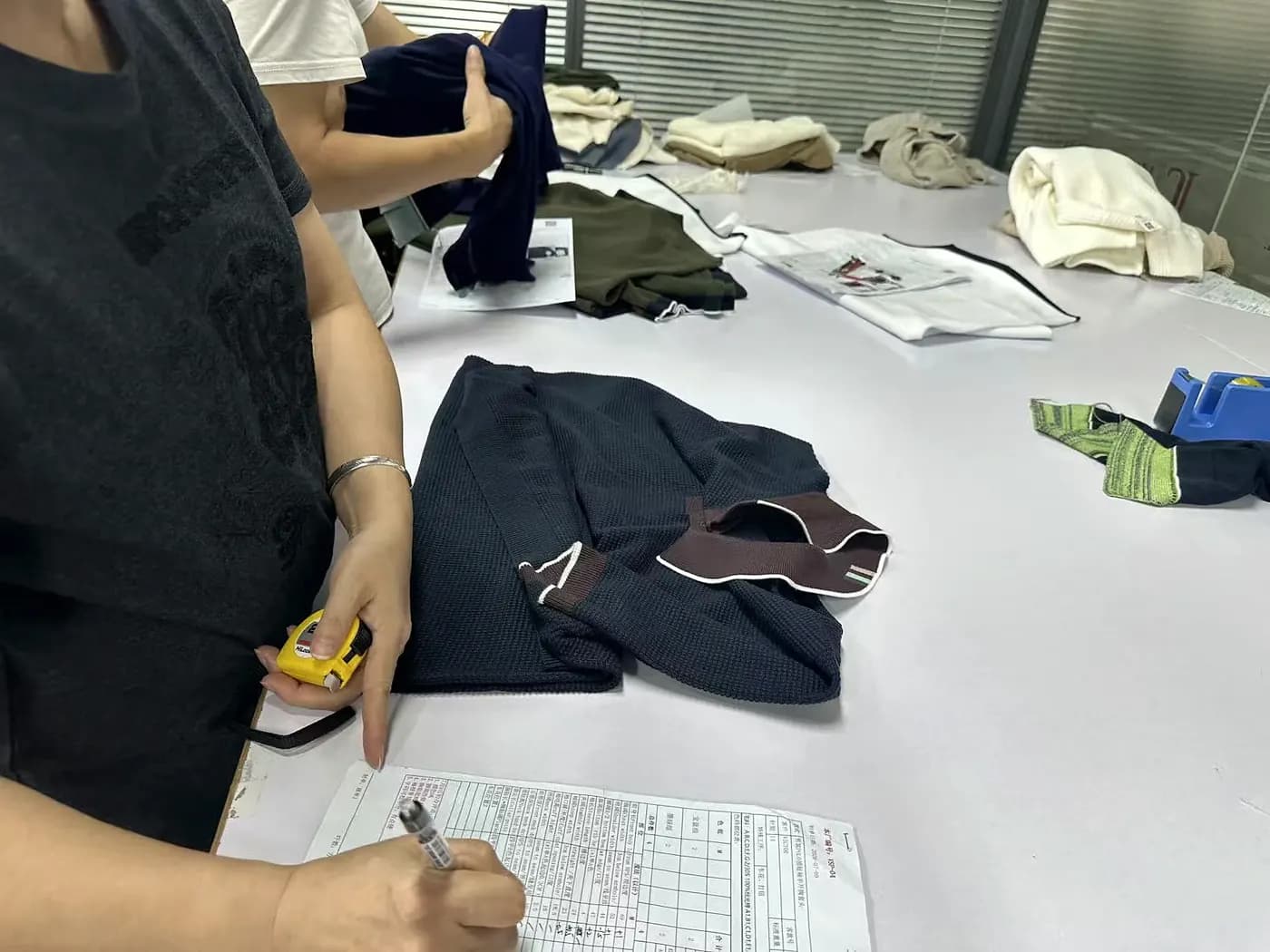
If your question depends on material, gauge, quantity or target price, submit an inquiry so the team can review it properly.
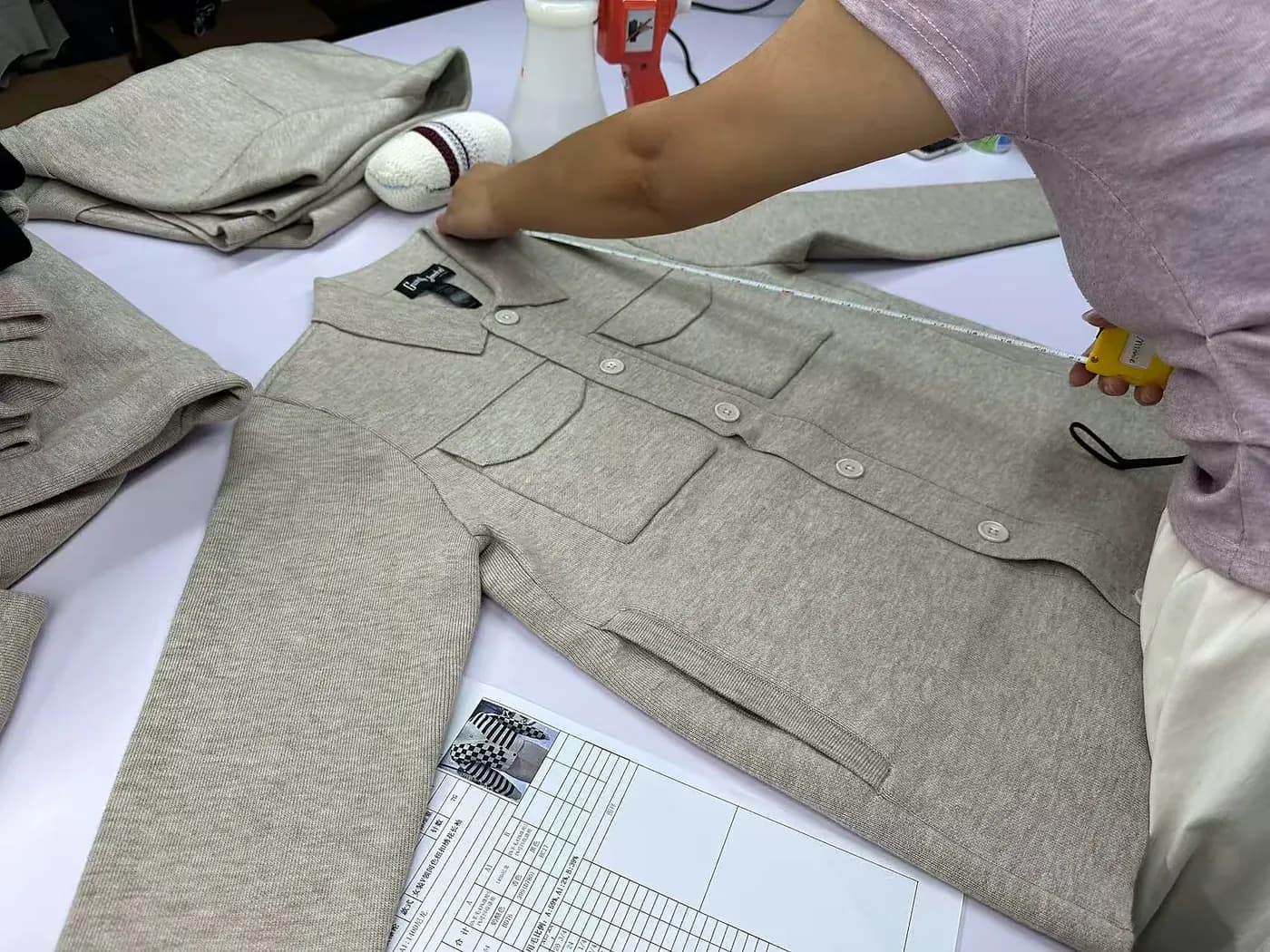
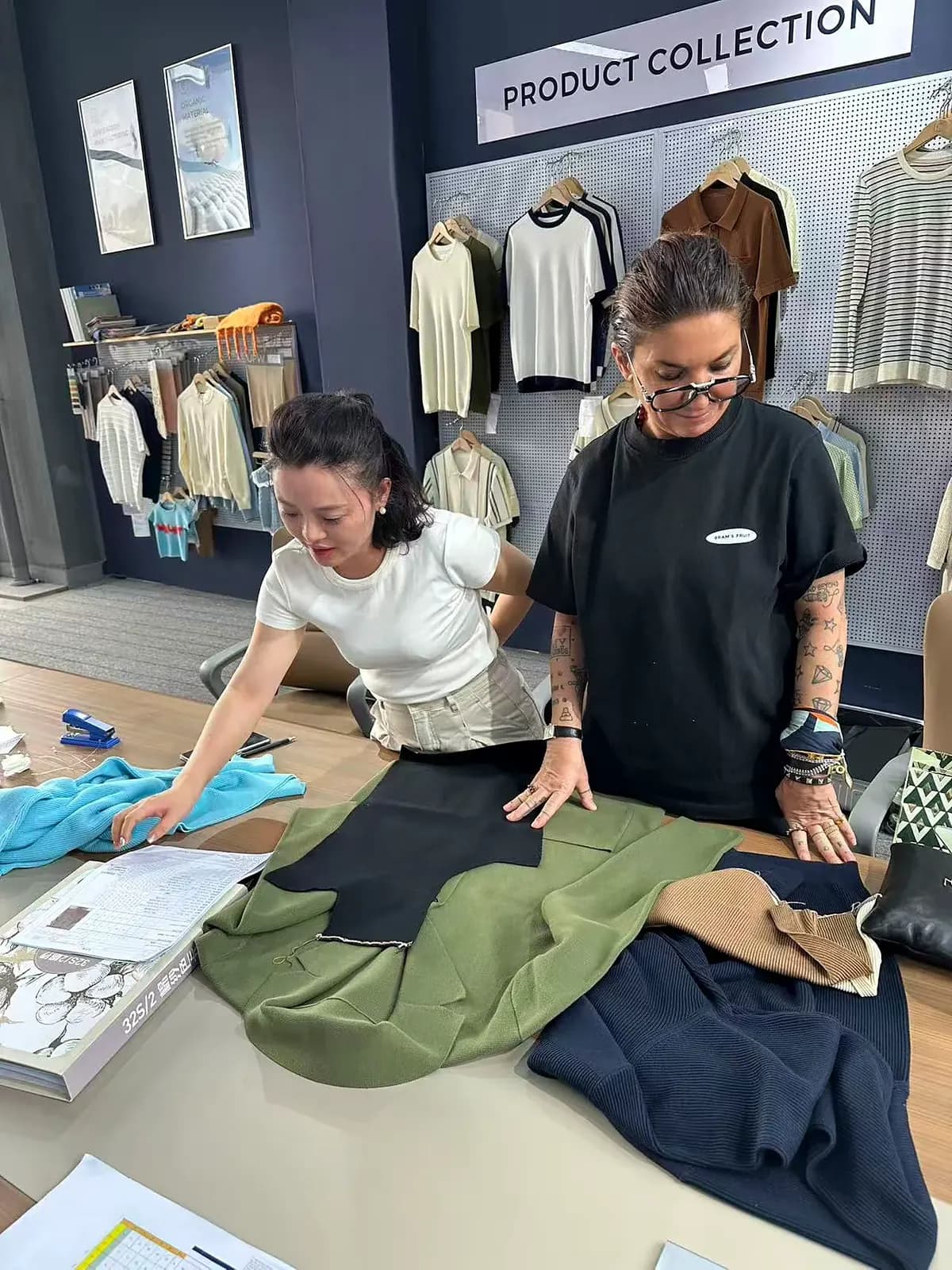
MOQ, Lieferzeiten, Kostenspannen, Feinheitenwahl und Qualitätsprüfpunkte typischer OEM/ODM-Strickprogramme für Nordamerika und Europa. E-Mail eintragen — den Link schicken wir in 30 Sekunden.
Kein Spam. Abmeldung mit einer einzigen Antwort. Wir nutzen Ihre E-Mail ausschließlich, um Ihnen den Report zu senden und auf Wunsch das Sourcing-Gespräch fortzusetzen.
Die gezeigten Marken sind zuvor betreute OEM/ODM-Partner. Die Logos sind dekorativ und bedeuten keine aktuelle Empfehlung.