Short version: Portugal and Turkey enter the EU at 0% duty; China pays 12%. That single line decides more sourcing arguments than it should, because on a wool-blend sweater the duty is worth about $2 a piece — often less than the gap in unit price, and almost always less than the cost of being six weeks late.
Most origin comparisons written for knitwear compare China, Vietnam and Bangladesh. That is the choice set of an American buyer. A British or European brand is usually choosing between China, Portugal and Turkey, and the trade-offs are completely different.
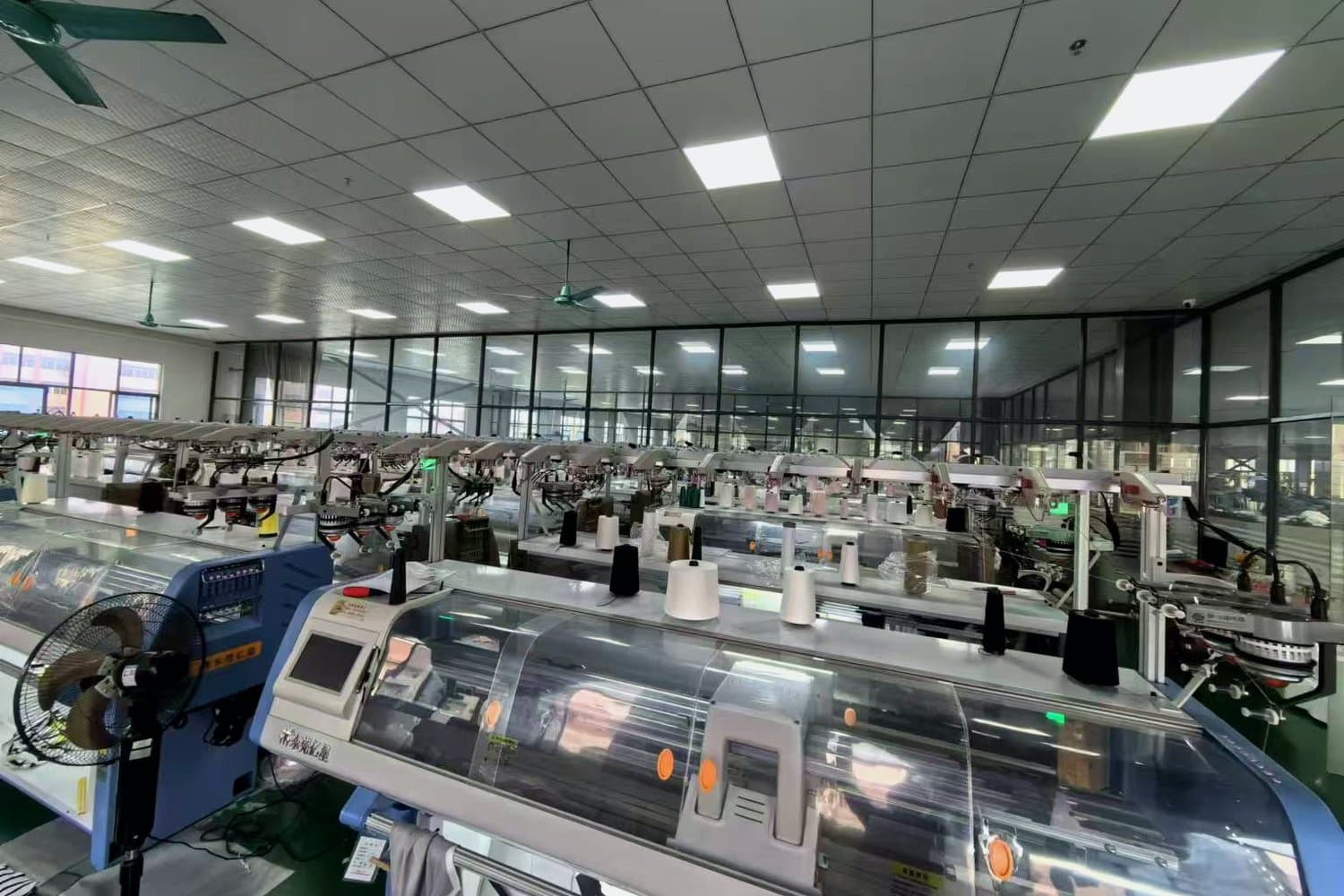
We are a knitwear factory in Dongguan, so we are one of the three things being compared here. The way we have handled that: our own figures are exact and checkable, the other two are described structurally with sourced ranges, and we have not invented anybody else's prices. Where China is the wrong answer, it says so.
⚠️ Practical sourcing reference, not legal advice or a quotation. Duty treatment depends on your specific HS classification and origin documentation — confirm with your customs broker.
|
| Portugal | 0% — intra-EU free movement | 0% under the EU–UK TCA, if rules of origin are met |
| Turkey | 0% — EU–Türkiye Customs Union covers industrial goods, with an A.TR movement certificate | 0% under the UK–Türkiye FTA, with the right origin proof |
| China | 12% MFN on most knitwear (HS 6110) | UK Global Tariff applies; confirm your commodity code |
Two things worth knowing before this settles the argument for you.
Duty is charged on customs value, not on retail. On a wool-blend sweater at a $17.36 FOB, 12% is roughly $2.08 a piece. Against a retail of £60–£90 it is not the deciding number people treat it as.
Zero duty is conditional, not automatic. Turkish goods need a valid A.TR; Portuguese goods entering the UK need to satisfy TCA rules of origin, which is a real question if the yarn came from outside the EU. A supplier who cannot produce the paperwork does not have the duty rate.
|
| Typical knitwear MOQ | 25–100 per style/colour | 100–300 per colour | 30 per colour on stock yarn |
| Lead time to EU | 4–8 weeks total | 6–9 weeks + 4–12 days road | Sampling 15–25 days · bulk 30–45 days · sea 25–35 days |
| Duty into EU | 0% | 0% | 12% |
| Unit cost | Highest | Middle | Lowest |
| Structural strength | Premium finish, small batch, EU compliance nearby | Vertical mills (Bursa, Denizli, İzmir), fast road freight | Gauge and technique breadth, fibre access at volume |
Sources for the Portugal and Turkey ranges are secondary and vary by factory; treat them as orientation and verify with the specific supplier. Our own figures are not ranges. Median FOB per piece across 112 styles we priced this year, at MOQ 30: cotton $13.98, wool blend $17.36, merino $44.27, wool/cashmere $66.05 — the full breakdown is in our yarn cost index.
Said plainly, because a comparison that always concludes "choose us" is an advertisement.
In-season replenishment. If a style sells through in week three and you need more before the season ends, sea freight has already lost you the window. Portugal at 4–8 weeks, or Turkey with 4–12 days of road freight, can restock inside a season. We cannot, unless you air-freight and give back the unit-cost advantage.
Very small first runs where the total is what matters. At 30–50 pieces the per-piece freight and the 12% duty land on a tiny base, and the FOB advantage compresses. If you are testing one style in one colour, proximity often wins on total outlay even at a higher unit price.
When you need to be in the building. A UK brand can be in Porto before lunch. Iterating a difficult fit block face-to-face is genuinely faster when you can walk the floor, and no amount of video calls fully replaces it.
Very short lead-time luxury programmes. If the whole model depends on reacting in four weeks, the geography decides it before the price does.
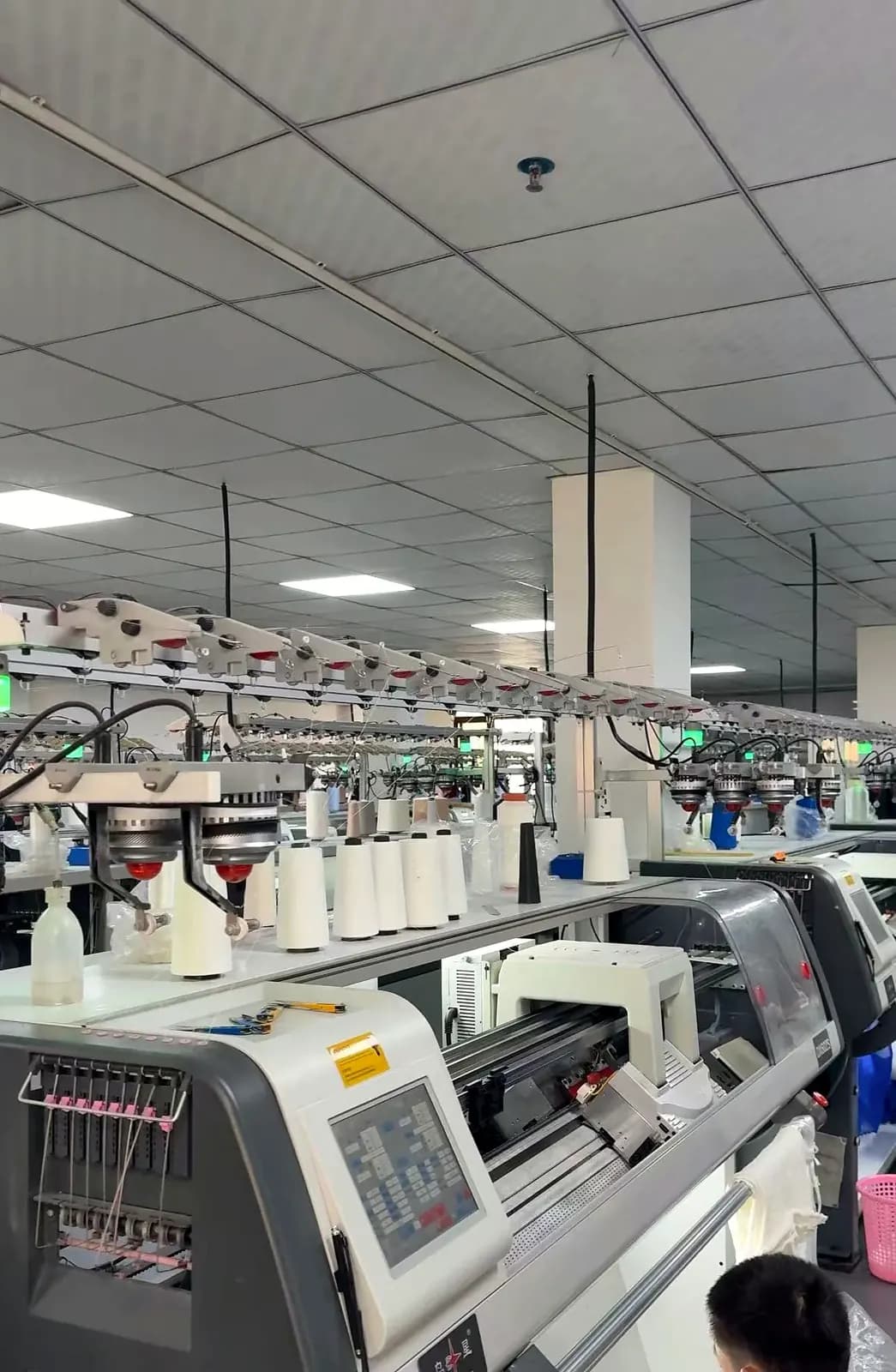
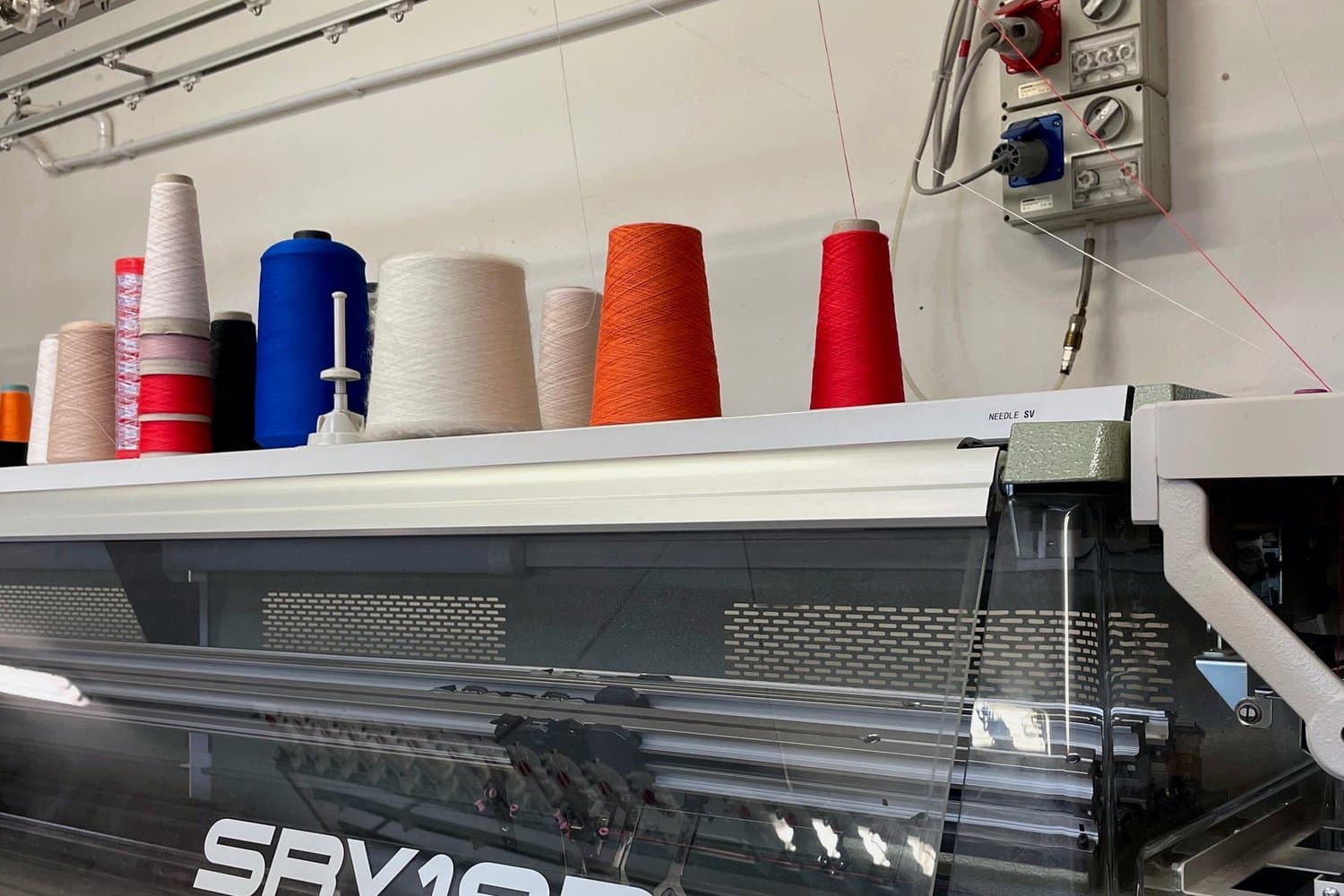
Gauge and technique range in one house. We run 3GG to 18GG under one roof — chunky hand-feel through to fine merino — plus jacquard and intarsia. European and Turkish factories tend to specialise more narrowly; matching a range across gauges often means splitting it across suppliers, with the colour-matching problems that brings.
Fibre access at workable minimums. Cashmere blends, merino tiers, mohair and alpaca at 30 pieces a colour is a different proposition from the same request in Portugal.
Unit cost at volume, even after duty. The 12% is real, but it applies to a lower base. Run the landed number rather than the headline rate before you decide it is decisive.
Programmes with a long planning runway. If you buy on a normal seasonal calendar and place bulk months ahead, the sea-freight window costs you nothing.
Ask each candidate the same four questions and put the answers in one shape:
1. "MOQ per colour, not per style." This is the single most misread number in sourcing quotes, and it is where a 100-piece minimum quietly becomes 300 across a three-colour drop.
2. "What is your gauge range in-house, and what do you outsource?" Outsourced knitting is where colour consistency goes wrong.
3. "Can you give me the duty documentation — A.TR, origin declaration — with the quote?" Zero duty on paper that never arrives is not zero duty.
4. "Sampling time for a genuinely custom piece, not a stock style?" A five-day custom sample is a claim worth probing; ours is 15–25 days and that is the honest number for custom work.
Then compare landed cost per piece, not FOB — our landed cost guide sets out the build-up, and the costing sheet covers what drives the FOB in the first place.
For the UK specifically, UK knitwear sourcing: MOQ, lead time and commercial terms covers the commercial side, and UK REACH vs EU REACH covers the regulatory divergence that catches nationwide sellers. If your shortlist is Asian rather than European, China vs Vietnam vs Bangladesh is the comparison you want instead.
Does the 12% duty make China uncompetitive for EU knitwear?
Rarely on unit economics. On a $17.36 FOB wool blend it is about $2.08 a piece. It matters most on small totals and on styles where the FOB gap was narrow to begin with.
Is Turkish knitwear duty-free into the EU?
Industrial goods move duty-free under the EU–Türkiye Customs Union, but the shipment needs a valid A.TR movement certificate. No paperwork, no preference.
What MOQ should I expect in Portugal?
Commonly 25–100 pieces per style or colour for knitwear, which is why it suits first runs and premium small-batch work.
Which is fastest for a repeat order?
Turkey by road, then Portugal. From China a reorder runs roughly 30–45 days production plus sea freight, so plan it into the season rather than reacting to it.
💬 Sourcing this for an upcoming project? Request a free quote → · MOQ 30 pcs · Sample in 15–25 days · WhatsApp us