Minimum Order Quantity (MOQ) for Custom Sweaters: A 2026 Guide for Small & Emerging Brands
更新 2026/9/19约 12 分钟阅读作者:Simon Liu · Licheng Knitwear
What drives sweater MOQ in 2026, what is realistic for a small or new brand (30–100 pcs per colour), and how to lower your minimum without paying a big per-unit premium — plus sample/bulk lead times.
Minimum Order Quantity (MOQ) for Custom Sweaters: A 2026 Guide for Small & Emerging Brands
Short answer: For custom OEM/ODM sweaters in 2026, most factories set a minimum order quantity (MOQ) of 300–1,000 pieces per style, and often per colour. Specialist factories that work with smaller brands can go down to 30–100 pieces per colour. The MOQ you are quoted is driven mainly by yarn purchasing, knitting machine setup, and whether the colour is in stock or dyed to order — not by the factory being difficult. If a supplier quotes a high MOQ, it usually means the yarn or colour has to be bought or dyed in bulk.
This guide explains what drives sweater MOQs, what is realistic for a small or new brand, and how to negotiate a first order you can actually sell through.
What is MOQ, and why do sweater factories have one?
MOQ is the smallest quantity a manufacturer will produce in a single production run. For knitwear it is set by four cost drivers:
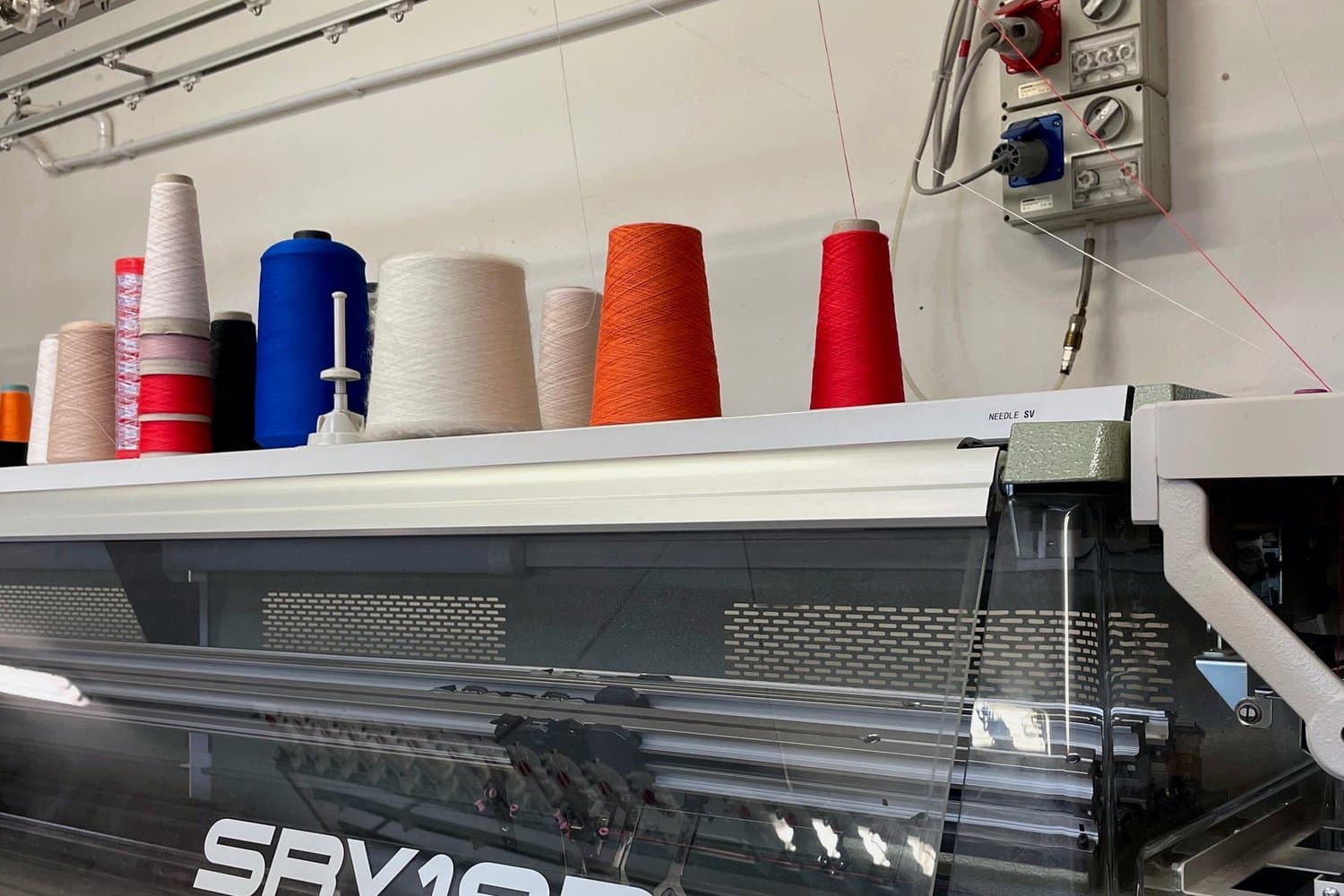
1. Yarn purchasing. Yarn is bought by weight, often in dye-lot minimums (commonly 50–100 kg per colour). A fine-gauge merino sweater uses roughly 300–500 g of yarn; a chunky wool cardigan can use 600–900 g. The factory has to buy a full dye lot even if your order only needs part of it.
2. Colour: stock vs. dyed-to-order. Using a yarn colour the mill already holds in stock keeps MOQ low. Asking for a custom Pantone match means the mill has to dye a minimum batch, which pushes the per-colour minimum up sharply.
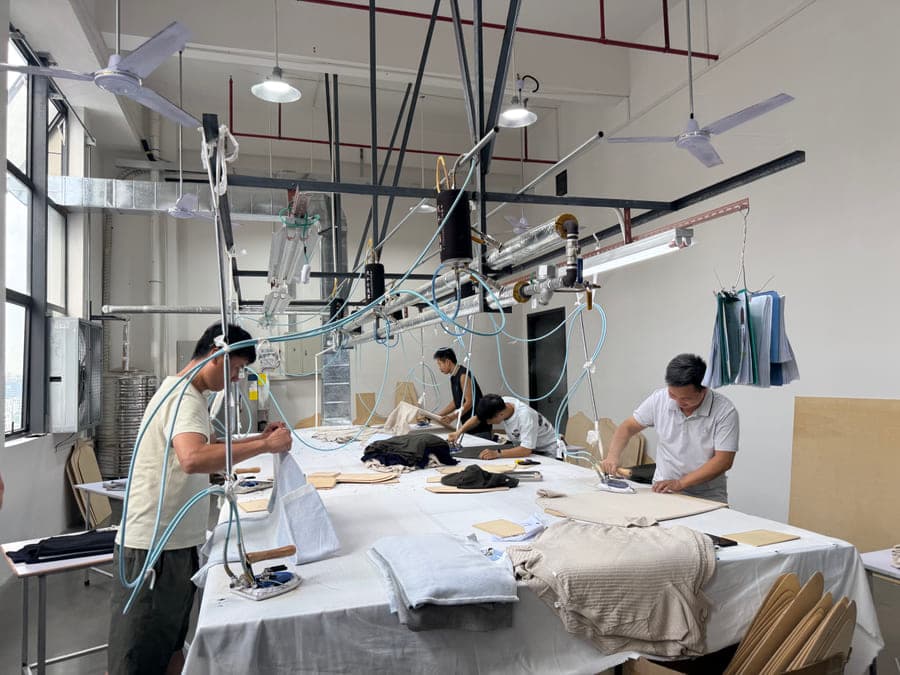
3. Machine setup and programming. Each style is programmed into the knitting machines and the linking line is set up for that construction. That setup cost is fixed, so spreading it over more pieces lowers the per-unit price.
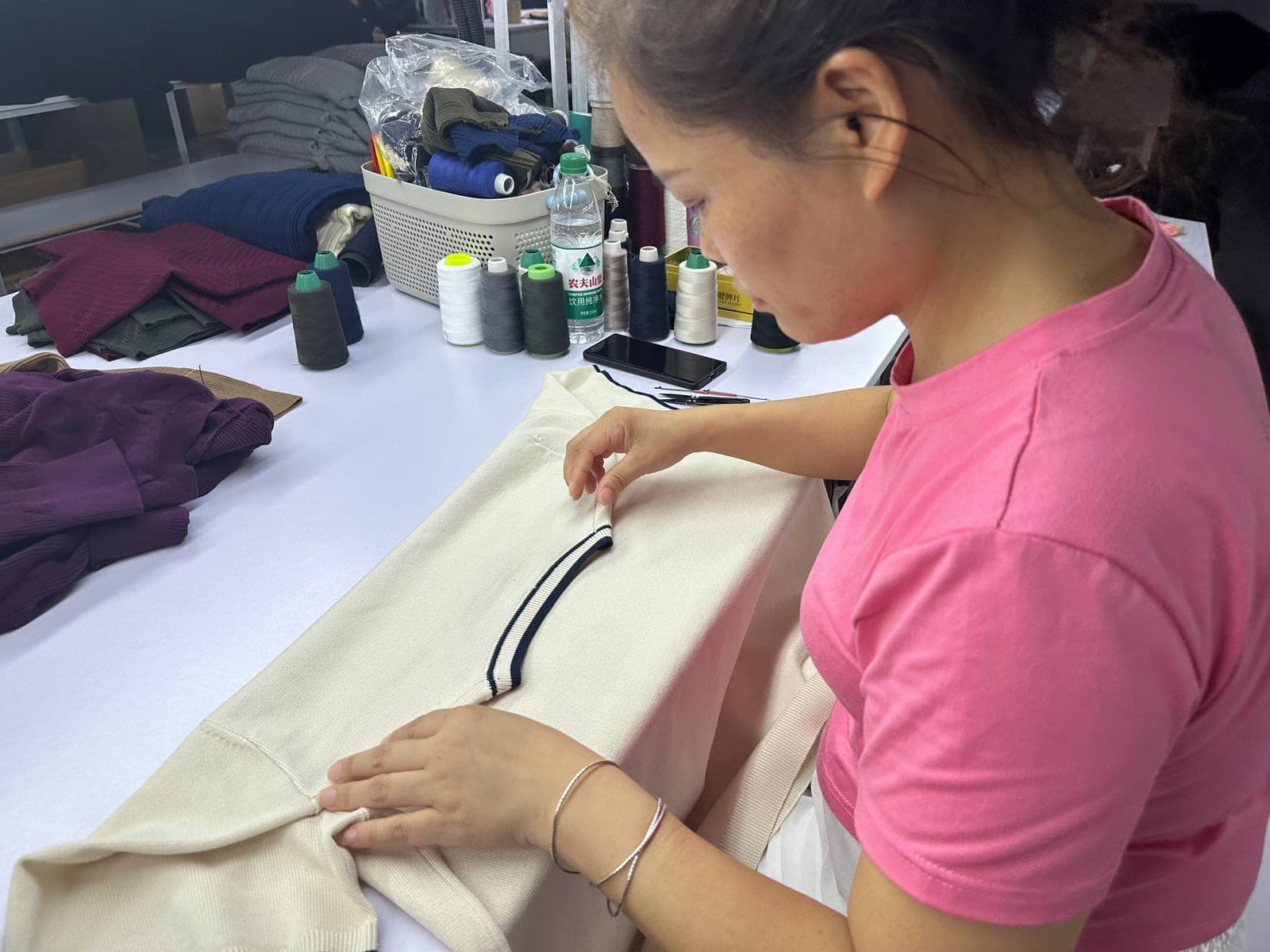
4. Labour efficiency. Knitting, linking, washing, and finishing run most efficiently in batches. Very small runs cost more per piece because the line is constantly being re-set.
Typical sweater MOQs in 2026
Supplier type
Typical MOQ
Per colour?
Best for
Large export factory
1,000–3,000 / style
Usually per colour
Established brands, retailers
Mid-size OEM factory
300–1,000 / style
Often per colour
Growing brands
Small-brand specialist
30–150 / colour
Per colour
Startups, DTC, capsule drops
Knitwear "sampling house"
1–30 (sample only)
n/a
Prototyping, not bulk
These are general industry ranges, not a single supplier's terms. The same style can carry very different MOQs depending on yarn and colour choices.
What's realistic for a small or new brand?
If you are launching a brand or testing a new style, a workable target is 30–100 pieces per colour per style. At that level you can:
Validate demand before committing capital to a large run.
Offer two or three colourways instead of one large single-colour buy.
Keep cash tied up in inventory low while you learn your sell-through rate.
To hit a low MOQ, the biggest lever is using yarn colours the mill already stocks. Stock-yarn programmes let some factories accept 30 pieces per colour, because no custom dyeing is required. Custom Pantone matching almost always raises the minimum.
How to lower your sweater MOQ (without paying a huge per-unit premium)
Start from stock yarns. Ask the factory for its in-stock yarn and colour card, and design your first drop around it.
Consolidate styles on shared yarn. If three styles use the same yarn, the dye-lot minimum is spread across all of them, so each individual style's effective minimum drops.
Limit your colour count. MOQ is usually per colour. Two colours at 50 pieces each is easier than five colours at 50 each.
Accept a modest price premium on the first run. A low-MOQ first order will have a higher per-unit cost; treat it as the cost of market validation, then scale the winners.
Be clear about your real goal. Tell the supplier you are starting small and intend to reorder. A factory that values long-term relationships will structure the first order to help you grow.
Sample lead time and bulk timing
For a small custom order, plan your calendar backwards from your in-store date:
Sampling: typically 15–25 days for a first proto and revision.
Bulk production: typically 30–45 days after sample approval.
Sea freight to North America / Europe: typically 25–35 days.
A low MOQ does not usually shorten these windows — yarn sourcing and finishing still take the same time — so build the lead time into your launch plan.
How Licheng Knitwear handles MOQ
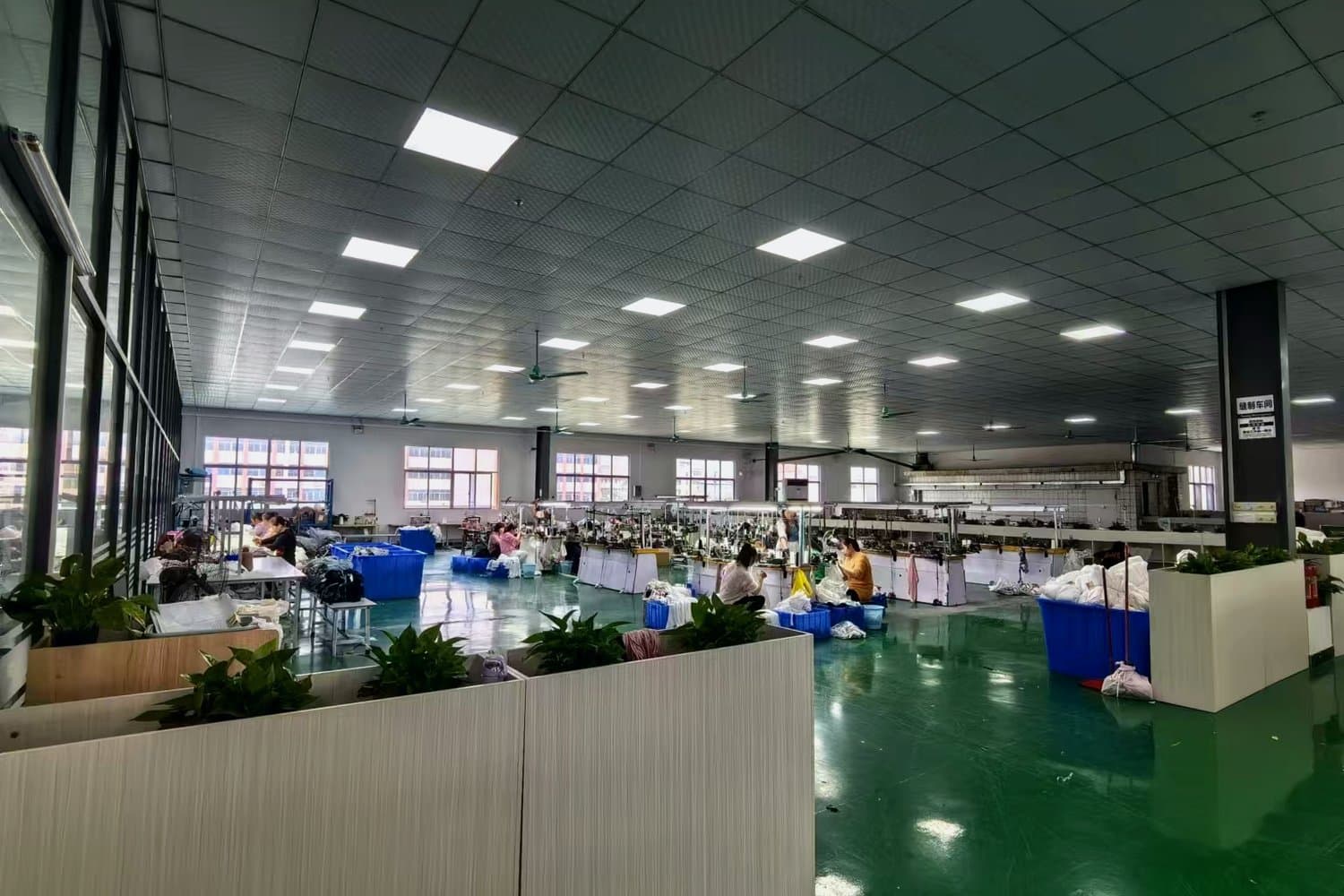
Licheng Knitwear (Dongguan Licheng Garment Co., Ltd.) is set up to work with smaller and emerging brands as well as established buyers. For custom OEM/ODM knitwear we can start from 30 pieces per colour when designing around in-stock yarns, with OEM/ODM customisation of yarn, gauge (3GG–18GG), construction, labels, and packaging. Sampling runs in 15–25 days and we serve B2B buyers across North America and Europe with full market compliance.
We treat a first 30-piece order as the start of a relationship, not a nuisance. If you are planning a first knit drop and want to know what's realistic for your design, request a quote with your style direction, target quantity, and colours, and we'll come back with a practical plan.
Frequently asked questions
Is sweater MOQ per style or per colour?
Usually per colour, per style. Each colour often needs its own yarn dye lot, so factories count the minimum at the colour level. Using stock colours is the main way to keep the per-colour minimum low.
Can I really order just 30 custom sweaters?
Yes, with the right factory and using in-stock yarn colours. Custom Pantone dyeing typically raises the minimum because the mill must dye a full batch.
Why is a low-MOQ order more expensive per piece?
Fixed costs — yarn dye-lot minimums, machine setup, and line changeovers — are spread over fewer pieces, so the per-unit cost is higher. The trade-off is much lower upfront inventory risk.
Does a low MOQ mean faster delivery?
No. Yarn sourcing, knitting, linking, and finishing take similar time regardless of quantity. Plan on 15–25 days for samples and 30–45 days for bulk after approval.
Most factories set 300-1,000 pieces per style, often per colour. Small-brand specialists can go to 30-100 pieces per colour using in-stock yarns.
Design around in-stock yarn colours, share one yarn across several styles, and limit your colour count. Custom Pantone dyeing raises the minimum.
Yes, modestly - fixed setup and yarn dye-lot costs spread over fewer pieces. The trade-off is far lower upfront inventory risk.
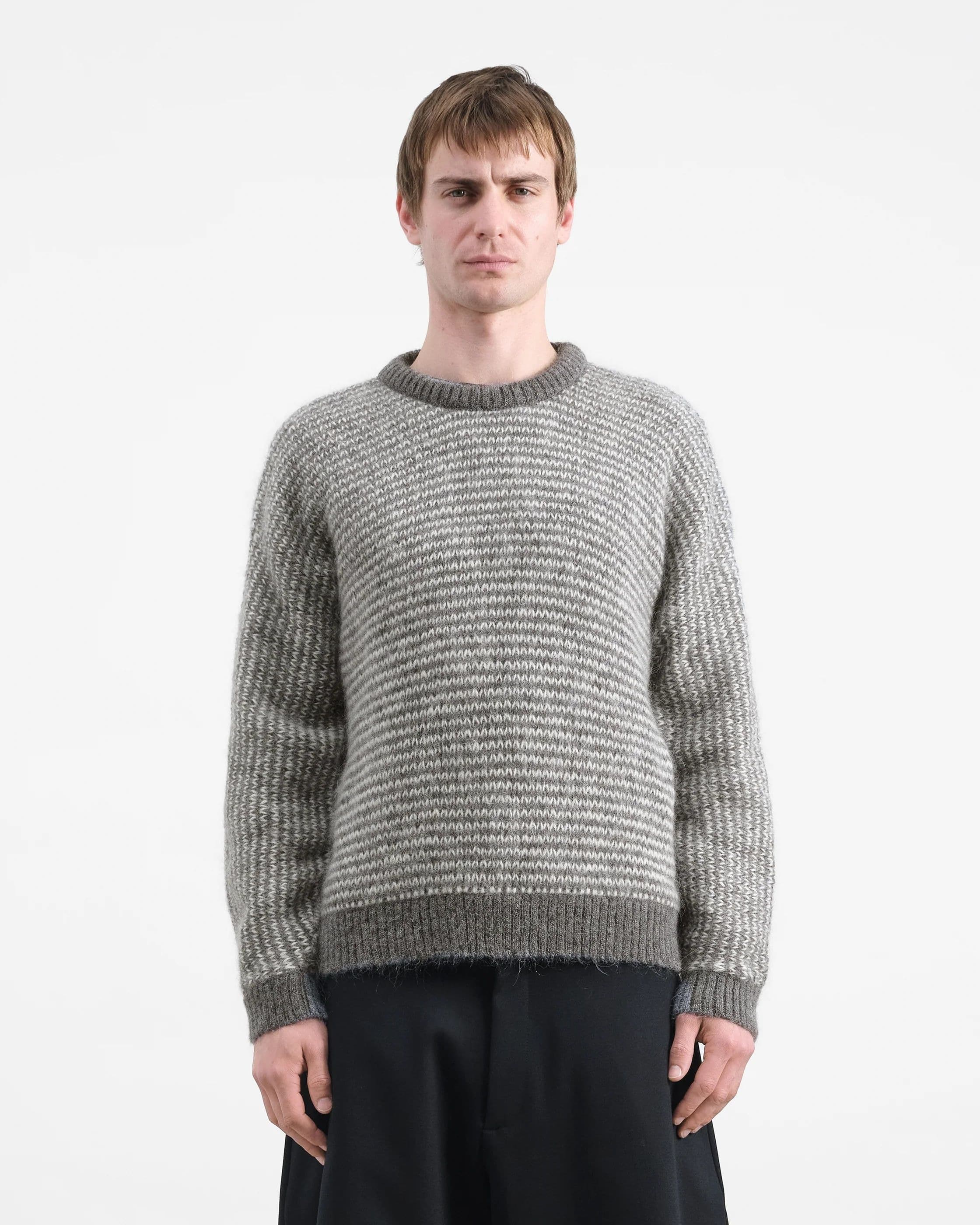
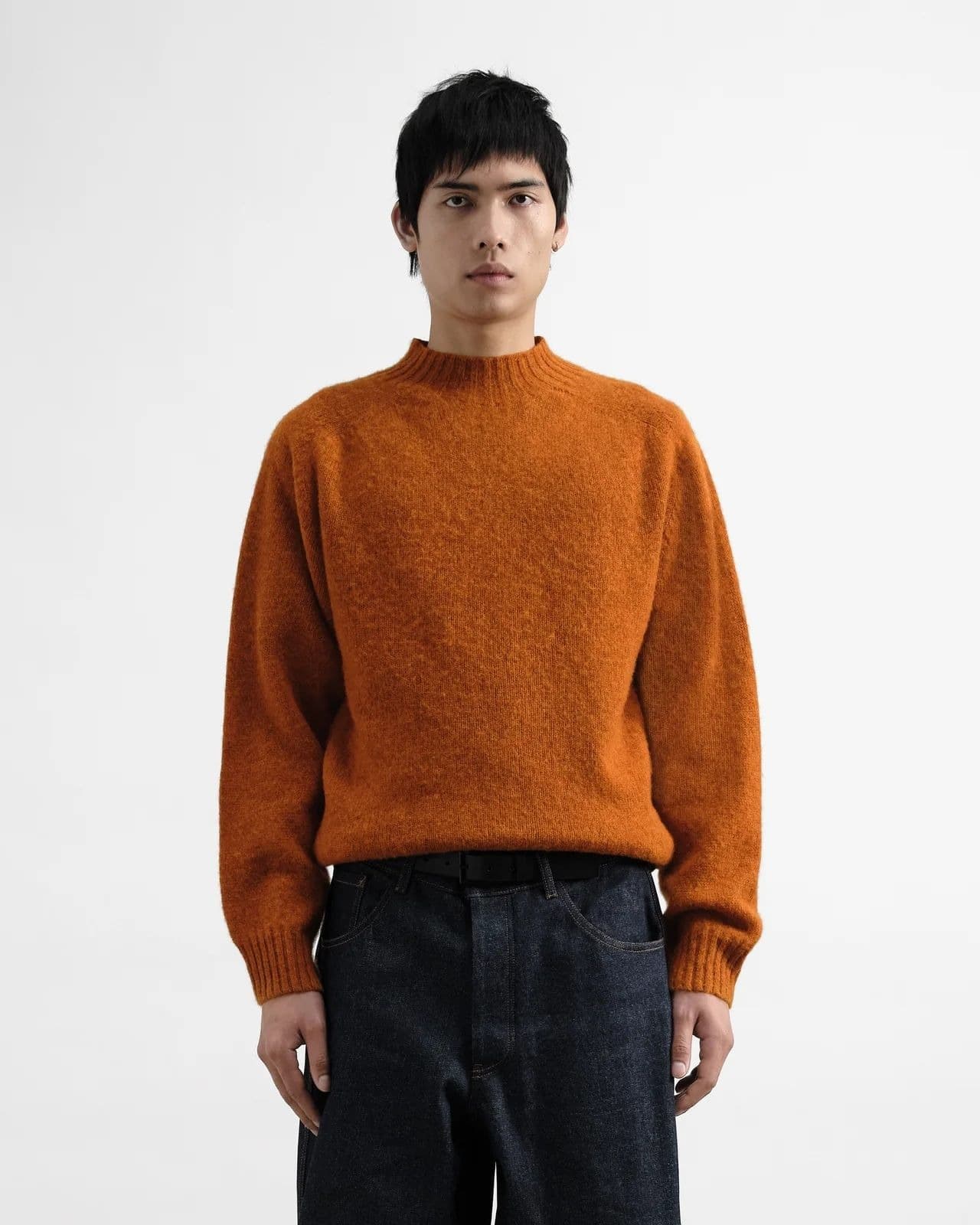
We focus on men's sweaters, cardigans, knit jackets, jacquard knitwear and private label knitwear. We support B2B buyers with OEM/ODM development, sampling and bulk production planning.
Ready sample styles and selected custom programs can support lower-risk trials before larger seasonal orders.
Yes. Brands, including new labels preparing a first collection, can pay for a sample and see it before placing a production order. Two routes: a ready sample of a published style at USD 60 per piece in about 7 days, or a development sample from your tech pack at USD 150 per style, covering yarn sourcing, knit programming, one prototype and one revision round, in 15-25 days. Cashmere and mohair styles are quoted individually and shipping is charged at cost. Production starts only after you approve the physical sample, at our minimum of 30 pieces per colour with sizes mixed inside the 30. A sample does not commit you to a production run; we do not make garments for personal use.
Ready to Start Your Project?
Get a free catalog or submit an RFQ today. Our team will respond within 24 hours.