美利奴羊毛针织:高端品牌开发指南
更新 2026/10/9约 12 分钟阅读作者:Simon Liu · Licheng Knitwear
美利奴羊毛的特殊之处,以及如何开发能撑起轻奢日常定价的美利奴针织,涵盖纤维支数、混纺与护理。
Merino wool has become the premium-everyday fiber of choice in knitwear, prized for a softness and versatility that ordinary wool cannot match. For brands positioning above basic but below luxury, merino is often the sweet spot. This guide explains what makes merino special and how to develop merino knitwear that justifies its price.
Merino is where wool stops being itchy and starts being craved. That single difference is what lets it carry a premium price.
💬 Sourcing this for an upcoming project? Request a free quote → · MOQ 50 pcs · Sample in 15–25 days · WhatsApp us
Merino comes from Merino sheep, whose fleece has exceptionally fine fibers. Fineness is measured in microns: the lower the micron count, the softer and finer the wool. Merino typically runs 17-24 microns, far finer than regular wool, which is why it feels soft against the skin and avoids the prickle of coarser wools.
| Micron range | Grade | Use |
|---|---|---|
| 17-18.5 | Superfine | Premium next-to-skin |
| 18.5-20 | Fine | Quality everyday |
| 20-23 | Medium | Mid-range knitwear |
| 23-24+ | Strong | Heavier, outdoor |
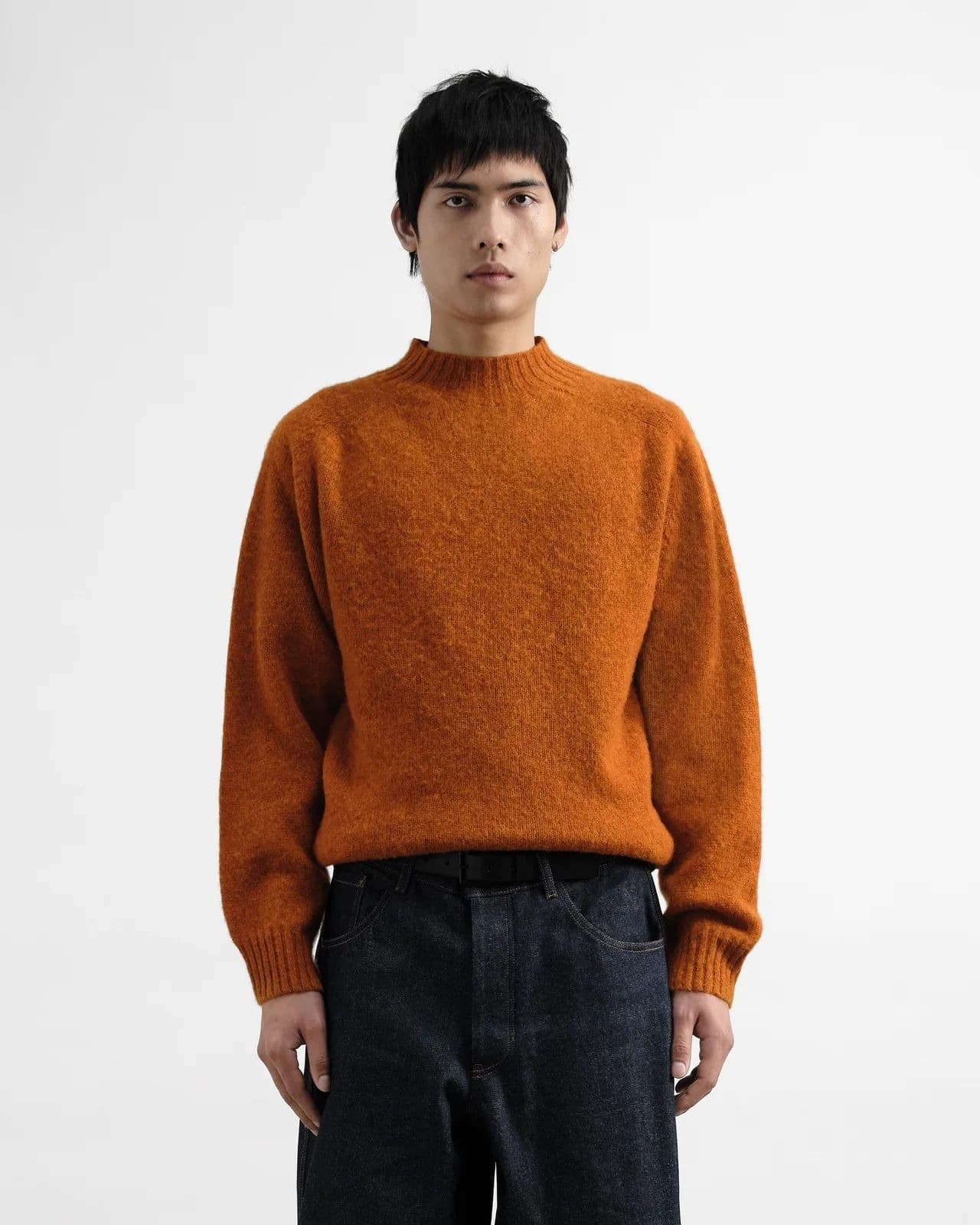
Beyond softness, merino offers real performance: it regulates temperature (warm in cold, breathable when active), resists odor naturally, manages moisture, and springs back to shape. These properties make it ideal for next-to-skin styles, travel knitwear and pieces that need to perform, not just look good.
Pure merino gives the cleanest story and best handfeel. Blends serve specific goals: merino-nylon adds durability for high-wear pieces; merino-acrylic lowers cost; merino-cashmere pushes into luxury softness. Choose based on your price point and durability needs, see our yarn selection guide.
Merino costs more than basic wool or cotton but less than cashmere, placing it perfectly for premium-everyday positioning. The softness and performance are tangible to customers, so it justifies a higher retail price, see our cost factors guide. For a first premium launch, merino is often a safer, more wearable choice than cashmere.
The right merino spec depends less on "what's best" and more on what your product is asked to do. A fine layering crew and a rugged travel half-zip pull in opposite directions on micron, blend and gauge. Use the table below as a starting point, then confirm against a development sample before committing to bulk.
| Program type | Micron / grade | Blend | Gauge | Why |
|---|---|---|---|---|
| Premium base layer / next-to-skin tee | 17-18.5 superfine | Pure or merino-nylon (95/5) | 14-16GG | Maximum softness; touch of nylon for shape retention |
| Everyday crew or v-neck | 18.5-20 fine | Pure merino | 7-12GG | Clean story, balanced cost, broad appeal |
| Travel / performance half-zip | 19-21 fine-medium | Merino-nylon | 7-12GG | Durability for repeated packing and wear |
| Entry premium / opening price | 20-23 medium | Merino-acrylic | 5-7GG | Lowers landed cost while keeping the merino name |
| Statement luxury piece | 17-18.5 superfine | Merino-cashmere | 12GG |
A worked example: suppose you are launching a unisex everyday crew at a mid-premium retail price. Specify 19-micron fine merino, pure (no blend) for the cleanest hangtag story, knit at 7GG for an approachable weight, and superwash-treated so the care label reads "machine wash cold." That single combination is forgiving to develop, sits comfortably above cotton in perceived value, and avoids the fragility and price jump of cashmere. From there, a sample in 15–25 days lets you confirm handfeel and pilling before locking bulk, which runs 30–45 days at our standard MOQ of 50 pcs.
Merino sells on trust, so the claims on your hangtag need to hold up. Two areas deserve attention. First, confirm the actual micron grade rather than the marketing word "merino," since the term alone does not guarantee fineness; ask for the yarn's fiber data and validate it against the softness you felt in the sample. Second, if you want a credible recycled or eco angle, scope it early. We hold OEKO-TEX Standard 100 (tested for harmful substances), ISO 9001 (quality management), GRS (Global Recycled Standard) for recycled-content programs and GOTS (Global Organic Textile Standard) for organic-cotton programs. If recycled fiber matters to your buyer, build it into the spec from the first sample so the GRS chain of custody is documented, rather than retrofitting the claim later.
Is merino wool itchy like regular wool? No. Merino fibers run 17-24 microns, fine enough to bend rather than prickle against skin, which is why it suits next-to-skin styles where coarser wool cannot be worn.
Can merino knitwear be machine-washed? Many merino yarns are superwash-treated and machine-washable, which is a strong selling point worth confirming on your specific yarn before printing the care label.
What's the minimum order and lead time for a custom merino program? Our MOQ is 50 pcs per style. Sampling takes 15–25 days and bulk production 30–45 days, so plan roughly two to three months from brief to delivered goods.
Licheng Knitwear develops merino and merino-blend knitwear across grades and gauges for premium-everyday B2B programs. Browse our sweaters or request a quote.
---
If you're planning a real project around any of the points above, we'd be glad to take a quick look. Send a short brief and we'll come back within one business day with a practical direction, MOQ + lead time estimate, and a sample plan if it makes sense.
→ Request a free quote · Download the men's knitwear catalog · WhatsApp us · info@lcgarment.cn
Merino is soft, breathable, warm year-round and naturally odour-resistant - a versatile premium fibre for sweaters across seasons.
Merino works across gauges: 12-14GG for fine layering knits, 7GG for mid-weight. We knit 3GG-18GG.
From 50 pcs per colour using stock merino; a custom-dyed colour also starts at 50 pcs, with a small-lot dyeing fee and 7–15 extra days.
We focus on men's sweaters, cardigans, knit jackets, jacquard knitwear and private label knitwear. We support B2B buyers with OEM/ODM development, sampling and bulk production planning.
Ready sample styles and selected custom programs can support lower-risk trials before larger seasonal orders.
Yes. Brands, including new labels preparing a first collection, can pay for a sample and see it before placing a production order. Two routes: a ready sample of a published style at USD 60 per piece in about 7 days, or a development sample from your tech pack at USD 150 per style, covering yarn sourcing, knit programming, one prototype and one revision round, in 15-25 days. Cashmere and mohair styles are quoted individually and shipping is charged at cost. Production starts only after you approve the physical sample, at our minimum of 50 pieces per colour with sizes mixed inside the 50. A sample does not commit you to a production run; we do not make garments for personal use.
| Pushes handfeel toward cashmere positioning |
定制针织
 针织品认证详解:RWS、OEKO-TEX、GRS 等核心认证针织买家认证指南——OEKO-TEX、RWS、GRS、GOTS、BCI——逐项解析认证内容、何时真正需要它,以及监管链证书和交易证书如何为材料声称提供背书。
 纱线与原料指南针对定制针织开发的 B2B 纱线与原料指南,帮助买家选择棉混纺、毛混纺及合成支撑纤维。
 Acrylic & Nylon-Blend Yarn for Knitwear: When It Is Right, When It Is WrongSynthetic yarns get a bad rap in editorial coverage and a quiet pass in the buying office, because the math on a 100,000-piece holiday sweater program rarely pencils in pure wool. This briefing is the version of the conversation you wish your mill would have with you: where acrylic genuinely earns its place (mass-market price points, vivid color, no-fuss care), where it quietly torpedoes a premium brand (hand, breathability, returns from in-store touch tests), and how nylon micro-percentages do real structural work in athletic ribs and high-abrasion zones. We cover the three blend ratios you will see quoted most often, the field-tip hand-feel checks your QC team can do without a lab, and the FOB yarn-price reality that drives most of these decisions in the first place.