Every year around late spring we get the same email. A D2C founder has a holiday drop locked into the marketing calendar, the creative deck is approved, the influencer is booked, and someone has just told them sweaters take four months. They want to know if 90 days is possible. The honest answer is yes, but the schedule has no slack, and the brand has to behave like a brand that has done this before — even if it hasn't. What follows is an anonymized composite pattern drawn from real capsule programs we have run with small D2C brands. Names, numbers, and exact SKU mixes are abstracted. The shape of the timeline is not.
Can a knitwear capsule really be produced in 90 days?
Yes, if the brief is locked at the start and the yarn is available. Ninety days is realistic for a small, well-defined capsule; it stops being realistic the moment the styling is still moving in week four or a dyed-to-order colour is introduced late.
What has to be true on day one for a 90-day capsule?
A locked brief, reference garments, a defined size run, and a colour direction that can be met from available yarn. Those four are what make the rest of the calendar deterministic.
How many sampling rounds fit in 90 days?
Realistically one full round plus a focused correction. That is why a reference garment matters so much - it removes most of the fit iteration that would otherwise consume the second round.
What is the most common reason a 90-day capsule slips?
A change introduced after sampling. A new colour, a different yarn or a fit revision after approval restarts steps that have external lead times attached, and no amount of factory speed compensates.
What MOQ suits a D2C capsule?
30 pieces per colour works for most capsules, which is what makes a tightly edited range in a few colourways viable. Remember the minimum counts per colour, so colour count is the main lever on total commitment.
💬 Sourcing this for an upcoming project? Request a free quote → · MOQ 30 pcs · Sample in 15–25 days · WhatsApp us
A capsule, for our purposes, is 8 to 12 SKUs sharing a single yarn family, built around 2 to 3 colorways, sized XS-3XL, and produced in one window. That definition matters because it directly controls what can be done in 90 days. The capsules that ship on time look like this:
- One yarn family (for example: a 7GG wool-acrylic blend, or a 5GG cotton-cashmere).
- 2 or 3 colors, ideally one neutral and one or two accent shades.
- 8-12 styles that share construction logic — for instance, three crew necks, two cardigans, one mock neck, one polo, one zip-up, all built off the same base gauge and similar trims.
- MOQ at 30 pieces per color (our standard), which a capsule brand usually multiplies into a 60-90 piece-per-SKU buy.
What does not fit in 90 days is a "capsule" that turns out to be three yarn families, six colors, mixed gauges, and a jacquard nobody mentioned in the brief. That is a small mainline collection wearing a capsule's clothing.
Below is the milestone map. Each row is non-negotiable in the sense that slipping it pushes the ship date by roughly the same number of days you slipped — there is no recovery in the back half.
|
| Brief lock | 1-7 | Tech pack draft, yarn direction, color references, SKU count frozen | Sign-off on brief and references |
| ODM development | 8-21 | Pattern blocks, stitch swatches, yarn sourcing, first proto | Approve swatches and proto direction |
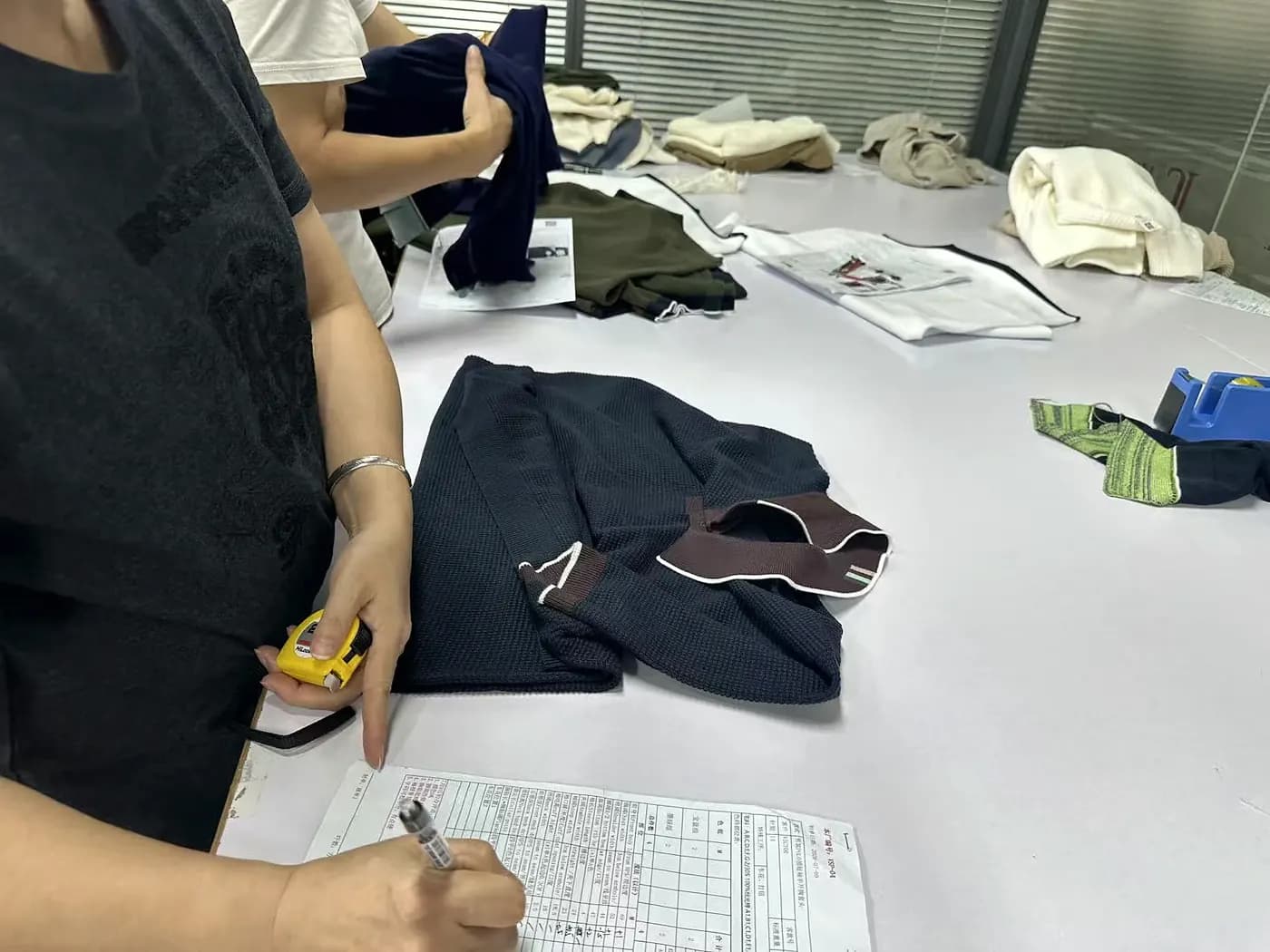
| Sampling R1 + lab dips | 22-35 | First salesman samples, Pantone lab dips submitted | Lab dip approval, fit comments |
| Sample iteration + FSA | 36-45 | Revised samples, final sample approval | Sign-off — no further design changes |
| PO + yarn-dye start | 46-50 | Bulk PO issued, yarn dyed to approved lab dips | Deposit and PO confirmation |
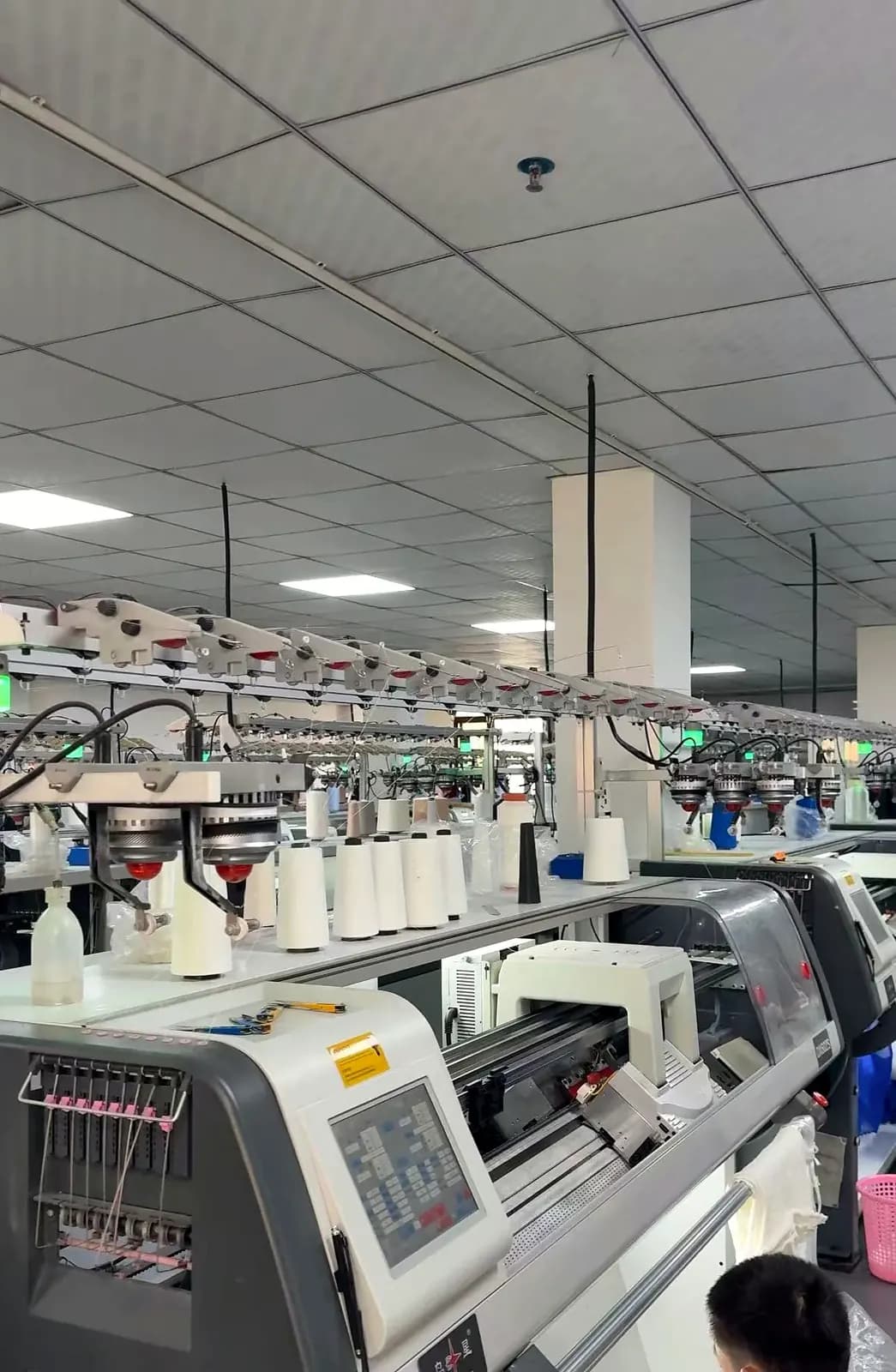
| Bulk production | 51-80 | Knitting, linking, washing, trimming, finishing |
That is the entire plan on one page. Everything below is what each row actually feels like when you live through it.
The first week is the most under-respected week in the entire schedule. Brands treat it as "just kicking off," then spend Day 30 wishing they had locked the yarn direction on Day 5. In a 90-day plan, the brief has to be final by Day 7. Final means: yarn family chosen, gauge agreed, SKU count fixed, color direction picked (with physical Pantone TCX references or actual yarn cards, not screen-based hex codes), and one named decision-maker on the brand side who owns approvals.
This is also when the brand should be honest about whether they want ODM (we develop from a reference) or true custom from a flat sketch. ODM is faster by roughly one to two weeks and is the right default for a 90-day capsule. If you want a deeper read on that tradeoff, the OEM vs ODM guide covers it.
Two weeks for development feels short and is short. In this window the factory is sourcing yarn from mill partners, knitting stitch swatches, drafting pattern blocks, and producing a first proto on at least the hero styles. The brand sees stitch swatches around Day 14 and a rough first proto around Day 21. The proto is ugly — wrong color, often wrong trim, sometimes a stand-in yarn. That is normal. Its job is to confirm hand-feel, gauge, and silhouette direction, not to be photographed.
The quiet killer here is yarn changes. If on Day 18 the brand decides the wool blend should actually be a cotton-cashmere, the schedule resets to Day 8. We have seen this happen and it is always expensive. Pick the yarn family on Day 5 and live with it.
First proper salesman samples land in this window, alongside lab dips submitted against the chosen Pantone references. Two technical points worth saying out loud:
- Lab dips are not exact. Natural fibers do not hit Pantone TCX dead-on. Expect a commercial match within a tolerance band — close enough to read as the intended color, not identical under every light source. If your creative director needs an exact Pantone, you need a synthetic yarn, and that is a different brief.
- Hi-low yarns are worse. Mélange, slub, or marled yarns carry two or more fiber colors in the same strand. Asking for a single Pantone match on a hi-low yarn is asking for a contradiction. The lab dip color-approval guide goes into the realistic tolerance language to use.
Brand-side feedback should arrive within 48 hours of sample receipt. Time-boxing this is the single highest-leverage discipline a capsule founder can impose on their team.
One more round of samples with the fit, color, and trim corrections from round one. By Day 45 the brand signs final sample approval — FSA — for every SKU. After FSA, no design changes. Adding a button color or a hem length "just for the cardigan" on Day 47 means the bulk yarn dye has to wait. The whole back half of the schedule depends on FSA being a real gate.
This is also the latest realistic moment to drop a SKU. If a style is not working, kill it now. Trying to fix a struggling SKU during bulk production is how brands end up with 80 pieces of something nobody on the team actually likes.
Deposit and bulk PO land here. Yarn for the approved colors goes into dye on the back of the approved lab dips. This is also when the brand confirms final size break, final pack ratio, hangtag and care label artwork, and the polybag spec. None of these are exciting but all of them can stop a shipment if they arrive on Day 80.
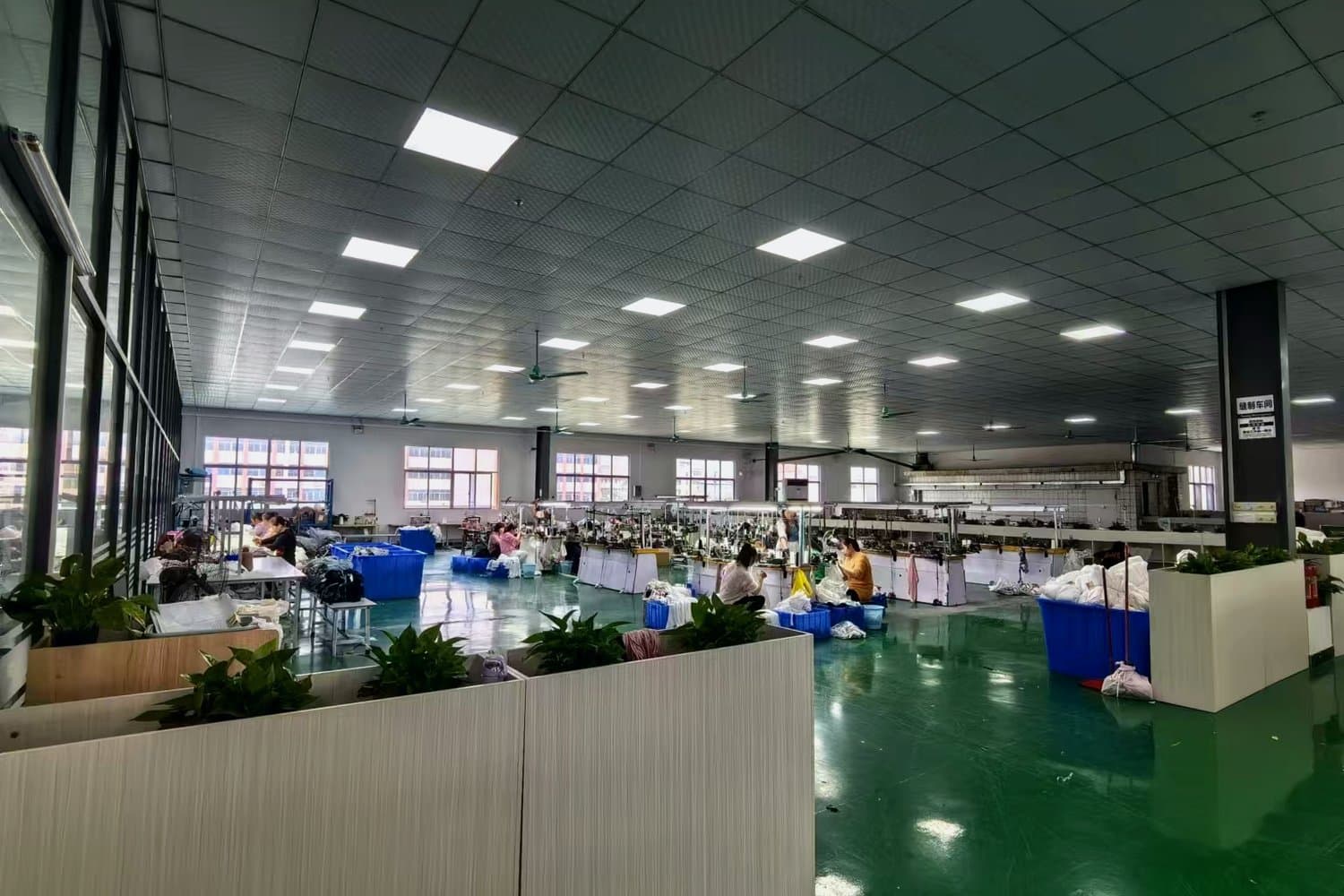
Thirty days of bulk for 8-12 SKUs at 60-90 pieces per SKU is tight but workable when the factory has been scheduling it since Day 7. Knitting, linking, washing, steaming, trimming, finishing, and inline QC all happen in this window. The brand's job is small but critical: respond to mid-production photos within 24 hours, do not request specification changes, and have the QC checklist signed off before Day 78.
Final inspection runs to AQL 2.5 (or tighter if the brand has specified). Packing, cartons, and shipping marks follow. By Day 87 the goods are at the freight forwarder. The last three days — 88, 89, 90 — are where the brand decides between sea freight (cheaper, three to five weeks transit, blows the marketing window) and air freight (expensive, three to seven days transit, holds the date). For a capsule with a fixed drop date and a booked influencer, air is almost always worth it on the hero SKUs even if the basics go by sea.
From the patterns we see, three things destroy this schedule, in roughly this order of frequency:
1. Yarn changes after Day 14. Sourcing new yarn, re-swatching, re-protoing — minimum two weeks lost.
2. Demanding exact Pantone on natural or hi-low yarns. Endless lab dip rounds, two to three weeks lost, often ending in compromise anyway.
3. Adding SKUs after Day 21. A new SKU is a new development cycle. There is no "just one more."
Honorable mentions: changing the decision-maker mid-project, taking longer than 48 hours on sample feedback, and discovering on Day 50 that the warehouse needs a special carton spec.
The capsules that ship on time share four boring characteristics. One decision-maker on the brand side, named on Day 1. Time-boxed feedback windows (48 hours, written into the project plan). A frozen SKU list at the end of development. And a realistic attitude about color — accepting commercial Pantone matches rather than chasing perfection on yarn that will never deliver it.
None of this is glamorous, and none of it is in the brand deck. It is, however, what separates a capsule that lands in time for the holiday drop from one that arrives at the DC the week of Christmas, useful for almost nothing except a tax write-down.
---
If you're planning a real project around any of the points above, we'd be glad to take a quick look. Send a short brief and we'll come back within one business day with a practical direction, MOQ + lead time estimate, and a sample plan if it makes sense.
→ Request a free quote · Download the men's knitwear catalog · WhatsApp us · info@lcgarment.cn
Browse the full men's sweaters range →