Minimum Order Quantity (MOQ) for Custom Sweaters: A 2026 Guide for Small & Emerging Brands
What drives sweater MOQ in 2026, what is realistic for a small or new brand (30–100 pcs per colour), and how to lower your minimum without paying a big per-unit premium — plus sample/bulk lead times.
Minimum Order Quantity (MOQ) for Custom Sweaters: A 2026 Guide for Small & Emerging Brands
Short answer: For custom OEM/ODM sweaters in 2026, most factories set a minimum order quantity (MOQ) of 300–1,000 pieces per style, and often per colour. Specialist factories that work with smaller brands can go down to 30–100 pieces per colour. The MOQ you are quoted is driven mainly by yarn purchasing, knitting machine setup, and whether the colour is in stock or dyed to order — not by the factory being difficult. If a supplier quotes a high MOQ, it usually means the yarn or colour has to be bought or dyed in bulk.
This guide explains what drives sweater MOQs, what is realistic for a small or new brand, and how to negotiate a first order you can actually sell through.
What is MOQ, and why do sweater factories have one?
MOQ is the smallest quantity a manufacturer will produce in a single production run. For knitwear it is set by four cost drivers:
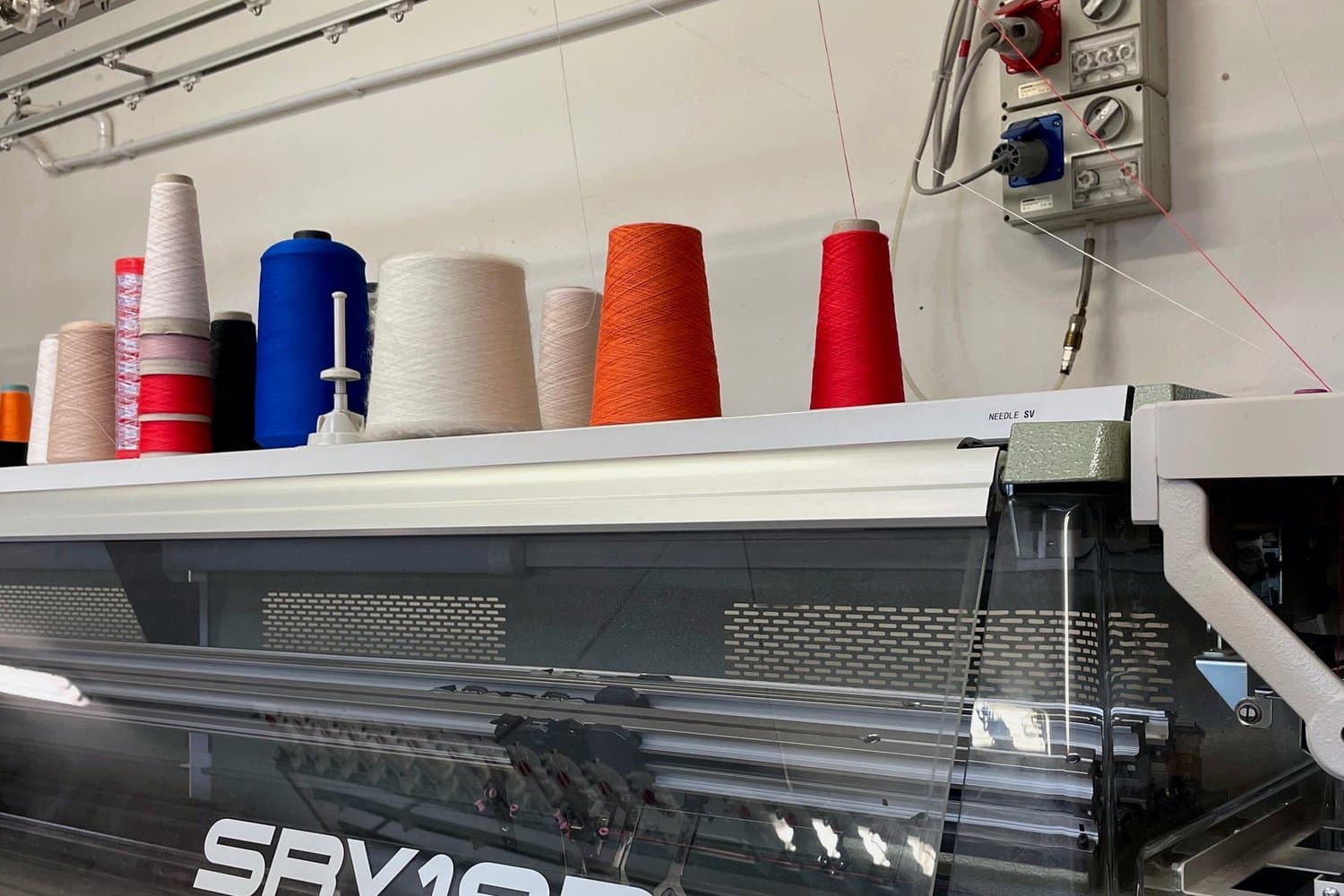
1. Yarn purchasing. Yarn is bought by weight, often in dye-lot minimums (commonly 50–100 kg per colour). A fine-gauge merino sweater uses roughly 300–500 g of yarn; a chunky wool cardigan can use 600–900 g. The factory has to buy a full dye lot even if your order only needs part of it. 2. Colour: stock vs. dyed-to-order. Using a yarn colour the mill already holds in stock keeps MOQ low. Asking for a custom Pantone match means the mill has to dye a minimum batch, which pushes the per-colour minimum up sharply. 3. Machine setup and programming. Each style is programmed into the knitting machines and the linking line is set up for that construction. That setup cost is fixed, so spreading it over more pieces lowers the per-unit price. 4. Knitting, linking, washing, and finishing run most efficiently in batches. Very small runs cost more per piece because the line is constantly being re-set.