How to Verify a Knitwear Supplier's Claims: Years, Lead Times, Certs & Reviews
Aktualisiert 19.9.202612 min readVon Simon Liu · Licheng Knitwear
Claims are free; verification protects your order. How to check the six most-inflated supplier claims — years in business, sample lead times, certifications, client logos, reviews and the factory itself — with a red-flag scorecard.
Quick answer — how to tell a real knitwear supplier from a good website: claims are free; verification is what protects your order. Six things are worth checking before you commit, because they're the ones most often inflated: years in business (check the actual company registration, not the homepage banner), sample lead times (a 5-day *custom* sample is usually a red flag — real custom sampling for knitwear runs ~15–25 days), certifications (ask for the certificate with its number and scope, then verify the number in the issuer's register), client/brand logos (ask for a reference you can actually contact), reviews (look for third-party reviews you can open and read, not just logos and screenshots), and the factory itself (a live floor video beats stock photos). This is a checklist you can run in one conversation — the red flags and what a verifiable supplier looks like are below.
1. "20 years in business" — verify the registration
Long-tenure claims are common and easy to print. The check is simple: ask for the registered company name and business licence / registration number and look at the incorporation date, not the marketing copy. A younger company isn't a problem — plenty of strong factories are under ten years old — but the *stated* age should match the *registered* age. Red flag: a "20+ years" banner with no verifiable registered entity behind it.
2. "Samples in 5 days" — know what's realistic
Sampling speed is where optimism creeps in. For genuinely custom knitwear — your yarn, your gauge, your design — a believable window is roughly 15–25 days, longer for fine gauges or dyed-to-order yarn. "3–5 day samples" usually means one of three things: it's a stock style being passed off as custom, the yarn is whatever's on hand, or the date simply won't hold. Red flag: implausibly fast custom sampling. A supplier quoting an honest 15–25 days is often the more reliable one.
3. Certifications — ask for the document, then verify the number
A logo wall (OEKO-TEX, GRS, BSCI, ISO…) means little on its own. The real check has three steps: (a) ask for the actual certificate, (b) read its scope and validity date (a certificate for one article or one mill doesn't automatically cover your product), and (c)verify the number in the issuer's public register. OEKO-TEX, GRS/Textile Exchange, ISO bodies and EU registers (e.g. Germany's LUCID for packaging) all let you check a number. Red flag: logos but no certificate, an expired certificate, or a scope that doesn't match your goods.
4. Client / brand logos — ask for a contactable reference
Recognisable brand logos are persuasive, and also the easiest thing to add to a page. There's nothing wrong with naming clients — but you can ask the obvious question: *can you give me a reference at one of these brands I can speak to, or an order example?* A supplier with real relationships can usually offer *something*; a logo grid with nothing behind it can't. Red flag: big logos, no verifiable connection, and reluctance to provide any reference.
5. Reviews — third-party and openable beats screenshots
There's a hierarchy of trust in reviews. Strongest: reviews on a third-party platform you can open and read yourself (a marketplace store with a public rating and buyer feedback). Weaker: image testimonials or screenshots on the supplier's own site, which can't be verified. Weakest: none at all. When a supplier links you to a public review page with a real score, that's a supplier confident in being checked. Red flag: only on-site screenshots, or no reviews you can independently open.
6. The factory — a live floor video beats stock photos
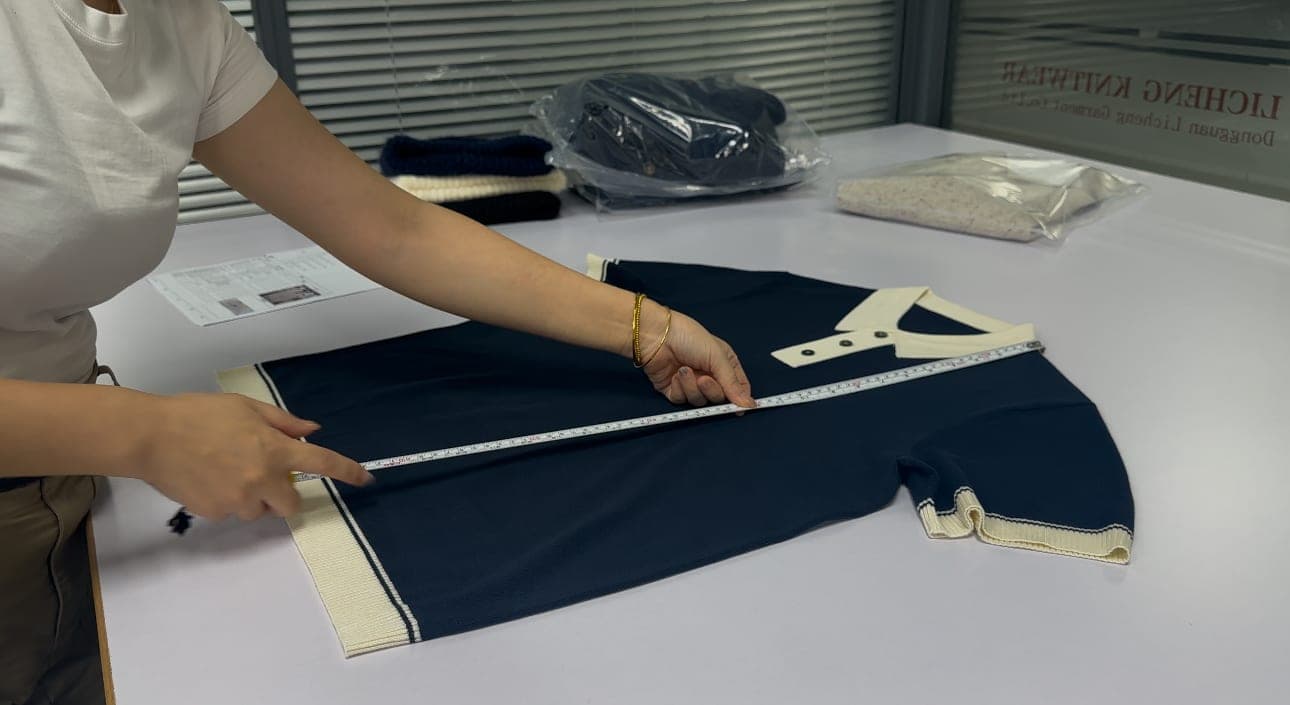
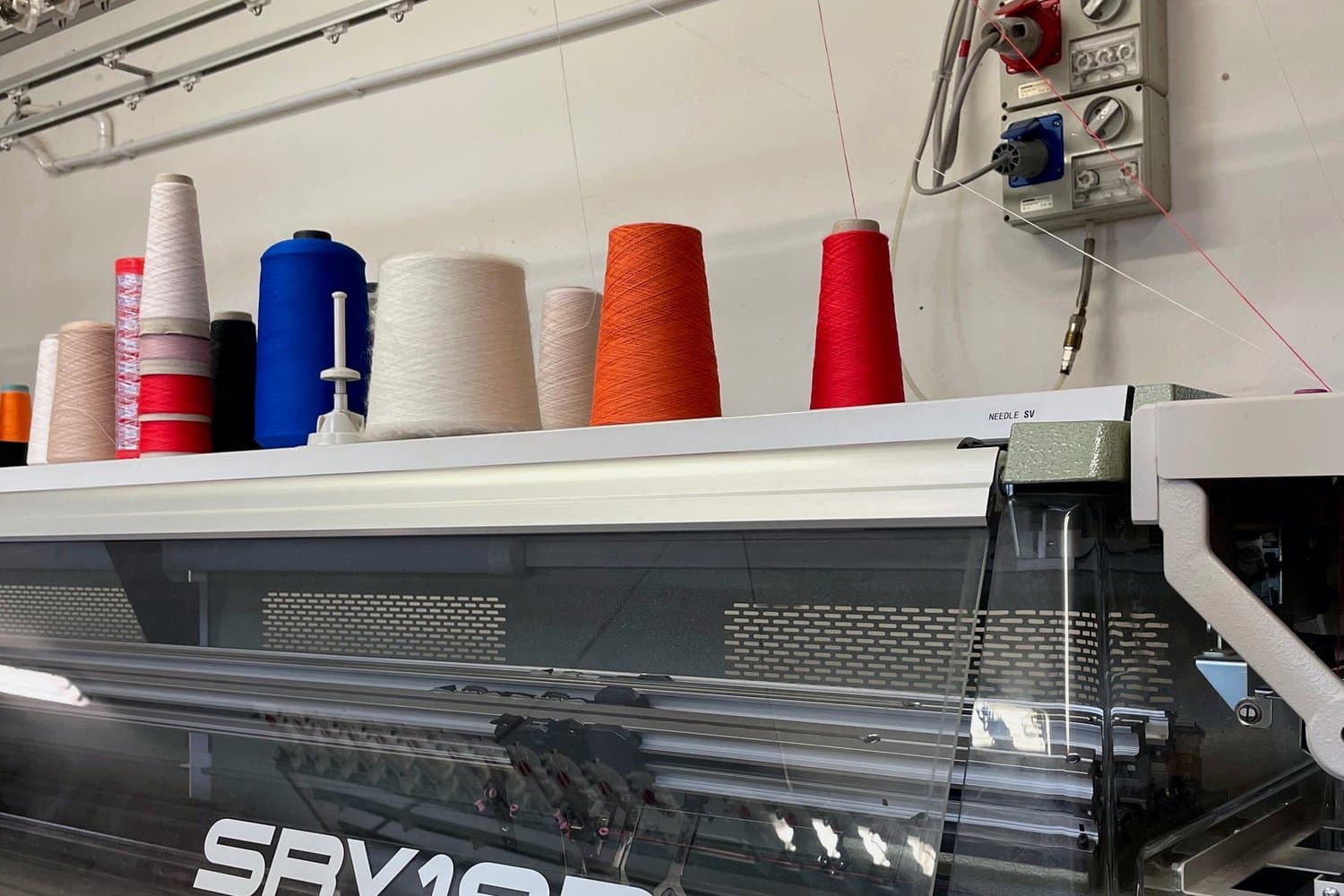
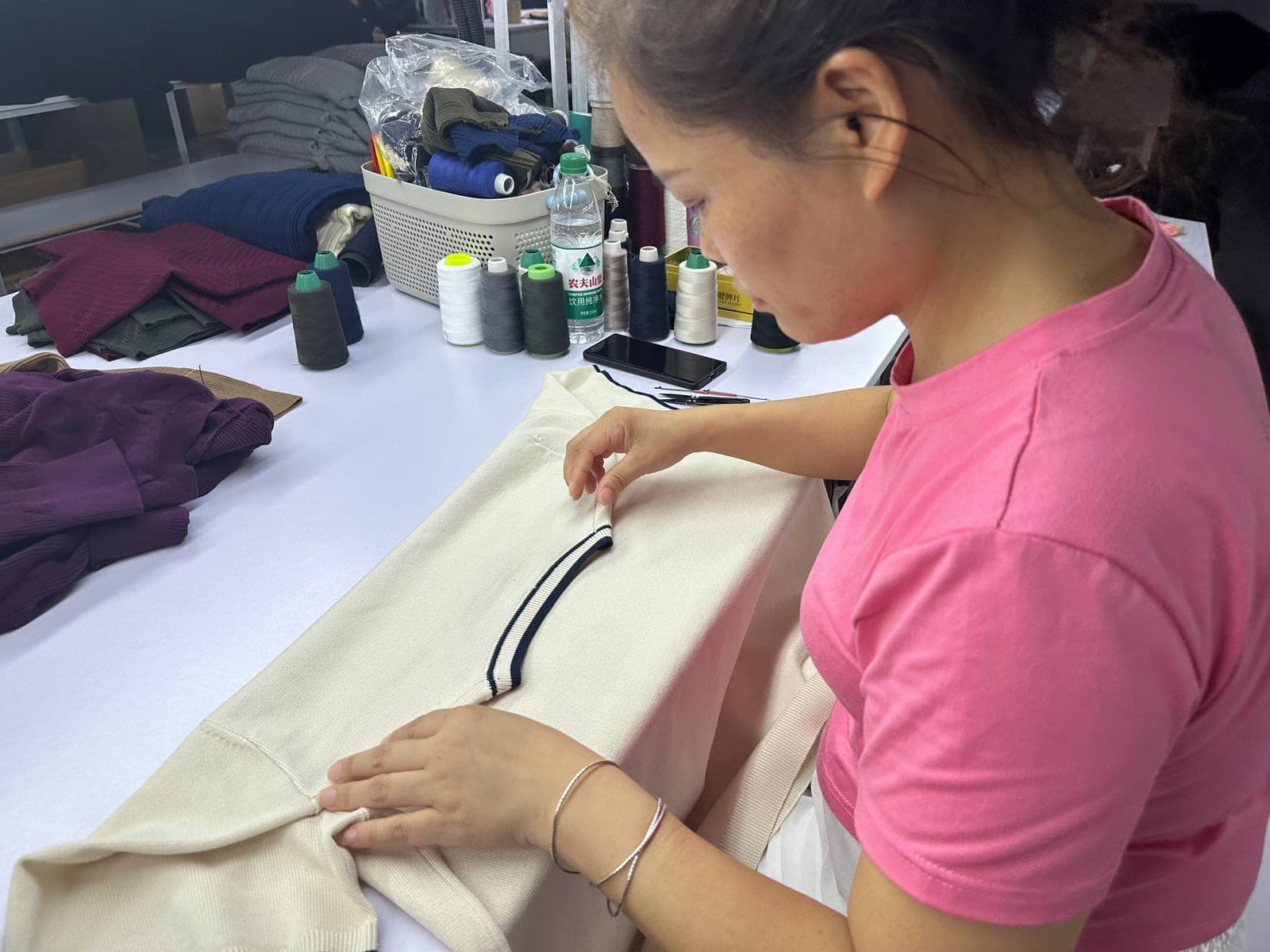
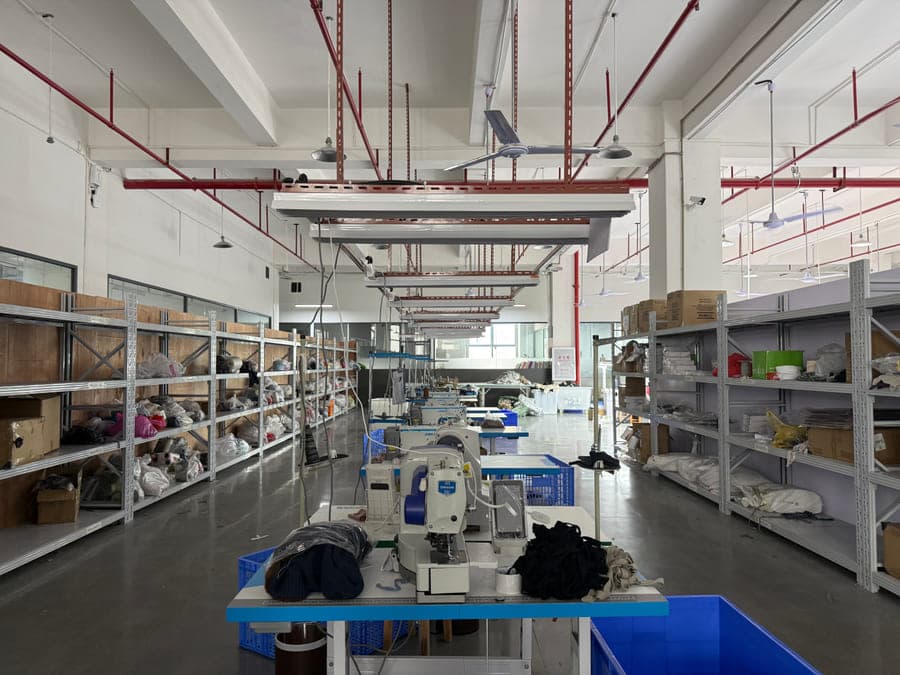
The last fear, especially with low-MOQ suppliers, is *am I dealing with a real factory or a trading desk?* The cheapest verification: ask for a recent video or live call of the knitting floor — the machines, the gauges they run, linking, washing, packing. A real manufacturer can show the floor on short notice. Stock or AI-style imagery and vague answers about "partner factories" are the tell. Red flag: no current floor footage and deflection to unnamed partners.
The supplier-verification scorecard
Claim
How to verify
Red flag
Years in business
Registered entity + incorporation date
"20+ yrs" banner, no registration
Sample lead time
Realistic for custom (~15–25 days knitwear)
Implausibly fast on custom
Certifications
Certificate + scope + number checked in register
Logos only / expired / wrong scope
Client logos
A contactable reference or order example
Logos with nothing behind them
Reviews
Openable third-party reviews with a real score
On-site screenshots only / none
Real factory
Recent floor video or live call
No footage, "partner factories"
MOQ
Stated per colour, holds at quote
Headline number that balloons
Where Licheng stands on this (transparently)
We'd rather be checked than take a claim on trust, so: our registered entity is Dongguan Licheng Garment Co., Ltd. (founded 2018); our buyer reviews are public — 4.9/5 from verified buyers on our Alibaba store, openable and readable; our certifications and EU registrations are listed with their identifiers (e.g. German packaging EPR LUCID DE4680505763138) on the Trust Center; and we show real production-floor photos (with a factory video on the way). Sampling is an honest 15–25 days, MOQ 30 pcs per colour. Run us through the scorecard above — that's the point of publishing it.
Send a tech pack or a reference and we'll reply within one business day. Request a quote →
Common Questions
What's a realistic sample lead time for custom knitwear?
For genuinely custom work (your yarn, gauge and design), roughly 15–25 days is believable, longer for fine gauges or dyed-to-order yarn. Much faster usually signals a stock style or a date that won't hold.
How do I verify a supplier's certifications?
Ask for the actual certificate, check its scope and validity date, and verify the number in the issuer's public register (OEKO-TEX, Textile Exchange for GRS, ISO bodies, LUCID for German packaging EPR). Logos alone aren't verification.
Are big-brand client logos proof of anything?
Not by themselves — they're easy to display. Ask for a contactable reference or an order example. A real relationship can usually be substantiated in some way.
What's the best way to confirm a factory is real?
Ask for a recent video or live call of the knitting floor and the machine gauges they run, plus the business registration. A real manufacturer shows the floor; a trading desk deflects to "partner factories".
Is a younger or smaller supplier riskier?
Not necessarily — age and size matter less than whether the claims are *verifiable*. A diligence-proof younger factory can be a safer bet than an older one whose claims don't check out.
---
Talk to our team about this
Building a shortlist and want a supplier that holds up to the checklist above? Send your product direction, target MOQ and destination markets and we'll reply within one business day with a straight answer on fit, MOQ, lead time and a sample plan.
Ask for certifications with their scope (OEKO-TEX, ISO 9001, GRS), real production photos or video, business registration, and references, then order a sample.
No verifiable certificates, stock-photo-only galleries, vague MOQ or lead-time answers, refusal to sample, and prices far below market.
Yes. A paid sample (15-25 days) confirms quality, fit and yarn before bulk and exposes any capability gaps.
Wir konzentrieren uns auf Herrenpullover, Cardigans, Strickjacken, Jacquard-Strickwaren und Private-Label-Strickwaren. Wir unterstützen B2B-Käufer bei OEM/ODM-Entwicklung, Mustererstellung und Serienproduktionsplanung.
Verfügbare Musterstile und ausgewählte kundenspezifische Programme ermöglichen risikoärmere Testläufe vor größeren Saisonaufträgen.
Ja. Marken, auch neue Labels vor ihrer ersten Kollektion, können ein Muster bezahlen und es ansehen, bevor sie einen Produktionsauftrag erteilen. Zwei Wege: ein Ready-Sample eines veröffentlichten Modells für USD 60 pro Stück in etwa 7 Tagen, oder ein Entwicklungsmuster nach Ihrem Tech-Pack für USD 150 pro Modell – inklusive Garnbeschaffung, Strickprogrammierung, einem Prototyp und einer Korrekturrunde – in 15-25 Tagen. Kaschmir- und Mohair-Modelle werden einzeln kalkuliert, der Versand wird zum Selbstkostenpreis berechnet. Die Produktion startet erst nach Freigabe des physischen Musters, ab 30 Stück pro Farbe, Größen innerhalb der 30 mischbar. Ein Muster verpflichtet Sie nicht zur Produktion; Kleidung für den privaten Gebrauch fertigen wir nicht.
Bereit, Ihr Projekt zu starten?
Fordern Sie einen Katalog an oder senden Sie heute eine Anfrage. Unser Team antwortet innerhalb von 24 Stunden.