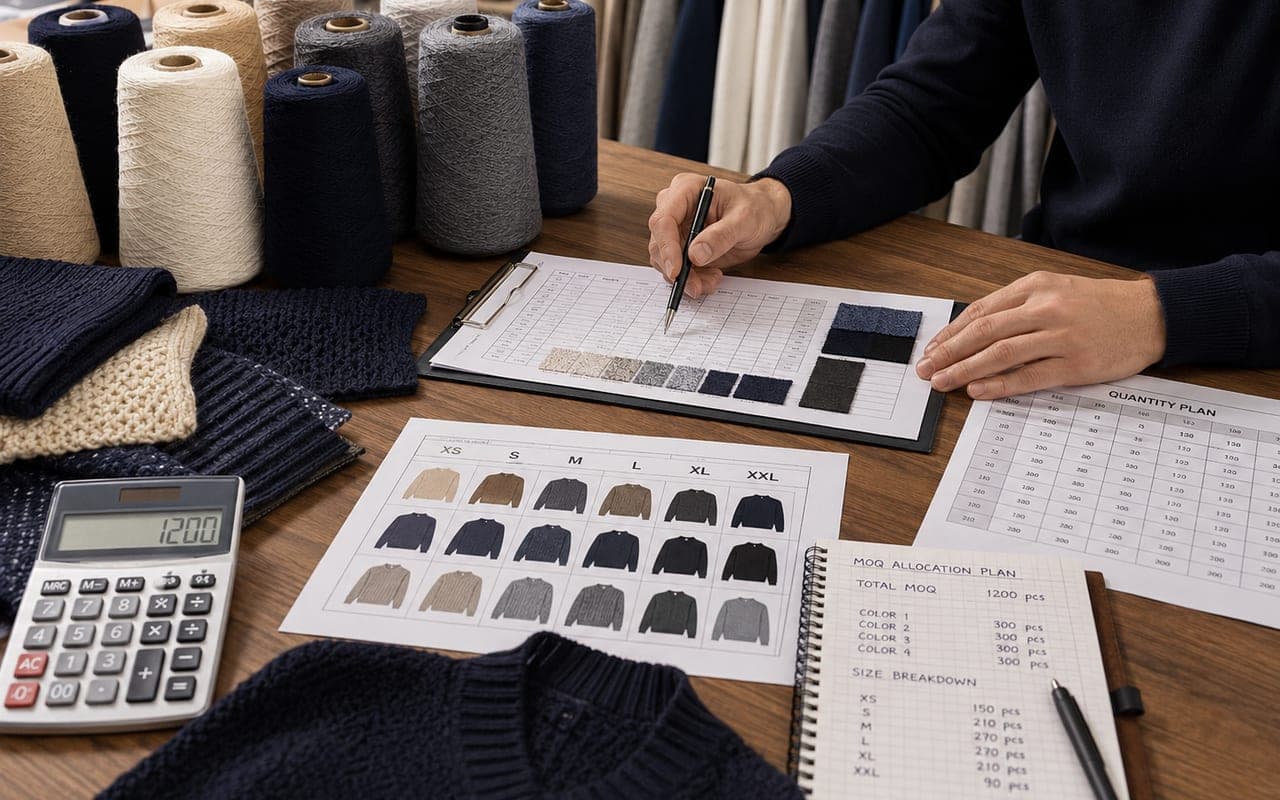
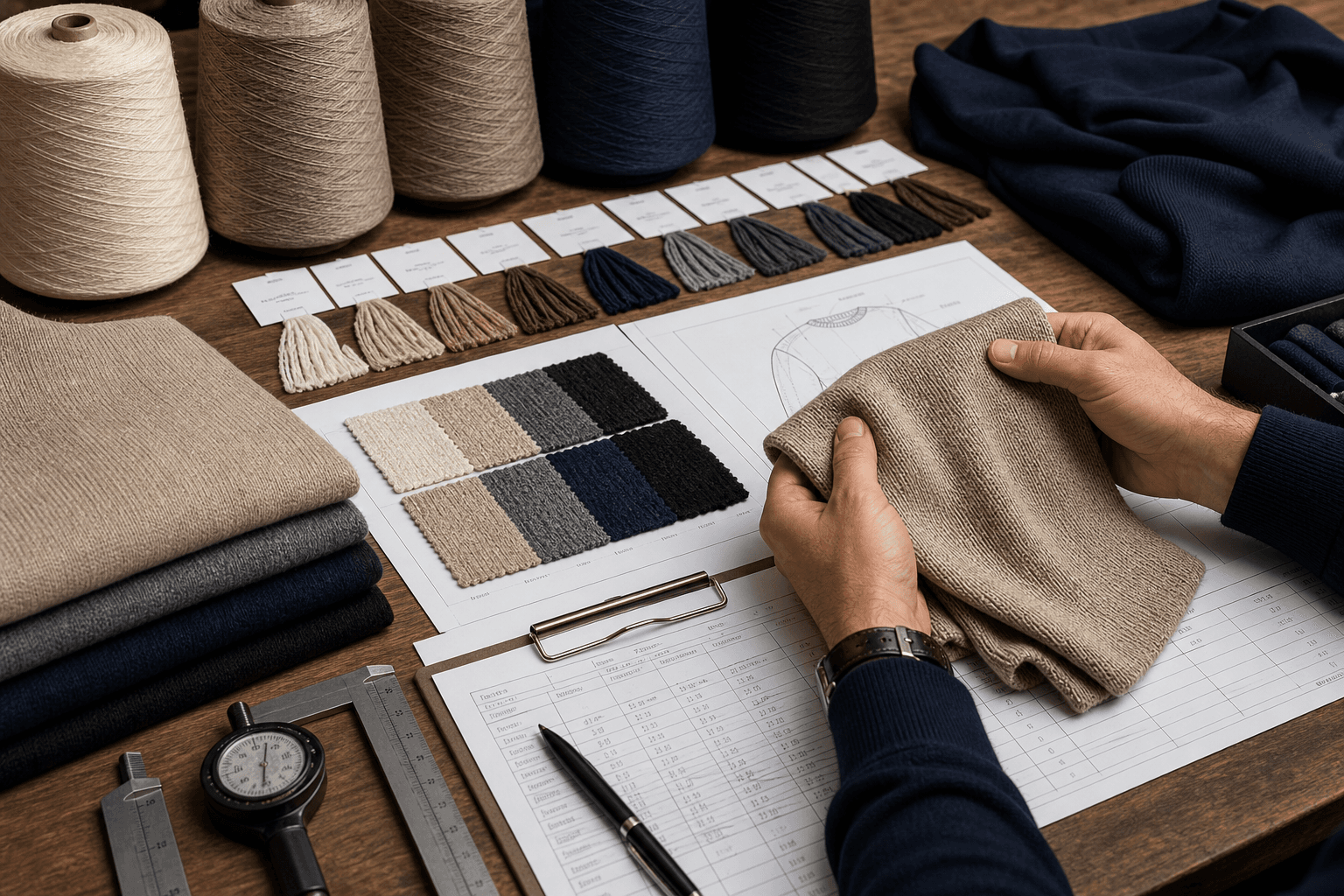
Quick answer — how low can knitwear MOQ go for a small brand? Realistic minimums in China are about 30 pieces per colour with stock (undyed or in-stock) yarn, 50–100 pieces per colour for custom-dyed programs, and 100–300+ for specialty fibers or complex jacquard. The "MOQ wall" exists because yarn dyeing and machine set-up have their own minimums — not because the factory is being difficult. The fastest way to a low MOQ is to use a factory's stock yarns and standard gauges, keep colour counts low, and work with a manufacturer that actually runs small-batch development (many large factories quote a low MOQ but quietly deprioritize the order). The table and tactics below show exactly how to get there.
💬 Planning a first knitwear run? Request a free quote → · MOQ from 30 pcs · Sample in 7–15 days · WhatsApp us
If you've made T-shirts or hoodies, knitwear MOQ can feel frustrating. The reason is structural: a knit garment is built from yarn, and yarn is the cost and quantity driver.
- Yarn dyeing has a minimum. Dye houses rarely dye less than 50–100 kg of a custom colour economically. If your style needs a colour that isn't already in stock, that dye lot sets a floor on how little you can make.
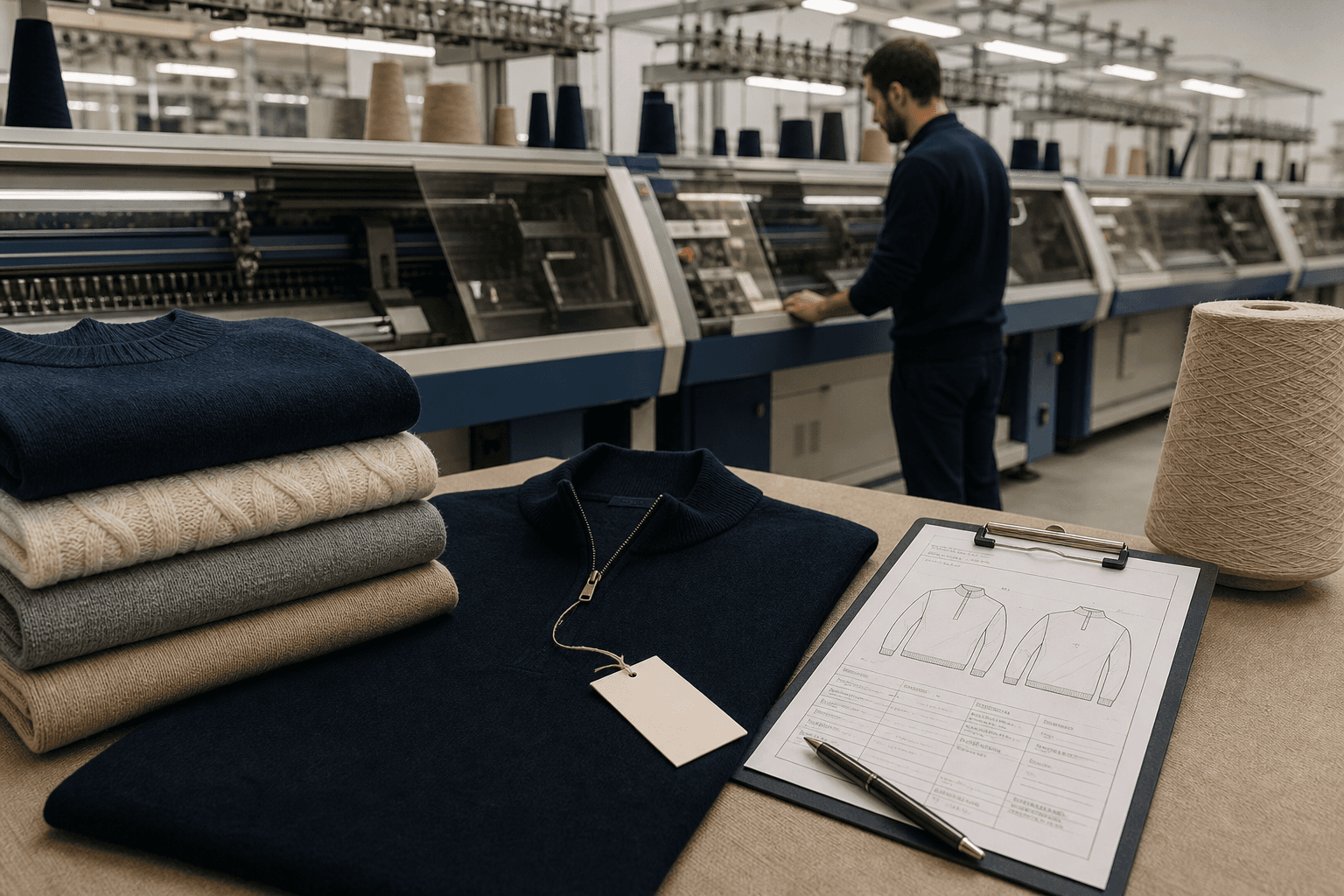
- Machine set-up is per-style. Programming a knitting machine for a new gauge, stitch and size set takes setup time that only pays off across a minimum number of pieces.
- Linking and finishing are labour-batched. Small runs lose the efficiency of a full production line.
Understanding this lets you *design around* the MOQ instead of fighting it.
These are typical reference ranges for custom knitwear produced in China for North American and European brands. Every program varies with yarn, gauge and complexity.
|
| Stock / in-house yarn, standard gauge | ~30 pcs | No dye lot needed; uses yarn already on the shelf |
| Custom-dyed colour, standard construction | 50–100 pcs | A dye lot minimum applies |
| Specialty fiber (cashmere, mohair, recycled blends) | 100–200+ pcs | Higher yarn minimums and cost |
| Complex jacquard / intaglio / multi-yarn | 150–300+ pcs | More set-up, more yarn colours |
| Ready / existing sample styles (no customization) | As low as 1–30 pcs | Nothing to develop |
A factory honest about these ranges is more trustworthy than one that promises "MOQ 10, any style" — because for a custom-dyed cashmere cardigan, MOQ 10 is not economically real.
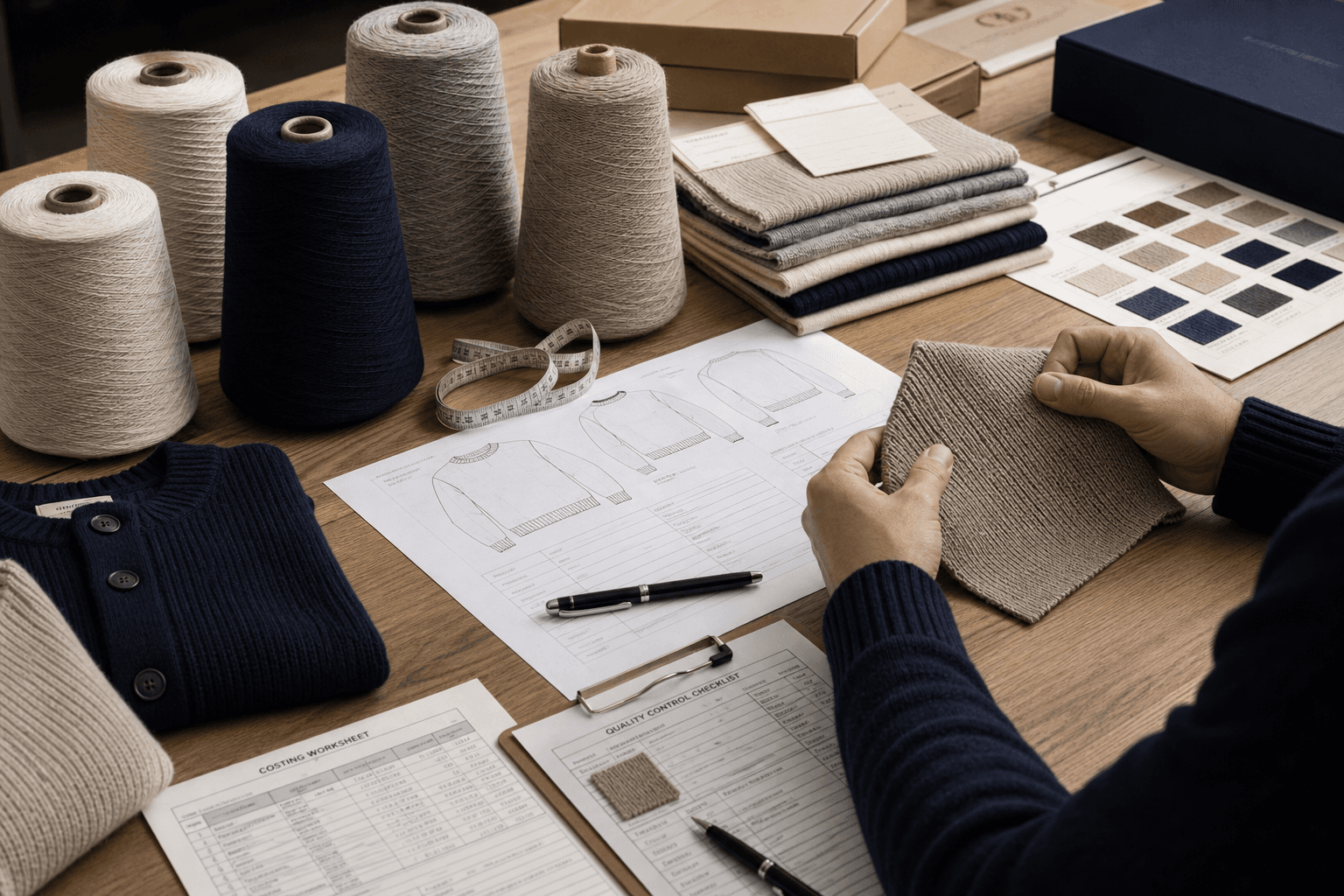
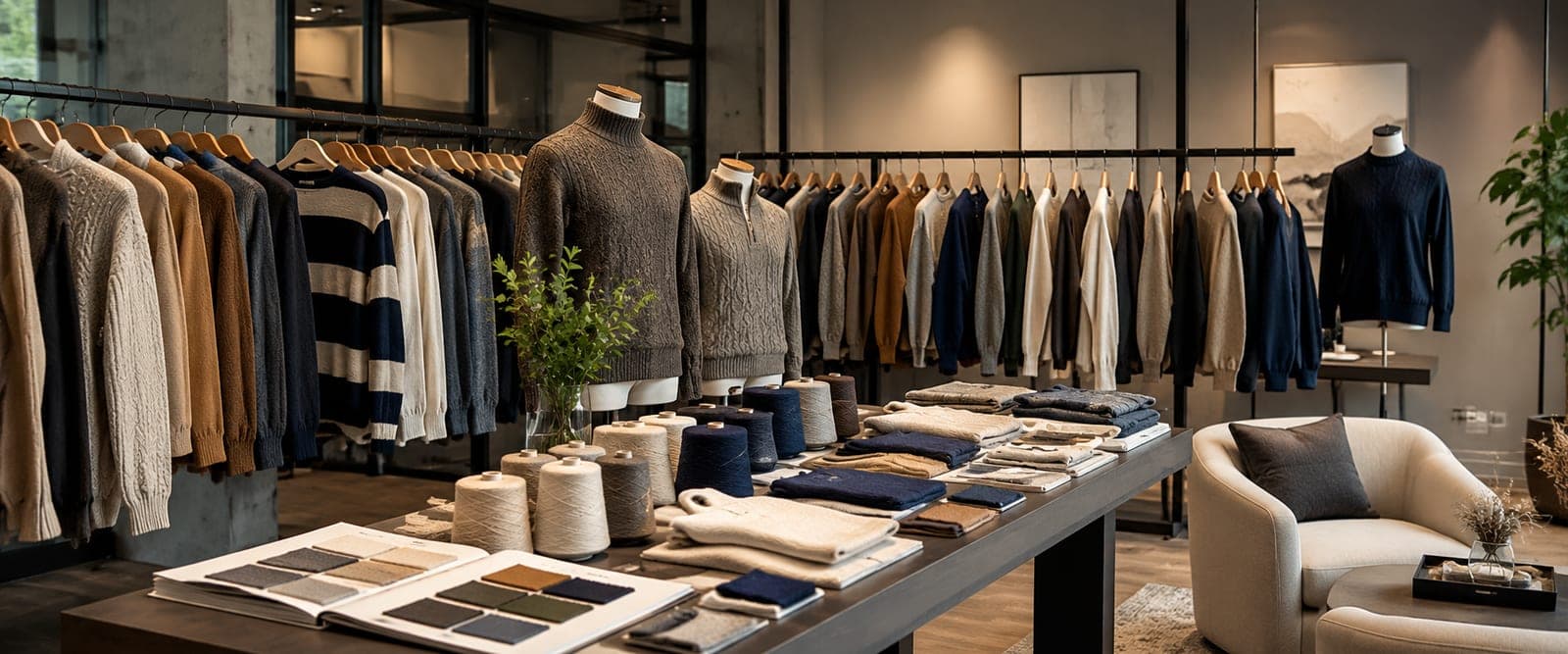
1. Use the factory's stock yarns and standard colours. This removes the dye-lot minimum — the single biggest MOQ lever. Ask for the factory's stock yarn card before you design.
2. Keep colour counts low. MOQ is *per colour*. Three colourways of 30 = 90 pieces of yarn planning; one colourway of 90 is the same total but simpler and cheaper.
3. Stick to standard gauges (e.g. 3GG, 7GG, 12GG). Unusual gauges mean more set-up and higher minimums.
4. Start with a sample order, then a small first bulk. A good partner treats a 30–50 pc first order as a relationship, not a nuisance, and scales with you.
5. Choose a factory that genuinely runs small batches. This matters more than the number on the quote (see below).
A low MOQ on paper means nothing if the factory won't actually prioritize a small run. Check for:
- A transparent, verifiable identity — real company name, address, factory photos, and a website (not just a one-line Alibaba listing).
- A clear sampling lead time — a serious small-batch factory quotes sampling in roughly 7–15 days and bulk in 30–45 days.
- Third-party certifications — e.g. OEKO-TEX Standard 100, ISO 9001, GRS — which signal real systems rather than a trading desk.
- In-house QC — inspection at AQL 2.5 with pilling, colour-fastness and shrinkage testing.
- Willingness to talk about your specific yarn, gauge and quantity rather than sending a generic price list.
Licheng Knitwear is a Dongguan custom knitwear manufacturer (since 2018) built for exactly this stage: MOQ from 30 pieces, samples in 7–15 days, OEKO-TEX / ISO 9001 / GRS, and OEM/ODM/private-label support for small and growing brands across North America and Europe.
What is a realistic MOQ for a startup sweater brand?
About 30 pieces per colour if you use stock yarn, or 50–100 if you need a custom-dyed colour. Below that, look at a factory's ready/existing styles, which can go much lower because nothing needs to be developed.
Can I get MOQ 10 or even 1 for custom knitwear?
For *fully custom* knitwear, MOQ 1–10 is rarely economical because of yarn-dyeing minimums. You can get very low quantities by either (a) ordering an existing/ready style, or (b) using on-demand 3D knitting services, which cost more per piece.
Does a lower MOQ cost more per piece?
Usually yes — set-up and yarn minimums are spread over fewer units. The trade-off is lower upfront risk, which is the right choice when you're testing a new design.
How long does a small knitwear order take?
Plan for roughly 7–15 days sampling, 30–45 days bulk production, plus ~25–35 days sea freight to North America or Europe. Air freight shortens shipping but raises cost.
What's the difference between low MOQ and "ready sample" styles?
Low MOQ means a small run of *your* custom design. Ready/existing styles are designs the factory already has, which you can order in very small quantities (sometimes single pieces) — useful for testing the market before committing to a custom program.