Accessories are usually the last line added to a knitwear range and the first one costed badly. They get treated as filler — a hat to round out the lookbook — and then the sock sizing, the glove grading and the gift packaging all turn up as surprises after the price has been agreed.
The analysis below uses an earlier snapshot of 30 published accessory styles, across hats, scarves, gloves, socks, blankets and berets. Its counts and price indices describe that historical sample, not the current catalogue or a quotation for newly added development references.
|
| 3GG – 5GG (chunky) | 10 |
| 7GG – 12GG | 7 |
| 12GG and finer | 13 |
13 of 30 accessory styles are 12GG or finer — the largest band here. In our menswear book, fine gauge is only about 4% of the range. The reason is the product mix: every sock in the range is 12GG, and fine scarves and liner gloves sit there too. Chunky 3GG–5GG covers beanies, wrap scarves and blankets at the other end.
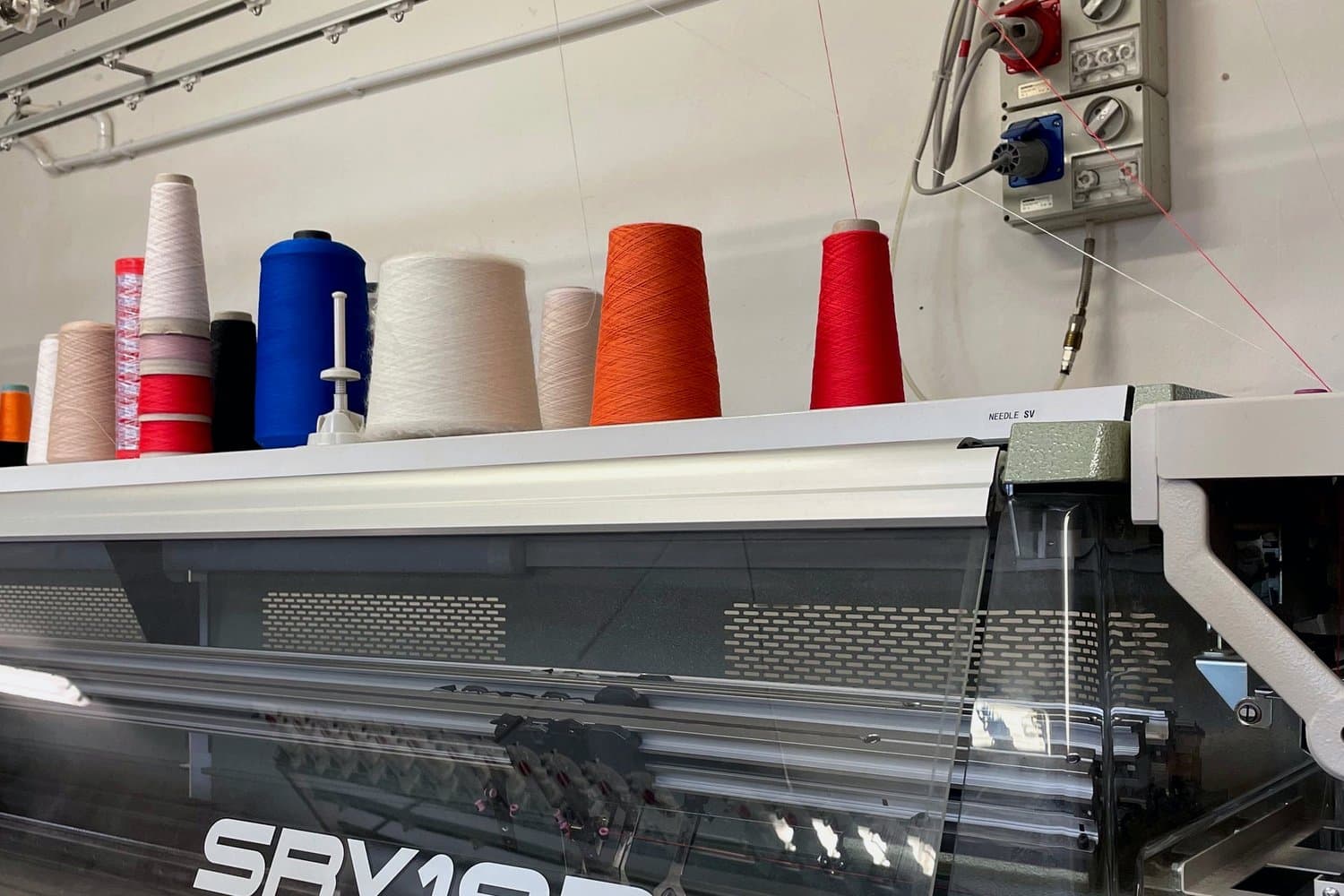
This matters commercially because fine-gauge and chunky-gauge work compete for different machine time. If a range carries both a chunky throw and a 12GG sock programme, they do not queue behind each other — which is one of the few places accessories are easier to plan than garments.
|
| One size (custom sizing on request) | 18 |
| Adult S/M/L | 6 |
| Standard 120×150 cm blankets/throws | 6 |
18 of 30 styles are one size. That removes the grading work, the size-run risk and most of the forecasting problem that makes a garment programme hard — a genuine reason to add accessories rather than another sweater.
The exception is socks and gloves. Both are graded S/M/L in our range and both have to actually fit, because a sock that is a size out is unwearable in a way an oversized beanie never is. Treat those two as garments, not as accessories, when you plan them.
Counted across the 30 published styles: wool in 13, cotton in 7, acrylic in 6, cashmere in 5, nylon in 4, merino in 4, plus alpaca, lambswool, bamboo viscose, chenille and recycled wool on individual styles.
Two observations from that spread:
Nylon and polyamide appear more often than in our garment range. Four styles carry nylon and several socks carry polyamide, because a sock or a glove takes abrasion a sweater never does. If a supplier quotes you a 100% natural-fibre sock, ask about the reinforcement at heel and toe.
Cashmere shows up on 5 of 30. Accessories are where cashmere earns its place in a range: a cashmere beanie or a lined glove puts the fibre on the shelf at a fraction of what a cashmere sweater costs the customer, which is why gift ranges lean on them.
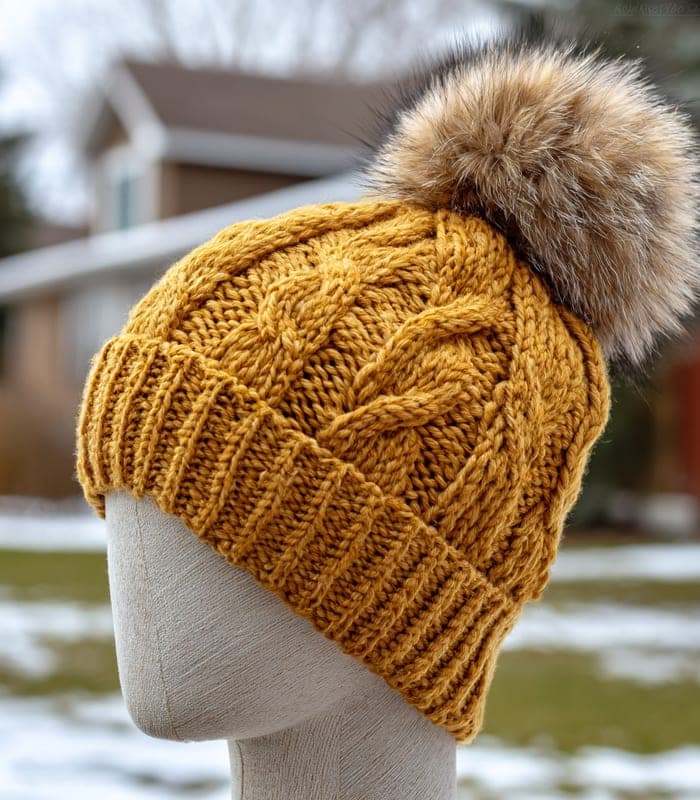
- Hats and berets — chunky cable pom-pom, slouchy striped, cashmere beanie, extra-fine merino beret, an animal-ear beanie
- Scarves and wraps — lambswool cable, extra-fine merino rib, alpaca textured, cashmere-blend oversized wrap, recycled-wool colour block, organic cotton lightweight
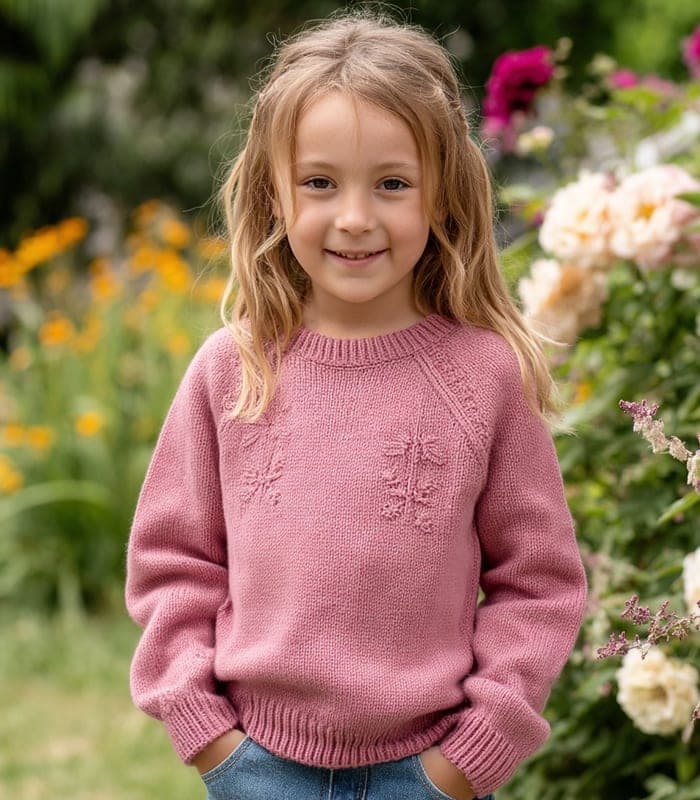
- Gloves and mittens — cable wool, cashmere-lined, tech-friendly conductive-thread, convertible mittens, fingerless alpaca-merino, organic cotton
- Socks — Alpine heritage wool, combed cotton patterned, merino performance thermal, bamboo, cashmere blend, vintage stripe lounge
- Blankets and throws — jacquard, chunky chenille, organic cotton waffle, cashmere travel, Nordic wool blend, acrylic outdoor
- Hybrid — a convertible balaclava-hood in merino-nylon
Our published index median for accessories is USD 2.83 per piece, FOB, at MOQ 30 per colour — by a wide margin the lowest entry point in our catalogue.
But read that number with the same care we would want you to apply to any median. It is the median across the whole accessory range, and that range runs from a cotton sock to a cashmere travel blanket. Socks pull it down; a cashmere wrap sits far above it.
Our product pages also print a yarn-family median beside it — USD 17.36 for a wool blend, USD 31.48 for a cashmere blend, USD 66.05 for cashmere on a wool base. Those are catalogue-wide figures for that yarn across all garment types, not the price of the accessory on the page. A cashmere beanie is not a USD 31.48 piece and it is not a USD 2.83 piece.
The workable rule: use USD 2.83 to sanity-check whether an accessory line fits your margin model at all, then quote each style individually. For anything in cashmere, alpaca or merino, go straight to a per-style quote.
Deciding packaging after the price. Gift boxes, belly bands and header cards for socks and gloves are a material share of the unit cost at this price point — at USD 2.83 a piece, a printed box can cost more than the product. Quote them with the piece, not after.
Running the accessory separately from the garment programme. If a hat is meant to match a sweater, it has to be booked on the same yarn and the same lab dips. Splitting them across lots is the single most common reason a matching set reads as two different shades on the shop floor — and nobody notices until it is on the rail.
|
| Published accessory styles | 30 |
| MOQ | 30 pieces per colour (plain and striped styles in the same yarn and colour can be combined) — same as our garment range |
| Category index median | USD 2.83/pc FOB at MOQ 30 — a range-level figure, not a per-style price |
| Gauge range in house | 3GG–18GG · 13 of 30 accessory styles at 12GG or finer |
| Sizing | 18 styles one size · 6 graded Adult S/M/L · blankets 120×150 cm |
| Sample lead time | 15–25 days from confirmed tech pack and yarn |
| Bulk lead time | 30–45 days after sample approval |
If you are adding an accessory line, the cheapest way to do it well is to book it on a yarn you are already using. Browse the published accessory range, request a quote, or send a photo of the reference piece on WhatsApp.
These B2B OEM/ODM references show directions for development. Their AI-generated images are not finished-sample photographs. Final yarn, construction, measurements, pricing and lead time require project review and sample approval.
Plain and striped styles may share the 30-piece minimum only when using the same yarn and colour. Jacquard/intarsia require 30 pieces per pattern; different patterns cannot be combined. Include the reference code, intended quantity, artwork, size range and delivery market when requesting a quotation.