Problemas de calidad comunes en los suéteres y cómo evitarlos
Una guía de control de calidad que aborda problemas comunes de los suéteres, como la variación de medidas, el pilling, la diferencia de color, la calidad de las costuras, el encogimiento y los errores de empaque.
Incluso un suéter bien diseñado puede decepcionar en producción a granel si no se comprenden y se previenen los defectos de fabricación más comunes. Conocer qué suele salir mal, y por qué, permite a los compradores B2B redactar mejores especificaciones, inspeccionar con más criterio y exigir a las fábricas un estándar determinado. Esta guía cubre los problemas de calidad más frecuentes en los suéteres y cómo evitar cada uno de ellos.
La mayoría de los defectos en la tejeduría de punto son predecibles y prevenibles. Los compradores que los conocen redactan mejores especificaciones y detectan los problemas antes del envío.
Los defectos más comunes en los suéteres
💬 ¿Buscas un proveedor para un próximo proyecto? Solicita una cotización gratuita → · MOQ 30 uds · Muestra en 15–25 días · Escríbenos por WhatsApp
| Defecto | Qué aspecto tiene | Causa principal |
|---|---|---|
| Pilling (bolitas) | Bolitas de pelusa en la superficie | Hilo de baja calidad o de fibra corta |
| Torsión (espiralidad) | Las costuras laterales giran en espiral alrededor del cuerpo | Torsión del hilo no equilibrada |
| Variación de tono | Las piezas difieren en color | Lotes de tintura mezclados |
| Desviación de medidas | Tallas fuera de especificación a lo largo del pedido | Control de tensión deficiente |
| Agujeros / puntos caídos | Huecos en el tejido | Fallos de tejeduría, enganches |
| Remallado irregular | Costuras abultadas o fruncidas | Mano de obra de remallado deficiente |
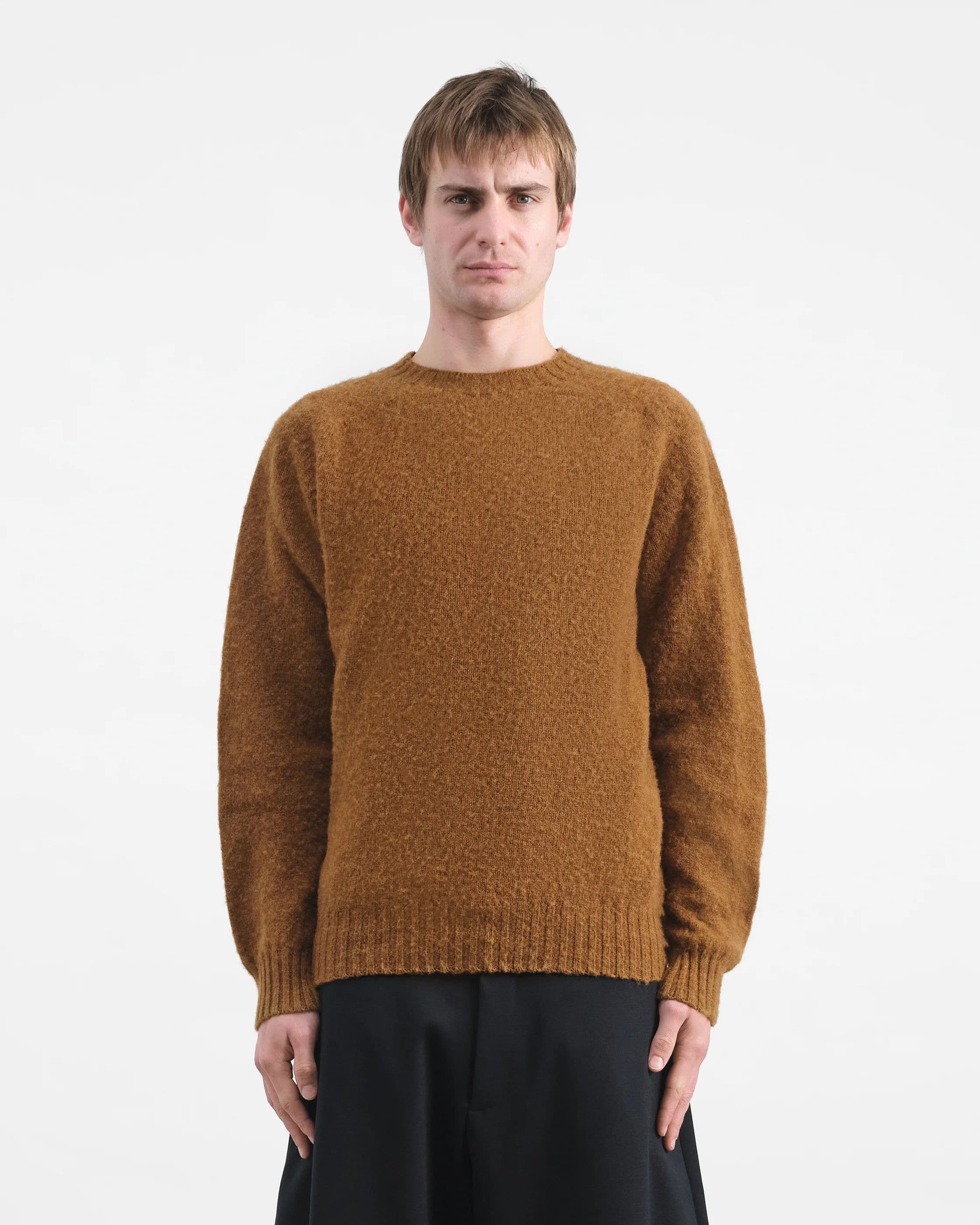
Pilling (formación de bolitas)
La queja más frecuente. El pilling se produce cuando las fibras cortas se sueltan y se enredan formando bolitas, especialmente en los puntos de fricción. La prevención empieza por el hilo: los hilos de fibra más larga y mayor torsión forman menos bolitas. Pide a la fábrica que realice una prueba de pilling sobre el hilo real de producción antes del lote a granel, y desconfía de las promesas sobre hilos baratos.
Torsión (espiralidad)
Cuando las costuras laterales giran en espiral alrededor del cuerpo tras el lavado, la torsión del hilo está desequilibrada o el tejido no se relajó ni se acabó correctamente. La prevención pasa por un hilo equilibrado y un acabado correcto. Revisa siempre una muestra lavada, no solo una recién hecha, porque la torsión a menudo aparece únicamente después del primer lavado.
Variación de tono
Si las prendas de un mismo pedido difieren ligeramente en color, la causa suele ser la mezcla de lotes de tintura. Una buena fábrica mantiene un solo lote de tintura por color y por pedido o, como mínimo, verifica la consistencia. Especifica el color con Pantone o con una muestra física y exige por escrito la consistencia del lote de tintura.
Desviación de medidas
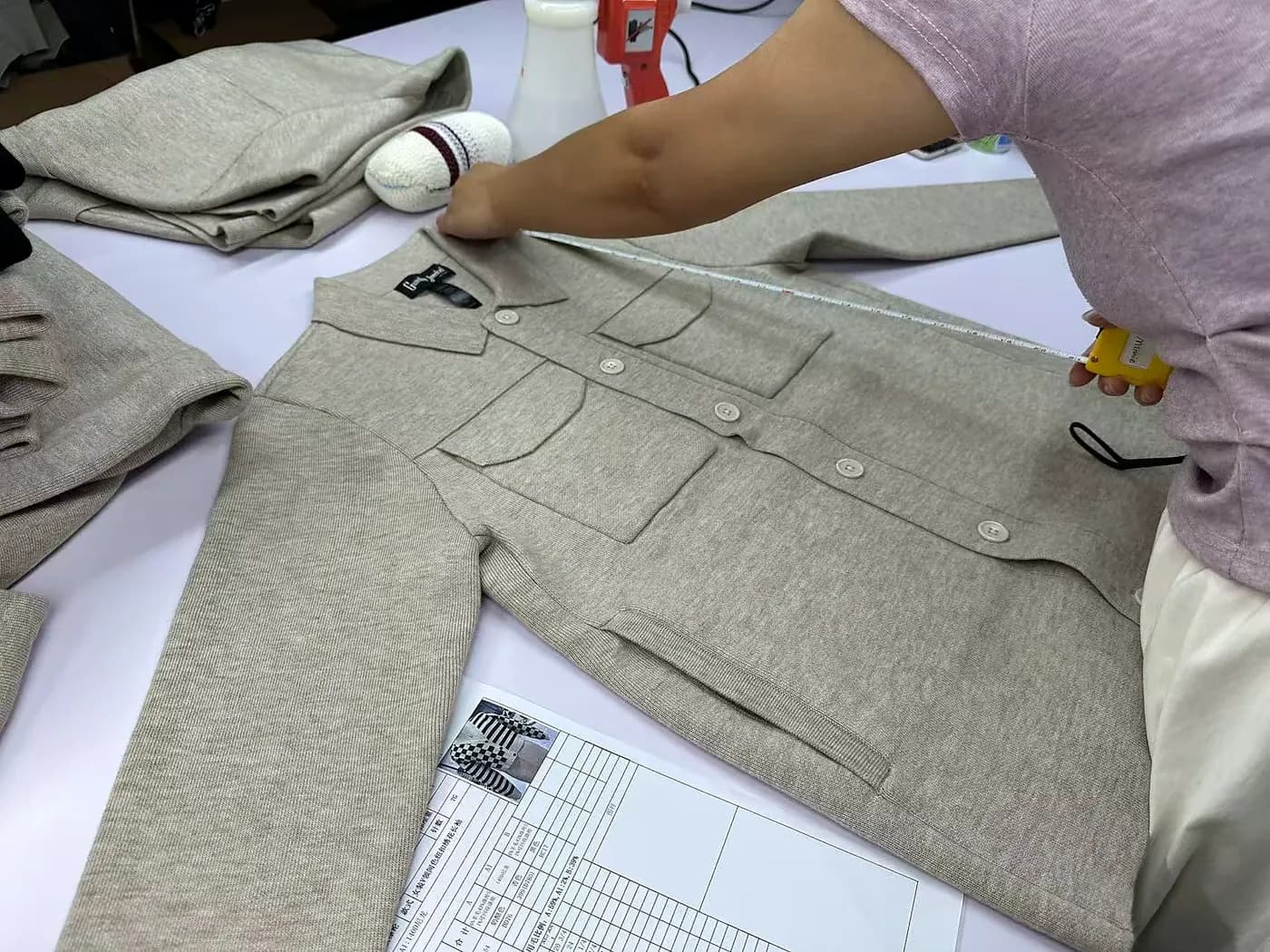
En pedidos grandes, las medidas pueden desviarse si no se controla la tensión de tejeduría. El resultado son tallas que se van saliendo de especificación a lo largo de la producción. La prevención consiste en el control de la tensión y en comprobaciones de medidas en línea. Acuerda las tolerancias (por ejemplo +/- 1cm) desde el principio, tal como se explica en nuestra lista de verificación de control de calidad.
Cómo prevenir los problemas como comprador
- Prueba el hilo para detectar pilling y encogimiento antes del lote a granel
- Aprueba una muestra PP lavada, no solo un prototipo recién hecho
- Especifica la consistencia del lote de tintura y las referencias de color
- Acuerda por escrito las tolerancias y un estándar AQL
- Inspecciona en varias etapas, no solo en la final
- Conserva la muestra aprobada como estándar de referencia
La mejor defensa es elegir desde el principio una fábrica con un control de calidad multietapa documentado. Descubre cómo evaluarlo en nuestra guía para auditar a una fábrica de tejido de punto.
Dónde debe detectarse cada defecto
Los defectos son más baratos de corregir cuanto antes se encuentran. Un agujero detectado durante la tejeduría en línea es un repunte; ese mismo agujero hallado en la inspección final puede significar una caja rechazada. Usa este mapa para decidir qué control detecta cada problema, de modo que nada quede pendiente hasta que la mercancía ya esté empacada.
| Defecto | Mejor etapa para detectarlo | Qué comprobar |
|---|---|---|
| Pilling (bolitas) | Aprobación del hilo (antes del lote a granel) | Prueba de pilling de laboratorio sobre el hilo de producción |
| Torsión (espiralidad) | Muestra PP, después del lavado | Costuras laterales en una muestra lavada |
| Variación de tono | Tintura / en línea | Un solo lote de tintura por color; comparación en cabina de luz |
| Desviación de medidas | Tejeduría en línea | Medir piezas al azar contra la ficha de especificaciones |
| Agujeros / puntos caídos | En línea + final (AQL) | Estado de las agujas, puntos de enganche, paneles completos |
| Remallado irregular | Remallado en línea | Planitud de la costura en cuello, hombro y sisa |
El patrón es constante: los fallos de hilo y acabado se eliminan en el diseño antes del lote a granel, mientras que los fallos de mano de obra se detectan en línea y se confirman en una inspección final AQL. A lo largo de las galgas, desde el grueso 3GG hasta el fino 18GG, y en algodón, lana, merino, cachemira y mezclas, acrílico e hilos reciclados, los controles siguen siendo los mismos: solo las tolerancias se estrechan a medida que la galga se vuelve más fina.
Un ejemplo práctico: detectar la espiralidad antes del envío
Un comprador pide 600 jerséis cuello redondo de merino de galga fina. El prototipo recién hecho parece perfecto, así que resulta tentador aprobarlo y seguir adelante. En lugar de eso, el comprador exige una muestra PP lavada. Tras un lavado doméstico, las costuras laterales rotan aproximadamente 3cm fuera de la vertical: espiralidad clásica por torsión desequilibrada. Como esto salió a la luz durante la ventana de muestreo de 15–25 días, y no después de la producción a granel de 30–45 días, la corrección es barata: la fábrica cambia a un hilo equilibrado (retorcido), añade un acabado de relajado y vaporizado adecuado y vuelve a presentar una muestra lavada. El pedido se envía sin problemas. Aprobar solo el prototipo recién hecho habría supuesto 600 prendas torciéndose en el primer lavado de los clientes, mucho más costoso que una ronda extra de muestra.
Una lista de verificación de prevención de defectos previa a la producción
Ejecútala antes de liberar el lote a granel, idealmente adjunta a tu orden de compra:
- [ ] El hilo de producción supera una prueba de laboratorio de pilling y encogimiento
- [ ] Muestra PP lavada aprobada (revisada por torsión y medidas)
- [ ] Un solo lote de tintura por color confirmado por escrito; color cotejado con Pantone o muestra
- [ ] Tolerancias de medidas indicadas (p. ej. +/- 1cm) y un nivel AQL acordado
- [ ] Inspección en línea programada, no solo la final
- [ ] Muestra aprobada sellada y conservada como estándar de referencia
- [ ] Si se declara contenido reciclado, solicitar la documentación GRS
Preguntas frecuentes
¿Se puede eliminar el pilling por completo? Ningún hilo es totalmente a prueba de bolitas, pero se puede minimizar eligiendo hilos de fibra más larga y mayor torsión y probando el hilo real de producción antes del lote a granel. El objetivo es un rendimiento de pilling aceptable y especificado, no un cero imposible.
¿Cómo hago responsable a una fábrica de los defectos? Pon el estándar por escrito: tolerancias de medidas, consistencia del lote de tintura y un nivel de inspección AQL acordado en la orden de compra, con una muestra aprobada sellada como referencia. Un estándar documentado convierte las disputas en comprobaciones objetivas.
¿Una muestra recién hecha me dirá si el suéter se torcerá o encogerá? A menudo no: la torsión y el encogimiento suelen aparecer solo después del primer lavado. Aprueba siempre una muestra PP lavada para verificar el comportamiento posterior al lavado antes de que comience la producción a granel de 30–45 días.
Licheng Knitwear aplica un control de calidad multietapa y pruebas de hilo para prevenir estos defectos a los compradores B2B de Norteamérica y Europa. Solicita una cotización o explora nuestros productos.
---
Habla con nuestro equipo sobre esto
Si estás planificando un proyecto real en torno a cualquiera de los puntos anteriores, estaremos encantados de echarle un vistazo rápido. Envíanos un breve resumen y te responderemos en un día hábil con una dirección práctica, una estimación de MOQ + plazo de entrega y un plan de muestras si tiene sentido.
→ Solicita una cotización gratuita · Escríbenos por WhatsApp · info@lcgarment.cn
Frequently Asked Questions
Los problemas habituales incluyen variación en las medidas, pilling, diferencia de color, remallado flojo, encogimiento, defectos de acabado y errores de embalaje.
No proveedor should promise zero risk. Clear specs, muestra approval y staged QC can reduce preventable issues.
Nos especializamos en suéteres de hombre, cárdigans, chaquetas de punto, prendas de punto jacquard y prendas de punto de marca privada. Apoyamos a compradores B2B con desarrollo OEM/ODM, desarrollo de muestras y planificación de producción en serie.
Los modelos de muestra disponibles y determinados programas personalizados permiten realizar pedidos de prueba de menor riesgo antes de los pedidos estacionales de mayor volumen.
Sí. Las marcas, incluidas las nuevas que preparan su primera colección, pueden pagar una muestra y verla antes de hacer un pedido de producción. Dos opciones: una muestra lista de un modelo publicado por USD 60 la pieza en unos 7 días, o una muestra de desarrollo a partir de su ficha técnica por USD 150 por modelo (incluye abastecimiento de hilo, programación de tejido, un prototipo y una ronda de ajustes) en 15-25 días. Los modelos de cachemira y mohair se cotizan aparte y el envío se cobra a coste. La producción comienza solo después de aprobar la muestra física, con un mínimo de 30 piezas por color y tallas combinables dentro de las 30. Una muestra no le compromete a producir; no fabricamos prendas para uso personal.
Nuestra tarifa de muestra no es reembolsable. El abastecimiento de hilo, la programación de tejido, la preparación de máquina y el remallado a mano cuestan aproximadamente lo mismo tanto si después viene una pieza como quinientas, y por eso existe la tarifa. Se descuenta de su primer pedido en volumen realizado dentro de los seis meses posteriores a la aprobación de la muestra: el 100% de una muestra de desarrollo y el 50% de una muestra lista.