Strickwarenhersteller in Deutschland: Ein Beschaffungsleitfaden für Einkäufer
Aktualisiert 19.9.202612 min readVon Simon Liu · Licheng Knitwear
Deutschland bleibt einer der diszipliniertesten Strickwaren-Beschaffungsmärkte Europas. Einkäufer erwarten hier strikte Spezifikationstreue, vorhersehbare Vorlaufzeiten, saubere Dokumentation und Garne, die über lange Herbst-Winter-Verkaufsfenster hinweg performen. Dieser Leitfaden ist aus unserer Position als in Dongguan ansässiger Hersteller von Custom-Strickwaren geschrieben, der mit deutschen Herrenmode- und Lifestyle-Marken arbeitet. Wir behandeln, was den Beschaffungskalender antreibt, wo Muster- und Bulk-Zeitpläne realistisch landen, mit welcher MOQ ein mittelgroßes deutsches Label planen kann, welche Feinheiten und Garne wir für den DACH-Markt am häufigsten spezifiziert sehen, wie Qualitätskontrolle und Compliance-Dokumentation typischerweise strukturiert sind und wie Logistik, Zahlung und Incoterms auf FOB-China-Basis verhandelt werden. Das Ziel ist eine praxistaugliche Referenz, die ein Sourcing-Manager in die nächste Lieferantenbewertung mitnehmen kann.
Warum Deutschland für die Strickwarenbeschaffung wichtig ist
Deutschland gehört zu den am stärksten strukturierten Strickwaren-Beschaffungsmärkten, mit denen wir arbeiten. Deutsche Herrenmodemarken — von hochwertigen Traditionslabels bis zu klar gestalteten zeitgenössischen Namen — planen ihre Herbst-Winter-Strickkapsel in der Regel sechs bis neun Monate im Voraus, wobei sich die Musterfreigaben auf das späte Frühjahr konzentrieren und die Platzierung der Bulk-Bestellungen vor dem Kalender der Sommer-Fachmessen erfolgt. Das Verkaufsfenster für Pullover aus Wolle und Wollmischungen in der DACH-Region ist lang und reicht oft von Ende August bis Februar. Das bedeutet, dass Einkäufer Garne bevorzugen, die ihre Form über eine ganze Saison hinweg halten, sowie Konstruktionen, die wiederholtes Tragen überstehen.
Was wir im täglichen Austausch mit deutschen Sourcing-Managern beobachten, ist eine starke Präferenz für Spezifikationsdisziplin gegenüber Preisverhandlungen. Tech Packs kommen mit vermessenen Messpunkten, definierten Nahtkonstruktionen und benannten Garnstärken an. Gegenmuster werden gegen die Spezifikation geprüft, nicht gegen ein Stimmungsbild. Für einen chinesischen Hersteller wie uns als in Dongguan ansässiger OEM- und ODM-Partner ist dies ein praktikables Muster — es reduziert das Hin und Her, bedeutet aber auch, dass der Lieferant eine Dokumentations- und Messgenauigkeit mitbringen muss, die der Erwartung des Einkäufers entspricht.
Deutsche Einkäufer neigen außerdem dazu, Bestellungen auf weniger Styles mit höheren Stückzahlen pro Farbstellung zu konsolidieren, statt auf breite Sortimente mit geringen Auflagen. Das prägt alles Nachgelagerte: Garneinkauf, Strickmaschinenzuteilung und der QC-Plan werden alle einfacher, wenn eine Bestellung so strukturiert ist. Wenn Sie einen chinesischen Lieferanten prüfen und das Gespräch mit Vorschlägen zur Garnsubstitution beginnt, bevor die Spezifikation festgelegt ist, ist das ein Signal, das es abzuwägen lohnt. Ein Lieferant, der standardmäßig zur Substitution greift, bevor er das Tech Pack vollständig gelesen hat, optimiert meist für seinen eigenen Garnbestand und nicht für das Produktbriefing der Marke.
Bereit, Ihr Projekt zu starten?
Fordern Sie einen Katalog an oder senden Sie heute eine Anfrage. Unser Team antwortet innerhalb von 24 Stunden.
Es ist auch erwähnenswert, wie deutsche Beschaffungsteams Lieferantenbewertungen dokumentieren. Während sich manche Märkte auf eine einzige Kontaktperson bei der Marke verlassen, die das Lieferantengespräch von Anfang bis Ende führt, verteilen deutsche Organisationen die Beziehung häufiger auf einen Sourcing-Manager, einen Qualitätsverantwortlichen und einen Logistikkoordinator, von denen jeder Dokumentation direkt anfordern kann. Ein Lieferant, der diese Anfragen sauber weiterleiten kann — ohne dass Informationen in einem einzigen Postfach gefangen bleiben — ist über ein Mehr-Saison-Programm hinweg deutlich einfacher zu handhaben. Wir organisieren unsere eigene Kundenbetreuung standardmäßig nach dieser Struktur.
Realitäten von Muster-Vorlaufzeit und Bulk-Produktion
Realitäten von Muster-Vorlaufzeit und Bulk-Produktion
Bei der Vorlaufzeit beginnt das Gespräch meist, und hier verursacht eine Fehlabstimmung die meiste Reibung. Unsere Standard-Muster-Vorlaufzeit liegt bei 7 bis 25 days, abhängig von der Garnverfügbarkeit und der Komplexität der Konstruktion. Ein gerader 7GG-Rundhalspullover aus Lammwolle in einem Lagergarn kann sich am unteren Ende bewegen. Eine 12GG-Merino-Strickjacke in Fully-Fashion mit individuellem Jacquard oder eine gebürstete Kaschmirmischung mit einem beschafften Garn bewegt sich zum oberen Ende. Einkäufer, die einen Lieferkalender für Deutschland planen, sollten 14 bis 18 days als realistischen Durchschnitt für einen ersten Prototyp ansetzen und eine zweite Runde für die Freigabe von Passform und Griff einplanen.
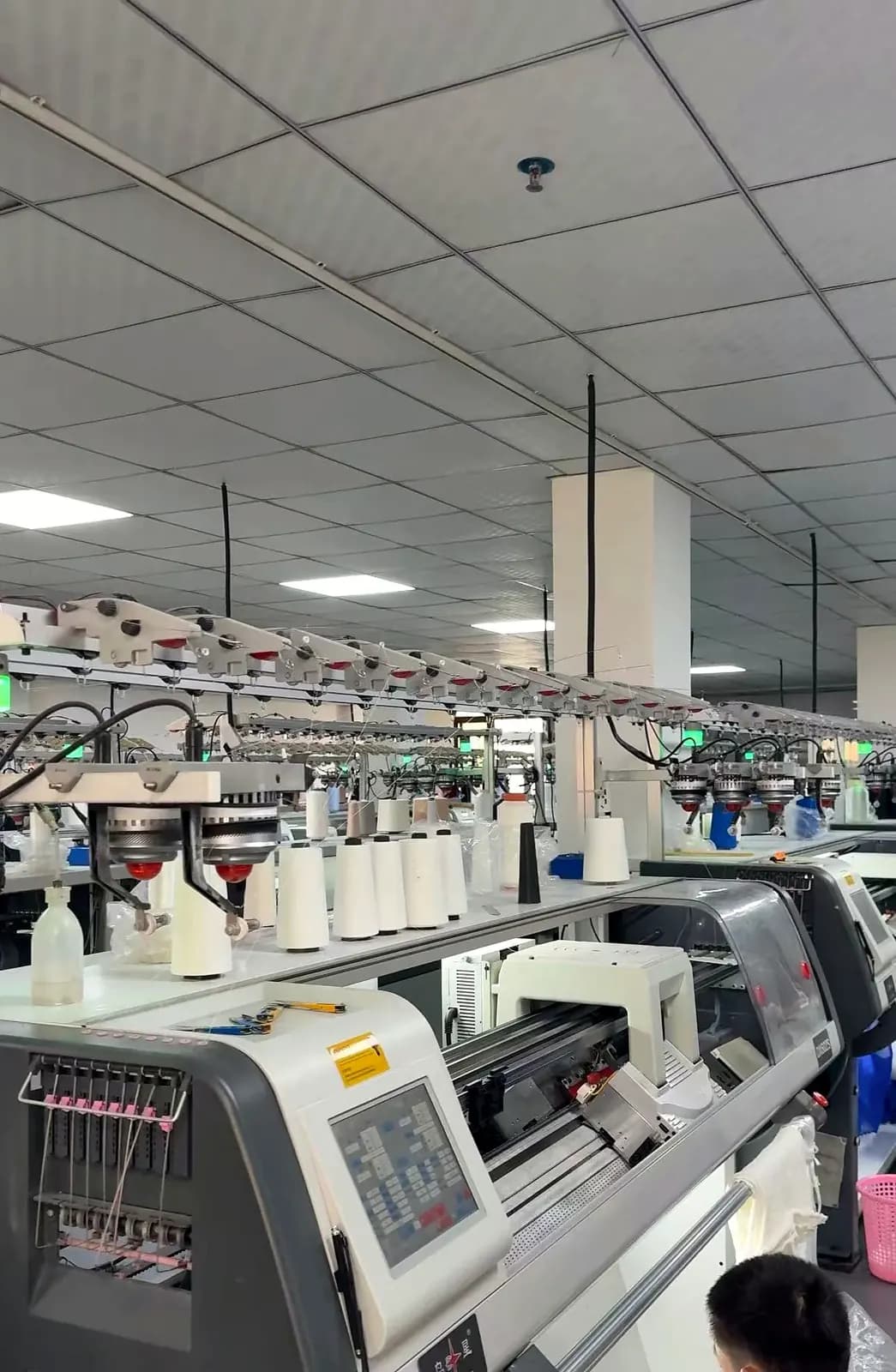
Die Bulk-Produktion läuft 30 to 45 days ab freigegebenem Verkaufsmuster und bestätigter Bestellung, ebenfalls abhängig von Garnvorlaufzeit, Feinheit und Bestellgröße. Gröbere Feinheiten (3GG, 5GG) laufen schneller am Strickstuhl, erfordern aber pro Teil mehr Konfektions- und Veredelungszeit. Feinere Feinheiten (12GG, 14GG) sind langsamer zu stricken, aber einfacher zu konfektionieren. Pullover aus Wolle und Wollmischungen, die für eine deutsche August-September-Lieferung geplant sind, sollten Anfang Mai als freigegebenes Muster vorliegen, wobei die Bestellung bis Mitte Mai bestätigt sein sollte.
Ein deutscher Sourcing-Manager, der eine typische AW-Kapsel plant, sollte den Kalender so rückwärts entwickeln:
Meilenstein
Zeitpunkt vor Lieferung
Verantwortlich
Tech Pack + Garnbriefing versendet
16-18 Wochen
Marke
Erstes Prototyp-Muster
14-16 Wochen (7-25d Durchlauf)
Hersteller
Passform- + Griff-Revision
12-14 Wochen
Beide
Verkaufsmuster freigegeben + Bestellung
10-12 Wochen
Marke
Bulk-Garnfärbung + Stricken + Konfektion
6-10 Wochen (30-45d Durchlauf)
Hersteller
Inline- + finale AQL-Inspektion
4-6 Wochen
Hersteller
FOB Yantian / Shenzhen
4-5 Wochen
Hersteller
Seefracht nach Hamburg / Bremerhaven
0 Wochen (Ankunft)
Spediteur
Seefracht von Südchina zu norddeutschen Häfen dauert typischerweise 32 bis 40 days von Hafen zu Hafen. Luftfracht ist für Mustersendungen und kleine kurzfristige Nachbestellungen verfügbar, ist aber für eine vollständige Pullover-Bulkmenge selten wirtschaftlich. Wenn ein Programm knapp gegen ein Ladentermin läuft, ist der Hebel, den wir zuerst betätigen, meist die Garnfärbe-Planung statt der Strickgeschwindigkeit — eine Ersparnis von einer Woche bei der Färberei-Buchung lässt sich oft leichter herausholen als eine Wochenersparnis an einem Strickstuhl, der bereits voll ausgelastet ist.
Ein praktischer Hinweis zum Kalenderverzug: Wo Programme ins Rutschen geraten, geschieht das am häufigsten beim Schritt der Griff-Freigabe und nicht beim Bulk-Strickschritt. Eine zusätzliche Woche in den Griff-Puffer einzubauen ist die einzelne nützlichste Änderung, die Marken nach einer ersten gemeinsamen Saison an ihrem Lieferantenkalender vornehmen.
MOQ und Geschäftsbedingungen für deutsche Markengrößen
Unsere Katalog-MOQ liegt typischerweise bei 30 pieces pro Farbe, pro Style. Für eine deutsche Marke, die drei Kernfarben über einen einzigen Style führt, ist das ein praktikables 90-Stück-Programm. Für größere Labels, die saisonale Kapseln aus sechs bis zehn Styles aufbauen, wird die MOQ pro Style selten zur Einschränkung — die Ökonomie des Garneinkaufs schon eher.
Die praktische Realität für mittelgroße deutsche Herrenmodemarken: Wenn Sie eine AW-Kapsel aus fünf Styles in jeweils drei Farbstellungen platzieren, sollte die Garnbestellung für jede Farbstellung über die Styles hinweg konsolidiert werden, wo Garnstärke und Zusammensetzung übereinstimmen. Wir strukturieren Bestellungen routinemäßig so, dass eine einzige Lammwoll-Farbe sowohl einen Rundhalspullover als auch einen Half-Zip im selben Drop bedient. Das reduziert Garnmindestmengen und verbessert die Farbpartien-Konsistenz, was deutschen QC-Teams auffällt, wenn eine Sendung unter standardisiertem D65-Licht gegen den freigegebenen Lab-Dip geprüft wird.
Bei der Preisgestaltung kalkulieren wir FOB China in USD. Manche deutschen Einkäufer bevorzugen in EUR ausgewiesene Bestellungen (ungefähre EUR-Umrechnung zum Bestelldatum) — wir kommen dem als kaufmännischer Annehmlichkeit entgegen, doch die zugrunde liegenden Produktionskosten sind dollarbasiert. Die Standardzahlung beträgt 30% Anzahlung bei Bestellbestätigung, 70% Restzahlung gegen B/L-Kopie. Open-Account-Bedingungen sind bei Wiederholungsgeschäft nach zwei bis drei erfolgreichen Bestellungen verhandelbar.
Für Marken, die neu mit einem chinesischen Lieferanten zusammenarbeiten, lautet die Frage, die uns in der Phase der Geschäftsbedingungen am häufigsten gestellt wird, wie der Preis über die Stückliste hinweg strukturiert ist. Eine klare Antwort: Das Garn macht bei Programmen aus Naturfasern in der Regel den größten Kostenanteil aus, gefolgt von der Arbeit für Konfektion und Veredelung als nächstgrößtem Posten, danach Zutaten, Verpackung und Inspektion. Diese Reihenfolge ist wichtig, denn sie zeigt Ihnen, wo Preisverhandlungen echten Spielraum haben und wo nicht. Beim Garn auf Qualität zu drücken, um eine Stückkostensenkung zu erreichen, zeigt sich im fertigen Kleidungsstück meist schon innerhalb eines Waschgangs.
Garn- und Feinheitsrichtungen, die deutsche Einkäufer bevorzugen
Die deutsche Herrenmode-Beschaffung tendiert zu Naturfasergarnen und mittleren bis feinen Feinheiten. Die Muster, die wir am häufigsten sehen:
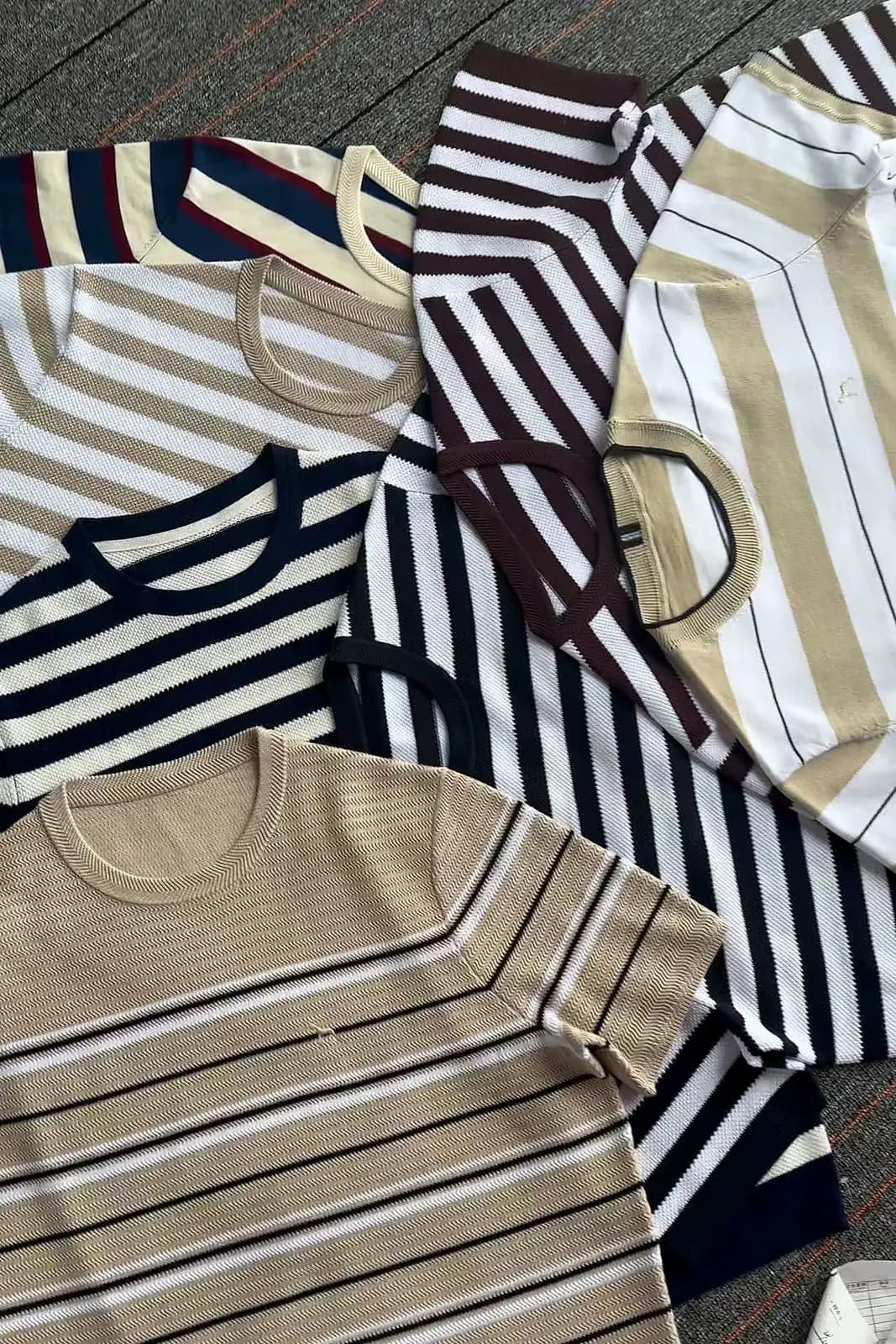
100% Merinowolle, 18,5-19,5 Mikron, in 7GG und 12GG, für Rundhalspullover, Half-Zips und Strickjacken. Das ist das Arbeitstier des deutschen AW-Sortiments.
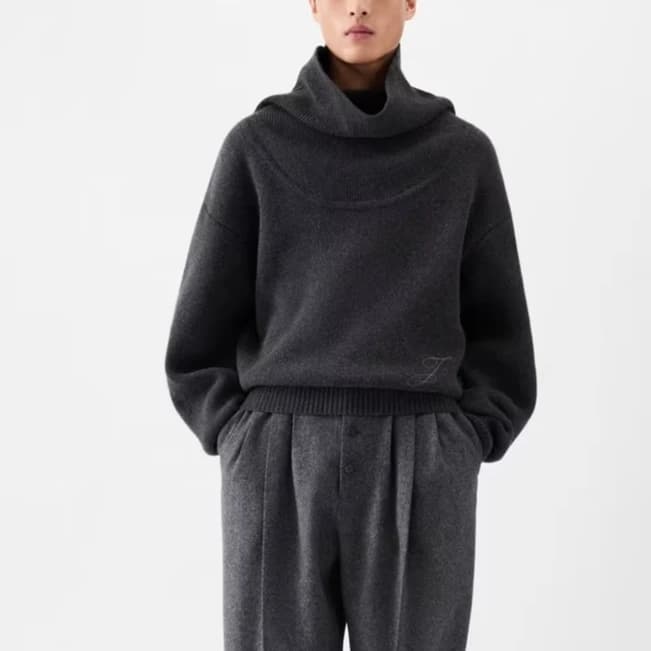
Lammwollmischungen (typischerweise 80/20 Lammwolle/Nylon) in 5GG und 7GG, für gröbere Raglan-Rundhalspullover und Schalkragen-Teile.
Kaschmir und Kaschmirmischungen (oft 30% Kaschmir / 70% Merino) in 12GG, für Styles im Premium-Preissegment.
Baumwoll-Merino-Mischungen in 12GG und 14GG, für Übergangs- und Frühherbstteile.
Feinheiten von 3GG bis 18GG sind alle bei uns verfügbar, wobei 5GG, 7GG und 12GG die von deutschen Programmen am häufigsten spezifizierten sind. Schwerere Konstruktionen im Handstrick-Look bei 3GG erscheinen gelegentlich im Sortiment, tendieren aber aufgrund der geringeren Strickgeschwindigkeit zu Premium-Preispunkten und längeren Vorlaufzeiten.
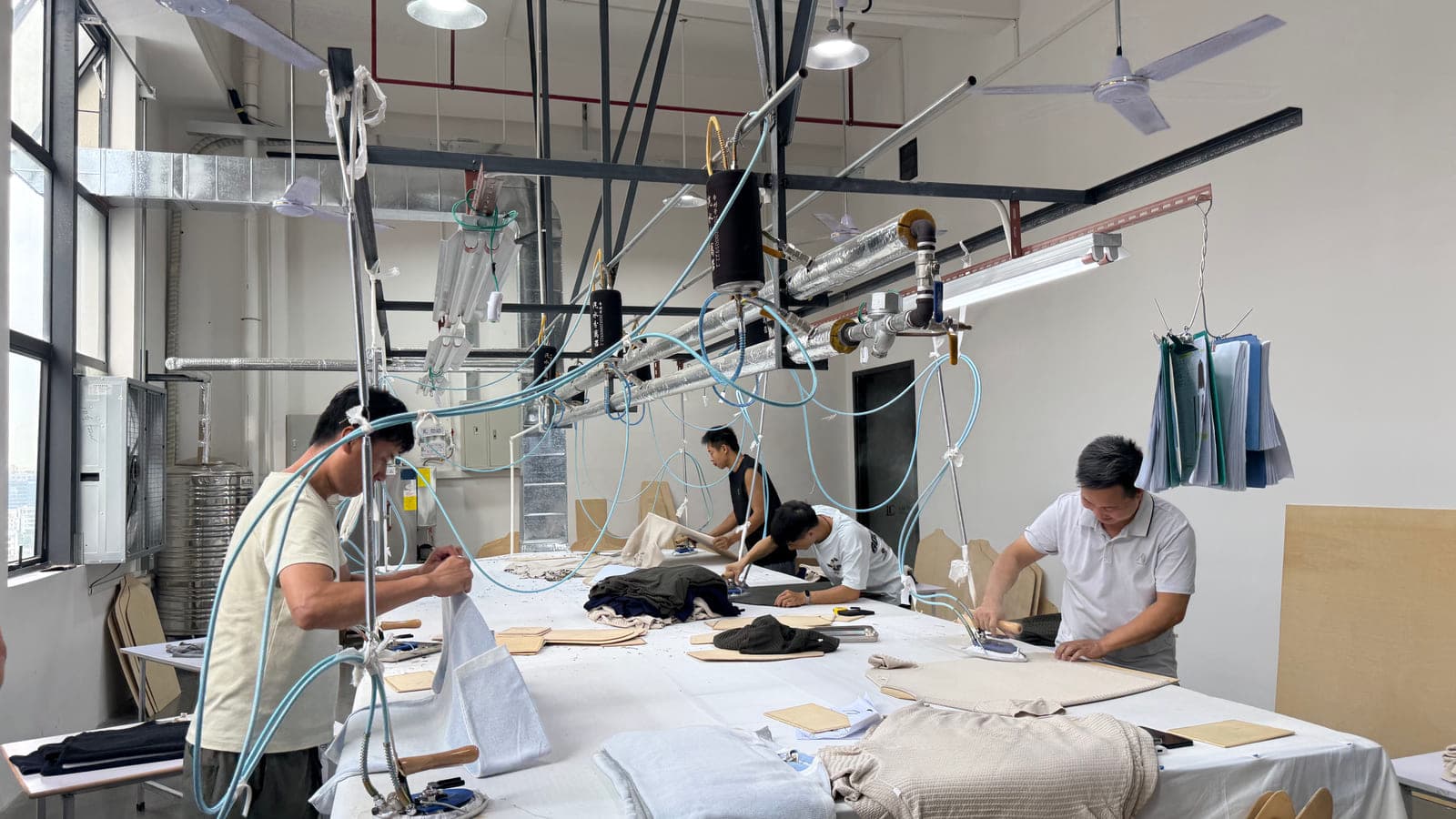
Die Wasch-Veredelung ist für den deutschen Markt ebenso wichtig wie das Garn. Einkäufer spezifizieren hier oft einen garmentgewaschenen Griff für Lammwolle und eine gewalkte Veredelung für Merino und fordern die Griff-Freigabe als eigenständigen Schritt vor der Bulk-Autorisierung an. Bauen Sie das in den Kalender der Musterfreigabe ein. Wo eine Veredelung für das Produktbriefing entscheidend ist — zum Beispiel eine weichgemachte Lammwolle, die sich direkt aus der Verpackung eingetragen anfühlen soll — empfehlen wir ein dediziertes Griff-Muster, das zusammen mit dem Passform-Muster versendet wird, damit sich die beiden Freigaben nicht gegenseitig blockieren.
Bei der Garnbeschaffung benennen deutsche Einkäufer gelegentlich eine bestimmte Spinnerei (italienische Spinnereien sind am häufigsten) und bitten uns, direkt mit diesem Lieferanten zu arbeiten. Das ist praktikabel, mit dem Vorbehalt, dass die Vorlaufzeiten von nominierten Garnen außerhalb unserer Kontrolle liegen und bereits in der Tech-Pack-Phase in den Kalender eingerechnet werden sollten, statt sie später zu entdecken. Für Marken ohne nominierte Spinnerei arbeiten wir aus einer engeren Auswahl von Spinnereien, bei denen wir ein etabliertes Konto und bekanntes Farbpartien-Verhalten haben.
Überlegungen zu Qualitätskontrolle und Compliance
Überlegungen zu Qualitätskontrolle und Compliance
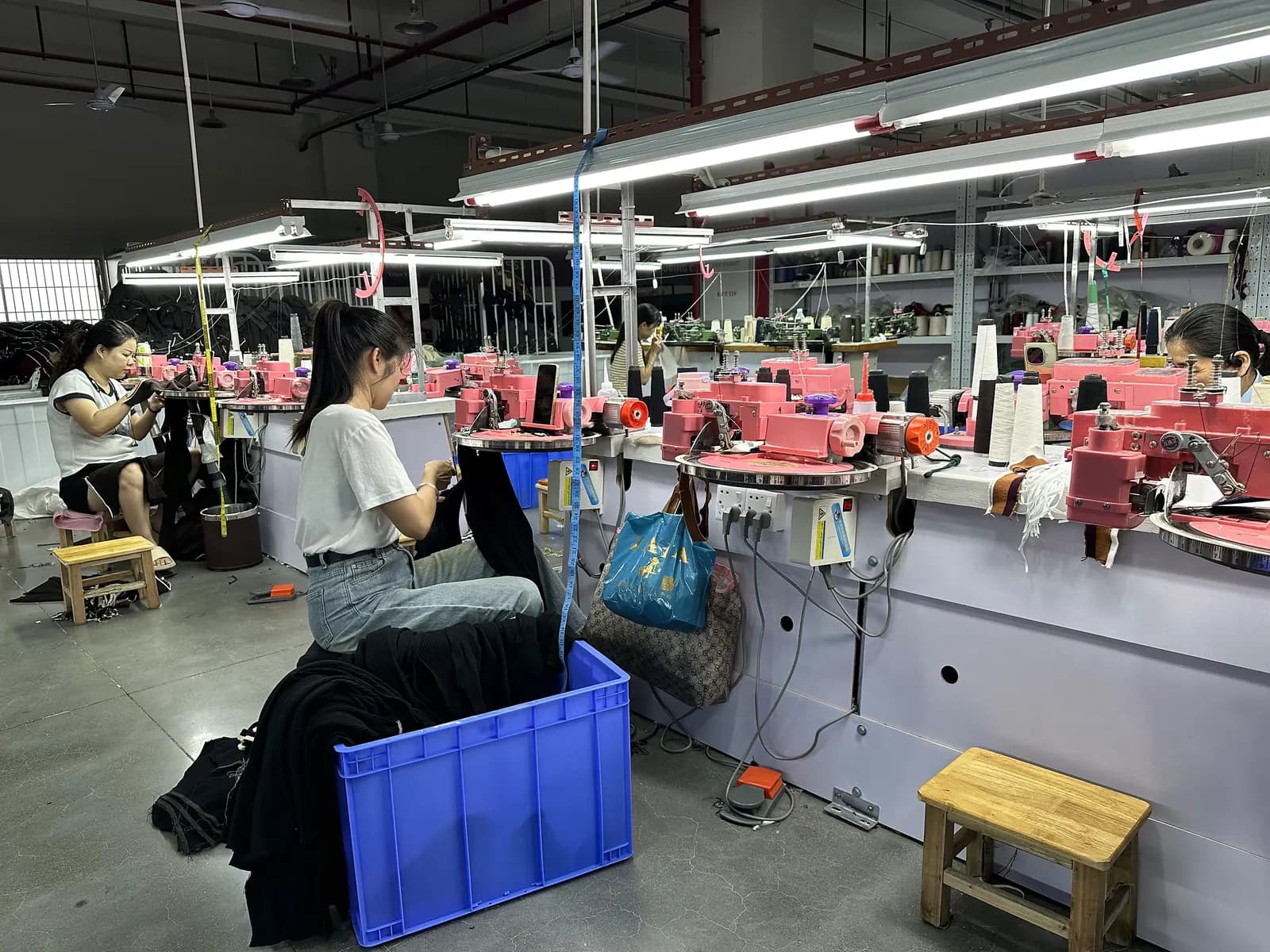
Die deutschen QC-Erwartungen sind dokumentationsintensiv. Wir führen Inline-Inspektionen während des Strickens und Konfektionierens durch, plus eine finale AQL-Inspektion (üblicherweise AQL 2.5 für Haupt- und 4.0 für Nebenfehler, auf Käuferanforderung anpassbar) vor dem Kartonieren. Jede Bulk-Sendung durchläuft eine Nadel- und Metalldetektion — das ist für jeden Pullover, der in den EU-Einzelhandelskanal geht, nicht verhandelbar, und wir behandeln es als Standard, nicht als Aufwertung.
Zur Compliance-Dokumentation: Die relevanten Auditberichte und Prüfzertifikate können qualifizierten Einkäufern auf Anfrage unter NDA zur Verfügung gestellt werden. Wir zeigen Zertifizierungslogos nicht öffentlich auf der Marketing-Website, weil der relevante Geltungsbereich und die Gültigkeit gegen die konkrete Bestellung und Sendung bestätigt werden sollten. Deutsche Einkäufer fordern typischerweise an: einen Faserzusammensetzungs-Prüfbericht pro Sendung, Formaldehyd- und Azofarbstoff-Prüfberichte für den EU-Markt und, wo erforderlich, eine aktuelle Zusammenfassung eines Fabrikaudits. Bauen Sie die Dokumentationsanforderung in die Bestellung ein, damit die Labor-Buchung mit dem Produktionskalender übereinstimmt.
Bei der Etikettierung erwarten deutsche Einzelhändler Pflegeetiketten in Deutsch mit der korrekten Deklaration der Faserzusammensetzung, dem Ursprungsland und CE/REACH-konformen Pflegesymbolen. Wir können das Pflegeetikett in unserem Betrieb aus käuferseitig gelieferten Druckvorlagen drucken und einnähen oder käuferseitig gelieferte Etiketten anbringen — beides ist praktikabel, aber die Wahl sollte vor der Musterfreigabe bestätigt werden.
Ein gesonderter Punkt, der bei den QC-Fehlerkategorien hervorzuheben ist: Die Pilling-Beständigkeit ist bei Lammwoll-Programmen für den deutschen Markt ein wiederkehrendes Thema. Wir behandeln Pilling-Tests als Teil der Musterfreigaberunde, wenn der Einkäufer dies kennzeichnet, doch das Ergebnis hängt ebenso sehr von Garndrehung und Veredelung ab wie von der Konstruktion. Wenn Pilling bei einem bestimmten Garn ein bekanntes Risiko ist, ist die richtige Stelle, es anzugehen, das Spinnerei-Briefing und nicht die AQL-Stufe.
Hinweise zu Logistik, Zahlung und Incoterms
Die meisten deutschen Programme, die wir versenden, laufen über FOB Yantian oder FOB Shenzhen, wobei der vom Käufer benannte Spediteur die Seefracht nach Hamburg oder Bremerhaven abwickelt. CIF- und DAP-Bedingungen sind auf Anfrage verfügbar, werden aber tendenziell konservativ kalkuliert, weil wir ein Risiko bepreisen, das wir nicht kontrollieren — für etablierte Programme ist FOB plus eine Spediteur-Beziehung, der die Marke vertraut, in der Regel die sauberere Struktur.
Die Größen, die wir produzieren, reichen von XS bis 3XL, was die Standard-Größenpalette der deutschen Herrenmode abdeckt (typischerweise S-XXL, wobei einige Marken für bestimmte Kanäle bis 3XL erweitern). Gradierungsspezifikationen sollten mit dem Tech Pack geliefert werden; wir arbeiten aus käuferseitig gelieferten Gradierregeln, statt eine Hausgradierung aufzuzwingen.
Die Zahlung erfolgt typischerweise per T/T: 30% Anzahlung, 70% gegen B/L-Kopie. L/C at sight ist für Erstprogramme über einem bestimmten Bestellwert verfügbar und wird manchmal von größeren deutschen Einkäufern mit etablierten Handelsfinanzierungsbeziehungen bevorzugt. Wir arbeiten derzeit nicht auf D/P- oder D/A-Basis für neue Konten.
Schließlich zur Kommunikationsfrequenz: Wir halten eine Überschneidung der Arbeitszeiten mit deutschen Einkäufern über die Fenster vom China-Vormittag bis zum frühen Deutschland-Nachmittag aufrecht, und unsere redaktionelle und vertriebliche Dokumentation ist in Englisch, Deutsch und Spanisch verfügbar. Für einen deutschen Sourcing-Manager, der ein erstes Programm mit uns bewertet, sind wöchentliche Status-Updates während des Musterns und zweimal wöchentliche während der letzten beiden Wochen der Bulk-Produktion vor dem Versand zu erwarten. Die Berichtsvorlage deckt den Status der Produktionsschritte, etwaige offene Qualitätsfragen und den nächsten Kontrollpunkt zur Versandbereitschaft ab — kurz genug, um auf dem morgendlichen Arbeitsweg gelesen zu werden, strukturiert genug, um alles ans Licht zu bringen, was eine Entscheidung erfordert.
---
Sprechen Sie mit unserem Team darüber
Wenn Sie ein echtes Projekt rund um einen der obigen Punkte planen, werfen wir gerne einen schnellen Blick darauf. Senden Sie uns ein kurzes Briefing, und wir melden uns innerhalb eines Werktags mit einer praktischen Richtung, einer Schätzung zu MOQ + Vorlaufzeit und, falls sinnvoll, einem Musterplan zurück.
Planen Sie 30 bis 45 Tage Bulk-Produktion ab freigegebenem Verkaufsmuster und bestätigter PO ein, plus einige Tage für AQL-Inspektion und Kartonieren vor FOB. Ein erstes Proto-Muster läuft 7 bis 25 Tage, abhängig von Garnverfügbarkeit und Konstruktionskomplexität. Für eine typische 5-Style-HW-Kapsel budgetieren Sie 16 bis 18 Wochen ab Tech-Pack-Freigabe bis zum Verladehafen.
Unsere Katalog-MOQ beträgt typischerweise 30 Stück pro Farbe, pro Style. Ein Dreifarbenprogramm auf einem einzelnen Style sind 90 Stück. Bei Multi-Style-Kapseln ist die bindende Einschränkung üblicherweise die Garneinkaufsökonomie statt der MOQ pro Style — die Konsolidierung von Garnfarbtönen über Styles innerhalb desselben Drops hinweg ist der effektivste Weg, dies zu managen.
100 % Merino in 7GG und 12GG, Lambswool-Mischungen in 5GG und 7GG sowie Kaschmirmischungen in 12GG decken den Großteil des deutschen HW-Sortiments ab, das wir produzieren. Baumwoll-Merino-Mischungen in 12GG und 14GG tauchen bei Übergangs-Styles auf. Feinheiten von 3GG bis 18GG sind alle verfügbar, wobei 5GG, 7GG und 12GG die am häufigsten spezifizierten sind.
Wir führen AQL-Inspektion plus Nadel- und Metalldetektion bei jeder Bulk-Sendung standardmäßig durch. Faserzusammensetzungs-, Formaldehyd- und Azofarbstoff-Prüfberichte werden pro Sendung arrangiert, wenn dies in der PO spezifiziert ist. Auditzusammenfassungen und andere Compliance-Dokumente können auf Anfrage unter NDA geteilt werden — wir veröffentlichen keine Zertifizierungslogos, weil Umfang und Gültigkeit gegen die spezifische PO bestätigt werden sollten.
Die meisten Programme verschiffen FOB Yantian oder FOB Shenzhen, wobei der Spediteur des Käufers die Seefracht nach Hamburg oder Bremerhaven abwickelt (typischerweise 32 bis 40 Tage Hafen-zu-Hafen). Die Zahlung erfolgt standardmäßig per T/T: 30 % Anzahlung bei PO, 70 % gegen B/L-Kopie. L/C at sight ist für Erstprogramme verfügbar. Die Preisgestaltung wird in USD quotiert; EUR-denominierte POs (ca. Umrechnung zum PO-Datum) werden als kommerzielle Annehmlichkeit akzeptiert.
Wir konzentrieren uns auf Herrenpullover, Cardigans, Strickjacken, Jacquard-Strickwaren und Private-Label-Strickwaren. Wir unterstützen B2B-Käufer bei OEM/ODM-Entwicklung, Mustererstellung und Serienproduktionsplanung.
MOQ, Lieferzeiten, Kostenspannen, Feinheitenwahl und Qualitätsprüfpunkte typischer OEM/ODM-Strickprogramme für Nordamerika und Europa. E-Mail eintragen — den Link schicken wir in 30 Sekunden.
Kein Spam. Abmeldung mit einer einzigen Antwort. Wir nutzen Ihre E-Mail ausschließlich, um Ihnen den Report zu senden und auf Wunsch das Sourcing-Gespräch fortzusetzen.