Strickwaren-Einkauf in Spanien & Portugal: Saisonkalender und Beschaffungsrhythmus
Aktualisiert 9.10.202612 min readVon Simon Liu · Licheng Knitwear
Iberische Strickwaren-Einkäufer stehen vor einem komprimierten Beschaffungsfenster: Ein langer, warmer Herbst verschiebt die AW-Strickeinführungen später als in Nordeuropa, während ein kurzer, aber intensiver Winter-Peak im Landesinneren Spaniens und eine milde portugiesische Küste einen mehrschichtigen Produktmix verlangen. Bei Licheng Knitwear, einem 2018 gegründeten Hersteller mit Sitz in Dongguan, arbeiten wir mit Großhändlern und Eigenmarken in ganz Spanien und Portugal zusammen, die einen Beschaffungsrhythmus benötigen, der auf diese Realitäten zugeschnitten ist und nicht auf generische europäische Kalender. Dieser Leitfaden erläutert, wie wir Muster und Serie für den iberischen Markt timen, welches MOQ und welche Handelsbedingungen zur typischen spanischen oder portugiesischen Markengröße passen, welche Garne und Feinheiten iberische Einkäufer bevorzugen und welche Fragen zu QC, Logistik und Incoterms wir am häufigsten hören. Das Ziel ist eine praktische Referenz, mit der Sie ein AW- oder SS-Strickprogramm aus Dongguan mit Zuversicht planen können.
Spanien und Portugal liegen am südlichen Rand des europäischen Strickwaren-Kalenders, und diese geografische Lage verändert unmerklich die Art und Weise, wie iberische Einkäufer ein Strickprogramm planen sollten. Die Winter kommen später, gehen schneller vorüber und teilen sich scharf zwischen dem kalten Landesinneren Kastiliens und Aragoniens und der milden Atlantikküste Galiciens, Asturiens und der gesamten portugiesischen Küste. Von unserer Fabrik in Dongguan aus beliefert Licheng Knitwear seit 2018 spanische und portugiesische Großhändler sowie Eigenmarken, und der Rhythmus, den wir empfehlen, unterscheidet sich deutlich vom deutschen oder skandinavischen Takt. Dieser Leitfaden richtet sich an Einkaufsteams, die diesen Unterschied in einen praxistauglichen Muster-, Serien- und Lieferplan übersetzen möchten.
Warum die Iberische Halbinsel für die Strickwaren-Beschaffung wichtig ist
Die Iberische Halbinsel ist nicht der größte Strickwarenmarkt Europas, aber einer der modisch-editorialsten. Spanien beherbergt weltweit einflussreiche, vertikal integrierte Marken, und Portugal verfügt über eine eigene tiefe Textilherstellungstradition, insbesondere rund um Vila Nova de Famalicão und Guimarães. Beide Tatsachen prägen die Erwartungen der Einkäufer auf drei konkrete Arten, die wir bei Licheng beobachten.
Erstens sind iberische Einkäufer tendenziell designgetrieben. Tech-Packs treffen mit starken Bezügen zu Silhouette, Griff und Finish ein, nicht nur zu Feinheit und Gewicht. Zweitens kommen unsere iberischen Kunden – da lokale portugiesische Strickkapazitäten vorhanden sind – meist aus Gründen der Preispositionierung, neuartiger Garne, der Komplexität von Jacquard und Intarsia oder wegen Mengen, die lokale Strickereien im AW-Hochbetrieb nicht aufnehmen können, nach Dongguan. Drittens ist der Einzelhandelskalender tatsächlich später: Spanische Kaufhäuser und unabhängige Händler nehmen schwere Strickware üblicherweise von Ende September bis Oktober in die Fläche, wobei der Großteil des Abverkaufs eher von November bis Januar erfolgt als im für den Norden typischen September-Peak.
Bereit, Ihr Projekt zu starten?
Fordern Sie einen Katalog an oder senden Sie heute eine Anfrage. Unser Team antwortet innerhalb von 24 Stunden.
Für einen Beschaffungsmanager ist dieses verzögerte Einzelhandelsfenster ein Planungsvorteil. Es bedeutet, dass eine iberische Marke ihre AW-Farb- und Garnentscheidungen ein bis zwei Wochen später als ein deutscher Wettbewerber bestätigen kann, ohne die Termine in der Fläche zu gefährden. Wir gestalten unsere Versandpläne rund um diese Flexibilität.
Realitäten der Vorlaufzeiten für Muster und Serie
Realitäten der Vorlaufzeiten für Muster und Serie
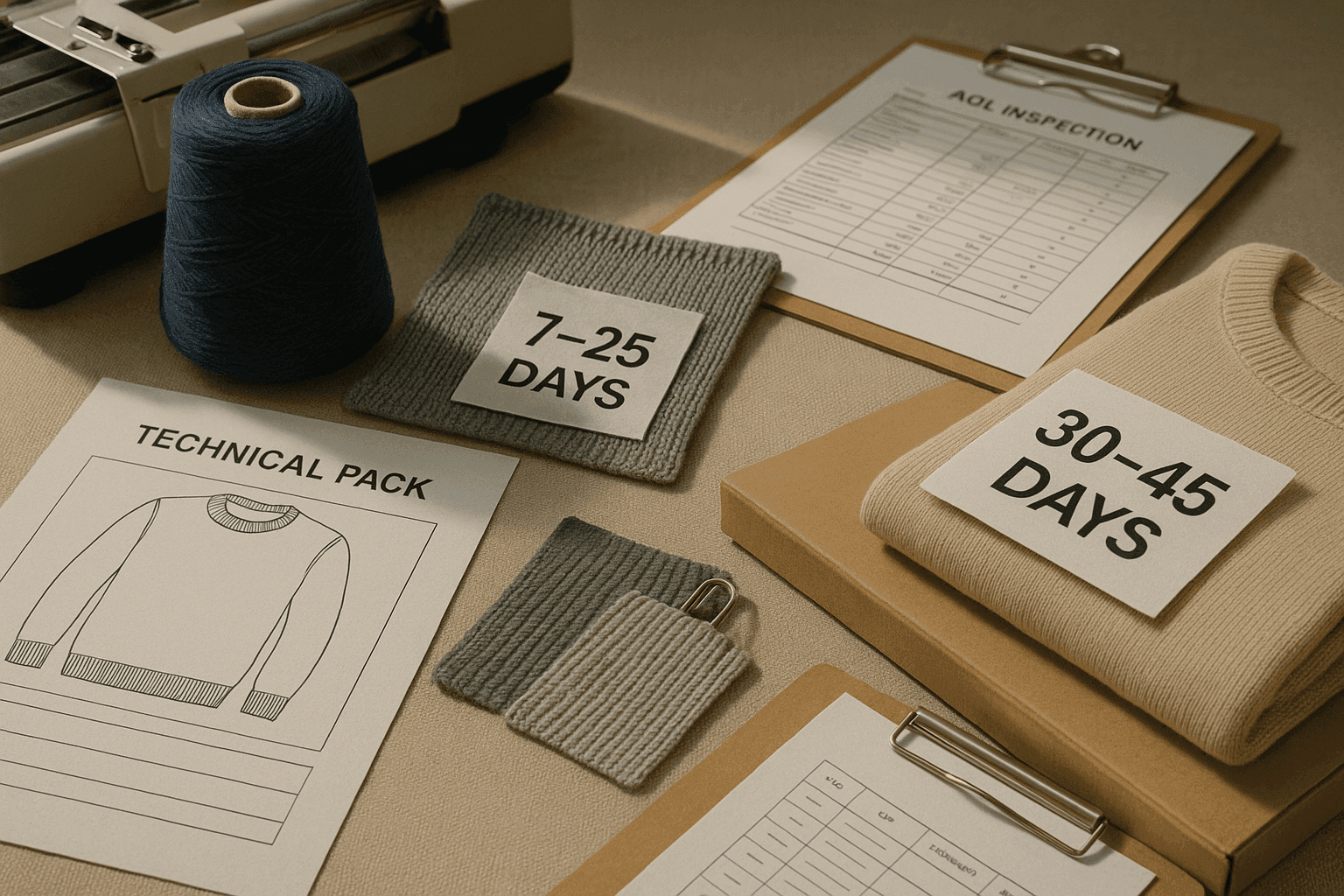
Lichengs veröffentlichte Vorlaufzeiten gelten konsistent auch für iberische Programme: Die Bemusterung dauert 7–25 Tage ab freigegebenem Tech-Pack, und die Serienproduktion dauert 30–45 Tage ab freigegebenem Verkaufsmuster und bestätigter Bestellung. Wo der iberische Kalender spezifisch wird, ist die Art, wie Sie diese Zeitfenster gegen den lokalen Einzelhandelsrhythmus stapeln.
Für eine AW-Kollektion, die Ende September bis Anfang Oktober in den Geschäften in Madrid, Barcelona oder Porto eintrifft, empfehlen wir die folgenden Ankerpunkte der Rückwärtsplanung. Bestätigen Sie das Garn und entwickeln Sie den ersten Prototyp bis Anfang Februar. Fixieren Sie das Verkaufsmuster bis Mitte März. Platzieren Sie die Serienbestellung spätestens in der ersten Maiwoche. Versenden Sie FOB Yantian oder Shenzhen bis Mitte Juli, um 28–35 Tage Seetransit nach Valencia, Algeciras oder zum Hafen von Leixões sowie Zoll und letzte Meile zu einem spanischen oder portugiesischen 3PL einzuplanen. SS-Programme mit leichten Stricken (feine Baumwolle, Leinenmischungen, Übergangs-Merino) folgen einem gespiegelten Zyklus mit Serienversand von November bis Dezember.
Wo Marken in die Falle tappen, ist das Serienfenster. Die genannte Vorlaufzeit von 30–45 Tagen setzt eine Produktion in der Saisonmitte voraus. Wenn Ihre Bestellung in unseren Hochbetrieb von August bis Oktober fällt, parallel zu US- und UK-AW-Aufträgen, liegt der realistische Wert am oberen Ende dieser Spanne, und Wartezeiten bei Garn-Färbepartien können ihn weiter verlängern. Iberische Einkäufer profitieren davon, früher im Kalender zu buchen, als sie es instinktiv für nötig halten – gerade weil ihr Einzelhandelstermin in der Fläche später liegt als der globale Ansturm.
MOQ und Handelsbedingungen für iberische Markengrößen
Die typische spanische oder portugiesische Eigenmarke, mit der wir arbeiten, gliedert sich in zwei Cluster: unabhängige Multi-Brand-Spezialisten, die 200–800 Teile pro Stil über die Farben hinweg einkaufen, und wachsende DTC- und Großhandelsmarken, die 500–2.000 Teile pro Stil platzieren. Unser Katalog-MOQ von 30 Teilen pro Farbe und Größenlauf ist genau für diese Bandbreite ausgelegt – es ermöglicht einer Marke, drei oder vier Farbstellungen in einem Hero-Stil anzubieten, ohne eine Lagerverpflichtung einzugehen, die nicht zur iberischen Einzelhandelsfläche passt.
Für die vollständig maßgeschneiderte Entwicklung (individuelle Garnmischung, kundenspezifischer Jacquard, gebrandete Accessoires) steigt das MOQ und wird projektbezogen kalkuliert. Die folgende Tabelle fasst den Handelsrahmen zusammen, innerhalb dessen unsere iberischen Kunden am häufigsten arbeiten.
Programmtyp
Typisches MOQ
Vorlaufzeit Muster
Vorlaufzeit Serie
Indikative FOB-Preisspanne (USD)
Katalogstil, nur Umfärbung
30 Stück / Farbe
7–12 Tage
30–35 Tage
12–22
Katalogstil, leichte Anpassung
30 Stück / Farbe
10–18 Tage
30–40 Tage
14–26
Voll-OEM, Standardgarn
30 Stück / Farbe
15–25 Tage
35–45 Tage
16–34
Voll-ODM mit Sondergarn
300–500 Stück / Farbe
20–25 Tage
40–45 Tage
22–48
Die Preise sind indikative FOB-China-Spannen über unseren gesamten Feinheitsbereich hinweg und hängen von Garn, Feinheit, Gewicht und Veredelung ab – sie sind kein Angebot. Lokale iberische Großhandelspreise liegen typischerweise in einer Spanne, die sich grob in eine gesunde Marge auf diese FOB-Werte umrechnet, sobald Zoll, Mehrwertsteuer und Fracht hinzukommen (ungefähre EUR-Umrechnung zu den jeweils geltenden Kursen).
Die Zahlungsbedingungen für neue iberische Kunden beginnen mit 30 % Anzahlung bei Bestellbestätigung und 70 % gegen Kopie des Konnossements. Etablierte Stammkunden können für spanische und portugiesische Häfen, die wir routinemäßig bedienen, 30/70 gegen Dokumente bei Lieferung aushandeln.
Garn- und Feinheitsrichtungen, die iberische Einkäufer bevorzugen
Licheng strickt von 3GG bis 18GG, wobei 5GG, 7GG und 12GG den Großteil unserer iberischen Lieferungen ausmachen. Die Aufteilung, die wir zwischen unseren spanischen und portugiesischen Kunden beobachten, ist konstant genug, um sie als Muster zu bezeichnen, auch wenn jede Marke anders ist.
Spanische Einkäufer, insbesondere jene, die Madrid und das kalte Landesinnere anvisieren, tendieren zu groben und mittelfeinen AW-Teilen in 5GG und 7GG: kurze Cardigans, übergroße Rundhalspullover, Zopfstrick und auffällige Kragenpullover. Recycelte Wollmischungen, Lambswool, Alpakamischungen und gebürstete Garne schneiden stark ab. Es gibt zudem einen beständigen spanischen Appetit auf erdige Ton-in-Ton-Paletten – Terrakotta, Olive, Ocker, Off-White, Marineblau –, die es einer Marke ermöglichen, Farbe über mehrere Saisons hinweg zu tragen.
Portugiesische Einkäufer hingegen tendieren oft etwas feiner in der Feinheit. Mit der atlantisch milden Küste, die sich von Porto bis zur Algarve erstreckt, teilen sich 12GG-Merino-Rundhälse, baumwollreiche Übergangsstrickwaren und leichte Cardigans die Verkaufsfläche zu gleichen Teilen mit schwereren Stilen. Leinen- und Baumwollmischungen verkaufen sich in ein längeres SS-Fenster hinein, als wir es anderswo in Europa sehen, und portugiesische Eigenmarken platzieren regelmäßig feinfädige Polo- und Half-Zip-Aufträge neben ihrem schweren AW-Programm.
In beiden Märkten sind nachhaltige Garn-Geschichten für das Briefing wichtig, aber nicht um jeden Preis. Recycelte Baumwolle, recycelte Wolle, GRS-konforme Garne (Dokumentation auf Anfrage bei den Garnspinnereien erhältlich, nicht öffentlich auf unserer Website dargestellt) und Bio-Baumwolle sind die häufigsten Anfragen. Wir beziehen Garn von etablierten Spinnereien und geben die Dokumentation bei der Bestätigung an den Einkäufer weiter, anstatt sie selbst als öffentliche Zertifizierungsaussage zu führen.
Qualitätskontrolle und Compliance-Überlegungen
Qualitätskontrolle und Compliance-Überlegungen
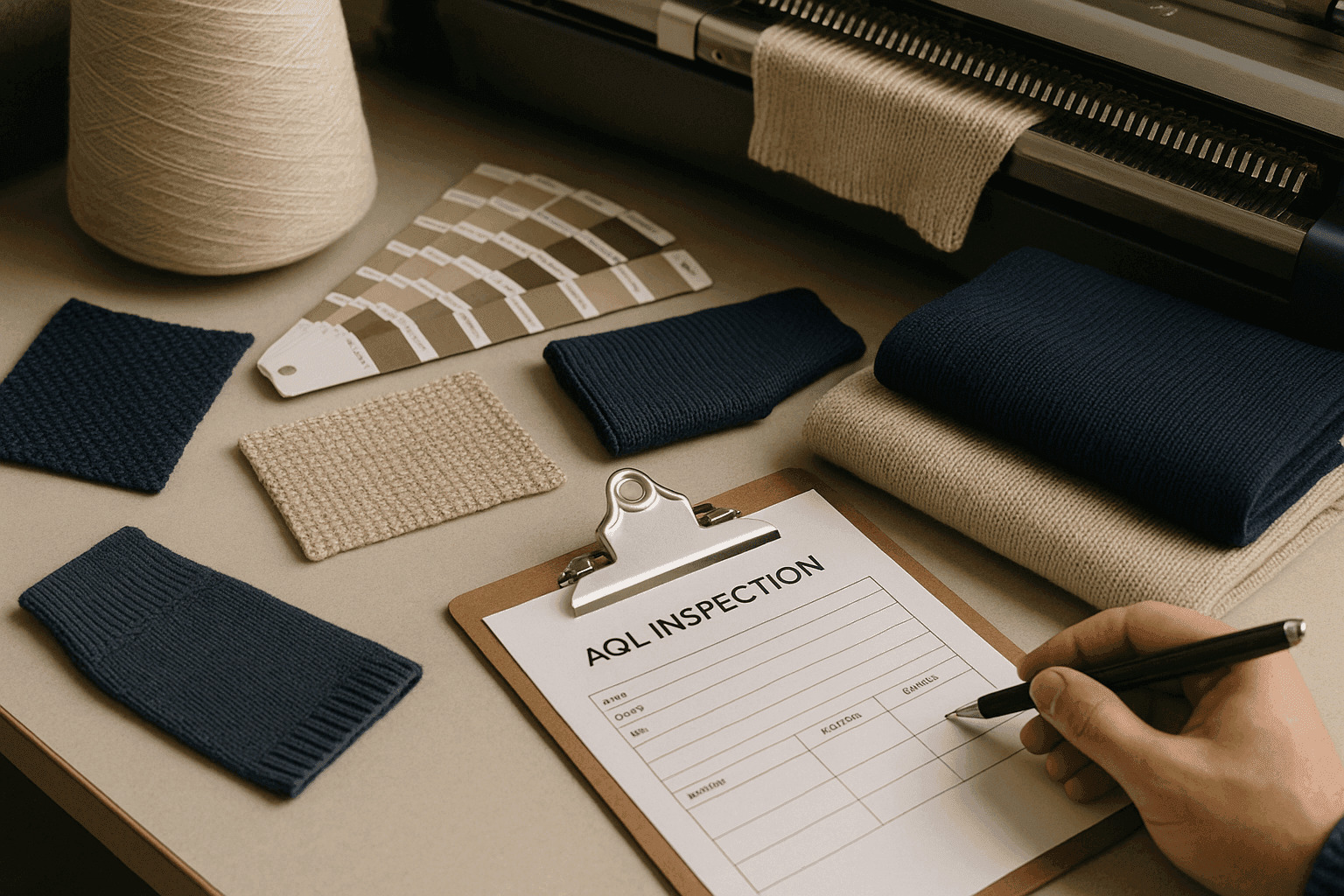
Unsere Standard-QC für iberische Lieferungen ist dieselbe wie für jeden anderen Markt und ruht auf drei Ebenen. Inline-Kontrollen während des Strickens und Verlinkens erfassen Feinheit, Maschendichte und Formgebungsfehler, bevor die Teile die Produktionsfläche verlassen. Eine AQL-Endkontrolle an den fertigen Kleidungsstücken prüft stichprobenartig Maße, Farbe, Griff, Etikett und Verpackungsgenauigkeit auf dem vereinbarten AQL-Niveau. Die Nadel- und Metalldetektion vor dem Versand ist bei jedem Karton nicht verhandelbar, und die Ergebnisse werden gegen die Bestellung protokolliert.
Für iberische Einkäufer im Besonderen verdienen zwei Bereiche eine frühzeitige Planung. Pflegeetikettierung: Spanien und Portugal verlangen beide für den Einzelhandelsverkauf Pflegesymbole und Faserzusammensetzung in der Landessprache, und wir legen die Etiketten in der Verkaufsmusterphase fest und nicht erst bei der Serie, um Nacharbeit zu vermeiden. REACH und die allgemeine EU-Produktsicherheitskonformität liegen auf Garn- und Accessoire-Ebene; wir arbeiten mit Garnlieferanten, deren Dokumente die nachgelagerten Compliance-Aussagen unseres Kunden stützen, und stellen diese Unterlagen auf Anfrage bereit, anstatt pauschale Zertifizierungssiegel zu zeigen.
Eine Drittpartei-Inspektion (SGS, Intertek, Bureau Veritas oder ein vom Einkäufer benannter Agent) kann vor dem Versand angesetzt werden und ist etwas, das mehrere unserer iberischen Kunden als feste Praxis nutzen. Wir koordinieren Zugang und Timing so, dass das Versandfenster nicht verlängert wird.
Logistik, Zahlung und Incoterms für die Iberische Halbinsel
Die praktische Incoterms-Frage für einen iberischen Einkäufer lautet meist FOB versus CIF, mit einem kleineren Anteil von Kunden, die DDP kaufen. Unsere Standardempfehlung lautet FOB Yantian oder FOB Shenzhen für jeden Einkäufer mit etabliertem Spediteur in Europa – sie gibt dem Einkäufer die Kontrolle über Konsolidierung, Routing und die Wahl des Zollagenten. CIF ist praktikabel, wenn der Einkäufer eine einzige Landed-to-Port-Zahl bevorzugt und unseren benannten Frachtführer und unsere Tarife akzeptiert.
Der Seetransit von Südchina zu den wichtigsten iberischen Häfen – Algeciras, Valencia, Barcelona, Leixões (Porto) und Lissabon – dauert je nach Routing ungefähr 28–35 Tage, wobei Algeciras oft als Umschlagdrehkreuz für die weitere europäische Verteilung fungiert. Für kleinere Nachbestellungen während der Hochsaison ist Luftfracht nach Madrid-Barajas über Konsolidierungspartner eine Option, die zum Zeitpunkt der Buchung kalkuliert wird. Wir führen für neue Kunden keine regulären DDP-Lieferungen auf die Iberische Halbinsel durch, da das Zoll- und Mehrwertsteuerrisiko von einem lokalen Zollagenten, dem der Einkäufer bereits vertraut, besser gehandhabt wird.
Die Zahlung in USD gegen FOB-Rechnungen ist Standard. Akkreditive sind für größere Erstaufträge praktikabel, und im Wiederholungsgeschäft stellen wir die meisten iberischen Kunden auf T/T gegen Dokumente um. Wir können Handelsrechnungen und Packlisten standardmäßig auf Englisch ausstellen und auf Anfrage einen spanischen oder portugiesischen Anhang hinzufügen, was die Zollabfertigung an den iberischen Eingangshäfen beschleunigt.
Der wichtigste praktische Punkt, den wir mit neuen iberischen Kunden teilen, ist zugleich der einfachste: Bauen Sie den Kalender rückwärts von Ihrem Termin in der Fläche auf, fixieren Sie das Garn früh und behandeln Sie das Serienfenster von 30–45 Tagen als echte Restriktion und nicht als flexible Zahl. Die Teams, die das tun, liefern jedes Jahr saubere AW-Kollektionen nach Madrid, Barcelona, Porto und Lissabon. Die Teams, die Vorlaufzeiten als verhandelbar behandeln, sind diejenigen, die am Ende im Oktober für Luftfracht bezahlen.
---
Sprechen Sie mit unserem Team darüber
Wenn Sie ein konkretes Projekt rund um einen der obigen Punkte planen, schauen wir uns das gerne kurz an. Senden Sie uns ein kurzes Briefing, und wir melden uns innerhalb eines Werktags mit einer praktischen Richtung, einer Schätzung von MOQ + Vorlaufzeit und einem Musterplan zurück, sofern das sinnvoll ist.
Für eine AW-Kollektion, die Ende September bis Anfang Oktober auf spanischen oder portugiesischen Einzelhandelsflächen eintrifft, empfehlen wir, Garn bis Anfang Februar zu bestätigen, das Verkaufsmuster bis Mitte März zu sperren und die Bulk-Bestellung spätestens in der ersten Maiwoche zu platzieren. Dieses Timing absorbiert Lichengs 30-45-tägiges Bulk-Fenster plus 28-35 Tage Seetransit nach Algeciras, Valencia, Barcelona oder Leixões und lässt vor dem Flächentermin Spielraum für Zoll und Last Mile.
Katalog-Styles starten bei 30 Stück pro Farbe, was zum typischen iberischen unabhängigen Händler oder zur wachsenden Private-Label-Marke passt, die 200-800 Stück pro Style über drei oder vier Farbvarianten hinweg einkauft. Vollständige OEM-Entwicklung mit Standardgarn bleibt bei 30 Stück pro Farbe; eine für die Bestellung gefärbte Farbe ist ab 30 Stück mit einem Kleinpartie-Färbezuschlag möglich, der ab der vollen Färbepartie der Spinnerei von 100-300 Stück pro Farbe entfällt.
Spanische Einkäufer, besonders für das kalte Landesinnere, neigen zu 5GG- und 7GG-Grobstrick- und Mittelfeinheit-AW-Stücken aus recycelter Wolle, Lambswool, Alpakamischungen und gebürsteten Garnen. Portugiesische Einkäufer tendieren oft zu feineren Feinheiten, wobei 12GG Merino, baumwollreiche Übergangsstrickware und leichte Strickjacken sich die Fläche mit schwereren AW-Styles teilen, und einem längeren SS-Fenster für Leinen- und Baumwollmischungen.
Ja. Wir setzen Pflegeetiketten mit Faserzusammensetzung und Pflegesymbolen in der Landessprache in der Verkaufsmuster-Phase, sodass sie vor dem Bulk fixiert sind. REACH-Dokumentation für Garn und Trim ist auf Anfrage über unsere Garnlieferanten erhältlich und wird dem Kunden bei Bestätigung bereitgestellt, statt als öffentliches Zertifizierungsabzeichen angezeigt zu werden. Drittparteien-Inspektion durch SGS, Intertek, Bureau Veritas oder einen vom Einkäufer benannten Agenten kann vor Versand geplant werden.
FOB Yantian oder FOB Shenzhen ist unser Standard für jeden iberischen Einkäufer mit einem etablierten europäischen Spediteur, weil es dem Einkäufer die Kontrolle über Routing, Konsolidierung und Zollabwicklung gibt. CIF ist praktikabel für Einkäufer, die eine einzige landed-to-port-Zahl bevorzugen. Wir fahren typischerweise kein DDP nach Spanien oder Portugal für neue Accounts, weil iberische MwSt. und Zoll besser von einem lokalen Makler gehandhabt werden.
Wir konzentrieren uns auf Herrenpullover, Cardigans, Strickjacken, Jacquard-Strickwaren und Private-Label-Strickwaren. Wir unterstützen B2B-Käufer bei OEM/ODM-Entwicklung, Mustererstellung und Serienproduktionsplanung.
MOQ, Lieferzeiten, Kostenspannen, Feinheitenwahl und Qualitätsprüfpunkte typischer OEM/ODM-Strickprogramme für Nordamerika und Europa. E-Mail eintragen — den Link schicken wir in 30 Sekunden.
Kein Spam. Abmeldung mit einer einzigen Antwort. Wir nutzen Ihre E-Mail ausschließlich, um Ihnen den Report zu senden und auf Wunsch das Sourcing-Gespräch fortzusetzen.
Die gezeigten Marken sind zuvor betreute OEM/ODM-Partner. Die Logos sind dekorativ und bedeuten keine aktuelle Empfehlung.