Climate & Season
Select weight and warmth for your target season.
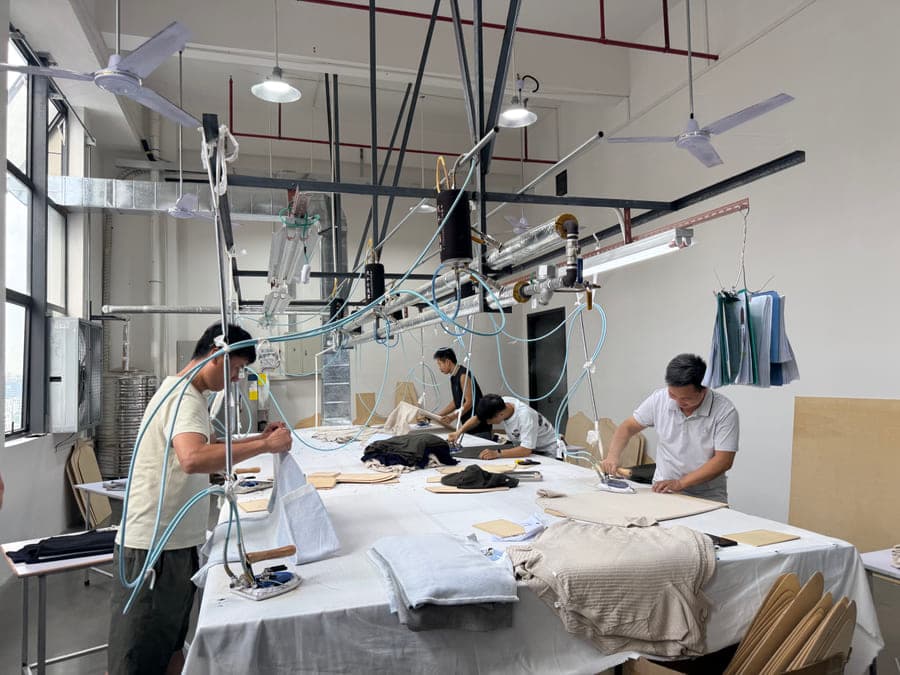
Licheng Knitwear produces custom knitwear from a minimum of 30 pieces per colour per style, and sizes may be mixed inside those 30 - so a first collection can launch with a full size run rather than thirty identical mediums. That single rule is what most small brands are actually asking about when they contact a knitwear factory, and it is the same across all 462 published styles in our catalogue. This page sets out what a brand gets at that quantity and what it does not: the same 3GG to 18GG machines, the same OEKO-TEX Standard 100, ISO 9001, GRS and GOTS certified production, and the same 15 to 25 day sampling as an eight-thousand-piece programme. It is written for founders placing a first production order, small labels testing one style before committing, and established brands adding a capsule outside their main range.
Gauge
3GG - 18GG
Qualität
Kontrollen je Phase
Fertigung
Custom Knitwear Support
Märkte
USA, Europa und mehr
Prüfen Sie praktische Faktoren vor dem Sampling. Die richtige Wahl beeinflusst Textur, Kosten, Griff, Zeitplan und Marktfit.
Select weight and warmth for your target season.
Match texture, drape and premium handfeel.
Plan sweaters, cardigans, polos or jackets.
Align with buyer preference and price point.
Licheng Knitwear produces custom knitwear from a minimum of 30 pieces per colour per style, and sizes may be mixed inside those 30 - so a first collection can launch with a full size run rather than thirty identical mediums. That single rule is what most small brands are actually asking about when they contact a knitwear factory, and it is the same across all 462 published styles in our catalogue. This page sets out what a brand gets at that quantity and what it does not: the same 3GG to 18GG machines, the same OEKO-TEX Standard 100, ISO 9001, GRS and GOTS certified production, and the same 15 to 25 day sampling as an eight-thousand-piece programme. It is written for founders placing a first production order, small labels testing one style before committing, and established brands adding a capsule outside their main range.
Minimum order quantity is 30 pieces per colour per style. Sizes may be mixed within those 30, so a run of 30 can be split across a full S-XXL size curve; the 30 applies to the colour, not to each size. Quantity tiers are 30 / 100 / 1,000 / 8,000 pieces, and a quotation is normally given at the tier above and below a buyer's target so the cost of moving up is visible before committing. Sampling takes about 15 to 25 days from a confirmed tech pack and yarn, and bulk production 30 to 45 days depending on quantity - both figures are identical at 30 pieces and at 8,000. Published index medians at MOQ 30 per colour are USD 17.36 for wool blends, USD 19.48 for polo sweaters, USD 19.73 for cardigans, USD 21.61 for knit jackets, USD 22.73 for sweaters and pullovers, and USD 26.48 for mohair and alpaca. Those are figures from our own yarn cost index rather than quotations: the final price moves with yarn lot, gauge, colour count and quantity. What actually changes at low volume is colour count rather than piece count - each additional colour is its own 30-piece minimum and its own dye lot, so three colours at 30 is a 90-piece order and prices accordingly. Machine access does not change: the full 3GG to 18GG in-house gauge range, jacquard and intarsia, linking, embroidery and appliqué are all available at 30 pieces. To get an accurate small-batch quotation, send a reference photo or tech pack, the target colour count, the size curve, the yarn or handfeel direction and the market the pieces are going to.
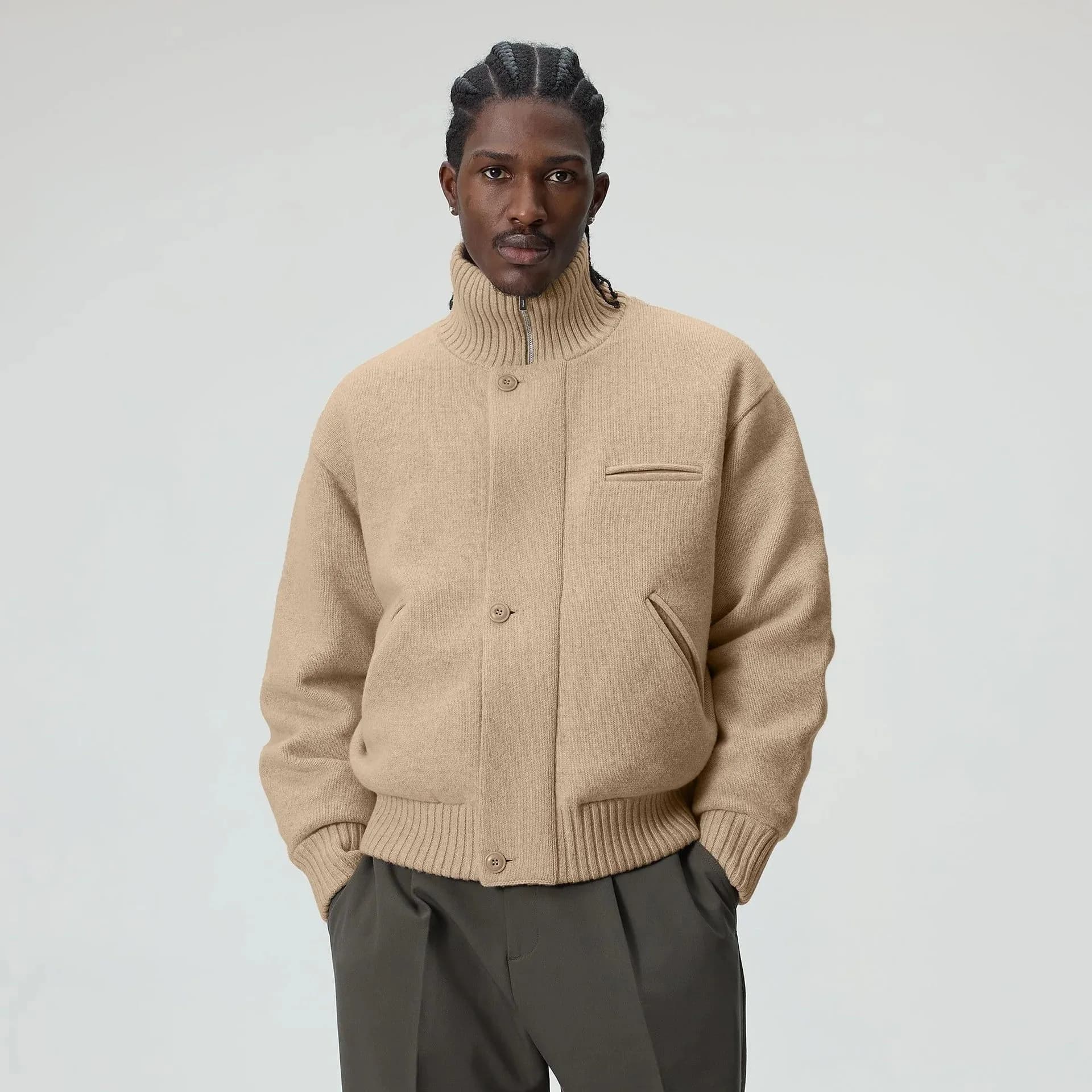
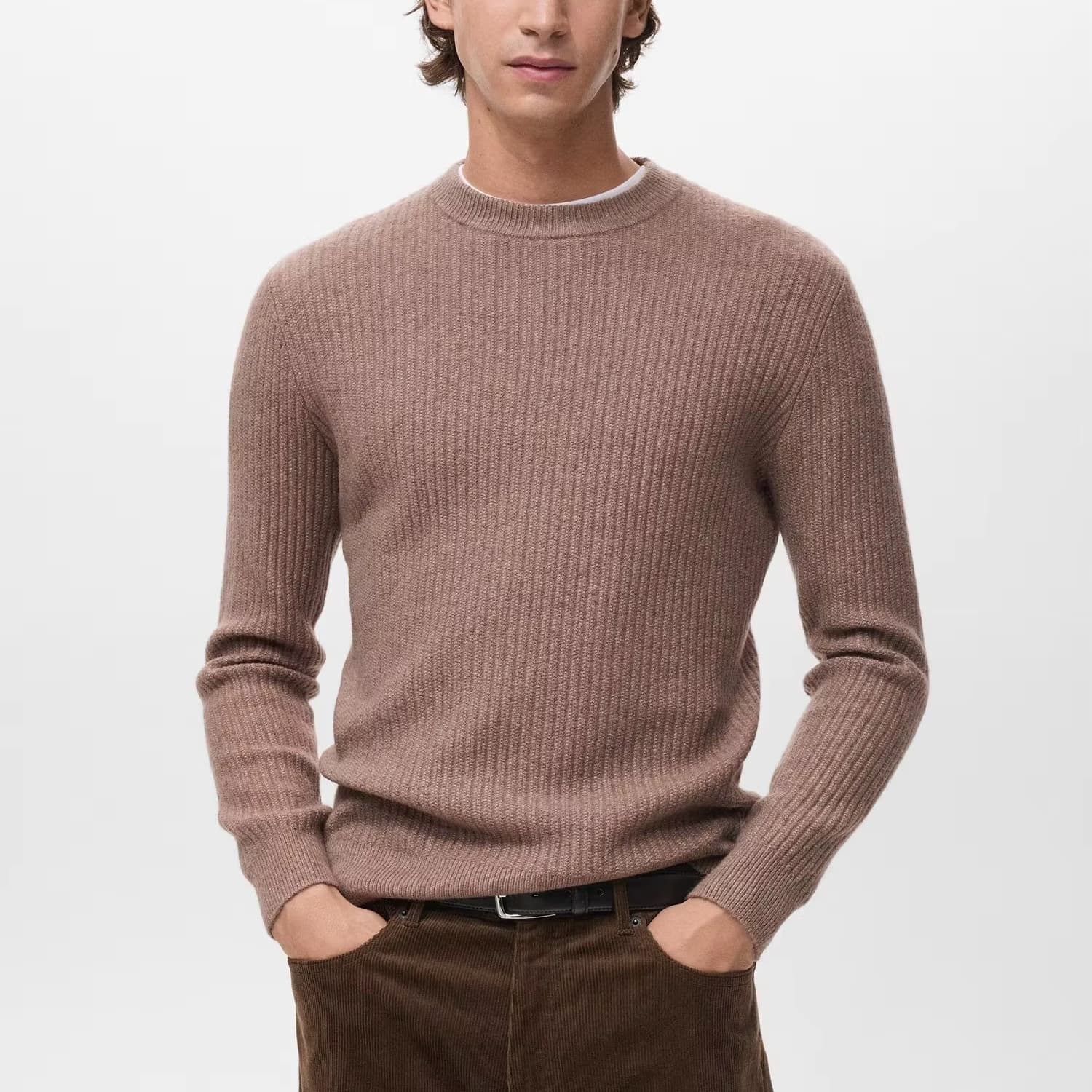
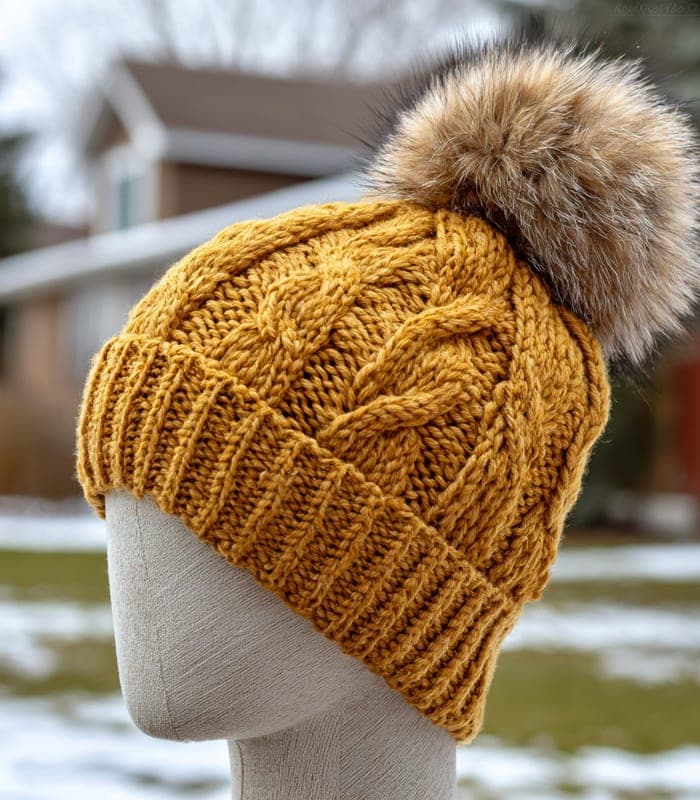
Suitable for first production runs, capsule collections, pre-order and crowdfunded launches, test styles ahead of a larger buy, club, school and team programmes, and replenishment of a single colour that has sold through. Product types include sweaters and pullovers, cardigans, knit jackets, polo sweaters, vests and sleeveless knits, and knit accessories. It fits brands that need a real production garment - correct linking, correct trims, their own woven label and care label - rather than a modified blank, and it fits buyers who would rather prove one style at 30 pieces than commit to a full range before the first customer has seen it.
Recommended for North America, the Nordics, the United Kingdom, Germany and the wider EU, where a large share of new knitwear labels start with small, well-specified runs rather than volume commitments. Nordic and Canadian buyers usually arrive with heavier gauges and wool or wool-blend directions for cold-weather layering. UK, German and other European buyers tend to lead with handfeel, restrained styling and documentation - certificates, composition and care labelling - because the pieces go into markets where those are checked. North American buyers more often lead with landed cost, size curve and how quickly a proven style can be repeated. The 30-piece minimum applies identically in every one of these markets; shipping and duty do not change it, though they do change the landed cost per piece at small volumes, which is worth modelling before the size curve is fixed.
At 30 pieces the constraint that matters is colour count, not piece count: every colour carries its own minimum and its own dye lot, so adding colours multiplies the order faster than adding sizes does. Brands starting out generally get further by proving one colourway across a full size run than by splitting the same budget across three colours. Yarn availability is the other small-batch constraint - a stock yarn ships immediately, while a custom-dyed shade carries its own lead time and minimum, so ask about yarn before locking a launch date.
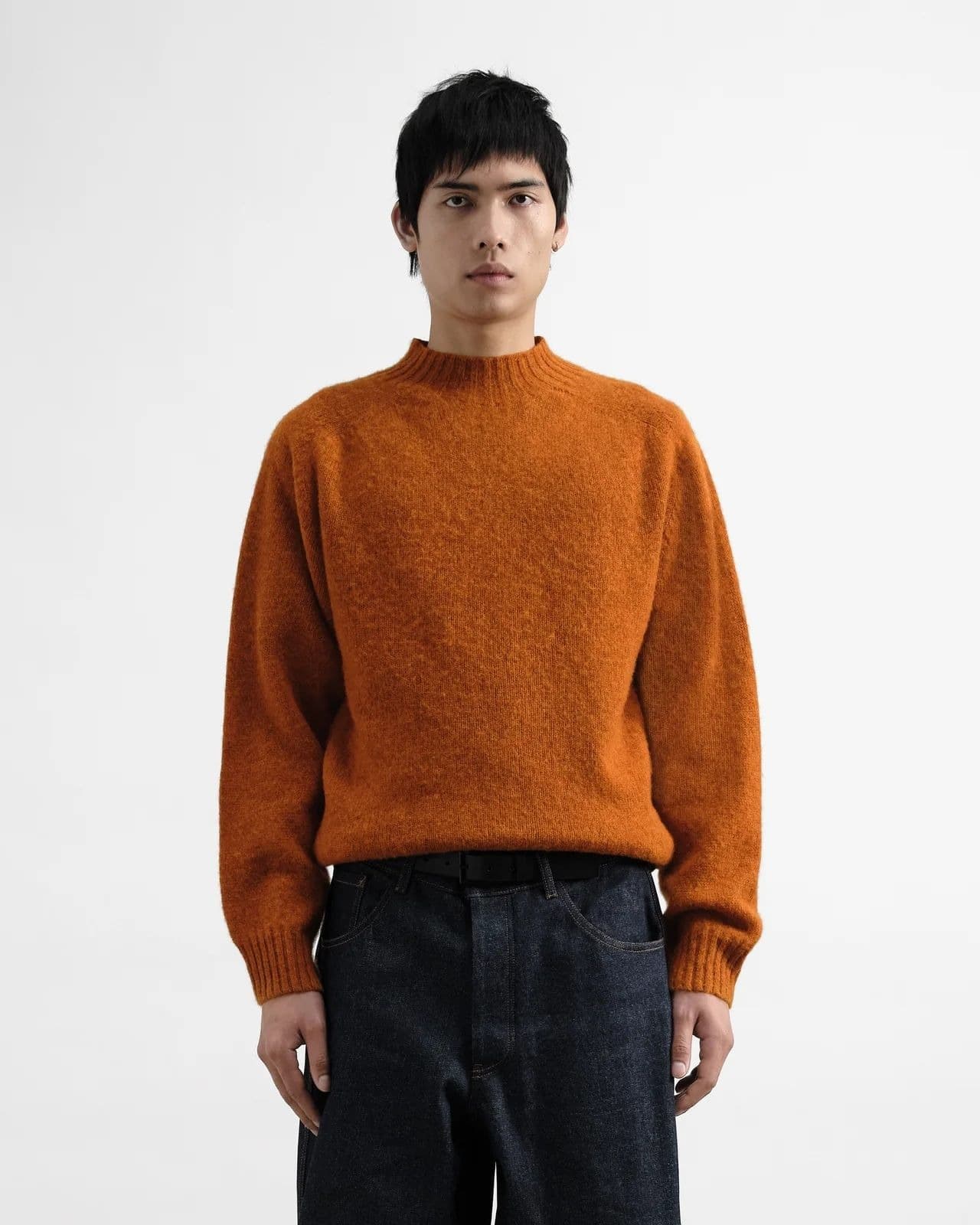
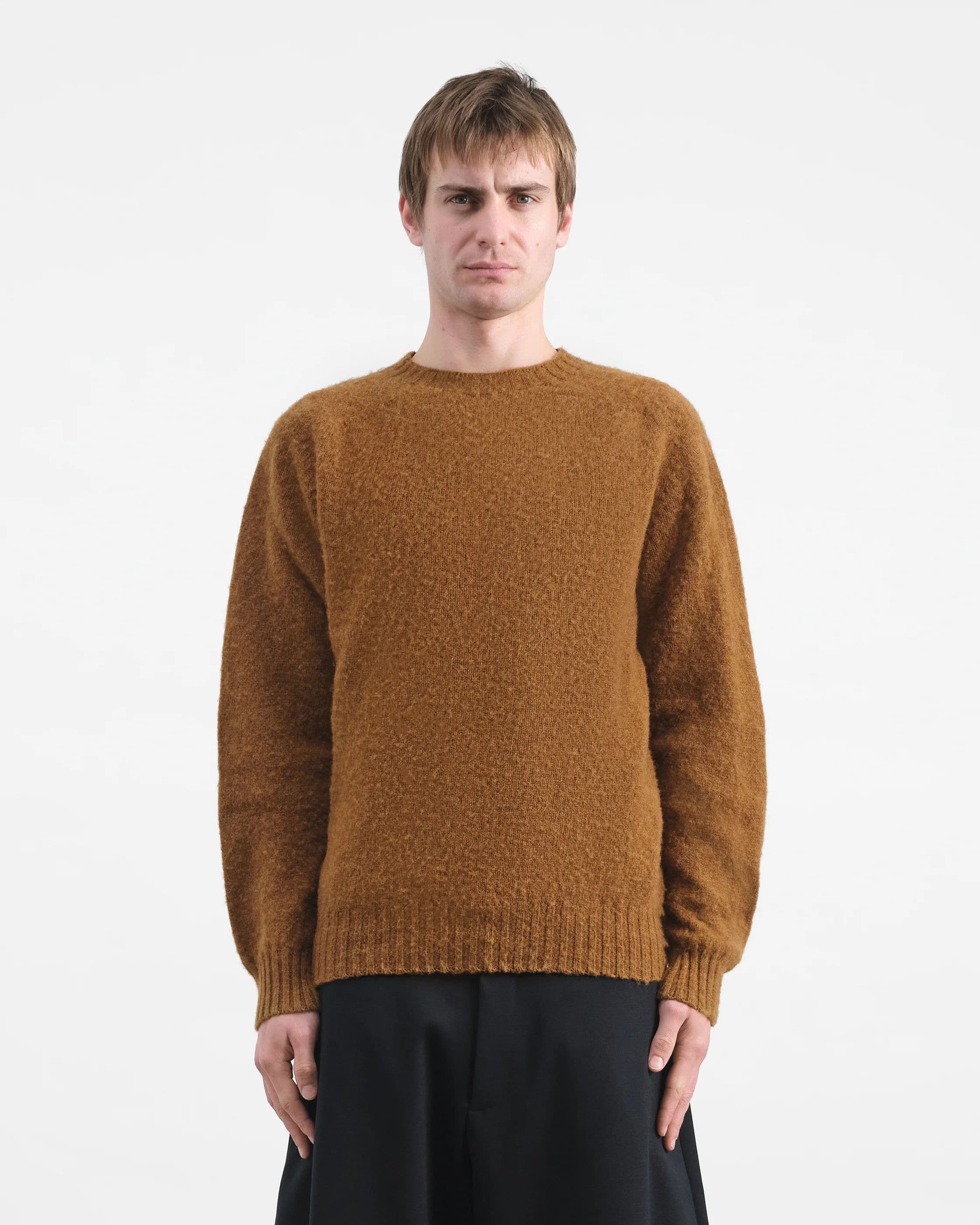
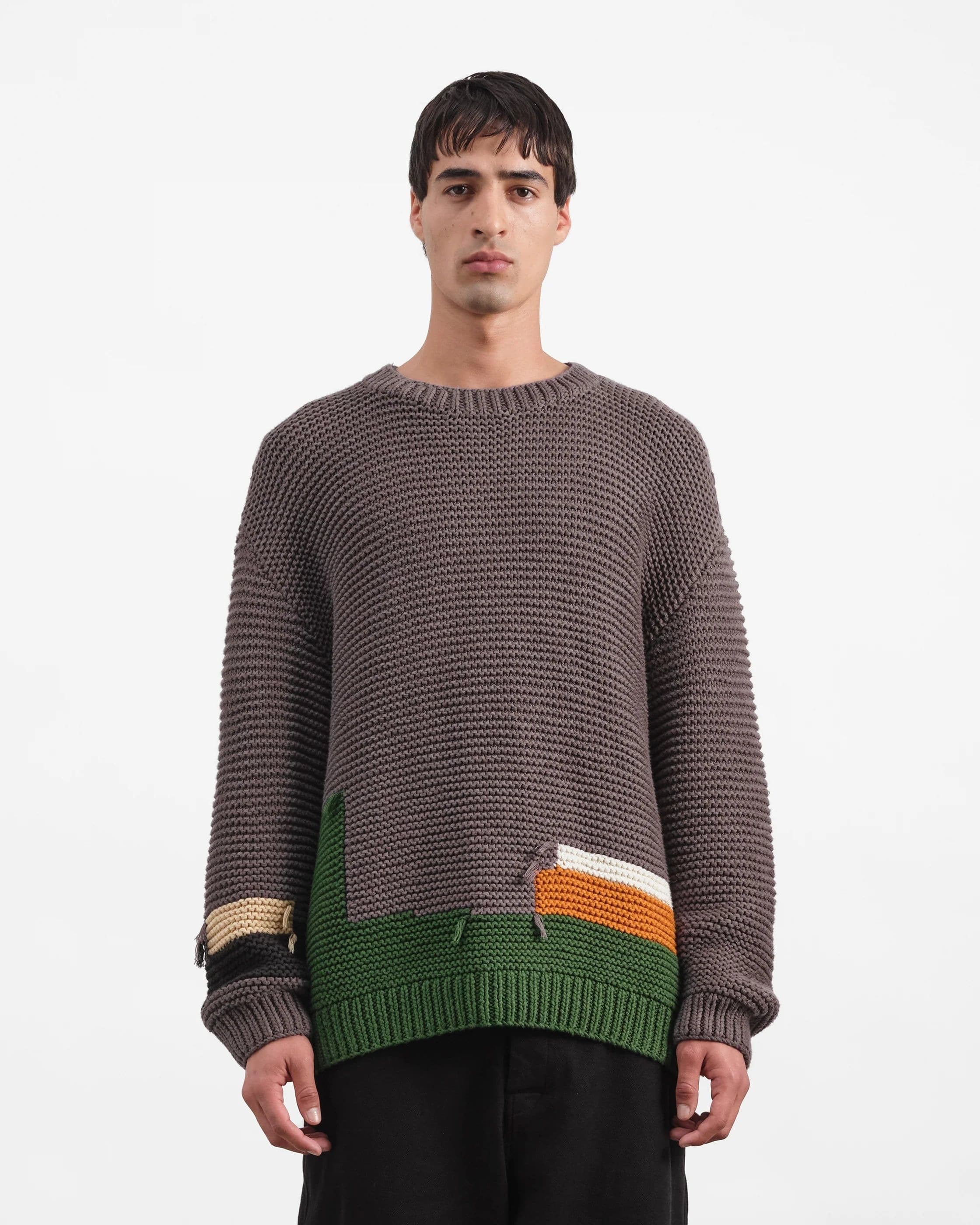
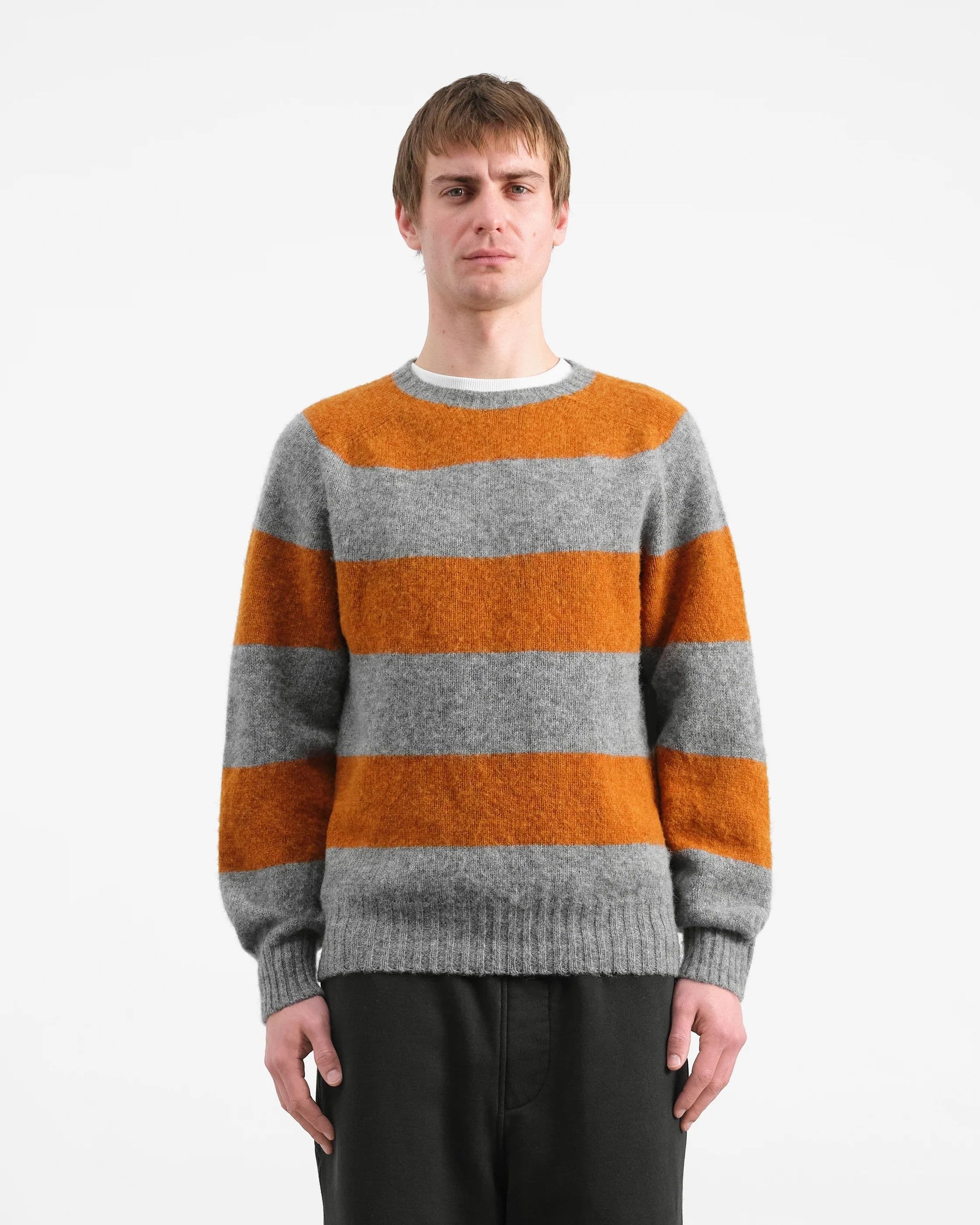
Vorhandene Produktrichtungen, die diese Kapazität nutzen können.
Other capabilities
Share your concept, sketch or reference.
We recommend gauge, yarn and construction.
We develop samples and refine until approved.
Confirm details, size specs and production plan.
Quality manufacturing with on-time delivery.
Verwandte Materialien
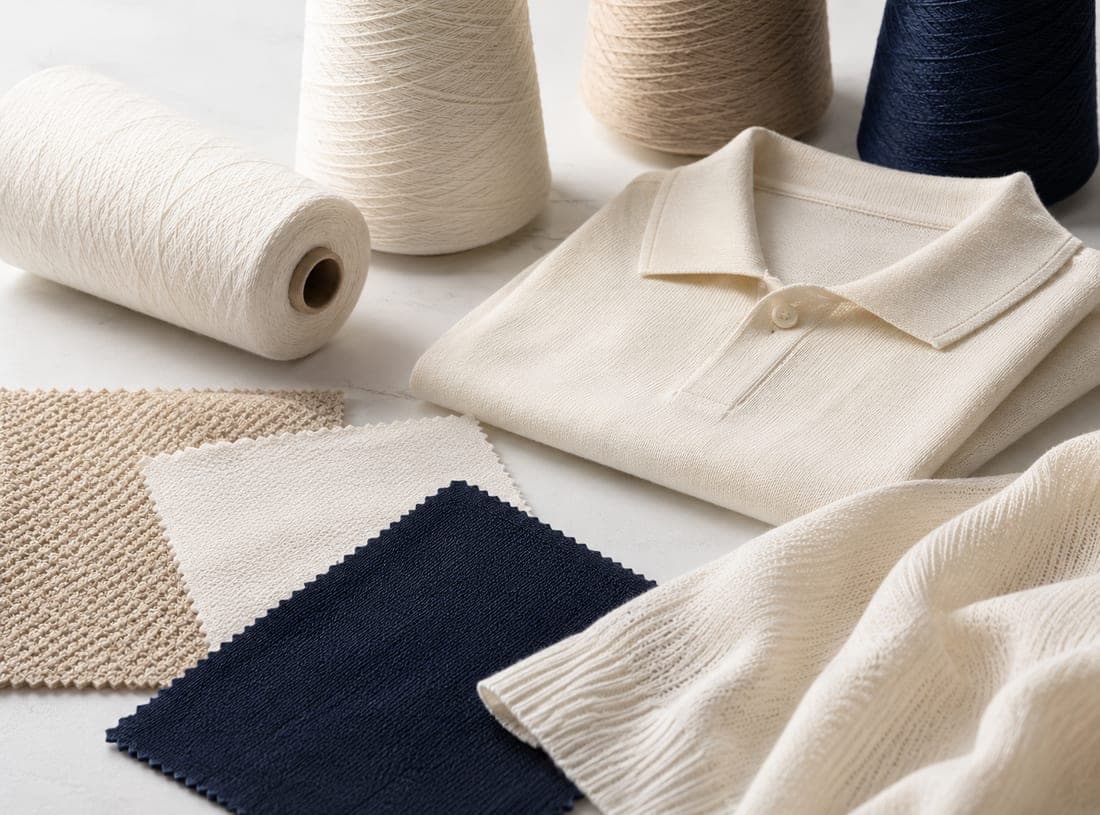
Atmungsaktive Baumwoll-Garnrichtung für individuelle Frühjahrs-, Sommer- und Übergangsstrickwaren.
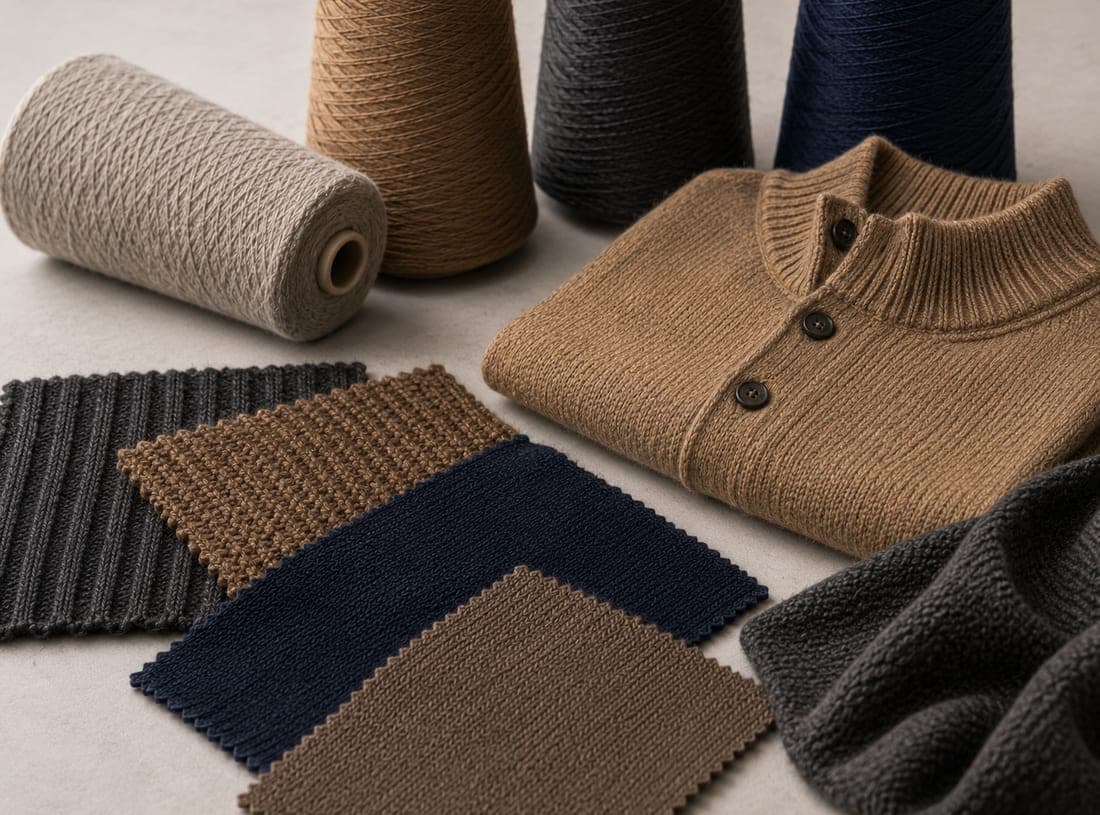
Ausgewogene Wärme, Kostenkontrolle und hochwertiger Griff für Herbst- und Winterstrickwaren-Programme.
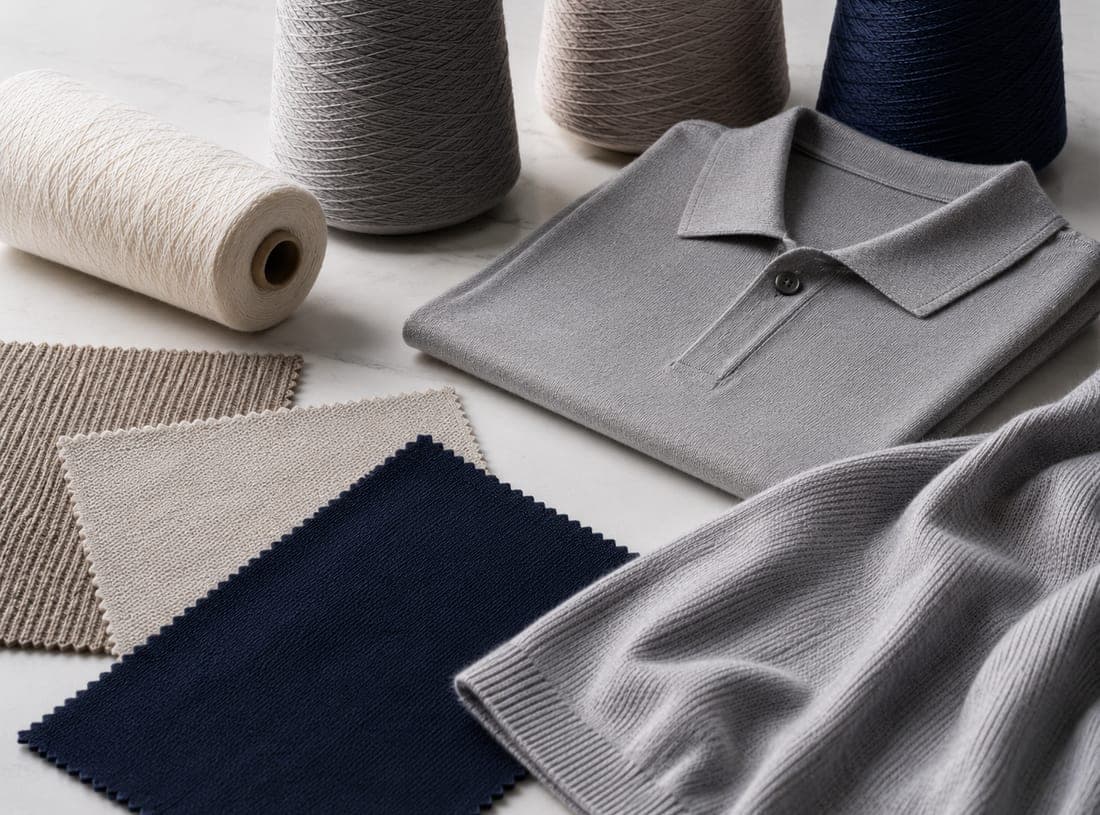
Feine Wollrichtung für hochwertige leichte Pullover und edle Menswear-Strickwaren.
Verwandte Guides
Wir konzentrieren uns auf Herrenpullover, Cardigans, Strickjacken, Jacquard-Strickwaren und Private-Label-Strickwaren. Wir unterstützen B2B-Käufer bei OEM/ODM-Entwicklung, Mustererstellung und Serienproduktionsplanung.
Verfügbare Musterstile und ausgewählte kundenspezifische Programme ermöglichen risikoärmere Testläufe vor größeren Saisonaufträgen.
Ja. Marken, auch neue Labels vor ihrer ersten Kollektion, können ein Muster bezahlen und es ansehen, bevor sie einen Produktionsauftrag erteilen. Zwei Wege: ein Ready-Sample eines veröffentlichten Modells für USD 60 pro Stück in etwa 7 Tagen, oder ein Entwicklungsmuster nach Ihrem Tech-Pack für USD 150 pro Modell – inklusive Garnbeschaffung, Strickprogrammierung, einem Prototyp und einer Korrekturrunde – in 15-25 Tagen. Kaschmir- und Mohair-Modelle werden einzeln kalkuliert, der Versand wird zum Selbstkostenpreis berechnet. Die Produktion startet erst nach Freigabe des physischen Musters, ab 30 Stück pro Farbe, Größen innerhalb der 30 mischbar. Ein Muster verpflichtet Sie nicht zur Produktion; Kleidung für den privaten Gebrauch fertigen wir nicht.
Unsere Mustergebühr ist nicht erstattungsfähig. Garnbeschaffung, Strickprogrammierung, Maschineneinrichtung und Handkettelei kosten etwa gleich viel, ob ein Stück folgt oder fünfhundert - deshalb gibt es die Gebühr überhaupt. Sie wird auf Ihre erste Serienbestellung angerechnet, wenn diese innerhalb von sechs Monaten nach Musterfreigabe erfolgt: 100% einer Entwicklungsmustergebühr, 50% einer Ready-Sample-Gebühr.
Ja, für Marken, die ein Modell entwickeln. Ein einzelnes Entwicklungsstück ist möglich, ohne Verpflichtung zur Serie: Ein Entwicklungsmuster kostet 150 USD pro Modell und umfasst Garnbeschaffung, Strickprogrammierung, einen Prototyp und eine Korrekturrunde, in 15–25 Tagen (Kaschmir und Mohair werden einzeln kalkuliert). Gehen Sie danach in Produktion, gilt ein Minimum von 30 Stück pro Farbe, Größen innerhalb der 30 mischbar, und die 150 USD werden vollständig auf eine Erstbestellung angerechnet, die innerhalb von sechs Monaten nach Musterfreigabe erfolgt. Kleidung für den privaten Gebrauch fertigen wir nicht.
Unsere veröffentlichte MOQ liegt bei 30 Stück pro Farbe, und diese Zahl kommt aus der Färbepartie, nicht aus der Maschinenzeit: Garn wird in Partien gefärbt, und etwa 30 Kleidungsstücke an Garn ist die kleinste Partie, die Kosten und Farbton gleichzeitig stabil hält. Weil diese Untergrenze am gefärbten Garn hängt und nicht am Modell, werden Modelle, die sich ein Garn in einer Farbe teilen, gemeinsam darauf angerechnet. Vier Modelle mit je 25 Stück, alle im selben Garn und derselben Farbe, ergeben 100 Stück in einer Färbepartie und werden akzeptiert. Nicht zusammengefasst werden eine zweite Farbe oder ein zweites Garn - jede ist eine eigene Färbepartie mit eigener Untergrenze. Die erste zu klärende Frage ist also nicht, wie viele Modelle Sie haben, sondern auf wie viele Garn-Farb-Kombinationen sie hinauslaufen.
Wir arbeiten mit Ihrem Team zusammen, um Ideen in meistverkaufte Strickwaren zu verwandeln. Von Konzept und Bemusterung bis zur Serienproduktion und Lieferung begleiten unsere Experten jeden Schritt.
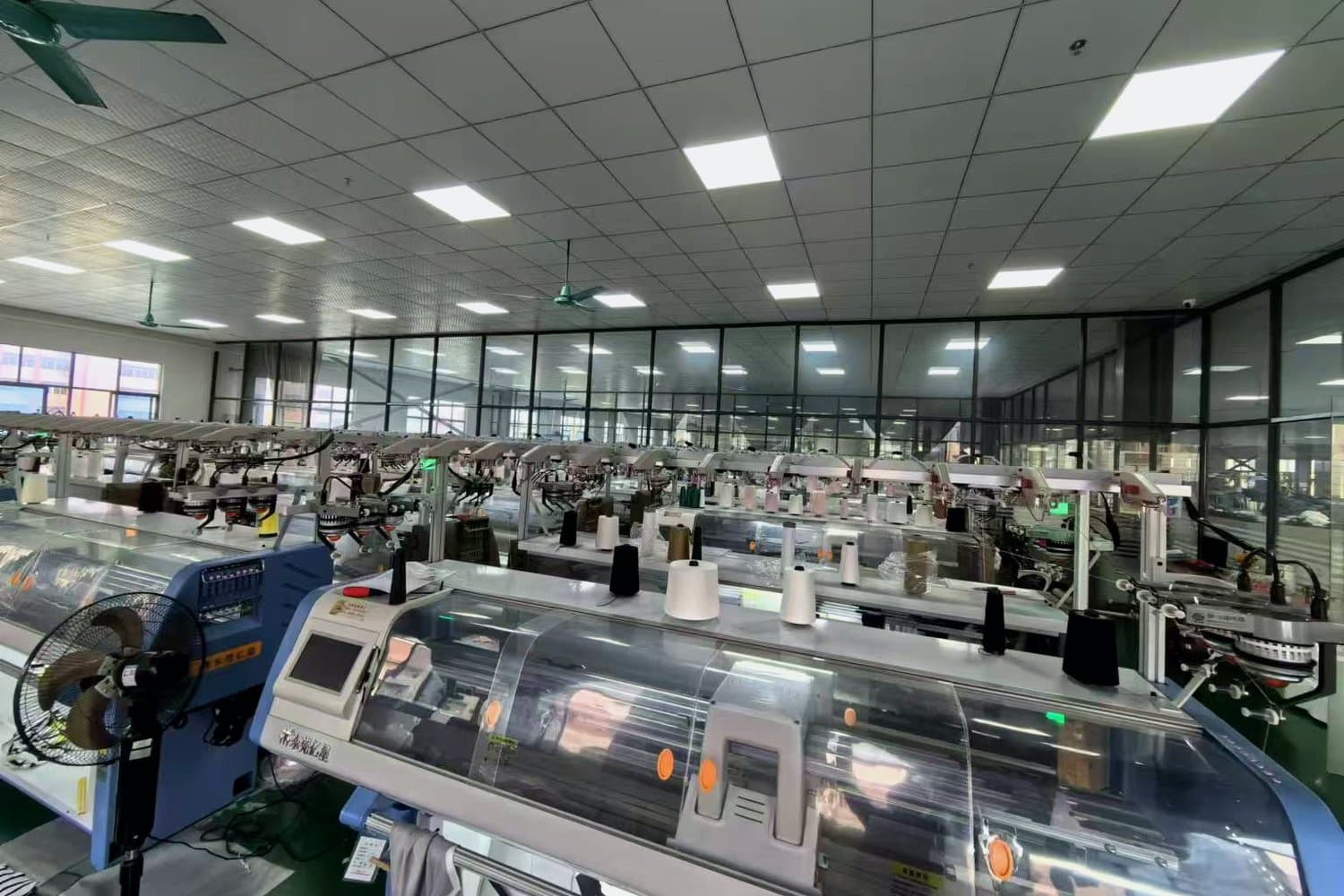
MOQ, Lieferzeiten, Kostenspannen, Feinheitenwahl und Qualitätsprüfpunkte typischer OEM/ODM-Strickprogramme für Nordamerika und Europa. E-Mail eintragen — den Link schicken wir in 30 Sekunden.
Kein Spam. Abmeldung mit einer einzigen Antwort. Wir nutzen Ihre E-Mail ausschließlich, um Ihnen den Report zu senden und auf Wunsch das Sourcing-Gespräch fortzusetzen.
Die gezeigten Marken sind zuvor betreute OEM/ODM-Partner. Die Logos sind dekorativ und bedeuten keine aktuelle Empfehlung.