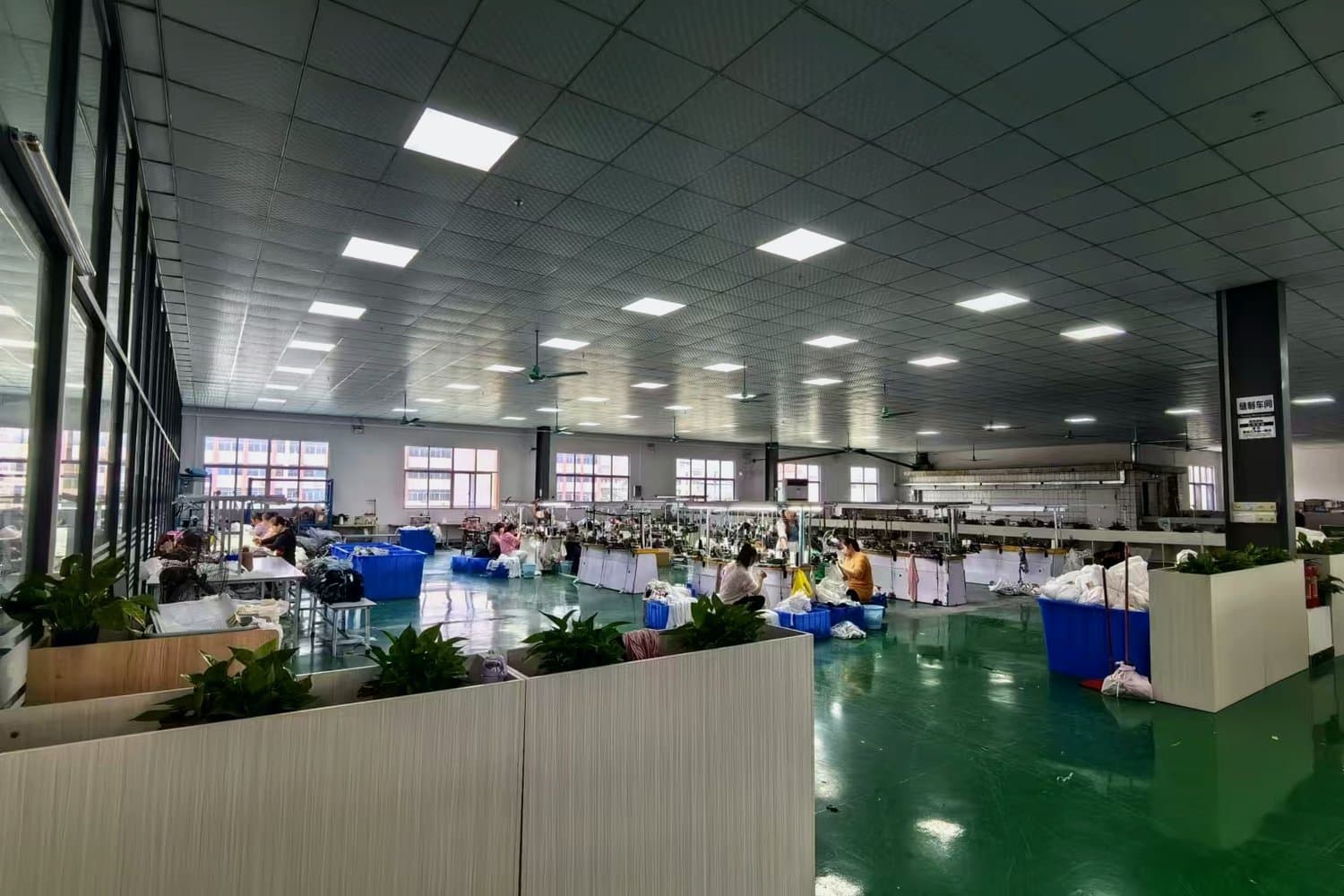
Nos especializamos en suéteres de hombre, cárdigans, chaquetas de punto, prendas de punto jacquard y prendas de punto de marca privada. Apoyamos a compradores B2B con desarrollo OEM/ODM, desarrollo de muestras y planificación de producción en serie.
FAQ para compradores
Respuestas claras antes de consultar.
Find practical answers about MOQ, sampling, yarn, gauge, OEM/ODM, private label, shipping, quality control and catalog requests.
Sourcing Topics
Organized by buyer questions.
Manual Review
Send details if your case is specific.
No False Claims
Compliance is confirmed by real documents.
General
Nos especializamos en suéteres de hombre, cárdigans, chaquetas de punto, prendas de punto jacquard y prendas de punto de marca privada. Apoyamos a compradores B2B con desarrollo OEM/ODM, desarrollo de muestras y planificación de producción en serie.
Atendemos principalmente a marcas de ropa, mayoristas, marcas de comercio electrónico, gerentes de aprovisionamiento y compradores de marca privada. El sitio está estructurado para el aprovisionamiento B2B de prendas de punto en Norteamérica y Europa.
Nuestras líneas de contenido y producto se centran en EE. UU., Canadá, Europa, los países nórdicos, Alemania y el Reino Unido. Otros mercados se pueden valorar en función de los requisitos del producto.
Por favor, envíenos una idea de producto, foto de referencia, ficha técnica, tabla de tallas, preferencia de material, plan de cantidades o precio objetivo. Incluso con información parcial, podemos sugerirle un camino de desarrollo práctico.
MOQ
30 pieces per colour using stock yarn. Custom-dyed yarn raises the minimum because the dye lot itself has a mill minimum - we confirm the practical number after seeing your colour card.
30 pieces per colour on stock yarn. Across our 41 published polo styles the index price band runs USD 8.97-66.05 per piece at that minimum, depending on fibre and gauge.
30 pieces per colour on stock yarn - the same minimum as our menswear programs. Our 37 published women's sweater styles sit in a USD 11.97-44.27 index band at that quantity.
30 pieces per colour using stock yarn. That figure is the same across all 63 published men's cardigans, including chunky and pattern-led styles. Custom-dyed colours carry a mill minimum on the yarn itself, which we quote separately.
30 pieces per colour using stock yarn, the same across all 8 published women's cardigans. Custom-dyed colours carry a separate yarn mill minimum.
30 pieces per colour using stock yarn, the same across all 6 published women's knit jackets.
30 pieces per colour using stock yarn, the same across all 10 published styles in this category.
30 pieces per colour using stock yarn, the same as any other garment in our range. A vest is not treated as a filler style with a different minimum.
30 pieces per colour. That is per style and colour, not per size - the full Newborn-12y run is covered by the one minimum.
30 pieces per colour. Maternity and baby use two different size systems - 12 published styles are graded XS-XL and 6 are graded 0-24m - and the minimum applies to each separately.
30 pieces per colour, the same minimum as our human garment range. We grade in two separate runs - XS/S/M for small dogs and L/XL/2XL for larger breeds - and the minimum applies to each.
30 pieces per colour, the same as our garment range, even though the unit value is far lower.
30 pieces per colour, the same minimum as our human garment range. Pet product is not treated as a side line with a different floor. The two size runs - XS/S/M and L/XL/2XL - are graded separately, so a style offered in both is two styles.
30 pieces per colour, the same as our garment range, even though the unit value is far lower. 18 of our 30 published accessory styles are one size, so that minimum covers the whole style rather than being split across a size run.
30 pieces per colour, applied to each size system separately. Our published range uses two: XS-XL on 12 maternity styles and 0-24m on 6 baby styles. A matching mother-and-baby set is therefore two styles and two minimums, which is the thing brands most often under-budget.
From 30-100 pieces per colour with specialist factories using in-stock yarns, versus 300-1,000+ at most factories.
Most factories set 300-1,000 pieces per style, often per colour. Small-brand specialists can go to 30-100 pieces per colour using in-stock yarns.
A real 30-100 pc/colour minimum, stock-yarn programmes, fast samples (15-25 days), transparent line-item costing, and a factory that treats a small first order as a relationship.
For custom knitwear a low MOQ is around 30-100 pieces per colour. Most factories want 300-1,000+; specialists that work with small brands go as low as 30 using in-stock yarns.
Design around stock yarn colours, share one yarn across styles, and limit colour count. Custom dyeing raises the minimum.
Design around in-stock yarn colours, share one yarn across several styles, and limit your colour count. Custom Pantone dyeing raises the minimum.
They can be. Check certifications (OEKO-TEX, ISO 9001), real production photos or video, and order a paid sample before bulk.
Yes. Factories set up for small brands accept from 30 pcs per colour, especially when you design around stock yarns. Custom Pantone dyeing usually raises the minimum.
The 30 is per colour; sizes inside one colour are yours to split. A second colour is a second 30.
From 30 pieces per colour using in-stock yarns; a custom-dyed colour adds a small-lot dyeing surcharge rather than a higher minimum, while nominated speciality yarns may raise it.
Yes, with a factory set up for small brands - check certs, real photos and order a sample first. We treat a 30-piece first order as the start of a relationship.
Yes, modestly - fixed setup and yarn dye-lot costs spread over fewer pieces. The trade-off is far lower upfront inventory risk.
Modestly. Fixed setup and yarn dye-lot costs spread over fewer pieces, so unit cost is higher. The trade-off is far lower upfront inventory risk.
Los modelos de muestra disponibles y determinados programas personalizados permiten realizar pedidos de prueba de menor riesgo antes de los pedidos estacionales de mayor volumen.
Los modelos lisos y de rayas que utilizan el mismo hilo y color pueden sumarse para alcanzar un mínimo de 30 unidades, con tallas combinadas. Por ejemplo, cuatro modelos lisos de 25 unidades cada uno, confeccionados con el mismo hilo y color, suman 100 prendas y cumplen ese mínimo. Los hilos o colores diferentes se cuentan por separado. El jacquard y la intarsia requieren 30 unidades por motivo; no se pueden sumar cantidades de motivos distintos. Envíenos los modelos, hilos, colores y cantidades para confirmar cómo se aplica el mínimo a su proyecto.
30 pieces per colour is the catalogue minimum, and a trial order can be discussed separately. Sampling is 15-25 days from a confirmed tech pack.
Un punto de partida habitual es de 100 piezas por modelo para el desarrollo personalizado, pero la MOQ final depende del hilo, la galga, los gráficos, los avíos y el plan de pedido. Las muestras listas o los pedidos de prueba se pueden tratar por separado.
Los modelos de muestra disponibles pueden permitir una conversación de prueba más flexible porque la orientación de desarrollo ya es más clara. La cantidad final sigue dependiendo de la disponibilidad de material y de las necesidades de personalización.
Sí. La galga puede afectar al consumo de hilo, la planificación de producción y la disposición de máquinas. Los estilos de galga gruesa o con patrones especiales pueden requerir una conversación de MOQ diferente a la de estilos simples de galga fina.
El embalaje de marca privada puede negociarse para pedidos más pequeños, pero algunos materiales de embalaje pueden tener su propia MOQ. Los compradores deben confirmar las etiquetas, etiquetas colgantes y embalaje con antelación.
La MOQ depende del hilo, la galga, la cantidad de colores, la complejidad del estilo, el rango de tallas y las necesidades de embalaje. Revisamos estos detalles antes de sugerir una orientación práctica para el pedido.
La conversación sobre pedidos de prueba puede ser posible cuando el hilo, el estilo y la cantidad son adecuados. La MOQ final se confirma tras la revisión de requisitos.
Custom colors can increase MOQ because hilo dyeing o sourcing may require minimums. Available hilo colors may allow more flexible discussion.
No. El jacquard y la intarsia parten de 30 piezas por motivo, con tallas combinables dentro de las 30; no se pueden sumar motivos distintos. Lo que cambia es el desarrollo: su diseño se revisa como carta de punto (número de colores, galga y longitud de flotes) y a partir de él se programa la máquina, algo que cubre la muestra de desarrollo.
Prepare la cantidad objetivo, el plan de colores, el rango de tallas y los requisitos de mercado. Esto ayuda al proveedor a evaluar opciones realistas.
Most factories set 300-1,000 pieces per style, often per colour. Small-brand specialists can go down to 30-100 pieces per colour when you design around in-stock yarns.
Yes. Designing around in-stock yarn colours lets some factories accept orders from 30 pieces per colour. Asking for a custom Pantone dye usually raises the minimum because the mill must dye a full batch.
Usually per colour, per style, because each colour needs its own yarn dye lot. Using stock colours is the main way to keep the per-colour minimum low.
Sampling
Most programmes reach approval in two to three rounds. A clean tech pack with confirmed measurements, a yarn spec and a physical colour reference often gets there in two; vague briefs and late design changes push a programme into a fourth or fifth.
A fit or revised-proto round usually takes 7-10 days per cycle, after the first round inside the standard 15-25 day window. Each extra cycle delays the start of the 30-45 day bulk window by about a week.
Yes. Measure it first, launder it to your care instructions, then measure again. Twisting and shrinkage often appear only after washing, and a body that relaxes from 68 cm to 71 cm is a finishing problem to fix before bulk, not after.
Sí. Las marcas, incluidas las nuevas que preparan su primera colección, pueden pagar una muestra y verla antes de hacer un pedido de producción. Dos opciones: una muestra lista de un modelo publicado por USD 60 la pieza en unos 7 días, o una muestra de desarrollo a partir de su ficha técnica por USD 150 por modelo (incluye abastecimiento de hilo, programación de tejido, un prototipo y una ronda de ajustes) en 15-25 días. Los modelos de cachemira y mohair se cotizan aparte y el envío se cobra a coste. La producción comienza solo después de aprobar la muestra física, con un mínimo de 30 piezas por color y tallas combinables dentro de las 30. Una muestra no le compromete a producir; no fabricamos prendas para uso personal.
Sí, para marcas que desarrollan un modelo. Una sola pieza de desarrollo es posible y no implica compromiso de producción: la muestra de desarrollo cuesta 150 USD por modelo e incluye la búsqueda de hilo, la programación del tejido, un prototipo y una ronda de cambios, en 15-25 días (el cachemir y el mohair se cotizan aparte). Si después pasa a producción, el mínimo es de 30 piezas por color con tallas combinables dentro de las 30, y los 150 USD se descuentan íntegramente de un primer pedido realizado en los seis meses siguientes a la aprobación de la muestra. No fabricamos prendas para uso personal.
In daylight, next to the physical Pantone TCX chip or swatch, for example beside a window. Approving a colour under warm shop lighting is how the wrong shade reaches bulk.
Precisely and in one structured batch: "shorten body by 2 cm" rather than "a bit shorter", referenced to the tech pack measurement, with must-fix items separated from nice-to-have, and confirmed in writing.
Yes, brands can develop one piece without committing to bulk production. A development sample costs USD 150 per style and covers yarn sourcing, writing the knitting program from your artwork, one prototype and one revision round, in 15–25 days; cashmere and mohair styles are quoted individually. If you place a bulk order within six months of approving the sample, the full USD 150 is credited against it. Jacquard and intarsia bulk orders start at 30 pieces per pattern, with mixed sizes; different patterns cannot be combined to reach that minimum. We do not make garments for personal wear.
We develop a first proto from your spec in 15-25 days from confirmed tech pack and yarn, you review fit, hand and colour, we revise as needed, then you approve before bulk.
Typically a proto plus one or two revisions to reach approval; complex styles may need more. We confirm per project.
Samples are usually paid (often credited against a bulk order). They confirm quality before you commit.
Materials
A Scope Certificate shows that a company is certified for a standard and scope. A Transaction Certificate documents a specific shipment of certified material, and it is what substantiates a claim such as "recycled" or "organic" on your order.
7GG covers 93 of our 129 published men's sweater styles - it is the four-season default. 3GG-5GG is chunky winter, 12GG-18GG is fine-gauge and layering.
Through brushing/raising the surface of mohair or brushed-yarn knits, creating a soft halo. We control the brush level so it survives wash and wear.
Merino (soft, fine), lambswool (classic warmth), and wool blends with acrylic or cotton for value and durability. Each suits a different price point and hand.
It depends on positioning: merino for soft year-round knits, lambswool for classic warmth, cotton for spring-summer, cashmere blends for premium, acrylic blends for value. Match yarn to season and price point.
Match the fibre to season, price point and hand: cotton/linen for spring-summer, merino and wool for year-round, cashmere blends for luxury, acrylic and recycled for value. Tell us your season and target price and we recommend.
Merino is soft, breathable, warm year-round and naturally odour-resistant - a versatile premium fibre for sweaters across seasons.
Decide on pure vs cashmere-blend, set quality grade and ply, request lab dips and a sample, and verify fibre content. We offer cashmere-blend programmes.
En coste de aterrizaje directo, sí — el hilo acrílico a 4-6 USD/kg FOB frente a la lana a 9-14 USD/kg impulsa un delta FOB real de 3-7 USD por jersey que es difícil de borrar con el acabado. La pregunta más difícil es el coste total de vida útil. Si vende acrílico en un canal premium donde el consumidor espera lana, las tasas de devolución y las puntuaciones de reseñas pueden comerse los ahorros en una sola temporada. Si lo vende en un canal de valor donde el consumidor espera precio y lavabilidad, el acrílico es claramente más barato de principio a fin. La decisión está impulsada por el canal, no solo por el coste.
Solo si la historia de trazabilidad le importa a su cliente. Supima es una marca registrada con licencia con una cadena documentada desde el productor estadounidense hasta la prenda acabada, lo que es genuinamente útil para las marcas que hacen una declaración de fibra Made-in-USA o de trazabilidad completa. La fibra en sí es excelente pero no categóricamente superior al Pima peruano de máxima calidad o al genuino Giza egipcio, ambos de los cuales normalmente se cotizan un 15-25% más baratos a nivel de hilo. Si no necesita la marca registrada en la etiqueta colgante, pida a su hilandería que cotice Pima peruano peinado como una alternativa de valor para el mismo tacto y brillo.
Exija dos documentos en cada envío: una ficha de especificación de la hilatura que indique el origen de la fibra, la longitud media de fibra y el diámetro medio de fibra; y un informe independiente de pruebas por terceros de Intertek, SGS, Bureau Veritas o equivalente que cubra la composición de la fibra y el diámetro medio de fibra (micras). Las pruebas deben referenciar su número de orden de compra. Tome muestras de retención en el control de calidad de entrada y péselas frente al peso objetivo de la ficha técnica. Para programas continuos, envíe ocasionalmente una muestra de retención a un laboratorio distinto del que utiliza el proveedor. El coste de las pruebas por envío es pequeño comparado con el coste de una oleada de devoluciones por mercancía de grado inferior que llegue a los clientes.
Para marcas que hacen afirmaciones de bienestar animal o trazabilidad ante consumidores o minoristas, sí — RWS es actualmente el estándar de cadena de custodia auditado por terceros más defendible, y el rastro del Certificado de Transacción es lo que le permite respaldar una afirmación si es cuestionada. Para marcas que compran discretamente lana libre de mulesing sin hacer la afirmación públicamente, una Declaración Nacional de Lana limpia o una atestación del productor pueden ser suficientes. La prima por RWS sobre merina no certificada comparable es típicamente modesta a nivel de hilo (a menudo del 10-20 por ciento), y la mayor parte del coste reside en el trabajo de documentación más que en la fibra en sí. Compre la certificación que tiene la intención de usar comercialmente.
Yes. The Responsible Wool Standard covers animal welfare and land management in the wool supply chain, and it is the standard behind welfare-style claims on wool products.
Acrylic leads our published range at 12 of 17 styles, and that is a functional choice rather than a cost one: pet product is washed far more often than human knitwear and needs to hold colour and shape through it. Several of our acrylic styles are specified anti-pilling. Wool appears on 5 styles and merino on 2 for premium programmes where the owner buys on fibre.
Cotton or bamboo appears on 12 of our 18 published styles - cotton on 11, bamboo on 4 - because for baby product skin contact is the entry requirement rather than a preference. Where warmth is needed next to skin we specify merino rather than coarse wool; our baby hooded sweater is 100% merino for that reason. Organic cotton appears on several styles, and GOTS and OEKO-TEX Standard 100 documentation is available.
44 of our 63 published cardigans sit at 7GG-12GG, and that is where a cardigan programme normally belongs. Only 9 are chunky 3GG-5GG - those photograph well but weigh more per piece and cost more to ship. We run 3GG to 18GG in house and confirm the band once the yarn and target fabric weight are fixed.
6 of our 8 published styles sit at 7GG-12GG. One is chunky 3GG-5GG for a cardigan-as-outerwear direction, and one is 12GG and finer for layering. We run 3GG to 18GG in house.
All 6 published styles are 3GG-5GG, and that is deliberate. A knit jacket has to hold structure that a cardigan does not, and at this gauge the structure comes from the fabric itself rather than from interlining. Finer-gauge pieces sit in our cardigan range instead.
Every one of our 10 published styles sits at 7GG-12GG. Coarser gauges seat out quickly in a bottom, and finer ones lack the body to hold a shape. This is the narrowest gauge band of any category in our range, and that is a construction decision rather than a styling one.
Cotton leads the range, appearing in 11 of our 18 published kids' styles, with 3 of those in 100% cotton for the most skin-sensitive programmes. Wool appears in 5 styles for winter outerwear pieces. The yarn list for kidswear is chosen for skin contact first.
Cotton appears in 11 of our 18 published styles and bamboo in 4, both chosen for next-to-skin softness rather than price. Wool appears in 4 and merino in 3 where warmth is needed. Cotton blend indexes at USD 14.98 per piece and wool blend at USD 17.36, both at MOQ 30 FOB.
Acrylic leads our range at 12 of 17 published styles, and that is a functional choice rather than a cost one: pet product is washed far more often than human knitwear and needs to stay colour-stable and in shape. Wool appears in 5 styles and merino in 2 for premium pet programmes where the owner buys on fibre.
7GG is where most of our jacket work sits - 16 of our 18 published jacket styles - because it holds structure without becoming coat-heavy. Go to 3GG-5GG when you want a genuine outerwear weight, and 12GG-18GG for zip-through layers worn under a coat.
Cotton is the summer standard and covers 16 of our 22 polo styles. Cotton-wool holds the collar better over a season and suits four-season ranges - it costs roughly USD 2-3 more per piece at the same gauge.
Merino for next-to-skin shape retention, cashmere blend where hand feel leads. Both hold a fitted line better than cotton, which relaxes with wear - that is why our fitted styles use them.
Merino works across gauges: 12-14GG for fine layering knits, 7GG for mid-weight. We knit 3GG-18GG.
Wool, merino, cashmere blends, cotton, linen, acrylic, recycled/GRS, mohair and alpaca, across 3GG-18GG gauges.
No - brushed acrylic or wool blends can achieve a similar fuzzy hand at lower cost; real mohair gives a finer, longer halo. We offer both.
Yes - merino is soft, breathable, warm year-round and naturally odour-resistant, making it versatile across seasons.
Yes - blends (e.g. wool/acrylic, cotton/cashmere) balance cost, hand and durability. We advise the blend ratio for your target price and feel.
Yes. Cashmere blends (with merino, wool or cotton) cut cost while keeping a soft hand, and suit accessible-luxury positioning.
Un listón razonable de mercado masivo es ISO 12945-2 (Martindale) grado de pilling mínimo 3-4 tras 2.000 ciclos, o ASTM D3512 (tumble aleatorio) grado mínimo 3 tras 30 minutos. Exíjaselo a la hilandería sobre el hilo de producción, no solo sobre la muestra de desarrollo. El acrílico de alto volumen con torsión adecuada y un acabado antipilling puede alcanzar el grado 4 de forma fiable; el acrílico barato de fibra corta fallará en el grado 2 dentro de los dos primeros lavados domésticos. Especificar el umbral y probar en el lote es la mayor palanca individual que tiene contra las quejas de pilling.
Visualmente, sí: el algodón mercerizado tiene un brillo suave distintivo, especialmente en colores sólidos profundos, y los tintes se ven más saturados y menos calizos. Al tacto es más liso y un toque más fresco al tacto. La prueba fiable es comparar dos muestras lado a lado bajo la luz del día; la diferencia de brillo es inconfundible en prendas de punto de cara lisa como el piqué o el interlock. En construcciones texturizadas el efecto se atenúa, que es exactamente por lo que mercerizar hilos rústicos o slub rara vez tiene sentido. Pida a su hilandería una muestra mercerizada y otra no mercerizada en el mismo color antes de comprometerse.
Puede serlo, si se declara y se cobra en consecuencia. El cachemir reciclado tiene una historia real de sostenibilidad y las mejores hilaturas producen ahora hilo con un tacto aceptable. La pega es la longitud de fibra: la fibra recuperada mecánicamente es casi siempre más corta que la virgen, lo que significa más pilling y una vida útil de la prenda más corta a menos que se mezcle con fibras largas vírgenes. Si va por este camino, especifique el porcentaje de contenido reciclado, exija trazabilidad hasta el reciclador y ajuste los criterios de aceptación de la prueba de pilling de forma realista. No lo comercialice como "lo mismo que el Grado A virgen". Los clientes que se preocupan por la sostenibilidad también tienden a ser compradores informados; el enfoque honesto rinde mejor que la versión del marketing edulcorado.
Tres comprobaciones. Primero, pida el certificado de prueba IWTO-12 sobre el lote específico de tops de lana antes del bulto — este es un documento estándar que cualquier hilandería real puede producir. Segundo, envíe una muestra PP a un laboratorio independiente (SGS, Intertek, Bureau Veritas) para una lectura de micras OFDA o laserscan más análisis de composición de fibra ISO 1833. Tercero, pregunte a la fábrica qué hilandería utilizan y verifique directamente con la hilandería que el lote existe. Si alguno de esos tres pasos encuentra resistencia, el lote probablemente no es lo que le dijeron. El coste combinado de los tres es pequeño en comparación con un rechazo de bulto.
Para un programa personalizado de 100% cachemir con un recuento de hilo, número de cabos y color específicos, debe esperar mínimos impulsados más por la hilatura que por el tejedor. El hilo de cachemir teñido suele requerir un lote mínimo de tintura del orden de 30-50kg por color en la hilatura. Esto se traduce en aproximadamente 80-150 prendas terminadas por color, según el peso del modelo. Si trabaja con colores en stock del catálogo permanente de la hilatura, los MOQ pueden bajar. El MOQ estándar de género de punto de Licheng de 30 piezas por color/modelo se aplica a la mayoría de los hilos, pero la economía de lotes de tintura específica del cachemir empuja a menudo el suelo realista al alza salvo que acepte un color de hilo en stock.
In September 2026, cotton or cotton blends came up in about one in five enquiries. Wool, merino, cashmere, mohair and alpaca combined came up in about one in six.
Better Cotton is a mass-balance sustainable cotton sourcing scheme, usually specified for cotton programmes at a retailer's request.
Finer than our garments. 13 of 30 published accessory styles are 12GG or above - every sock in the range is 12GG, along with fine scarves and liner gloves. 10 styles are chunky 3GG-5GG for beanies, wrap scarves and blankets, and 7 sit at 7GG-12GG. For comparison, fine gauge is only about 4% of our menswear range.
All 8 published vests carry wool in the composition, and 6 of those also carry cotton - the transitional build that keeps selling past autumn. The 3 priced styles sit on a wool-blend fibre median of USD 17.36. Any vest can be re-quoted in merino or cashmere on the same construction.
3-5GG for chunky AW knits, 7GG for mid-weight, 12-14GG for fine and fashion knits. We knit the full 3GG-18GG range.
Brushed surfaces can pill more; we pair them with anti-pill treatment and yarn selection to keep the hand without excessive shedding.
From 30 pieces per colour using stock wool yarns; custom-dyed colours may raise the minimum.
Yes. Acrylic and cotton blends are the most economical; merino, alpaca and cashmere raise the unit cost most.
From 30 pcs per colour using stock merino; custom-dyed colours may raise the minimum.
From 30 pcs per colour for small brands using available yarns; pure cashmere and custom colours may carry higher yarn minimums.
El nylon se gana su lugar en tres situaciones específicas: estructuras de canalé que necesitan recuperación elástica (puños, dobladillos, cuellos en estilos entallados o atléticos), zonas de alta abrasión (codos, talón/puntera en calcetines o prendas para piernas de punto) y cualquier historia de producto que enfatice durabilidad o rendimiento atlético. No mejora el tacto, la calidez ni la caída, por lo que añadirlo al tejido del cuerpo de corte holgado es un coste desperdiciado. El uso productivo clásico es un acabado de canalé 1x1 al 88/7/5 algodón/nylon/elastano en un polo de punto atlético, donde el nylon y el elastano juntos evitan que el canalé se deforme tras una temporada.
Para básicos de galga pesada donde la construcción proporciona la identidad visual y el objetivo de precio es ajustado: piense en cárdigans de algodón de 5GG para venta minorista de valor, camisetas teñidas en prenda o cualquier programa que aterrice por debajo de aproximadamente 25 $ minoristas mayoristas. El open-end ahorra un 15-25% a nivel de hilo y se procesa más rápido, lo que se acumula a escala. Es una mala elección en cualquier lugar donde la cara del tejido necesite leerse limpia y lisa, especialmente polos de galga fina y cuellos redondos ligeros, porque el pelusilla inherente y la menor alineación de la fibra se notan inmediatamente en una superficie lisa y hacen pilling más rápido con el uso.
Sí, y la mayoría de los programas de jerséis lo hacen. Un patrón común es merina australiana para estilos de capa base superfina donde la finura es innegociable, y merina certificada RWS sudamericana o sudafricana de 19,5-21 micras para jerséis de peso medio donde la diferencia percibida por el consumidor es pequeña. El riesgo está en el etiquetado y la afirmación — si su etiqueta colgante dice 'merina australiana' y el bulto es uruguayo, tiene un problema independientemente de lo buena que sea la fibra. O bien mantenga afirmaciones genéricas ('100% lana merina, certificada RWS') o ejecute SKU separados por origen.
Nuestro MOQ estándar es de 30 piezas por color, lo que también se mantiene para programas de merina. La restricción para los programas RWS suele ser el mínimo del lado del hilo en la hilandería — el hilo certificado RWS en unas micras, color y cabos específicos a menudo lleva su propio mínimo (comúnmente 50-100 kg por tono para lotes teñidos). Para compradores de primera temporada solemos recomendar procesar natural sin teñir o uno o dos tonos RWS de stock para la primera entrega para evitar inventario de hilo varado, expandiendo luego la gama de colores una vez probada la rotación. También podemos agrupar compras de hilo entre SKU para alcanzar el mínimo de la hilandería.
No. For GRS, RWS and GOTS the claim is valid only if the yarn is certified and the chain-of-custody documentation flows through every link to your order. The knitter specifies and passes through the certificates rather than owning the claim.
Merino is softer against the skin and costs considerably more: our published yarn index medians are USD 44.27 for 100% merino against USD 17.36 for wool blend. Whichever you choose, ask for pilling results to ISO 12945-2 and check the zip placket after a wash test to ISO 6330.
Accessories run finer than our garments: 13 of 30 published styles are 12GG and above, which covers socks, fine scarves and liner gloves. 10 styles are chunky 3GG-5GG for beanies and blankets, and 7 sit in the middle at 7GG-12GG.
Un 30% de lana en una mezcla desplaza significativamente el tacto, la calidez y la transpirabilidad frente al acrílico puro — su equipo de control de calidad puede confirmar esto con una prueba de calidez en la muñeca sobre muestras competidoras. Dicho esto, no se exceda en las afirmaciones. Comercializarlo como cálido, suave y más fácil de cuidar que la lana pura es defendible. Comercializarlo como un jersey de lana no lo es. El enfoque de texto más limpio es liderar con la proporción de mezcla ("70% acrílico, 30% lana") y dejar que el consumidor haga su propio juicio. Fije la proporción real sobre el hilo de producción con una prueba de contenido de fibra de terceros antes de que se envíe el lote.
El hilo es típicamente del 25-40% del coste FOB de una prenda de punto de algodón de galga fina, así que pasar del upland peinado a unos 6 $/kg al Supima mercerizado a unos 15 $/kg en una prenda de 400 g añade aproximadamente 3,60 $ de coste de fibra, lo que normalmente se traduce en 4-5 $ en FOB después del manejo. Esa puede ser la diferencia entre 14 $ y 19 $ FOB en la misma silueta. La palanca es real pero limitada: un hilo de lujo no rescatará un tejido pobre o un mal acabado, y un hilo genérico bien tejido y bien acabado superará a un hilo caro manejado descuidadamente.
Todo el cachemir forma pilling inicialmente. Esto es función de la fibra, no un defecto. Las fibras cortas sueltas en la superficie del hilo se aglomeran con la fricción y se desprenden en los tres a cinco primeros usos. Lo que separa el buen cachemir del malo es lo que ocurre después. El Grado A de 2 cabos, debidamente acabado, se asienta en una superficie lisa tras el periodo inicial de desprendimiento y forma pilling solo ligeramente bajo uso intenso. El hilo de grado inferior o mezclado con cortos sigue formando pilling indefinidamente porque siempre hay otra fibra corta abriéndose camino hacia la superficie. Especifique como umbral de aceptación una prueba de pilling Martindale de grado mínimo 3-4 tras 2000 ciclos.
OEKO-TEX Standard 100 on the material is a common, practical baseline for chemical-safety reassurance on garments worn against the skin.
6 of our 8 published styles sit at 7GG-12GG, the classic over-shirt weight. 2 are 5GG-7GG for heavier cable and argyle vests worn as a mid-layer. Pattern work should be costed as its own line - 3 of our 8 vests carry cable or argyle.
El acrílico y otras fibras sintéticas sí desprenden microfibras en el lavado doméstico, y esto está cada vez más en el radar regulatorio en la UE y California. Las palancas honestas de aprovisionamiento son: especificar hilo de fibra larga y muy retorcido (desprende menos que la fibra corta), aplicar un acabado de chamuscado y cepillado que fije las fibras en la estructura y recomendar el cuidado con lavado en frío que reduce la rotura de fibras. Algunos compradores también incluyen orientación para usar una bolsa Guppyfriend o un filtro similar. No existe actualmente un estándar para la certificación sintética de bajo desprendimiento, por lo que la conversación es sobre buenas prácticas razonables en lugar de una afirmación verificable. No prometa desprendimiento cero.
Para un polo premium o un cuello redondo de galga fina en niveles de precio medio-alto: "100% algodón Pima peinado, hilado en anillos, 30/2, mercerizado." Eso le da a la hilandería una especificación clara y común que se cotiza de forma consistente entre proveedores sin atarle a la prima de la marca registrada Supima. Para un cárdigan o cuello redondo de peso medio a un precio más accesible: "100% algodón peinado, hilado en anillos, 24/2." Añada una línea de certificación solo si va a verificar realmente la declaración intermedia. Las especificaciones vagas invitan a sustituciones baratas; las sobreespecificadas limitan su grupo de proveedores e inflan su cotización innecesariamente.
La fibra de Mongolia Interior y Mongolia ostenta el precio de mercado más alto debido a la finura, la longitud y al reconocimiento de marca construido durante décadas de suministro a las casas de lujo europeas. La fibra afgana e iraní puede ser de excelente calidad en términos absolutos, pero cotiza con descuento debido a la menor familiaridad del comprador y a una infraestructura de suministro menos consistente. El hilo hilado en China domina la cadena de suministro mundial incluso cuando la fibra en bruto procede de otro lugar, porque la experiencia en descerdado e hilatura está concentrada en Mongolia Interior y Hebei. Para las decisiones de aprovisionamiento, céntrese en la longitud de fibra, las micras y la reputación de la hilatura más que en el país por sí solo: una fibra mongola bien clasificada hilada en Mongolia Interior es a menudo una mejor compra que una afirmación de Mongolia Interior dictada por el marketing con documentación débil.
Los plazos de muestreo en Licheng son de 15-25 días para ambos, pero el lado del aprovisionamiento de merina añade tiempo al principio si se requiere documentación RWS. Cuente con 1-2 semanas adicionales antes de que comience el muestreo para confirmar la disponibilidad del hilo, asegurar la hilandería y encaminar el Certificado de Transacción. La producción de bulto tarda 30-45 días como estándar una vez que el hilo está disponible. La variable a vigilar es el plazo del hilo teñido — el hilo RWS en un color personalizado suele ser de 4-6 semanas en la hilandería antes incluso de llegar a nosotros. Reservar el hilo en la aprobación PP, no en la orden de compra, es la mayor palanca de planificación.
Wool, merino, cashmere blends, cotton, linen, acrylic, recycled/GRS, mohair and alpaca, across 3GG-18GG gauges.
Yes - tell us the season, price point and hand you want and we recommend the fibre and blend, with stock options to keep MOQ low.
Yes - recycled and GRS-certified yarn options are available for a sustainability story.
Cotton (and cotton blends) for breathable spring-summer knits; wool and merino for warmth and year-round wear. Many brands run both by season.
It depends on grade - basic cotton is economical; merino and fine wool cost more than standard cotton but less than cashmere.
Yes - across 3GG-18GG gauges, in your colours and trims, from 30 pieces per colour.
Gauge
Gauge is the number of needles per inch - lower GG (3-5) is chunky, higher GG (12-14) is fine. We knit 3GG-18GG.
3-5GG for chunky winter knits, 7GG for mid-weight, 12-14GG for fine and fashion knits. Tell us the season and we will recommend.
Yes. We run 3GG to 18GG, so chunky cables and fine-gauge fashion knits are both in range.
OEM/ODM
Sí. Podemos revisar fichas técnicas, fotos de referencia, medidas y requisitos de precio objetivo.
OEM normalmente sigue la ficha técnica o el diseño específico del comprador. ODM puede partir de direcciones de muestras de fábrica o sugerencias de desarrollo, y luego ajustarse a la marca y al mercado del comprador.
Sí, una foto puede servir para iniciar la conversación. Para el desarrollo de muestras, los compradores también deben confirmar el material, la galga, las tallas, el mercado de destino y qué partes de la foto deben mantenerse o modificarse.
Sí. Los compradores de Norteamérica pueden comenzar con suéteres, cárdigans o chaquetas de punto de marca privada. Las etiquetas, etiquetas colgantes, adhesivos de talla y embalaje pueden discutirse una vez que la dirección del producto esté clara.
Sí. Un comprador puede comenzar con una orientación de muestra ODM y luego perfeccionarla hasta convertirla en un producto OEM más específico tras recibir comentarios. Esto es habitual cuando la primera orientación necesita una revisión más rápida.
OEM makes to your own design and spec; ODM develops designs you can brand. We offer both, plus private label.
A tech pack or reference plus yarn, colour, quantity and target price. We develop a sample, then bulk.
From 30 pieces per colour using in-stock yarns.
La complejidad del diseño, la cantidad de colores, la galga, la composición del hilo y la ubicación influyen en el costo del jacquard. El diseño debe revisarse como carta de tejido antes del desarrollo de muestras.
OEM if you have your own designs or tech packs; ODM if you want us to develop styles you brand. Many buyers mix both.
Yes - OEM, ODM and private label with your labels, hangtags and packaging, from 30 pcs per colour.
Shipping
El sitio está estructurado para compradores de Estados Unidos, Canadá, Europa, los países nórdicos, Alemania y el Reino Unido.
Los programas de invierno para Canadá deben iniciar el desarrollo de muestras con antelación, ya que el hilo, la galga, los avíos y los detalles de embalaje pueden afectar los plazos. Es importante confirmar los detalles de la producción en serie antes de la ventana de temporada.
Si. Carton marks, size stickers, hangtags and polybag requirements can be prepared according to buyer instructions. These details should be confirmed before packing.
Technique
Jacquard is a useful starting point for repeating patterns, and intarsia for separate colour areas or placed graphics. Confirm the actual yarn arrangement, backing, weight and reverse-side requirements through technical review and a swatch showing both sides.
Intarsia can be a suitable route for large placed colour areas, and jacquard for repeating motifs. Confirm the construction using the actual artwork, yarn, gauge and reverse-side requirements.
Cost and weight depend on the yarn, structure, programming and finishing. Ask for an itemised development and production quotation.
Jacquard knits multiple colours per row carrying yarns on the back (repeating patterns); intarsia uses separate colour blocks with no floats (clean large graphics and logos).
Intarsia for large solid colour blocks and logos; jacquard for detailed repeating motifs. We advise from your artwork.
Yes - both add complexity versus a plain knit; we quote per design and gauge.
Product
Yes. We offer full OEM/ODM private-label production — custom colours, sizing (XS–3XL), yarn and gauge, plus woven main labels, care labels, hangtags and custom packaging for your own brand.
Yes. We run full OEM/ODM private-label production - custom colours, sizing (XS–3XL), yarn and gauge, plus woven main labels, care labels, hangtags and custom packaging under your own brand. Dongguan Licheng Garment holds OEKO-TEX STANDARD 100, ISO 9001, GRS and GOTS.
Yes. We run full OEM/ODM private-label production - custom colours, sizing (XS–3XL), yarn and gauge, plus woven main labels, care labels, hangtags and custom packaging under your own brand. Dongguan Licheng Garment holds OEKO-TEX STANDARD 100, ISO 9001, GRS and GOTS.
A cropped boxy crew sweater with shaped shoulder volume and long sleeves. The concept gives brands a starting point for a structured silhouette without prescribing a proven shoulder method. Agree shoulder construction, sleeve-head ease, shoulder width and body length from the tech pack. Assess shape retention, comfort, seam bulk and dimensional stability on a physical sample before approving the structure. AI concepts are not proof of a completed or tested sample.
A short-sleeve fine-knit top with vertical pleated-effect detail across the front and a plain back. The images describe the intended silhouette; the pleat method is developed through a swatch. Confirm whether the required effect uses knitted shaping, tuck structure or an agreed finishing method. Review pleat depth, stretch recovery, hem level, opacity and wash stability before sample approval; no permanent-pleat performance is claimed. AI concepts are not proof of a completed or tested sample.
A long-sleeve sweater with a scarf collar and an extended panel for wrapping or draping. This combines the sweater and scarf design direction in a single development brief. Confirm scarf length, attachment position, neck opening and whether the panel is integrated or separately linked. Check drape, weight at the neckline and wash behaviour on the sample; images do not establish a tested one-piece manufacturing method. AI concepts are not proof of a completed or tested sample.
A summer bucket-hat development reference with an openwork crown and a denser brim. Intended for B2B accessory collections with buyer-defined head size, brim width and yarn. Confirm crown shaping, brim reinforcement or finishing route, head circumference and wash-care requirements. Inspect brim recovery and dimensional stability on a physical sample. No UV-protection, waterproof or tested shape-retention claim is made. AI concepts are not proof of a completed or tested sample.
A relaxed long-sleeve hooded knit dress with pastel colour blocks, developed as a separate one-piece garment for B2B brands. Confirm the cotton blend, hem length, hood and drawcord construction, colour placement and wash stability on the sample. Stripe colour changes and intarsia panels require different development review; jacquard/intarsia follow the per-pattern MOQ rule. AI concepts are not proof of a completed or tested sample.
This reference is a hooded knit top and separate trousers. The images are digitally rendered from factory sample photographs. The pastel one-piece dress is a separate development reference, LC27-W35.
A plain-knit zip jacket developed with a separate fleece lining, ribbed hem and cuffs. The lined construction offers a distinct option for brands sourcing knitted outer layers. Specify fleece composition, weight, lining coverage and seam attachment before quotation. Check shell/lining shrinkage, bulk at the zipper, sleeve movement and wash compatibility on the sample; warmth ratings and tested performance are not supplied by these concept images. AI design references show a development direction; the physical sample determines the final specification.
A fine-gauge crew sweater with a narrow metallic-effect stripe running from the right shoulder down the sleeve. This responds to requests for subtle shimmer with a defined stripe position. Confirm metallic-effect yarn supplier, actual fibre composition, shade, availability and stripe width before sampling. The 95/5 ratio describes the proposed body yarn only, not the finished garment including the stripe. Review skin-side feel, snagging, colourfastness, wash shrinkage and seam placement on a sample. AI design references show a development direction; the physical sample determines the final specification.
A Nordic-inspired small-dot and patterned-yoke cardigan with a full zipper and a separate lining development route. This addresses lined jacquard outer-layer sourcing rather than a standard unlined sweater. Approve original or buyer-authorized artwork, lining material, lining attachment, zipper specification and wearing ease. Review shell/lining shrinkage compatibility, colourfastness and seam movement on a physical sample; no thermal or weatherproof performance is claimed. AI design references show a development direction; the physical sample determines the final specification.
The original product specification remains unchanged. A hybrid bomber combines faux-suede front panels with a knitted back and sleeves. The material join, zipper and rib edges require coordinated sampling. Proposed yarn: 50% wool / 50% acrylic knit; polyester faux-suede front; gauge direction: 7GG. Approve separate woven and knitted swatches, panel placement, seam compatibility and differential shrinkage; confirm the front material is faux suede. The additional images are AI development references, not proof of an approved sample.
The original product specification remains unchanged. A full-zip jacket with patch pockets and a detachable faux-fur collar direction. Snap attachment and collar coverage are proposed construction options. Proposed yarn: 60% wool / 40% acrylic knit; polyester faux-fur collar; gauge direction: 7GG. Confirm faux-fur specification, collar pattern, snap placement and attachment strength; approve the appearance both with and without the trim. The additional images are AI development references, not proof of an approved sample.
The original product specification remains unchanged. A sleeveless V-neck layer with front cables and ribbed armholes. Proposed yarn: 50% wool / 50% acrylic; gauge direction: 7GG. Approve armhole depth, shoulder width and V opening over the intended shirt; check cable-panel dimensions. The additional images are AI development references, not proof of an approved sample.
The original product specification remains unchanged. A cotton crew using narrower front cable columns for a lighter seasonal development direction. Proposed yarn: 100% cotton; gauge direction: 9GG. Confirm cable scale, finished weight and neckline recovery; approve wash measurements. The additional images are AI development references, not proof of an approved sample.
The original product specification remains unchanged. A classic crew offered as a recycled-cotton yarn development programme. Proposed yarn: 50% recycled cotton / 50% cotton, subject to sourcing confirmation; gauge direction: 12GG. Confirm recycled content, supplier evidence and any required transaction documents before making product-level GRS claims. The additional images are AI development references, not proof of an approved sample.
The original product specification remains unchanged. A fine-yarn Fair Isle quarter-zip direction using a patterned yoke without cartoon motifs. Proposed yarn: 70% merino wool / 30% nylon; gauge direction: 7GG. Confirm original yoke artwork, zipper backing and motif alignment at the opening; assess wash stability. The additional images are AI development references, not proof of an approved sample.
The original product specification remains unchanged. A quarter-zip direction with a central cable and narrower side cables. The plain back concentrates the texture on the front and sleeves. Proposed yarn: 50% wool / 50% acrylic; gauge direction: 7GG. Specify cable width, crossing direction, neck height and zipper length; approve zipper backing and neck comfort on the sample. The additional images are AI development references, not proof of an approved sample.
The original product specification remains unchanged. A cricket-style V-neck combining vertical cable panels and contrast neck and cuff tipping. Stripe colours and cable placement can be adapted to a private-label collection. Proposed yarn: 50% wool / 50% cotton; gauge direction: 7GG. Approve V-depth, border stripe order and cable chart; review front/back texture and finished body length. The additional images are AI development references, not proof of an approved sample.
The original product specification remains unchanged. An argyle dog sweater development intended for a coordinated owner-and-pet colour story. The human garment is a separate specification and quotation. Proposed yarn: 100% acrylic; gauge direction: 12GG. Grade the diamond chart to dog back length, chest and neck measurements; approve leg clearance and reverse yarn joins. The additional images are AI development references, not proof of an approved sample.
The original product specification remains unchanged. A fine-gauge balaclava direction with a rib-edged face opening and extended neck section. Fit around the face and under outerwear must be checked on a sample. Proposed yarn: 100% merino wool; wool-blend alternative; gauge direction: 12GG. Specify face aperture, neck length and head circumference; confirm visibility, breathing clearance and stretch recovery. No protective-equipment claim is made. The additional images are AI development references, not proof of an approved sample.
The original product specification remains unchanged. Fingerless knit gloves with a thumb opening and optional cable panels. Wrist length and hand coverage can be adjusted for an accessory collection. Proposed yarn: 60% wool / 40% acrylic; gauge direction: 7GG. Specify palm circumference, thumb opening and wrist length; check left/right fit and edge stretch on a sample. The additional images are AI development references, not proof of an approved sample.
The original product specification remains unchanged. An oversized rectangular wrap that can be draped over the shoulders or used as a travel layer. Edge finish and yarn weight determine the final drape. Proposed yarn: 50% wool / 50% acrylic; cashmere-blend alternative; gauge direction: 5GG. Approve finished dimensions, stitch choice and edge treatment; compare yarn alternatives and garment weight before setting a price. The additional images are AI development references, not proof of an approved sample.
The original product specification remains unchanged. A fine-rib merino scarf direction for a private-label gift programme. Box, label and care-card choices are separate packaging specifications. Proposed yarn: 100% merino wool; gauge direction: 12GG. Approve dimensions, edge finish, yarn softness and packing requirements; RWS yarn sourcing is optional and requires supplier documentation. The additional images are AI development references, not proof of an approved sample.
The original product specification remains unchanged. A fine-knit crew with narrow vertical chalk stripes inspired by tailored fabric. Proposed yarn: 50% wool / 50% cotton; gauge direction: 12GG. Confirm stripe spacing and jacquard construction; use per-pattern MOQ when the stripes are knitted as jacquard. The additional images are AI development references, not proof of an approved sample.
The original product specification remains unchanged. An Aran development combining diamonds, ropes and textured infill. A wool/cotton yarn is proposed; garment weight must be measured rather than inferred from the image. Proposed yarn: 60% wool / 40% cotton; gauge direction: 5GG. Approve a stitch map for front, back and sleeves, including whether the back is simplified; confirm weight, wash stability and cable definition. The additional images are AI development references, not proof of an approved sample.
The original product specification remains unchanged. A button-front knit overshirt with two flap chest pockets. Its collar and pocket architecture provide a shacket direction for layering over a base garment. Proposed yarn: 70% wool / 30% nylon; gauge direction: 12GG. Agree the double-knit structure, collar shape and pocket-flap dimensions; review reinforcement at buttons and pocket corners. The additional images are AI development references, not proof of an approved sample.
The original product specification remains unchanged. A snap-front varsity bomber with contrasting sleeves and tipped collar, hem and cuffs. Buyer-owned patches can be positioned during artwork review. Proposed yarn: 70% acrylic / 30% wool; gauge direction: 7GG. Confirm snap spacing, sleeve/body colour layout and badge attachment; approve rib stripe order and metal trim specification. The additional images are AI development references, not proof of an approved sample.
The original product specification remains unchanged. A baby cardigan with an opening planned for easy dressing, proposed in fine organic-cotton yarn. Proposed yarn: 100% organic cotton, subject to yarn documentation; gauge direction: 12GG. Confirm age-specific sizing, neck opening and fastening attachment; verify fibre documents and product testing scope before certification claims. The additional images are AI development references, not proof of an approved sample.
The original product specification remains unchanged. A knit romper with a crotch fastening and sleeve options developed to the buyer size chart. Proposed yarn: Bamboo-derived fibre/cotton blend or organic cotton; exact fibre names and ratios by approval; gauge direction: 12GG. Confirm fibre identification, crotch dimensions and fastening attachment; assess skin-contact trims and washing on a physical sample. The additional images are AI development references, not proof of an approved sample.
The original product specification remains unchanged. A baby cardigan and elastic-waist footed-trouser direction developed as two coordinated pieces. Proposed yarn: 100% organic cotton, subject to documentation; gauge direction: 12GG. Confirm separate measurements and quantities, foot length, waistband and fastening attachment; verify yarn documents and intended-use testing. The additional images are AI development references, not proof of an approved sample.
The original product specification remains unchanged. A front-opening baby jacket with a hood and proposed knitted-in ear details. Proposed yarn: Merino wool or documented organic-cotton option; gauge direction: 7GG. Confirm integral ear construction, fastening attachment and hood fit; no hood cords, detachable trim or tested-compliance claim. The additional images are AI development references, not proof of an approved sample.
The original product specification remains unchanged. A ribbed maternity dress with additional abdominal ease and a knee or midi length. Proposed yarn: Organic cotton with elastane; composition and sourcing by approval; gauge direction: 12GG. Confirm actual stretch recovery, belly allowance and dress length; verify fibre documentation and wash measurements. The additional images are AI development references, not proof of an approved sample.
The original product specification remains unchanged. A child-sized holiday crew using knitted-in seasonal motifs without added pom-poms or other loose decorations. Proposed yarn: 60% cotton / 40% acrylic; gauge direction: 7GG. Approve age-specific measurements, original artwork and reverse floats; the final product needs a destination-specific testing review. The additional images are AI development references, not proof of an approved sample.
The original product specification remains unchanged. A zip-front knit jacket with two contrasting woven chest pockets. The fabric combination makes pocket attachment and shrinkage compatibility central to the sample review. Proposed yarn: 50% wool / 50% acrylic knit; nylon woven pockets; gauge direction: 9GG. Define pocket size, flap closure and seam position; compare nylon and knit wash behaviour before approving bulk construction. The additional images are AI development references, not proof of an approved sample.
The original product specification remains unchanged. A heather-body crew sweater with a multicolour Fair Isle yoke. The proposed colour map uses up to five yarn colours. Proposed yarn: 70% wool / 30% nylon; gauge direction: 7GG. Approve original yoke artwork, colour placement and reverse floats; check the pattern scale across the size range. The additional images are AI development references, not proof of an approved sample.
The original product specification remains unchanged. A dropped-shoulder crew with a loose-knit mohair-blend direction and brushed surface. Proposed yarn: 30% mohair / 40% acrylic / 30% nylon; gauge direction: 5GG. Approve density and brushing level; compare finished measurements, surface shedding and opacity before bulk approval. The additional images are AI development references, not proof of an approved sample.
The original product specification remains unchanged. A crew sweater using irregular front colour blocks, with optional plain, rib and moss-stitch panels. Proposed yarn: 50% wool / 50% acrylic; gauge direction: 7GG. Approve original block artwork, joining tension and panel dimensions; each pattern retains its own MOQ. The additional images are AI development references, not proof of an approved sample.
The original product specification remains unchanged. A fine-gauge V-neck vest with oversized tonal front diamonds. Proposed yarn: 70% merino wool / 30% nylon; gauge direction: 12GG. Develop buyer-owned diamond artwork and colour arrangement; approve motif scale, joins and armhole grading. The additional images are AI development references, not proof of an approved sample.
The original product specification remains unchanged. A pullover with an overlapping shawl collar and a textured pearl-stitch body. Proposed yarn: 60% wool / 40% acrylic; gauge direction: 5GG. Approve collar overlap and opening ease; confirm front length, weight and texture recovery. The additional images are AI development references, not proof of an approved sample.
The original product specification remains unchanged. A pullover knit hoodie with a kangaroo pocket and a proposed double-layer hood. Proposed yarn: 60% cotton / 40% wool; gauge direction: 7GG. Specify hood volume, pocket reinforcement and adult cord details; approve garment weight and wash results. The additional images are AI development references, not proof of an approved sample.
A short-sleeve maxi dress with repeated vertical openwork and a round neckline. Its long straight silhouette and sleeves differ from the existing sleeveless flared midi reference. Approve openwork repeat, finished length, opacity, garment weight and growth after washing or hanging. Agree a slip or underlayer separately. This is a machine-knit crochet-look direction; hand crochet is not included in the standard proposal. AI design references show a development direction; the physical sample determines the final specification.
A fitted roll-neck sweater combining an opaque body with semi-transparent long sleeves. The mesh-panel direction adds a distinct layering option to the existing solid turtleneck range. Confirm mesh yarn and stitch density separately from the body, sleeve opacity, seam strength and wash stability. Discuss an underlayer for the sheer areas; no lining is implied. AI design references show a development direction; the physical sample determines the final specification.
A two-piece resort development combining a tied halter top with an open back and a straight midi skirt. The set addresses halter and coordinated-knit sourcing requests. Provide separate top and skirt measurements, quantities and size ratios; confirm neck-tie length, support, waistband recovery and skirt opacity. Each garment is one MOQ piece; a two-piece set is not one piece. Metal charms are optional buyer-supplied details subject to review, not included in the reference. AI design references show a development direction; the physical sample determines the final specification.
An adult nursing set pairing a wrap-front top with high-waisted wide-leg trousers. Approve wrap coverage, access overlap and waistband ease; each garment requires separate measurements and quantities. AI design references show a development direction; the physical sample determines the final specification.
A round-neck holiday cardigan with snowflake jacquard and a metal-look button direction. Approve motif placement across the opening, reverse finish and button specification; hardware and yarn are confirmed during sampling. AI design references show a development direction; the physical sample determines the final specification.
An adult holiday sweater programme that combines buyer-authorised company branding with seasonal artwork. Supply authorised logo files and original motif artwork; approve colour separation, placement and size grading. AI design references show a development direction; the physical sample determines the final specification.
A folded-cuff adult beanie and matching scarf proposed at approximately 25 x 160 cm. Specify separate dimensions and quantities for the two items; each jacquard pattern keeps its own MOQ. AI design references show a development direction; the physical sample determines the final specification.
A decorative holiday stocking with a hanging loop and a cuff area for buyer-defined name embroidery. Confirm dimensions, loop attachment and embroidery placement; this is a decorative item, not a garment or toy. AI design references show a development direction; the physical sample determines the final specification.
A round-neck cotton pullover with small all-over honeycomb texture. Confirm tuck-stitch density, finished width and wash recovery; compare body texture with the rib edges. AI design references show a development direction; the physical sample determines the final specification.
A close-fitting long-sleeve knit tee proposed in fine-gauge cotton-silk yarn. Confirm current yarn composition and availability, opacity and seam stability; quote only after yarn selection. AI design references show a development direction; the physical sample determines the final specification.
A dropped-shoulder crew with openwork throughout the body and sleeves. Specify mesh repeat, transparency and rib width; check garment dimensions after laundering. AI design references show a development direction; the physical sample determines the final specification.
A wide-rib crew with a slightly dropped shoulder and a proposed wool-cashmere yarn. Verify actual cashmere content, yarn weight and rib recovery; approve finished measurements before bulk. AI design references show a development direction; the physical sample determines the final specification.
A stand-collar half-zip sweater whose body uses waffle texture throughout. Confirm waffle depth, zipper length and backing; check neck height and dimensional change after washing. AI design references show a development direction; the physical sample determines the final specification.
A child-sized cable half-zip direction coordinated with the adult M01 option. Confirm age-specific grading, zipper backing and neck clearance; assess component attachment and laundering on the sample. AI design references show a development direction; the physical sample determines the final specification.
A child-sized Nordic star-yoke crew coordinated with the adult M05 direction. Approve original motifs and reverse floats, neck opening and age-specific measurements; washing performance requires testing. AI design references show a development direction; the physical sample determines the final specification.
A button-front cardigan with a patterned round yoke and plain lower body. Review button attachment, placket backing and reverse floats; grade yoke placement for each child size. AI design references show a development direction; the physical sample determines the final specification.
A V-neck school sweater with narrow colour tipping at the neck, cuffs and hem. Specify school size chart and colour standards; any crest requires buyer authorisation, and wash performance must be checked. AI design references show a development direction; the physical sample determines the final specification.
A youth cardigan with a five-button opening and a designated chest patch position. Use buyer-authorised artwork; confirm youth measurements, patch and button attachment, and wash recovery. AI design references show a development direction; the physical sample determines the final specification.
A child-sized cotton crew with an original fox artwork direction knitted into the front. Use buyer-approved original artwork; confirm intarsia joins, reverse floats, neck clearance and age-specific grading. AI design references show a development direction; the physical sample determines the final specification.
A coordinated crew sweater and elastic-waist jogger set, with separate garment measurements and quantities. Develop the waistband without an exposed drawcord; review age-specific fit, rib recovery and destination requirements. This is a daywear development reference, not a sleepwear certification. AI design references show a development direction; the physical sample determines the final specification.
A short-sleeve child-sized polo with a knitted collar and reinforced button opening. Approve collar dimensions, button attachment and size grading; verify yarn documents before using organic labels. AI design references show a development direction; the physical sample determines the final specification.
A round-neck cotton cardigan with small openwork motifs and ruffled edges. Specify aperture size, ruffle fullness and button attachment; check snagging and wash dimensions in sample review. AI design references show a development direction; the physical sample determines the final specification.
A chunky shawl-collar cardigan with a proposed toggle opening and patch pockets. Confirm intended age group and assess toggle and loop dimensions, attachment and snagging; hardware approval is required before production. AI design references show a development direction; the physical sample determines the final specification.
A child-sized sleeveless layer with front cables and a V-shaped opening. Confirm armhole depth and neck opening over the intended shirt; assess cable-panel width and wash recovery. AI design references show a development direction; the physical sample determines the final specification.
A long-sleeve A-line dress with a Fair Isle pattern placement at the yoke or lower body. Approve dress length, motif position and reverse floats for each size; review neck clearance and wash dimensions. AI design references show a development direction; the physical sample determines the final specification.
Coordinated adult and baby cardigans share a yarn-colour direction while using separate blocks and fastenings. Specify separate quantities, size charts and hardware; baby fastening attachment requires review. If jacquard is selected, each pattern requires its own MOQ. AI design references show a development direction; the physical sample determines the final specification.
A V-neck cardigan with proposed concealed chest-access zippers and additional body ease. Specify access-opening position, zipper backing and abdominal ease; assess comfort and access with a physical fit sample. AI design references show a development direction; the physical sample determines the final specification.
A relaxed drop-shoulder crew whose surface comes from chenille yarn rather than a raised stitch pattern. Confirm chenille composition and yarn stability; assess shedding, pilling and wash results on the physical sample. AI design references show a development direction; the physical sample determines the final specification.
A crew sweater with a fine all-over herringbone pattern using two closely related yarn colours. Confirm herringbone scale, colour contrast and reverse construction; assess distortion after washing. AI design references show a development direction; the physical sample determines the final specification.
A slim mock-neck pullover with a compact half-Milano body and proposed side slits. The short standing collar is separate from a roll-neck construction. Confirm collar height, slit length, fabric weight and recovery; assess drape before finalising the stitch density. AI design references show a development direction; the physical sample determines the final specification.
A chunky crew developed around a saddle-shoulder construction. The shoulder strip and sleeve join define the block. Provide shoulder and sleeve measurements; approve yarn weight, seam position and packed volume on the sample. AI design references show a development direction; the physical sample determines the final specification.
A short-sleeve fine-knit polo with a buttonless V opening and ribbed sleeve ends. Approve opening depth, collar recovery and cotton yarn finish; any organic option requires separate fibre documentation. AI design references show a development direction; the physical sample determines the final specification.
A polo with an all-over honeycomb texture and a two-button opening. The cellular stitch is distinct from fine vertical rib. Approve texture depth, stitch density and collar firmness; define sleeve length and finished garment weight. AI design references show a development direction; the physical sample determines the final specification.
A retro polo direction combining broad and narrow horizontal chest stripes with a buttonless collar. Confirm stripe sequence at front, back and sleeves; approve collar opening, sleeve length and colour matching. AI design references show a development direction; the physical sample determines the final specification.
A short-sleeve fine-knit polo using a short zipper in place of a button placket. Confirm zipper length, backing and collar proportions; check puckering and stretch around the opening. AI design references show a development direction; the physical sample determines the final specification.
A long-sleeve polo sweater with a central front cable panel and a knitted collar. Approve cable width, placket termination and panel alignment; check how the cable affects front length. AI design references show a development direction; the physical sample determines the final specification.
A cotton-linen polo with narrow contrast edges on the collar and cuffs. Specify tipping width, yarn colours and sleeve length; review laundering and care instructions for the selected linen blend. AI design references show a development direction; the physical sample determines the final specification.
A short crew-neck vest with wide ribs and a brushed-yarn direction. Confirm body length, armhole size and brushing level; assess stretch recovery and shedding on a sample. AI design references show a development direction; the physical sample determines the final specification.
A fine-knit V-neck waistcoat with five front buttons and two small pockets. Specify pocket position, button spacing and hem shape; check opening reinforcement and layering ease. AI design references show a development direction; the physical sample determines the final specification.
An oversized cotton vest with openwork across the body and broad rib edges. Approve mesh size, opacity and shoulder width; assess shape change after washing and hanging. AI design references show a development direction; the physical sample determines the final specification.
A short-sleeve polo with vertical openwork panels and a three-button placket. This uses the revised open-knit design references. Confirm pointelle spacing, opacity and placket support; test dimensional change after washing. AI design references show a development direction; the physical sample determines the final specification.
A sleeveless V-neck vest carrying Fair Isle bands across the body. Confirm original artwork, reverse-float management and motif placement around the V opening. AI design references show a development direction; the physical sample determines the final specification.
A full-zip knit hoodie developed with no hood drawstring and two side pockets. Confirm age group, zipper guard and hood dimensions; component and destination-market requirements need a product-specific review. No compliance certification is implied. AI design references show a development direction; the physical sample determines the final specification.
A square pointelle blanket development direction with ribbed or scalloped edges. Confirm finished size, openings, edge stability and intended use; obtain product-specific testing and labelling review. No infant sleep-safety claim is made. AI design references show a development direction; the physical sample determines the final specification.
A folded-cuff beanie direction using a proposed recycled-fibre yarn. Recycled content and product-level certification claims depend on the selected supply chain. Confirm recycled percentages, fibre documents and any required transaction records before approving labels or a GRS product claim. Approve cuff depth and stretch recovery. AI design references show a development direction; the physical sample determines the final specification.
A cotton Harrington-style knit jacket with a short stand collar, full zipper and slanted pockets. Rib cuffs and hem frame the compact body. Confirm collar height, pocket angle and knit density; test zipper balance and shrinkage in the approved sample. AI design references show a development direction; the physical sample determines the final specification.
An all-over snowflake jacket with a full zipper and stand collar. The chunky 5GG pattern direction differs from a narrow patterned chest band. Approve original artwork, repeat scale and matching across the zipper; control reverse floats and confirm garment weight. AI design references show a development direction; the physical sample determines the final specification.
A knit zip jacket with faux-suede placement concentrated on the collar and shoulder yoke. Most of the body remains knitted rather than using a full woven front. Map the yoke seams and collar material; approve fabric compatibility, seam puckering and zipper support. AI design references show a development direction; the physical sample determines the final specification.
A compact button-front knit trucker with two flap chest pockets and a proposed waist-tab detail. The knit construction needs reinforcement at the hardware. Approve pocket-flap shape, button positions and waist-tab function; confirm dense-knit stability after washing. AI design references show a development direction; the physical sample determines the final specification.
A collared dog sweater with broad rugby-style stripes. Stripe placement and collar scale should be adjusted to each animal size. Confirm neck and chest ease, back length, collar comfort and stripe grading; test wash colourfastness on the chosen yarn. AI design references show a development direction; the physical sample determines the final specification.
A pearl-stitch dog sweater styled with a shawl collar and decorative chest buttons. The button detail is proposed as non-functional rather than a full opening. Confirm button attachment, collar depth and leg clearance; assess trim security and comfort on the intended dog sizes. AI design references show a development direction; the physical sample determines the final specification.
A rib-knit bodysuit covering the torso and upper legs with an open belly area. Stretch and leg placement must be established through a dog-specific pattern. Specify neck, chest, back and leg measurements, belly opening and recovery; validate movement and fit without making a medical or protective claim. AI design references show a development direction; the physical sample determines the final specification.
A cotton mesh-knit dog tee direction with short-sleeve or sleeveless options. Mesh scale and body coverage are developed to the intended breed and climate. Approve hole size, leg opening, belly clearance and snag resistance; confirm fit and yarn comfort on a physical sample. AI design references show a development direction; the physical sample determines the final specification.
A coordinated rib-knit dog snood and adult beanie direction. The pieces share a colour concept but require separate measurements and quantities. Measure the dog head, neck and snood length independently from the adult hat; keep eyes and breathing unobstructed. Each item is counted separately for MOQ. AI design references show a development direction; the physical sample determines the final specification.
A ribbed fisherman beanie available as a shorter fitted direction or a longer folded-cuff development. Both versions need their own height and circumference. Specify finished height, cuff depth, head circumference and stretch recovery; verify ear coverage for the selected version. AI design references show a development direction; the physical sample determines the final specification.
A cable beanie paired with a rectangular cable scarf for a coordinated accessory collection. The proposed scarf is approximately 25 by 180 cm, subject to approval. Approve separate hat and scarf measurement sheets and cable placement; each accessory counts separately for MOQ and costing. AI design references show a development direction; the physical sample determines the final specification.
An adult earflap hat with Nordic-inspired patterning and an optional pom-pom. A fleece lining or double-knit interior can be evaluated during sampling. Approve original artwork, earflap coverage, lining choice and pom-pom attachment; this is an adult accessory brief. AI design references show a development direction; the physical sample determines the final specification.
A tubular snood designed to sit around the neck or be raised over the head. Its convertible proportions differ from a scarf with long ends. Approve tube circumference, height and rib recovery in both wearing positions; confirm yarn handfeel against the neck. AI design references show a development direction; the physical sample determines the final specification.
A wide chunky scarf direction with an optional fringe finish. The proposed size gives brands a substantial cold-season accessory to develop. Confirm finished width, length, fringe length and stitch choice; check weight and dimensional stability after washing. AI design references show a development direction; the physical sample determines the final specification.
A Fair Isle scarf direction using a double-layer construction to manage the reverse of the pattern. Motifs can be coordinated with a separately specified sweater collection. Approve original colour chart, reverse finish, layer joining and edge construction; different garment patterns retain separate MOQ requirements. AI design references show a development direction; the physical sample determines the final specification.
A compact full-zip bomber with angled pockets and a proposed dense Milano-rib body. The 5GG development targets a more substantial knit than fine-gauge cardigan constructions. Approve fabric density, garment weight, pocket construction and zipper stability; specify body length relative to rib depth. AI design references show a development direction; the physical sample determines the final specification.
A full-zip jacket with vertical front cables and a raised funnel neck. The back remains plain so the design emphasis stays on the opening and cable panels. Specify funnel height, cable chart, zipper length and the transition into rib hems; approve neck comfort when fully zipped. AI design references show a development direction; the physical sample determines the final specification.
A boxy knit chore jacket with one chest pocket and two lower patch pockets. A button opening and dense knit body translate workwear proportions into a knitwear development. Specify all three pocket positions, collar shape and body ease; assess pocket sag and button reinforcement on the sample. AI design references show a development direction; the physical sample determines the final specification.
Horizontal ottoman ridges define this full-zip jacket. The texture runs across the body and sleeves, creating a different surface from vertical rib or cable jackets. Specify ridge width, stitch repeat and zipper finish; review fabric recovery and seam alignment after washing. AI design references show a development direction; the physical sample determines the final specification.
A short-sleeve knit tee with a cotton/linen yarn direction and a close-fitting crew-neck silhouette. The fine-gauge body is intended for warm-season collections. Confirm yarn handfeel, opacity, sleeve length and dimensional stability; establish finished garment weight on the sample. AI design references show a development direction; the physical sample determines the final specification.
A Nordic-inspired sweater with small scattered motifs across the body and wider yoke and cuff borders. The pattern needs buyer-approved original artwork. Map dot spacing, yoke borders and reverse floats across sizes; certified yarn options require separate documentation. AI design references show a development direction; the physical sample determines the final specification.
A half-zip wool sweater direction with a patterned band across the chest. The design is winter-inspired; it carries no tested ski-performance claim. Approve an original snowflake chart, band height, zipper length and collar shape; assess pattern placement across sizes. AI design references show a development direction; the physical sample determines the final specification.
A cotton/linen V-neck cardigan with a simple button opening and fine-gauge body. The yarn direction is intended for warm-season layering rather than a heavy winter cardigan. Specify body ease and button spacing; approve placket stability, yarn handfeel and wash dimensions. AI design references show a development direction; the physical sample determines the final specification.
A round-neck button cardigan with repeated openwork across the body and sleeves. Pointelle scale and opacity can be adjusted to the buyer collection. Approve the needle-transfer pattern, hole size and button-band reinforcement; review snagging and intended layering opacity. AI design references show a development direction; the physical sample determines the final specification.
A Nordic cardigan direction with a dotted body, patterned yoke and decorative metal-clasp opening. The placket can use an agreed backing tape for stability. Approve original motif artwork, clasp material and positions, placket tape and reverse floats; do not assume a particular metal alloy. AI design references show a development direction; the physical sample determines the final specification.
A shawl-collar cardigan using a full zipper instead of a button opening. Patch pockets and pearl-stitch texture create a substantial layering direction. Confirm the zipper termination at the shawl collar, pocket dimensions and stitch density; assess collar roll and front balance. AI design references show a development direction; the physical sample determines the final specification.
A short-sleeve button-through knit shirt with an open camp collar. The body can use a plain knit or buyer-approved subtle texture. Specify collar spread, button spacing, sleeve opening and hem shape; approve opacity and wash dimensions on the selected yarn. AI design references show a development direction; the physical sample determines the final specification.
A wool-rich cashmere-blend crew cardigan with a full button opening. Its round neckline offers a different layering shape from a V-neck cashmere cardigan. Confirm fibre composition, button spacing and finished chest measurements; approve handfeel and rib recovery on the actual yarn. AI design references show a development direction; the physical sample determines the final specification.
Large front diamonds and a plain back define this fine-gauge argyle direction. Buyers can specify their own restrained or contrasting colour arrangement. Approve diamond scale, diagonal-line technique, yarn joins and colour chart before knitting. A pure-merino alternative needs separate yarn costing. AI design references show a development direction; the physical sample determines the final specification.
A star-pattern yoke sits above a plain body, with narrow patterned bands near the cuffs and hem. The artwork is a development direction for a buyer-defined winter collection. Approve original pattern artwork, yoke depth, reverse floats and border alignment. Any requested certified yarn requires sourcing documentation. AI design references show a development direction; the physical sample determines the final specification.
A fine-gauge roll-neck layering brief with a close-fitting body and set-in sleeves. The folded neck and body length can be developed for wearing under tailored layers. Specify folded and unfolded neck height, neck stretch, fibre fineness and finished measurements; validate handfeel and wash behaviour on the chosen yarn. AI design references show a development direction; the physical sample determines the final specification.
A long-sleeve cotton knit with an open collar and broad chest stripe. The colour layout gives brands a football-inspired direction without team logos or licensed badges. Specify stripe heights, colour sequence and collar opening; test contrast-colour washfastness on the proposed yarn. AI design references show a development direction; the physical sample determines the final specification.
A chunky button cardigan with a broad shawl collar and two patch pockets. Pearl-stitch texture is the main development feature rather than a plain fine-gauge body. Confirm stitch construction, collar width, button spacing and pocket dimensions; assess bulk at the collar and pocket joins. AI design references show a development direction; the physical sample determines the final specification.
A full-zip cardigan using a three-zone graduated colour direction and a proposed mohair blend. The brushing level and yarn-change method determine the final transition. Map the gradient heights and yarn transitions; approve brushing, shedding and zipper reinforcement on a sample. AI design references show a development direction; the physical sample determines the final specification.
A button cardigan framed by contrast bands at the neck, placket and cuffs. An optional chest badge position can carry buyer-owned branding. Specify stripe widths, badge dimensions and button spacing; review applied badge attachment without assuming the reference patch is supplied. AI design references show a development direction; the physical sample determines the final specification.
A fine-gauge merino V-neck cardigan intended for light layering. Pocket inclusion and body length are buyer options within the development brief. Approve button spacing, neckline depth, pocket choice and yarn fineness; check placket stability and finished measurements. AI design references show a development direction; the physical sample determines the final specification.
A dropped-shoulder cardigan with a loose-knit alpaca-blend direction and large front buttons. The proposed yarn and stitch density control the drape and surface halo. Approve density, shedding, body width and button reinforcement; confirm fibre content with the actual yarn supplier. AI design references show a development direction; the physical sample determines the final specification.
A full-zip cotton cardigan with a small waffle texture throughout the body. Its stand collar and textured surface provide a structured layering direction. Confirm waffle scale, zipper length and finished shrinkage; review placket reinforcement so the zipper hangs evenly. AI design references show a development direction; the physical sample determines the final specification.
A fine-gauge V-neck cardigan with diamonds across the front and a plain back. Pattern alignment across the button opening is a key part of the development. Approve the intarsia colour chart, diamond placement, button positions and reverse yarn joins. AI design references show a development direction; the physical sample determines the final specification.
A round-neck button cardigan with one cable column on each side of the opening. This menswear brief uses a wool blend and a heavier gauge than the womenswear cotton version. Confirm cable width, button spacing and the balance of the two front panels; approve rib tension at the round neckline. AI design references show a development direction; the physical sample determines the final specification.
A sleeveless knit gilet with a full zipper and side pockets. The armhole and shoulder proportions require a separate block from a sleeved jacket. Specify armhole depth, shoulder width and pocket construction; select Milano rib or cable structure through swatch review. AI design references show a development direction; the physical sample determines the final specification.
A dog hoodie with a proposed dorsal zipper to assist dressing. The opening position and protective backing need a physical fit review. Specify zipper length and backing, hood fit and belly clearance; ensure the closure does not catch fur or restrict movement during sample assessment. AI design references show a development direction; the physical sample determines the final specification.
A wide knit headband with a front twist joining the two sides. The seam and twist volume affect how it sits across the forehead and ears. Approve circumference, width, twist construction and seam comfort; confirm stretch recovery after repeated wear. AI design references show a development direction; the physical sample determines the final specification.
Approve the feasible machine-knit motif, opening size, button-band stability and finished measurements before sampling. Buyer-owned artwork, yarn preferences and a tech pack guide OEM/ODM development. The images are AI design references; final construction and fit require physical sample approval.
Approve fringe security, shedding, skirt length including trim and waist recovery. Confirm the final yarn composition. Buyer-owned artwork, yarn preferences and a tech pack guide OEM/ODM development. The images are AI design references; final construction and fit require physical sample approval.
Choose sleeve length, yarn colour mix and whether metallic yarn is included. Review surface snagging, edge stability and each jacquard pattern. Buyer-owned artwork, yarn preferences and a tech pack guide OEM/ODM development. The images are AI design references; final construction and fit require physical sample approval.
Specify front length, back length and slit height independently. Check hem balance, drape and wash shrinkage on the fitting sample. Buyer-owned artwork, yarn preferences and a tech pack guide OEM/ODM development. The images are AI design references; final construction and fit require physical sample approval.
Confirm back-slit length, hip ease, waistband tension and seated recovery. Approve opacity and final skirt length after washing. Buyer-owned artwork, yarn preferences and a tech pack guide OEM/ODM development. The images are AI design references; final construction and fit require physical sample approval.
Approve shedding, brushing level, wash behaviour and neckline recovery on a sample. A lower-mohair blend is a separately costed alternative. Buyer-owned artwork, yarn preferences and a tech pack guide OEM/ODM development. The images are AI design references; final construction and fit require physical sample approval.
Confirm fibre composition, swatch handfeel, rib recovery and shrinkage before approving the cotton/cashmere yarn. Buyer-owned artwork, yarn preferences and a tech pack guide OEM/ODM development. The images are AI design references; final construction and fit require physical sample approval.
Review yoke depth, pattern alignment, colour count and reverse floats. Confirm the linking and shaping method through the sample. Buyer-owned artwork, yarn preferences and a tech pack guide OEM/ODM development. The images are AI design references; final construction and fit require physical sample approval.
Specify both hem lengths, V-neck depth and side balance on the tech pack; assess drape on a body as well as flat measurements. Buyer-owned artwork, yarn preferences and a tech pack guide OEM/ODM development. The images are AI design references; final construction and fit require physical sample approval.
Confirm stripe repeat at the shoulder, placket spacing and collar recovery after washing. Plain and stripe MOQ grouping requires the same yarn and colour. Buyer-owned artwork, yarn preferences and a tech pack guide OEM/ODM development. The images are AI design references; final construction and fit require physical sample approval.
Select knitted pointelle or ruffled edging, confirm edge stretch and review opacity. Modal and silk alternatives require separate swatches. Buyer-owned artwork, yarn preferences and a tech pack guide OEM/ODM development. The images are AI design references; final construction and fit require physical sample approval.
Approve cable repeat, washed width and shoulder balance. Confirm finished weight after sampling instead of treating worksheet weight as a measured result. Buyer-owned artwork, yarn preferences and a tech pack guide OEM/ODM development. The images are AI design references; final construction and fit require physical sample approval.
Confirm toggle attachment, collar shape, pocket loading and under-layer ease. A zipped alternative requires separate hardware and placket review. Buyer-owned artwork, yarn preferences and a tech pack guide OEM/ODM development. The images are AI design references; final construction and fit require physical sample approval.
Check snap placement, trim compatibility, closure security and separate care instructions. The collar and cuffs are proposed synthetic faux fur. Buyer-owned artwork, yarn preferences and a tech pack guide OEM/ODM development. The images are AI design references; final construction and fit require physical sample approval.
Review the final button count and spacing, brushing level, shedding and cropped length. Reference views illustrate a direction and do not fix production measurements. Buyer-owned artwork, yarn preferences and a tech pack guide OEM/ODM development. The images are AI design references; final construction and fit require physical sample approval.
Approve hole size, pattern repeat, button-band stability and opacity over the intended base layer. Buyer-owned artwork, yarn preferences and a tech pack guide OEM/ODM development. The images are AI design references; final construction and fit require physical sample approval.
Confirm cable width, placket tension and button alignment after washing. This womenswear development has its own fit and grading. Buyer-owned artwork, yarn preferences and a tech pack guide OEM/ODM development. The images are AI design references; final construction and fit require physical sample approval.
Review motif continuity across the button bands, yoke placement and reverse floats. Confirm each artwork pattern separately. Buyer-owned artwork, yarn preferences and a tech pack guide OEM/ODM development. The images are AI design references; final construction and fit require physical sample approval.
Compare the 95/5 swatch, button-band stability and wash shrinkage; confirm fibre declaration and finished measurements. Buyer-owned artwork, yarn preferences and a tech pack guide OEM/ODM development. The images are AI design references; final construction and fit require physical sample approval.
Specify quantities for each garment rather than assuming one set is one MOQ piece. Review cable draw-in, waist recovery and matching yarn lots. Buyer-owned artwork, yarn preferences and a tech pack guide OEM/ODM development. The images are AI design references; final construction and fit require physical sample approval.
Confirm rise, inseam, waistband construction, opacity and knee recovery after wear and washing. Buyer-owned artwork, yarn preferences and a tech pack guide OEM/ODM development. The images are AI design references; final construction and fit require physical sample approval.
Specify knee position, flare width, rise and inseam; test recovery and opacity on the approved yarn. Buyer-owned artwork, yarn preferences and a tech pack guide OEM/ODM development. The images are AI design references; final construction and fit require physical sample approval.
Confirm tee and shorts quantities separately, shorts rise and waistband tension. Review opacity, shrinkage and the approved size mix. Buyer-owned artwork, yarn preferences and a tech pack guide OEM/ODM development. The images are AI design references; final construction and fit require physical sample approval.
Approve hood weight, drawcord specification, cuff stretch and knee recovery. Each garment has its own quantity and measurement chart. Buyer-owned artwork, yarn preferences and a tech pack guide OEM/ODM development. The images are AI design references; final construction and fit require physical sample approval.
Confirm pleat opening, waist stretch, skirt length and recovery after hanging and washing. Buyer-owned artwork, yarn preferences and a tech pack guide OEM/ODM development. The images are AI design references; final construction and fit require physical sample approval.
Approve stretch allowance, opacity, movement ease and length after hanging. A wool-blend option changes drape and needs a separate sample. Buyer-owned artwork, yarn preferences and a tech pack guide OEM/ODM development. The images are AI design references; final construction and fit require physical sample approval.
Confirm body ease, neckline height and finished dress length. Select plain or cable construction before quoting yarn consumption. Buyer-owned artwork, yarn preferences and a tech pack guide OEM/ODM development. The images are AI design references; final construction and fit require physical sample approval.
Approve yarn composition, loop snagging, binding stability and button weight. Confirm the final number and position of buttons through the tech pack. Buyer-owned artwork, yarn preferences and a tech pack guide OEM/ODM development. The images are AI design references; final construction and fit require physical sample approval.
Review zip length, rib recovery, shoulder shape and ease over a base layer. Confirm density and finished weight on the sample. Buyer-owned artwork, yarn preferences and a tech pack guide OEM/ODM development. The images are AI design references; final construction and fit require physical sample approval.
Confirm cape dimensions, opening positions and fringe attachment. Select a high neck or hood and approve buyer artwork before sampling. Buyer-owned artwork, yarn preferences and a tech pack guide OEM/ODM development. The images are AI design references; final construction and fit require physical sample approval.
Provide neck, chest and back measurements; approve belly clearance and harness access. Matching plain-texture garments can combine MOQ only when yarn and colour are identical. Pilling and washing performance require testing. Buyer-owned artwork, yarn preferences and a tech pack guide OEM/ODM development. The images are AI design references; final construction and fit require physical sample approval.
Confirm strap length, lace attachment, edge recovery and opacity. Quote the cami and cardigan separately with their own quantities and size ratios. Buyer-owned artwork, yarn preferences and a tech pack guide OEM/ODM development. The images are AI design references; final construction and fit require physical sample approval.
Review hole size, vertical repeat, seam alignment and the intended underlayer. Confirm opacity and stretch on a physical swatch. Buyer-owned artwork, yarn preferences and a tech pack guide OEM/ODM development. The images are AI design references; final construction and fit require physical sample approval.
Confirm neck stretch, next-to-skin handfeel and finished body measurements. RWS-certified yarn is an optional sourcing request requiring documentary confirmation. Buyer-owned artwork, yarn preferences and a tech pack guide OEM/ODM development. The images are AI design references; final construction and fit require physical sample approval.
Quote the cardigan and skirt as separate garments with individual quantities and size ratios. Confirm colour match, waistband stretch and skirt recovery. Buyer-owned artwork, yarn preferences and a tech pack guide OEM/ODM development. The images are AI design references; final construction and fit require physical sample approval.
Confirm collar structure, pocket reinforcement, button spacing and room for an under-layer. Review garment weight on the sample. Buyer-owned artwork, yarn preferences and a tech pack guide OEM/ODM development. The images are AI design references; final construction and fit require physical sample approval.
Approve reverse floats, claw clearance, neck stretch and actual breed measurements. Different human and dog artwork patterns cannot be combined toward the 30-piece pattern MOQ. Buyer-owned artwork, yarn preferences and a tech pack guide OEM/ODM development. The images are AI design references; final construction and fit require physical sample approval.
Approve diamond scale, yarn joins and colour placement on a knitted sample. Buyer artwork must replace or explicitly approve the reference pattern. Buyer-owned artwork, yarn preferences and a tech pack guide OEM/ODM development. The images are AI design references; final construction and fit require physical sample approval.
Review back coverage, belly clearance and neck stretch on the target breed. Approve size grading from actual measurements; anti-pilling and washability remain test requirements, not verified claims. Buyer-owned artwork, yarn preferences and a tech pack guide OEM/ODM development. The images are AI design references; final construction and fit require physical sample approval.
This is a scarf without a hood. Approve brushing level, shedding, dimensional change and handfeel on a sample; the image cannot verify fibre composition or test results. Buyer-owned artwork, yarn preferences and a tech pack guide OEM/ODM development. The images are AI design references; final construction and fit require physical sample approval.
Choose embroidery, a woven label or knitted-in jacquard after reviewing artwork scale and rib stretch. A jacquard logo pattern requires its own 30-piece pattern MOQ; embroidered plain bases follow the confirmed yarn/colour grouping policy. Buyer-owned artwork, yarn preferences and a tech pack guide OEM/ODM development. The images are AI design references; final construction and fit require physical sample approval.
Review rib recovery, collar height, zip backing and washing shrinkage together. The suggested mercerized cotton yarn and its finish must be confirmed before sampling. Buyer-owned artwork, yarn preferences and a tech pack guide OEM/ODM development. The images are AI design references; final construction and fit require physical sample approval.
The images illustrate the silhouette. Confirm both zip sliders, hood construction, pocket depth and garment weight on the physical development sample. Buyer-owned artwork, yarn preferences and a tech pack guide OEM/ODM development. The images are AI design references; final construction and fit require physical sample approval.
Review pattern alignment across the zip, yarn-colour count and floats on the reverse. The reference pattern can guide a new brand design but is not evidence of an available stocked garment. Buyer-owned artwork, yarn preferences and a tech pack guide OEM/ODM development. The images are AI design references; final construction and fit require physical sample approval.
Confirm button spacing, collar shape, body length and the final number of buttons against the tech pack. Brand labels or small embroidery can be specified separately. Buyer-owned artwork, yarn preferences and a tech pack guide OEM/ODM development. The images are AI design references; final construction and fit require physical sample approval.
This reference is not a confirmed merino oversized Henley or a mother-of-pearl-button specification. Different yarns, fit and button materials require a separate development review. Buyer-owned artwork, yarn preferences and a tech pack guide OEM/ODM development. The images are AI design references; final construction and fit require physical sample approval.
Check body length on the intended size range, hem recovery and zip waviness after finishing. Final stitch choice and yarn are agreed through sampling. Buyer-owned artwork, yarn preferences and a tech pack guide OEM/ODM development. The images are AI design references; final construction and fit require physical sample approval.
Review overlap depth, inner fastening, belt length and drape. A merino-based alternative needs its own swatch because it changes weight and recovery from the viscose/nylon direction. Buyer-owned artwork, yarn preferences and a tech pack guide OEM/ODM development. The images are AI design references; final construction and fit require physical sample approval.
The flower is a reference design. Buyers can provide original artwork, placement dimensions and colour references; yarn joins and the reverse side must be approved on a knitted sample. Buyer-owned artwork, yarn preferences and a tech pack guide OEM/ODM development. The images are AI design references; final construction and fit require physical sample approval.
Supply the original artwork, dog measurements and intended size mix. Review the reverse floats, belly opening and neck stretch before approving a sample; wash and pilling performance must be tested. Buyer-owned artwork, yarn preferences and a tech pack guide OEM/ODM development. The images are AI design references; final construction and fit require physical sample approval.
Provide breed and actual neck, chest and back measurements. Confirm leg mobility, belly clearance and any harness opening on a fitting sample; generic XS-XL labels alone are not a fit guarantee. Buyer-owned artwork, yarn preferences and a tech pack guide OEM/ODM development. The images are AI design references; final construction and fit require physical sample approval.
Confirm zip length, lower-slider travel and pocket placement against the approved sample; the two-way opening is a development specification, not a hardware performance claim. Buyer-owned artwork, yarn preferences and a tech pack guide OEM/ODM development. The images are AI design references; final construction and fit require physical sample approval.
Letter width, stitch resolution and reverse-side floats are reviewed before sampling. This is yarn-colour jacquard, not a printed logo. Different artwork patterns are quoted separately. Buyer-owned artwork, yarn preferences and a tech pack guide OEM/ODM development. The images are AI design references; final construction and fit require physical sample approval.
Quote both garments and size ratios explicitly: a jacket and a pair of trousers are separate pieces, not an assumed single unit for MOQ. Confirm yarn/colour grouping, zip length and trouser recovery before sampling. Buyer-owned artwork, yarn preferences and a tech pack guide OEM/ODM development. The images are AI design references; final construction and fit require physical sample approval.
Provide the cat neck, chest and back measurements and the intended size grading. Fit, seam comfort, fibre suitability and washing behaviour require physical samples; no hypoallergenic or non-irritating performance is asserted. Buyer-owned artwork, yarn preferences and a tech pack guide OEM/ODM development. The images are AI design references; final construction and fit require physical sample approval.
Specify hood depth, face opening and scarf-panel length. This reference uses a wool/acrylic direction; a mohair hooded scarf would be a separate material development. Buyer-owned artwork, yarn preferences and a tech pack guide OEM/ODM development. The images are AI design references; final construction and fit require physical sample approval.
Yes. We run full OEM/ODM private-label production - custom colours, sizing (One size (custom sizing on request)), yarn and gauge, plus woven main labels, care labels, hangtags and custom packaging under your own brand. Dongguan Licheng Garment holds OEKO-TEX STANDARD 100, ISO 9001, GRS and GOTS.
Yes. We run full OEM/ODM private-label production - custom colours, sizing (Adult S/M/L), yarn and gauge, plus woven main labels, care labels, hangtags and custom packaging under your own brand. Dongguan Licheng Garment holds OEKO-TEX STANDARD 100, ISO 9001, GRS and GOTS.
Yes. We run full OEM/ODM private-label production - custom colours, sizing (Standard 120×150 cm (custom on request)), yarn and gauge, plus woven main labels, care labels, hangtags and custom packaging under your own brand. Dongguan Licheng Garment holds OEKO-TEX STANDARD 100, ISO 9001, GRS and GOTS.
Yes. We run full OEM/ODM private-label production - custom colours, sizing (0–24m), yarn and gauge, plus woven main labels, care labels, hangtags and custom packaging under your own brand. Dongguan Licheng Garment holds OEKO-TEX STANDARD 100, ISO 9001, GRS and GOTS.
Yes. We run full OEM/ODM private-label production - custom colours, sizing (0–24m), yarn and gauge, plus woven main labels, care labels, hangtags and custom packaging under your own brand. Dongguan Licheng Garment holds OEKO-TEX STANDARD 100, ISO 9001, GRS and GOTS.
Yes. We run full OEM/ODM private-label production - custom colours, sizing (One size (custom sizing on request)), yarn and gauge, plus woven main labels, care labels, hangtags and custom packaging under your own brand. Dongguan Licheng Garment holds OEKO-TEX STANDARD 100, ISO 9001, GRS and GOTS.
Yes. We run full OEM/ODM private-label production - custom colours, sizing (One size (custom sizing on request)), yarn and gauge, plus woven main labels, care labels, hangtags and custom packaging under your own brand. Dongguan Licheng Garment holds OEKO-TEX STANDARD 100, ISO 9001, GRS and GOTS.
Yes. We run full OEM/ODM private-label production - custom colours, sizing (One size (custom sizing on request)), yarn and gauge, plus woven main labels, care labels, hangtags and custom packaging under your own brand. Dongguan Licheng Garment holds OEKO-TEX STANDARD 100, ISO 9001, GRS and GOTS.
Yes. We run full OEM/ODM private-label production - custom colours, sizing (Newborn–12y), yarn and gauge, plus woven main labels, care labels, hangtags and custom packaging under your own brand. Dongguan Licheng Garment holds OEKO-TEX STANDARD 100, ISO 9001, GRS and GOTS.
Yes. We run full OEM/ODM private-label production - custom colours, sizing (Newborn–12y), yarn and gauge, plus woven main labels, care labels, hangtags and custom packaging under your own brand. Dongguan Licheng Garment holds OEKO-TEX STANDARD 100, ISO 9001, GRS and GOTS.
Yes. We run full OEM/ODM private-label production - custom colours, sizing (Newborn–12y), yarn and gauge, plus woven main labels, care labels, hangtags and custom packaging under your own brand. Dongguan Licheng Garment holds OEKO-TEX STANDARD 100, ISO 9001, GRS and GOTS.
Yes. We run full OEM/ODM private-label production - custom colours, sizing (Newborn–12y), yarn and gauge, plus woven main labels, care labels, hangtags and custom packaging under your own brand. Dongguan Licheng Garment holds OEKO-TEX STANDARD 100, ISO 9001, GRS and GOTS.
Yes. We run full OEM/ODM private-label production - custom colours, sizing (XS–XL), yarn and gauge, plus woven main labels, care labels, hangtags and custom packaging under your own brand. Dongguan Licheng Garment holds OEKO-TEX STANDARD 100, ISO 9001, GRS and GOTS.
Yes. We run full OEM/ODM private-label production - custom colours, sizing (XS–XL), yarn and gauge, plus woven main labels, care labels, hangtags and custom packaging under your own brand. Dongguan Licheng Garment holds OEKO-TEX STANDARD 100, ISO 9001, GRS and GOTS.
Yes. We run full OEM/ODM private-label production - custom colours, sizing (XS–XL), yarn and gauge, plus woven main labels, care labels, hangtags and custom packaging under your own brand. Dongguan Licheng Garment holds OEKO-TEX STANDARD 100, ISO 9001, GRS and GOTS.
Yes. We run full OEM/ODM private-label production - custom colours, sizing (XS–XL), yarn and gauge, plus woven main labels, care labels, hangtags and custom packaging under your own brand. Dongguan Licheng Garment holds OEKO-TEX STANDARD 100, ISO 9001, GRS and GOTS.
Yes. We run full OEM/ODM private-label production - custom colours, sizing (XS–XL), yarn and gauge, plus woven main labels, care labels, hangtags and custom packaging under your own brand. Dongguan Licheng Garment holds OEKO-TEX STANDARD 100, ISO 9001, GRS and GOTS.
Yes. We run full OEM/ODM private-label production - custom colours, sizing (XS–XL), yarn and gauge, plus woven main labels, care labels, hangtags and custom packaging under your own brand. Dongguan Licheng Garment holds OEKO-TEX STANDARD 100, ISO 9001, GRS and GOTS.
Yes. We run full OEM/ODM private-label production - custom colours, sizing (XS-3XL), yarn and gauge, plus woven main labels, care labels, hangtags and custom packaging under your own brand. Dongguan Licheng Garment holds OEKO-TEX STANDARD 100, ISO 9001, GRS and GOTS.
Yes. We run full OEM/ODM private-label production - custom colours, sizing (XS–3XL), yarn and gauge, plus woven main labels, care labels, hangtags and custom packaging under your own brand. Dongguan Licheng Garment holds OEKO-TEX STANDARD 100, ISO 9001, GRS and GOTS.
Yes. We run full OEM/ODM private-label production - custom colours, sizing (XS–3XL), yarn and gauge, plus woven main labels, care labels, hangtags and custom packaging under your own brand. Dongguan Licheng Garment holds OEKO-TEX STANDARD 100, ISO 9001, GRS and GOTS.
Yes. We run full OEM/ODM private-label production - custom colours, sizing (XS–3XL), yarn and gauge, plus woven main labels, care labels, hangtags and custom packaging under your own brand. Dongguan Licheng Garment holds OEKO-TEX STANDARD 100, ISO 9001, GRS and GOTS.
Yes. We run full OEM/ODM private-label production - custom colours, sizing (XS–3XL), yarn and gauge, plus woven main labels, care labels, hangtags and custom packaging under your own brand. Dongguan Licheng Garment holds OEKO-TEX STANDARD 100, ISO 9001, GRS and GOTS.
Yes. We run full OEM/ODM private-label production - custom colours, sizing (XS–3XL), yarn and gauge, plus woven main labels, care labels, hangtags and custom packaging under your own brand. Dongguan Licheng Garment holds OEKO-TEX STANDARD 100, ISO 9001, GRS and GOTS.
Yes. We run full OEM/ODM private-label production - custom colours, sizing (XS–3XL), yarn and gauge, plus woven main labels, care labels, hangtags and custom packaging under your own brand. Dongguan Licheng Garment holds OEKO-TEX STANDARD 100, ISO 9001, GRS and GOTS.
Yes. We run full OEM/ODM private-label production - custom colours, sizing (XS–3XL), yarn and gauge, plus woven main labels, care labels, hangtags and custom packaging under your own brand. Dongguan Licheng Garment holds OEKO-TEX STANDARD 100, ISO 9001, GRS and GOTS.
Yes. We run full OEM/ODM private-label production - custom colours, sizing (XS-3XL), yarn and gauge, plus woven main labels, care labels, hangtags and custom packaging under your own brand. Dongguan Licheng Garment holds OEKO-TEX STANDARD 100, ISO 9001, GRS and GOTS.
Yes. We run full OEM/ODM private-label production - custom colours, sizing (XS-3XL), yarn and gauge, plus woven main labels, care labels, hangtags and custom packaging under your own brand. Dongguan Licheng Garment holds OEKO-TEX STANDARD 100, ISO 9001, GRS and GOTS.
Yes. We run full OEM/ODM private-label production - custom colours, sizing (XS-3XL), yarn and gauge, plus woven main labels, care labels, hangtags and custom packaging under your own brand. Dongguan Licheng Garment holds OEKO-TEX STANDARD 100, ISO 9001, GRS and GOTS.
Yes. We run full OEM/ODM private-label production - custom colours, sizing (XS-3XL), yarn and gauge, plus woven main labels, care labels, hangtags and custom packaging under your own brand. Dongguan Licheng Garment holds OEKO-TEX STANDARD 100, ISO 9001, GRS and GOTS.
Yes. We run full OEM/ODM private-label production - custom colours, sizing (XS-3XL), yarn and gauge, plus woven main labels, care labels, hangtags and custom packaging under your own brand. Dongguan Licheng Garment holds OEKO-TEX STANDARD 100, ISO 9001, GRS and GOTS.
Yes. We run full OEM/ODM private-label production - custom colours, sizing (XS-3XL), yarn and gauge, plus woven main labels, care labels, hangtags and custom packaging under your own brand. Dongguan Licheng Garment holds OEKO-TEX STANDARD 100, ISO 9001, GRS and GOTS.
Yes. We run full OEM/ODM private-label production - custom colours, sizing (XS-3XL), yarn and gauge, plus woven main labels, care labels, hangtags and custom packaging under your own brand. Dongguan Licheng Garment holds OEKO-TEX STANDARD 100, ISO 9001, GRS and GOTS.
Yes. We run full OEM/ODM private-label production - custom colours, sizing (XS–3XL), yarn and gauge, plus woven main labels, care labels, hangtags and custom packaging under your own brand. Dongguan Licheng Garment holds OEKO-TEX STANDARD 100, ISO 9001, GRS and GOTS.
Yes. We run full OEM/ODM private-label production - custom colours, sizing (XS, S, M (custom on request)), yarn and gauge, plus woven main labels, care labels, hangtags and custom packaging under your own brand. Dongguan Licheng Garment holds OEKO-TEX STANDARD 100, ISO 9001, GRS and GOTS.
Yes. We run full OEM/ODM private-label production - custom colours, sizing (L, XL, 2XL (custom on request)), yarn and gauge, plus woven main labels, care labels, hangtags and custom packaging under your own brand. Dongguan Licheng Garment holds OEKO-TEX STANDARD 100, ISO 9001, GRS and GOTS.
Yes. We run full OEM/ODM private-label production - custom colours, sizing (XS, S, M (custom on request)), yarn and gauge, plus woven main labels, care labels, hangtags and custom packaging under your own brand. Dongguan Licheng Garment holds OEKO-TEX STANDARD 100, ISO 9001, GRS and GOTS.
Yes. We run full OEM/ODM private-label production - custom colours, sizing (XS–XL), yarn and gauge, plus woven main labels, care labels, hangtags and custom packaging under your own brand. Dongguan Licheng Garment holds OEKO-TEX STANDARD 100, ISO 9001, GRS and GOTS.
Yes. We run full OEM/ODM private-label production - custom colours, sizing (XS–XL), yarn and gauge, plus woven main labels, care labels, hangtags and custom packaging under your own brand. Dongguan Licheng Garment holds OEKO-TEX STANDARD 100, ISO 9001, GRS and GOTS.
Yes. We run full OEM/ODM private-label production - custom colours, sizing (XS–XL), yarn and gauge, plus woven main labels, care labels, hangtags and custom packaging under your own brand. Dongguan Licheng Garment holds OEKO-TEX STANDARD 100, ISO 9001, GRS and GOTS.
Yes. We run full OEM/ODM private-label production - custom colours, sizing (XS–XL), yarn and gauge, plus woven main labels, care labels, hangtags and custom packaging under your own brand. Dongguan Licheng Garment holds OEKO-TEX STANDARD 100, ISO 9001, GRS and GOTS.
Yes. We run full OEM/ODM private-label production - custom colours, sizing (XS–XL), yarn and gauge, plus woven main labels, care labels, hangtags and custom packaging under your own brand. Dongguan Licheng Garment holds OEKO-TEX STANDARD 100, ISO 9001, GRS and GOTS.
Yes. We offer full OEM/ODM private-label production - custom colours, sizing (XS–3XL), yarn and gauge, plus woven main labels, care labels, hangtags and custom packaging for your own brand. Dongguan Licheng Garment is an OEKO-TEX STANDARD 100, ISO 9001, GRS and GOTS certified knitwear factory.
Yes. We offer full OEM/ODM private-label production - custom colours, sizing (XS–3XL), yarn and gauge, plus woven main labels, care labels, hangtags and custom packaging for your own brand. Dongguan Licheng Garment is an OEKO-TEX STANDARD 100, ISO 9001, GRS and GOTS certified knitwear factory.
Yes. We offer full OEM/ODM private-label production - custom colours, sizing (XS–3XL), yarn and gauge, plus woven main labels, care labels, hangtags and custom packaging for your own brand. Dongguan Licheng Garment is an OEKO-TEX STANDARD 100, ISO 9001, GRS and GOTS certified knitwear factory.
Yes. We offer full OEM/ODM private-label production - custom colours, sizing (XS–3XL), yarn and gauge, plus woven main labels, care labels, hangtags and custom packaging for your own brand. Dongguan Licheng Garment is an OEKO-TEX STANDARD 100, ISO 9001, GRS and GOTS certified knitwear factory.
Kids' sweaters, cardigans, hoodies and sets, with child-safe trims and compliant labelling, in soft yarns and your colours and branding.
Women's sweaters, cardigans, knit jackets, knit dresses and bottoms, in any yarn and gauge, with custom fit, colours, trims and labels.
Knit bomber jackets, shackets (shirt-jackets), hybrid knit jackets and heavyweight cardigans, with zippers, woven panels, faux-fur trims and custom hardware.
A turtleneck has a tall collar that folds over; a mock neck has a shorter, unfolded stand collar. Both are warm, smart-casual styles we produce to spec.
V-neck, crew, argyle, ribbed and button or zip knit vests and gilets, in wool, cotton, merino and blends, with your colours and labels.
Johnny-collar, button-placket, zip and long- or short-sleeve knit polos in cotton, cotton-silk, merino and blends, with custom collars, trims and labels.
A cardigan opens at the front with buttons or a zipper; a pullover is closed and pulled over the head. Cardigans suit layering and trims; pullovers are simpler and faster to produce.
Crew necks are casual and versatile for layering; V-necks read smarter and pair with collared shirts. Many brands offer both - we develop either from your spec.
A quarter-zip opens about a quarter of the way down for a small placket; a half-zip opens further for more ventilation and a deeper collar. Both are popular smart-casual styles.
Full-zip, button-front, shawl collar, bomber-style and mock-neck cardigans, in cotton, wool, merino, cashmere blend and acrylic, with custom trims and labels.
Yes. We offer full OEM/ODM private-label production — custom colours, sizing (XS–3XL), yarn and gauge, plus woven main labels, care labels, hangtags and custom packaging for your own brand.
Yes. We offer full OEM/ODM private-label production — custom colours, sizing (XS–3XL), yarn and gauge, plus woven main labels, care labels, hangtags and custom packaging for your own brand.
Yes. We offer full OEM/ODM private-label production — custom colours, sizing (XS–3XL), yarn and gauge, plus woven main labels, care labels, hangtags and custom packaging for your own brand.
Yes. We offer full OEM/ODM private-label production — custom colours, sizing (XS–3XL), yarn and gauge, plus woven main labels, care labels, hangtags and custom packaging for your own brand.
MOQ is 30 pieces per colour (plain and striped styles in the same yarn and colour can be combined), and sizes may be mixed within that 30 - so a first collection or a test drop is workable. We publish an indicative median of about USD 17.36 per piece for this type at MOQ 30 per colour - a figure from our own yarn cost index, not a quote. Send your target quantity and yarn and we price it exactly.
MOQ is 30 pieces per colour (plain and striped styles in the same yarn and colour can be combined), and sizes may be mixed within that 30 - so a first collection or a test drop is workable. We publish an indicative median of about USD 45.77 per piece for this type at MOQ 30 per colour - a figure from our own yarn cost index, not a quote. Send your target quantity and yarn and we price it exactly.
MOQ is 30 pieces per colour (plain and striped styles in the same yarn and colour can be combined), and sizes may be mixed within that 30 - so a first collection or a test drop is workable. We publish an indicative median of about USD 66.05 per piece for this type at MOQ 30 per colour - a figure from our own yarn cost index, not a quote. Send your target quantity and yarn and we price it exactly.
30 pieces per colour. Plain and striped styles using the same yarn and colour may be combined; sizes may be mixed. Jacquard/intarsia: 30 pieces per pattern, with no combining different patterns.
30 pieces per colour. Plain and striped styles using the same yarn and colour may be combined; sizes may be mixed. Jacquard/intarsia: 30 pieces per pattern, with no combining different patterns.
30 pieces per colour. Plain and striped styles using the same yarn and colour may be combined; sizes may be mixed. Jacquard/intarsia: 30 pieces per pattern, with no combining different patterns.
30 pieces per colour. Plain and striped styles using the same yarn and colour may be combined; sizes may be mixed. Jacquard/intarsia: 30 pieces per pattern, with no combining different patterns.
30 pieces per colour. Plain and striped styles using the same yarn and colour may be combined; sizes may be mixed. Jacquard/intarsia: 30 pieces per pattern, with no combining different patterns.
Confirm top and trouser measurements, hood and drawcord construction, pocket trims, side stripes, fibre content, gauge and wash stability. Source-sheet cotton composition is a direction for swatch confirmation. Current sample availability and price require review.
30 pieces per colour. Plain and striped styles using the same yarn and colour may be combined; sizes may be mixed. Jacquard/intarsia: 30 pieces per pattern, with no combining different patterns.
30 pieces per colour. Plain and striped styles using the same yarn and colour may be combined; sizes may be mixed. Jacquard/intarsia: 30 pieces per pattern, with no combining different patterns.
30 pieces per pattern for jacquard or intarsia; different patterns cannot be combined. Confirm yarn colours and size mix during quotation.
30 pieces per colour. Plain and striped styles using the same yarn and colour may be combined; sizes may be mixed. Jacquard/intarsia: 30 pieces per pattern, with no combining different patterns.
30 pieces per colour. Plain and striped styles using the same yarn and colour may be combined; sizes may be mixed. Jacquard/intarsia: 30 pieces per pattern, with no combining different patterns.
30 pieces per colour. Plain and striped styles using the same yarn and colour may be combined; sizes may be mixed. Jacquard/intarsia: 30 pieces per pattern, with no combining different patterns.
30 pieces per colour. Plain and striped styles using the same yarn and colour may be combined; sizes may be mixed. Jacquard/intarsia: 30 pieces per pattern, with no combining different patterns.
30 pieces per colour. Plain and striped styles using the same yarn and colour may be combined; sizes may be mixed. Jacquard/intarsia: 30 pieces per pattern, with no combining different patterns.
30 pieces per pattern for jacquard or intarsia; different patterns cannot be combined. Confirm yarn colours and size mix during quotation.
Plain and striped styles using the same yarn and colour may combine quantities to reach 30 pieces; sizes may be mixed. Jacquard/intarsia require 30 pieces per pattern, and different patterns cannot be combined. We publish an indicative median of about USD 17.36 per piece for this type at MOQ 30 per colour - a figure from our own yarn cost index, not a quote. Send your target quantity and yarn and we price it exactly.
30 pieces per colour. Plain and striped styles using the same yarn and colour may be combined; sizes may be mixed. Jacquard/intarsia: 30 pieces per pattern, with no combining different patterns.
30 pieces per colour. Plain and striped styles using the same yarn and colour may be combined; sizes may be mixed. Jacquard/intarsia: 30 pieces per pattern, with no combining different patterns.
30 pieces per pattern for jacquard or intarsia; different patterns cannot be combined. Confirm yarn colours and size mix during quotation.
30 pieces per colour. Plain and striped styles using the same yarn and colour may be combined; sizes may be mixed. Jacquard/intarsia: 30 pieces per pattern, with no combining different patterns.
30 pieces per colour. Plain and striped styles using the same yarn and colour may be combined; sizes may be mixed. Jacquard/intarsia: 30 pieces per pattern, with no combining different patterns.
30 pieces per colour. Plain and striped styles using the same yarn and colour may be combined; sizes may be mixed. Jacquard/intarsia: 30 pieces per pattern, with no combining different patterns.
30 pieces per colour. Plain and striped styles using the same yarn and colour may be combined; sizes may be mixed. Jacquard/intarsia: 30 pieces per pattern, with no combining different patterns.
30 pieces per pattern for jacquard or intarsia; different patterns cannot be combined. Confirm yarn colours and size mix during quotation.
30 pieces per colour. Plain and striped styles using the same yarn and colour may be combined; sizes may be mixed. Jacquard/intarsia: 30 pieces per pattern, with no combining different patterns.
Plain and striped styles using the same yarn and colour may combine quantities to reach 30 pieces; sizes may be mixed. Jacquard/intarsia require 30 pieces per pattern, and different patterns cannot be combined. We publish an indicative median of about USD 66.05 per piece for this type at MOQ 30 per colour - a figure from our own yarn cost index, not a quote. Send your target quantity and yarn and we price it exactly.
30 pieces per colour. Plain and striped styles using the same yarn and colour may be combined; sizes may be mixed. Jacquard/intarsia: 30 pieces per pattern, with no combining different patterns.
30 pieces per colour. Plain and striped styles using the same yarn and colour may be combined; sizes may be mixed. Jacquard/intarsia: 30 pieces per pattern, with no combining different patterns.
30 pieces per colour. Plain and striped styles using the same yarn and colour may be combined; sizes may be mixed. Jacquard/intarsia: 30 pieces per pattern, with no combining different patterns.
30 pieces per colour. Plain and striped styles using the same yarn and colour may be combined; sizes may be mixed. Jacquard/intarsia: 30 pieces per pattern, with no combining different patterns.
30 pieces per colour. Plain and striped styles using the same yarn and colour may be combined; sizes may be mixed. Jacquard/intarsia: 30 pieces per pattern, with no combining different patterns.
30 pieces per colour. Plain and striped styles using the same yarn and colour may be combined; sizes may be mixed. Jacquard/intarsia: 30 pieces per pattern, with no combining different patterns. Each component is counted as a separate piece; confirm quantities per item, yarn, colour and pattern. Each component requires its own quantity and measurements; a set is not counted as a single MOQ piece.
30 pieces per colour. Plain and striped styles using the same yarn and colour may be combined; sizes may be mixed. Jacquard/intarsia: 30 pieces per pattern, with no combining different patterns.
30 pieces per pattern for jacquard or intarsia; different patterns cannot be combined. Confirm yarn colours and size mix during quotation.
30 pieces per colour. Plain and striped styles using the same yarn and colour may be combined; sizes may be mixed. Jacquard/intarsia: 30 pieces per pattern, with no combining different patterns.
30 pieces per pattern for jacquard or intarsia; different patterns cannot be combined. Confirm yarn colours and size mix during quotation.
30 pieces per pattern for jacquard or intarsia; different patterns cannot be combined. Confirm yarn colours and size mix during quotation.
30 pieces per colour. Plain and striped styles using the same yarn and colour may be combined; sizes may be mixed. Jacquard/intarsia: 30 pieces per pattern, with no combining different patterns.
30 pieces per colour. Plain and striped styles using the same yarn and colour may be combined; sizes may be mixed. Jacquard/intarsia: 30 pieces per pattern, with no combining different patterns.
30 pieces per colour. Plain and striped styles using the same yarn and colour may be combined; sizes may be mixed. Jacquard/intarsia: 30 pieces per pattern, with no combining different patterns.
30 pieces per colour. Plain and striped styles using the same yarn and colour may be combined; sizes may be mixed. Jacquard/intarsia: 30 pieces per pattern, with no combining different patterns.
30 pieces per colour. Plain and striped styles using the same yarn and colour may be combined; sizes may be mixed. Jacquard/intarsia: 30 pieces per pattern, with no combining different patterns. Each component is counted as a separate piece; confirm quantities per item, yarn, colour and pattern. Each component requires its own quantity and measurements; a set is not counted as a single MOQ piece.
30 pieces per colour. Plain and striped styles using the same yarn and colour may be combined; sizes may be mixed. Jacquard/intarsia: 30 pieces per pattern, with no combining different patterns. Each component is counted as a separate piece; confirm quantities per item, yarn, colour and pattern. Each component requires its own quantity and measurements; a set is not counted as a single MOQ piece.
30 pieces per pattern for jacquard or intarsia; different patterns cannot be combined. Confirm yarn colours and size mix during quotation.
30 pieces per pattern for jacquard or intarsia; different patterns cannot be combined. Confirm yarn colours and size mix during quotation.
30 pieces per pattern for jacquard or intarsia; different patterns cannot be combined. Confirm yarn colours and size mix during quotation. Each component is counted as a separate piece; confirm quantities per item, yarn, colour and pattern. Each component requires its own quantity and measurements; a set is not counted as a single MOQ piece.
30 pieces per pattern for jacquard or intarsia; different patterns cannot be combined. Confirm yarn colours and size mix during quotation.
30 pieces per colour. Plain and striped styles using the same yarn and colour may be combined; sizes may be mixed. Jacquard/intarsia: 30 pieces per pattern, with no combining different patterns.
30 pieces per colour. Plain and striped styles using the same yarn and colour may be combined; sizes may be mixed. Jacquard/intarsia: 30 pieces per pattern, with no combining different patterns.
30 pieces per colour. Plain and striped styles using the same yarn and colour may be combined; sizes may be mixed. Jacquard/intarsia: 30 pieces per pattern, with no combining different patterns.
30 pieces per colour. Plain and striped styles using the same yarn and colour may be combined; sizes may be mixed. Jacquard/intarsia: 30 pieces per pattern, with no combining different patterns.
30 pieces per colour. Plain and striped styles using the same yarn and colour may be combined; sizes may be mixed. Jacquard/intarsia: 30 pieces per pattern, with no combining different patterns.
30 pieces per colour. Plain and striped styles using the same yarn and colour may be combined; sizes may be mixed. Jacquard/intarsia: 30 pieces per pattern, with no combining different patterns.
30 pieces per colour. Plain and striped styles using the same yarn and colour may be combined; sizes may be mixed. Jacquard/intarsia: 30 pieces per pattern, with no combining different patterns.
30 pieces per pattern for jacquard or intarsia; different patterns cannot be combined. Confirm yarn colours and size mix during quotation.
30 pieces per pattern for jacquard or intarsia; different patterns cannot be combined. Confirm yarn colours and size mix during quotation.
30 pieces per colour. Plain and striped styles using the same yarn and colour may be combined; sizes may be mixed. Jacquard/intarsia: 30 pieces per pattern, with no combining different patterns.
30 pieces per colour. Plain and striped styles using the same yarn and colour may be combined; sizes may be mixed. Jacquard/intarsia: 30 pieces per pattern, with no combining different patterns.
30 pieces per pattern for jacquard or intarsia; different patterns cannot be combined. Confirm yarn colours and size mix during quotation.
30 pieces per colour. Plain and striped styles using the same yarn and colour may be combined; sizes may be mixed. Jacquard/intarsia: 30 pieces per pattern, with no combining different patterns. Each component is counted as a separate piece; confirm quantities per item, yarn, colour and pattern. Each component requires its own quantity and measurements; a set is not counted as a single MOQ piece.
30 pieces per colour. Plain and striped styles using the same yarn and colour may be combined; sizes may be mixed. Jacquard/intarsia: 30 pieces per pattern, with no combining different patterns.
30 pieces per colour. Plain and striped styles using the same yarn and colour may be combined; sizes may be mixed. Jacquard/intarsia: 30 pieces per pattern, with no combining different patterns.
30 pieces per colour. Plain and striped styles using the same yarn and colour may be combined; sizes may be mixed. Jacquard/intarsia: 30 pieces per pattern, with no combining different patterns.
30 pieces per colour. Plain and striped styles using the same yarn and colour may be combined; sizes may be mixed. Jacquard/intarsia: 30 pieces per pattern, with no combining different patterns.
30 pieces per pattern for jacquard or intarsia; different patterns cannot be combined. Confirm yarn colours and size mix during quotation.
30 pieces per colour. Plain and striped styles using the same yarn and colour may be combined; sizes may be mixed. Jacquard/intarsia: 30 pieces per pattern, with no combining different patterns. Each component is counted as a separate piece; confirm quantities per item, yarn, colour and pattern. Each component requires its own quantity and measurements; a set is not counted as a single MOQ piece.
30 pieces per colour. Plain and striped styles using the same yarn and colour may be combined; sizes may be mixed. Jacquard/intarsia: 30 pieces per pattern, with no combining different patterns.
30 pieces per colour. Plain and striped styles using the same yarn and colour may be combined; sizes may be mixed. Jacquard/intarsia: 30 pieces per pattern, with no combining different patterns.
30 pieces per pattern for jacquard or intarsia; different patterns cannot be combined. Confirm yarn colours and size mix during quotation.
30 pieces per colour. Plain and striped styles using the same yarn and colour may be combined; sizes may be mixed. Jacquard/intarsia: 30 pieces per pattern, with no combining different patterns.
30 pieces per colour. Plain and striped styles using the same yarn and colour may be combined; sizes may be mixed. Jacquard/intarsia: 30 pieces per pattern, with no combining different patterns.
30 pieces per colour. Plain and striped styles using the same yarn and colour may be combined; sizes may be mixed. Jacquard/intarsia: 30 pieces per pattern, with no combining different patterns.
30 pieces per colour. Plain and striped styles using the same yarn and colour may be combined; sizes may be mixed. Jacquard/intarsia: 30 pieces per pattern, with no combining different patterns.
30 pieces per colour. Plain and striped styles using the same yarn and colour may be combined; sizes may be mixed. Jacquard/intarsia: 30 pieces per pattern, with no combining different patterns.
30 pieces per colour. Plain and striped styles using the same yarn and colour may be combined; sizes may be mixed. Jacquard/intarsia: 30 pieces per pattern, with no combining different patterns.
30 pieces per colour. Plain and striped styles using the same yarn and colour may be combined; sizes may be mixed. Jacquard/intarsia: 30 pieces per pattern, with no combining different patterns.
30 pieces per colour. Plain and striped styles using the same yarn and colour may be combined; sizes may be mixed. Jacquard/intarsia: 30 pieces per pattern, with no combining different patterns.
30 pieces per colour. Plain and striped styles using the same yarn and colour may be combined; sizes may be mixed. Jacquard/intarsia: 30 pieces per pattern, with no combining different patterns.
30 pieces per colour. Plain and striped styles using the same yarn and colour may be combined; sizes may be mixed. Jacquard/intarsia: 30 pieces per pattern, with no combining different patterns.
30 pieces per colour. Plain and striped styles using the same yarn and colour may be combined; sizes may be mixed. Jacquard/intarsia: 30 pieces per pattern, with no combining different patterns.
30 pieces per pattern for jacquard or intarsia; different patterns cannot be combined. Confirm yarn colours and size mix during quotation.
30 pieces per colour. Plain and striped styles using the same yarn and colour may be combined; sizes may be mixed. Jacquard/intarsia: 30 pieces per pattern, with no combining different patterns.
30 pieces per colour. Plain and striped styles using the same yarn and colour may be combined; sizes may be mixed. Jacquard/intarsia: 30 pieces per pattern, with no combining different patterns.
30 pieces per colour. Plain and striped styles using the same yarn and colour may be combined; sizes may be mixed. Jacquard/intarsia: 30 pieces per pattern, with no combining different patterns.
30 pieces per colour. Plain and striped styles using the same yarn and colour may be combined; sizes may be mixed. Jacquard/intarsia: 30 pieces per pattern, with no combining different patterns.
30 pieces per colour. Plain and striped styles using the same yarn and colour may be combined; sizes may be mixed. Jacquard/intarsia: 30 pieces per pattern, with no combining different patterns.
30 pieces per colour. Plain and striped styles using the same yarn and colour may be combined; sizes may be mixed. Jacquard/intarsia: 30 pieces per pattern, with no combining different patterns.
30 pieces per colour. Plain and striped styles using the same yarn and colour may be combined; sizes may be mixed. Jacquard/intarsia: 30 pieces per pattern, with no combining different patterns. Each component requires its own quantity and measurements; a set is not counted as a single MOQ piece.
30 pieces per pattern for jacquard or intarsia; different patterns cannot be combined. Confirm yarn colours and size mix during quotation.
30 pieces per colour. Plain and striped styles using the same yarn and colour may be combined; sizes may be mixed. Jacquard/intarsia: 30 pieces per pattern, with no combining different patterns.
30 pieces per colour. Plain and striped styles using the same yarn and colour may be combined; sizes may be mixed. Jacquard/intarsia: 30 pieces per pattern, with no combining different patterns.
30 pieces per colour. Plain and striped styles using the same yarn and colour may be combined; sizes may be mixed. Jacquard/intarsia: 30 pieces per pattern, with no combining different patterns.
30 pieces per colour. Plain and striped styles using the same yarn and colour may be combined; sizes may be mixed. Jacquard/intarsia: 30 pieces per pattern, with no combining different patterns.
30 pieces per colour. Plain and striped styles using the same yarn and colour may be combined; sizes may be mixed. Jacquard/intarsia: 30 pieces per pattern, with no combining different patterns.
30 pieces per pattern for jacquard or intarsia; different patterns cannot be combined. Confirm yarn colours and size mix during quotation.
30 pieces per pattern for jacquard or intarsia; different patterns cannot be combined. Confirm yarn colours and size mix during quotation.
30 pieces per colour. Plain and striped styles using the same yarn and colour may be combined; sizes may be mixed. Jacquard/intarsia: 30 pieces per pattern, with no combining different patterns.
30 pieces per colour. Plain and striped styles using the same yarn and colour may be combined; sizes may be mixed. Jacquard/intarsia: 30 pieces per pattern, with no combining different patterns.
30 pieces per pattern for jacquard or intarsia; different patterns cannot be combined. Confirm yarn colours and size mix during quotation.
30 pieces per pattern for jacquard or intarsia; different patterns cannot be combined. Confirm yarn colours and size mix during quotation.
30 pieces per colour. Plain and striped styles using the same yarn and colour may be combined; sizes may be mixed. Jacquard/intarsia: 30 pieces per pattern, with no combining different patterns.
30 pieces per colour. Plain and striped styles using the same yarn and colour may be combined; sizes may be mixed. Jacquard/intarsia: 30 pieces per pattern, with no combining different patterns.
30 pieces per colour. Plain and striped styles using the same yarn and colour may be combined; sizes may be mixed. Jacquard/intarsia: 30 pieces per pattern, with no combining different patterns.
30 pieces per colour. Plain and striped styles using the same yarn and colour may be combined; sizes may be mixed. Jacquard/intarsia: 30 pieces per pattern, with no combining different patterns.
30 pieces per colour. Plain and striped styles using the same yarn and colour may be combined; sizes may be mixed. Jacquard/intarsia: 30 pieces per pattern, with no combining different patterns.
30 pieces per colour. Plain and striped styles using the same yarn and colour may be combined; sizes may be mixed. Jacquard/intarsia: 30 pieces per pattern, with no combining different patterns.
30 pieces per colour. Plain and striped styles using the same yarn and colour may be combined; sizes may be mixed. Jacquard/intarsia: 30 pieces per pattern, with no combining different patterns.
30 pieces per colour. Plain and striped styles using the same yarn and colour may be combined; sizes may be mixed. Jacquard/intarsia: 30 pieces per pattern, with no combining different patterns.
30 pieces per pattern for jacquard or intarsia; different patterns cannot be combined. Confirm yarn colours and size mix during quotation.
30 pieces per colour. Plain and striped styles using the same yarn and colour may be combined; sizes may be mixed. Jacquard/intarsia: 30 pieces per pattern, with no combining different patterns.
30 pieces per colour. Plain and striped styles using the same yarn and colour may be combined; sizes may be mixed. Jacquard/intarsia: 30 pieces per pattern, with no combining different patterns.
30 pieces per colour. Plain and striped styles using the same yarn and colour may be combined; sizes may be mixed. Jacquard/intarsia: 30 pieces per pattern, with no combining different patterns.
30 pieces per colour. Plain and striped styles using the same yarn and colour may be combined; sizes may be mixed. Jacquard/intarsia: 30 pieces per pattern, with no combining different patterns.
30 pieces per colour. Plain and striped styles using the same yarn and colour may be combined; sizes may be mixed. Jacquard/intarsia: 30 pieces per pattern, with no combining different patterns.
30 pieces per colour. Plain and striped styles using the same yarn and colour may be combined; sizes may be mixed. Jacquard/intarsia: 30 pieces per pattern, with no combining different patterns.
30 pieces per pattern for jacquard or intarsia; different patterns cannot be combined. Confirm yarn colours and size mix during quotation.
30 pieces per colour. Plain and striped styles using the same yarn and colour may be combined; sizes may be mixed. Jacquard/intarsia: 30 pieces per pattern, with no combining different patterns.
30 pieces per colour. Plain and striped styles using the same yarn and colour may be combined; sizes may be mixed. Jacquard/intarsia: 30 pieces per pattern, with no combining different patterns.
30 pieces per colour. Plain and striped styles using the same yarn and colour may be combined; sizes may be mixed. Jacquard/intarsia: 30 pieces per pattern, with no combining different patterns.
30 pieces per colour. Plain and striped styles using the same yarn and colour may be combined; sizes may be mixed. Jacquard/intarsia: 30 pieces per pattern, with no combining different patterns.
30 pieces per colour. Plain and striped styles using the same yarn and colour may be combined; sizes may be mixed. Jacquard/intarsia: 30 pieces per pattern, with no combining different patterns.
30 pieces per colour. Plain and striped styles using the same yarn and colour may be combined; sizes may be mixed. Jacquard/intarsia: 30 pieces per pattern, with no combining different patterns.
30 pieces per colour. Plain and striped styles using the same yarn and colour may be combined; sizes may be mixed. Jacquard/intarsia: 30 pieces per pattern, with no combining different patterns.
30 pieces per colour. Plain and striped styles using the same yarn and colour may be combined; sizes may be mixed. Jacquard/intarsia: 30 pieces per pattern, with no combining different patterns.
30 pieces per colour. Plain and striped styles using the same yarn and colour may be combined; sizes may be mixed. Jacquard/intarsia: 30 pieces per pattern, with no combining different patterns.
30 pieces per colour. Plain and striped styles using the same yarn and colour may be combined; sizes may be mixed. Jacquard/intarsia: 30 pieces per pattern, with no combining different patterns.
30 pieces per colour. Plain and striped styles using the same yarn and colour may be combined; sizes may be mixed. Jacquard/intarsia: 30 pieces per pattern, with no combining different patterns.
30 pieces per pattern for jacquard or intarsia; different patterns cannot be combined. Confirm yarn colours and size mix during quotation.
30 pieces per colour. Plain and striped styles using the same yarn and colour may be combined; sizes may be mixed. Jacquard/intarsia: 30 pieces per pattern, with no combining different patterns.
30 pieces per colour. Plain and striped styles using the same yarn and colour may be combined; sizes may be mixed. Jacquard/intarsia: 30 pieces per pattern, with no combining different patterns.
30 pieces per colour. Plain and striped styles using the same yarn and colour may be combined; sizes may be mixed. Jacquard/intarsia: 30 pieces per pattern, with no combining different patterns.
30 pieces per colour. Plain and striped styles using the same yarn and colour may be combined; sizes may be mixed. Jacquard/intarsia: 30 pieces per pattern, with no combining different patterns.
30 pieces per pattern for jacquard or intarsia; different patterns cannot be combined. Confirm yarn colours and size mix during quotation.
30 pieces per colour. Plain and striped styles using the same yarn and colour may be combined; sizes may be mixed. Jacquard/intarsia: 30 pieces per pattern, with no combining different patterns.
30 pieces per colour. Plain and striped styles using the same yarn and colour may be combined; sizes may be mixed. Jacquard/intarsia: 30 pieces per pattern, with no combining different patterns.
30 pieces per colour. Plain and striped styles using the same yarn and colour may be combined; sizes may be mixed. Jacquard/intarsia: 30 pieces per pattern, with no combining different patterns.
30 pieces per colour. Plain and striped styles using the same yarn and colour may be combined; sizes may be mixed. Jacquard/intarsia: 30 pieces per pattern, with no combining different patterns.
30 pieces per colour. Plain and striped styles using the same yarn and colour may be combined; sizes may be mixed. Jacquard/intarsia: 30 pieces per pattern, with no combining different patterns.
30 pieces per colour. Plain and striped styles using the same yarn and colour may be combined; sizes may be mixed. Jacquard/intarsia: 30 pieces per pattern, with no combining different patterns.
30 pieces per pattern for jacquard or intarsia; different patterns cannot be combined. Confirm yarn colours and size mix during quotation.
30 pieces per colour. Plain and striped styles using the same yarn and colour may be combined; sizes may be mixed. Jacquard/intarsia: 30 pieces per pattern, with no combining different patterns.
30 pieces per colour. Plain and striped styles using the same yarn and colour may be combined; sizes may be mixed. Jacquard/intarsia: 30 pieces per pattern, with no combining different patterns.
30 pieces per colour. Plain and striped styles using the same yarn and colour may be combined; sizes may be mixed. Jacquard/intarsia: 30 pieces per pattern, with no combining different patterns.
30 pieces per colour. Plain and striped styles using the same yarn and colour may be combined; sizes may be mixed. Jacquard/intarsia: 30 pieces per pattern, with no combining different patterns.
30 pieces per pattern for jacquard or intarsia; different patterns cannot be combined. Confirm yarn colours and size mix during quotation.
30 pieces per pattern for jacquard or intarsia; different patterns cannot be combined. Confirm yarn colours and size mix during quotation.
30 pieces per colour. Plain and striped styles using the same yarn and colour may be combined; sizes may be mixed. Jacquard/intarsia: 30 pieces per pattern, with no combining different patterns.
30 pieces per pattern for jacquard or intarsia; different patterns cannot be combined. Confirm yarn colours and size mix during quotation.
30 pieces per colour. Plain and striped styles using the same yarn and colour may be combined; sizes may be mixed. Jacquard/intarsia: 30 pieces per pattern, with no combining different patterns. A jacket and a pair of trousers are counted as separate pieces; confirm each garment quantity and size ratio when requesting a set quotation.
30 pieces per colour. Plain and striped styles using the same yarn and colour may be combined; sizes may be mixed. Jacquard/intarsia: 30 pieces per pattern, with no combining different patterns.
30 pieces per colour. Plain and striped styles using the same yarn and colour may be combined; sizes may be mixed. Jacquard/intarsia: 30 pieces per pattern, with no combining different patterns.
MOQ is 30 pieces per colour (plain and striped styles in the same yarn and colour can be combined), and sizes may be mixed within that 30. Indicative FOB is USD 12.80-18.80 per piece at MOQ 30 per colour, depending on yarn, gauge, colour count and quantity. That is a published range from our own yarn cost index, not a quote - send your target quantity and we will price it exactly.
MOQ is 30 pieces per colour (plain and striped styles in the same yarn and colour can be combined), and sizes may be mixed within that 30. Indicative FOB is USD 9.98-13.98 per piece at MOQ 30 per colour, depending on yarn, gauge, colour count and quantity. That is a published range from our own yarn cost index, not a quote - send your target quantity and we will price it exactly.
MOQ is 30 pieces per colour (plain and striped styles in the same yarn and colour can be combined), and sizes may be mixed within that 30. Pricing for this style is quoted on request because it varies by yarn, gauge, colour count and quantity. MOQ is 30 pieces per colour and sizes may be mixed within that 30 - send your target quantity and we will price it.
MOQ is 30 pieces per colour (plain and striped styles in the same yarn and colour can be combined), and sizes may be mixed within that 30. Indicative FOB is USD 51.97-59.99 per piece at MOQ 30 per colour, depending on yarn, gauge, colour count and quantity. That is a published range from our own yarn cost index, not a quote - send your target quantity and we will price it exactly.
MOQ is 30 pieces per colour (plain and striped styles in the same yarn and colour can be combined), and sizes may be mixed within that 30. Indicative FOB is USD 19.65-28.98 per piece at MOQ 30 per colour, depending on yarn, gauge, colour count and quantity. That is a published range from our own yarn cost index, not a quote - send your target quantity and we will price it exactly.
MOQ is 30 pieces per colour (plain and striped styles in the same yarn and colour can be combined), and sizes may be mixed within that 30. Indicative FOB is USD 22.98-26.98 per piece at MOQ 30 per colour, depending on yarn, gauge, colour count and quantity. That is a published range from our own yarn cost index, not a quote - send your target quantity and we will price it exactly.
MOQ is 30 pieces per colour (plain and striped styles in the same yarn and colour can be combined), and sizes may be mixed within that 30. Indicative FOB is USD 17.98-23.98 per piece at MOQ 30 per colour, depending on yarn, gauge, colour count and quantity. That is a published range from our own yarn cost index, not a quote - send your target quantity and we will price it exactly.
MOQ is 30 pieces per colour (plain and striped styles in the same yarn and colour can be combined), and sizes may be mixed within that 30. Indicative FOB is USD 16.97-25.99 per piece at MOQ 30 per colour, depending on yarn, gauge, colour count and quantity. That is a published range from our own yarn cost index, not a quote - send your target quantity and we will price it exactly.
MOQ is 30 pieces per colour (plain and striped styles in the same yarn and colour can be combined), and sizes may be mixed within that 30. Indicative FOB is USD 52.48-59.62 per piece at MOQ 30 per colour, depending on yarn, gauge, colour count and quantity. That is a published range from our own yarn cost index, not a quote - send your target quantity and we will price it exactly.
MOQ is 30 pieces per colour (plain and striped styles in the same yarn and colour can be combined), and sizes may be mixed within that 30 - so a first collection or a test drop is workable. Scarves, wraps, throws and premium-yarn accessories are quoted per style - our published accessories median is driven by hats and socks, and the garment medians do not fit them either. Send your target quantity and yarn and we price it exactly.
MOQ is 30 pieces per colour (plain and striped styles in the same yarn and colour can be combined), and sizes may be mixed within that 30 - so a first collection or a test drop is workable. We publish an indicative median of about USD 2.83 per piece for small knit accessories such as hats, gloves and socks at MOQ 30 per colour - a figure from our own yarn cost index, not a quote. Send your target quantity and yarn and we price it exactly.
MOQ is 30 pieces per colour (plain and striped styles in the same yarn and colour can be combined), and sizes may be mixed within that 30 - so a first collection or a test drop is workable. Scarves, wraps, throws and premium-yarn accessories are quoted per style - our published accessories median is driven by hats and socks, and the garment medians do not fit them either. Send your target quantity and yarn and we price it exactly.
MOQ is 30 pieces per colour (plain and striped styles in the same yarn and colour can be combined), and sizes may be mixed within that 30 - so a first collection or a test drop is workable. Babywear is quoted per style and size range - baby sizes use far less yarn than the adult garments our published cost index is built on, so those medians do not apply here. Send your target quantity and yarn and we price it exactly.
MOQ is 30 pieces per colour (plain and striped styles in the same yarn and colour can be combined), and sizes may be mixed within that 30 - so a first collection or a test drop is workable. Pricing is quoted on request for this style because it varies by yarn, gauge, colour count and quantity. Send your target quantity and we price it.
MOQ is 30 pieces per colour (plain and striped styles in the same yarn and colour can be combined), and sizes may be mixed within that 30 - so a first collection or a test drop is workable. Pricing is quoted on request for this style because it varies by yarn, gauge, colour count and quantity. Send your target quantity and we price it.
MOQ is 30 pieces per colour (plain and striped styles in the same yarn and colour can be combined), and sizes may be mixed within that 30 - so a first collection or a test drop is workable. We publish an indicative median of about USD 2.83 per piece for small knit accessories such as hats, gloves and socks at MOQ 30 per colour - a figure from our own yarn cost index, not a quote. Send your target quantity and yarn and we price it exactly.
MOQ is 30 pieces per colour (plain and striped styles in the same yarn and colour can be combined), and sizes may be mixed within that 30 - so a first collection or a test drop is workable. Scarves, wraps, throws and premium-yarn accessories are quoted per style - our published accessories median is driven by hats and socks, and the garment medians do not fit them either. Send your target quantity and yarn and we price it exactly.
MOQ is 30 pieces per colour (plain and striped styles in the same yarn and colour can be combined), and sizes may be mixed within that 30 - so a first collection or a test drop is workable. We publish an indicative median of about USD 2.83 per piece for small knit accessories such as hats, gloves and socks at MOQ 30 per colour - a figure from our own yarn cost index, not a quote. Send your target quantity and yarn and we price it exactly.
MOQ is 30 pieces per colour (plain and striped styles in the same yarn and colour can be combined), and sizes may be mixed within that 30 - so a first collection or a test drop is workable. Pricing is quoted on request for this style because it varies by yarn, gauge, colour count and quantity. Send your target quantity and we price it.
MOQ is 30 pieces per colour (plain and striped styles in the same yarn and colour can be combined), and sizes may be mixed within that 30 - so a first collection or a test drop is workable. Scarves, wraps, throws and premium-yarn accessories are quoted per style - our published accessories median is driven by hats and socks, and the garment medians do not fit them either. Send your target quantity and yarn and we price it exactly.
MOQ is 30 pieces per colour (plain and striped styles in the same yarn and colour can be combined), and sizes may be mixed within that 30 - so a first collection or a test drop is workable. Kidswear is quoted per style and size range - children's sizes use less yarn than the adult garments our published cost index is built on, so those medians do not apply here. Send your target quantity and yarn and we price it exactly.
MOQ is 30 pieces per colour (plain and striped styles in the same yarn and colour can be combined), and sizes may be mixed within that 30 - so a first collection or a test drop is workable. Kidswear is quoted per style and size range - children's sizes use less yarn than the adult garments our published cost index is built on, so those medians do not apply here. Send your target quantity and yarn and we price it exactly.
MOQ is 30 pieces per colour (plain and striped styles in the same yarn and colour can be combined), and sizes may be mixed within that 30 - so a first collection or a test drop is workable. Kidswear is quoted per style and size range - children's sizes use less yarn than the adult garments our published cost index is built on, so those medians do not apply here. Send your target quantity and yarn and we price it exactly.
MOQ is 30 pieces per colour (plain and striped styles in the same yarn and colour can be combined), and sizes may be mixed within that 30 - so a first collection or a test drop is workable. Kidswear is quoted per style and size range - children's sizes use less yarn than the adult garments our published cost index is built on, so those medians do not apply here. Send your target quantity and yarn and we price it exactly.
MOQ is 30 pieces per colour (plain and striped styles in the same yarn and colour can be combined), and sizes may be mixed within that 30 - so a first collection or a test drop is workable. We publish an indicative median of about USD 14.98 per piece for this type at MOQ 30 per colour - a figure from our own yarn cost index, not a quote. Send your target quantity and yarn and we price it exactly.
MOQ is 30 pieces per colour (plain and striped styles in the same yarn and colour can be combined), and sizes may be mixed within that 30 - so a first collection or a test drop is workable. We publish an indicative median of about USD 66.05 per piece for this type at MOQ 30 per colour - a figure from our own yarn cost index, not a quote. Send your target quantity and yarn and we price it exactly.
MOQ is 30 pieces per colour (plain and striped styles in the same yarn and colour can be combined), and sizes may be mixed within that 30 - so a first collection or a test drop is workable. Pricing is quoted on request for this style because it varies by yarn, gauge, colour count and quantity. Send your target quantity and we price it.
MOQ is 30 pieces per colour (plain and striped styles in the same yarn and colour can be combined), and sizes may be mixed within that 30 - so a first collection or a test drop is workable. We publish an indicative median of about USD 14.98 per piece for this type at MOQ 30 per colour - a figure from our own yarn cost index, not a quote. Send your target quantity and yarn and we price it exactly.
MOQ is 30 pieces per colour (plain and striped styles in the same yarn and colour can be combined), and sizes may be mixed within that 30 - so a first collection or a test drop is workable. We publish an indicative median of about USD 17.36 per piece for this type at MOQ 30 per colour - a figure from our own yarn cost index, not a quote. Send your target quantity and yarn and we price it exactly.
MOQ is 30 pieces per colour (plain and striped styles in the same yarn and colour can be combined), and sizes may be mixed within that 30 - so a first collection or a test drop is workable. We publish an indicative median of about USD 17.36 per piece for this type at MOQ 30 per colour - a figure from our own yarn cost index, not a quote. Send your target quantity and yarn and we price it exactly.
MOQ is 30 pieces per colour (plain and striped styles in the same yarn and colour can be combined), and sizes may be mixed within that 30 - so a first collection or a test drop is workable. We publish an indicative median of about USD 14.98 per piece for this type at MOQ 30 per colour - a figure from our own yarn cost index, not a quote. Send your target quantity and yarn and we price it exactly.
MOQ is 30 pieces per colour (plain and striped styles in the same yarn and colour can be combined), and sizes may be mixed within that 30 - so a first collection or a test drop is workable. Pricing is quoted on request for this style because it varies by yarn, gauge, colour count and quantity. Send your target quantity and we price it.
MOQ is 30 pieces per colour (plain and striped styles in the same yarn and colour can be combined), and sizes may be mixed within that 30 - so a first collection or a test drop is workable. Pricing is quoted on request for this style because it varies by yarn, gauge, colour count and quantity. Send your target quantity and we price it.
MOQ is 30 pieces per colour (plain and striped styles in the same yarn and colour can be combined), and sizes may be mixed within that 30 - so a first collection or a test drop is workable. Indicative FOB is USD 59.97-68.99 per piece at MOQ 30 per colour, tiered by quantity and dependent on yarn, gauge and colour count. Send your target quantity and we price it exactly.
MOQ is 30 pieces per colour (plain and striped styles in the same yarn and colour can be combined), and sizes may be mixed within that 30 - so a first collection or a test drop is workable. Indicative FOB is USD 16.99-28.99 per piece at MOQ 30 per colour, tiered by quantity and dependent on yarn, gauge and colour count. Send your target quantity and we price it exactly.
MOQ is 30 pieces per colour (plain and striped styles in the same yarn and colour can be combined), and sizes may be mixed within that 30 - so a first collection or a test drop is workable. We publish an indicative median of about USD 17.36 per piece for this type at MOQ 30 per colour - a figure from our own yarn cost index, not a quote. Send your target quantity and yarn and we price it exactly.
MOQ is 30 pieces per colour (plain and striped styles in the same yarn and colour can be combined), and sizes may be mixed within that 30 - so a first collection or a test drop is workable. Indicative FOB is USD 49.97-58.99 per piece at MOQ 30 per colour, tiered by quantity and dependent on yarn, gauge and colour count. Send your target quantity and we price it exactly.
MOQ is 30 pieces per colour (plain and striped styles in the same yarn and colour can be combined), and sizes may be mixed within that 30 - so a first collection or a test drop is workable. We publish an indicative median of about USD 45.77 per piece for this type at MOQ 30 per colour - a figure from our own yarn cost index, not a quote. Send your target quantity and yarn and we price it exactly.
MOQ is 30 pieces per colour (plain and striped styles in the same yarn and colour can be combined), and sizes may be mixed within that 30 - so a first collection or a test drop is workable. We publish an indicative median of about USD 31.48 per piece for this type at MOQ 30 per colour - a figure from our own yarn cost index, not a quote. Send your target quantity and yarn and we price it exactly.
MOQ is 30 pieces per colour (plain and striped styles in the same yarn and colour can be combined), and sizes may be mixed within that 30 - so a first collection or a test drop is workable. We publish an indicative median of about USD 44.27 per piece for this type at MOQ 30 per colour - a figure from our own yarn cost index, not a quote. Send your target quantity and yarn and we price it exactly.
MOQ is 30 pieces per colour (plain and striped styles in the same yarn and colour can be combined), and sizes may be mixed within that 30 - so a first collection or a test drop is workable. Indicative FOB is USD 26.88-35.88 per piece at MOQ 30 per colour, tiered by quantity and dependent on yarn, gauge and colour count. Send your target quantity and we price it exactly.
MOQ is 30 pieces per colour (plain and striped styles in the same yarn and colour can be combined), and sizes may be mixed within that 30 - so a first collection or a test drop is workable. Indicative FOB is USD 24.97-33.99 per piece at MOQ 30 per colour, tiered by quantity and dependent on yarn, gauge and colour count. Send your target quantity and we price it exactly.
MOQ is 30 pieces per colour (plain and striped styles in the same yarn and colour can be combined), and sizes may be mixed within that 30 - so a first collection or a test drop is workable. Indicative FOB is USD 58.97-66.99 per piece at MOQ 30 per colour, tiered by quantity and dependent on yarn, gauge and colour count. Send your target quantity and we price it exactly.
MOQ is 30 pieces per colour (plain and striped styles in the same yarn and colour can be combined), and sizes may be mixed within that 30 - so a first collection or a test drop is workable. Indicative FOB is USD 17.88-26.99 per piece at MOQ 30 per colour, tiered by quantity and dependent on yarn, gauge and colour count. Send your target quantity and we price it exactly.
MOQ is 30 pieces per colour (plain and striped styles in the same yarn and colour can be combined), and sizes may be mixed within that 30 - so a first collection or a test drop is workable. We publish an indicative median of about USD 45.77 per piece for this type at MOQ 30 per colour - a figure from our own yarn cost index, not a quote. Send your target quantity and yarn and we price it exactly.
MOQ is 30 pieces per colour (plain and striped styles in the same yarn and colour can be combined), and sizes may be mixed within that 30 - so a first collection or a test drop is workable. We publish an indicative median of about USD 45.77 per piece for this type at MOQ 30 per colour - a figure from our own yarn cost index, not a quote. Send your target quantity and yarn and we price it exactly.
MOQ is 30 pieces per colour (plain and striped styles in the same yarn and colour can be combined), and sizes may be mixed within that 30 - so a first collection or a test drop is workable. We publish an indicative median of about USD 14.98 per piece for this type at MOQ 30 per colour - a figure from our own yarn cost index, not a quote. Send your target quantity and yarn and we price it exactly.
MOQ is 30 pieces per colour (plain and striped styles in the same yarn and colour can be combined), and sizes may be mixed within that 30 - so a first collection or a test drop is workable. We publish an indicative median of about USD 17.36 per piece for this type at MOQ 30 per colour - a figure from our own yarn cost index, not a quote. Send your target quantity and yarn and we price it exactly.
MOQ is 30 pieces per colour (plain and striped styles in the same yarn and colour can be combined), and sizes may be mixed within that 30 - so a first collection or a test drop is workable. Indicative FOB is USD 29.97-38.99 per piece at MOQ 30 per colour, tiered by quantity and dependent on yarn, gauge and colour count. Send your target quantity and we price it exactly.
MOQ is 30 pieces per colour (plain and striped styles in the same yarn and colour can be combined), and sizes may be mixed within that 30 - so a first collection or a test drop is workable. Indicative FOB is USD 16.97-24.99 per piece at MOQ 30 per colour, tiered by quantity and dependent on yarn, gauge and colour count. Send your target quantity and we price it exactly.
MOQ is 30 pieces per colour (plain and striped styles in the same yarn and colour can be combined), and sizes may be mixed within that 30 - so a first collection or a test drop is workable. Indicative FOB is USD 36.99-45.99 per piece at MOQ 30 per colour, tiered by quantity and dependent on yarn, gauge and colour count. Send your target quantity and we price it exactly.
MOQ is 30 pieces per colour (plain and striped styles in the same yarn and colour can be combined), and sizes may be mixed within that 30 - so a first collection or a test drop is workable. Indicative FOB is USD 25.88-35.99 per piece at MOQ 30 per colour, tiered by quantity and dependent on yarn, gauge and colour count. Send your target quantity and we price it exactly.
MOQ is 30 pieces per colour (plain and striped styles in the same yarn and colour can be combined), and sizes may be mixed within that 30 - so a first collection or a test drop is workable. We publish an indicative median of about USD 44.27 per piece for this type at MOQ 30 per colour - a figure from our own yarn cost index, not a quote. Send your target quantity and yarn and we price it exactly.
MOQ is 30 pieces per colour (plain and striped styles in the same yarn and colour can be combined), and sizes may be mixed within that 30 - so a first collection or a test drop is workable. Indicative FOB is USD 25.99-55.00 per piece at MOQ 30 per colour, tiered by quantity and dependent on yarn, gauge and colour count. Send your target quantity and we price it exactly.
MOQ is 30 pieces per colour (plain and striped styles in the same yarn and colour can be combined), and sizes may be mixed within that 30 - so a first collection or a test drop is workable. Indicative FOB is USD 19.97-31.99 per piece at MOQ 30 per colour, tiered by quantity and dependent on yarn, gauge and colour count. Send your target quantity and we price it exactly.
MOQ is 30 pieces per colour (plain and striped styles in the same yarn and colour can be combined), and sizes may be mixed within that 30 - so a first collection or a test drop is workable. Indicative FOB is USD 29.88-37.99 per piece at MOQ 30 per colour, tiered by quantity and dependent on yarn, gauge and colour count. Send your target quantity and we price it exactly.
MOQ is 30 pieces per colour (plain and striped styles in the same yarn and colour can be combined), and sizes may be mixed within that 30 - so a first collection or a test drop is workable. Indicative FOB is USD 41.97-54.99 per piece at MOQ 30 per colour, tiered by quantity and dependent on yarn, gauge and colour count. Send your target quantity and we price it exactly.
MOQ is 30 pieces per colour (plain and striped styles in the same yarn and colour can be combined), and sizes may be mixed within that 30 - so a first collection or a test drop is workable. Indicative FOB is USD 41.97-53.89 per piece at MOQ 30 per colour, tiered by quantity and dependent on yarn, gauge and colour count. Send your target quantity and we price it exactly.
MOQ is 30 pieces per colour (plain and striped styles in the same yarn and colour can be combined), and sizes may be mixed within that 30 - so a first collection or a test drop is workable. Indicative FOB is USD 53.42-57.99 per piece at MOQ 30 per colour, tiered by quantity and dependent on yarn, gauge and colour count. Send your target quantity and we price it exactly.
MOQ is 30 pieces per colour (plain and striped styles in the same yarn and colour can be combined), and sizes may be mixed within that 30 - so a first collection or a test drop is workable. Indicative FOB is USD 20.88-32.66 per piece at MOQ 30 per colour, tiered by quantity and dependent on yarn, gauge and colour count. Send your target quantity and we price it exactly.
MOQ is 30 pieces per colour (plain and striped styles in the same yarn and colour can be combined), and sizes may be mixed within that 30 - so a first collection or a test drop is workable. We publish an indicative median of about USD 17.36 per piece for this type at MOQ 30 per colour - a figure from our own yarn cost index, not a quote. Send your target quantity and yarn and we price it exactly.
MOQ is 30 pieces per colour (plain and striped styles in the same yarn and colour can be combined), and sizes may be mixed within that 30 - so a first collection or a test drop is workable. Indicative FOB is USD 18.95-27.85 per piece at MOQ 30 per colour, tiered by quantity and dependent on yarn, gauge and colour count. Send your target quantity and we price it exactly.
MOQ is 30 pieces per colour (plain and striped styles in the same yarn and colour can be combined), and sizes may be mixed within that 30 - so a first collection or a test drop is workable. Indicative FOB is USD 21.97-29.99 per piece at MOQ 30 per colour, tiered by quantity and dependent on yarn, gauge and colour count. Send your target quantity and we price it exactly.
MOQ is 30 pieces per colour (plain and striped styles in the same yarn and colour can be combined), and sizes may be mixed within that 30 - so a first collection or a test drop is workable. We publish an indicative median of about USD 66.05 per piece for this type at MOQ 30 per colour - a figure from our own yarn cost index, not a quote. Send your target quantity and yarn and we price it exactly.
MOQ is 30 pieces per colour (plain and striped styles in the same yarn and colour can be combined), and sizes may be mixed within that 30 - so a first collection or a test drop is workable. We publish an indicative median of about USD 66.05 per piece for this type at MOQ 30 per colour - a figure from our own yarn cost index, not a quote. Send your target quantity and yarn and we price it exactly.
MOQ is 30 pieces per colour (plain and striped styles in the same yarn and colour can be combined), and sizes may be mixed within that 30 - so a first collection or a test drop is workable. Indicative FOB is USD 26.66-35.99 per piece at MOQ 30 per colour, tiered by quantity and dependent on yarn, gauge and colour count. Send your target quantity and we price it exactly.
MOQ is 30 pieces per colour (plain and striped styles in the same yarn and colour can be combined), and sizes may be mixed within that 30 - so a first collection or a test drop is workable. We publish an indicative median of about USD 14.98 per piece for this type at MOQ 30 per colour - a figure from our own yarn cost index, not a quote. Send your target quantity and yarn and we price it exactly.
MOQ is 30 pieces per colour (plain and striped styles in the same yarn and colour can be combined), and sizes may be mixed within that 30 - so a first collection or a test drop is workable. We publish an indicative median of about USD 17.36 per piece for this type at MOQ 30 per colour - a figure from our own yarn cost index, not a quote. Send your target quantity and yarn and we price it exactly.
MOQ is 30 pieces per colour (plain and striped styles in the same yarn and colour can be combined), and sizes may be mixed within that 30 - so a first collection or a test drop is workable. Scarves, wraps, throws and premium-yarn accessories are quoted per style - our published accessories median is driven by hats and socks, and the garment medians do not fit them either. Send your target quantity and yarn and we price it exactly.
MOQ is 30 pieces per colour (plain and striped styles in the same yarn and colour can be combined), and sizes may be mixed within that 30 - so a first collection or a test drop is workable. Scarves, wraps, throws and premium-yarn accessories are quoted per style - our published accessories median is driven by hats and socks, and the garment medians do not fit them either. Send your target quantity and yarn and we price it exactly.
MOQ is 30 pieces per colour (plain and striped styles in the same yarn and colour can be combined), and sizes may be mixed within that 30 - so a first collection or a test drop is workable. Pricing is quoted on request for this style because it varies by yarn, gauge, colour count and quantity. Send your target quantity and we price it.
MOQ is 30 pieces per colour (plain and striped styles in the same yarn and colour can be combined), and sizes may be mixed within that 30 - so a first collection or a test drop is workable. Pet knitwear is quoted per style and size - a dog or cat sweater uses far less yarn than the adult garments our published cost index is built on, so those medians do not apply here. Send your target quantity and yarn and we price it exactly.
MOQ is 30 pieces per colour (plain and striped styles in the same yarn and colour can be combined), and sizes may be mixed within that 30 - so a first collection or a test drop is workable. Pet knitwear is quoted per style and size - a dog or cat sweater uses far less yarn than the adult garments our published cost index is built on, so those medians do not apply here. Send your target quantity and yarn and we price it exactly.
MOQ is 30 pieces per colour (plain and striped styles in the same yarn and colour can be combined), and sizes may be mixed within that 30 - so a first collection or a test drop is workable. Pricing is quoted on request for this style because it varies by yarn, gauge, colour count and quantity. Send your target quantity and we price it.
MOQ is 30 pieces per colour (plain and striped styles in the same yarn and colour can be combined), and sizes may be mixed within that 30 - so a first collection or a test drop is workable. Pricing is quoted on request for this style because it varies by yarn, gauge, colour count and quantity. Send your target quantity and we price it.
MOQ is 30 pieces per colour (plain and striped styles in the same yarn and colour can be combined), and sizes may be mixed within that 30 - so a first collection or a test drop is workable. Pricing is quoted on request for this style because it varies by yarn, gauge, colour count and quantity. Send your target quantity and we price it.
MOQ is 30 pieces per colour (plain and striped styles in the same yarn and colour can be combined), and sizes may be mixed within that 30 - so a first collection or a test drop is workable. We publish an indicative median of about USD 26.48 per piece for this type at MOQ 30 per colour - a figure from our own yarn cost index, not a quote. Send your target quantity and yarn and we price it exactly.
MOQ is 30 pieces per colour (plain and striped styles in the same yarn and colour can be combined), and sizes may be mixed within that 30 - so a first collection or a test drop is workable. We publish an indicative median of about USD 14.98 per piece for this type at MOQ 30 per colour - a figure from our own yarn cost index, not a quote. Send your target quantity and yarn and we price it exactly.
MOQ is 30 pieces per colour (plain and striped styles in the same yarn and colour can be combined), and sizes may be mixed within that 30 - so a first collection or a test drop is workable. We publish an indicative median of about USD 66.05 per piece for this type at MOQ 30 per colour - a figure from our own yarn cost index, not a quote. Send your target quantity and yarn and we price it exactly.
MOQ is 30 pieces per colour (plain and striped styles in the same yarn and colour can be combined), and sizes may be mixed within that 30 - so a first collection or a test drop is workable. We publish an indicative median of about USD 17.36 per piece for this type at MOQ 30 per colour - a figure from our own yarn cost index, not a quote. Send your target quantity and yarn and we price it exactly.
MOQ is 30 pieces per colour (plain and striped styles in the same yarn and colour can be combined), and sizes may be mixed within that 30 - so a first collection or a test drop is workable. We publish an indicative median of about USD 13.98 per piece for this type at MOQ 30 per colour - a figure from our own yarn cost index, not a quote. Send your target quantity and yarn and we price it exactly.
MOQ is 30 pieces per colour (plain and striped styles in the same yarn and colour can be combined), and sizes may be mixed within that 30 - so a first collection or a test drop is workable. We publish an indicative median of about USD 14.98 per piece for this type at MOQ 30 per colour - a figure from our own yarn cost index, not a quote. Send your target quantity and yarn and we price it exactly.
MOQ is 30 pieces per colour (plain and striped styles in the same yarn and colour can be combined), and sizes may be mixed within that 30 - so a first collection or a test drop is workable. We publish an indicative median of about USD 14.98 per piece for this type at MOQ 30 per colour - a figure from our own yarn cost index, not a quote. Send your target quantity and yarn and we price it exactly.
MOQ is 30 pieces per colour (plain and striped styles in the same yarn and colour can be combined), and sizes may be mixed within that 30 - so a first collection or a test drop is workable. Pricing is quoted on request for this style because it varies by yarn, gauge, colour count and quantity. Send your target quantity and we price it.
MOQ is 30 pieces per colour (plain and striped styles in the same yarn and colour can be combined), and sizes may be mixed within that 30 - so a first collection or a test drop is workable. We publish an indicative median of about USD 44.27 per piece for this type at MOQ 30 per colour - a figure from our own yarn cost index, not a quote. Send your target quantity and yarn and we price it exactly.
MOQ is 30 pieces per colour (plain and striped styles in the same yarn and colour can be combined), and sizes may be mixed within that 30 - so a first collection or a test drop is workable. Pricing is quoted on request for this style because it varies by yarn, gauge, colour count and quantity. Send your target quantity and we price it.
MOQ is 30 pieces per colour (plain and striped styles in the same yarn and colour can be combined), and sizes may be mixed within that 30 - so a first collection or a test drop is workable. We publish an indicative median of about USD 31.48 per piece for this type at MOQ 30 per colour - a figure from our own yarn cost index, not a quote. Send your target quantity and yarn and we price it exactly.
MOQ is 30 pieces per colour (plain and striped styles in the same yarn and colour can be combined), and sizes may be mixed within that 30 - so a first collection or a test drop is workable. Pricing is quoted on request for this style because it varies by yarn, gauge, colour count and quantity. Send your target quantity and we price it.
MOQ is 30 pieces per colour (plain and striped styles in the same yarn and colour can be combined), and sizes may be mixed within that 30 - so a first collection or a test drop is workable. We publish an indicative median of about USD 17.36 per piece for this type at MOQ 30 per colour - a figure from our own yarn cost index, not a quote. Send your target quantity and yarn and we price it exactly.
MOQ is 30 pieces per colour (plain and striped styles in the same yarn and colour can be combined), and sizes may be mixed within that 30 - so a first collection or a test drop is workable. We publish an indicative median of about USD 31.48 per piece for this type at MOQ 30 per colour - a figure from our own yarn cost index, not a quote. Send your target quantity and yarn and we price it exactly.
MOQ is 30 pieces per colour (plain and striped styles in the same yarn and colour can be combined), and sizes may be mixed within that 30 - so a first collection or a test drop is workable. Pricing is quoted on request for this style because it varies by yarn, gauge, colour count and quantity. Send your target quantity and we price it.
MOQ is 30 pieces per colour (plain and striped styles in the same yarn and colour can be combined), and sizes may be mixed within that 30 - so a first collection or a test drop is workable. We publish an indicative median of about USD 26.48 per piece for this type at MOQ 30 per colour - a figure from our own yarn cost index, not a quote. Send your target quantity and yarn and we price it exactly.
MOQ is 30 pieces per colour (plain and striped styles in the same yarn and colour can be combined), and sizes may be mixed within that 30 - so a first collection or a test drop is workable. We publish an indicative median of about USD 31.48 per piece for this type at MOQ 30 per colour - a figure from our own yarn cost index, not a quote. Send your target quantity and yarn and we price it exactly.
MOQ is 30 pieces per colour (plain and striped styles in the same yarn and colour can be combined), and sizes may be mixed within that 30 - so a first collection or a test drop is workable. We publish an indicative median of about USD 31.48 per piece for this type at MOQ 30 per colour - a figure from our own yarn cost index, not a quote. Send your target quantity and yarn and we price it exactly.
Yes - both are standard constructions across our 3GG-18GG gauge range, in any yarn, with your colours and labels.
Yes - markets like the US (CPSIA) and EU have child-safety requirements on trims, drawcords and labelling. We produce to the applicable standards.
From 30 pieces per colour, samples 15-25 days, bulk 30-45 days.
Yes - hybrid construction (knit body with woven or faux-suede front panels) is a specialty; we source and apply the panels and trims to spec.
Merino, lambswool and cashmere blends for softness against the neck; fine gauges (12-14GG) for a sleek look. We advise by season and price point.
Yes - vests are a strong layering and trans-seasonal piece; they use less yarn than a full sweater, which can help cost and MOQ.
Cotton and cotton-silk for breathable spring-summer polos; merino for year-round. We knit fine gauges (12-14GG) for a clean polo surface.
Usually slightly - the front opening, plackets, buttons or zippers and extra finishing add labour and trims cost.
Yes - YKK or metal zippers with branded or custom pulls, plus collar height, fabric and labels to your spec.
From 30 pieces per colour, samples in 15-25 days and bulk in 30-45 days.
It is knitted in wool / cotton blend at Confirmed per design (3GG–18GG in-house range), with intarsia, turtleneck. We can also review merino wool, cotton-cashmere, organic cotton, linen blends and recycled yarns, and adjust gauge, colour, fit and trims to your target season and price.
It is knitted in cotton / cashmere blend at Confirmed per design (3GG–18GG in-house range), with a stand collar, full zip and side pockets. We can also review merino wool, cotton-cashmere, organic cotton, linen blends and recycled yarns, and adjust gauge, colour, fit and trims to your target season and price.
It is knitted in wool / cashmere blend at Confirmed per design (3GG–18GG in-house range), with a stand collar and full zip. We can also review merino wool, cotton-cashmere, organic cotton, linen blends and recycled yarns, and adjust gauge, colour, fit and trims to your target season and price.
It is knitted in wool / cashmere blend at Confirmed per design (3GG–18GG in-house range), with zip pocket. We can also review merino wool, cotton-cashmere, organic cotton, linen blends and recycled yarns, and adjust gauge, colour, fit and trims to your target season and price.
Yes. A paid B2B development sample can be reviewed before committing to bulk. Suggested: 50% wool / 50% acrylic; final yarn selected with buyer. Indicative 15-25 days after specification and yarn confirmation. Sample fees and final specifications are confirmed after requirement review.
Yes. A paid B2B development sample can be reviewed before committing to bulk. Suggested: Cotton / viscose blend; exact ratio selected at sampling. Indicative 15-25 days after specification and yarn confirmation. Sample fees and final specifications are confirmed after requirement review.
Yes. A paid B2B development sample can be reviewed before committing to bulk. Suggested: 60% wool / 40% acrylic; final yarn selected with buyer. Indicative 15-25 days after specification and yarn confirmation. Sample fees and final specifications are confirmed after requirement review.
Yes. A paid B2B development sample can be reviewed before committing to bulk. Suggested: Cotton; optional paper/cotton yarn reviewed separately. Indicative 15-25 days after specification and yarn confirmation. Sample fees and final specifications are confirmed after requirement review.
Yes. A paid B2B development sample can be reviewed before committing to bulk. Suggested: Mercerized cotton blend; final blend to be selected. Indicative 15-25 days after specification and yarn confirmation. Sample fees and final specifications are confirmed after requirement review.
30 pieces per colour. Plain and striped styles using the same yarn and colour may be combined; sizes may be mixed. Jacquard/intarsia: 30 pieces per pattern, with no combining different patterns. Each top and each pair of trousers counts as a separate piece; agree quantities per component.
Yes. Licheng handles in-house production for this development direction. The displayed images are AI design references, not evidence of a completed sample. Final yarn sourcing, construction, price and lead time are confirmed with the buyer before sampling and production.
Yes. Licheng handles in-house production for this development direction. The displayed images are AI design references, not evidence of a completed sample. Final yarn sourcing, construction, price and lead time are confirmed with the buyer before sampling and production.
Yes. Licheng handles in-house production for this development direction. The displayed images are AI design references, not evidence of a completed sample. Final yarn sourcing, construction, price and lead time are confirmed with the buyer before sampling and production.
Yes. We run full OEM/ODM private-label production - custom colours, sizing (XS-3XL), yarn and gauge, plus woven main labels, care labels, hangtags and custom packaging under your own brand. Dongguan Licheng Garment holds OEKO-TEX STANDARD 100, ISO 9001, GRS and GOTS.
Yes. We run full OEM/ODM private-label production - custom colours, sizing (0–24m), yarn and gauge, plus woven main labels, care labels, hangtags and custom packaging under your own brand. Dongguan Licheng Garment holds OEKO-TEX STANDARD 100, ISO 9001, GRS and GOTS.
Yes. We run full OEM/ODM private-label production - custom colours, sizing (0–24m), yarn and gauge, plus woven main labels, care labels, hangtags and custom packaging under your own brand. Dongguan Licheng Garment holds OEKO-TEX STANDARD 100, ISO 9001, GRS and GOTS.
Yes. We run full OEM/ODM private-label production - custom colours, sizing (0–24m), yarn and gauge, plus woven main labels, care labels, hangtags and custom packaging under your own brand. Dongguan Licheng Garment holds OEKO-TEX STANDARD 100, ISO 9001, GRS and GOTS.
Yes. We run full OEM/ODM private-label production - custom colours, sizing (0–24m), yarn and gauge, plus woven main labels, care labels, hangtags and custom packaging under your own brand. Dongguan Licheng Garment holds OEKO-TEX STANDARD 100, ISO 9001, GRS and GOTS.
Yes. B2B brands can request a paid development sample without committing to bulk. Suggested: 70% wool / 30% nylon. 12GG (development direction). Adult sizes developed to your tech pack; size grading confirmed through sampling. Indicative 15-25 days after specification and yarn confirmation. Sample fees and production prices require a quotation after specification review.
Yes. B2B brands can request a paid development sample without committing to bulk. Suggested: 100% cotton. 7GG (development direction). Adult sizes developed to your tech pack; size grading confirmed through sampling. Indicative 15-25 days after specification and yarn confirmation. Sample fees and production prices require a quotation after specification review.
Yes. B2B brands can request a paid development sample without committing to bulk. Suggested: 70% viscose / 30% nylon; cotton alternative. 12GG (development direction). Adult sizes developed to your tech pack; size grading confirmed through sampling; separate measurements and quantities for each component, counted as individual pieces for MOQ. Indicative 15-25 days after specification and yarn confirmation. Sample fees and production prices require a quotation after specification review.
Yes. B2B brands can request a paid development sample without committing to bulk. Suggested: 95% cotton / 5% cashmere; cotton-blend alternative. 12GG (development direction). Adult maternity or nursing size chart; body ease and access checked on a fit sample. Indicative 15-25 days after specification and yarn confirmation. Sample fees and production prices require a quotation after specification review.
Yes. B2B brands can request a paid development sample without committing to bulk. Suggested: 70% modal / 30% cotton. 12GG (development direction). Adult maternity or nursing size chart; body ease and access checked on a fit sample; separate measurements and quantities for each component, counted as individual pieces for MOQ. Indicative 15-25 days after specification and yarn confirmation. Sample fees and production prices require a quotation after specification review.
Yes. B2B brands can request a paid development sample without committing to bulk. Suggested: 70% wool / 30% acrylic. 7GG (development direction). Adult sizes developed to your tech pack; size grading confirmed through sampling. Indicative 15-25 days after specification and yarn confirmation. Sample fees and production prices require a quotation after specification review.
Yes. B2B brands can request a paid development sample without committing to bulk. Suggested: 100% acrylic or 60% acrylic / 40% wool. 7GG (development direction). Adult sizes developed to your tech pack; size grading confirmed through sampling. Indicative 15-25 days after specification and yarn confirmation. Sample fees and production prices require a quotation after specification review.
Yes. B2B brands can request a paid development sample without committing to bulk. Suggested: 60% acrylic / 40% wool. 7GG (development direction). Separate adult accessory dimensions; separate measurements and quantities for each component, counted as individual pieces for MOQ. Indicative 15-25 days after specification and yarn confirmation. Sample fees and production prices require a quotation after specification review.
Yes. B2B brands can request a paid development sample without committing to bulk. Suggested: 100% acrylic or wool-blend alternative. 7GG (development direction). Proposed 45 cm length; confirm size. Indicative 15-25 days after specification and yarn confirmation. Sample fees and production prices require a quotation after specification review.
Yes. B2B brands can request a paid development sample without committing to bulk. Suggested: 100% cotton. 5GG (development direction). Adult sizes developed to your tech pack; size grading confirmed through sampling. Indicative 15-25 days after specification and yarn confirmation. Sample fees and production prices require a quotation after specification review.
Yes. B2B brands can request a paid development sample without committing to bulk. Suggested: 100% cotton. 12GG (development direction). Adult sizes developed to your tech pack; size grading confirmed through sampling. Indicative 15-25 days after specification and yarn confirmation. Sample fees and production prices require a quotation after specification review.
Yes. B2B brands can request a paid development sample without committing to bulk. Suggested: 70% cotton / 30% silk. 16GG (development direction). Adult sizes developed to your tech pack; size grading confirmed through sampling. Indicative 15-25 days after specification and yarn confirmation. Sample fees and production prices require a quotation after specification review.
Yes. B2B brands can request a paid development sample without committing to bulk. Suggested: 55% cotton / 45% linen. 7GG (development direction). Adult sizes developed to your tech pack; size grading confirmed through sampling. Indicative 15-25 days after specification and yarn confirmation. Sample fees and production prices require a quotation after specification review.
Yes. B2B brands can request a paid development sample without committing to bulk. Suggested: 90% wool / 10% cashmere. 7GG (development direction). Adult sizes developed to your tech pack; size grading confirmed through sampling. Indicative 15-25 days after specification and yarn confirmation. Sample fees and production prices require a quotation after specification review.
Yes. B2B brands can request a paid development sample without committing to bulk. Suggested: 60% cotton / 40% wool. 9GG (development direction). Adult sizes developed to your tech pack; size grading confirmed through sampling. Indicative 15-25 days after specification and yarn confirmation. Sample fees and production prices require a quotation after specification review.
Yes. B2B brands can request a paid development sample without committing to bulk. Suggested: 60% cotton / 40% acrylic. 7GG (development direction). Child age group and size chart agreed with buyer; age-specific grading confirmed through sampling. Indicative 15-25 days after specification and yarn confirmation. Sample fees and production prices require a quotation after specification review.
Yes. B2B brands can request a paid development sample without committing to bulk. Suggested: 50% wool / 50% acrylic. 7GG (development direction). Child age group and size chart agreed with buyer; age-specific grading confirmed through sampling. Indicative 15-25 days after specification and yarn confirmation. Sample fees and production prices require a quotation after specification review.
Yes. B2B brands can request a paid development sample without committing to bulk. Suggested: 50% wool / 50% acrylic. 7GG (development direction). Child age group and size chart agreed with buyer; age-specific grading confirmed through sampling. Indicative 15-25 days after specification and yarn confirmation. Sample fees and production prices require a quotation after specification review.
Yes. B2B brands can request a paid development sample without committing to bulk. Suggested: 50% cotton / 50% acrylic. 12GG (development direction). Child age group and size chart agreed with buyer; age-specific grading confirmed through sampling. Indicative 15-25 days after specification and yarn confirmation. Sample fees and production prices require a quotation after specification review.
Yes. B2B brands can request a paid development sample without committing to bulk. Suggested: 70% acrylic / 30% wool. 7GG (development direction). Child age group and size chart agreed with buyer; age-specific grading confirmed through sampling. Indicative 15-25 days after specification and yarn confirmation. Sample fees and production prices require a quotation after specification review.
Yes. B2B brands can request a paid development sample without committing to bulk. Suggested: 100% cotton; cotton/acrylic alternative. 7GG (development direction). Child age group and size chart agreed with buyer; age-specific grading confirmed through sampling. Indicative 15-25 days after specification and yarn confirmation. Sample fees and production prices require a quotation after specification review.
Yes. B2B brands can request a paid development sample without committing to bulk. Suggested: 70% cotton / 30% acrylic. 9GG (development direction). Child age group and size chart agreed with buyer; age-specific grading confirmed through sampling; separate measurements and quantities for each component, counted as individual pieces for MOQ. Indicative 15-25 days after specification and yarn confirmation. Sample fees and production prices require a quotation after specification review.
Yes. B2B brands can request a paid development sample without committing to bulk. Suggested: 100% cotton; organic option subject to documentation. 12GG (development direction). Child age group and size chart agreed with buyer; age-specific grading confirmed through sampling. Indicative 15-25 days after specification and yarn confirmation. Sample fees and production prices require a quotation after specification review.
Yes. B2B brands can request a paid development sample without committing to bulk. Suggested: 100% cotton; organic option subject to documentation. 12GG (development direction). Child age group and size chart agreed with buyer; age-specific grading confirmed through sampling. Indicative 15-25 days after specification and yarn confirmation. Sample fees and production prices require a quotation after specification review.
Yes. B2B brands can request a paid development sample without committing to bulk. Suggested: 60% wool / 40% acrylic. 5GG (development direction). Child age group and size chart agreed with buyer; age-specific grading confirmed through sampling. Indicative 15-25 days after specification and yarn confirmation. Sample fees and production prices require a quotation after specification review.
Yes. B2B brands can request a paid development sample without committing to bulk. Suggested: 60% cotton / 40% acrylic. 7GG (development direction). Child age group and size chart agreed with buyer; age-specific grading confirmed through sampling. Indicative 15-25 days after specification and yarn confirmation. Sample fees and production prices require a quotation after specification review.
Yes. B2B brands can request a paid development sample without committing to bulk. Suggested: 60% cotton / 40% acrylic. 7GG (development direction). Child age group and size chart agreed with buyer; age-specific grading confirmed through sampling. Indicative 15-25 days after specification and yarn confirmation. Sample fees and production prices require a quotation after specification review.
Yes. B2B brands can request a paid development sample without committing to bulk. Suggested: 60% cotton / 40% acrylic. 7GG adult; 12GG baby option (development direction). Separate adult and baby size charts, measurements and quantities; each garment counted separately. Indicative 15-25 days after specification and yarn confirmation. Sample fees and production prices require a quotation after specification review.
Yes. B2B brands can request a paid development sample without committing to bulk. Suggested: Polyester chenille; cotton/polyester alternative. 5GG (development direction). Adult sizes developed to your tech pack; size grading confirmed through sampling. Indicative 15-25 days after specification and yarn confirmation. Sample fees and production prices require a quotation after specification review.
Yes. B2B brands can request a paid development sample without committing to bulk. Suggested: 50% wool / 50% acrylic. 12GG (development direction). Adult sizes developed to your tech pack; size grading confirmed through sampling. Indicative 15-25 days after specification and yarn confirmation. Sample fees and production prices require a quotation after specification review.
Yes. B2B brands can request a paid development sample without committing to bulk. Suggested: 70% wool / 30% nylon. 12GG (development direction). Adult sizes developed to your tech pack; size grading confirmed through sampling. Indicative 15-25 days after specification and yarn confirmation. Sample fees and production prices require a quotation after specification review.
Yes. B2B brands can request a paid development sample without committing to bulk. Suggested: 60% wool / 40% acrylic. 3GG (development direction). Adult sizes developed to your tech pack; size grading confirmed through sampling. Indicative 15-25 days after specification and yarn confirmation. Sample fees and production prices require a quotation after specification review.
Yes. B2B brands can request a paid development sample without committing to bulk. Suggested: 100% mercerized cotton. 14GG (development direction). Adult sizes developed to your tech pack; size grading confirmed through sampling. Indicative 15-25 days after specification and yarn confirmation. Sample fees and production prices require a quotation after specification review.
Yes. B2B brands can request a paid development sample without committing to bulk. Suggested: 100% cotton. 12GG (development direction). Adult sizes developed to your tech pack; size grading confirmed through sampling. Indicative 15-25 days after specification and yarn confirmation. Sample fees and production prices require a quotation after specification review.
Yes. B2B brands can request a paid development sample without committing to bulk. Suggested: 100% cotton. 12GG (development direction). Adult sizes developed to your tech pack; size grading confirmed through sampling. Indicative 15-25 days after specification and yarn confirmation. Sample fees and production prices require a quotation after specification review.
Yes. B2B brands can request a paid development sample without committing to bulk. Suggested: 100% mercerized cotton. 14GG (development direction). Adult sizes developed to your tech pack; size grading confirmed through sampling. Indicative 15-25 days after specification and yarn confirmation. Sample fees and production prices require a quotation after specification review.
Yes. B2B brands can request a paid development sample without committing to bulk. Suggested: 50% wool / 50% acrylic. 7GG (development direction). Adult sizes developed to your tech pack; size grading confirmed through sampling. Indicative 15-25 days after specification and yarn confirmation. Sample fees and production prices require a quotation after specification review.
Yes. B2B brands can request a paid development sample without committing to bulk. Suggested: 60% cotton / 40% linen. 12GG (development direction). Adult sizes developed to your tech pack; size grading confirmed through sampling. Indicative 15-25 days after specification and yarn confirmation. Sample fees and production prices require a quotation after specification review.
Yes. B2B brands can request a paid development sample without committing to bulk. Suggested: 30% mohair / 40% acrylic / 30% nylon. 5GG (development direction). Adult sizes developed to your tech pack; size grading confirmed through sampling. Indicative 15-25 days after specification and yarn confirmation. Sample fees and production prices require a quotation after specification review.
Yes. B2B brands can request a paid development sample without committing to bulk. Suggested: 70% wool / 30% nylon. 12GG (development direction). Adult sizes developed to your tech pack; size grading confirmed through sampling. Indicative 15-25 days after specification and yarn confirmation. Sample fees and production prices require a quotation after specification review.
Yes. B2B brands can request a paid development sample without committing to bulk. Suggested: 55% cotton / 45% linen. 12GG (development direction). Adult sizes developed to your tech pack; size grading confirmed through sampling. Indicative 15-25 days after specification and yarn confirmation. Sample fees and production prices require a quotation after specification review.
Yes. B2B brands can request a paid development sample without committing to bulk. Suggested: 70% wool / 30% nylon. 7GG (development direction). Adult sizes developed to your tech pack; size grading confirmed through sampling. Indicative 15-25 days after specification and yarn confirmation. Sample fees and production prices require a quotation after specification review.
Yes. B2B brands can request a paid development sample without committing to bulk. Suggested: 60% cotton / 40% acrylic; organic-cotton option subject to documentation. 7GG (development direction). Child age group and size chart agreed with buyer; age-specific grading confirmed through sampling. Indicative 15-25 days after specification and yarn confirmation. Sample fees and production prices require a quotation after specification review.
Yes. B2B brands can request a paid development sample without committing to bulk. Suggested: 100% organic cotton, subject to documentation. 7GG (development direction). Proposed 80 x 80 cm; confirm finished size. Indicative 15-25 days after specification and yarn confirmation. Sample fees and production prices require a quotation after specification review.
Yes. B2B brands can request a paid development sample without committing to bulk. Suggested: Recycled cotton / recycled polyester; proportions to be confirmed. 7GG (development direction). Adult head dimensions by approval. Indicative 15-25 days after specification and yarn confirmation. Sample fees and production prices require a quotation after specification review.
Yes. B2B brands can request a paid development sample without committing to bulk. Suggested: 90% wool / 10% cashmere. 12GG (development direction). Adult sizes developed to your tech pack; size grading confirmed through sampling. Indicative 15-25 days after specification and yarn confirmation. Sample fees and production prices require a quotation after specification review.
Yes. B2B brands can request a paid development sample without committing to bulk. Suggested: 100% cotton. 9GG (development direction). Adult sizes developed to your tech pack; size grading confirmed through sampling. Indicative 15-25 days after specification and yarn confirmation. Sample fees and production prices require a quotation after specification review.
Yes. B2B brands can request a paid development sample without committing to bulk. Suggested: 100% wool. 5GG (development direction). Adult sizes developed to your tech pack; size grading confirmed through sampling. Indicative 15-25 days after specification and yarn confirmation. Sample fees and production prices require a quotation after specification review.
Yes. B2B brands can request a paid development sample without committing to bulk. Suggested: 50% wool / 50% acrylic knit; polyester faux suede. 7GG (development direction). Adult sizes developed to your tech pack; size grading confirmed through sampling. Indicative 15-25 days after specification and yarn confirmation. Sample fees and production prices require a quotation after specification review.
Yes. B2B brands can request a paid development sample without committing to bulk. Suggested: 100% cotton. 12GG (development direction). Adult sizes developed to your tech pack; size grading confirmed through sampling. Indicative 15-25 days after specification and yarn confirmation. Sample fees and production prices require a quotation after specification review.
Yes. B2B brands can request a paid development sample without committing to bulk. Suggested: 100% cotton; acrylic alternative. 7GG (development direction). Dog breed, neck, chest and back measurements; grading by approval. Indicative 15-25 days after specification and yarn confirmation. Sample fees and production prices require a quotation after specification review.
Yes. B2B brands can request a paid development sample without committing to bulk. Suggested: 70% acrylic / 30% wool. 5GG (development direction). Dog breed, neck, chest and back measurements; grading by approval. Indicative 15-25 days after specification and yarn confirmation. Sample fees and production prices require a quotation after specification review.
Yes. B2B brands can request a paid development sample without committing to bulk. Suggested: Cotton with elastane; proportions to be confirmed. 12GG (development direction). Dog breed, neck, chest and back measurements; grading by approval. Indicative 15-25 days after specification and yarn confirmation. Sample fees and production prices require a quotation after specification review.
Yes. B2B brands can request a paid development sample without committing to bulk. Suggested: 100% cotton. 12GG (development direction). Dog breed, neck, chest and back measurements; grading by approval. Indicative 15-25 days after specification and yarn confirmation. Sample fees and production prices require a quotation after specification review.
Yes. B2B brands can request a paid development sample without committing to bulk. Suggested: 100% acrylic. 7GG (development direction). Separate measurements and quantities for each item; each piece is counted separately for MOQ; dog head/neck circumference and snood length, adult hat circumference and height. Indicative 15-25 days after specification and yarn confirmation. Sample fees and production prices require a quotation after specification review.
Yes. B2B brands can request a paid development sample without committing to bulk. Suggested: 100% wool; merino alternative. 7GG (development direction). Adult dimensions by approval. Indicative 15-25 days after specification and yarn confirmation. Sample fees and production prices require a quotation after specification review.
Yes. B2B brands can request a paid development sample without committing to bulk. Suggested: 60% wool / 40% acrylic. 7GG (development direction). Separate measurements and quantities for each item; each piece is counted separately for MOQ. Indicative 15-25 days after specification and yarn confirmation. Sample fees and production prices require a quotation after specification review.
Yes. B2B brands can request a paid development sample without committing to bulk. Suggested: 70% wool / 30% acrylic. 7GG (development direction). Adult head dimensions by approval. Indicative 15-25 days after specification and yarn confirmation. Sample fees and production prices require a quotation after specification review.
Yes. B2B brands can request a paid development sample without committing to bulk. Suggested: 60% wool / 40% acrylic. 7GG (development direction). Circumference and height by approval. Indicative 15-25 days after specification and yarn confirmation. Sample fees and production prices require a quotation after specification review.
Yes. B2B brands can request a paid development sample without committing to bulk. Suggested: 50% wool / 50% acrylic. 3GG (development direction). Proposed 35 x 200 cm; confirm finished size. Indicative 15-25 days after specification and yarn confirmation. Sample fees and production prices require a quotation after specification review.
Yes. B2B brands can request a paid development sample without committing to bulk. Suggested: 70% wool / 30% acrylic. 7GG (development direction). Proposed 25 x 170 cm; confirm finished size. Indicative 15-25 days after specification and yarn confirmation. Sample fees and production prices require a quotation after specification review.
Yes. B2B brands can request a paid development sample without committing to bulk. Suggested: 70% merino wool / 30% nylon. 12GG (development direction). Adult sizes developed to your tech pack; size grading confirmed through sampling. Indicative 15-25 days after specification and yarn confirmation. Sample fees and production prices require a quotation after specification review.
Yes. B2B brands can request a paid development sample without committing to bulk. Suggested: 60% wool / 40% acrylic. 5GG (development direction). Adult sizes developed to your tech pack; size grading confirmed through sampling. Indicative 15-25 days after specification and yarn confirmation. Sample fees and production prices require a quotation after specification review.
Yes. B2B brands can request a paid development sample without committing to bulk. Suggested: 60% wool / 40% acrylic. 5GG (development direction). Adult sizes developed to your tech pack; size grading confirmed through sampling. Indicative 15-25 days after specification and yarn confirmation. Sample fees and production prices require a quotation after specification review.
Yes. B2B brands can request a paid development sample without committing to bulk. Suggested: 70% cotton / 30% wool. 12GG (development direction). Adult sizes developed to your tech pack; size grading confirmed through sampling. Indicative 15-25 days after specification and yarn confirmation. Sample fees and production prices require a quotation after specification review.
Yes. B2B brands can request a paid development sample without committing to bulk. Suggested: 50% wool / 50% acrylic. 7GG (development direction). Adult sizes developed to your tech pack; size grading confirmed through sampling. Indicative 15-25 days after specification and yarn confirmation. Sample fees and production prices require a quotation after specification review.
Yes. B2B brands can request a paid development sample without committing to bulk. Suggested: 55% cotton / 45% linen. 14GG (development direction). Adult sizes developed to your tech pack; size grading confirmed through sampling. Indicative 15-25 days after specification and yarn confirmation. Sample fees and production prices require a quotation after specification review.
Yes. B2B brands can request a paid development sample without committing to bulk. Suggested: 100% wool. 7GG (development direction). Adult sizes developed to your tech pack; size grading confirmed through sampling. Indicative 15-25 days after specification and yarn confirmation. Sample fees and production prices require a quotation after specification review.
Yes. B2B brands can request a paid development sample without committing to bulk. Suggested: 100% wool. 7GG (development direction). Adult sizes developed to your tech pack; size grading confirmed through sampling. Indicative 15-25 days after specification and yarn confirmation. Sample fees and production prices require a quotation after specification review.
Yes. B2B brands can request a paid development sample without committing to bulk. Suggested: 55% cotton / 45% linen. 12GG (development direction). Adult sizes developed to your tech pack; size grading confirmed through sampling. Indicative 15-25 days after specification and yarn confirmation. Sample fees and production prices require a quotation after specification review.
Yes. B2B brands can request a paid development sample without committing to bulk. Suggested: 100% cotton. 12GG (development direction). Adult sizes developed to your tech pack; size grading confirmed through sampling. Indicative 15-25 days after specification and yarn confirmation. Sample fees and production prices require a quotation after specification review.
Yes. B2B brands can request a paid development sample without committing to bulk. Suggested: 100% wool. 7GG (development direction). Adult sizes developed to your tech pack; size grading confirmed through sampling. Indicative 15-25 days after specification and yarn confirmation. Sample fees and production prices require a quotation after specification review.
Yes. B2B brands can request a paid development sample without committing to bulk. Suggested: 60% wool / 40% acrylic. 5GG (development direction). Adult sizes developed to your tech pack; size grading confirmed through sampling. Indicative 15-25 days after specification and yarn confirmation. Sample fees and production prices require a quotation after specification review.
Yes. B2B brands can request a paid development sample without committing to bulk. Suggested: 100% cotton; cotton/linen alternative. 12GG (development direction). Adult sizes developed to your tech pack; size grading confirmed through sampling. Indicative 15-25 days after specification and yarn confirmation. Sample fees and production prices require a quotation after specification review.
Yes. B2B brands can request a paid development sample without committing to bulk. Suggested: 70% merino wool / 30% nylon. 12GG (development direction). Adult sizes developed to your tech pack; size grading confirmed through sampling. Indicative 15-25 days after specification and yarn confirmation. Sample fees and production prices require a quotation after specification review.
Yes. B2B brands can request a paid development sample without committing to bulk. Suggested: 100% wool. 7GG (development direction). Adult sizes developed to your tech pack; size grading confirmed through sampling. Indicative 15-25 days after specification and yarn confirmation. Sample fees and production prices require a quotation after specification review.
Yes. B2B brands can request a paid development sample without committing to bulk. Suggested: 100% extra-fine merino wool. 14GG (development direction). Adult sizes developed to your tech pack; size grading confirmed through sampling. Indicative 15-25 days after specification and yarn confirmation. Sample fees and production prices require a quotation after specification review.
Yes. B2B brands can request a paid development sample without committing to bulk. Suggested: 100% cotton; cotton/acrylic alternative. 12GG (development direction). Adult sizes developed to your tech pack; size grading confirmed through sampling. Indicative 15-25 days after specification and yarn confirmation. Sample fees and production prices require a quotation after specification review.
Yes. B2B brands can request a paid development sample without committing to bulk. Suggested: 60% wool / 40% acrylic. 3GG (development direction). Adult sizes developed to your tech pack; size grading confirmed through sampling. Indicative 15-25 days after specification and yarn confirmation. Sample fees and production prices require a quotation after specification review.
Yes. B2B brands can request a paid development sample without committing to bulk. Suggested: 30% mohair / 40% acrylic / 30% nylon. 5GG (development direction). Adult sizes developed to your tech pack; size grading confirmed through sampling. Indicative 15-25 days after specification and yarn confirmation. Sample fees and production prices require a quotation after specification review.
Yes. B2B brands can request a paid development sample without committing to bulk. Suggested: 70% acrylic / 30% wool. 7GG (development direction). Adult sizes developed to your tech pack; size grading confirmed through sampling. Indicative 15-25 days after specification and yarn confirmation. Sample fees and production prices require a quotation after specification review.
Yes. B2B brands can request a paid development sample without committing to bulk. Suggested: 100% extra-fine merino wool. 14GG (development direction). Adult sizes developed to your tech pack; size grading confirmed through sampling. Indicative 15-25 days after specification and yarn confirmation. Sample fees and production prices require a quotation after specification review.
Yes. B2B brands can request a paid development sample without committing to bulk. Suggested: 30% alpaca / 40% acrylic / 30% nylon. 5GG (development direction). Adult sizes developed to your tech pack; size grading confirmed through sampling. Indicative 15-25 days after specification and yarn confirmation. Sample fees and production prices require a quotation after specification review.
Yes. B2B brands can request a paid development sample without committing to bulk. Suggested: 100% cotton. 9GG (development direction). Adult sizes developed to your tech pack; size grading confirmed through sampling. Indicative 15-25 days after specification and yarn confirmation. Sample fees and production prices require a quotation after specification review.
Yes. B2B brands can request a paid development sample without committing to bulk. Suggested: 50% wool / 50% acrylic. 7GG (development direction). Adult sizes developed to your tech pack; size grading confirmed through sampling. Indicative 15-25 days after specification and yarn confirmation. Sample fees and production prices require a quotation after specification review.
Yes. B2B brands can request a paid development sample without committing to bulk. Suggested: 60% wool / 40% acrylic. 5GG (development direction). Adult sizes developed to your tech pack; size grading confirmed through sampling. Indicative 15-25 days after specification and yarn confirmation. Sample fees and production prices require a quotation after specification review.
Yes. B2B brands can request a paid development sample without committing to bulk. Suggested: 70% cotton / 30% acrylic. 7GG (development direction). Dog breed, neck, chest and back measurements; grading by approval. Indicative 15-25 days after specification and yarn confirmation. Sample fees and production prices require a quotation after specification review.
Yes. B2B brands can request a paid development sample without committing to bulk. Suggested: 60% wool / 40% acrylic. 7GG (development direction). Proposed 10 cm width; circumference by approval. Indicative 15-25 days after specification and yarn confirmation. Sample fees and production prices require a quotation after specification review.
Suggested: 100% cotton; cotton/linen alternative. 7GG (development direction). Adult sizes developed to your tech pack; size grading confirmed through sampling. Indicative 15-25 days after specification and yarn confirmation. Sample cost and the final production quote are confirmed after specification review. B2B brands can commission a paid development sample without committing to bulk.
Suggested: Cotton / viscose blend; proportions to be confirmed. 7GG (development direction). Adult sizes developed to your tech pack; size grading confirmed through sampling. Indicative 15-25 days after specification and yarn confirmation. Sample cost and the final production quote are confirmed after specification review. B2B brands can commission a paid development sample without committing to bulk.
Suggested: Cotton / viscose blend with optional metallic yarn; proportions to be confirmed. 12GG (development direction). Adult sizes developed to your tech pack; size grading confirmed through sampling. Indicative 15-25 days after specification and yarn confirmation. Sample cost and the final production quote are confirmed after specification review. B2B brands can commission a paid development sample without committing to bulk.
Suggested: 50% wool / 50% acrylic. 7GG (development direction). Adult sizes developed to your tech pack; size grading confirmed through sampling. Indicative 15-25 days after specification and yarn confirmation. Sample cost and the final production quote are confirmed after specification review. B2B brands can commission a paid development sample without committing to bulk.
Suggested: Viscose / nylon blend; proportions to be confirmed. 12GG (development direction). Adult sizes developed to your tech pack; size grading confirmed through sampling. Indicative 15-25 days after specification and yarn confirmation. Sample cost and the final production quote are confirmed after specification review. B2B brands can commission a paid development sample without committing to bulk.
Suggested: 50% mohair / 25% nylon / 25% wool. 7GG (development direction). Adult sizes developed to your tech pack; size grading confirmed through sampling. Indicative 15-25 days after specification and yarn confirmation. Sample cost and the final production quote are confirmed after specification review. B2B brands can commission a paid development sample without committing to bulk.
Suggested: 95% cotton / 5% cashmere. 12GG (development direction). Adult sizes developed to your tech pack; size grading confirmed through sampling. Indicative 15-25 days after specification and yarn confirmation. Sample cost and the final production quote are confirmed after specification review. B2B brands can commission a paid development sample without committing to bulk.
Suggested: 70% wool / 30% nylon. 7GG (development direction). Adult sizes developed to your tech pack; size grading confirmed through sampling. Indicative 15-25 days after specification and yarn confirmation. Sample cost and the final production quote are confirmed after specification review. B2B brands can commission a paid development sample without committing to bulk.
Suggested: 50% wool / 50% acrylic. 7GG (development direction). Adult sizes developed to your tech pack; size grading confirmed through sampling. Indicative 15-25 days after specification and yarn confirmation. Sample cost and the final production quote are confirmed after specification review. B2B brands can commission a paid development sample without committing to bulk.
Suggested: 100% cotton. 7GG (development direction). Adult sizes developed to your tech pack; size grading confirmed through sampling. Indicative 15-25 days after specification and yarn confirmation. Sample cost and the final production quote are confirmed after specification review. B2B brands can commission a paid development sample without committing to bulk.
Suggested: 70% cotton / 30% modal; cotton/silk option subject to yarn review. 14GG (development direction). Adult sizes developed to your tech pack; size grading confirmed through sampling. Indicative 15-25 days after specification and yarn confirmation. Sample cost and the final production quote are confirmed after specification review. B2B brands can commission a paid development sample without committing to bulk.
Suggested: 60% wool / 40% acrylic. 5GG (development direction). Adult sizes developed to your tech pack; size grading confirmed through sampling. Indicative 15-25 days after specification and yarn confirmation. Sample cost and the final production quote are confirmed after specification review. B2B brands can commission a paid development sample without committing to bulk.
Suggested: 60% wool / 40% acrylic. 5GG (development direction). Adult sizes developed to your tech pack; size grading confirmed through sampling. Indicative 15-25 days after specification and yarn confirmation. Sample cost and the final production quote are confirmed after specification review. B2B brands can commission a paid development sample without committing to bulk.
Suggested: 50% wool / 50% acrylic body; polyester faux-fur trims. 7GG (development direction). Adult sizes developed to your tech pack; size grading confirmed through sampling. Indicative 15-25 days after specification and yarn confirmation. Sample cost and the final production quote are confirmed after specification review. B2B brands can commission a paid development sample without committing to bulk.
Suggested: 50% mohair / 25% nylon / 25% wool. 7GG (development direction). Adult sizes developed to your tech pack; size grading confirmed through sampling. Indicative 15-25 days after specification and yarn confirmation. Sample cost and the final production quote are confirmed after specification review. B2B brands can commission a paid development sample without committing to bulk.
Suggested: 100% cotton; cotton/modal alternative. 14GG (development direction). Adult sizes developed to your tech pack; size grading confirmed through sampling. Indicative 15-25 days after specification and yarn confirmation. Sample cost and the final production quote are confirmed after specification review. B2B brands can commission a paid development sample without committing to bulk.
Suggested: 100% cotton. 12GG (development direction). Adult sizes developed to your tech pack; size grading confirmed through sampling. Indicative 15-25 days after specification and yarn confirmation. Sample cost and the final production quote are confirmed after specification review. B2B brands can commission a paid development sample without committing to bulk.
Suggested: 70% wool / 30% nylon. 7GG (development direction). Adult sizes developed to your tech pack; size grading confirmed through sampling. Indicative 15-25 days after specification and yarn confirmation. Sample cost and the final production quote are confirmed after specification review. B2B brands can commission a paid development sample without committing to bulk.
Suggested: 95% cotton / 5% cashmere. 12GG (development direction). Adult sizes developed to your tech pack; size grading confirmed through sampling. Indicative 15-25 days after specification and yarn confirmation. Sample cost and the final production quote are confirmed after specification review. B2B brands can commission a paid development sample without committing to bulk.
Suggested: 60% wool / 40% acrylic. 7GG (development direction). Each garment needs a separate measurement chart, quantity and size ratio; a two-piece set is not counted as one MOQ piece. Indicative 15-25 days after specification and yarn confirmation. Sample cost and the final production quote are confirmed after specification review. B2B brands can commission a paid development sample without committing to bulk.
Suggested: 70% viscose / 30% nylon. 12GG (development direction). Adult sizes developed to your tech pack; size grading confirmed through sampling. Indicative 15-25 days after specification and yarn confirmation. Sample cost and the final production quote are confirmed after specification review. B2B brands can commission a paid development sample without committing to bulk.
Suggested: 70% viscose / 30% nylon. 12GG (development direction). Adult sizes developed to your tech pack; size grading confirmed through sampling. Indicative 15-25 days after specification and yarn confirmation. Sample cost and the final production quote are confirmed after specification review. B2B brands can commission a paid development sample without committing to bulk.
Suggested: 100% cotton. 12GG (development direction). Each garment needs a separate measurement chart, quantity and size ratio; a two-piece set is not counted as one MOQ piece. Indicative 15-25 days after specification and yarn confirmation. Sample cost and the final production quote are confirmed after specification review. B2B brands can commission a paid development sample without committing to bulk.
Suggested: 70% cotton / 30% acrylic. 9GG (development direction). Each garment needs a separate measurement chart, quantity and size ratio; a two-piece set is not counted as one MOQ piece. Indicative 15-25 days after specification and yarn confirmation. Sample cost and the final production quote are confirmed after specification review. B2B brands can commission a paid development sample without committing to bulk.
Suggested: 50% wool / 50% acrylic. 7GG (development direction). Adult sizes developed to your tech pack; size grading confirmed through sampling. Indicative 15-25 days after specification and yarn confirmation. Sample cost and the final production quote are confirmed after specification review. B2B brands can commission a paid development sample without committing to bulk.
Suggested: 70% viscose / 30% nylon; wool-blend alternative. 12GG (development direction). Adult sizes developed to your tech pack; size grading confirmed through sampling. Indicative 15-25 days after specification and yarn confirmation. Sample cost and the final production quote are confirmed after specification review. B2B brands can commission a paid development sample without committing to bulk.
Suggested: 50% wool / 50% acrylic. 7GG (development direction). Adult sizes developed to your tech pack; size grading confirmed through sampling. Indicative 15-25 days after specification and yarn confirmation. Sample cost and the final production quote are confirmed after specification review. B2B brands can commission a paid development sample without committing to bulk.
Suggested: Acrylic / wool / polyester boucle blend; proportions to be confirmed. 7GG (development direction). Adult sizes developed to your tech pack; size grading confirmed through sampling. Indicative 15-25 days after specification and yarn confirmation. Sample cost and the final production quote are confirmed after specification review. B2B brands can commission a paid development sample without committing to bulk.
Suggested: 60% wool / 40% acrylic. 7GG (development direction). Adult sizes developed to your tech pack; size grading confirmed through sampling. Indicative 15-25 days after specification and yarn confirmation. Sample cost and the final production quote are confirmed after specification review. B2B brands can commission a paid development sample without committing to bulk.
Suggested: 70% wool / 30% nylon. 7GG (development direction). One-size development direction; neck, length and cape span require approval. Indicative 15-25 days after specification and yarn confirmation. Sample cost and the final production quote are confirmed after specification review. B2B brands can commission a paid development sample without committing to bulk.
Suggested: 100% acrylic. 7GG (development direction). Dog breed, neck, chest and back measurements; grading by approval. Indicative 15-25 days after specification and yarn confirmation. Sample cost and the final production quote are confirmed after specification review. B2B brands can commission a paid development sample without committing to bulk.
Suggested: 70% viscose / 30% nylon; cotton/modal alternative. 14GG (development direction). Each garment needs a separate measurement chart, quantity and size ratio; a two-piece set is not counted as one MOQ piece. Indicative 15-25 days after specification and yarn confirmation. Sample cost and the final production quote are confirmed after specification review. B2B brands can commission a paid development sample without committing to bulk.
Suggested: 100% cotton; cotton/modal alternative. 14GG (development direction). Adult sizes developed to your tech pack; size grading confirmed through sampling. Indicative 15-25 days after specification and yarn confirmation. Sample cost and the final production quote are confirmed after specification review. B2B brands can commission a paid development sample without committing to bulk.
Suggested: 100% extra-fine merino wool. 12GG (development direction). Adult sizes developed to your tech pack; size grading confirmed through sampling. Indicative 15-25 days after specification and yarn confirmation. Sample cost and the final production quote are confirmed after specification review. B2B brands can commission a paid development sample without committing to bulk.
Suggested: 60% wool / 40% acrylic. 5GG (development direction). Adult sizes developed to your tech pack; size grading confirmed through sampling. Indicative 15-25 days after specification and yarn confirmation. Sample cost and the final production quote are confirmed after specification review. B2B brands can commission a paid development sample without committing to bulk.
Suggested: 50% wool / 50% acrylic; viscose-blend alternative. 7GG (development direction). Each garment needs a separate measurement chart, quantity and size ratio; a two-piece set is not counted as one MOQ piece. Indicative 15-25 days after specification and yarn confirmation. Sample cost and the final production quote are confirmed after specification review. B2B brands can commission a paid development sample without committing to bulk.
Suggested: 70% cotton / 30% wool. 9GG (development direction). Adult sizes developed to your tech pack; size grading confirmed through sampling. Indicative 15-25 days after specification and yarn confirmation. Sample cost and the final production quote are confirmed after specification review. B2B brands can commission a paid development sample without committing to bulk.
Suggested: 70% acrylic / 30% wool. 7GG (development direction). Dog breed, neck, chest and back measurements; grading by approval. Indicative 15-25 days after specification and yarn confirmation. Sample cost and the final production quote are confirmed after specification review. B2B brands can commission a paid development sample without committing to bulk.
Suggested: 70% acrylic / 30% merino wool (proposed). 7GG (development direction). Dog breed, neck, chest and back measurements; grading by approval. Indicative 15-25 days after specification and yarn confirmation. Sample cost and the final production quote are confirmed after specification review. B2B brands can commission a paid development sample without committing to bulk.
Suggested: 100% acrylic (proposed). 7GG (development direction). Dog breed, neck, chest and back measurements; grading by approval. Indicative 15-25 days after specification and yarn confirmation. Sample cost and the final production quote are confirmed after specification review. B2B brands can commission a paid development sample without committing to bulk.
Suggested: 50% mohair / 25% nylon / 25% wool. 7GG (development direction). Approx. 30 x 180 cm development target. Indicative 15-25 days after specification and yarn confirmation. Sample cost and the final production quote are confirmed after specification review. B2B brands can commission a paid development sample without committing to bulk.
Suggested: 100% acrylic; wool-blend alternative. 7GG (development direction). Adult circumference to be specified. Indicative 15-25 days after specification and yarn confirmation. Sample cost and the final production quote are confirmed after specification review. B2B brands can commission a paid development sample without committing to bulk.
Suggested: 100% mercerized cotton. 12GG (development direction). Adult sizes developed to your tech pack; size grading confirmed through sampling. Indicative 15-25 days after specification and yarn confirmation. Sample cost and the final production quote are confirmed after specification review. B2B brands can commission a paid development sample without committing to bulk.
Suggested: 50% wool / 50% acrylic; cotton/acrylic alternative on request. 7GG (development direction). Adult sizes developed to your tech pack; size grading confirmed through sampling. Indicative 15-25 days after specification and yarn confirmation. Sample cost and the final production quote are confirmed after specification review. B2B brands can commission a paid development sample without committing to bulk.
Suggested: 70% wool / 30% nylon. 7GG (development direction). Adult sizes developed to your tech pack; size grading confirmed through sampling. Indicative 15-25 days after specification and yarn confirmation. Sample cost and the final production quote are confirmed after specification review. B2B brands can commission a paid development sample without committing to bulk.
Suggested: 70% cotton / 30% wool. 12GG (development direction). Adult sizes developed to your tech pack; size grading confirmed through sampling. Indicative 15-25 days after specification and yarn confirmation. Sample cost and the final production quote are confirmed after specification review. B2B brands can commission a paid development sample without committing to bulk.
Suggested: 60% cotton / 40% wool. 9GG (development direction). Adult sizes developed to your tech pack; size grading confirmed through sampling. Indicative 15-25 days after specification and yarn confirmation. Sample cost and the final production quote are confirmed after specification review. B2B brands can commission a paid development sample without committing to bulk.
Suggested: 70% wool / 30% nylon. 12GG (development direction). Adult sizes developed to your tech pack; size grading confirmed through sampling. Indicative 15-25 days after specification and yarn confirmation. Sample cost and the final production quote are confirmed after specification review. B2B brands can commission a paid development sample without committing to bulk.
Suggested: 70% viscose / 30% nylon; merino-blend alternative. 12GG (development direction). Adult sizes developed to your tech pack; size grading confirmed through sampling. Indicative 15-25 days after specification and yarn confirmation. Sample cost and the final production quote are confirmed after specification review. B2B brands can commission a paid development sample without committing to bulk.
Suggested: 50% wool / 50% acrylic; cotton alternative. 7GG (development direction). Adult sizes developed to your tech pack; size grading confirmed through sampling. Indicative 15-25 days after specification and yarn confirmation. Sample cost and the final production quote are confirmed after specification review. B2B brands can commission a paid development sample without committing to bulk.
Suggested: 100% acrylic (proposed). 7GG (development direction). Dog breed, neck, chest and back measurements; grading by approval. Indicative 15-25 days after specification and yarn confirmation. Sample cost and the final production quote are confirmed after specification review. B2B brands can commission a paid development sample without committing to bulk.
Suggested: 50% wool / 50% acrylic. 7GG (development direction). Adult sizes developed to your tech pack; size grading confirmed through sampling. Indicative 15-25 days after specification and yarn confirmation. Sample cost and the final production quote are confirmed after specification review. B2B brands can commission a paid development sample without committing to bulk.
Suggested: 100% cotton. 12GG (development direction). Adult sizes developed to your tech pack; size grading confirmed through sampling. Indicative 15-25 days after specification and yarn confirmation. Sample cost and the final production quote are confirmed after specification review. B2B brands can commission a paid development sample without committing to bulk.
Suggested: 70% cotton / 30% acrylic. 9GG (development direction). Jacket and trouser measurements and size ratios confirmed separately. Indicative 15-25 days after specification and yarn confirmation. Sample cost and the final production quote are confirmed after specification review. B2B brands can commission a paid development sample without committing to bulk.
Suggested: 100% merino wool (proposed). 12GG (development direction). Cat-specific neck, chest and back measurements; grading by approval. Indicative 15-25 days after specification and yarn confirmation. Sample cost and the final production quote are confirmed after specification review. B2B brands can commission a paid development sample without committing to bulk.
Suggested: 60% wool / 40% acrylic. 7GG (development direction). Adult dimensions to be specified. Indicative 15-25 days after specification and yarn confirmation. Sample cost and the final production quote are confirmed after specification review. B2B brands can commission a paid development sample without committing to bulk.
It is knitted in 70% merino wool, 30% acrylic at 3GG, with a cable design that is machine-knitted and hand-finished. We can also review merino wool, cotton-cashmere, organic cotton, linen blends and recycled yarns, and adjust gauge, colour, fit and trims to your target season and price.
Our published motif styles run from 3GG to 12GG, most often 7GG–12GG. Lower gauges give a chunkier, more graphic look; higher gauges hold finer detail. Fine points and small text need 12GG; at 5GG a motif has to be drawn bolder. Prove it on a swatch at the actual gauge before the tech pack is final.
It is knitted in 80% alpaca wool, 20% nylon at 5GG, with Textured knit pattern adds depth and visual interest; alpaca wool provides exceptional warmth without bulk.. We can also review merino wool, cotton-cashmere, organic cotton, linen blends and recycled yarns, and adjust gauge, colour, fit and trims to your target season and price.
It is knitted in wool blend yarn at 12GG, with socks construction. We can also review merino wool, cotton-cashmere, organic cotton, linen blends and recycled yarns, and adjust gauge, colour, fit and trims to your target season and price.
It is knitted in 75% combed cotton, 22% polyamide, 3% elastane at 12GG, with socks construction. We can also review merino wool, cotton-cashmere, organic cotton, linen blends and recycled yarns, and adjust gauge, colour, fit and trims to your target season and price.
It is knitted in 60% cotton, 40% acrylic at 3GG, with Intricate jacquard patterns inspired by indigenous motifs; reversible design; fringed edges. We can also review merino wool, cotton-cashmere, organic cotton, linen blends and recycled yarns, and adjust gauge, colour, fit and trims to your target season and price.
It is knitted in organic cotton and cashmere blend at 3GG, with Classic cable knit pattern, contrasting elbow patches, buttoned shoulder. We can also review merino wool, cotton-cashmere, organic cotton, linen blends and recycled yarns, and adjust gauge, colour, fit and trims to your target season and price.
It is knitted in bamboo and organic cotton blend at 7GG, with Classic Peter Pan collar, flared skirt, back button closure. We can also review merino wool, cotton-cashmere, organic cotton, linen blends and recycled yarns, and adjust gauge, colour, fit and trims to your target season and price.
It is knitted in 100% chenille polyester at 3GG, with Oversized cable knit pattern; plush texture; available in various sizes. We can also review merino wool, cotton-cashmere, organic cotton, linen blends and recycled yarns, and adjust gauge, colour, fit and trims to your target season and price.
It is knitted in wool blend yarn at 3GG, with Classic cable knit, ribbed cuff, timeless style. We can also review merino wool, cotton-cashmere, organic cotton, linen blends and recycled yarns, and adjust gauge, colour, fit and trims to your target season and price.
It is knitted in cashmere yarn at 7GG, with Touchscreen-compatible fingertips, sleek style, subtle decoration. We can also review merino wool, cotton-cashmere, organic cotton, linen blends and recycled yarns, and adjust gauge, colour, fit and trims to your target season and price.
It is knitted in 50% wool, 50% acrylic at 3GG, with Prominent cable-knit patterns with a large, fluffy pom-pom; ribbed cuff for secure fit. We can also review merino wool, cotton-cashmere, organic cotton, linen blends and recycled yarns, and adjust gauge, colour, fit and trims to your target season and price.
It is knitted in wool blend yarn at 7GG, with Fold-over mitten flap, button-secured, switch between mitten & fingerless. We can also review merino wool, cotton-cashmere, organic cotton, linen blends and recycled yarns, and adjust gauge, colour, fit and trims to your target season and price.
It is knitted in bamboo viscose blend at 12GG, with socks construction. We can also review merino wool, cotton-cashmere, organic cotton, linen blends and recycled yarns, and adjust gauge, colour, fit and trims to your target season and price.
It is knitted in organic cotton yarn at 12GG, with Waffle weave for breathability; lightweight and versatile; machine washable. We can also review merino wool, cotton-cashmere, organic cotton, linen blends and recycled yarns, and adjust gauge, colour, fit and trims to your target season and price.
It is knitted in 100% extra-fine merino wool at 12GG, with Classic beret shape with a modern knit texture; lightweight and breathable. We can also review merino wool, cotton-cashmere, organic cotton, linen blends and recycled yarns, and adjust gauge, colour, fit and trims to your target season and price.
It is knitted in cashmere yarn at 3GG, with Intricate cable-knit patterns; ribbed cuffs and hem; snug-fitting hood. We can also review merino wool, cotton-cashmere, organic cotton, linen blends and recycled yarns, and adjust gauge, colour, fit and trims to your target season and price.
It is knitted in 100% combed cotton at 7GG, with Playful cherry print with round neckline and button closure. We can also review merino wool, cotton-cashmere, organic cotton, linen blends and recycled yarns, and adjust gauge, colour, fit and trims to your target season and price.
It is knitted in 70% cotton, 30% acrylic at 7GG, with Elegant patterns with classic button-down front. We can also review merino wool, cotton-cashmere, organic cotton, linen blends and recycled yarns, and adjust gauge, colour, fit and trims to your target season and price.
It is knitted in 100% organic cotton with brushed interior at 3GG, with Classic cable knit pattern with ribbed cuffs and hem for durability and snug fit. We can also review merino wool, cotton-cashmere, organic cotton, linen blends and recycled yarns, and adjust gauge, colour, fit and trims to your target season and price.
It is knitted in organic cotton yarn at Confirmed per design (3GG-18GG in-house range), with Minimalist design with ribbed cuffs and hem; front kangaroo pocket; no drawstrings for safety. We can also review merino wool, cotton-cashmere, organic cotton, linen blends and recycled yarns, and adjust gauge, colour, fit and trims to your target season and price.
It is knitted in mohair / alpaca yarn at 7GG, with Textured knit with shawl collar and toggle buttons. We can also review merino wool, cotton-cashmere, organic cotton, linen blends and recycled yarns, and adjust gauge, colour, fit and trims to your target season and price.
It is knitted in 70% wool, 30% recycled polyester blend at 7GG, with Horizontal stripes inspired by the Fisherman's aesthetic, relaxed fit with drop shoulders. We can also review merino wool, cotton-cashmere, organic cotton, linen blends and recycled yarns, and adjust gauge, colour, fit and trims to your target season and price.
It is knitted in 100% cotton yarn at 7GG, with Hand-knit with intricate patterns and sleeveless design. We can also review merino wool, cotton-cashmere, organic cotton, linen blends and recycled yarns, and adjust gauge, colour, fit and trims to your target season and price.
It is knitted in 100% combed cotton at Confirmed per design (3GG-18GG in-house range), with Front button closure; ribbed detailing; relaxed fit for layering. We can also review merino wool, cotton-cashmere, organic cotton, linen blends and recycled yarns, and adjust gauge, colour, fit and trims to your target season and price.
It is knitted in fine-knit merino wool at 7GG, with Clean lines with single-tone design, subtle texture variations for visual interest. We can also review merino wool, cotton-cashmere, organic cotton, linen blends and recycled yarns, and adjust gauge, colour, fit and trims to your target season and price.
It is knitted in wool blend yarn at 5GG, with Traditional Nordic patterns; front zipper; lined hood for warmth. We can also review merino wool, cotton-cashmere, organic cotton, linen blends and recycled yarns, and adjust gauge, colour, fit and trims to your target season and price.
It is knitted in organic cotton yarn at 7GG, with Color-block pattern with relaxed fit and ribbed cuffs. We can also review merino wool, cotton-cashmere, organic cotton, linen blends and recycled yarns, and adjust gauge, colour, fit and trims to your target season and price.
It is knitted in 80% organic cotton, 20% recycled polyester blend at 12GG, with Delicate floral embroidery on the front, ribbed neckline, cuffs, and hem. We can also review merino wool, cotton-cashmere, organic cotton, linen blends and recycled yarns, and adjust gauge, colour, fit and trims to your target season and price.
It is knitted in 60% cotton, 40% acrylic at 5GG, with Animal ears on hood; front pouch pocket; playful embroidered details. We can also review merino wool, cotton-cashmere, organic cotton, linen blends and recycled yarns, and adjust gauge, colour, fit and trims to your target season and price.
It is knitted in 80% cotton, 20% polyester at Confirmed per design (3GG-18GG in-house range), with Bold horizontal stripes; ribbed cuffs and hem; comfortable hood. We can also review merino wool, cotton-cashmere, organic cotton, linen blends and recycled yarns, and adjust gauge, colour, fit and trims to your target season and price.
It is knitted in 60% organic cotton, 40% recycled polyester blend at 3GG, with Chunky knit texture with playful patterns like geometric shapes or subtle animal motifs. We can also review merino wool, cotton-cashmere, organic cotton, linen blends and recycled yarns, and adjust gauge, colour, fit and trims to your target season and price.
It is knitted in wool blend yarn at 7GG, with Classic button-down with V-neck and front pockets. We can also review merino wool, cotton-cashmere, organic cotton, linen blends and recycled yarns, and adjust gauge, colour, fit and trims to your target season and price.
It is knitted in 100% lambswool at 3GG, with Traditional cable knit pattern offers a timeless look; lambswool ensures softness and warmth.. We can also review merino wool, cotton-cashmere, organic cotton, linen blends and recycled yarns, and adjust gauge, colour, fit and trims to your target season and price.
It is knitted in cashmere yarn at 12GG, with Ultra-soft texture; compact and lightweight; comes with a matching travel pouch. We can also review merino wool, cotton-cashmere, organic cotton, linen blends and recycled yarns, and adjust gauge, colour, fit and trims to your target season and price.
It is knitted in 100% organic cotton at 3GG, with Classic cable-knit patterns with front buttons serving as nursing access points; timeless design ensuring versatility.. We can also review merino wool, cotton-cashmere, organic cotton, linen blends and recycled yarns, and adjust gauge, colour, fit and trims to your target season and price.
It is knitted in 70% merino wool, 30% cashmere at 7GG, with Adjustable tie waist; longline silhouette; soft, luxurious feel. We can also review merino wool, cotton-cashmere, organic cotton, linen blends and recycled yarns, and adjust gauge, colour, fit and trims to your target season and price.
It is knitted in 100% recycled acrylic at 3GG, with High-low hem for back coverage; chunky knit for warmth; drop shoulders for relaxed fit. We can also review merino wool, cotton-cashmere, organic cotton, linen blends and recycled yarns, and adjust gauge, colour, fit and trims to your target season and price.
It is knitted in 95% cotton, 5% spandex at Confirmed per design (3GG-18GG in-house range), with Hidden vertical zippers along colorblock lines for easy nursing access; tunic length and oversized fit align with the athleisure trend.. We can also review merino wool, cotton-cashmere, organic cotton, linen blends and recycled yarns, and adjust gauge, colour, fit and trims to your target season and price.
It is knitted in 70% wool, 30% recycled polyester at 7GG, with Classic Fair Isle patterns with hidden zippers along the chest for nursing; taps into the "fisherman aesthetic" trend.. We can also review merino wool, cotton-cashmere, organic cotton, linen blends and recycled yarns, and adjust gauge, colour, fit and trims to your target season and price.
It is knitted in 60% bamboo viscose, 40% organic cotton at 7GG, with Side ruching for growth; breathable and moisture-wicking fabric; relaxed fit with flattering drape. We can also review merino wool, cotton-cashmere, organic cotton, linen blends and recycled yarns, and adjust gauge, colour, fit and trims to your target season and price.
It is knitted in 80% merino wool, 20% organic cotton at 7GG, with Hidden side zippers for discreet nursing access, relaxed fit, crew neckline; embodies the "quiet luxury" trend focusing on quality and understated elegance.. We can also review merino wool, cotton-cashmere, organic cotton, linen blends and recycled yarns, and adjust gauge, colour, fit and trims to your target season and price.
It is knitted in 95% modal, 5% spandex at 12GG, with Seamless construction; delicate lace trim on neckline and cuffs; stretchable fabric accommodating all trimesters. We can also review merino wool, cotton-cashmere, organic cotton, linen blends and recycled yarns, and adjust gauge, colour, fit and trims to your target season and price.
It is knitted in 80% organic cotton, 20% recycled polyester at 7GG, with Button detailing on shoulders for nursing access; textured knit pattern; extended length for coverage. We can also review merino wool, cotton-cashmere, organic cotton, linen blends and recycled yarns, and adjust gauge, colour, fit and trims to your target season and price.
It is knitted in french terry with fleece lining at 7GG, with Hidden 2-way zipper across the chest for easy nursing; fleece lining over the bust area provides additional warmth, ideal for colder climates.. We can also review merino wool, cotton-cashmere, organic cotton, linen blends and recycled yarns, and adjust gauge, colour, fit and trims to your target season and price.
It is knitted in 60% bamboo, 40% organic cotton at 7GG, with Adjustable front wrap for easy nursing access; soft, breathable fabric offers comfort and a flattering silhouette.. We can also review merino wool, cotton-cashmere, organic cotton, linen blends and recycled yarns, and adjust gauge, colour, fit and trims to your target season and price.
It is knitted in wool blend knit body / woven nylon sleeves at 7GG–12GG (confirmed per design), with Ribbed knit body with woven nylon sleeves, stand collar and full-zip front. We can also review merino wool, cotton-cashmere, organic cotton, linen blends and recycled yarns, and adjust gauge, colour, fit and trims to your target season and price.
It is knitted in cotton / acrylic at 7GG–12GG (confirmed per design), with intarsia, crew neck, sweater silhouette. We can also review merino wool, cotton-cashmere, organic cotton, linen blends and recycled yarns, and adjust gauge, colour, fit and trims to your target season and price.
It is knitted in wool / cotton blend at Confirmed per design (3GG–18GG in-house range), with textured, crew neck. We can also review merino wool, cotton-cashmere, organic cotton, linen blends and recycled yarns, and adjust gauge, colour, fit and trims to your target season and price.
It is knitted in wool / cotton blend at Confirmed per design (3GG–18GG in-house range), with fair isle, turtleneck. We can also review merino wool, cotton-cashmere, organic cotton, linen blends and recycled yarns, and adjust gauge, colour, fit and trims to your target season and price.
It is knitted in faux suede shell / wool blend rib knit trim at 7GG–12GG (confirmed per design), with Faux-suede shell finished with rib-knit collar, cuffs and hem. We can also review merino wool, cotton-cashmere, organic cotton, linen blends and recycled yarns, and adjust gauge, colour, fit and trims to your target season and price.
It is knitted in cotton / cashmere blend at Confirmed per design (3GG–18GG in-house range), with crew neck. We can also review merino wool, cotton-cashmere, organic cotton, linen blends and recycled yarns, and adjust gauge, colour, fit and trims to your target season and price.
It is knitted in cashmere blend at Confirmed per design (3GG–18GG in-house range), with pattern, mock neck. We can also review merino wool, cotton-cashmere, organic cotton, linen blends and recycled yarns, and adjust gauge, colour, fit and trims to your target season and price.
It is knitted in merino wool at Confirmed per design (3GG–18GG in-house range), with crew neck. We can also review merino wool, cotton-cashmere, organic cotton, linen blends and recycled yarns, and adjust gauge, colour, fit and trims to your target season and price.
It is knitted in wool / acrylic at 7GG–12GG (confirmed per design), with argyle, crew neck, sweater silhouette. We can also review merino wool, cotton-cashmere, organic cotton, linen blends and recycled yarns, and adjust gauge, colour, fit and trims to your target season and price.
It is knitted in wool / nylon blend at 7GG–12GG (confirmed per design), with Chunky knit body with a removable faux-fur collar, button front and patch pockets. We can also review merino wool, cotton-cashmere, organic cotton, linen blends and recycled yarns, and adjust gauge, colour, fit and trims to your target season and price.
It is knitted in wool / acrylic blend knit with woven sleeve panels at 7GG–12GG (confirmed per design), with Ribbed knit body with woven sleeve panels, crew-neck funnel collar and full-zip front. We can also review merino wool, cotton-cashmere, organic cotton, linen blends and recycled yarns, and adjust gauge, colour, fit and trims to your target season and price.
It is knitted in wool blend at 7GG–12GG (confirmed per design), with intarsia, crew neck, sweater silhouette. We can also review merino wool, cotton-cashmere, organic cotton, linen blends and recycled yarns, and adjust gauge, colour, fit and trims to your target season and price.
It is knitted in wool / cotton blend at Confirmed per design (3GG–18GG in-house range), with contrast, crew neck. We can also review merino wool, cotton-cashmere, organic cotton, linen blends and recycled yarns, and adjust gauge, colour, fit and trims to your target season and price.
It is knitted in cotton / cashmere blend at Confirmed per design (3GG–18GG in-house range), with drawstring. We can also review merino wool, cotton-cashmere, organic cotton, linen blends and recycled yarns, and adjust gauge, colour, fit and trims to your target season and price.
It is knitted in cotton / cashmere blend at Confirmed per design (3GG–18GG in-house range), with hooded, zip pocket. We can also review merino wool, cotton-cashmere, organic cotton, linen blends and recycled yarns, and adjust gauge, colour, fit and trims to your target season and price.
It is knitted in cotton / nylon / silk blend at Confirmed per design (3GG–18GG in-house range), with pattern, v neck. We can also review merino wool, cotton-cashmere, organic cotton, linen blends and recycled yarns, and adjust gauge, colour, fit and trims to your target season and price.
It is knitted in wool / cotton blend at Confirmed per design (3GG–18GG in-house range), with fair isle. We can also review merino wool, cotton-cashmere, organic cotton, linen blends and recycled yarns, and adjust gauge, colour, fit and trims to your target season and price.
It is knitted in 50% wool / 50% acrylic at 7GG–12GG (confirmed per design), with Ribbed knit body with a removable faux-fur collar and full-zip front. We can also review merino wool, cotton-cashmere, organic cotton, linen blends and recycled yarns, and adjust gauge, colour, fit and trims to your target season and price.
It is knitted in wool / cotton blend at Confirmed per design (3GG–18GG in-house range), with ribbed, mock neck, full zip. We can also review merino wool, cotton-cashmere, organic cotton, linen blends and recycled yarns, and adjust gauge, colour, fit and trims to your target season and price.
It is knitted in faux suede front / wool knit sleeves at 7GG–12GG (confirmed per design), with V-neck cardigan-jacket with a faux-suede front panel, wool knit sleeves and a covered button placket. We can also review merino wool, cotton-cashmere, organic cotton, linen blends and recycled yarns, and adjust gauge, colour, fit and trims to your target season and price.
It is knitted in cotton at 12GG–14GG (confirmed per design), with ribbed, polo collar, knit polo silhouette. We can also review merino wool, cotton-cashmere, organic cotton, linen blends and recycled yarns, and adjust gauge, colour, fit and trims to your target season and price.
It is knitted in mohair / acrylic at 5GG–7GG (confirmed per design), with brushed fuzzy, crew neck, sweater silhouette. We can also review merino wool, cotton-cashmere, organic cotton, linen blends and recycled yarns, and adjust gauge, colour, fit and trims to your target season and price.
It is knitted in cotton / wool blend at 5GG–7GG (confirmed per design), with textured, full-zip, knit jacket silhouette. We can also review merino wool, cotton-cashmere, organic cotton, linen blends and recycled yarns, and adjust gauge, colour, fit and trims to your target season and price.
It is knitted in wool / cotton blend at Confirmed per design (3GG–18GG in-house range), with v neck, button down. We can also review merino wool, cotton-cashmere, organic cotton, linen blends and recycled yarns, and adjust gauge, colour, fit and trims to your target season and price.
It is knitted in merino wool at Confirmed per design (3GG–18GG in-house range), with heavy gauge. We can also review merino wool, cotton-cashmere, organic cotton, linen blends and recycled yarns, and adjust gauge, colour, fit and trims to your target season and price.
It is knitted in wool blend at 5GG–7GG (confirmed per design), with fair isle, turtleneck, sweater silhouette. We can also review merino wool, cotton-cashmere, organic cotton, linen blends and recycled yarns, and adjust gauge, colour, fit and trims to your target season and price.
It is knitted in faux suede shell / wool blend rib knit trim at 7GG–12GG (confirmed per design), with Faux-suede shell finished with contrast rib-knit collar, cuffs and hem. We can also review merino wool, cotton-cashmere, organic cotton, linen blends and recycled yarns, and adjust gauge, colour, fit and trims to your target season and price.
It is knitted in merino wool at Confirmed per design (3GG–18GG in-house range), with button placket. We can also review merino wool, cotton-cashmere, organic cotton, linen blends and recycled yarns, and adjust gauge, colour, fit and trims to your target season and price.
It is knitted in merino wool at Confirmed per design (3GG–18GG in-house range), with pattern, crew neck. We can also review merino wool, cotton-cashmere, organic cotton, linen blends and recycled yarns, and adjust gauge, colour, fit and trims to your target season and price.
It is knitted in merino wool at Confirmed per design (3GG–18GG in-house range), with rolled edge, v neck. We can also review merino wool, cotton-cashmere, organic cotton, linen blends and recycled yarns, and adjust gauge, colour, fit and trims to your target season and price.
It is knitted in merino wool at Confirmed per design (3GG–18GG in-house range), with striped, crew neck. We can also review merino wool, cotton-cashmere, organic cotton, linen blends and recycled yarns, and adjust gauge, colour, fit and trims to your target season and price.
It is knitted in merino wool at Confirmed per design (3GG–18GG in-house range), with striped, half placket. We can also review merino wool, cotton-cashmere, organic cotton, linen blends and recycled yarns, and adjust gauge, colour, fit and trims to your target season and price.
It is knitted in modal / cotton at 12GG–14GG (confirmed per design), with fine gauge, crew neck, knit set silhouette. We can also review merino wool, cotton-cashmere, organic cotton, linen blends and recycled yarns, and adjust gauge, colour, fit and trims to your target season and price.
It is knitted in wool / acrylic at 5GG–7GG (confirmed per design), with fair isle, polo collar, knit polo silhouette. We can also review merino wool, cotton-cashmere, organic cotton, linen blends and recycled yarns, and adjust gauge, colour, fit and trims to your target season and price.
It is knitted in cotton / wool at 7GG–12GG (confirmed per design), with striped, crew neck, sweater silhouette. We can also review merino wool, cotton-cashmere, organic cotton, linen blends and recycled yarns, and adjust gauge, colour, fit and trims to your target season and price.
It is knitted in wool / polyester blend at 7GG–12GG (confirmed per design), with Heavyweight knit body with a cream faux-shearling collar, dual zip and button closure and patch pockets. We can also review merino wool, cotton-cashmere, organic cotton, linen blends and recycled yarns, and adjust gauge, colour, fit and trims to your target season and price.
It is knitted in wool blend knit body / woven nylon sleeves at 7GG–12GG (confirmed per design), with Ribbed knit body with woven nylon sleeves, funnel collar and full-zip front. We can also review merino wool, cotton-cashmere, organic cotton, linen blends and recycled yarns, and adjust gauge, colour, fit and trims to your target season and price.
It is knitted in wool at 7GG–12GG (confirmed per design), with Heavyweight knit body with a black faux-fur collar, dual zip and button closure and patch pockets. We can also review merino wool, cotton-cashmere, organic cotton, linen blends and recycled yarns, and adjust gauge, colour, fit and trims to your target season and price.
It is knitted in wool / polyester blend at 7GG–12GG (confirmed per design), with Reversible build: ribbed knit on one face, quilted water-resistant panel on the other, with a hood and full-zip front. We can also review merino wool, cotton-cashmere, organic cotton, linen blends and recycled yarns, and adjust gauge, colour, fit and trims to your target season and price.
It is knitted in wool blend knit with nylon panelling at 7GG–12GG (confirmed per design), with Ribbed knit body and sleeves with a lined turn-down collar and full-zip front. We can also review merino wool, cotton-cashmere, organic cotton, linen blends and recycled yarns, and adjust gauge, colour, fit and trims to your target season and price.
It is knitted in merino wool blend at 7GG–12GG (confirmed per design), with textured, V-neck, sweater silhouette. We can also review merino wool, cotton-cashmere, organic cotton, linen blends and recycled yarns, and adjust gauge, colour, fit and trims to your target season and price.
It is knitted in wool / cotton blend at Confirmed per design (3GG–18GG in-house range), with patchwork, stand collar, full zip. We can also review merino wool, cotton-cashmere, organic cotton, linen blends and recycled yarns, and adjust gauge, colour, fit and trims to your target season and price.
It is knitted in wool / cotton blend at Confirmed per design (3GG–18GG in-house range), with pattern, v neck. We can also review merino wool, cotton-cashmere, organic cotton, linen blends and recycled yarns, and adjust gauge, colour, fit and trims to your target season and price.
It is knitted in wool / cotton blend at Confirmed per design (3GG–18GG in-house range), with ribbed, turtleneck. We can also review merino wool, cotton-cashmere, organic cotton, linen blends and recycled yarns, and adjust gauge, colour, fit and trims to your target season and price.
It is knitted in wool / nylon at 7GG–12GG (confirmed per design), with textured, stand collar, half-zip, sweater silhouette. We can also review merino wool, cotton-cashmere, organic cotton, linen blends and recycled yarns, and adjust gauge, colour, fit and trims to your target season and price.
It is knitted in wool / cotton blend at Confirmed per design (3GG–18GG in-house range), with striped, short sleeve, crew neck. We can also review merino wool, cotton-cashmere, organic cotton, linen blends and recycled yarns, and adjust gauge, colour, fit and trims to your target season and price.
It is knitted in faux suede front / wool blend knit sleeves at 7GG–12GG (confirmed per design), with Tall ribbed funnel collar, textured knit sleeves, welt pockets and a faux-suede front panel. We can also review merino wool, cotton-cashmere, organic cotton, linen blends and recycled yarns, and adjust gauge, colour, fit and trims to your target season and price.
It is knitted in faux suede front / wool blend knit sleeves at 7GG–12GG (confirmed per design), with Rib-knit stand collar, cuffs and hem, textured knit sleeves and a faux-suede front panel. We can also review merino wool, cotton-cashmere, organic cotton, linen blends and recycled yarns, and adjust gauge, colour, fit and trims to your target season and price.
It is knitted in wool / acrylic at 5GG–7GG (confirmed per design), with fair isle, button-front, cardigan silhouette. We can also review merino wool, cotton-cashmere, organic cotton, linen blends and recycled yarns, and adjust gauge, colour, fit and trims to your target season and price.
It is knitted in wool / cashmere blend at Confirmed per design (3GG–18GG in-house range), with buttonless. We can also review merino wool, cotton-cashmere, organic cotton, linen blends and recycled yarns, and adjust gauge, colour, fit and trims to your target season and price.
It is knitted in acrylic / mohair at 5GG–7GG (confirmed per design), with brushed fuzzy, polo collar, knit polo silhouette. We can also review merino wool, cotton-cashmere, organic cotton, linen blends and recycled yarns, and adjust gauge, colour, fit and trims to your target season and price.
It is knitted in cotton / polyamide blend at Confirmed per design (3GG–18GG in-house range), with crew neck. We can also review merino wool, cotton-cashmere, organic cotton, linen blends and recycled yarns, and adjust gauge, colour, fit and trims to your target season and price.
It is knitted in wool / cotton blend at Confirmed per design (3GG–18GG in-house range), with ribbed, full zip. We can also review merino wool, cotton-cashmere, organic cotton, linen blends and recycled yarns, and adjust gauge, colour, fit and trims to your target season and price.
It is knitted in cashmere yarn at 7GG, with Sleek, unadorned silhouette with a snug fit; double-layered for added warmth. We can also review merino wool, cotton-cashmere, organic cotton, linen blends and recycled yarns, and adjust gauge, colour, fit and trims to your target season and price.
It is knitted in wool blend yarn at 12GG, with Clean lines with subtle ribbed texture; lightweight yet warm; fringed edges for added elegance. We can also review merino wool, cotton-cashmere, organic cotton, linen blends and recycled yarns, and adjust gauge, colour, fit and trims to your target season and price.
It is knitted in organic cotton yarn at 12GG, with Lightweight, ribbed cuff, optional decorative stitching, hypoallergenic. We can also review merino wool, cotton-cashmere, organic cotton, linen blends and recycled yarns, and adjust gauge, colour, fit and trims to your target season and price.
It is knitted in 100% certified organic cotton at 12GG, with Lightweight and breathable fine knit; eco-friendly material appeals to sustainability-conscious consumers; suitable for transitional weather.. We can also review merino wool, cotton-cashmere, organic cotton, linen blends and recycled yarns, and adjust gauge, colour, fit and trims to your target season and price.
It is knitted in 72% merino wool, 25% polyamide, 3% elastane at 12GG, with socks construction. We can also review merino wool, cotton-cashmere, organic cotton, linen blends and recycled yarns, and adjust gauge, colour, fit and trims to your target season and price.
It is knitted in 100% acrylic (anti-pilling) at 7GG, with pullover with stylish ombre effect. We can also review merino wool, cotton-cashmere, organic cotton, linen blends and recycled yarns, and adjust gauge, colour, fit and trims to your target season and price.
It is knitted in 70% acrylic, 30% cotton at 5GG, with Boho-inspired fringe along the hem, loose knit for breathability, side slits for enhanced mobility. We can also review merino wool, cotton-cashmere, organic cotton, linen blends and recycled yarns, and adjust gauge, colour, fit and trims to your target season and price.
It is knitted in 50% wool, 50% acrylic at 3GG, with Traditional cable-knit pattern, turtleneck design for neck warmth, reinforced stitching for longevity. We can also review merino wool, cotton-cashmere, organic cotton, linen blends and recycled yarns, and adjust gauge, colour, fit and trims to your target season and price.
It is knitted in 100% acrylic (anti-pilling) at 7GG, with small-dog sweater construction. We can also review merino wool, cotton-cashmere, organic cotton, linen blends and recycled yarns, and adjust gauge, colour, fit and trims to your target season and price.
It is knitted in 60% cotton, 40% acrylic at 7GG, with Hoodie style offering a casual look. We can also review merino wool, cotton-cashmere, organic cotton, linen blends and recycled yarns, and adjust gauge, colour, fit and trims to your target season and price.
It is knitted in organic cotton yarn at Confirmed per design (3GG-18GG in-house range), with Attached hood for added style and warmth, front pocket detail, breathable and hypoallergenic material. We can also review merino wool, cotton-cashmere, organic cotton, linen blends and recycled yarns, and adjust gauge, colour, fit and trims to your target season and price.
It is knitted in 70% merino wool, 30% acrylic at 7GG, with small-dog sweater construction. We can also review merino wool, cotton-cashmere, organic cotton, linen blends and recycled yarns, and adjust gauge, colour, fit and trims to your target season and price.
It is knitted in wool blend yarn at 5GG, with Traditional Nordic patterns, ribbed cuffs and hem, high collar for added warmth. We can also review merino wool, cotton-cashmere, organic cotton, linen blends and recycled yarns, and adjust gauge, colour, fit and trims to your target season and price.
It is knitted in 85% polyester, 15% nylon at 7GG, with small-dog sweater construction. We can also review merino wool, cotton-cashmere, organic cotton, linen blends and recycled yarns, and adjust gauge, colour, fit and trims to your target season and price.
It is knitted in 100% acrylic (anti-pilling) at 7GG, with Pullover vest style allowing freedom of movement. We can also review merino wool, cotton-cashmere, organic cotton, linen blends and recycled yarns, and adjust gauge, colour, fit and trims to your target season and price.
It is knitted in 88% polyester, 12% elastane at 12GG, with Bold horizontal stripes for a sporty look, lightweight and quick-drying material, elasticated cuffs for secure fit. We can also review merino wool, cotton-cashmere, organic cotton, linen blends and recycled yarns, and adjust gauge, colour, fit and trims to your target season and price.
It is knitted in cashmere yarn at 5GG, with Minimalist design with a sleek silhouette, stretchable fabric, easy-to-wear pullover style. We can also review merino wool, cotton-cashmere, organic cotton, linen blends and recycled yarns, and adjust gauge, colour, fit and trims to your target season and price.
It is knitted in 60% cotton, 40% acrylic at 7GG, with small-dog sweater construction. We can also review merino wool, cotton-cashmere, organic cotton, linen blends and recycled yarns, and adjust gauge, colour, fit and trims to your target season and price.
It is knitted in 50% wool, 50% acrylic at 7GG, with Turtleneck design providing warmth and comfort. We can also review merino wool, cotton-cashmere, organic cotton, linen blends and recycled yarns, and adjust gauge, colour, fit and trims to your target season and price.
It is knitted in 100% acrylic (anti-pilling) at 7GG, with Features subtle animal ears (e.g., cat, bear) for a whimsical touch; snug fit with a ribbed edge. We can also review merino wool, cotton-cashmere, organic cotton, linen blends and recycled yarns, and adjust gauge, colour, fit and trims to your target season and price.
It is knitted in 60% recycled wool, 30% polyester, 10% nylon at 5GG, with Bold color-blocking design aligns with current fashion trends; use of recycled materials emphasizes sustainability.. We can also review merino wool, cotton-cashmere, organic cotton, linen blends and recycled yarns, and adjust gauge, colour, fit and trims to your target season and price.
It is knitted in 50% cotton, 50% acrylic at 12GG, with Loose, slouchy fit with bold horizontal stripes; lightweight knit for transitional seasons. We can also review merino wool, cotton-cashmere, organic cotton, linen blends and recycled yarns, and adjust gauge, colour, fit and trims to your target season and price.
It is knitted in 85% acrylic, 12% nylon, 3% conductive fibre at 7GG, with Conductive fingertips for devices, warm, modern design. We can also review merino wool, cotton-cashmere, organic cotton, linen blends and recycled yarns, and adjust gauge, colour, fit and trims to your target season and price.
It is knitted in cashmere yarn at 12GG, with socks construction. We can also review merino wool, cotton-cashmere, organic cotton, linen blends and recycled yarns, and adjust gauge, colour, fit and trims to your target season and price.
It is knitted in acrylic yarn at 3GG, with Bold color blocks; fade-resistant; quick-drying; machine washable. We can also review merino wool, cotton-cashmere, organic cotton, linen blends and recycled yarns, and adjust gauge, colour, fit and trims to your target season and price.
It is knitted in 80% cotton, 17% polyamide, 3% elastane at 12GG, with socks construction. We can also review merino wool, cotton-cashmere, organic cotton, linen blends and recycled yarns, and adjust gauge, colour, fit and trims to your target season and price.
It is knitted in alpaca and synthetic fiber blend at 12GG, with Delicate lace knit patterns integrated into the sweater, offering a feminine touch. We can also review merino wool, cotton-cashmere, organic cotton, linen blends and recycled yarns, and adjust gauge, colour, fit and trims to your target season and price.
It is knitted in organic cotton and modal blend at 7GG, with Boat neckline, three-quarter sleeves, and an asymmetrical hemline. We can also review merino wool, cotton-cashmere, organic cotton, linen blends and recycled yarns, and adjust gauge, colour, fit and trims to your target season and price.
It is knitted in 55% cotton, 40% polyester, 5% elastane at Confirmed per design (3GG-18GG in-house range), with Quarter-zip front, stand-up collar, ribbed cuffs & hem. We can also review merino wool, cotton-cashmere, organic cotton, linen blends and recycled yarns, and adjust gauge, colour, fit and trims to your target season and price.
It is knitted in cashmere and wool blend at 7GG, with Turtleneck, long sleeves, belted waist, and a straight silhouette. We can also review merino wool, cotton-cashmere, organic cotton, linen blends and recycled yarns, and adjust gauge, colour, fit and trims to your target season and price.
It is knitted in 50% wool, 50% acrylic at 5GG, with Zip front, hood, subtle embroidery details. We can also review merino wool, cotton-cashmere, organic cotton, linen blends and recycled yarns, and adjust gauge, colour, fit and trims to your target season and price.
It is knitted in 100% cotton at 12GG, with Cable-knit texture for a timeless appeal; ribbed cuffs and hem for added structure; embroidered logo on the chest. We can also review merino wool, cotton-cashmere, organic cotton, linen blends and recycled yarns, and adjust gauge, colour, fit and trims to your target season and price.
It is knitted in 100% combed cotton at 12GG, with Classic cable-knit texture; ribbed cuffs and hem. We can also review merino wool, cotton-cashmere, organic cotton, linen blends and recycled yarns, and adjust gauge, colour, fit and trims to your target season and price.
It is knitted in cotton blend at Confirmed per design (3GG-18GG in-house range), with Classic hoodie design, relaxed fit, front pocket, drawstring hood. We can also review merino wool, cotton-cashmere, organic cotton, linen blends and recycled yarns, and adjust gauge, colour, fit and trims to your target season and price.
It is knitted in organic cotton & merino wool blend at 12GG, with Slim fit, fine ribbed texture, extended cuffs and hem for layering. We can also review merino wool, cotton-cashmere, organic cotton, linen blends and recycled yarns, and adjust gauge, colour, fit and trims to your target season and price.
It is knitted in organic cotton blended with recycled polyester at 7GG, with Timeless ribbed texture with a flattering V-neckline; slim fit. We can also review merino wool, cotton-cashmere, organic cotton, linen blends and recycled yarns, and adjust gauge, colour, fit and trims to your target season and price.
It is knitted in organic cotton with crochet-style knit at 7GG, with Sleeveless design with intricate crochet patterns, midi length, and a flared hem. We can also review merino wool, cotton-cashmere, organic cotton, linen blends and recycled yarns, and adjust gauge, colour, fit and trims to your target season and price.
It is knitted in tencel & recycled cotton blend at 12GG, with Lightweight knit, breathable fabric, slim fit, roll neck. We can also review merino wool, cotton-cashmere, organic cotton, linen blends and recycled yarns, and adjust gauge, colour, fit and trims to your target season and price.
It is knitted in 80% lambswool, 20% nylon at 5GG, with Full-zip front, traditional Fair Isle pattern, ribbed cuffs & hem. We can also review merino wool, cotton-cashmere, organic cotton, linen blends and recycled yarns, and adjust gauge, colour, fit and trims to your target season and price.
It is knitted in modal & spandex blend at Confirmed per design (3GG-18GG in-house range), with Body-hugging fit, decorative buttons on cuffs or shoulder, smooth finish. We can also review merino wool, cotton-cashmere, organic cotton, linen blends and recycled yarns, and adjust gauge, colour, fit and trims to your target season and price.
It is knitted in modal and cashmere blend at 7GG, with Form-fitting sweater with a classic V-neckline, adorned with subtle embellishments such as small beads or embroidery near the neckline.. We can also review merino wool, cotton-cashmere, organic cotton, linen blends and recycled yarns, and adjust gauge, colour, fit and trims to your target season and price.
It is knitted in bamboo viscose & organic cotton blend at Confirmed per design (3GG-18GG in-house range), with Relaxed fit, side slits for ease of movement, extended back hem, minimalist design. We can also review merino wool, cotton-cashmere, organic cotton, linen blends and recycled yarns, and adjust gauge, colour, fit and trims to your target season and price.
It is knitted in organic cotton and recycled polyester blend at 7GG, with High-rise waist with wide elastic band; ribbed texture; subtle side slits at hem. We can also review merino wool, cotton-cashmere, organic cotton, linen blends and recycled yarns, and adjust gauge, colour, fit and trims to your target season and price.
It is knitted in lightweight knit at Confirmed per design (3GG-18GG in-house range), with Longline design, low sleeves, open front, relaxed hood. We can also review merino wool, cotton-cashmere, organic cotton, linen blends and recycled yarns, and adjust gauge, colour, fit and trims to your target season and price.
It is knitted in 100% extra fine non-mulesed merino wool at 5GG, with Wide raglan detailing, front neck detail, elongated ribbed cuffs, signature yellow intarsia tab on back neck. We can also review merino wool, cotton-cashmere, organic cotton, linen blends and recycled yarns, and adjust gauge, colour, fit and trims to your target season and price.
It is knitted in wool and synthetic blend at 7GG, with Intricate jacquard patterns inspired by traditional motifs, adding visual interest. We can also review merino wool, cotton-cashmere, organic cotton, linen blends and recycled yarns, and adjust gauge, colour, fit and trims to your target season and price.
It is knitted in modal and recycled polyester blend at 7GG, with Athleisure-inspired jogger cut; contrasting side stripes; ribbed cuffs. We can also review merino wool, cotton-cashmere, organic cotton, linen blends and recycled yarns, and adjust gauge, colour, fit and trims to your target season and price.
It is knitted in organic cotton at Confirmed per design (3GG-18GG in-house range), with Open-front design, relaxed fit, front pockets, soft hood. We can also review merino wool, cotton-cashmere, organic cotton, linen blends and recycled yarns, and adjust gauge, colour, fit and trims to your target season and price.
It is knitted in 100% cashmere at 12GG, with Fine-gauge knit with a smooth finish, luxurious feel, elegant drape. We can also review merino wool, cotton-cashmere, organic cotton, linen blends and recycled yarns, and adjust gauge, colour, fit and trims to your target season and price.
It is knitted in 65% viscose, 35% acrylic at 12GG, with V-neckline with classic polo collar; ribbed knit for a flattering fit; short sleeves suitable for layering. We can also review merino wool, cotton-cashmere, organic cotton, linen blends and recycled yarns, and adjust gauge, colour, fit and trims to your target season and price.
It is knitted in 55% linen, 45% cotton at 7GG, with cardigan construction. We can also review merino wool, cotton-cashmere, organic cotton, linen blends and recycled yarns, and adjust gauge, colour, fit and trims to your target season and price.
It is knitted in bamboo viscose with elastane at 12GG, with Breathable, lightweight knit with a subtle V-neck, offering a sleek and minimalist design.. We can also review merino wool, cotton-cashmere, organic cotton, linen blends and recycled yarns, and adjust gauge, colour, fit and trims to your target season and price.
It is knitted in 100% acrylic at 12GG, with Bold color-block stripes for a modern look; ribbed cuffs and hem for a snug fit; relaxed fit for comfort. We can also review merino wool, cotton-cashmere, organic cotton, linen blends and recycled yarns, and adjust gauge, colour, fit and trims to your target season and price.
It is knitted in 80% merino wool, 20% cashmere at 5GG, with Half-zip collar, relaxed fit, ribbed hem & cuffs. We can also review merino wool, cotton-cashmere, organic cotton, linen blends and recycled yarns, and adjust gauge, colour, fit and trims to your target season and price.
It is knitted in organic cotton and recycled wool blend at 7GG, with Sleek, body-skimming silhouette with a high neckline and subtle ribbed texture. We can also review merino wool, cotton-cashmere, organic cotton, linen blends and recycled yarns, and adjust gauge, colour, fit and trims to your target season and price.
It is knitted in 80% merino wool, 20% cashmere at 7GG, with cardigan construction. We can also review merino wool, cotton-cashmere, organic cotton, linen blends and recycled yarns, and adjust gauge, colour, fit and trims to your target season and price.
It is knitted in wool blend at 5GG, with Adjustable waist channels, button closure, cozy hood. We can also review merino wool, cotton-cashmere, organic cotton, linen blends and recycled yarns, and adjust gauge, colour, fit and trims to your target season and price.
It is knitted in cashmere blend at 5GG, with Slim fit with kangaroo pocket, ribbed detailing, cozy hood. We can also review merino wool, cotton-cashmere, organic cotton, linen blends and recycled yarns, and adjust gauge, colour, fit and trims to your target season and price.
It is knitted in 100% certified organic cotton at 7GG, with cardigan construction. We can also review merino wool, cotton-cashmere, organic cotton, linen blends and recycled yarns, and adjust gauge, colour, fit and trims to your target season and price.
It is knitted in 100% organic cotton at 7GG, with Relaxed fit with dropped shoulders, minimalistic design emphasizing comfort. We can also review merino wool, cotton-cashmere, organic cotton, linen blends and recycled yarns, and adjust gauge, colour, fit and trims to your target season and price.
It is knitted in 100% merino wool at 5GG, with Oversized silhouette with intricate cable knit patterns. We can also review merino wool, cotton-cashmere, organic cotton, linen blends and recycled yarns, and adjust gauge, colour, fit and trims to your target season and price.
It is knitted in 60% acrylic, 20% wool, 20% polyester at 7GG, with cardigan construction. We can also review merino wool, cotton-cashmere, organic cotton, linen blends and recycled yarns, and adjust gauge, colour, fit and trims to your target season and price.
It is knitted in alpaca & recycled polyester blend at 3GG, with Loose fit, chunky cable knit pattern, dropped shoulders, high fold-over neck. We can also review merino wool, cotton-cashmere, organic cotton, linen blends and recycled yarns, and adjust gauge, colour, fit and trims to your target season and price.
It is knitted in soft knit blend (exact composition varies) at 12GG, with Classic polo collar with button placket; soft knit fabric for all-day comfort; tailored fit to enhance silhouette. We can also review merino wool, cotton-cashmere, organic cotton, linen blends and recycled yarns, and adjust gauge, colour, fit and trims to your target season and price.
It is knitted in 100% merino wool at 7GG, with All-over ribbed texture providing elasticity and a snug fit, enhancing warmth. We can also review merino wool, cotton-cashmere, organic cotton, linen blends and recycled yarns, and adjust gauge, colour, fit and trims to your target season and price.
It is knitted in qu matte beads yarn (stretchy and breathable) at 12GG, with Lightweight and breathable fabric; classic polo collar with button placket; versatile design suitable for various occasions. We can also review merino wool, cotton-cashmere, organic cotton, linen blends and recycled yarns, and adjust gauge, colour, fit and trims to your target season and price.
It is knitted in bamboo viscose and elastane blend at 7GG, with Tapered leg with ribbed ankle cuffs; mid-rise waist; discreet side pockets. We can also review merino wool, cotton-cashmere, organic cotton, linen blends and recycled yarns, and adjust gauge, colour, fit and trims to your target season and price.
It is knitted in 65% viscose, 35% nylon at 7GG, with cardigan construction. We can also review merino wool, cotton-cashmere, organic cotton, linen blends and recycled yarns, and adjust gauge, colour, fit and trims to your target season and price.
It is knitted in 60% wool, 40% acrylic at 5GG, with Full-zip front, structured silhouette, stand-up collar. We can also review merino wool, cotton-cashmere, organic cotton, linen blends and recycled yarns, and adjust gauge, colour, fit and trims to your target season and price.
It is knitted in 70% wool, 30% acrylic at 7GG, with cardigan construction. We can also review merino wool, cotton-cashmere, organic cotton, linen blends and recycled yarns, and adjust gauge, colour, fit and trims to your target season and price.
It is knitted in 70% lambswool, 30% nylon at 5GG, with Full-zip front, cable-knit pattern, high collar. We can also review merino wool, cotton-cashmere, organic cotton, linen blends and recycled yarns, and adjust gauge, colour, fit and trims to your target season and price.
It is knitted in recycled wool with jacquard knit pattern at 7GG, with A-line cut with intricate jacquard patterns, long sleeves, and a modest V-neck. We can also review merino wool, cotton-cashmere, organic cotton, linen blends and recycled yarns, and adjust gauge, colour, fit and trims to your target season and price.
It is knitted in organic cotton with a hint of linen at 7GG, with Cropped wide-leg silhouette; elastic waistband; subtle knit patterns for added depth. We can also review merino wool, cotton-cashmere, organic cotton, linen blends and recycled yarns, and adjust gauge, colour, fit and trims to your target season and price.
It is knitted in cashmere & silk blend at 5GG, with Intricate knit patterns, fitted silhouette, soft drape. We can also review merino wool, cotton-cashmere, organic cotton, linen blends and recycled yarns, and adjust gauge, colour, fit and trims to your target season and price.
It is knitted in linen and cotton blend at 7GG, with Textured knit pattern with side slits and a relaxed V-neck, combining style with ease of movement.. We can also review merino wool, cotton-cashmere, organic cotton, linen blends and recycled yarns, and adjust gauge, colour, fit and trims to your target season and price.
It is knitted in wool and organic cotton blend at 7GG, with Subtle textured knit pattern with ribbed cuffs and hem. We can also review merino wool, cotton-cashmere, organic cotton, linen blends and recycled yarns, and adjust gauge, colour, fit and trims to your target season and price.
It is knitted in cashmere and silk blend at 12GG, with Refined V-neckline with delicate buttons and a slightly cropped fit. We can also review merino wool, cotton-cashmere, organic cotton, linen blends and recycled yarns, and adjust gauge, colour, fit and trims to your target season and price.
It is knitted in cashmere and merino wool blend at 7GG, with Relaxed wide-leg cut; adjustable drawstring waistband; minimalistic design for timeless appeal. We can also review merino wool, cotton-cashmere, organic cotton, linen blends and recycled yarns, and adjust gauge, colour, fit and trims to your target season and price.
This style is knitted in viscose / cotton blend at 12GG (fine), with block stripe intarsia, camp collar, short sleeve. We can also review alternatives such as merino wool, cotton-cashmere, organic cotton and recycled blends, and adjust gauge, colour, fit and trims to match your target season and price.
This style is knitted in cotton at 12GG (fine), with houndstooth jacquard, open placket, short sleeve. We can also review alternatives such as merino wool, cotton-cashmere, organic cotton and recycled blends, and adjust gauge, colour, fit and trims to match your target season and price.
This style is knitted in 100% cotton at 12GG (fine), with moss-stitch texture, open collar, short sleeve. We can also review alternatives such as merino wool, cotton-cashmere, organic cotton and recycled blends, and adjust gauge, colour, fit and trims to match your target season and price.
This style is knitted in cotton / polyester blend at 7GG, with chunky rib, mock neck, button placket. We can also review alternatives such as merino wool, cotton-cashmere, organic cotton and recycled blends, and adjust gauge, colour, fit and trims to match your target season and price.
This style is knitted in cotton / acrylic blend at 12GG (fine), with open pointelle texture, distressed hem, crew neck. We can also review alternatives such as merino wool, cotton-cashmere, organic cotton and recycled blends, and adjust gauge, colour, fit and trims to match your target season and price.
This style is knitted in cotton / linen blend at 12GG (fine), with fine multi-colour stripe, open knit, short sleeve. We can also review alternatives such as merino wool, cotton-cashmere, organic cotton and recycled blends, and adjust gauge, colour, fit and trims to match your target season and price.
This style is knitted in 100% cotton at 12GG (fine), with honeycomb open-work, shirt collar, button front. We can also review alternatives such as merino wool, cotton-cashmere, organic cotton and recycled blends, and adjust gauge, colour, fit and trims to match your target season and price.
This style is knitted in 100% mercerized cotton at 12GG (fine), with ikat diamond intarsia, V neck, button front. We can also review alternatives such as merino wool, cotton-cashmere, organic cotton and recycled blends, and adjust gauge, colour, fit and trims to match your target season and price.
This style is knitted in 100% combed cotton at 12GG (fine), with fine rib, two-button placket, long sleeve. We can also review alternatives such as merino wool, cotton-cashmere, organic cotton and recycled blends, and adjust gauge, colour, fit and trims to match your target season and price.
This style is knitted in 100% combed cotton at 12GG (fine), with plain jersey knit, ribbed trims, crew neck. We can also review alternatives such as merino wool, cotton-cashmere, organic cotton and recycled blends, and adjust gauge, colour, fit and trims to match your target season and price.
This style is knitted in 60% cotton 40% cashmere at 12GG (fine), with vertical pinstripe, V neck, button front. We can also review alternatives such as merino wool, cotton-cashmere, organic cotton and recycled blends, and adjust gauge, colour, fit and trims to match your target season and price.
This style is knitted in 95% cotton 5% elastane at 12GG (fine), with fine rib, four-button henley placket, slim fit. We can also review alternatives such as merino wool, cotton-cashmere, organic cotton and recycled blends, and adjust gauge, colour, fit and trims to match your target season and price.
This style is knitted in 100% combed cotton at 12GG (fine), with cable knit, marl yarn, crew neck. We can also review alternatives such as merino wool, cotton-cashmere, organic cotton and recycled blends, and adjust gauge, colour, fit and trims to match your target season and price.
This style is knitted in 100% combed cotton at 12GG (fine), with herringbone texture, three-button placket, long sleeve. We can also review alternatives such as merino wool, cotton-cashmere, organic cotton and recycled blends, and adjust gauge, colour, fit and trims to match your target season and price.
This style is knitted in 100% combed cotton at 12GG (fine), with cable knit, V neck, button front with patch pockets. We can also review alternatives such as merino wool, cotton-cashmere, organic cotton and recycled blends, and adjust gauge, colour, fit and trims to match your target season and price.
This style is knitted in 100% mercerized cotton at 12GG (fine), with windowpane check jacquard, shirt collar, button front. We can also review alternatives such as merino wool, cotton-cashmere, organic cotton and recycled blends, and adjust gauge, colour, fit and trims to match your target season and price.
This style is knitted in cotton at 7GG, with ribbed knit, funnel neck, full-length zip with side pockets. We can also review alternatives such as merino wool, cotton-cashmere, organic cotton and recycled blends, and adjust gauge, colour, fit and trims to match your target season and price.
With two separate graded runs rather than one chart stretched from XS to 2XL - 11 published styles are graded XS/S/M for small breeds and cats, 6 are L/XL/2XL for larger dogs. A dachshund and a French bulldog can share a chest measurement and still need different back lengths. Both runs carry custom sizing on request, and your tech pack should state back length and chest girth, not chest alone.
Yes, and it must be on the tech pack before knitting. Seven of our 12 published maternity styles carry nursing access - wrap, hidden zip, side zip and button placket are all represented - and each solves the problem differently, which changes the panel shaping. A zip added to a finished knitted panel will ripple, and the opening sits across the bust where it shows.
Yes, and it should be specified on the tech pack before knitting. Feeding openings and closures are a construction decision that affects panel shaping and rib placement, not a styling detail that can be added at sampling.
With two separate graded runs rather than one stretched chart - 11 published styles are graded XS/S/M and 6 are graded L/XL/2XL. Breed shape varies more than human body shape, so we develop fit on breed-shape blocks rather than scaling down a human pattern.
Hats, scarves, gloves, socks, blankets and boxed sets sit in our 30 published accessory styles. 18 of those are one size, 6 are graded adult S/M/L, and blankets run to a standard 120x150 cm with custom sizes on request.
Yes. Nominate the zip brand and size on the tech pack and we book it alongside the yarn, so trims and knitting run on one lead-time clock rather than two.
Yes - jacquard and argyle are knitted in, not printed. Colour count drives cost and knitting time far more than pattern complexity does, so tell us the colour count early.
Yes. Cropped lengths are fixed against a body measurement rather than a garment measurement, because that is where 2-3 cm of drift between sample and bulk usually comes from.
From 30 pieces per colour, samples 15-25 days, bulk 30-45 days.
Yes - we develop and grade the size run to your measurements and target fit during sampling.
From 30 pieces per colour; nominated hardware (YKK, custom buttons) may add a small minimum and lead time.
From 30 pieces per colour.
From 30 pieces per colour using in-stock yarns.
From 30 pieces per colour, samples 15-25 days, bulk 30-45 days.
Yes - both in any yarn, gauge and colour, with custom trims, labels and packaging, from 30 pieces per colour.
From 30 pieces per colour using in-stock yarns.
From 30 pieces per colour; nominated branded zippers may add a small minimum and lead time.
Yes - corozo, metal or horn buttons and YKK or metal zippers, sourced to spec or buyer-nominated.
Yes. B2B brands can request a paid development sample without committing to bulk. Suggested: Proposed shell: 50% wool / 50% acrylic; proposed lining: polyester fleece. 7GG (development direction). Adult sizes developed to your tech pack; size grading confirmed through sampling. Indicative 15-25 days after specification and yarn confirmation. Sample fees and production prices require a quotation after specification review.
Yes. B2B brands can request a paid development sample without committing to bulk. Suggested: Proposed body yarn: 95% cotton / 5% cashmere; metallic-effect stripe yarn specified separately. 14GG (development direction). Adult sizes developed to your tech pack; size grading confirmed through sampling. Indicative 15-25 days after specification and yarn confirmation. Sample fees and production prices require a quotation after specification review.
Yes. B2B brands can request a paid development sample without committing to bulk. Suggested: Merino wool or wool shell; lining fibre and weight agreed with buyer. 7GG (development direction). Adult sizes developed to your tech pack; size grading confirmed through sampling. Indicative 15-25 days after specification and yarn confirmation. Sample fees and production prices require a quotation after specification review.
Plain and striped styles using the same yarn and colour may combine quantities to reach 30 pieces; sizes may be mixed. Jacquard/intarsia require 30 pieces per pattern, and different patterns cannot be combined. Indicative FOB is USD 24.97-33.99 per piece at MOQ 30 per colour, tiered by quantity and dependent on yarn, gauge and colour count. Send your target quantity and we price it exactly.
Plain and striped styles using the same yarn and colour may combine quantities to reach 30 pieces; sizes may be mixed. Jacquard/intarsia require 30 pieces per pattern, and different patterns cannot be combined. We publish an indicative median of about USD 13.98 per piece for this type at MOQ 30 per colour - a figure from our own yarn cost index, not a quote. Send your target quantity and yarn and we price it exactly.
Plain and striped styles using the same yarn and colour may combine quantities to reach 30 pieces; sizes may be mixed. Jacquard/intarsia require 30 pieces per pattern, and different patterns cannot be combined. Indicative FOB is USD 25.88-35.99 per piece at MOQ 30 per colour, tiered by quantity and dependent on yarn, gauge and colour count. Send your target quantity and we price it exactly.
Plain and striped styles using the same yarn and colour may combine quantities to reach 30 pieces; sizes may be mixed. Jacquard/intarsia require 30 pieces per pattern, and different patterns cannot be combined. Indicative FOB is USD 49.97-58.99 per piece at MOQ 30 per colour, tiered by quantity and dependent on yarn, gauge and colour count. Send your target quantity and we price it exactly.
Plain and striped styles using the same yarn and colour may combine quantities to reach 30 pieces; sizes may be mixed. Jacquard/intarsia require 30 pieces per pattern, and different patterns cannot be combined. Indicative FOB is USD 8.97-14.59 per piece at MOQ 30 per colour, tiered by quantity and dependent on yarn, gauge and colour count. Send your target quantity and we price it exactly.
Plain and striped styles using the same yarn and colour may combine quantities to reach 30 pieces; sizes may be mixed. Jacquard/intarsia require 30 pieces per pattern, and different patterns cannot be combined. We publish an indicative median of about USD 17.36 per piece for this type at MOQ 30 per colour - a figure from our own yarn cost index, not a quote. Send your target quantity and yarn and we price it exactly.
Plain and striped styles using the same yarn and colour may combine quantities to reach 30 pieces; sizes may be mixed. Jacquard/intarsia require 30 pieces per pattern, and different patterns cannot be combined. FOB pricing is tiered by quantity and depends on yarn, gauge and customization — request a quote with your target quantity for exact pricing.
Plain and striped styles using the same yarn and colour may combine quantities to reach 30 pieces; sizes may be mixed. Jacquard/intarsia require 30 pieces per pattern, and different patterns cannot be combined. Scarves, wraps, throws and premium-yarn accessories are quoted per style - our published accessories median is driven by hats and socks, and the garment medians do not fit them either. Send your target quantity and yarn and we price it exactly.
Plain and striped styles using the same yarn and colour may combine quantities to reach 30 pieces; sizes may be mixed. Jacquard/intarsia require 30 pieces per pattern, and different patterns cannot be combined. Scarves, wraps, throws and premium-yarn accessories are quoted per style - our published accessories median is driven by hats and socks, and the garment medians do not fit them either. Send your target quantity and yarn and we price it exactly.
Plain and striped styles using the same yarn and colour may combine quantities to reach 30 pieces; sizes may be mixed. Jacquard/intarsia require 30 pieces per pattern, and different patterns cannot be combined. Scarves, wraps, throws and premium-yarn accessories are quoted per style - our published accessories median is driven by hats and socks, and the garment medians do not fit them either. Send your target quantity and yarn and we price it exactly.
Plain and striped styles using the same yarn and colour may combine quantities to reach 30 pieces; sizes may be mixed. Jacquard/intarsia require 30 pieces per pattern, and different patterns cannot be combined. We publish an indicative median of about USD 14.98 per piece for this type at MOQ 30 per colour - a figure from our own yarn cost index, not a quote. Send your target quantity and yarn and we price it exactly.
Plain and striped styles using the same yarn and colour may combine quantities to reach 30 pieces; sizes may be mixed. Jacquard/intarsia require 30 pieces per pattern, and different patterns cannot be combined. Pet knitwear is quoted per style and size - a dog or cat sweater uses far less yarn than the adult garments our published cost index is built on, so those medians do not apply here. Send your target quantity and yarn and we price it exactly.
Plain and striped styles using the same yarn and colour may combine quantities to reach 30 pieces; sizes may be mixed. Jacquard/intarsia require 30 pieces per pattern, and different patterns cannot be combined. Pricing is quoted on request for this style because it varies by yarn, gauge, colour count and quantity. Send your target quantity and we price it.
Plain and striped styles using the same yarn and colour may combine quantities to reach 30 pieces; sizes may be mixed. Jacquard/intarsia require 30 pieces per pattern, and different patterns cannot be combined. Babywear is quoted per style and size range - baby sizes use far less yarn than the adult garments our published cost index is built on, so those medians do not apply here. Send your target quantity and yarn and we price it exactly.
Plain and striped styles using the same yarn and colour may combine quantities to reach 30 pieces; sizes may be mixed. Jacquard/intarsia require 30 pieces per pattern, and different patterns cannot be combined. Babywear is quoted per style and size range - baby sizes use far less yarn than the adult garments our published cost index is built on, so those medians do not apply here. Send your target quantity and yarn and we price it exactly.
Plain and striped styles using the same yarn and colour may combine quantities to reach 30 pieces; sizes may be mixed. Jacquard/intarsia require 30 pieces per pattern, and different patterns cannot be combined. Babywear is quoted per style and size range - baby sizes use far less yarn than the adult garments our published cost index is built on, so those medians do not apply here. Send your target quantity and yarn and we price it exactly.
Plain and striped styles using the same yarn and colour may combine quantities to reach 30 pieces; sizes may be mixed. Jacquard/intarsia require 30 pieces per pattern, and different patterns cannot be combined. Kidswear is quoted per style and size range - children's sizes use less yarn than the adult garments our published cost index is built on, so those medians do not apply here. Send your target quantity and yarn and we price it exactly.
At Licheng it is 30 pieces per colour, the same as plain knits, and sizes can be mixed within the 30. Samples take 15–25 days and bulk 30–45 days.
Development samples run about 15-25 days from a confirmed tech pack and yarn. Bulk is typically 30-45 days depending on quantity, yarn availability and how much customization the style carries.
Development samples take about 15-25 days from confirmed tech pack and yarn. Bulk production typically runs 30-45 days depending on quantity, yarn availability and customization complexity.
Yes, and it has to be specified on the tech pack before knitting because it changes the panel shaping. Six of our published styles use a dedicated small-dog sweater construction built around exactly these openings. Cutting a hole into a finished knitted panel is how a garment ladders on the first walk.
Hats and berets, scarves and wraps, gloves and mittens, socks, blankets and throws, plus hybrids such as a convertible balaclava-hood. Blankets run to a standard 120x150 cm with custom sizes on request. Socks and gloves are graded Adult S/M/L and should be planned like garments rather than like accessories, because a sock a size out is unwearable.
Through construction rather than grading. Our published range uses high-low hems, side ruching and releasing side seams, and wrap or tie constructions that adjust. Grading a standard women's block up a size does not work, because bust, waist and hip do not move together - the result is tight where it matters and loose everywhere else.
The zip. A metal zip in a custom length or with a branded puller needs its own sourcing window, and that window sits before knitting rather than after. The zip also changes the front band construction, which is the hardest part of a cardigan to get right. Across our 63 published men's cardigans, 28 name a zip and 23 name a button, with 4 shawl-front styles - no style carries both.
Because the band was knitted at the wrong width or tension for the body fabric. It is the most common reason an otherwise good cardigan sample reads as wrong, and it shows up after washing rather than on the machine. We specify band width and tension on the tech pack and wash-test the first sample.
The collar and cuff rib is specified for width, tension and rib structure on the tech pack, then wash-tested on the first sample rather than assumed. 2 of our 6 published jackets use a stand-up collar, which is the construction most exposed to this.
Recovery is specified, not assumed. The rib structure, blend and finishing are chosen for recovery and then tested before bulk, and the waistband construction and elastic channel are specified on the tech pack. Knit bottoms lose shape faster than any other knit garment when this is left open.
At the armhole and neckline. Those edges take the most handling and are the most visible, so we link the rib rather than overlocking it. It is the single clearest difference between a developed vest and a filler one.
Trim, button and cord placement are reviewed against children's-wear norms before sampling rather than after. Requirements differ by market, so tell us where the product ships at the tech pack stage and we work to that market's rules.
Yes. Booking both on one yarn lot is how the two pieces actually match on the retail floor - splitting them across lots is the usual reason a matched set reads as two different colours.
Yes. Harness openings and leg placement are specified on the tech pack before knitting, because they change panel shaping. 6 of our published styles use a dedicated small-dog sweater construction built around exactly these openings.
15-25 days from a confirmed tech pack and yarn. Dyed-to-order yarn or a fine 18GG gauge sits at the longer end.
This style is knitted in cotton blend. We can also review alternatives such as merino wool, cotton-cashmere, acrylic-wool and recycled blends, and adjust gauge, colour, fit and trims to match your target season and price.
This style is knitted in wool blend. We can also review alternatives such as merino wool, cotton-cashmere, acrylic-wool and recycled blends, and adjust gauge, colour, fit and trims to match your target season and price.
This style is knitted in cashmere. We can also review alternatives such as merino wool, cotton-cashmere, acrylic-wool and recycled blends, and adjust gauge, colour, fit and trims to match your target season and price.
This style is knitted in wool / cotton blend. We can also review alternatives such as merino wool, cotton-cashmere, acrylic-wool and recycled blends, and adjust gauge, colour, fit and trims to match your target season and price.
This style is knitted in mohair. We can also review alternatives such as merino wool, cotton-cashmere, acrylic-wool and recycled blends, and adjust gauge, colour, fit and trims to match your target season and price.
This style is knitted in merino blend. We can also review alternatives such as merino wool, cotton-cashmere, acrylic-wool and recycled blends, and adjust gauge, colour, fit and trims to match your target season and price.
Yes. We knit on our own flat-bed machines across 3GG-18GG, so intarsia, turtleneck can be re-scaled, re-coloured or replaced with your artwork, and the neckline, fit, trims and length adjusted to your tech pack. We also add embroidery, appliqué and custom branding. This style is developed for B2B apparel brands and private-label buyers in North America and Europe.
Yes. We knit on our own flat-bed machines across 3GG-18GG, so the stand collar and pockets can be re-scaled, re-coloured or replaced with your artwork, and the neckline, fit, trims and length adjusted to your tech pack. We also add embroidery, appliqué and custom branding. This style is developed for B2B apparel brands and private-label buyers in North America and Europe.
Yes. We knit on our own flat-bed machines across 3GG-18GG, so the stand collar and textured bands can be re-scaled, re-coloured or replaced with your artwork, and the neckline, fit, trims and length adjusted to your tech pack. We also add embroidery, appliqué and custom branding. This style is developed for B2B apparel brands and private-label buyers in North America and Europe.
The original reference uses an alpaca / merino blend direction at 7GG; the exact blend ratio is confirmed at sampling. LC27-A11 is a separate proposed 60% wool / 40% acrylic cable or rib development option. Confirm palm circumference, thumb opening, wrist length, yarn handle and wash results on the physical sample.
It is knitted in merino wool blend at 7GG–12GG (confirmed per design), with Ribbed knit body with a removable faux-fur collar and full-zip front. We can also review merino wool, cotton-cashmere, organic cotton, linen blends and recycled yarns, and adjust gauge, colour, fit and trims to your target season and price.
It is knitted in cotton blend at Confirmed per design (3GG–18GG in-house range), with crew neck. We can also review merino wool, cotton-cashmere, organic cotton, linen blends and recycled yarns, and adjust gauge, colour, fit and trims to your target season and price.
It is knitted in wool blend at 5GG–7GG (confirmed per design), with fair isle, quarter-zip, sweater silhouette. We can also review merino wool, cotton-cashmere, organic cotton, linen blends and recycled yarns, and adjust gauge, colour, fit and trims to your target season and price.
It is knitted in wool / acrylic at 5GG–7GG (confirmed per design), with cable-knit, crew neck, sweater vest silhouette. We can also review merino wool, cotton-cashmere, organic cotton, linen blends and recycled yarns, and adjust gauge, colour, fit and trims to your target season and price.
It is knitted in wool / cotton blend at Confirmed per design (3GG–18GG in-house range), with cable knit, crew neck. We can also review merino wool, cotton-cashmere, organic cotton, linen blends and recycled yarns, and adjust gauge, colour, fit and trims to your target season and price.
It is knitted in 70% wool, 30% cashmere at 3GG, with Oversized dimensions allow multiple styling options (shawl, wrap); soft texture with subtle sheen adds elegance.. We can also review merino wool, cotton-cashmere, organic cotton, linen blends and recycled yarns, and adjust gauge, colour, fit and trims to your target season and price.
It is knitted in 70% merino wool, 30% nylon at 7GG, with Versatile design that can be worn as a balaclava or hood; adjustable drawstrings for customization. We can also review merino wool, cotton-cashmere, organic cotton, linen blends and recycled yarns, and adjust gauge, colour, fit and trims to your target season and price.
It is knitted in 100% organic cotton at 7GG, with Mid-length with side slits; ribbed texture for stretch; crew neckline; long sleeves. We can also review merino wool, cotton-cashmere, organic cotton, linen blends and recycled yarns, and adjust gauge, colour, fit and trims to your target season and price.
It is knitted in 100% extra-fine merino wool at 5GG, with Classic ribbed knit pattern offering elasticity and texture; provides warmth and breathability; minimalist design ensures versatility across different outfits.. We can also review merino wool, cotton-cashmere, organic cotton, linen blends and recycled yarns, and adjust gauge, colour, fit and trims to your target season and price.
It is knitted in bamboo fiber blend at 12GG, with Delicate chest embroidery, button closures, adjustable shoulder straps. We can also review merino wool, cotton-cashmere, organic cotton, linen blends and recycled yarns, and adjust gauge, colour, fit and trims to your target season and price.
It is knitted in 100% merino wool at 7GG, with Attached hood with ear details, front zipper, ribbed hem. We can also review merino wool, cotton-cashmere, organic cotton, linen blends and recycled yarns, and adjust gauge, colour, fit and trims to your target season and price.
It is knitted in 100% organic cotton at 3GG, with Chunky knit texture, natural wooden buttons, ribbed cuffs. We can also review merino wool, cotton-cashmere, organic cotton, linen blends and recycled yarns, and adjust gauge, colour, fit and trims to your target season and price.
It is knitted in organic cotton and recycled polyester blend at 7GG, with Matching top and bottom, subtle geometric patterns, elastic waistband, buttoned neckline. We can also review merino wool, cotton-cashmere, organic cotton, linen blends and recycled yarns, and adjust gauge, colour, fit and trims to your target season and price.
It is knitted in 50% wool, 50% acrylic blend at 7GG, with Intricate Fair Isle knitting across the chest and sleeves, ribbed trims for a snug fit. We can also review merino wool, cotton-cashmere, organic cotton, linen blends and recycled yarns, and adjust gauge, colour, fit and trims to your target season and price.
Yes. We knit on our own flat-bed machines across 3GG-18GG, so Textured knit pattern adds depth and visual interest; alpaca wool provides exceptional warmth without bulk. can be re-scaled, re-coloured or replaced with your artwork, and the neckline, fit, trims and length adjusted to your tech pack. We also add embroidery, appliqué and custom branding. This style is developed for B2B apparel brands and private-label buyers in North America and Europe.
Yes. We knit on our own flat-bed machines across 3GG-18GG, so socks construction can be re-scaled, re-coloured or replaced with your artwork, and the neckline, fit, trims and length adjusted to your tech pack. We also add embroidery, appliqué and custom branding. This style is developed for B2B apparel brands and private-label buyers in North America and Europe.
Yes. We knit on our own flat-bed machines across 3GG-18GG, so jacquard can be re-scaled, re-coloured or replaced with your artwork, and the neckline, fit, trims and length adjusted to your tech pack. We also add embroidery, appliqué and custom branding. This style is developed for B2B apparel brands and private-label buyers in North America and Europe.
Yes. We knit on our own flat-bed machines across 3GG-18GG, so cable can be re-scaled, re-coloured or replaced with your artwork, and the neckline, fit, trims and length adjusted to your tech pack. We also add embroidery, appliqué and custom branding. This style is developed for B2B apparel brands and private-label buyers in North America and Europe.
Yes. We knit on our own flat-bed machines across 3GG-18GG, so Classic Peter Pan collar, flared skirt, back button closure can be re-scaled, re-coloured or replaced with your artwork, and the neckline, fit, trims and length adjusted to your tech pack. We also add embroidery, appliqué and custom branding. This style is developed for B2B apparel brands and private-label buyers in North America and Europe.
Yes. We knit on our own flat-bed machines across 3GG-18GG, so cable, rib can be re-scaled, re-coloured or replaced with your artwork, and the neckline, fit, trims and length adjusted to your tech pack. We also add embroidery, appliqué and custom branding. This style is developed for B2B apparel brands and private-label buyers in North America and Europe.
Yes. We knit on our own flat-bed machines across 3GG-18GG, so Touchscreen-compatible fingertips, sleek style, subtle decoration can be re-scaled, re-coloured or replaced with your artwork, and the neckline, fit, trims and length adjusted to your tech pack. We also add embroidery, appliqué and custom branding. This style is developed for B2B apparel brands and private-label buyers in North America and Europe.
Yes. We knit on our own flat-bed machines across 3GG-18GG, so Fold-over mitten flap, button-secured, switch between mitten & fingerless can be re-scaled, re-coloured or replaced with your artwork, and the neckline, fit, trims and length adjusted to your tech pack. We also add embroidery, appliqué and custom branding. This style is developed for B2B apparel brands and private-label buyers in North America and Europe.
Yes. We knit on our own flat-bed machines across 3GG-18GG, so waffle can be re-scaled, re-coloured or replaced with your artwork, and the neckline, fit, trims and length adjusted to your tech pack. We also add embroidery, appliqué and custom branding. This style is developed for B2B apparel brands and private-label buyers in North America and Europe.
Yes. We knit on our own flat-bed machines across 3GG-18GG, so Classic beret shape with a modern knit texture; lightweight and breathable can be re-scaled, re-coloured or replaced with your artwork, and the neckline, fit, trims and length adjusted to your tech pack. We also add embroidery, appliqué and custom branding. This style is developed for B2B apparel brands and private-label buyers in North America and Europe.
Yes. We knit on our own flat-bed machines across 3GG-18GG, so Playful cherry print with round neckline and button closure can be re-scaled, re-coloured or replaced with your artwork, and the neckline, fit, trims and length adjusted to your tech pack. We also add embroidery, appliqué and custom branding. This style is developed for B2B apparel brands and private-label buyers in North America and Europe.
Yes. We knit on our own flat-bed machines across 3GG-18GG, so Elegant patterns with classic button-down front can be re-scaled, re-coloured or replaced with your artwork, and the neckline, fit, trims and length adjusted to your tech pack. We also add embroidery, appliqué and custom branding. This style is developed for B2B apparel brands and private-label buyers in North America and Europe.
Yes. We knit on our own flat-bed machines across 3GG-18GG, so rib can be re-scaled, re-coloured or replaced with your artwork, and the neckline, fit, trims and length adjusted to your tech pack. We also add embroidery, appliqué and custom branding. This style is developed for B2B apparel brands and private-label buyers in North America and Europe.
Yes. We knit on our own flat-bed machines across 3GG-18GG, so Textured knit with shawl collar and toggle buttons can be re-scaled, re-coloured or replaced with your artwork, and the neckline, fit, trims and length adjusted to your tech pack. We also add embroidery, appliqué and custom branding. This style is developed for B2B apparel brands and private-label buyers in North America and Europe.
Yes. We knit on our own flat-bed machines across 3GG-18GG, so stripe can be re-scaled, re-coloured or replaced with your artwork, and the neckline, fit, trims and length adjusted to your tech pack. We also add embroidery, appliqué and custom branding. This style is developed for B2B apparel brands and private-label buyers in North America and Europe.
Yes. We knit on our own flat-bed machines across 3GG-18GG, so Hand-knit with intricate patterns and sleeveless design can be re-scaled, re-coloured or replaced with your artwork, and the neckline, fit, trims and length adjusted to your tech pack. We also add embroidery, appliqué and custom branding. This style is developed for B2B apparel brands and private-label buyers in North America and Europe.
Yes. We knit on our own flat-bed machines across 3GG-18GG, so Clean lines with single-tone design, subtle texture variations for visual interest can be re-scaled, re-coloured or replaced with your artwork, and the neckline, fit, trims and length adjusted to your tech pack. We also add embroidery, appliqué and custom branding. This style is developed for B2B apparel brands and private-label buyers in North America and Europe.
Yes. We knit on our own flat-bed machines across 3GG-18GG, so Traditional Nordic patterns; front zipper; lined hood for warmth can be re-scaled, re-coloured or replaced with your artwork, and the neckline, fit, trims and length adjusted to your tech pack. We also add embroidery, appliqué and custom branding. This style is developed for B2B apparel brands and private-label buyers in North America and Europe.
Yes. We knit on our own flat-bed machines across 3GG-18GG, so rib, color block can be re-scaled, re-coloured or replaced with your artwork, and the neckline, fit, trims and length adjusted to your tech pack. We also add embroidery, appliqué and custom branding. This style is developed for B2B apparel brands and private-label buyers in North America and Europe.
Yes. We knit on our own flat-bed machines across 3GG-18GG, so rib, embroider can be re-scaled, re-coloured or replaced with your artwork, and the neckline, fit, trims and length adjusted to your tech pack. We also add embroidery, appliqué and custom branding. This style is developed for B2B apparel brands and private-label buyers in North America and Europe.
Yes. We knit on our own flat-bed machines across 3GG-18GG, so embroider can be re-scaled, re-coloured or replaced with your artwork, and the neckline, fit, trims and length adjusted to your tech pack. We also add embroidery, appliqué and custom branding. This style is developed for B2B apparel brands and private-label buyers in North America and Europe.
Yes. We knit on our own flat-bed machines across 3GG-18GG, so rib, stripe can be re-scaled, re-coloured or replaced with your artwork, and the neckline, fit, trims and length adjusted to your tech pack. We also add embroidery, appliqué and custom branding. This style is developed for B2B apparel brands and private-label buyers in North America and Europe.
Yes. We knit on our own flat-bed machines across 3GG-18GG, so Chunky knit texture with playful patterns like geometric shapes or subtle animal motifs can be re-scaled, re-coloured or replaced with your artwork, and the neckline, fit, trims and length adjusted to your tech pack. We also add embroidery, appliqué and custom branding. This style is developed for B2B apparel brands and private-label buyers in North America and Europe.
Yes. We knit on our own flat-bed machines across 3GG-18GG, so Classic button-down with V-neck and front pockets can be re-scaled, re-coloured or replaced with your artwork, and the neckline, fit, trims and length adjusted to your tech pack. We also add embroidery, appliqué and custom branding. This style is developed for B2B apparel brands and private-label buyers in North America and Europe.
Yes. We knit on our own flat-bed machines across 3GG-18GG, so Ultra-soft texture; compact and lightweight; comes with a matching travel pouch can be re-scaled, re-coloured or replaced with your artwork, and the neckline, fit, trims and length adjusted to your tech pack. We also add embroidery, appliqué and custom branding. This style is developed for B2B apparel brands and private-label buyers in North America and Europe.
Yes. We knit on our own flat-bed machines across 3GG-18GG, so Adjustable tie waist; longline silhouette; soft, luxurious feel can be re-scaled, re-coloured or replaced with your artwork, and the neckline, fit, trims and length adjusted to your tech pack. We also add embroidery, appliqué and custom branding. This style is developed for B2B apparel brands and private-label buyers in North America and Europe.
Yes. We knit on our own flat-bed machines across 3GG-18GG, so High-low hem for back coverage; chunky knit for warmth; drop shoulders for relaxed fit can be re-scaled, re-coloured or replaced with your artwork, and the neckline, fit, trims and length adjusted to your tech pack. We also add embroidery, appliqué and custom branding. This style is developed for B2B apparel brands and private-label buyers in North America and Europe.
Yes. We knit on our own flat-bed machines across 3GG-18GG, so Hidden vertical zippers along colorblock lines for easy nursing access; tunic length and oversized fit align with the athleisure trend. can be re-scaled, re-coloured or replaced with your artwork, and the neckline, fit, trims and length adjusted to your tech pack. We also add embroidery, appliqué and custom branding. This style is developed for B2B apparel brands and private-label buyers in North America and Europe.
Yes. We knit on our own flat-bed machines across 3GG-18GG, so fair isle can be re-scaled, re-coloured or replaced with your artwork, and the neckline, fit, trims and length adjusted to your tech pack. We also add embroidery, appliqué and custom branding. This style is developed for B2B apparel brands and private-label buyers in North America and Europe.
Yes. We knit on our own flat-bed machines across 3GG-18GG, so Side ruching for growth; breathable and moisture-wicking fabric; relaxed fit with flattering drape can be re-scaled, re-coloured or replaced with your artwork, and the neckline, fit, trims and length adjusted to your tech pack. We also add embroidery, appliqué and custom branding. This style is developed for B2B apparel brands and private-label buyers in North America and Europe.
Yes. We knit on our own flat-bed machines across 3GG-18GG, so Hidden side zippers for discreet nursing access, relaxed fit, crew neckline; embodies the "quiet luxury" trend focusing on quality and understated elegance. can be re-scaled, re-coloured or replaced with your artwork, and the neckline, fit, trims and length adjusted to your tech pack. We also add embroidery, appliqué and custom branding. This style is developed for B2B apparel brands and private-label buyers in North America and Europe.
Yes. We knit on our own flat-bed machines across 3GG-18GG, so Seamless construction; delicate lace trim on neckline and cuffs; stretchable fabric accommodating all trimesters can be re-scaled, re-coloured or replaced with your artwork, and the neckline, fit, trims and length adjusted to your tech pack. We also add embroidery, appliqué and custom branding. This style is developed for B2B apparel brands and private-label buyers in North America and Europe.
Yes. We knit on our own flat-bed machines across 3GG-18GG, so Button detailing on shoulders for nursing access; textured knit pattern; extended length for coverage can be re-scaled, re-coloured or replaced with your artwork, and the neckline, fit, trims and length adjusted to your tech pack. We also add embroidery, appliqué and custom branding. This style is developed for B2B apparel brands and private-label buyers in North America and Europe.
Yes. We knit on our own flat-bed machines across 3GG-18GG, so turtleneck can be re-scaled, re-coloured or replaced with your artwork, and the neckline, fit, trims and length adjusted to your tech pack. We also add embroidery, appliqué and custom branding. This style is developed for B2B apparel brands and private-label buyers in North America and Europe.
Yes. We knit on our own flat-bed machines across 3GG-18GG, so Adjustable front wrap for easy nursing access; soft, breathable fabric offers comfort and a flattering silhouette. can be re-scaled, re-coloured or replaced with your artwork, and the neckline, fit, trims and length adjusted to your tech pack. We also add embroidery, appliqué and custom branding. This style is developed for B2B apparel brands and private-label buyers in North America and Europe.
Yes. We knit on our own flat-bed machines across 3GG-18GG, so intarsia can be re-scaled, re-coloured or replaced with your artwork, and the neckline, fit, trims and length adjusted to your tech pack. We also add embroidery, appliqué and custom branding. This style is developed for B2B apparel brands and private-label buyers in North America and Europe.
Yes. We knit on our own flat-bed machines across 3GG-18GG, so textured, crew neck can be re-scaled, re-coloured or replaced with your artwork, and the neckline, fit, trims and length adjusted to your tech pack. We also add embroidery, appliqué and custom branding. This style is developed for B2B apparel brands and private-label buyers in North America and Europe.
Yes. We knit on our own flat-bed machines across 3GG-18GG, so fair isle, turtleneck can be re-scaled, re-coloured or replaced with your artwork, and the neckline, fit, trims and length adjusted to your tech pack. We also add embroidery, appliqué and custom branding. This style is developed for B2B apparel brands and private-label buyers in North America and Europe.
Yes. We knit on our own flat-bed machines across 3GG-18GG, so crew neck can be re-scaled, re-coloured or replaced with your artwork, and the neckline, fit, trims and length adjusted to your tech pack. We also add embroidery, appliqué and custom branding. This style is developed for B2B apparel brands and private-label buyers in North America and Europe.
Yes. We knit on our own flat-bed machines across 3GG-18GG, so mock neck can be re-scaled, re-coloured or replaced with your artwork, and the neckline, fit, trims and length adjusted to your tech pack. We also add embroidery, appliqué and custom branding. This style is developed for B2B apparel brands and private-label buyers in North America and Europe.
Yes. We knit on our own flat-bed machines across 3GG-18GG, so argyle can be re-scaled, re-coloured or replaced with your artwork, and the neckline, fit, trims and length adjusted to your tech pack. We also add embroidery, appliqué and custom branding. This style is developed for B2B apparel brands and private-label buyers in North America and Europe.
Yes. We knit on our own flat-bed machines across 3GG-18GG, so Chunky knit body with a removable faux-fur collar, button front and patch pockets can be re-scaled, re-coloured or replaced with your artwork, and the neckline, fit, trims and length adjusted to your tech pack. We also add embroidery, appliqué and custom branding. This style is developed for B2B apparel brands and private-label buyers in North America and Europe.
Yes. We knit on our own flat-bed machines across 3GG-18GG, so rib, full zip can be re-scaled, re-coloured or replaced with your artwork, and the neckline, fit, trims and length adjusted to your tech pack. We also add embroidery, appliqué and custom branding. This style is developed for B2B apparel brands and private-label buyers in North America and Europe.
Yes. We knit on our own flat-bed machines across 3GG-18GG, so contrast, crew neck can be re-scaled, re-coloured or replaced with your artwork, and the neckline, fit, trims and length adjusted to your tech pack. We also add embroidery, appliqué and custom branding. This style is developed for B2B apparel brands and private-label buyers in North America and Europe.
Yes. We knit on our own flat-bed machines across 3GG-18GG, so drawstring can be re-scaled, re-coloured or replaced with your artwork, and the neckline, fit, trims and length adjusted to your tech pack. We also add embroidery, appliqué and custom branding. This style is developed for B2B apparel brands and private-label buyers in North America and Europe.
Yes. We knit on our own flat-bed machines across 3GG-18GG, so hooded, zip pocket can be re-scaled, re-coloured or replaced with your artwork, and the neckline, fit, trims and length adjusted to your tech pack. We also add embroidery, appliqué and custom branding. This style is developed for B2B apparel brands and private-label buyers in North America and Europe.
Yes. We knit on our own flat-bed machines across 3GG-18GG, so pattern, v neck can be re-scaled, re-coloured or replaced with your artwork, and the neckline, fit, trims and length adjusted to your tech pack. We also add embroidery, appliqué and custom branding. This style is developed for B2B apparel brands and private-label buyers in North America and Europe.
Yes. We knit on our own flat-bed machines across 3GG-18GG, so rib, full zip, mock neck can be re-scaled, re-coloured or replaced with your artwork, and the neckline, fit, trims and length adjusted to your tech pack. We also add embroidery, appliqué and custom branding. This style is developed for B2B apparel brands and private-label buyers in North America and Europe.
Yes. We knit on our own flat-bed machines across 3GG-18GG, so V-neck cardigan-jacket with a faux-suede front panel, wool knit sleeves and a covered button placket can be re-scaled, re-coloured or replaced with your artwork, and the neckline, fit, trims and length adjusted to your tech pack. We also add embroidery, appliqué and custom branding. This style is developed for B2B apparel brands and private-label buyers in North America and Europe.
Yes. We knit on our own flat-bed machines across 3GG-18GG, so mohair, brushed can be re-scaled, re-coloured or replaced with your artwork, and the neckline, fit, trims and length adjusted to your tech pack. We also add embroidery, appliqué and custom branding. This style is developed for B2B apparel brands and private-label buyers in North America and Europe.
Yes. We knit on our own flat-bed machines across 3GG-18GG, so full zip can be re-scaled, re-coloured or replaced with your artwork, and the neckline, fit, trims and length adjusted to your tech pack. We also add embroidery, appliqué and custom branding. This style is developed for B2B apparel brands and private-label buyers in North America and Europe.
Yes. We knit on our own flat-bed machines across 3GG-18GG, so v neck, button down can be re-scaled, re-coloured or replaced with your artwork, and the neckline, fit, trims and length adjusted to your tech pack. We also add embroidery, appliqué and custom branding. This style is developed for B2B apparel brands and private-label buyers in North America and Europe.
Yes. We knit on our own flat-bed machines across 3GG-18GG, so heavy gauge can be re-scaled, re-coloured or replaced with your artwork, and the neckline, fit, trims and length adjusted to your tech pack. We also add embroidery, appliqué and custom branding. This style is developed for B2B apparel brands and private-label buyers in North America and Europe.
Yes. We knit on our own flat-bed machines across 3GG-18GG, so button placket can be re-scaled, re-coloured or replaced with your artwork, and the neckline, fit, trims and length adjusted to your tech pack. We also add embroidery, appliqué and custom branding. This style is developed for B2B apparel brands and private-label buyers in North America and Europe.
Yes. We knit on our own flat-bed machines across 3GG-18GG, so pattern, crew neck can be re-scaled, re-coloured or replaced with your artwork, and the neckline, fit, trims and length adjusted to your tech pack. We also add embroidery, appliqué and custom branding. This style is developed for B2B apparel brands and private-label buyers in North America and Europe.
Yes. We knit on our own flat-bed machines across 3GG-18GG, so rolled edge, v neck can be re-scaled, re-coloured or replaced with your artwork, and the neckline, fit, trims and length adjusted to your tech pack. We also add embroidery, appliqué and custom branding. This style is developed for B2B apparel brands and private-label buyers in North America and Europe.
Yes. We knit on our own flat-bed machines across 3GG-18GG, so fine gauge, crew neck, knit set silhouette can be re-scaled, re-coloured or replaced with your artwork, and the neckline, fit, trims and length adjusted to your tech pack. We also add embroidery, appliqué and custom branding. This style is developed for B2B apparel brands and private-label buyers in North America and Europe.
Yes. We knit on our own flat-bed machines across 3GG-18GG, so fair isle, stripe can be re-scaled, re-coloured or replaced with your artwork, and the neckline, fit, trims and length adjusted to your tech pack. We also add embroidery, appliqué and custom branding. This style is developed for B2B apparel brands and private-label buyers in North America and Europe.
Yes. We knit on our own flat-bed machines across 3GG-18GG, so Heavyweight knit body with a cream faux-shearling collar, dual zip and button closure and patch pockets can be re-scaled, re-coloured or replaced with your artwork, and the neckline, fit, trims and length adjusted to your tech pack. We also add embroidery, appliqué and custom branding. This style is developed for B2B apparel brands and private-label buyers in North America and Europe.
Yes. We knit on our own flat-bed machines across 3GG-18GG, so Heavyweight knit body with a black faux-fur collar, dual zip and button closure and patch pockets can be re-scaled, re-coloured or replaced with your artwork, and the neckline, fit, trims and length adjusted to your tech pack. We also add embroidery, appliqué and custom branding. This style is developed for B2B apparel brands and private-label buyers in North America and Europe.
Yes. We knit on our own flat-bed machines across 3GG-18GG, so textured, V-neck, sweater silhouette can be re-scaled, re-coloured or replaced with your artwork, and the neckline, fit, trims and length adjusted to your tech pack. We also add embroidery, appliqué and custom branding. This style is developed for B2B apparel brands and private-label buyers in North America and Europe.
Yes. We knit on our own flat-bed machines across 3GG-18GG, so patchwork, full zip can be re-scaled, re-coloured or replaced with your artwork, and the neckline, fit, trims and length adjusted to your tech pack. We also add embroidery, appliqué and custom branding. This style is developed for B2B apparel brands and private-label buyers in North America and Europe.
Yes. We knit on our own flat-bed machines across 3GG-18GG, so rib, turtleneck can be re-scaled, re-coloured or replaced with your artwork, and the neckline, fit, trims and length adjusted to your tech pack. We also add embroidery, appliqué and custom branding. This style is developed for B2B apparel brands and private-label buyers in North America and Europe.
Yes. We knit on our own flat-bed machines across 3GG-18GG, so half zip can be re-scaled, re-coloured or replaced with your artwork, and the neckline, fit, trims and length adjusted to your tech pack. We also add embroidery, appliqué and custom branding. This style is developed for B2B apparel brands and private-label buyers in North America and Europe.
Yes. We knit on our own flat-bed machines across 3GG-18GG, so buttonless can be re-scaled, re-coloured or replaced with your artwork, and the neckline, fit, trims and length adjusted to your tech pack. We also add embroidery, appliqué and custom branding. This style is developed for B2B apparel brands and private-label buyers in North America and Europe.
Yes. We knit on our own flat-bed machines across 3GG-18GG, so zip pocket can be re-scaled, re-coloured or replaced with your artwork, and the neckline, fit, trims and length adjusted to your tech pack. We also add embroidery, appliqué and custom branding. This style is developed for B2B apparel brands and private-label buyers in North America and Europe.
Yes. We knit on our own flat-bed machines across 3GG-18GG, so Sleek, unadorned silhouette with a snug fit; double-layered for added warmth can be re-scaled, re-coloured or replaced with your artwork, and the neckline, fit, trims and length adjusted to your tech pack. We also add embroidery, appliqué and custom branding. This style is developed for B2B apparel brands and private-label buyers in North America and Europe.
Yes. We knit on our own flat-bed machines across 3GG-18GG, so Lightweight and breathable fine knit; eco-friendly material appeals to sustainability-conscious consumers; suitable for transitional weather. can be re-scaled, re-coloured or replaced with your artwork, and the neckline, fit, trims and length adjusted to your tech pack. We also add embroidery, appliqué and custom branding. This style is developed for B2B apparel brands and private-label buyers in North America and Europe.
Yes. We knit on our own flat-bed machines across 3GG-18GG, so ombre can be re-scaled, re-coloured or replaced with your artwork, and the neckline, fit, trims and length adjusted to your tech pack. We also add embroidery, appliqué and custom branding. This style is developed for B2B apparel brands and private-label buyers in North America and Europe.
Yes. We knit on our own flat-bed machines across 3GG-18GG, so Boho-inspired fringe along the hem, loose knit for breathability, side slits for enhanced mobility can be re-scaled, re-coloured or replaced with your artwork, and the neckline, fit, trims and length adjusted to your tech pack. We also add embroidery, appliqué and custom branding. This style is developed for B2B apparel brands and private-label buyers in North America and Europe.
Yes. We knit on our own flat-bed machines across 3GG-18GG, so cable, turtleneck can be re-scaled, re-coloured or replaced with your artwork, and the neckline, fit, trims and length adjusted to your tech pack. We also add embroidery, appliqué and custom branding. This style is developed for B2B apparel brands and private-label buyers in North America and Europe.
Yes. We knit on our own flat-bed machines across 3GG-18GG, so Hoodie style offering a casual look can be re-scaled, re-coloured or replaced with your artwork, and the neckline, fit, trims and length adjusted to your tech pack. We also add embroidery, appliqué and custom branding. This style is developed for B2B apparel brands and private-label buyers in North America and Europe.
Yes. We knit on our own flat-bed machines across 3GG-18GG, so Attached hood for added style and warmth, front pocket detail, breathable and hypoallergenic material can be re-scaled, re-coloured or replaced with your artwork, and the neckline, fit, trims and length adjusted to your tech pack. We also add embroidery, appliqué and custom branding. This style is developed for B2B apparel brands and private-label buyers in North America and Europe.
Yes. We knit on our own flat-bed machines across 3GG-18GG, so small-dog sweater construction can be re-scaled, re-coloured or replaced with your artwork, and the neckline, fit, trims and length adjusted to your tech pack. We also add embroidery, appliqué and custom branding. This style is developed for B2B apparel brands and private-label buyers in North America and Europe.
Yes. We knit on our own flat-bed machines across 3GG-18GG, so Pullover vest style allowing freedom of movement can be re-scaled, re-coloured or replaced with your artwork, and the neckline, fit, trims and length adjusted to your tech pack. We also add embroidery, appliqué and custom branding. This style is developed for B2B apparel brands and private-label buyers in North America and Europe.
Yes. We knit on our own flat-bed machines across 3GG-18GG, so Minimalist design with a sleek silhouette, stretchable fabric, easy-to-wear pullover style can be re-scaled, re-coloured or replaced with your artwork, and the neckline, fit, trims and length adjusted to your tech pack. We also add embroidery, appliqué and custom branding. This style is developed for B2B apparel brands and private-label buyers in North America and Europe.
Yes. We knit on our own flat-bed machines across 3GG-18GG, so Bold color-blocking design aligns with current fashion trends; use of recycled materials emphasizes sustainability. can be re-scaled, re-coloured or replaced with your artwork, and the neckline, fit, trims and length adjusted to your tech pack. We also add embroidery, appliqué and custom branding. This style is developed for B2B apparel brands and private-label buyers in North America and Europe.
Yes. We knit on our own flat-bed machines across 3GG-18GG, so Conductive fingertips for devices, warm, modern design can be re-scaled, re-coloured or replaced with your artwork, and the neckline, fit, trims and length adjusted to your tech pack. We also add embroidery, appliqué and custom branding. This style is developed for B2B apparel brands and private-label buyers in North America and Europe.
Yes. We knit on our own flat-bed machines across 3GG-18GG, so color block can be re-scaled, re-coloured or replaced with your artwork, and the neckline, fit, trims and length adjusted to your tech pack. We also add embroidery, appliqué and custom branding. This style is developed for B2B apparel brands and private-label buyers in North America and Europe.
Yes. We knit on our own flat-bed machines across 3GG-18GG, so Delicate lace knit patterns integrated into the sweater, offering a feminine touch can be re-scaled, re-coloured or replaced with your artwork, and the neckline, fit, trims and length adjusted to your tech pack. We also add embroidery, appliqué and custom branding. This style is developed for B2B apparel brands and private-label buyers in North America and Europe.
Yes. We knit on our own flat-bed machines across 3GG-18GG, so Boat neckline, three-quarter sleeves, and an asymmetrical hemline can be re-scaled, re-coloured or replaced with your artwork, and the neckline, fit, trims and length adjusted to your tech pack. We also add embroidery, appliqué and custom branding. This style is developed for B2B apparel brands and private-label buyers in North America and Europe.
Yes. We knit on our own flat-bed machines across 3GG-18GG, so cable, rib, embroider can be re-scaled, re-coloured or replaced with your artwork, and the neckline, fit, trims and length adjusted to your tech pack. We also add embroidery, appliqué and custom branding. This style is developed for B2B apparel brands and private-label buyers in North America and Europe.
Yes. We knit on our own flat-bed machines across 3GG-18GG, so Classic hoodie design, relaxed fit, front pocket, drawstring hood can be re-scaled, re-coloured or replaced with your artwork, and the neckline, fit, trims and length adjusted to your tech pack. We also add embroidery, appliqué and custom branding. This style is developed for B2B apparel brands and private-label buyers in North America and Europe.
Yes. We knit on our own flat-bed machines across 3GG-18GG, so crochet can be re-scaled, re-coloured or replaced with your artwork, and the neckline, fit, trims and length adjusted to your tech pack. We also add embroidery, appliqué and custom branding. This style is developed for B2B apparel brands and private-label buyers in North America and Europe.
Yes. We knit on our own flat-bed machines across 3GG-18GG, so fair isle, rib can be re-scaled, re-coloured or replaced with your artwork, and the neckline, fit, trims and length adjusted to your tech pack. We also add embroidery, appliqué and custom branding. This style is developed for B2B apparel brands and private-label buyers in North America and Europe.
Yes. We knit on our own flat-bed machines across 3GG-18GG, so Relaxed fit, side slits for ease of movement, extended back hem, minimalist design can be re-scaled, re-coloured or replaced with your artwork, and the neckline, fit, trims and length adjusted to your tech pack. We also add embroidery, appliqué and custom branding. This style is developed for B2B apparel brands and private-label buyers in North America and Europe.
Yes. We knit on our own flat-bed machines across 3GG-18GG, so Longline design, low sleeves, open front, relaxed hood can be re-scaled, re-coloured or replaced with your artwork, and the neckline, fit, trims and length adjusted to your tech pack. We also add embroidery, appliqué and custom branding. This style is developed for B2B apparel brands and private-label buyers in North America and Europe.
Yes. We knit on our own flat-bed machines across 3GG-18GG, so intarsia, rib can be re-scaled, re-coloured or replaced with your artwork, and the neckline, fit, trims and length adjusted to your tech pack. We also add embroidery, appliqué and custom branding. This style is developed for B2B apparel brands and private-label buyers in North America and Europe.
Yes. We knit on our own flat-bed machines across 3GG-18GG, so Open-front design, relaxed fit, front pockets, soft hood can be re-scaled, re-coloured or replaced with your artwork, and the neckline, fit, trims and length adjusted to your tech pack. We also add embroidery, appliqué and custom branding. This style is developed for B2B apparel brands and private-label buyers in North America and Europe.
Yes. We knit on our own flat-bed machines across 3GG-18GG, so Fine-gauge knit with a smooth finish, luxurious feel, elegant drape can be re-scaled, re-coloured or replaced with your artwork, and the neckline, fit, trims and length adjusted to your tech pack. We also add embroidery, appliqué and custom branding. This style is developed for B2B apparel brands and private-label buyers in North America and Europe.
Yes. We knit on our own flat-bed machines across 3GG-18GG, so cardigan construction can be re-scaled, re-coloured or replaced with your artwork, and the neckline, fit, trims and length adjusted to your tech pack. We also add embroidery, appliqué and custom branding. This style is developed for B2B apparel brands and private-label buyers in North America and Europe.
Yes. We knit on our own flat-bed machines across 3GG-18GG, so Breathable, lightweight knit with a subtle V-neck, offering a sleek and minimalist design. can be re-scaled, re-coloured or replaced with your artwork, and the neckline, fit, trims and length adjusted to your tech pack. We also add embroidery, appliqué and custom branding. This style is developed for B2B apparel brands and private-label buyers in North America and Europe.
Yes. We knit on our own flat-bed machines across 3GG-18GG, so rib, color block, stripe can be re-scaled, re-coloured or replaced with your artwork, and the neckline, fit, trims and length adjusted to your tech pack. We also add embroidery, appliqué and custom branding. This style is developed for B2B apparel brands and private-label buyers in North America and Europe.
Yes. We knit on our own flat-bed machines across 3GG-18GG, so Adjustable waist channels, button closure, cozy hood can be re-scaled, re-coloured or replaced with your artwork, and the neckline, fit, trims and length adjusted to your tech pack. We also add embroidery, appliqué and custom branding. This style is developed for B2B apparel brands and private-label buyers in North America and Europe.
Yes. We knit on our own flat-bed machines across 3GG-18GG, so Relaxed fit with dropped shoulders, minimalistic design emphasizing comfort can be re-scaled, re-coloured or replaced with your artwork, and the neckline, fit, trims and length adjusted to your tech pack. We also add embroidery, appliqué and custom branding. This style is developed for B2B apparel brands and private-label buyers in North America and Europe.
Yes. We knit on our own flat-bed machines across 3GG-18GG, so Classic polo collar with button placket; soft knit fabric for all-day comfort; tailored fit to enhance silhouette can be re-scaled, re-coloured or replaced with your artwork, and the neckline, fit, trims and length adjusted to your tech pack. We also add embroidery, appliqué and custom branding. This style is developed for B2B apparel brands and private-label buyers in North America and Europe.
Yes. We knit on our own flat-bed machines across 3GG-18GG, so Lightweight and breathable fabric; classic polo collar with button placket; versatile design suitable for various occasions can be re-scaled, re-coloured or replaced with your artwork, and the neckline, fit, trims and length adjusted to your tech pack. We also add embroidery, appliqué and custom branding. This style is developed for B2B apparel brands and private-label buyers in North America and Europe.
Yes. We knit on our own flat-bed machines across 3GG-18GG, so Full-zip front, structured silhouette, stand-up collar can be re-scaled, re-coloured or replaced with your artwork, and the neckline, fit, trims and length adjusted to your tech pack. We also add embroidery, appliqué and custom branding. This style is developed for B2B apparel brands and private-label buyers in North America and Europe.
Yes. We knit on our own flat-bed machines across 3GG-18GG, so Cropped wide-leg silhouette; elastic waistband; subtle knit patterns for added depth can be re-scaled, re-coloured or replaced with your artwork, and the neckline, fit, trims and length adjusted to your tech pack. We also add embroidery, appliqué and custom branding. This style is developed for B2B apparel brands and private-label buyers in North America and Europe.
Yes. We knit on our own flat-bed machines across 3GG-18GG, so Textured knit pattern with side slits and a relaxed V-neck, combining style with ease of movement. can be re-scaled, re-coloured or replaced with your artwork, and the neckline, fit, trims and length adjusted to your tech pack. We also add embroidery, appliqué and custom branding. This style is developed for B2B apparel brands and private-label buyers in North America and Europe.
Yes. We knit on our own flat-bed machines across 3GG-18GG, so Refined V-neckline with delicate buttons and a slightly cropped fit can be re-scaled, re-coloured or replaced with your artwork, and the neckline, fit, trims and length adjusted to your tech pack. We also add embroidery, appliqué and custom branding. This style is developed for B2B apparel brands and private-label buyers in North America and Europe.
Yes. We knit on our own flat-bed machines across 3GG-18GG, so Relaxed wide-leg cut; adjustable drawstring waistband; minimalistic design for timeless appeal can be re-scaled, re-coloured or replaced with your artwork, and the neckline, fit, trims and length adjusted to your tech pack. We also add embroidery, appliqué and custom branding. This style is developed for B2B apparel brands and private-label buyers in North America and Europe.
Yes. The block stripe intarsia, camp collar, short sleeve is developed on our own flat-bed machines (3GG-18GG in house), so the intarsia, camp collar, short sleeve can be re-scaled, re-coloured or replaced with your artwork, and the collar, placket, trims and fit adjusted to your tech pack. This style is developed for B2B apparel brands and private-label buyers in North America and Europe.
Yes. The houndstooth jacquard, open placket, short sleeve is developed on our own flat-bed machines (3GG-18GG in house), so the houndstooth, short sleeve can be re-scaled, re-coloured or replaced with your artwork, and the collar, placket, trims and fit adjusted to your tech pack. This style is developed for B2B apparel brands and private-label buyers in North America and Europe.
Yes. The moss-stitch texture, open collar, short sleeve is developed on our own flat-bed machines (3GG-18GG in house), so the short sleeve can be re-scaled, re-coloured or replaced with your artwork, and the collar, placket, trims and fit adjusted to your tech pack. This style is developed for B2B apparel brands and private-label buyers in North America and Europe.
Yes. The chunky rib, mock neck, button placket is developed on our own flat-bed machines (3GG-18GG in house), so the mock neck, ribbed can be re-scaled, re-coloured or replaced with your artwork, and the collar, placket, trims and fit adjusted to your tech pack. This style is developed for B2B apparel brands and private-label buyers in North America and Europe.
Yes. The open pointelle texture, distressed hem, crew neck is developed on our own flat-bed machines (3GG-18GG in house), so the distressed, crew neck can be re-scaled, re-coloured or replaced with your artwork, and the collar, placket, trims and fit adjusted to your tech pack. This style is developed for B2B apparel brands and private-label buyers in North America and Europe.
Yes. The fine multi-colour stripe, open knit, short sleeve is developed on our own flat-bed machines (3GG-18GG in house), so the short sleeve, multi stripe can be re-scaled, re-coloured or replaced with your artwork, and the collar, placket, trims and fit adjusted to your tech pack. This style is developed for B2B apparel brands and private-label buyers in North America and Europe.
Yes. The honeycomb open-work, shirt collar, button front is developed on our own flat-bed machines (3GG-18GG in house), so the honeycomb, shirt collar, open-work can be re-scaled, re-coloured or replaced with your artwork, and the collar, placket, trims and fit adjusted to your tech pack. This style is developed for B2B apparel brands and private-label buyers in North America and Europe.
Yes. The ikat diamond intarsia, V neck, button front is developed on our own flat-bed machines (3GG-18GG in house), so the intarsia, ikat, v neck can be re-scaled, re-coloured or replaced with your artwork, and the collar, placket, trims and fit adjusted to your tech pack. This style is developed for B2B apparel brands and private-label buyers in North America and Europe.
Yes. The fine rib, two-button placket, long sleeve is developed on our own flat-bed machines (3GG-18GG in house), so the ribbed can be re-scaled, re-coloured or replaced with your artwork, and the collar, placket, trims and fit adjusted to your tech pack. This style is developed for B2B apparel brands and private-label buyers in North America and Europe.
Yes. The plain jersey knit, ribbed trims, crew neck is developed on our own flat-bed machines (3GG-18GG in house), so the ribbed, crew neck can be re-scaled, re-coloured or replaced with your artwork, and the collar, placket, trims and fit adjusted to your tech pack. This style is developed for B2B apparel brands and private-label buyers in North America and Europe.
Yes. The vertical pinstripe, V neck, button front is developed on our own flat-bed machines (3GG-18GG in house), so the pinstripe, v neck can be re-scaled, re-coloured or replaced with your artwork, and the collar, placket, trims and fit adjusted to your tech pack. This style is developed for B2B apparel brands and private-label buyers in North America and Europe.
Yes. The lightweight plain knit, oversized fit, crew neck is developed on our own flat-bed machines (3GG-18GG in house), so the crew neck, oversized can be re-scaled, re-coloured or replaced with your artwork, and the collar, placket, trims and fit adjusted to your tech pack. This style is developed for B2B apparel brands and private-label buyers in North America and Europe.
Yes. The fine rib, four-button henley placket, slim fit is developed on our own flat-bed machines (3GG-18GG in house), so the henley, ribbed can be re-scaled, re-coloured or replaced with your artwork, and the collar, placket, trims and fit adjusted to your tech pack. This style is developed for B2B apparel brands and private-label buyers in North America and Europe.
Yes. The cable knit, marl yarn, crew neck is developed on our own flat-bed machines (3GG-18GG in house), so the marl, cable knit, crew neck can be re-scaled, re-coloured or replaced with your artwork, and the collar, placket, trims and fit adjusted to your tech pack. This style is developed for B2B apparel brands and private-label buyers in North America and Europe.
Yes. The herringbone texture, three-button placket, long sleeve is developed on our own flat-bed machines (3GG-18GG in house), so the herringbone can be re-scaled, re-coloured or replaced with your artwork, and the collar, placket, trims and fit adjusted to your tech pack. This style is developed for B2B apparel brands and private-label buyers in North America and Europe.
Yes. The cable knit, V neck, button front with patch pockets is developed on our own flat-bed machines (3GG-18GG in house), so the cable knit, v neck can be re-scaled, re-coloured or replaced with your artwork, and the collar, placket, trims and fit adjusted to your tech pack. This style is developed for B2B apparel brands and private-label buyers in North America and Europe.
Yes. The windowpane check jacquard, shirt collar, button front is developed on our own flat-bed machines (3GG-18GG in house), so the windowpane, shirt collar can be re-scaled, re-coloured or replaced with your artwork, and the collar, placket, trims and fit adjusted to your tech pack. This style is developed for B2B apparel brands and private-label buyers in North America and Europe.
Yes. The ribbed knit, funnel neck, full-length zip with side pockets is developed on our own flat-bed machines (3GG-18GG in house), so the funnel neck, full zip, ribbed can be re-scaled, re-coloured or replaced with your artwork, and the collar, placket, trims and fit adjusted to your tech pack. This style is developed for B2B apparel brands and private-label buyers in North America and Europe.
Yes, and they should be booked on the same yarn and the same lab dips. Running the accessory separately is the most common reason a matching hat and sweater read as two different shades on the shop floor, and it is usually noticed only once the product is on the rail.
All 18 published styles are graded on one Newborn-12y chart, so a range keeps a consistent fit as the customer's child grows. Grading rules are applied across the full run rather than per size block.
Yes, and they should be booked on the same yarn and the same lab dips. Running the accessory separately is the usual reason a matching hat and sweater read as two different shades on the shop floor.
It is developed for B2B apparel brands, wholesalers and private-label buyers in North America and Europe (USA, Canada and the EU).
Yes. We knit on our own flat-bed machines across 3GG-18GG, so fair isle, quarter zip can be re-scaled, re-coloured or replaced with your artwork, and the neckline, fit, trims and length adjusted to your tech pack. We also add embroidery, appliqué and custom branding. This style is developed for B2B apparel brands and private-label buyers in North America and Europe.
Yes. We knit on our own flat-bed machines across 3GG-18GG, so Oversized dimensions allow multiple styling options (shawl, wrap); soft texture with subtle sheen adds elegance. can be re-scaled, re-coloured or replaced with your artwork, and the neckline, fit, trims and length adjusted to your tech pack. We also add embroidery, appliqué and custom branding. This style is developed for B2B apparel brands and private-label buyers in North America and Europe.
Yes. We knit on our own flat-bed machines across 3GG-18GG, so Versatile design that can be worn as a balaclava or hood; adjustable drawstrings for customization can be re-scaled, re-coloured or replaced with your artwork, and the neckline, fit, trims and length adjusted to your tech pack. We also add embroidery, appliqué and custom branding. This style is developed for B2B apparel brands and private-label buyers in North America and Europe.
Yes. We knit on our own flat-bed machines across 3GG-18GG, so Matching top and bottom, subtle geometric patterns, elastic waistband, buttoned neckline can be re-scaled, re-coloured or replaced with your artwork, and the neckline, fit, trims and length adjusted to your tech pack. We also add embroidery, appliqué and custom branding. This style is developed for B2B apparel brands and private-label buyers in North America and Europe.
Yes. Regular is the sampled fit, not a limit. We re-calculate the panel for a dropped shoulder, a wider body and a deeper armhole. A sleeveless body takes unisex sizing unusually well, because there is no sleeve length to reconcile between a men's and a women's block. MOQ stays 30 pieces per colour, with sizes mixed inside that 30.
Yes, and it is worth specifying deliberately. An opened tension gives the airy, slightly under-knitted handle of the current relaxed direction, but it changes the measurements - a fitted block cannot simply be graded up and slackened, the panel is re-calculated. We confirm the handle on a knitted swatch before the graded sample. Best results at 5GG-7GG.
Yes. Wool / acrylic is the sampled build because it launders hard. For a softer, hairier handle we use wool/alpaca blends, mohair blends or brushed lambswool. Alpaca gives drape and a soft halo with less prickle than mohair; mohair gives a longer, more visible halo; brushed lambswool is the most economical of the three and the easiest to repeat in bulk. Send a target handle or a reference garment and we will propose a spec.
The original product specification remains unchanged. A coordinated holiday pattern programme across adult, child and dog garments. Each body needs its own pattern grading. Proposed yarn: 60% acrylic / 40% wool; gauge direction: 7GG. Approve original artwork and quantities per pattern; measure adult, child and dog pieces separately. Review child trims and animal belly and harness clearance. The additional images are AI development references, not proof of an approved sample.
The original product specification remains unchanged. An adult novelty holiday sweater combining knitted seasonal motifs with optional applied pom-poms. Proposed yarn: 100% acrylic; decorative yarn by approval; gauge direction: 7GG. Specify attachment and decorative yarn; this direction is adult-only, with no LED or battery elements. Review trim durability before production. The additional images are AI development references, not proof of an approved sample.
The original product specification remains unchanged. A dog holiday sweater direction with a belly opening and proposed lead-access opening. Proposed yarn: 100% acrylic; gauge direction: 7GG. Provide breed, neck, chest and back measurements; approve motif grading and harness compatibility on a sample. The additional images are AI development references, not proof of an approved sample.
The original product specification remains unchanged. A child-sized crew with three-colour blocks across the body and sleeves. Proposed yarn: 60% cotton / 40% acrylic; gauge direction: 7GG. Approve original block layout, joining tension and age-specific grading; review laundering and colourfastness. The additional images are AI development references, not proof of an approved sample.
The original product specification remains unchanged. A long-sleeve plain-knit polo proposed in a merino blend for lightweight layering. Proposed yarn: 70% merino wool / 30% nylon; gauge direction: 12GG. Confirm collar dimensions, button spacing and yarn handle; approve wash and measurement results before ordering. The additional images are AI development references, not proof of an approved sample.
The original product specification remains unchanged. An adult holiday crew with a reindeer-and-snowflake artwork direction. Proposed yarn: 60% acrylic / 40% wool; gauge direction: 7GG. Use buyer-approved original artwork; confirm motif scale, reverse finish and colourfastness. The additional images are AI development references, not proof of an approved sample.
The original product specification remains unchanged. Ribbed leg warmers developed as a pair, with independently specified upper and lower openings. Length and compression are fit decisions to confirm through sampling. Proposed yarn: 60% wool / 40% acrylic; gauge direction: 7GG. Specify finished length, both opening circumferences and rib recovery; make no medical compression or circulation claim. The additional images are AI development references, not proof of an approved sample.
The original product specification remains unchanged. A chunky dog turtleneck with a simplified Aran cable map. The proposed yarn and 5GG structure provide an alternative to finer cable petwear. Proposed yarn: 70% acrylic / 30% wool; gauge direction: 5GG. Reduce cable repeats to suit smaller sizes; confirm neck stretch, chest ease and wash behaviour. Anti-pilling performance is not established by the reference image. The additional images are AI development references, not proof of an approved sample.
Development reference LC27-W14. Suggested yarn: 70% wool / 30% nylon; merino-blend alternative. Gauge direction: 7GG. Stitch direction: Two-colour landscape jacquard with fringe. Final composition, gauge and measurements depend on the approved sample. It is an additional AI design direction, not a replacement for the original product specification or a photo of an approved sample. Jacquard artwork requires 30 pieces per pattern; different patterns cannot be combined.
Development reference LC27-J04. Suggested yarn: 50% wool / 50% acrylic. Gauge direction: 7GG. Stitch direction: Intarsia colour blocks with mixed stitch textures. Final composition, gauge and measurements depend on the approved sample. It is an additional AI design direction, not a replacement for the original product specification or a photo of an approved sample. Intarsia colour-block artwork requires 30 pieces per pattern; different patterns cannot be combined.
Development reference LC27-W23. Suggested yarn: 90% wool / 10% cashmere; 95% cotton / 5% cashmere alternative. Gauge direction: 12GG. Stitch direction: Plain knit or fine rib. Final composition, gauge and measurements depend on the approved sample. It is an additional AI design direction, not a replacement for the original product specification or a photo of an approved sample. Compare the finer-gauge yarn options through a swatch and fit sample before selecting the production specification.
30 pieces per pattern for jacquard or intarsia; different patterns cannot be combined. Confirm yarn colours and size mix during quotation. Each component is counted as a separate piece; confirm quantities per item, yarn, colour and pattern. Each component requires its own quantity and measurements; a set is not counted as a single MOQ piece.
30 pieces per pattern for jacquard or intarsia; different patterns cannot be combined. Confirm yarn colours and size mix during quotation.
30 pieces per pattern for jacquard or intarsia; different patterns cannot be combined. Confirm yarn colours and size mix during quotation.
30 pieces per pattern for jacquard or intarsia; different patterns cannot be combined. Confirm yarn colours and size mix during quotation.
30 pieces per colour. Plain and striped styles using the same yarn and colour may be combined; sizes may be mixed. Jacquard/intarsia: 30 pieces per pattern, with no combining different patterns.
30 pieces per colour. Plain and striped styles using the same yarn and colour may be combined; sizes may be mixed. Jacquard/intarsia: 30 pieces per pattern, with no combining different patterns.
Sourcing
30 pieces per colour, with sizes mixed inside those 30. The minimum applies to each style and colour separately, so a sweater, beanie and scarf in two colours is six style-colours, or 180 pieces.
No. Our minimum is 30 pieces per colour and it does not move. Below that, the fixed costs of the knitting programme, the yarn lot and the sample push the unit price up steeply rather than gently.
No. In our September 2026 enquiries, about one in three buyers started with reference photos and fewer than one in ten had a finished tech pack. A photo plus your size range and target fibre is enough to start sampling.
Mid-to-chunky gauges of 3GG-7GG, which trap warmth and hold structure. All six of our published women's knit jackets are 3GG-5GG for that reason.
When anything changes - a new colour, a yarn swap or a gauge change - treat it as fresh development and approve a sample again. An identical reorder against the approved PP sample usually skips sampling.
Fine gauge needs fine yarn, around 2/48Nm or finer, which has little tolerance for tension error and breaks easily. It also needs separate fine-gauge machines, knitting time climbs steeply, and linking the small, tight loops takes an operator who does it regularly.
They are level. On the construction field alone it is 25 zip and 25 button; counting garment names as well it is 29 zip and 26 button, with the balance shawl-collar or open-front.
7GG and coarser. Nine of our 18 published children's styles are 7GG, with 3GG and 5GG for chunky and patterned pieces. Children's knits are judged on warmth and durability through repeated washing, and a fine-gauge children's sweater disappoints after ten washes.
Fit is the intended silhouette - slim, regular or relaxed. Size spec is the exact measurements for each size. Grading is how those measurements step up or down between sizes. A range fits predictably only when all three are right and consistent.
Sampling over two to three rounds takes 3-6 weeks, yarn sourcing 1-3 weeks (longer for custom dye), bulk production 30-45 days, sea shipping 3-6 weeks, and customs and delivery 1-2 weeks.
About two to three months: roughly 15-25 days of sampling once the specification is confirmed, 30-45 days of bulk production, plus freight. For a November event, start the conversation in August or September.
A measure of yarn thickness, written for example as 2/26 or 2/48. A lower count means a thicker yarn, which usually means a heavier, lower-gauge knit; it drives hand-feel, warmth and price.
Vector artwork - AI, EPS or a PDF with live paths - is best, because it scales to the exact size without losing definition. A clean high-resolution image is workable and often enough to quote from, though it may need redrawing before production.
In our index, 100% merino has a median of USD 44.27 per piece against USD 13.98 for 100% cotton - about 3.2 times - for the same factory at the same MOQ of 30 pieces per colour. Moving a style from a cotton blend to merino roughly triples the FOB.
Around 30,000 to 50,000 pieces a month, or roughly 1,000 to 1,800 pieces a day depending on gauge, yarn, stitch structure and order complexity. On-time delivery on planned production runs above 95%.
For larger orders, where a bank guarantee of payment adds security for both sides. Deposit plus balance by bank transfer remains the most common arrangement for custom knitwear.
Strictly, Fair Isle is the Shetland tradition of no more than two colours in any row. Nordic covers Norwegian and Icelandic traditions such as the lusekofte, Setesdal, selburose and lopapeysa. On the machine they are all the same technique: two-colour jacquard.
12GG fine gives a flat, shirt-like surface and a collar that holds its shape without bulk. At 5GG-7GG a polo reads as knitwear - effectively a sweater with a collar - so it suits autumn/winter layering instead.
Across our 241 published men's styles, 57 name a zip and 33 name a button, out of the 92 that carry a front closure at all. Strip out the 13 quarter- and half-zip pullovers and it is 44 full-length zips to 33 buttons. In a cardigan-only range the two are effectively level, so the answer depends on whether your range is layering-led or cardigan-led.
MOQ ranges, sample and bulk lead times, cost drivers and compliance by sourcing country - so buyers can match supplier to order type.
Europe needs specific compliance (GPSR, packaging EPR, EU fibre labelling); North America focuses on customs, duties and CPSIA for kids. We handle full NA and EU compliance and labelling.
Ready-made (stock) styles ship faster with low risk but limited differentiation; custom (OEM/ODM) is built to your design, yarn, colour and trims for a unique product. Many brands start with ready samples then move to custom.
There is no single best - it depends on order size and product. China for low-MOQ fashion knitwear and variety; Bangladesh for low-cost volume; Vietnam for premium fine-gauge at scale; Turkiye for EU near-shore speed.
China for low-MOQ fashion knitwear and the widest yarn/gauge range; Vietnam for premium fine-gauge at scale; Bangladesh for low-cost high volume with large MOQs.
Look for verifiable certificates, a real factory walkthrough, a gauge and yarn range that fits your product, a reasonable MOQ (from 30/colour for small brands), and responsive sampling.
Three: writing and proving the knitting programme for that body, size set and gauge; the yarn lot, taken from our stock yarn colours (an exact colour dyed to order is also possible at 30 pieces, for a small-lot dyeing surcharge that falls away at the mill's 100-300-piece dye lot); and one properly made sample approved before bulk. None of them gets smaller if you order fewer pieces.
In September 2026, about four in ten raised sampling in their first message. Roughly one in five asked for zip-front pieces, the same share asked for motifs knitted in through jacquard or intarsia, and cardigans were the most-requested garment.
A knit jacket has to work as an outer layer: it holds its structure when worn open, has a functional zip or button closure, and usually carries working pockets. A sweater is a mid-layer, often at a finer gauge and with no closure.
Work backwards from the date stock is needed: allow for yarn confirmation and any sample change of 15-25 days, bulk production of 30-45 days, and sea freight and customs of around 30 days. For stock on the shelf by 1 October, that means placing the PO in early July.
Four things, roughly in order: knitting time, because panels need more courses; yarn cost, because finer counts cost more per kilogram; a higher reject rate until the style is dialled in; and linking labour, because a fine seam carries roughly twice the stitches per inch.
44 of our 71 published cardigans sit in the 7GG-12GG band. Chunky 3GG-5GG cardigans dominate mood boards but are only 9 of 71 in the actual range.
Cotton appears in 11 of our 18 published children's styles and wool in 6. Five use organic cotton and three recycled fibre, a higher share than our adult shelf, with alpaca, cashmere and merino on one style each.
In the article's illustrative regular-fit example: half chest grows 2.5 cm per size, body length 2 cm, and sleeve length and shoulder width 1.5 cm each. Your own fit block sets the actual base.
For a January-February in-store date, around August-September of the prior year. The spring/summer runway is shorter than it feels because in-store dates arrive soon after the holidays.
When the specification is confirmed - garment, colour, size range, artwork and quantity. Everything before that is negotiation time, and on a group order it is usually longer than people expect.
A small swatch dyed to match your target colour and approved before bulk dyeing. Lab-dip rounds are a common source of timeline slippage, so they belong in the calendar from the start.
Because the smallest mark a stitch can make is one stitch. A letter needs its strokes and its counters - the spaces inside letters like a, e and o - to each be more than one stitch wide; below that the word fills in and becomes a shape.
Not meaningfully. The published median for knit jackets and outerwear is USD 21.61 against USD 22.73 for sweaters and pullovers. Construction adds far less than yarn does, so a cotton knit jacket typically lands below a merino crew-neck.
The published planning ranges are USD 15-35 for cardigans and USD 20-45 for zip cardigans and knit jackets. Merino and premium wool styles sit at USD 28-55, and cashmere or premium blends at USD 45-95 and above. They are planning ranges, not quotations.
The sample fee covers pattern, knit-down and fit; the 30% deposit at order confirmation buys yarn and books machine time; the 70% balance is paid after a passed pre-shipment inspection and releases the goods at FOB handover.
Traditionally unspun lopi wool - light, airy and noticeably rougher than merino. If a brief says "Icelandic" and the sample comes back in merino it will feel wrong, so name the handfeel you want in the brief.
Four constructions: a two- or three-button placket, a Johnny or open collar with no placket, a camp collar, and a quarter- or half-zip front. Each needs something different at sampling - a square placket, a separately specified collar rib, or a zip tape matched to gauge.
63.1% of our published men's range sits at 7GG-12GG. Chunky 3GG-5GG is only 5.8% and fine 12GG and above only 4.1%, despite chunky knits dominating autumn mood boards. We run 3GG to 18GG in house, and the band is confirmed once the yarn count and target fabric weight are fixed.
For small brands: from 30 pieces per colour, samples in 15-25 days and bulk in 30-45 days is competitive for custom knitwear.
Yes - we produce for both markets with the correct labelling, certifications and packaging for each, from one development process.
Custom adds development and sampling (15-25 days) plus bulk (30-45 days); ready styles skip development. Custom is worth it for brand differentiation.
China specialists go lowest (from 30 pieces per colour). Bangladesh typically needs 1,000-5,000+ and long lead times.
China specialists go lowest (from 30 per colour). Bangladesh typically needs 1,000-5,000+ pieces and long lead times.
Yes. Not the cheapest, but the most flexible: low MOQ, the widest yarn and gauge range, fast samples and full EU/NA compliance.
Keep one body colour and tell the groups apart by the crest, by a trim colour on the collar and cuffs, or by where the mark is placed. Two body colours means two yarn lots, and for a group smaller than sixty that usually settles the question.
Wool and wool blends for natural warmth and resilience, and brushed or boucle yarns for loft and texture. A hybrid construction can pair the knit body with a woven or fleece lining for extra wind resistance.
Keep the approved PP sample as the reference standard, specify dye-lot matching, reorder enough to use a full dye lot where possible, and stay with the same factory so the programme and know-how carry over.
Barely. 12GG uses less yarn, but the yarn is finer and dearer and the panels take longer, so the two roughly cancel and fibre and structure move the price more than gauge. Above 12GG that stops being true.
Zip styles and their trims, any patterned yarn for Fair Isle, jacquard or intarsia, and cashmere or cashmere-blend base yarn. Solid-body colours beyond the pattern colours can be confirmed later without moving the critical path.
Published index medians at MOQ 30 per colour run from USD 13.98 for 100% cotton and USD 14.98 for a cotton blend to USD 22.73 for sweaters and USD 44.27 for 100% merino - nearly four times from low to high, so choose the fibre first.
Because knit fabric stretches and recovers. A grade that looks tidy on a spec sheet can still feel off on the body, which is why a size-run sample is used to confirm the grading at the chosen gauge and fibre.
Fall/winter leans on 3GG-7GG chunky to mid gauges in wool, merino, cashmere and blends. Spring/summer leans on 12GG-18GG fine gauges in cotton, merino, recycled yarns and acrylic.
Three things: artwork that needs redrawing, colour approval by committee, and collecting sizes from every member. The most common cause of a stalled group order is waiting for people to confirm their size.
Yarn-dye colours the yarn before knitting; piece-dye and garment-dye colour after knitting. Each affects colour consistency, hand-feel and cost differently.
Not as a smooth gradient. Knitting and embroidery build colour from discrete threads, so a gradient is reproduced as bands. That can be kept deliberately, but it is a decision to make at artwork stage, not a surprise at sampling.
No. A 95/5 cashmere blend on a cotton base has a median of USD 45.77, while the same 5% on a wool base is USD 66.05. The base yarn, not the cashmere percentage, drives most of the difference.
North America accounts for about 40-45% of exports and Europe 30-35%, with South America at 10-15% and the Middle East and other regions at 5-10%. Nordic and premium European knitwear are active development markets.
EXW: you collect from the factory and handle everything. FOB: the factory delivers to the port. CIF: the factory arranges freight and insurance to your port. DDP: the factory delivers to your door with duties paid - simplest for the buyer, and the highest quoted price.
Yes. A yoke-only design concentrates the pattern around the shoulders on a plain body, so it is lighter, cleaner and more affordable to produce. All-over pattern uses the most yarn, the longest sampling and carries the highest price.
Published index medians at MOQ 30 per colour run from USD 14.98 for a cotton blend and USD 17.36 for a wool blend to USD 19.48 for the polo category, USD 26.48 for mohair or alpaca and USD 66.05 for cashmere on a wool base. Pick the fibre first; the price follows.
Published index medians per piece FOB at MOQ 30 per colour: USD 14.98 cotton blend, USD 17.36 wool blend, USD 26.48 mohair or alpaca, USD 31.48 cashmere blend, USD 44.27 100% merino, USD 66.05 cashmere on a wool base. 136 of 185 priced men's styles sit on the wool-blend median, so USD 17.36 is the most useful planning anchor. These move with yarn prices and are not a quotation.
Compare quotes against typical ranges to spot red flags (e.g. unrealistic 3-day samples) and negotiate from a realistic baseline.
Samples 15-25 days, bulk 30-45 days, plus 25-35 days sea freight. Plan backwards from your in-store date.
Yes - review our ready sample directions to validate fit and quality, then move to custom yarn, colour, trims and labels for your own line.
China - low MOQ, fast samples (15-25 days), the widest yarn and gauge range, and full EU/NA compliance suit small and growing brands.
China - low MOQ, fast samples (15-25 days), wide variety and EU/NA compliance suit small and growing brands.
From 30 pcs per colour for small-brand specialists, samples in 15-25 days and bulk in 30-45 days.
Knit jacket is the broad category. A knit bomber is one silhouette within it - cropped body, ribbed hem and cuffs, sporty - while shackets and overshirts sit at the shirt-jacket end. Bomber suits streetwear, shacket smart-casual, and a structured hybrid outdoor and heritage.
Usually. Fixed costs such as set-up and sampling spread across more units, and larger yarn purchases unlock better rates. Scale can also be used to move from stock to custom yarn, and a growing relationship tends to bring more favourable payment terms.
Ask whether its minimum is the same at 18GG as at 12GG. A factory that quotes 3GG-18GG either owns dedicated fine-gauge machinery or plans to subcontract, and the answer separates the two.
Because it is the one that surfaces problems. A custom zip has its own sourcing window before knitting, the front band has to be knitted to a stable width and tension so the zip does not ripple after washing, and zip lengths are discrete, so size runs have to be rounded somewhere.
Per style, and in a first programme across two or three age bands rather than the full Newborn-12 years. Neck opening, sleeve-to-body proportion and ease all change between a newborn and a 10-year block, and not in a straight line.
At 12GG and above there is far less yarn and proportionally more machine time and finishing, so the fixed set-up weighs more heavily per piece. On a 3GG-5GG chunky body the garment is mostly yarn and the set-up is a smaller share of the total.
A stated tolerance such as plus or minus 1 cm on each point of measure, with the measuring method written down, so production and QC have a clear pass or fail.
In sampling rounds and in yarn sourcing for custom dye lots. For fall/winter the pressure sits upstream in yarn; for spring/summer it is the calendar itself. Build explicit buffer into both rather than planning on the best case.
No. A rush can compress the gaps between stages, prioritise the job in the queue and use faster freight, but it cannot remove sampling - without an approved sample, the first time anyone sees the garment is when the whole order arrives.
Fully-fashioned panels are knitted to the exact garment shape and linked together - cleaner, more premium and with less waste. Cut-and-sew garments are cut from knitted fabric and sewn.
Left chest is the default and safest position: it is where a crest is expected, the flattest area on most bodies and the least affected by movement. Larger centre-chest crests work, but must be planned around any placket, zip line or cable panel.
112 styles priced by one factory at the same MOQ tier of 30 pieces per colour, collected on 30 July 2026 from our published storefront listings. Groups with fewer than three styles are withheld, and listings with no stated composition are excluded from the fibre table.
Peak-season loading in the autumn/winter buying window, and lab-dip or colour-approval rounds. Lead times start only after sample approval and yarn confirmation, so both belong in the calendar from the start.
The Incoterm, the deposit percentage and its trigger, a balance tied to a passed inspection rather than a date, how the sample fee is treated, fibre, gauge and measurement tolerances locked to the approved sample, and any certifications you need named.
A cardigan - historically clasped with pewter fasteners, today more often buttoned or zipped. A "Norwegian sweater" brief should state pullover, button-through or full zip, because a zip through an all-over jacquard changes the pattern planning.
Less than most knits. Of our 28 published knit polos, 12 are spring/summer and 16 are all-season, which is why the polo is worth building a programme around rather than treating as a seasonal add-on.
Our polo median is USD 19.48 against USD 22.73 for sweaters and pullovers, even though a polo adds a collar and placket. The category median mostly reports which fibres get used in that category rather than construction difficulty: our pullovers skew to heavier wool-rich builds and our polos to lighter cotton-rich ones. Budget by fibre first, then adjust for construction.
Confirm the silhouette and closure first, then a proto to check structure and warmth, then a fit sample across sizes. Allow slightly longer sampling than for a sweater, because a knit jacket uses more yarn and a more complex construction.
On an identical reorder, shade drift between dye lots. On a modified one, differences in fit and hand-feel - which is why a modified reorder is re-sampled and re-quoted if the yarn or gauge changes.
A reference garment or clear photos of the front, back, collar and cuff; the target yarn, or ask us to recommend one; the colours and approximate quantity per colour; and your target landed cost if you have one. A full tech pack is not required.
Wool blend: 46 of the 58 priced cardigans in our range, at a published index median of USD 17.36. That is a more useful planning anchor than the all-cardigan median of USD 19.73.
A cardigan, a hoodie and a pullover cover the wardrobe - our 18 published children's styles split evenly, six of each. Adding a fourth silhouette usually adds tooling and grading work before it adds sales.
Order 30 and keep the spares. They cover a late joiner, a wrong size or a garment damaged before the event, and the five extra pieces are the lowest-cost insurance in the whole project.
Yes. The fit sample confirms the base size on a real body or form; the size-run confirms the grading across the whole range. Skipping the size run is a common and expensive mistake.
Group styles on shared yarn to streamline sourcing, stagger development so sampling capacity is not overwhelmed, and plan reorder windows too - a mid-season reorder needs the same lead time as the original.
The date, the rough quantity, the garment type or a reference photo, the crest artwork and your colours if they are fixed. Missing pieces do not block a first response; the date is the one item that changes the answer.
Your true per-unit cost: the FOB price plus freight, duty and clearance. It is the number to budget on, not FOB.
Only slightly, and we tell you before sampling: thickening a keyline, simplifying an internal element, or resetting a motto in a face with more open counters. That is a normal part of putting a mark on knitwear, not a redesign.
Yes. The figures are published under CC BY 4.0, so they can be quoted and reused, including commercially, with attribution to Licheng Knitwear and a link to the index page. New editions are published quarterly rather than edited in place.
Inquiries are answered within 3 hours, regular styles usually get a same-day initial quote, and complex styles are quoted within 24 hours of a complete tech pack. Stating quantity, gauge and yarn up front avoids a back-and-forth.
They often do. As trust builds over repeat orders, terms usually become more favourable, alongside a steadier order rhythm. A smaller first trial order with milestone payments is the usual way to start.
Merino for soft, next-to-skin contemporary ranges; unspun lopi for a true Icelandic handle; wool-cashmere blends for a premium price point; and wool-acrylic for stability and price in volume programmes, with pilling expectations agreed to ISO 12945-2.
A button placket that pulls. The placket has to be knitted or linked square, and it is the first thing to check on a polo sample.
Sampling runs about 15–25 days from a confirmed tech pack and yarn, and bulk 30–45 days after approval. Add time for lab dips, nominated trims and shipping, and work backwards from the date the collection has to be in store.
AW2027 yarn is normally committed between October 2026 and January 2027. Because 225 of our 241 men's styles are tagged all-season, the same yarn booking often serves both a transitional programme and the AW programme, so booking once at a slightly larger quantity usually beats splitting it across two windows at two prices.
30 pieces per colour, the same across all 241 published men's styles including chunky and Fair Isle. Samples take 15-25 days from a confirmed tech pack and yarn; bulk runs 30-45 days after sample approval depending on quantity.
Check certifications with scope, a real factory walkthrough, a gauge/yarn range that fits your product, a reasonable MOQ (from 30/colour for small brands), and responsive sampling.
Yes - a paid sample (15-25 days) confirms quality, fit and yarn before you commit to bulk.
Samples 15-25 days, bulk 30-45 days, plus 25-35 days sea freight to NA/EU.
Compliance
Yes. We have an appointed EU Authorized Representative under the EU GPSR, are registered for German packaging EPR via the LUCID register (registration DE4680505763138), and produce to OEKO-TEX Standard 100, GRS, GOTS and ISO 9001 processes. Compliance documents are available for buyer review before bulk.
Yes. We have an appointed EU Authorized Representative under the GPSR, German packaging EPR registration via LUCID (DE4680505763138), and OEKO-TEX Standard 100, GRS, GOTS and ISO 9001 processes — so product-safety responsibility and packaging EPR are covered before goods are placed on the EU market.
The Ecodesign for Sustainable Products Regulation, Regulation (EU) 2024/1781, known as ESPR. The framework is in force, and its recital 49 names textiles, in particular garments and footwear, as a priority for the first working plan.
The transitional registration submission dates have been extended twice and now sit at 27 October 2029, 2030 and 2031. For brands importing finished knitwear they are usually irrelevant, because registration binds substances imported at one tonne a year or more, not articles.
75 mg/kg of content under REACH Annex XVII entry 72, in force since 1 November 2020. The entry 77 emission limit that applied from 6 August 2026 excludes articles covered by entry 72, so it does not apply to consumer clothing.
Fibre-content and care labelling, GPSR safety/traceability, packaging EPR (LUCID and others, PPWR coming), and REACH chemical limits. We support the full set.
REACH restricts hazardous substances (SVHCs, azo dyes, certain chemicals) in textiles sold in the EU. Compliant knitwear stays within these limits.
Extended Producer Responsibility makes whoever places packaging on a market register and pay for its recovery (e.g. Germany's LUCID/VerpackG, France, others). It covers polybags, hangtags and cartons.
Fibre-composition labelling, care information, GPSR safety/traceability, packaging EPR (e.g. Germany's LUCID), and REACH chemical limits. We support all of these.
Fibre composition by percentage in EU languages, plus care information; GPSR also requires traceability and safety information. We apply compliant labels to your spec.
No. amfori BSCI es un programa de auditoría. Una fábrica recibe un informe de auditoría con una calificación (normalmente de A a E), no un certificado. Los compradores que dicen que un proveedor está "certificado BSCI" están utilizando una forma abreviada para "tiene una auditoría amfori BSCI vigente en la plataforma". La auditoría es válida durante uno o dos años según la calificación y se aloja en la plataforma de sostenibilidad de amfori.
No por sí mismo. La UE regula la seguridad química textil principalmente a través de REACH, que fija límites legales de sustancias. OEKO-TEX Standard 100 es una certificación voluntaria que demuestra el cumplimiento de REACH y de límites más estrictos por encima. Muchos minoristas y marketplaces de la UE lo exigen comercialmente aunque no sea un mandato legal, y para productos dirigidos a niños menores de 36 meses (Clase I) es un requisito casi universal del comprador.
Recital 36 of the ESPR links the passport to a unique product identifier, a unique operator identifier and a unique facility identifier. The facility identifier means a brand must know, and be able to evidence, which factory made the garment.
Only when a Candidate List substance is above 0.1% w/w and totals more than one tonne a year per importer. Both thresholds must be met for notification.
Not yet. From 19 July 2026 the ban under Article 25 of the Ecodesign Regulation binds large companies - those exceeding two of three thresholds: 250 employees, EUR 50 million turnover or EUR 25 million balance sheet. Medium-sized companies follow from 19 July 2030.
On your own brand order we knit artwork you hold the rights to. Resort and mountain names can be registered trademarks, and under Switzerland's Swissness rules the Swiss cross signals Swiss origin, which a garment made in China does not have. Public-domain alpine motifs — snowflakes, peaks, pines, chalets, edelweiss — carry no such restriction.
No. They are separate registrations with separate fees and separate registers. Your polybag and carton obligations do not cover the garment.
Yes - we provide compliant labelling, OEKO-TEX/GRS materials and documentation; the importer remains the EU economic operator.
Use tested materials (e.g. OEKO-TEX Standard 100), compliant dyes and finishing, and keep documentation. We produce to these standards.
Yes if you sell into EPR markets - register and report packaging volumes. We can adjust packaging (recyclable, minimal) to ease compliance.
Yes - with compliant labels, OEKO-TEX tested materials, and documentation for GPSR, packaging and REACH.
Origin marking rules vary, but fibre composition labelling is mandatory in the EU. We provide accurate composition for your labels and customs.
Yes. Since the EU General Product Safety Regulation (GPSR) applied on 13 December 2024, products sold to EU consumers — including knitwear — need an EU-based Responsible Person whose contact appears on the product, packaging and online listing. We have one appointed, so the obligation does not fall back on you as the importer.
SEDEX es la plataforma de membresía en la que proveedores y compradores intercambian datos éticos. SMETA (Sedex Members Ethical Trade Audit) es la metodología de auditoría —disponible como 2 pilares (laboral y salud y seguridad) o 4 pilares (añade medio ambiente y ética empresarial)— que produce el informe de auditoría real almacenado en la plataforma SEDEX. "Estamos en SEDEX" por sí solo no significa que una fábrica haya sido auditada; pida el informe SMETA y el número de centro SEDEX.
Nosotros no emitimos certificados OEKO-TEX — solo los institutos de ensayo acreditados pueden emitirlos, y los posee la parte certificada (normalmente la hilandería, la tintorería, la planta de acabado o el fabricante de prendas). Trabajamos con hilanderías y tintorerías que poseen sus propios certificados de alcance Standard 100 sobre los materiales que abastecemos, y remitimos esos certificados a los compradores como parte de la documentación de producción cuando la PO se estructura en torno a ellos. Si se requiere un certificado de prenda terminada, lo plantearemos como un proyecto independiente con el instituto de ensayo.
Not yet law, but the working plan points to durability such as pilling and dimensional stability, fibre composition disclosure, recycled content, microfibre release, end-of-life handling, and substances of concern carried through the passport.
No. It is assessed per component article, so a zip pull, a button and a knitted panel are assessed separately. A substance that looks negligible across a whole sweater can sit above 0.1% in a trim alone.
The revised Waste Framework Directive entered into force on 16 October 2025. Member States must transpose it by mid-2027 and have national schemes operating by April 2028. Some countries, France in particular, already run textile EPR, so check country by country.
Directive (EU) 2025/1892 requires Member States to transpose it by 17 June 2027, and to ensure extended producer responsibility schemes are established by 17 April 2028. Four countries already charge today: France, the Netherlands, Hungary and Latvia.
Packaging rules are tightening (PPWR) and GPSR is in force. Plan compliant labelling and packaging into development from the start.
No, but OEKO-TEX Standard 100 tests for many of the same harmful substances and helps demonstrate chemical safety alongside REACH.
Yes - recyclable polybags, biodegradable options and minimised packaging to support EPR and PPWR direction.
Both - we provide compliant product and documentation; the importer is the EU economic operator responsible for placing it on the market. We help you meet the requirements.
Yes - we support EU compliance including GPSR traceability, fibre labelling and packaging EPR considerations.
OEKO-TEX Standard 100 (harmful-substance testing), GRS scope and transaction certificates for recycled-content claims, REACH/SVHC test reports, and accurate EU fibre-composition labelling — all available for buyer review.
Yes — LUCID registration DE4680505763138. Registering before the first shipment avoids German market holds, because retailers and marketplaces check it.
SA8000 es una certificación completa de sistema de gestión —comparable en rigor a ISO 9001— y requiere políticas documentadas, auditorías internas, revisión por la dirección, formación y sistemas de acción correctiva mantenidos a lo largo de un ciclo de certificación de tres años con supervisión anual. El coste y el esfuerzo continuado son significativamente mayores que los de una auditoría puntual BSCI o SMETA, por lo que las fábricas generalmente solo la persiguen cuando un cliente importante o un grupo corporativo lo exige.
Standard 100 es una certificación de producto — analiza un artículo textil terminado frente a los límites de sustancias nocivas. STeP (Sustainable Textile and Leather Production) es una certificación de instalación — audita un emplazamiento de fabricación en cuanto a gestión medioambiental, gestión química, seguridad y salud laboral, responsabilidad social y gestión de la calidad. Un producto puede estar certificado Standard 100 sin fabricarse en una instalación STeP, y una instalación STeP puede producir productos no certificados. Los compradores de la UE centrados en sostenibilidad a veces piden ambos.
Because the passport has to identify the facility that made the garment. A brand buying through an agent that keeps the factory confidential cannot declare a facility it has never been told, and that is the requirement with the longest lead time.
No. The GPSR applies in Northern Ireland but not in Great Britain, which still runs on the older product-safety framework. The same sweater sold in London follows GB rules; sold in Belfast it follows EU rules, including the EU-established Responsible Person requirement.
No. CBAM's definitive phase covers iron and steel, aluminium, cement, fertilisers, electricity and hydrogen - not textiles or garments. The only realistic exposure is the metal content of trims such as zips, and textiles are not due for formal review until 2030.
No. The obligation attaches to whoever first makes the product available on the market in that country, which is the importer or the brand. A factory outside the EU is not the producer in a standard OEM arrangement.
Sí en BSCI: nuestra fábrica de Dongguan cuenta con una auditoría amfori BSCI vigente y además tiene la certificación WRAP. Actualmente no tenemos SEDEX (SMETA) ni SA8000. Compartimos los informes de auditoría con los compradores a petición; no publicamos los números de auditoría en la web. Para afirmaciones a nivel de material, como el contenido reciclado, reenviamos los certificados del proveedor (hilandería) y los vinculamos al pedido en una cadena verificable, en lugar de emitirlos de nuevo con nuestro nombre.
Vaya a oeko-tex.com y utilice la herramienta Label Check o Certificate Validity Check. Introduzca el número de certificado y el nombre del titular tal como aparecen en el documento. El sitio devolverá el estado actual — válido, caducado o no encontrado — junto con la descripción del artículo registrada. Contraste que el nombre del titular coincide con el proveedor real, que la clase de producto coincide con su uso final y que la descripción del artículo cubre lo que está comprando. Un PDF por sí solo no es prueba; lo es el registro vivo.
Whether it will name the facility in writing; whether fibre composition can be traced to the yarn lot; whether recycled content comes with transaction certificates rather than a statement; and what durability testing it already runs, and by which method.
Which restriction entry the test report covers and what figure it shows; whether SVHC screening covered the components, not just the fabric; whether the documentation works for both GB and Northern Ireland shipments; and who the Responsible Person is for Northern Ireland and EU sales.
Entry 72 by number, with its substance list: formaldehyde at 75 mg/kg, the listed PAHs, extractable metals, azo dye precursors, disperse dyes, phthalates and solvents. Asking a lab for "REACH testing" without naming entry 72 tends to buy a broad SVHC screen that does not answer the retailer's question.
It depends on the member state. The directive says Member States shall ensure a producer established in another Member State appoints one, but only that Member States may provide that a producer established in a third country does. For a UK, US or Chinese seller that means checking each national implementing law rather than relying on the directive.
Para la mayoría de las marcas de confección emergentes que se abastecen en China, Vietnam o Bangladesh, una auditoría SMETA de 4 pilares vigente o una auditoría amfori BSCI vigente con calificación B o superior es una línea base sensata — proporciona visibilidad de tercera parte sobre aspectos laborales, salud y seguridad, medio ambiente y ética empresarial sin excluir a la mayor parte de la base de fábricas pyme. Reserve SA8000 como requisito para programas de mayor volumen o compromisos de marca específicos, y combine siempre cualquier auditoría con sus propias visitas a fábrica o con una auditoría liderada por el comprador.
No. Standard 100 es un estándar de seguridad química — certifica que el artículo terminado no contiene sustancias nocivas reguladas por encima de los límites definidos. No dice nada sobre contenido orgánico, contenido reciclado, bienestar animal, uso de agua, uso de energía o condiciones de trabajo. Si una marca quiere hacer declaraciones de sostenibilidad, se necesitan certificaciones independientes: GOTS u OCS para contenido orgánico, GRS o RCS para contenido reciclado, RWS para lana responsable, y estándares sociales auditados como BSCI o SEDEX para prácticas laborales.
Reported fees across the live schemes run roughly EUR 0.006 to EUR 0.20 per item. On a 5,000-piece drop that is between EUR 30 and EUR 1,000 per market. Eco-modulation can move it materially, which is why composition and durability are worth deciding at development.
Net weight per garment, exact fibre composition as it will appear on the label, a category classification consistent with Annex IVc, and durability or recyclability attributes where you want the eco-modulation discount.
Market
Nuestro MOQ de catálogo es típicamente de 30 piezas por color, lo que hace realista una primera cápsula focalizada para una marca nórdica independiente. Los patrones Fair Isle e intarsia se mantienen en 30 piezas por color, y un color teñido para el pedido es posible desde 30 piezas con un recargo por tintura en lote pequeño, que desaparece con el lote de la hilatura de 100–300 piezas. Solo el hilo totalmente personalizado (micronaje propio, mezcla exclusiva o jaspeado) eleva el mínimo, normalmente a 100–300 piezas por color. Planifique con rigor el número de colores en la primera PO para mantener manejable el compromiso total.
Nuestro MOQ de catálogo es típicamente de 30 piezas por color para estilos e hilados ya presentes en nuestra biblioteca de desarrollo. Para hilado totalmente personalizado que debe tintarse para su pedido, el suelo práctico es más alto porque la hilatura fija su propio lote mínimo de tintura. Las marcas independientes británicas suelen situarse en 30-50 piezas por color para una cápsula de prueba y en 100-300 piezas por color para una gama AW establecida, donde el hilado teñido a medida resulta viable.
Nuestro MOQ de catálogo en Licheng es de 30 piezas por color para desarrollos basados en catálogo. Para OEM totalmente a medida con hilado personalizado, el mínimo práctico es mayor porque se aplican los mínimos de compra de hilado y de partida de tintura. La mayoría de los primeros pedidos DTC del Benelux se sitúan entre 30 y 100 piezas por color repartidos en uno a tres modelos.
Para una colección OI que aterriza en el linealismo minorista español o portugués a finales de septiembre o principios de octubre, recomendamos confirmar el hilo a principios de febrero, cerrar la muestra de venta a mediados de marzo y colocar la PO de producción a más tardar la primera semana de mayo. Ese calendario absorbe la ventana de producción de 30-45 días de Licheng más 28-35 días de tránsito marítimo a Algeciras, Valencia, Barcelona o Leixões, y deja margen de aduanas y última milla antes de la fecha en tienda.
No. Nuestro precio FOB se fija en la puerta de la fábrica en China y no cambia en función del destino estadounidense del comprador. Lo que cambia es el coste de flete aguas abajo y el transporte interior del comprador. Cotizamos FOB Shenzhen o FOB Yantian y el transitario del comprador enruta desde allí — LA/Long Beach para compradores de la Costa Oeste, NY/NJ, Norfolk o Savannah para compradores de la Costa Este.
Nuestro MOQ de catálogo es de 30 piezas por color. La mayoría de las marcas francesas que incorporamos colocan un primer PO de 4-8 estilos en 2-3 colores cada uno, con 30-80 piezas por color dependiendo de si el color es un tono básico o un color de historia. Bajar de 30 piezas por color en el mismo hilo a veces es posible si varios SKU comparten la referencia de hilo, pero normalmente añade una prima de coste por pieza.
La mayoría de los jerséis de punto se encuadran en la partida arancelaria HS 6110 y atraen el tipo arancelario NMF (Nación Más Favorecida) de Canadá del 18% sobre las importaciones desde China. China no es socio de libre comercio bajo CUSMA, CPTPP ni CETA, por lo que no hay tipo preferencial disponible para género de punto de origen chino. El GST del 5% se aplica entonces sobre el valor con derechos pagados. Los compradores deben confirmar la subpartida HS exacta para cada estilo con su agente de aduanas canadiense autorizado — el contenido de fibra, el género y la construcción pueden desplazar la clasificación dentro de la partida 6110.
Planifique entre 30 y 45 días de producción bulk desde la muestra de venta aprobada y el pedido confirmado, más unos días para la inspección AQL y el encajonado antes de FOB. Una primera muestra prototipo lleva de 7 a 25 días según la disponibilidad de hilado y la complejidad de la construcción. Para una cápsula AW típica de 5 estilos, presupueste entre 16 y 18 semanas desde la entrega de la ficha técnica hasta el puerto de carga.
Los estilos de catálogo comienzan en 30 piezas por color, lo que encaja con el típico independiente ibérico o la marca blanca en crecimiento que compra 200-800 piezas por estilo en tres o cuatro combinaciones de color. El desarrollo OEM completo con hilo estándar se mantiene en 30 piezas por color; un color teñido para el pedido es posible desde 30 piezas con un recargo por tintura en lote pequeño, que desaparece al llegar al lote completo de la hilandería de 100-300 piezas por color.
El FCL marítimo desde Yantian o Shenzhen suele tardar 30-38 días de puerto a puerto hasta Róterdam o Amberes, más el despacho de aduanas y la entrega interior. El LCL añade tiempo de consolidación. El flete aéreo a Schiphol o Lieja es más rápido, pero rara vez es rentable salvo para muestras o reposiciones urgentes.
Cuente con 7-25 días para el desarrollo de muestras y luego 30-45 días para la producción en serie tras la confirmación del pedido y la disponibilidad de materiales. Añada un tránsito marítimo de unas 2-3 semanas a los puertos de la Costa Oeste de EE. UU. o de 4-5 semanas a los puertos de la Costa Este de EE. UU. vía Panamá. Para un programa de otoño/invierno, eso significa que la confirmación de la ficha técnica a finales de invierno es realista, y antes para fechas ajustadas de entrada en tienda en la Costa Oeste.
Planifique aproximadamente 4-6 meses de extremo a extremo. El muestreo dura 7-25 días por ronda y normalmente requiere de dos a tres rondas (proto, horma, PP). La producción en serie es de 30-45 días tras el PO y la aprobación PP. El flete marítimo desde China hasta un puerto francés es de aproximadamente 30-40 días. Para una temporada FW que aterrice en el 3PL de la UE a finales del verano, eso significa que el muestreo debe comenzar en febrero y el PO colocarse como muy tarde a finales de mayo.
Realistamente, en febrero. El plazo de muestra es de 7–25 días por ronda y la mayoría de los programas OI nórdicos necesitan al menos muestras proto, de fit y de preproducción. Sume un plazo de bulk de 30–45 días desde la PP y la PO aprobadas, más 30–40 días de flete marítimo a Gotemburgo o Aarhus, y cualquier retraso en las aprobaciones empieza a comerse la ventana de lanzamiento. Empiece con dos temporadas de antelación si puede.
El tránsito marítimo desde los puertos de contenedores de Yantian o Shenzhen a Vancouver se ejecuta en aproximadamente 14-18 días puerto a puerto, más 3-5 días para despacho aduanero y transporte terrestre a un 3PL del área de Vancouver. Toronto vía la ruta de aguas continuas de Halifax o vía Vancouver más ferrocarril típicamente llega 28-35 días puerto a puerto. Añada nuestro plazo de producción en serie de 30-45 días antes de la salida de fábrica, y un comprador canadiense debería planificar una ventana de 75-90 días desde la confirmación de PO hasta cajas en el muelle para un envío marítimo.
Nuestro plazo de muestreo es de 7-25 días. El extremo inferior (7-12 días) es alcanzable cuando el hilado está en stock y la construcción es sencilla; el extremo superior (20-25 días) es normal cuando el hilado debe obtenerse de una hilatura, se requiere color personalizado, o el diseño incluye intarsia, jacquard o acabado especial. Planifique al menos una ronda de revisión en su calendario global.
Nuestro MOQ de catálogo es típicamente de 30 piezas por color, por estilo. Un programa de tres colores en un único estilo son 90 piezas. Para cápsulas multiestilo, la restricción vinculante suele ser la economía de compra de hilado en lugar del MOQ por estilo: consolidar tonos de hilado entre estilos dentro del mismo drop es la forma más eficaz de gestionarlo.
Merino 100% en 7GG y 12GG, mezclas de lambswool en 5GG y 7GG, y mezclas de cashmere en 12GG cubren la mayoría del surtido AW alemán que producimos. Las mezclas de algodón-merino en 12GG y 14GG aparecen para estilos de transición. Las galgas de 3GG a 18GG están todas disponibles, siendo 5GG, 7GG y 12GG las más comúnmente especificadas.
Depende del caso de uso. Para una pieza estrella tradicional de pescador o inspirada en Aran, normalmente recomendamos 3GG–5GG en una mezcla de lana o lana/alpaca: ahí es donde residen el rendimiento térmico y el peso visual. Para un cuello redondo de capa que va bajo una chaqueta shell, una mezcla de merino 7GG a 18,5 micras es un valor por defecto más sensato. Ejecutamos de 3GG a 18GG en planta, de modo que podemos ajustarnos al brief en vez de al revés.
Para otoño-invierno, los briefs neerlandeses y belgas se inclinan por pullovers de peso medio 5GG-7GG y cárdigans y chaquetas de punto gruesos 3GG-5GG. Para el punto de workwear smart-casual vemos muchas medias cremalleras y cuellos mock en 7GG-12GG. Los briefs de primavera-verano son habitualmente polos, cuellos redondos finos y cárdigans ligeros en punto fino 12GG.
Los compradores españoles, particularmente para el frío interior, se inclinan hacia piezas OI gruesas y de galga media 5GG y 7GG en lana reciclada, lambswool, mezclas de alpaca e hilos cepillados. Los compradores portugueses suelen inclinarse hacia galgas más finas, con merino 12GG, punto de transición rico en algodón y cárdigans ligeros compartiendo espacio en tienda con estilos OI más pesados, y una ventana PV más larga para mezclas de lino y algodón.
Sí, y muchos de nuestros compradores estadounidenses hacen exactamente esto. Normalmente planificamos el calendario frente al plazo más ajustado de entrada en tienda de la Costa Oeste y utilizamos la ventana en temporada más larga de la Costa Este como la parte final más indulgente. La producción se realiza una vez; el transitario del comprador gestiona la división entre los puertos estadounidenses.
Las marcas francesas de moda masculina se inclinan hacia construcciones de galga fina 7GG y 12GG para piezas premium-everyday, y 3GG-5GG para cárdigans gruesos de otoño e invierno. Los hilos más comunes son lana merino, mezclas algodón-cachemira, mohair cepillado para piezas de moda y mezclas de lana más pesadas para trenzados. El algodón y el lino-algodón aparecen en los programas SS.
Nuestro MOQ de catálogo es típicamente de 30 piezas por color, lo que funciona bien para los tamaños más pequeños de marcas canadienses que vemos. Una cápsula de cuatro estilos con dos combinaciones de color por estilo a 60-100 piezas por color alcanza cómodamente el MOQ y entrega suficiente profundidad de tallas para un lanzamiento DTC o boutique. El teñido de hilo a medida eleva el mínimo por color porque las hilanderías ejecutan lotes mínimos de tintura, por lo que los primeros pedidos suelen ser más fáciles de planificar en torno a nuestras opciones de hilo de tintura en stock.
Briefing y tech pack a fábrica para principios de marzo de 2026. Muestra prototipo aprobada de finales de marzo a mediados de abril, muestra de fit sobre escalado a finales de abril, muestra PP firmada a mediados de mayo, PO de producción confirmada a finales de mayo. La producción dura 30-45 días, después 28-35 días de flete marítimo hasta un puerto británico, más el despacho de aduanas. Esto le permite un aterrizaje en almacén a mediados de septiembre con un margen razonable.
En toda nuestra cartera de compradores estadounidenses, 7GG y 12GG dominan los programas de galga fina y media (más inclinados a la Costa Oeste), mientras que 5GG y 3GG-5GG grueso impulsan las piezas más pesadas de otoño/invierno (más inclinadas a la Costa Este). Trabajamos de 3GG a 18GG y confirmamos la galga por diseño en la fase de muestra.
El plazo de muestra en Licheng es de 7-25 días según la disponibilidad de hilado y la complejidad. La producción en serie es de 30-45 días desde la muestra PP aprobada y la PO confirmada, contados desde la llegada del hilado a nuestra fábrica de Dongguan. Añada 30-38 días de flete marítimo encima para estimar la llegada a puerta en el Benelux.
Sí. Fijamos las etiquetas de cuidado con composición de fibra y símbolos de cuidado en el idioma local en la fase de muestra de venta para que queden fijados antes de la producción. La documentación REACH de hilo y avíos está disponible bajo petición a través de nuestros proveedores de hilo y se entrega al cliente en la confirmación en lugar de mostrarse como una insignia pública de certificación. La inspección por terceros realizada por SGS, Intertek, Bureau Veritas o un agente designado por el comprador puede programarse en el pre-embarque.
Sí, podemos estructurar el envío DDP a una dirección francesa designada a través de un transitario asociado. Para cotizar DDP necesitamos la dirección de entrega final, el número EORI del comprador y la confirmación de qué líneas de coste quiere el comprador desglosadas por separado (valor equivalente FOB, flete, arancel e IVA). Para marcas con su propio transitario, FOB desde un puerto del sur de China sigue siendo la opción más transparente.
Sí, cuando el comprador designa un hilo que porta ese certificado y acepta el correspondiente flujo de cadena de custodia y certificado de transacción. Somos un fabricante, no una hilatura, de modo que el certificado vive con el hilo: damos soporte a la documentación y trazabilidad del lado de producción. No publicamos logos de certificación que no se mantengan activamente en un programa; los documentos están disponibles a petición en lugar de mostrarse públicamente.
Sí. Las normas canadienses de etiquetado textil exigen que las instrucciones de cuidado y el contenido de fibra aparezcan tanto en inglés como en francés en mercancías vendidas al por menor en Canadá. Producimos etiquetas de cuidado tejidas bilingües y hangtags bilingües en la fábrica en lugar de pedir a la marca que reetiquete cajas en Canadá — es más rápido y más barato imprimir correctamente la primera vez. Los compradores envían la traducción al francés con el tech pack; si falta, la marcamos antes de la aprobación de la muestra PP para que la producción en serie no comience con la etiqueta incorrecta.
FOB es la elección más común una vez que tiene una relación con un transitario británico: usted controla el transportista y absorbe el arancel y el IVA limpiamente. CIF funciona para compradores primerizos pero es menos transparente en cuanto al margen de flete. DDP está disponible para marcas sin infraestructura de importación, pero normalmente cuesta más todo incluido a medida que crece.
Realizamos inspección AQL más detección de agujas y metales en cada envío bulk como predeterminado. Los informes de ensayo de composición de fibra, formaldehído y colorantes azoicos se organizan por envío cuando se especifica en el pedido. Los resúmenes de auditoría y otros documentos de cumplimiento pueden compartirse a petición bajo NDA: no publicamos logos de certificación porque el alcance y la validez deberían confirmarse contra el pedido específico.
Realizamos internamente inspección AQL y detección de agujas y metales y damos la bienvenida a inspecciones externas por parte de SGS, Intertek, Bureau Veritas o una agencia designada por el comprador. Los informes de ensayo de materiales y la documentación justificativa alineada con los requisitos habituales de los minoristas europeos están disponibles a petición y no se exponen públicamente. Las necesidades específicas de certificación se confirman por adelantado durante el muestreo.
FOB Yantian o FOB Shenzhen es nuestro estándar por defecto para cualquier comprador ibérico con un transitario europeo establecido, porque da al comprador el control del enrutamiento, la consolidación y la gestión aduanera. CIF es viable para compradores que prefieren una cifra única puesta en puerto. Normalmente no operamos DDP a España o Portugal para nuevas cuentas porque el IVA y las aduanas ibéricas se gestionan mejor por un agente local.
Sí. Producimos etiquetas de cuidado con el contenido y el idioma requeridos por el comprador, incluida la divulgación del contenido de fibras esperada según las normas de la FTC de EE. UU. El etiquetado se informa en la fase de ficha técnica y se confirma en la muestra PP. Los documentos de cumplimiento están disponibles bajo solicitud y no se muestran públicamente.
Las etiquetas de cuidado en francés con los porcentajes de fibra correctos, país de origen y símbolos de cuidado forman parte de la producción estándar de marca privada para programas con destino Francia y no añaden coste significativo. Sí necesitan quedar bloqueadas en la fase de muestra PP. El factor de coste es la complejidad de la etiqueta tejida, no el idioma.
La mayoría de las cuentas nórdicas operan con FOB Shenzhen o FOB Yantian, con su propio transitario gestionando el flete y la aduana en la UE/EEE. Las condiciones de pago estándar en una cuenta nueva son 30% T/T de depósito a la confirmación de la PO y 70% T/T contra copia del conocimiento de embarque antes de la salida del buque. Las condiciones netas se discuten caso por caso una vez que hay un historial limpio de entregas a lo largo de varias temporadas.
La mayoría de los compradores canadienses con una relación de agente establecida son mejor atendidos por FOB Yantian o FOB Shenzhen — mantienen el control sobre los costes de flete, el despacho aduanero y las oportunidades de devolución de aranceles. DDP conviene a los importadores primerizos que quieren un precio único puesto en destino y están dispuestos a pagar una prima modesta por la simplicidad. CIF o DAP se sitúa en el medio: gestionamos el flete marítimo y el seguro hasta el puerto o destino nombrado, el agente del comprador gestiona el despacho y el arancel. Podemos cotizar cualquiera de estos bajo solicitud.
Sí. Producimos conforme a declaraciones REACH acordadas que cubren sustancias como tintes azoicos, liberación de níquel y ftalatos. Podemos suministrar declaraciones de composición de materiales e informes de inspección bajo solicitud. Para género de punto infantil trabajamos según las expectativas de cordones y cintas que los minoristas británicos especifican comúnmente. Los documentos de cumplimiento se comparten directamente con los compradores en lugar de mostrarse públicamente.
La mayoría de los programas envían FOB Yantian o FOB Shenzhen, con el transitario del comprador gestionando el flete marítimo a Hamburgo o Bremerhaven (típicamente de 32 a 40 días puerto a puerto). El pago es T/T estándar: 30% de depósito al pedido, 70% contra copia del B/L. L/C a la vista está disponible para primeros programas. Los precios se cotizan en USD; los pedidos denominados en EUR (aprox. conversión en la fecha del pedido) se acomodan como conveniencia comercial.
Construction
30 pieces per colour, and sizes can be mixed within the 30.
Hand-linking joins panels stitch-by-stitch for cleaner, flatter seams (premium); machine/overlock linking is faster and lower-cost. We offer both.
Each panel is knitted to its final shape and linked together, giving clean, flat seams and minimal yarn waste - the hallmark of quality sweaters.
Fully-fashioned knits each panel to shape and links them with minimal waste and cleaner seams; cut-and-sew cuts pieces from knit fabric and sews them, which is faster but wastes more yarn.
Yes. We can source metal, nylon coil or moulded zips, one-way or two-way, with a standard or branded puller, or fit zips you supply.
For premium sweaters and fine gauges where seam quality matters. We advise per product and price point.
For some lightweight jersey or fleece-like knit styles where speed matters more than the fully-fashioned finish. We advise per product.
Fully-fashioned is generally higher quality and more durable for sweaters; cut-and-sew suits certain jersey or lightweight styles. We advise by product.
The knitted front stretches and the zip does not, so a badly joined placket waves after the first wash. We tape and stabilise the placket before setting the zip and wash-test the pre-production sample.
Full-fashioned shaping, plain/rib/cable/jacquard/intarsia structures, and hand or machine linking across 3GG-18GG.
Full-fashion for classic, durable sweaters and premium positioning; cut-and-sew for certain casual jersey knits. We can do both.
Yes - fully-fashioned uses more skilled labour and linking; cut-and-sew can be cheaper at volume but wastes more material.
Across the zip styles we publish, the entry price per style has a median of USD 17.36, from USD 12.97 for a cotton-linen quarter-zip polo to USD 66.05 for wool-cashmere pieces. Yarn and construction decide where yours lands.
Trend
If the artwork covers more than roughly a hand's width, knit it in with jacquard or intarsia. If it is smaller, or has fine internal detail, apply it with embroidery or appliqué. A large embroidered motif stiffens the panel; a small knitted-in crest at 7GG becomes a blur.
The join. Knit stretches and suede, nylon and shearling do not, so every seam where they meet has to be engineered - the seam allowance, the stabiliser tape and the rib depth around it.
Volume from yarn weight, knitted at 3GG-5GG, where a thick yarn on a coarse machine holds the shape; and volume from opened tension at 7GG, where the stitch density is programmed looser so the same yarn occupies more space.
12GG is the dominant gauge across our published men's spring/summer styles, with 16GG at the finest end. Keeping a winter gauge with a thinner yarn gives a garment that is lighter but still reads as winter; gauge plus structure is what makes a knit wearable in May.
Para la mayoría del género de punto navideño con dibujo procedente de China, el corte práctico es mediados de julio. Eso da por supuesto que las muestras de proto y de fit ya están aprobadas, que el hilo está cualificado y que la muestra PP puede firmarse a finales de julio. Un PO emitido en agosto fuerza a la marca a recurrir o bien al flete aéreo o bien a aplazar la fecha en tienda: no hay forma realista de comprimir ocho semanas de tejido de bulto con dibujo y tránsito marítimo más allá de eso.
12GG y 14GG son las galgas apropiadas para SS. 12GG conviene a mallas, pointelle y cuellos redondos relajados donde algo de peso favorece la caída. 14GG es la galga del polo y del cuello redondo refinado, con una superficie más densa que admite los tintes pastel con más limpieza. Las galgas más gruesas pertenecen a los programas AW.
En enero o febrero de 2026. Es cuando los muestrarios de hilados OI se abren en las hilanderías y cuando los fabricantes pueden mostrarle las calidades que estarán realmente disponibles para la temporada. Esperar hasta abril significa trabajar con hilados sobrantes o sustituidos.
El retorno del género de punto heritage propiamente pesado a galga 3GG-5GG — jerséis de ochos, pescador y estilo shetland en peso realmente grueso, anclados por crema y avena pero extendiéndose hacia el azul denim y el marrón oscuro. Es la tendencia con mayor exposición de plazos de entrega porque el hilado grueso en tonos naturales es la primera categoría en agotarse en las hilanderías.
A few extra days inside the normal 15-25 day sampling window for the first artwork approval, because embroidery and appliqué are done through a partner workshop. It does not change the minimum.
About the same as a straight knit jacket: the suede front removes knitting time but adds cutting and joining. Our published index median for knit jackets is USD 21.61 per piece at MOQ 30 per colour.
Because the pattern was graded up instead of the tension being opened. A standard-density fabric cut to a bigger block is larger but not fuller: it hangs off the shoulder without body and the hem collapses.
Cellulosics. Across 49 published spring/summer styles, cotton appears in 40, viscose in 9, bamboo in 7 and linen in 5, while wool and cashmere appear in 2 each as blend components for transitional weights.
In our book it is - 32 of 65 women's styles run at 7GG. Chunky gauges dominate seasonal imagery and a much smaller share of actual orders. Build the range around 7GG and treat 3GG as the accent.
El flete aéreo desde el sur de China a EE. UU. o la UE cuesta aproximadamente cinco veces el coste marítimo por kilogramo, y el múltiplo se amplía en el pico del Q4 cuando se tensa la capacidad aérea. En un jersey de 400 gramos en embalaje minorista, solo el diferencial de flete puede borrar el margen del pedido. El aéreo puede salvar una fecha de lanzamiento, pero debe modelarse como una decisión de margen, no como un recurso por defecto.
El hilo debe reservarse antes de diciembre de 2026 para cualquier volumen que dependa de un título, color o mezcla de fibra específicos, en particular el lino-algodón en títulos finos y los lotes de tinte pastel lavado. Una confirmación tardía en febrero de 2027 a menudo significa sustituir hilo o color, lo que compromete la lectura premium de la prenda.
Planifique aproximadamente 90-110 días desde la PO hasta ex-fábrica: tintura del hilado 4-8 semanas (a menudo en paralelo con la aprobación de la PP), tejido de producción 30-45 días, luego remallado, lavado, acabado e inspección AQL. El flete marítimo añade entonces 18-35 días dependiendo del destino.
No ha terminado, sino que está madurando. La forma oversized cruda de 2022-2025 se está refinando hacia un ajuste "relajado pero sastrero" con línea de hombro corregida, manga controlada y largo de cuerpo anclado. Los tech packs que sigan utilizando el patrón oversized antiguo producirán muestras que se verán anticuadas para AW26. Planifique reescalar sus patrones core como parte del coste de desarrollo de la temporada.
Yes. On a knitted ground a pocket is structural: an unsupported pocket mouth grows with wear and does not come back, so the opening is stabilised, and a zip pocket's tape is set so it does not ripple the fabric.
Decide before the neckline is knitted, because the two need different neckline constructions. A removable collar lets one body serve two price points; its hardware then carries the weight and needs nickel-release checks.
A drop shoulder, an extended armhole, and a body length shortened in proportion to the width. These are pattern and programming decisions to name in the tech pack; a garment graded two sizes up has none of them.
Published index medians at MOQ 30 per colour run from USD 13.98 for 100% cotton and USD 14.98 for a cotton blend to USD 19.48 for knit polos, USD 19.73 for cardigans and USD 22.73 for sweaters. The full spread is about 1.6 times.
More than the word "mohair" suggests. We are asked for anything from 30% to 75% mohair content, and both hand-feel and cost track the percentage closely. Specify the percentage rather than leaving it to the factory.
La construcción con dibujo es más lenta en la máquina: un panel fair-isle multicolor puede tejerse un 30-50 % más lento que un panel liso del mismo peso, y cada color adicional añade un lote de hilo que cualificar, un lab dip que aprobar y un riesgo de lote de tintura. Las galgas navideñas más pesadas (chunky de 3GG-5GG) también usan más gramos por pieza, lo que alarga el tiempo de tintura y tejido. El efecto acumulado son entre dos y cuatro semanas extra frente a un cuello redondo básico en el mismo calendario.
Trabajando hacia atrás: en tienda de marzo a abril de 2027 requiere salida de fábrica de enero a febrero de 2027. La producción en serie corre 30-45 días con nuestro plazo típico, por lo que la OC debe confirmarse y el hilo de producción en serie debe estar teñido entre mediados de noviembre de 2026 y principios de enero de 2027. El plazo de muestras es de 7-25 días, con las muestras de preproducción confirmadas en octubre-noviembre de 2026.
Solo en un programa de catálogo que ya hayamos desarrollado y probado. Para construcciones nuevas o galgas nuevas, saltarse el prototipado empuja el riesgo a la muestra PP o, peor, a la producción. Dos rondas de prototipos en marzo-abril es el plan más seguro.
De cuatro a seis semanas antes de lo que lo haría para un básico de 12GG. El hilado grueso 3GG-5GG en crema, avena, camel y tonos naturales tiene una asignación ajustada en la hilandería y un ciclo de reposición largo. Confirmar el hilado pronto protege tanto su precio como su fecha de entrega: la reserva tardía en los programas heritage es la causa más frecuente de que los pedidos gruesos AW26 se entreguen con retraso.
No. The minimum stays 30 pieces per colour, with sizes mixed inside those 30. A nominated trim such as a fur collar can add days before the production clock starts.
A rib variant, also called half-brioche or fisherman rib, where alternate rows tuck to give a fuller, softer fabric. It uses more yarn per centimetre than plain rib, and loose tension changes the measurements, so it needs a swatch round before the graded sample.
Mohair blends give the longest, most visible halo at the highest yarn cost; wool-alpaca blends give a softer, shorter halo with less prickle and more drape; brushed lambswool is the most economical route to a similar look, produced by finishing.
It replaces a woven shirt in a wardrobe rather than a sweater, so it keeps selling when the weather warms. Thirteen of our 37 published men's spring/summer styles are knit polos - more than a third.
Because it is two garments, and knit bottoms need more linking and finishing than a body does. Median FOB is $40.03 for knit bottoms and two-piece sets against $21.73 for a knit dress or skirt, from our own published price bands at MOQ 30 per colour.
A veces, y le diremos honestamente si podemos. Evaluamos la capacidad, la complejidad del producto y si la cadena de aprobación puede cumplir con un SLA más estricto. No nos saltaremos la muestra PP en producto navideño con dibujo y no prometeremos una fecha ex-factory en la que no creamos. Si las cuentas no salen, se lo diremos antes del depósito, no después.
Las camisetas de algodón compiten con la moda rápida en precio y con el streetwear en gráficos, y la mayoría de las marcas heritage y contemporáneas no pueden ganar en ninguno de los dos ejes. Un polo de punto de galga fina gana en tacto y construcción, soporta un AUR más alto y se sitúa en el armario entre una camiseta y una camisa, donde la presión competitiva es menor.
Nuestro MOQ de catálogo es de 30 pieces por color. Los desarrollos a medida — hilados nuevos, construcciones nuevas — suelen ser más altos porque los mínimos de la hilandería (a menudo 100 kg+ para teñido a pedido) marcan el suelo. Combinar variantes de color y estilos sobre el mismo hilado le ayuda a alcanzar los mínimos de manera eficiente.
A finales del ciclo de desarrollo de AW26 — típicamente al inicio o mediados del muestreo de AW26. Los polos de punto son piezas de galga fina (normalmente 12GG) donde la construcción de la tapeta, la forma del cuello y la selección del hilado a menudo necesitan al menos una ronda de revisión. Arrancar a finales de AW26 deja margen para muestras de proto, fit y PP sin comprimir la ventana de bulk de SS27.
Gauge and yarn first, then structure, then colour with the structure in front of you, then applied detail, then mixed materials and pockets. Applied detail is the layer to cut first if the costing comes back high.
Choosing the second material before the gauge. The gauge sets how much the knit will move, and that decides what the join has to absorb. Adding a hybrid build, a new colour and new artwork in the same first run is the other one.
The target garment weight, or a reference garment the factory can weigh. It resolves by itself whether the volume should come from yarn weight or from opened tension.
Yes, as development rather than shelf selection. Only 2 of our 49 published spring/summer styles are relaxed fit, and 3 carry an open structure such as waffle, moss stitch or honeycomb open-work - pointelle, mesh and ajour are under-represented on the shelf.
It is the main price driver. A 95/5 cashmere blend on a cotton base has a median FOB of $45.77; the same 5% cashmere on a wool base is $66.05. Same cashmere content, about $20 apart. Specifying "5% cashmere" without specifying the base does not specify price.
Es una opción legítima y vale la pena modelarla. Una fecha en tienda a finales de noviembre desplaza la fecha límite de ex-factory de bulto a primeros de octubre, lo que da aproximadamente tres semanas extra a lo largo del calendario: lo suficiente para absorber una ronda de proto lenta o un cambio tardío de hilo. La contrapartida es una ventana de sell-through más corta y menos tiempo a precio completo. Para las marcas que gestionan su primera cápsula navideña, el calendario más largo suele compensar por sí solo gracias a la reducción del riesgo de flete aéreo.
Nuestra MOQ de catálogo es de 30 pieces por color en el set estándar de tallas XS a 3XL. Los títulos a medida de lino-algodón o los lab-dips personalizados de pastel lavado requieren un compromiso mayor por color porque los lotes de tintura de la hilandería son mayores; guiamos a los compradores en los mínimos concretos durante la cotización inicial.
Aprobar las muestras PP tarde. Cada día de retraso entre la aprobación de la PP y el inicio de la producción o bien sale de la ventana de tejido de producción (lo que comprime la calidad) o bien empuja la fecha de envío, lo que después obliga a incrementos de flete de mar a aire que cuestan USD 4-8 por pieza en coste aterrizado.
Los tonos tierra continúan con fuerza en AW26 — camel, avena, crema, taupe, oliva, marrón oscuro y óxido se prolongan todos. La paleta se está extendiendo más que rotando hacia fuera, con rojos más profundos (granate, burdeos, ladrillo) superponiéndose como acentos. Para SS27 la base de tonos tierra se suaviza hacia naturales más claros, con el rojo continuando como acento. Planifique la gestión del lote de tintura en los tonos naturales, ya que son sensibles a la reposición.
Book 5GG cardigan yarn and any 3GG chunky first - they compete for the same machine time and yarn lots, and tighten 4-6 weeks before the rest. Fine-gauge 12GG merino and cashmere blends can be held later in the calendar.
Comparison
Jacquard carries every colour across the row as floats on the reverse, so colour count per row is the constraint. Intarsia uses a separate yarn carrier for each colour block and leaves no floats, so the fabric stays single-thickness and light, but it knits more slowly and costs more.
About 7 days, because the programme exists and the yarn is in house. From a confirmed tech pack and yarn, a new development takes about 15-25 days.
Portugal enters at 0% under intra-EU free movement, Turkey at 0% under the EU-Turkey Customs Union with an A.TR certificate, and China pays 12% MFN duty on most knitwear under HS 6110.
The machine knits body and sleeves as tubes and shapes them at the same time on multiple needle beds, so a three-dimensional garment comes off the machine in one piece. Both cutting and linking disappear.
La cantidad objetivo ausente. El precio del género de punto es muy sensible al volumen — la tintura en madeja, los avíos, las etiquetas y la preparación de máquina se amortizan de forma distinta a 30 piezas vs 500 piezas por color — por lo que sin una cantidad la fábrica tiene que cotizar al MOQ o suponer. Una línea sencilla como "objetivo 200 piezas/color, 3 colores" cierra esta carencia en segundos.
No. OEM describe quién diseñó el producto — el comprador lo diseñó, la fábrica lo fabricó. La marca propia describe qué marca aparece en el producto terminado — se utilizan las etiquetas, el hangtag y el embalaje del comprador. Un jersey puede ser OEM y de marca propia al mismo tiempo, pero también puede ser ODM y de marca propia, donde la fábrica diseñó el jersey y el comprador simplemente añadió sus etiquetas. La marca propia es un acuerdo de embalaje y marca, no un modelo de propiedad del diseño.
Normalmente no. Cada galga tiene un rango de título de hilo fijado por el canal de la aguja. Un algodón 2/30 Nm se teje en 7GG y 12GG pero es demasiado grueso para 14GG. Un algodón 2/72 Nm se teje limpiamente en 14GG pero carece de cobertura en 7GG. Planifique hilo y galga juntos, no por separado.
En una costura del mismo color y en condiciones normales de visualización, las costuras remalladas a mano y mecánicas se ven casi idénticas por fuera. La diferencia aparece en el interior de la prenda bajo inspección minuciosa, en tiras de cuello en color contrastado donde la cadeneta es visible, y en tejido de galga fina (12GG y superior) donde el remallado a mano mantiene la alineación de mallas con mayor precisión. El overlock siempre es visualmente distinguible de cualquier método de remallado por el borde doblado y el hilo envolvente.
Según nuestra observación de los primeros programas de pequeñas marcas, el coste total de llegada suele situarse entre un 15 y un 30 por ciento por encima del precio unitario FOB. La diferencia es mayor en envíos LCL pequeños donde la manipulación portuaria, el riesgo de demoras y el muestreo por pieza se amortizan entre pocas unidades. Para el segundo o tercer pedido de reposición con mayor volumen, la diferencia suele estrecharse a entre el 8 y el 15 por ciento. Incorpore el extremo superior de ese rango en el modelo de su primer programa y trate cualquier ahorro como ganancia adicional.
La falta de coincidencia entre partidas de tintura es la que más comúnmente se pasa por alto en la inspección final, porque la iluminación de fábrica a menudo oculta la variación de tono que se hace evidente bajo la luz del día o la iluminación D65 de tienda. Una verificación con caja de luz en el QC final y una regla escrita de una partida por prenda desde el inicio de la OC son los dos controles más baratos. La inconsistencia en el remallado es la segunda más pasada por alto, porque puede superar una verificación visual en el final pero fallar tras el primer lavado del consumidor.
Sesenta minutos son suficientes para una evaluación en la primera llamada que decide si invertir en una muestra pagada, no para una auditoría completa de cumplimiento social o capacidad. Trátelo como la puerta de acceso antes de gastar dinero. Las auditorías completas — visita a la fábrica, cumplimiento social, verificación de capacidad — vienen después, solo para proveedores que superen esta etapa.
La base de 30 uds./color se aplica a desarrollos de tipo catálogo que encajan dentro de nuestra biblioteca estándar de hilados y galgas. Los lotes de tintura en madeja totalmente personalizados, los hilados especiales o los jacquards complejos pueden conllevar mínimos más altos porque la propia hilandería fija un suelo. Documentamos la lógica del MOQ por proyecto antes de la PO, de modo que no haya sorpresas.
No. It is 30 pieces per colour, with sizes mixed inside the 30, on either route. Bulk lead time, labelling and the QC route are also the same.
Colourfastness to washing to ISO 105-C06 and to rubbing to ISO 105-X12, tested on the actual colour combination, because dye migration between adjacent colour blocks does not show on a solid ground.
It can be, at 0% under the EU-UK Trade and Cooperation Agreement, but only if the rules of origin are met - a real question when the yarn came from outside the EU.
Cut-and-sew, which loses yarn to pattern nesting and seam allowance. Fully-fashioned and whole-garment knit to shape and have no cutting waste. On a USD 44 merino that waste is worth arguing about; on a USD 14 cotton it usually is not.
No siempre. Si está en fase de concepto, es honesto decirlo y pedir a la fábrica que haga ODM de una especificación — eso es una cotización de desarrollo, no una cotización de producción, y una fábrica seria lo gestionará. La señal de alerta es enviar una imagen de inspiración y *esperar* un precio firme de producción, porque eso requiere suposiciones que la fábrica no ha sido autorizada a hacer.
Por defecto, sí. Bajo los términos estándar de ODM, la fábrica posee el diseño y el patrón subyacente, y es libre de ofrecer el mismo cuerpo a otros compradores en distintos colores y etiquetas. Si la exclusividad importa a su marca, contrátela por separado — bien una tarifa de exclusividad pagada sobre ese patrón, una exclusividad regional con límite temporal, o la compra total del diseño. Deje la exclusividad por escrito en el PO; no se sobreentiende por pagar las muestras.
En nuestro rango típico del sector, sí: alrededor de 10–20% más para la misma prenda, principalmente por el coste del hilo, mayor tiempo de tejido y un QC más estricto. La excepción se da cuando 12GG se construye en un hilo muy premium (merino extrafino, mezcla de seda) y 14GG se construye en algodón mercerizado estándar; en ese caso el coste del hilo puede dominar e invertir la comparación.
La mano de obra habitual del sector para remallado se sitúa en el rango de 0,10-0,25 USD por prenda para overlock, 0,30-0,70 USD para remallado mecánico y 0,80-2,50 USD para remallado a mano completo, en USD FOB China. La cifra depende de la galga, la longitud de la costura, el comportamiento del hilado y cuántas costuras se remallan. Desglosamos el remallado como línea propia en las cotizaciones para que los compradores puedan ver el coste de la especificación.
Negociables: tarifa de muestra (a menudo reembolsable contra el bulk), preparación de avíos (a veces exonerada para clientes recurrentes), cargos por revisión de embalaje (evitables con una aprobación disciplinada). Semi-negociables: rondas de lab dip (se pueden acordar topes), cambio de galga (depende de la cantidad). Mayoritariamente fijos: mínimos de tintorería del hilo, mínimos de lote de tintura por color, manipulación portuaria, tarifas diarias de demoras, tipos de cambio. Las partidas no negociables siguen siendo controlables mediante planificación: elija menos colores, pre-despache documentos, bloquee el tipo de cambio.
Para una nueva combinación de hilo, galga o acabado, ambos ensayos son esenciales antes de la aprobación de PP. Para un pedido repetido sobre un hilo que ya se ha enviado limpiamente y donde el tintorero y el acabador no han cambiado, una verificación documentada de encogimiento sobre la tirada de producción suele ser suficiente; el pilling puede referenciarse al ensayo anterior. Si algo en la cadena de suministro ha cambiado — nueva tintorería, nueva partida de hilo de un molino diferente, nueva línea de acabado — trátelo como un hilo nuevo y vuelva a ensayar.
Trátelo como Ámbar, no como Rojo automático. Algunas fábricas tienen NDA con compradores que impiden compartir incluso informes tachados. Pida en su lugar una descripción de sus hallazgos AQL típicos: qué defectos aparecen con más frecuencia, cuál es su tasa interna de rechazo y con qué inspectores externos han trabajado. Las respuestas específicas están bien; las vagas no.
Por dos motivos. Primero, nuestras galgas estándar de producción (5GG, 7GG, 12GG) encajan con cómo hemos programado la capacidad interna, por lo que la mayoría de los proyectos de catálogo no esperan a que se libere una máquina de tejer. Segundo, publicamos un margen de temporada alta por escrito antes de emitir la PO, de modo que la ventana de 30–45 días que citamos refleja lo que realmente podemos cumplir, no el escenario más favorable.
No necesariamente. En Licheng el MOQ de catálogo es de 30 piezas por color tanto para OEM como para ODM. La diferencia está en qué impulsa el mínimo: el MOQ OEM lo fijan los mínimos de lote de tintura de hilo y el tiempo de programación del tejido, el MOQ ODM depende de si la fábrica ya tiene el hilo. Para mezclas de hilo poco habituales o fibras certificadas, los mínimos OEM pueden subir a 100-300 piezas por color; un color específico sobre hilo estándar se mantiene en 30 piezas, con un recargo por tintura en lote pequeño por debajo del lote de la hilandería. Los mínimos ODM tienden a mantenerse más cerca de la base de catálogo porque el hilo está en casa.
On areas that lie flat during production - left chest, centre front, upper back and sleeve - because it is worked on the flat panel before the pieces are linked. Artwork that crosses a seam changes the order of operations.
A colour change or a label change does not touch the knitting programme. A gauge or fibre change, or grading to your own size chart, is development work and moves the timeline back toward 15-25 days.
For in-season replenishment, very small first runs where total outlay matters most, programmes that need face-to-face fit iteration, and very short lead-time luxury programmes. Proximity wins those before price does.
We run computerised flat knitting from 3GG to 18GG and build fully-fashioned and cut-and-sew knitwear. Whole-garment needs a specific machine class; if your style genuinely requires it, ask and we will say plainly whether we can knit it or you are better served elsewhere.
Porque FOB China, EXW fábrica, CIF puerto de destino y DDP producen cifras muy distintas — la diferencia puede ser del 10–25 % del precio unitario según el volumen y el destino. Sin un Incoterm, dos fábricas cotizarán sobre dos bases distintas y el comprador no podrá comparar. Indicar "FOB Shenzhen" o "CIF Hamburgo" en la RFQ elimina ese ruido.
14GG, con un margen claro. Es la única galga comercial de tejido plano que se lee de forma consistente como prenda de punto fino y no como jersey en el retail. 12GG se acerca en un hilo fino, pero las puntadas siguen siendo visibles de cerca.
En costuras internas ocultas —bolsas de bolsillo, fijación de forro, conformado de manga bajo un forro de chaqueta— el overlock está bien y es la opción estándar. En costuras visibles de un producto posicionado como premium (tira de cuello, hombro, puño), no recomendamos el overlock porque la costura se lee como construcción cortar y coser y contradice el posicionamiento premium que el resto de la prenda intenta transmitir.
Las demoras llegan cuando el contenedor permanece en la terminal de destino pasados los días libres, normalmente porque aduanas está esperando un documento. La respuesta es el pre-despacho: haga que su agente confirme el código HS, el certificado de origen, cualquier reivindicación de sostenibilidad que haga (RWS, GRS, OEKO-TEX) y la factura comercial antes de que llegue el buque. La mayoría de las demoras en las primeras importaciones se deben a documentos faltantes o contradictorios, no al volumen de importación. Los días libres son normalmente de 4 a 7; la mayoría de los envíos despachan cómodamente dentro de esa ventana cuando los documentos están listos.
La construcción fully fashioned reduce el riesgo de costura lateral torcida (riesgo 3) y la inconsistencia de remallado en el hombro (riesgo 8) porque los paneles se tejen a la forma y se unen en puntos de puntada fijos. El corte y confección sobre tejido de punto aumenta ambos, más una pequeña cantidad de riesgo de encogimiento porque los bordes cortados se relajan de manera diferente. El corte y confección es más rápido y barato, por lo que tiene su lugar; la compensación debe ser una decisión consciente en el tech pack, no una ocurrencia tardía.
Pida la cotización antes de la llamada como parte del paquete documental, y luego audite en la llamada. La cotización le dice si se molestaron en leer su estilo de referencia. La llamada le dice si la cotización es defendible. Auditar sin una cotización sobre la mesa hace que la conversación sea abstracta; usted quiere números concretos para sondear.
Ambos. Nuestro catálogo, las respuestas técnicas y la documentación de pedido están disponibles en inglés, alemán y español, y trabajamos con compradores en esos idiomas directamente durante el muestreo y la producción. El vocabulario técnico en DE y ES ha sido revisado en términos específicos de género de punto, no traducido por máquina.
50 today, alongside 579 styles developed to customers' specifications. They run from USD 6.50 to USD 66.00 per piece by quantity; 33 are 12GG fine gauge, and by season 19 are spring/summer, 17 all-season and 14 autumn/winter.
Not reliably, and the two routes price and behave completely differently. Send the photo and we will say which it is and which route gets you closer.
When you need a wide gauge and technique range in one house, fibre access such as cashmere, merino, mohair and alpaca at 30 pieces a colour, unit cost at volume even after duty, or you plan on a normal seasonal calendar where sea freight costs nothing in time.
When the piece is jersey-weight, the volume is high and the silhouette is simple. Forcing fully-fashioned onto a basic tee-weight knit adds cost the customer cannot see.
Por nuestra experiencia en Licheng, una RFQ completa — una que cubra los 15 campos de este artículo — suele recibir una cotización firme en 2–3 días laborables. Una RFQ incompleta suele tardar 7–10 días laborables por las rondas de aclaración. El cuello de botella rara vez es el costeo en sí; es el ida y vuelta sobre información ausente.
ODM con embalaje de marca propia es casi siempre el más rápido porque el diseño, el patrón y el escalado ya existen. Espere un plazo de muestra de 5-15 días y un plazo de producción en masa de 30-40 días en Licheng. OEM añade tiempo de desarrollo por encima porque cada silueta se patrona y se muestrea desde cero — el tiempo total realista desde el concepto hasta la entrega de la producción en masa es de dos a cuatro meses. La marca blanca es la más rápida de todas cuando el producto existe en stock, pero las opciones se limitan a lo que la fábrica ya produce.
El MOQ en Licheng es de 30 unidades por color en el catálogo, independientemente de la galga. El coste de muestreo suele ser mayor en 14GG que en 7GG porque se consumen más tiempo de máquina y un hilo más fino, y el riesgo de revisión es mayor. El plazo de muestreo también se extiende de aproximadamente 7–12 días en 7GG a 14–25 días en 14GG para una pieza de complejidad media.
Ejecutamos remallado mecánico cómodamente de 5GG a 12GG. A 3GG grueso, las mallas son demasiado grandes e irregulares para que el cargador las alimente con fiabilidad, y a 14GG las mallas son demasiado pequeñas para la configuración estándar de la remalladora. Para ambos extremos del rango de galga, derivamos el trabajo al remallado a mano.
DDP (Delivered Duty Paid) traslada el flete, las tasas portuarias, los derechos arancelarios y la entrega de última milla al lado del vendedor, por lo que aparecen dentro del precio unitario en lugar de como facturas separadas. Para un primer programa en el que el responsable financiero quiere una sola cifra contra la que presupuestar, DDP suele ser más fácil. Las contrapartidas son que los precios unitarios DDP son más altos, menos transparentes, y se tiene menos control sobre el transitario. La mayoría de las pequeñas marcas consolidadas pasan de DDP en el primer pedido a FOB o FCA una vez que han construido relaciones con su propio transitario y agente.
Antes de que se comprometa el hilo de producción. Una muestra de conjunto de tallas es la única manera fiable de detectar tempranamente el escalado erróneo (riesgo 9), porque las reglas de escalado que parecen correctas en M pueden agravarse a lo largo de la tirada y fallar en XS o 3XL. El tiempo adicional de muestra — típicamente de 5 a 10 días dentro de la ventana de 7 a 25 días — y el hilo adicional utilizado para las muestras son pequeños en relación con el coste de una entrega de producción mal escalada. Recomendamos la aprobación de un conjunto de tallas siempre que la gama de tallas abarque más de tres tallas o cuando la marca sea un nuevo bloque de ajuste.
De siete a veinticinco días es el rango honesto para una muestra de género de punto no trivial. Dentro de eso, los cuellos redondos 7GG más simples sobre hilado en stock se inclinan hacia el extremo más corto; intarsia, jacquard o estilos que requieren tintura en madeja se inclinan hacia el más largo. Cualquiera que cotice menos de cinco días para un estilo nuevo está usando programas existentes o prometiendo en exceso. La producción en serie tras la aprobación de la muestra normalmente lleva 30-45 días.
Firmamos NDAs mutuos bajo petición y tenemos una política escrita de que las artes, los tech packs y las construcciones desarrolladas por el comprador no se publican en nuestro catálogo público. Las construcciones de nuestro catálogo son o bien diseños propios o bien artículos aprobados por el comprador para su publicación. Es un compromiso contractual, no verbal.
AQL 2.5 under ISO 2859-1, with needle detection on every carton before packing, and colour worked to Pantone TCX references with lab dips approved before bulk.
Yes. Ordering an existing style, marking it up by hand and sending it back is faster and far less ambiguous than writing a spec from a drawing, and it removes most second sample rounds.
MOQ per colour rather than per style; gauge range in-house and what is outsourced; whether duty documentation such as an A.TR comes with the quote; and sampling time for a genuinely custom piece. Then compare landed cost per piece, not FOB.
Ask which machines would knit the style, how many of them the factory has, and for video of one running a whole-garment style. A factory on standard flat machines can make excellent fully-fashioned knitwear but cannot make whole-garment.
Sí, y lo recomendamos para primeros pedidos. Lo importante es que la RFQ sea idéntica para todos los destinatarios — misma cantidad, misma galga, mismo Incoterm, misma fecha de entrega. La razón más común por la que los compradores ven cotizaciones tremendamente distintas no es la estrategia de precios de la fábrica, sino datos de RFQ inconsistentes que hacen que las cotizaciones no sean comparables.
Sí, y es una vía habitual. Muchas marcas emergentes empiezan con dos o tres estilos ODM en embalaje de marca propia para validar la categoría y aprender del feedback del comprador, y después encargan desarrollo OEM en los estilos que quieren poseer en exclusiva. La relación con la fábrica, los datos de ajuste, la configuración de etiquetas y los sistemas de calidad se trasladan, por lo que el segundo ciclo avanza más rápido que el primero. La clave es ser honesto con uno mismo y con la fábrica sobre qué estilos deben ser exclusivamente suyos y cuáles están bien como adaptaciones de catálogo.
Tratar la galga como una elección de acabado en lugar de como una elección de diseño. La galga se fija antes de que se bloqueen el hilo y la estructura, no después. El problema de etapa tardía más caro que vemos es un tech pack escrito para tacto y peso 7GG que la marca pide después que se "actualice" a 14GG sin cambiar el título de hilo, el peso objetivo ni el precio: el resultado no existe en ninguna máquina.
Especifique el método explícitamente por costura, no como una única línea en la parte superior de la página de construcción. Escriba «tira de cuello a cuerpo: remallado a mano con aguja completa, hilado a juego» y «costura de hombro: remallado a mano en hilo» en lugar de simplemente «remallado». Solicite una fotografía etiquetada de la sección transversal de la costura durante el muestreo y confirme por escrito qué método se utilizará en producción. Documentamos el método acordado en la orden de producción para que no pueda sustituirse de forma silenciosa.
Las categorías son universales —tintura del hilo, muestreo, lab dips, avíos, manipulación portuaria, flete, tipo de cambio— pero los rangos típicos en USD difieren. Bangladés tiende a tener partidas más bajas impulsadas por mano de obra (tarifas de muestra, tarifas diarias de QC) pero mayor complejidad logística y mayores pass-throughs de derechos arancelarios de importación de hilo porque la mayor parte del hilo fino se aprovisiona de China de todos modos. Vietnam se sitúa entre los dos en coste pero con mayor capacidad en galga alta para mezclas sintéticas. Nuestra [guía de aprovisionamiento China vs Vietnam vs Bangladés](/resources/china-vs-vietnam-vs-bangladesh-knitwear-sourcing) compara el coste total en lugar del precio unitario titular precisamente por esta razón.
No siempre, pero es muy recomendable para el primer pedido con una fábrica nueva, para hilos de alto valor y para pedidos con arte o escalado complejos. Incluso cuando no se utiliza, la opción de una inspección de terceros en el contrato de la OC cambia el incentivo de la fábrica, porque saben que podría enviarse un inspector independiente. Para pedidos repetidos con un proveedor conocido en un programa estable, la propia inspección AQL de la fábrica más la revisión por parte del comprador del informe de inspección suele ser suficiente. La decisión debe estar en el plan de riesgos, no en el presupuesto.
La licencia comercial normalmente lo indica — los tipos de licencia de fabricación son diferentes de los de comercialización. Coteje en gsxt.gov.cn. Pida vídeo del taller de tejido durante la llamada (no pregrabado). Haga preguntas específicas por galga sobre su parque de máquinas: cuántas máquinas rectilíneas 7GG, qué marca, en qué condición. Una trading company delante de una fábrica no es un problema si se declara; una que pretende ser una fábrica sí lo es.
El FOB no es su coste real. Menos rondas de revisión, menos envíos tardíos, lotes de hilado trazables que hacen que los reordenamientos realmente coincidan y un proceso posventa documentado reducen el coste total de propiedad. Para estilos básicos de alto volumen, una gran fábrica genérica puede seguir siendo la respuesta adecuada; para programas personalizados o de volumen medio donde cada disrupción es cara, los ahorros se mueven en el sentido contrario.
Cost
In the article's illustrative model, a USD 18 FOB sweater lands near USD 25 once sea freight, a 30% duty placeholder, clearance and inland delivery are added - about 39% above FOB. The duty line is the variable to confirm with a licensed customs broker for your HTS code.
Indicatively US$10-45 FOB per piece for most knitwear in 2026 - around $10-18 for acrylic/cotton blends, $18-36 for wool/merino, and $29-49 for cashmere blends. Pure cashmere and heavy knit jackets cost more. Yarn and order quantity are the biggest drivers; your exact price is confirmed by a quote.
FOB unit price + freight + insurance + import duty + customs/broker fees + inland delivery. Budget all of these, not just the FOB price.
El doble está en el extremo alto de lo normal, pero no es automáticamente una señal de alarma. Para género de punto muy complejo —tintura personalizada intensiva, intarsia, jacquard multihilo o piezas gruesas con acabado a mano— una proporción de 2x puede ser legítima porque los costes de puesta a punto son inusualmente altos en relación con el material. Para cuellos redondos y cárdigans sencillos de galga fina, la diferencia debería situarse más cerca de 1,5-1,8x. Si su proveedor cotiza una proporción de 2x en una pieza sencilla, pídale que le explique las categorías de costeo. Una fábrica real puede explicar dónde está sentado el dinero extra. Si no puede o no quiere, trátelo como una señal de negociación.
Porque el porcentaje exacto expone tanto su hipótesis de margen como su relación con la hilandería, y la mayoría de las fábricas no compartirán ninguna de las dos cosas con un comprador con el que no tienen una relación larga. El porcentaje del hilo en un modelo concreto también es genuinamente sensible: depende del título exacto del hilo y de la hipótesis de consumo, que es propiedad intelectual que la fábrica ha ido construyendo a lo largo de muchos programas. Una fábrica razonable le dirá el peso de hilo asumido por prenda y la especificación amplia de fibra, lo que es suficiente para que usted contraste la cotización con los precios de mercado del hilo por su cuenta.
Sweaters, pullovers and cardigans sit under heading 6110, split by fibre: 6110.11 wool, 6110.12 cashmere, 6110.19 other fine animal hair, 6110.20 cotton, 6110.30 man-made fibres and 6110.90 other materials. The full 8-10 digit line and its rate come from the destination schedule.
Our published index band runs USD 13.97-66.05 per piece at MOQ 30 per colour, across 129 styles. Fibre drives most of it: cotton blend around USD 14.98, wool blend USD 17.36, 100% merino USD 44.27, cashmere blend USD 31.48.
Yarn is bought by weight in dye-lot minimums, and premium fibres (merino, cashmere, alpaca) cost far more than acrylic. A heavier, chunky knit also uses more yarn than a fine-gauge piece.
It varies by country, fibre and HS code (e.g. US and EU knitwear duties differ by material). Check your HS classification; we provide accurate fibre composition for it.
Muchas lo acreditarán contra la factura de producción. La devolución pura es menos común porque la fábrica ya ha pagado a su programador, su tintorero y su remalladora por el trabajo de muestra, pero acreditarlo contra la orden de compra de producción es una petición razonable y se concede con frecuencia, especialmente para pedidos cómodamente por encima del MOQ. Consígalo por escrito antes de que se facture la muestra. Una estructura típica es "cargos de muestra acreditados al 50-100 por ciento contra la factura de producción al confirmar la orden de compra". Los proveedores que se niegan a cualquier crédito de muestra suelen ser pequeñas operaciones que genuinamente no pueden permitírselo, no necesariamente los que intentan aprovecharse de usted.
Mire primero la especificación de avíos y embalaje, porque ahí sí es genuinamente negociable sin afectar a la calidad de la prenda. Después, mire el acabado: ¿cada tratamiento de la especificación está realmente haciendo un trabajo, o el antipilling acabó ahí por defecto? Luego, mire el tamaño del pedido y el número de colores, porque la economía de los lotes de tintura puede mover la cifra de forma significativa. El hilo, el tiempo de máquina y el remallado son los lugares equivocados por donde empezar; presionar sobre ellos suele comprarle una degradación silenciosa en lugar de un ahorro real. El margen es el peor sitio donde presionar porque mata la relación a lo largo de varias temporadas.
The global 10% Section 122 tariff expired on 23 July 2026, and Section 301 forced-labour tariffs took effect on 24 July at two tiers - 10% or 12.5% depending on a USTR determination for each economy. Your broker should confirm which tier applies before a season is costed.
Yes. Fixed costs - yarn dye-lot minimums, machine setup and line changeovers - are spread over fewer pieces, so the per-unit cost is higher at low volumes. The trade-off is far lower upfront inventory risk.
Consolidate orders for FCL, optimise packaging/volume, confirm the correct HS code, and use duty-free routes where eligible.
Sí, y muchas marcas consolidadas hacen exactamente esto, sobre todo cuando tienen una relación existente con una hilatura de confianza. Enviar su propio hilo elimina por completo la puesta a punto de la partida de tintura de la cotización del proveedor y puede reducir el coste de la muestra en 1-3 dólares según la pieza. Dos advertencias. Primero, la fábrica no garantizará el rendimiento del mismo modo si usted suministra el hilo: el pilling, el encogimiento y la calidad del acabado pasan a ser en parte su problema. Segundo, necesita tener suficiente hilo a mano para cubrir tanto la muestra como la producción, lo que significa que está asumiendo riesgo de inventario antes de que se apruebe el diseño.
Porque la estructura de costes se invierte. El grueso de 3GG usa mucho hilo pero se teje en minutos y se remalla rápido porque los puntos son grandes. El fino de 14GG usa menos hilo pero pasa horas en la máquina y requiere un remallado más lento y cualificado porque los puntos son diminutos. El ahorro de hilo en un modelo de 14GG queda en gran medida consumido por el tiempo de máquina adicional y la mano de obra. Esta es también la razón por la que las fábricas de galga fina tienden a ser especializadas: han invertido en máquinas de mayor precisión y en operarios de remallado más experimentados que las fábricas de punto grueso no necesitan.
Nuestra tarifa de muestra no es reembolsable. El abastecimiento de hilo, la programación de tejido, la preparación de máquina y el remallado a mano cuestan aproximadamente lo mismo tanto si después viene una pieza como quinientas, y por eso existe la tarifa. Se descuenta de su primer pedido en volumen realizado dentro de los seis meses posteriores a la aprobación de la muestra: el 100% de una muestra de desarrollo y el 50% de una muestra lista.
Yes. Because the fibre selects the HTS subheading, the same style in wool (6110.11) and in acrylic (6110.30) can carry different duty rates. That makes fibre a commercial decision as well as a hand-feel one, and it is worth discussing with your factory and broker before sampling.
Our published index band for this category is USD 17.36-51.97 per piece at MOQ 30 per colour. Where a style lands depends on gauge, yarn, colour count and quantity - chunky 3GG bodies use several times the yarn of a 12GG layer.
Freight, insurance, import duty, customs/broker fees and inland delivery. Add these to the FOB price to estimate your landed cost.
Porque la muestra en sí es una sola pieza: el coste de fabricar esa pieza única no cambia en función de lo que pida después. Lo que cambia es el precio unitario de producción, que cae a medida que más piezas absorben los mismos costes fijos de puesta a punto. Una idea equivocada común es que comprometerse a una orden de compra mayor debería reducir el cargo de muestra. No lo hace directamente. Lo que sí puede hacer es mover al proveedor a acreditar el cargo de muestra contra la factura de producción o a absorber el coste como cortesía, porque valora el pedido mayor. Esa es una palanca de relación, no una palanca de estructura de costes.
No lo sabe, directamente, y no debería preguntarlo. Lo que puede hacer es comparar el FOB total con el de otras dos o tres fábricas de un nivel similar para la misma especificación. Si tres fábricas se agrupan en una banda del 5-8 por ciento entre sí para la misma especificación, esa banda es aproximadamente donde se sitúa un precio sostenible. Si una fábrica está un 20 por ciento por debajo de las demás, ese proveedor o está cometiendo errores en su cálculo de costes, o planea degradar algo en la fase de PP, o está operando con un margen insostenible. Ninguna de esas opciones es buena para usted a lo largo de varias temporadas de producción.
The article lists five levers: fibre and HTS choice, comparing FOB against DDP quotes, consolidating into full containers with fewer styles, larger runs that spread sampling and freight, and confirming the duty rate before sampling so the programme still works at target margin.
Use in-stock yarns and colours, share yarn across styles, simplify the pattern where possible, and keep trims standard on entry products - then scale proven styles to spread fixed costs.
Tres comprobaciones rápidas. Primero, proporción: la producción debería situarse entre aproximadamente el 55-65 por ciento del precio de muestra para género de punto típico en volúmenes de 300-1000 piezas. Una proporción por debajo del 50 por ciento merece escrutinio. Segundo, disposición a desglosar: pida a la fábrica el coste dividido en hilo, tintura/puesta a punto, mano de obra y gastos generales. Un proveedor honesto compartirá al menos categorías redondeadas. Tercero, comparación con un segundo proveedor sobre la misma tech pack. Dentro de un nivel, los cargos de muestra deberían agruparse dentro de un margen del 20 por ciento entre sí. Un valor atípicamente alto con una cotización de producción sospechosamente baja es el patrón clásico de muestra inflada. Repase el costeo antes de comprometerse.
No, y pedirlo dañará la relación antes de empezar. Ninguna fábrica de género de punto en China ni en ningún otro lugar compartirá su hoja de costes interna real con un cliente, y cualquier hoja de costes que entreguen será una versión maquillada ensamblada para justificar la cotización en lugar de revelarla. En su lugar, formule las preguntas específicas descritas en este artículo: proveedor y consumo de hilo, tipo de máquina e hipótesis de producción, puntos de remallado, tamaño de lote de tintura, especificación de avíos. Las respuestas a esas preguntas le dicen lo que realmente necesita saber sin forzar a la fábrica a una posición en la que tenga que mentir.
Yarn type and weight, gauge and complexity, construction and linking, finishing, order quantity, and trims and packaging.
Use stock yarns, share yarn across styles, simplify construction, and scale quantity to spread fixed setup costs.
Yarn is bought by weight in dye-lot minimums; premium fibres like merino and cashmere and custom colours raise cost most.
La composición del hilo, la galga, la complejidad del estilo, la cantidad de colores, la cantidad, los acabados y el embalaje son los principales factores de coste.
Fixed costs - yarn dye-lot minimums, machine setup and line changeovers - are spread over fewer pieces, so the per-unit cost is higher at low volumes. The trade-off is much lower upfront inventory risk.
No se debe confirmar un precio final antes de revisar los requisitos. El contenido público es orientativo para la planificación, no constituye una cotización definitiva.
Yes. Acrylic and cotton blends are the most economical; merino, alpaca and cashmere blends raise the unit cost significantly.
Simplifique la cantidad de colores, defina con claridad los planes de tallas, evalúe hilos alternativos y alinee los requisitos de embalaje desde el principio.
Yarn type and weight, gauge and complexity, construction and linking, finishing, order quantity, and trims/packaging.
Yes. Labels, hangtags, polybags, stickers y carton marks can affect costo y coordination time.
Use stock yarns, share yarn across styles, simplify construction, and scale quantity to spread fixed costs. We advise on trade-offs.
Calibre can affect hilo count, weight, machine planning y producción time, so it may change costo direction.
Yes - we can break the quote into yarn, knitting, linking, finishing, trims and packaging so you see where cost sits.
Capability
We change three things together rather than just grading the pattern up: the stitch tension is opened so the fabric keeps drape instead of going limp, the shoulder is dropped and the armhole extended so the volume sits where it should, and the body is widened with a proportionally shortened length. Rib depth at neck, cuff and hem is then tuned so the garment holds its shape after wash. We confirm all of it on a knitted swatch before the graded sample.
7GG is the usual home for it - 276 of our published styles are knitted at 7GG - and we work across 3GG-18GG in house. Going chunkier (5GG or 3GG) gives more presence but less drape; going finer (12GG) keeps the drape but loses the airy look. We will knit the same yarn at two tensions so you can choose from fabric rather than from a description.
Three routes. A wool/alpaca blend gives drape and a soft halo with less prickle than mohair. A mohair blend gives a longer, more visible halo. A brushed lambswool is the most economical of the three and is the easiest to repeat in bulk. Melange, marl and multi-colour stripe effects are knitted in the yarn rather than printed. Tell us your target price, season weight and care requirement and we will name a specific composition.
A physical yarn or fabric swatch is the most reliable, TCX next, TPG last - not because TPG is wrong, but because it is a paper standard and paper and spun yarn reflect light differently, so a match that looks right on a chip can read a half-tone off in a knitted panel. Most seasonal colour cards quote TPG, so send it anyway: we convert it, tell you where the risk sits, and confirm on the first lab dip. Standard is 3 lab-dip rounds, checked in a D65 light box to a deltaE under 1.5.
Yes. We knit half-cardigan stitch (half-brioche / fisherman rib) and full-cardigan rib, plus plain jersey, 1x1 and 2x2 rib, cable, pointelle and open-work, jacquard and intarsia. Half-cardigan is usually developed at 5GG-7GG where the stitch has room to bloom.
Yes. We knit half-cardigan stitch (also called half-brioche or fisherman rib) and full-cardigan rib, alongside plain jersey, 1x1 and 2x2 rib, cable, pointelle and open-work, jacquard and intarsia. Half-cardigan is usually developed at 5GG-7GG where the stitch has room to bloom; send a reference or tech pack and we will knit a swatch before the full sample.
30 pieces per colour, and sizes may be mixed inside that 30 - so a first collection or a test drop is workable without committing to a full size run per colour. Development samples take about 15-25 days from a confirmed tech pack and yarn; bulk production runs 30-45 days depending on quantity and how much customization the style carries.
Less than you expect. Mid-tone warm neutrals - oatmeal, ecru, turtledove grey, camel - let cable, rib, pointelle and jacquard read clearly because the shadow inside the stitch has somewhere to fall. Very dark navy, charcoal and black flatten the same structure; at two metres a cable that reads beautifully in oatmeal can disappear in black. If the colourway has to be dark, we usually go a gauge heavier, deepen the cable, or add a contrast trim. Decide the structure and the shade together rather than in sequence.
Yes. We deliberately open the stitch density at 7GG to get a relaxed, airy handle for oversized silhouettes, and we can run it in hairy yarns such as mohair and alpaca blends or add a brushed finish. Because loose tension changes both the measurements and the yarn consumption, we confirm it on a knitted swatch first, then apply it to the graded sample.
Not by lab dip. A melange or marl is blended before spinning, so you approve the yarn itself and the approval sample must be knitted rather than wound on a card - the blend only resolves at fabric scale. Yarn-dyed stripes are approved colour by colour and then again as a knitted repeat, because the proportion changes how each colour reads. Allow one extra approval round in the schedule for either.
The usual routes are a wool/alpaca blend, a mohair blend, or a wool base with a brushed finish. Alpaca gives drape and a soft halo with less prickle than mohair; mohair gives a longer, more visible halo; a brushed lambswool is the most economical of the three. Melange, marl and multi-colour stripe effects are knitted in the yarn rather than printed. We will recommend a specific composition once we know your target price, season weight and care requirements.
Yes. Send us the code (TPG or TCX) or the card and we will lab-dip it in your chosen yarn and gauge, 3 rounds as standard, D65 light box, deltaE under 1.5. We will also tell you honestly if the shade will fight the stitch structure you have chosen, and what to change if it does. Minimum order stays 30 pieces per colour with sizes mixed inside that 30.
It depends on area and detail. Knitted-in (jacquard, intarsia, argyle) is built by the machine as the panel is made - no separate process step, it washes exactly like the ground fabric, and it is the right route for anything covering a large area. Embroidery or appliqué is stitched onto the finished flat panel and is the right route for a logo, a crest, a small placed motif, or artwork with detail finer than the stitch can resolve. We will tell you which one your artwork needs when we see it, and neither route changes the 30-piece-per-colour minimum.
Yes. Embroidery is applied to the flat panel before the garment is linked, so placement is limited to areas that lie flat in production - left chest, centre front, upper back, sleeve. Embroidery on a knit needs backing so the stitching does not pull the ground fabric, and we choose that backing against your gauge and fibre and confirm it on a swatch before the sample. Colour count in the artwork drives the cost more than the size does.
Yes, and it is knitted in, not stitched on. Argyle is a knitted-in diamond-and-overcheck pattern built with intarsia and a fine overcheck line, so it has no floats behind the diamonds and washes as one fabric. We knit it on vests, V necks, crew necks, cardigans and polos, in wool blends, wool/cotton and mohair. MOQ is 30 pieces per colour with sizes mixed inside that 30.
The minimum stays 30 pieces per colour either way. Embroidery and appliqué are commissioned through a partner workshop, so they add a step to the schedule rather than to the minimum - allow a few extra days inside the normal 15-25 day sampling window for the first artwork approval. Knitted-in patterning adds nothing to the schedule because the machine does it while the panel is being made.
Yes - 34 of our published styles carry contrast or hybrid construction: suede fronts and sleeve panels, shearling and faux-fur collars, shawl and shirt collars, nylon contrast panels and pockets, ribbed trims against a woven or suede shell, and applied varsity-style patches. The join is the engineering problem rather than the material: knit stretches and suede, nylon and shearling do not, so seam allowance, stabiliser and the rib depth around the join are set at sample stage and re-checked on the first bulk panel.
Yes. 27 of our published styles carry pockets - patch, chest, kangaroo, zip, flap and nylon-contrast. On a knitted ground a pocket is structural as well as decorative, because an unsupported pocket mouth will grow with wear, so we stabilise the opening; for zip pockets the tape is set so the zip does not ripple the fabric around it. Pockets are an economical way to lift a plain sweater into a designed piece without adding artwork.
Lead Time
Plan about 3-4 months from first sample to in-store: roughly 15-25 days for sampling, 30-45 days for bulk production, and 25-35 days for sea freight to North America or Europe. Reorders of an approved style are faster, around 30 days plus freight.
A proto sample typically takes 15-25 days, plus one or two revision rounds. Custom Pantone colours add about 5-10 days for lab dips; designing around in-stock yarn colours is faster.
Bulk production is usually 30-45 days after sample approval, depending on order size, gauge, yarn and how labour-intensive the details are (jacquard, intarsia, hand-linking and embroidery take longer).
Use stock yarns and colours, send a clear reference or tech pack up front, approve samples quickly in writing, keep construction simple for the first run, and order early for autumn/winter peak season.
Sea freight is about 25-35 days port-to-port to North America or Europe, plus inland delivery and customs. Air freight is 5-10 days at a much higher cost and is best for urgent or small shipments.
Work back from your in-store date by 3-4 months for a first order, and add buffer for autumn/winter when knitwear capacity is tight. Reorders need about 30 days plus freight.
Startups
Launch with two or three hero styles, design around in-stock yarn colours to keep MOQ low (from ~30 pieces per colour), order a sample before bulk, and place a small first run to validate demand before scaling.
Specialist factories accept from around 30 pieces per colour using in-stock yarns. Most large factories want 300-1,000+, which is why choosing a small-brand-focused manufacturer matters.
No. A reference photo and basic specs (yarn, colour, gauge, fit) are enough to begin; a tech pack improves accuracy and is worth building as you grow.
Plan about 3-4 months from first sample to in-store: 15-25 days for samples, 30-45 days for bulk, and 25-35 days sea freight to North America or Europe.
Reorder
Around 30 days when yarn and colour are already approved, versus 30-45 days for new development.
We hold approved yarn for repeat buyers so reorders skip dyeing and start faster, with lower colour-matching risk.
The standard 30 pieces per colour applies; repeat colours on stock yarn are quickest and lowest-risk.
Colour
You supply a Pantone or physical standard; the mill dyes a lab dip for your approval; then bulk yarn is dyed to the approved lab dip. Stock colours skip dyeing.
You send a Pantone or physical standard; the mill dyes a lab dip; you approve it; then bulk yarn is dyed to the approved lab dip. Stock colours skip dyeing.
You supply a Pantone (TCX/TPX) reference; the mill dyes a lab dip, we send it for approval, then dye the bulk yarn to the approved standard. Stock colours skip the dyeing step.
Often 1-2 rounds to hit the standard; unusual shades may need more.
Often 1-2 rounds to hit the standard. Tight or unusual shades may need more. We send lab dips for sign-off before bulk dyeing.
A lab dip is a small dyed yarn sample for colour sign-off before bulk. It prevents costly colour mismatches on the full order.
Not the MOQ - a custom-dyed colour still starts at 30 pieces per colour, with a small-lot dyeing surcharge below the mill's 100-300-piece dye lot, and the lab dip adds 7-15 days. Designing around in-stock colours keeps cost and lead time lowest.
Yes - a small-lot dyeing surcharge below 100-300 pieces per colour, and 7-15 extra days for the lab dip. The MOQ stays at 30 pieces per colour; in-stock colours keep cost and lead time lowest.
Yes - a small-lot dyeing surcharge below 100-300 pieces per colour, and 7-15 extra days for the lab dip. The MOQ stays at 30 pieces per colour; in-stock colours keep cost and lead time lowest.
Sustainability
Yes - recycled and GRS-certified yarns (rPET, recycled wool/cotton blends) for a verifiable sustainability story.
No automáticamente. GRS exige una cadena de custodia ininterrumpida, lo que significa que cada instalación que manipule el material — hilandería, fábrica de género de punto, tintorería, acabador, confeccionista — debe tener su propia certificación GRS, y cada transferencia entre ellas requiere un Certificado de Transacción emitido por el organismo de certificación. Si algún eslabón no está certificado, la prenda acabada no puede llevar legalmente la declaración GRS aunque el hilo de entrada sea genuinamente GRS. Planifique el enrutamiento certificado en la decisión de aprovisionamiento desde el principio. Para programas que necesitan la declaración a nivel de prenda acabada, canalizamos el pedido a través de fábricas socias certificadas GRS y proporcionamos la cadena de TC por lote bajo petición.
No disponemos de nuestro propio certificado de alcance como fábrica CMT, y somos directos al respecto — afirmar lo contrario sería inexacto. Lo que hacemos es enrutar las POs a hilanderos e hilanderías que sí tienen los certificados de alcance pertinentes (GRS, RCS, GOTS, OCS, OEKO-TEX STANDARD 100) y trasladar al comprador los certificados de transacción que acompañan al envío. Las solicitudes de documentación se gestionan por proyecto; estructure la PO alrededor de una hilandería certificada y haremos pasar el papeleo.
Licheng no posee por sí misma un certificado de alcance GOTS u OCS. Para los pedidos con declaración orgánica trabajamos con hilanderías y tintorerías que poseen sus propios certificados de alcance válidos y encaminamos la confección final a través de una fábrica asociada que posee la certificación adecuada cuando el comprador estructura el pedido en torno a ello. Reenviamos los certificados de transacción de los proveedores certificados y coordinamos la cadena, pero la declaración final depende de que el comprador especifique el estándar desde el principio y acepte el coste y el plazo adicionales que requiere la ruta certificada.
No. Actualmente no somos titulares de un certificado de alcance GRS o RCS propio, y no hacemos declaraciones de contenido reciclado sobre Licheng como fabricante. Cuando los compradores especifican hilo con contenido reciclado en el PO, lo aprovisionamos en hilaturas que disponen de sus propios certificados de alcance y trasladamos el certificado de alcance del proveedor y el certificado de transacción por envío para que el comprador los revise. Si su programa exige el logotipo GRS o RCS sobre el envase, el tejedor del producto terminado también debe estar certificado de alcance — se lo diremos en la fase de cotización para que la decisión de enrutamiento se tome antes del muestreo.
Recyclable polybags, biodegradable bags and minimised packaging to support EU EPR and PPWR direction.
Para la mayoría de los programas comerciales de género de punto, un 25-30% de contenido reciclado mezclado con fibra virgen o natural mantiene el tacto cerca de la muestra de referencia y conserva la resistencia al pilling en un rango normal. Al 50%, empieza a verse más pelusa superficial tras el lavado y una profundidad de color ligeramente reducida en tonos más oscuros — manejable, pero requiere un control de calidad más estricto y el equipo de diseño debería aprobar la muestra real de la mezcla, no la referencia virgen. Por encima del 70%, el tacto se convierte en una elección de diseño en lugar de una concesión. El poliéster reciclado químicamente es la excepción y puede emplearse en porcentajes más altos sin la penalización en el tacto, con un sobreprecio significativo.
La elección del hilado, por amplio margen. La fibra y la hilatura suelen dominar la huella cradle-to-gate de una prenda de punto. Una proporción significativa del bill of materials trasladada de materia prima virgen a reciclada certificada superará a cualquier cambio operativo aguas abajo. La optimización de galga es la palanca gratuita más potente — recorta a la vez carbono y coste de hilado cuando se aplica a estilos gruesos sobreespecificados.
Un certificado de alcance (SC) se emite a una instalación por un año y demuestra que el centro está aprobado para procesar material orgánico certificado. Un certificado de transacción (TC) se emite por envío y demuestra que una consignación concreta es material certificado cubierto por el alcance del vendedor. Ambos son necesarios para una declaración orgánica legal: el SC por sí solo nunca es suficiente. El TC es lo que realmente permite al siguiente procesador o a la marca formular una declaración GOTS u OCS sobre el material.
Un certificado de alcance prueba que una planta concreta (p. ej. una hilatura) está certificada por un organismo de certificación aprobado para procesar material reciclado bajo GRS o RCS para los tipos de fibra indicados. Se renueva anualmente. Un certificado de transacción (TC) prueba que un envío concreto de material certificado pasó de una planta certificada a la siguiente, con el porcentaje y el peso de reciclado declarados. El certificado de alcance prueba capacidad; el TC prueba su envío específico. Para una declaración de contenido reciclado defendible necesita ambos — el certificado de alcance archivado y un TC del lote de hilo que entró en su mercancía.
Yes - GRS transaction certificates and OEKO-TEX documentation back recycled-content and chemical-safety claims, so you avoid greenwashing.
La mayoría del hilo de lana reciclada comercial considerado de alta calidad está dominado por insumo posindustrial — restos de hilatura, residuos de hilado y recortes de sala de corte — porque la fibra es más limpia, el color es clasificable y la longitud de la fibra es viable. La lana reciclada posconsumo, hecha a partir de prendas trituradas al final de su vida útil, existe y es técnicamente la historia de sostenibilidad más sólida, pero la fibra es más corta, el color base es más grisáceo y las motas son más visibles. Muchos hilos de "lana reciclada" son una mezcla de ambos. Pregunte específicamente a la hilandería qué porcentaje es posindustrial frente a posconsumo si la distinción importa para su declaración.
Pueden serlo, si el hilado se envía con un certificado de transacción GRS o RCS vinculado a un hilandero con certificado de alcance, y si mantiene la cadena documental desde el hilandero hasta la prenda. No son defendibles solo a partir de una afirmación en una etiqueta colgante ni de una declaración no verificada de la hilandería. El rastro de auditoría mínimo es: certificado de alcance del hilandero, certificado de transacción por envío y números de lote coincidentes en la PO.
En tres lugares: un TC ausente en el hilador (el hilo era realmente orgánico pero no se emitió un TC para ese lote), un TC que se emitió pero nunca viajó con el envío de hilo hasta el tejedor, y una fábrica final que posee únicamente el TC del hilador y asume que cubre la prenda terminada. La fábrica de confección necesita su propio TC saliente que haga referencia a cada TC anterior en la cadena hasta el hilador.
Técnicamente posible pero raro en la práctica. El reciclaje mecánico acorta la longitud de fibra en cada pasada, por lo que el hilo de lana 100% reciclada tiende a ser grueso y limitado en colores, y el algodón 100% reciclado en galgas finas de género de punto (12GG en adelante) es poco común. La mayor parte del hilo de lana reciclada que se vende hoy es una mezcla con un 40-70% de lana reciclada combinada con lana virgen o fibras sintéticas de refuerzo. La mayor parte del hilo de algodón reciclado es 20-30% reciclado con 70-80% virgen. Si su ficha técnica dice 100% reciclado, prepárese para aceptar un producto de galga gruesa más basto o para revisar la especificación — y, en cualquier caso, el porcentaje del certificado de transacción es lo que rige la declaración.
Más honesto de lo que la mayoría de las marcas lo son actualmente. Todos los tejidos de punto sintéticos liberan microfibras al lavarse, incluido el poliéster reciclado — esto está bien documentado y cada vez es más familiar para los consumidores comprometidos. La posición defendible es especificar la construcción para minimizar la liberación (mayor torsión del cabo, estructura de punto más densa, algodón mercerizado en mezclas de algodón, menor intensidad de cepillado, acabado enzimático) y comunicar que la prenda fue diseñada para reducir la liberación de fibras, en lugar de afirmar que no las libera. Exagerar en este punto invita a un escrutinio y a un riesgo reputacional que el beneficio de marketing rara vez compensa.
En rutas de larga distancia desde China hacia Europa o Norteamérica, el flete aéreo añade habitualmente entre 5 y 15 kg de CO2e por prenda frente al marítimo, dependiendo de la ruta y del peso de la prenda. Eso es a menudo mayor que toda la etapa de fibra. La mayor parte del flete aéreo en género de punto es una jugada de recuperación por un calendario incumplido — la reducción de carbono más barata del programa suele ser planificar correctamente la temporada para que el flete marítimo sea viable.
Prevea de dos a cuatro semanas más allá del cronograma estándar de producción de punto de 30 a 45 días. Los TC se emiten después del envío y cualquier laguna en la cadena requiere que el organismo de certificación investigue antes de firmar. Un comprador que pide una entrega masiva con declaración orgánica en la misma ventana de 35 días que un pedido convencional casi siempre va a descubrir que se ha saltado algo en la cadena documental.
Especifique el porcentaje y el reparto de la materia prima, no solo la palabra reciclado. Por ejemplo: "50% lana reciclada mecánicamente (mínimo 30% post-consumo) / 50% lana virgen, hilatura con certificado de alcance GRS, certificado de transacción requerido por cada envío de producción antes de la salida de la mercancía". Exija el certificado de alcance de la hilatura en la fase de muestra y confirme su número contra la base de datos de Textile Exchange. Exija que el certificado de transacción esté en su poder antes de que salga la producción. Haga coincidir exactamente la redacción de su etiqueta colgante y su página de producto con lo que indique el TC — redondee el número auditado, no lo redondee al alza.
Prevea que el plazo de muestreo se alargue desde nuestros 15-25 días estándar hasta aproximadamente 15-21 días, porque el hilo certificado normalmente se envía desde una hilandería específica con un Certificado de Transacción en lugar de proceder del stock local. Los colores con tintura a medida añaden otras dos a tres semanas al inicio del calendario y pueden desencadenar mínimos de tintura en madeja por encima del MOQ de su modelo. La producción a granel a 30-45 días generalmente se mantiene. Presupueste dos a tres rondas de muestras de mezcla de hilo antes de la aprobación, especialmente si la marca no ha trabajado antes con material reciclado — acordar la proporción de mezcla y el tacto desde el principio evita una segunda ronda de pedido de hilo a granel que tiene su propio plazo de entrega.
Como mínimo: (1) porcentaje de hilado y nombre de la certificación con referencia al certificado de alcance, (2) peso acabado objetivo de la prenda en gramos por talla con tolerancia, (3) nombre de la tintorería y nivel de conformidad ZDHC, (4) contenido PCR del polybag y papel FSC para los avíos, (5) Incoterm y modo de flete con regla de escalado para flete aéreo, (6) grado de resistencia al pilling Martindale o ASTM con ensayo pre-bulk requerido. Cualquier cosa menor deja la afirmación de carbono sin respaldo.
OCS es el punto de entrada práctico si su objetivo es una declaración creíble de contenido orgánico: verifica que la fibra certificada está presente y es trazable a través de la cadena, pero no regula los colorantes ni la mano de obra. GOTS es la declaración más fuerte y la que la mayoría de los compradores tienen en mente, pero exige que cada procesador de la cadena posea un alcance GOTS que cubra la química y los criterios sociales, lo que reduce sus opciones de proveedores y eleva el coste. Elija el estándar antes de elegir el hilo.
La materia prima pre-consumo (pre-industrial) es residuo generado dentro del sistema textil — recortes de sala de corte, lotes de teñido rechazados, retales de paneles tejidos. Nunca llegó al consumidor. La materia prima post-consumo son prendas usadas reales, recogidas, clasificadas y desfibradas hasta volver a fibra. La post-consumo es más creíble para un relato de sostenibilidad dirigido a consumidores (es lo que la mayoría de los compradores DTC se imagina), más cara, de menor volumen y con limitaciones de color. GRS detalla el reparto en el certificado de transacción. Si su narrativa se apoya en rescatar prendas del vertedero, necesita específicamente post-consumo — el certificado de alcance por sí solo no le dice cuál hay en su hilo.
Podemos reunir los insumos que necesita un informe de carbono — certificados de transacción del hilado, nivel ZDHC de la tintorería, certificado PCR del embalaje, bill of lading con modo y ruta — pero no operamos un modelo LCA propietario y no emitimos una cifra de CO2e con nuestra marca que no podamos defender. Si su equipo de sostenibilidad utiliza una herramienta como Higg MSI, Made2Flow o una calculadora exigida por un minorista, proporcionamos las evidencias a nivel de línea que esas herramientas requieren. Trátenos como la fuente de datos, no como el modelador.
Trends
Texture and dimension (cable, brushed, boucle), tonal and melange colour, retro/preppy and streetwear graphics, and sustainable yarns. We develop to current trend direction.
Yes - send a moodboard or reference and we translate it into yarn, gauge, structure and colour for your line.
Plan 3-4 months from first sample to in-store: 15-25 days sampling, 30-45 days bulk, 25-35 days freight.
Lead time
Reorders are usually faster than a first order - around 30 days when yarn and colour are already approved, versus 30-45 days for new development.
Yes - keep yarn in our stock program, reuse approved colours, and forecast early so yarn can be reserved. We run a reorder and yarn-stock program for repeat buyers.
The standard 30 pieces per colour applies; repeat colours on stock yarn are quickest.
Typically 15-25 days for a first prototype plus one revision, depending on yarn availability and design complexity.
Usually 30-45 days for bulk, plus about 25-35 days sea freight to North America or Europe. Plan your calendar backwards from your in-store date.
Stock yarn removes dyeing time from the front end, but knitting, linking and finishing still set a floor of roughly 15-25 days for a sample.
Quality
Yes - we welcome third-party QC (e.g. AQL inspection before shipment) and provide access for inspectors. We also run our own multi-step QC.
Para lana sin tratar a 5-7GG con etiqueta de cuidado de limpieza en seco, ±3% de largo y ±3% de ancho es la especificación habitual de uso intensivo. Para merino superwash a 12GG con etiqueta de lavado a máquina, puede ajustarse a ±1,5% de largo y ±2,0% de ancho — pero solo si el fabricante se compromete al pretratamiento húmedo en la línea de acabado y usted supedita la serie a un ensayo de lavado PP contra ISO 5077 o AATCC 135. Cualquier cifra más ajustada que ±1,5% se vuelve hostil para el inspector y tiende a generar disputas.
La longitud de la fibra. Las fibras cortas tienen más extremos sueltos que pueden migrar a la superficie y formar pelusa. Especificar fibra peinada de fibra larga — algodón de fibra larga, lana estambre, cachemira de grado más largo — aborda la causa raíz de forma más fiable que cualquier tratamiento de acabado posterior.
AQL 2.5 for major defects is common for knitwear; we inspect fabric, workmanship, linking, measurements and finished goods, with needle detection.
Tres causas típicas. Primera, el hilo de serie procedía de un lote de hilatura distinto al de la PP, con un tratamiento de cutícula o torsión ligeramente distintos. Segunda, el tiempo de permanencia del vapor sobre los paneles se acortó en la serie para cumplir la fecha de embarque. Tercera, la muestra PP se midió en seco pero nunca se sometió a ensayo de lavado, por lo que el comportamiento ante el lavado del consumidor nunca se comprobó realmente. La solución es supeditar la OC a un ensayo de lavado PP (no solo a una medición en seco) y exigir la declaración del lote del hilo de serie.
Funcionan, pero con un techo. El lavado enzimático/con celulasa en algodón y los acabados antipilling de tipo resina en lana suelen aportarle alrededor de un grado en la escala Martindale o ICI. Son útiles cuando se apilan sobre una buena elección de hilado y un procesado peinado/chamuscado — no pueden rescatar un hilado fundamentalmente de fibra corta o mal torsionado.
Before shipment, on finished, packed goods - so any issue is caught before it leaves the factory.
Parcialmente. El algodón encoge porque las fibras se hinchan en agua y el hilo se relaja al secarse. La relajación puede revertirse parcialmente estirando la prenda hasta su forma original durante el secado al aire, pero los compradores no pueden asumir que el consumidor lo hará. Los controles fiables son el hilo mercerizado (pretensado en sosa cáustica en la hilatura) y el pretratamiento húmedo de la prenda terminada antes del QC final. El enfieltrado de la lana, por el contrario, es irreversible.
Cualquiera de los dos es aceptable; la elección depende del tejido y del mercado. Martindale (ISO 12945-2) se ajusta a los géneros de punto plano y de galga fina y es el estándar europeo por defecto. ICI pillbox (ISO 12945-1) o el random tumble ASTM D3512 someten mejor a tensión a los tejidos de punto gruesos y voluminosos, y son más habituales entre los compradores norteamericanos. Especifique el método, el número de ciclos y el grado mínimo de forma explícita en el tech pack.
We record the yarn lot against your style. Reorders are matched to it rather than re-sourced, which is where most hand-feel drift between runs comes from.
No. El tejido de punto es anisótropo — encoge a ritmos distintos a lo largo de las columnas (largo) que a lo largo de las filas (ancho), y las dos direcciones necesitan tolerancias separadas. Una cifra combinada única crea ambigüedad en la inspección. La práctica habitual es especificar cada dirección en cada punto de medida en la ficha técnica, p. ej. largo de cuerpo ±2,0%, ancho de pecho ±2,5%, largo de manga ±2,5%.
El planchado al vapor y el acabado final pueden enmascarar una pelusa incipiente que el primer lavado doméstico libera. Recomendamos realizar un ensayo de lavado y secado sobre la muestra antes de la aprobación — las condiciones domésticas son la prueba real, no la mesa de inspección — y pedir a la fábrica que realice el ensayo de abrasión sobre tejido lavado, no solo sobre tejido recién acabado.
Técnicamente sí, pero debería requerir la refirma del comprador porque cambiar la etiqueta cambia la asignación de responsabilidad sobre el encogimiento. Si aprobó una PP con una etiqueta de limpieza en seco y después solicita que la serie se embarque con una etiqueta de lavado a máquina, el fabricante debe volver a realizar el ensayo de lavado PP bajo la nueva condición. De lo contrario, habrá aprobado un producto y embarcado otro. Por nuestra parte bloqueamos los cambios de etiqueta hasta que el resultado del ensayo conste por escrito.
Sí; con un cepillado direccional controlado y los umbrales de ensayo adecuados, el mohair cepillado puede alcanzar grados comercialmente aceptables — normalmente alrededor de un grado por debajo de los equivalentes de superficie lisa. La práctica honesta, no obstante, es comunicar el comportamiento esperado de pelusa al consumidor final a través del texto de cuidados. El cepillado es lo que crea el tacto por el que el cliente está pagando, y suprimirlo por completo desvirtuaría el producto.
Material and colour checks, knitting workmanship, linking and seam strength, measurement/tolerance, needle (metal) detection, washing/finishing review, and AQL inspection before shipment.
AQL 2.5 for major defects is standard for knitwear; we can align to your AQL on request.
Yes - we welcome third-party QC before shipment in addition to our own multi-step checks.
Logistics
Typically 25-35 days port-to-port to North America or Europe, plus customs clearance and inland delivery. Air freight is faster for samples or urgent top-ups.
Para jerséis y cárdigans que se mueven del sur de China a puertos de la costa este de EE. UU. o del norte de Europa, el punto de equilibrio se sitúa aproximadamente en 12-15 CBM una vez incluidos honestamente los gastos de destino. Por debajo de 12 CBM, el LCL es fiablemente más barato. Por encima de 15 CBM, paga más por LCL y espera más tiempo. La zona de 12-15 es donde debe cotizar ambas y compararlas con su fecha de puesta en lineal. Si los mercados de flete se disparan, el punto de inflexión se desplaza hacia abajo — a veces hasta 10 CBM — porque las tarifas LCL por CBM suben más rápido que las tarifas FCL todo incluido. Pida siempre una cotización actualizada en cargas límite en lugar de fiarse de los cálculos del trimestre pasado.
Sea (LCL or FCL) for bulk - far cheaper per piece; air for samples, small urgent orders or to hit a tight launch. We advise the mix.
Use 100 piezas por CBM como cifra de planificación para género de punto de galga media plegado para minorista y embolsado en polietileno (cuellos redondos 7-12GG, polos, cárdigans ligeros). Los cárdigans pesados 3-5GG y los puntos gruesos se acercan más a 70-90 piezas por CBM. Los polos primaverales de galga fina pueden alcanzar 130-160. Si la fábrica envía en cajas de exportación con embalaje compacto sin bolsas individuales de polietileno, le caben 180-220 por CBM pero pierde la condición de listo para minorista. Pida a su fábrica las dimensiones reales de las cajas y las piezas por caja desde el principio — la mayoría puede facilitar los tamaños de caja en la tercera semana de producción. Multiplique las cajas por el volumen de caja para obtener una cifra honesta de CBM para las cotizaciones del transitario.
We provide FOB with export docs and commercial invoice/packing list; your freight forwarder handles ocean transport and import clearance.
Pida al transitario que detalle por escrito todos los cargos de destino antes de reservar. Las partidas que quiere ver son: manipulación CFS en destino (por CBM con un mínimo), tarifa de desconsolidación, presentación de ISF, despacho de aduanas, manifiesto/documentación, días libres de sobreestadías, tarifa de almacenamiento tras los días libres y transporte por carretera desde el almacén CFS hasta su punto final de entrega. Una tarifa de origen limpia que oculte 800 dólares de factura de destino es la trampa LCL más habitual. Si un transitario no detalla los cargos de destino por adelantado, cambie de transitario. Los consolidadores fiables publican sus listas de tarifas CFS y las comparten a petición.
Sí, ligeramente. La carga LCL se manipula entre 3 y 5 veces más que la FCL: carga en el CFS de origen, consolidación en el contenedor maestro, desconsolidación en destino, clasificación en el suelo del CFS y recogida final. Cada manipulación es una oportunidad de aplastamiento de cajas, daños por carretilla elevadora o exposición a humedad si el CFS está mal gestionado. Habitualmente vemos entre el 0,3 % y el 0,8 % de las cajas LCL llegando con algún daño cosmético en la caja frente a casi cero en un FCL bien cargado. En el caso del género de punto dentro de bolsas de polietileno y de cajas de exportación de doble pared, esto rara vez se traduce en daños al producto — pero sí significa que debe fotografiar el estado de las cajas en la recepción y presentar reclamaciones rápidamente si detecta esquinas aplastadas o manchas de agua.
Cuando su pedido cubica entre 35 y 50 CBM. Un contenedor de 40 pies tiene unos 58-60 CBM utilizables, así que una carga de 35 CBM desperdicia mucho aire y aun así paga el flete del contenedor completo. A menudo resulta más barato reservar un 20 pies (que admite 26-28 CBM utilizables) más un tramo LCL para los 7-22 CBM restantes. La contrapartida: ahora coordina dos cargas y dos BL, y la parte LCL llega entre 5 y 10 días más tarde. Para compradores con una fecha de puesta en lineal ajustada, esta complejidad no compensa el ahorro. Para compradores con una ventana flexible y una fábrica ordenada, el enfoque híbrido puede ahorrar entre 600 y 1200 USD en un envío límite.
Private label
Pick your styles and yarns, set colours and trims, add your woven labels and hangtags, approve a sample, then run bulk. We support OEM, ODM and full private label from 30 pieces per colour.
Woven main and care labels, embroidery, jacquard logos, leather patches, hangtags and custom packaging.
From 30 pieces per colour, samples in 15-25 days and bulk in 30-45 days - roughly 3-4 months from first sample to in-store.
Care
Fibre composition and care symbols are required, and many markets need country of origin. The EU also requires specific fibre-content labelling. We apply compliant care labels to your spec.
Usually hand-wash or gentle cold machine wash and dry flat to avoid stretching and shrinkage. We set the care instructions based on the yarn and any treatments.
Yes - washes and treatments are tested on the approved sample for shrinkage, hand and colourfastness before bulk production.
Finishing
Garment, stone and enzyme washes for a worn-in hand, plus pigment and garment dye for vintage effects. Each is tested for shrinkage, hand and colourfastness before bulk.
Yes. Brushing and raising create a soft, fuzzy surface; we also offer anti-pill treatment and hand-feel softening.
Hand-linking joins knit panels with cleaner, flatter seams than machine overlock - preferred for premium knitwear. We offer both hand and machine linking.
Washes and special finishing add sampling and testing time and are confirmed on the approved sample before bulk production.
Trims
Yes - corozo, metal (with engraved logo), horn and resin buttons, plus YKK and metal/coil zippers with branded pulls. Send a reference or sample and we match it.
Yes. We apply buyer-nominated hardware (for example YKK or custom-engraved buttons) during production; nominated trims may carry their own minimums and a little extra lead time.
Buttons, zippers, drawcords and cord-stops, suede or knit elbow patches, contrast tipping on collars and cuffs, and custom rib trims.
Standard trims fit our 30 pcs per colour MOQ. Custom-engraved buttons or branded zippers may add a supplier minimum and a few days of sourcing.
Supplier vetting
Ask for certifications with their scope (OEKO-TEX, ISO 9001, GRS), real production photos or video, business registration, and references, then order a sample.
Check business registration, ask for certifications with their scope (OEKO-TEX, ISO 9001, GRS), request real production photos or video, and order a paid sample before committing to bulk.
No verifiable certificates, stock-photo-only galleries, vague MOQ or lead-time answers, refusal to sample, and prices far below market.
Common ones are OEKO-TEX Standard 100 (harmful-substance tested), ISO 9001 (quality management system) and GRS (recycled content). Always ask for the certificate and its exact scope, then verify it.
Yes. A paid sample (15-25 days) confirms quality, fit and yarn before bulk and exposes any capability gaps.
Yes. A paid sample - usually 15-25 days - confirms quality, fit and yarn hand before you commit capital to a full production run.
Quotation
FOB unit price, yarn and gauge, MOQ, sample and bulk lead times, customisation and trims, packaging, and payment terms.
Yarn choice, gauge and complexity, order quantity (MOQ spreads setup cost), trims and finishing, and whether the colour is stock or custom-dyed.
Yarn dye-lot minimums, custom trim and hardware minimums, lab dip and sample fees, special finishing, and packaging. Ask for each as a line item.
RFQ
Product type, a reference image or tech pack, target quantity and colours, yarn and gauge preference, target price, target market, and your timeline.
No. A reference photo and basic specs are enough to start. A tech pack improves accuracy, but a good factory can develop from a clear description.
A well-structured RFQ should get a first response within a few business hours to a day. We typically reply within 4 business hours.
Small brands
Yes. Specialist factories work with small and emerging brands from around 30-100 pieces per colour, so you can validate demand before scaling up.
Design around in-stock yarns to keep MOQ low, limit your colour count, and start with one or two proven styles before expanding the range.
Plan about 15-25 days for samples, 30-45 days for bulk, and 25-35 days freight to North America or Europe - roughly 3-4 months from first sample to in-store.
Case Study
Para la mayoría de marcas del mercado medio es realista si la dirección de diseño se bloquea antes de que comience la selección de hilados, no en paralelo. Las cuatro semanas se miden hacia atrás desde la entrega del tech-pack a la fábrica, no desde el concepto. En la práctica eso significa que la dirección de diseño se asienta a finales de febrero, la selección de la biblioteca de hilados ocurre durante principios de marzo y el bloqueo se produce aproximadamente cuatro semanas antes de que los tech-packs salgan a finales de marzo. Las marcas que intentan ejecutar la selección de hilado y el diseño de silueta en paralelo casi siempre se saltan el bloqueo. La disciplina está en la secuenciación, no en la velocidad.
Puede hacerlo, pero está comprando velocidad con riesgo. Treinta días dan para un ciclo de muestra y una PPS apresurada, lo que significa que está comprometiendo volumen de bulto antes de haber visto cómo responde el nuevo proveedor a las correcciones. Si el calendario realmente no permite 60 días, lo más seguro suele ser mantener al proveedor antiguo en una parte de la temporada e incorporar al nuevo en paralelo contra el primer estilo de la siguiente temporada. Las marcas que intentan cambiar una temporada completa en 30 días son las mismas marcas que aparecen seis meses después preguntando cómo deshacer un mal primer pedido.
Es alcanzable, pero solo bajo condiciones específicas. La cápsula tiene que ser de 8-12 SKU en una sola familia de hilado con 2-3 colores, dentro de una curva de tallas estándar XS-3XL, y construida sobre desarrollo ODM a partir de una referencia, en lugar de custom desde cero. La marca también tiene que comprometerse con un cierre del brief en una semana, plazos de respuesta de 48 horas, y una lista de SKU congelada después del Día 21. Fuera de esas barreras, los 90 días empiezan a deslizarse rápido. Un programa de género de punto de desarrollo completo más típico dura 120-150 días, así que la versión de 90 días es una excepción disciplinada, no la opción por defecto.
En la práctica, una temporada completa fuerte más la lectura temprana de una segunda temporada es suficiente para empezar. Hemos visto marcas bloquear demasiado pronto — calificando algo como SKU motor tras un único mes de lanzamiento que se benefició de prensa o de un empujón de un punto de venta que no se va a repetir. La señal más limpia es sell-through a margen completo a lo largo de la ventana natural de temporada (de ocho a doce semanas para género de punto de AW), más demanda de reorden de al menos dos puntos de venta. Si ambas están presentes, congele la ficha técnica. Si todavía se está preguntando si es un héroe, aún no lo es.
La mayoría de las marcas debutantes con las que trabajamos se sitúan entre 18 y 35 SKU en el debut, con 25-30 como punto dulce. Por debajo de 18 no se puede construir una historia de colección coherente en la web; por encima de 35 se empieza a forzar el ancho de banda de decisión de un único fundador y a quemar semanas de desarrollo en estilos que no se ganarán su sitio en la tienda. El caso compuesto de este artículo utilizó 30 SKU a lo largo de ocho patrones base y doce colorways, lo cual está en el extremo superior de lo manejable para un debut sin un responsable de producción dedicado. Si trabaja en solitario, considere 20-25 SKU para la primera ronda y use el segundo PO para ampliar.
Sí, según nuestra experiencia, y las cuentas casi siempre favorecen la inspección. Una inspección AQL-2.5 normal de nivel único sobre una producción de 300-500 piezas es una tarifa fija modesta — muy inferior al coste de un único evento de devoluciones por un defecto que llegue al DC. La razón por la que las marcas se la saltan en los estilos pequeños es que asumen que el riesgo es proporcional al volumen; no lo es. Una tasa de rechazo del 15 por ciento sobre un estilo de 400 piezas siguen siendo 60 unidades devueltas, lo que sobre un precio de género de punto es dinero real. Inspeccione todo lo que se envía.
Sí, abiertamente. Las fábricas capaces lo prefieren porque les da un objetivo concreto que alcanzar y una comparación justa. Las que se ponen a la defensiva cuando oyen que habrá control de calidad emparejado son las que más necesita conocer pronto. Plantearlo como "tenemos una prenda de referencia y compararemos lado a lado" es lenguaje comercial normal; no es algo adversarial. Lo único que no debería compartir es el precio del proveedor actual: eso convierte una validación de calidad en una guerra de precios y pierde la señal.
Trabajamos con un mínimo de 30 piezas por color, que es genuinamente bajo para el sector. Una cápsula D2C típica aterriza en 60-90 piezas por SKU repartidas en 2-3 colores, así que el volumen total del programa suele ser de 500-1.200 piezas. Por debajo de eso, su coste de desarrollo por pieza (patrones, muestras, lab dips) se come su margen. Por encima de 1.500-2.000 piezas en total, tiene margen para una cápsula ligeramente más compleja — por ejemplo, una segunda familia de hilado — sin romper el reloj de los 90 días. La [guía de MOQ](/resources/moq-explained-knitwear) cubre las cuentas con más detalle.
La renegociación directa de FOB en pedidos recurrentes de bajo volumen rara vez funciona y a menudo daña la relación. Las fábricas cotizan contra la realidad de tiempo y materiales, y una repetición de 200 piezas no cambia esa realidad. Lo que sí funciona es estructural: prerreservar hilo contra una previsión, consolidar POs en un calendario que la fábrica pueda encajar, congelar la ficha técnica para que el coste de muestreo desaparezca, y estabilizar las condiciones comerciales para que el coste administrativo caiga. Estos se componen. El ocho por ciento que típicamente vemos en nuestros casos compuestos viene de esa pila, no de que alguien rediseñe la hoja de cotización.
Si trabaja en ODM con un fabricante que tiene su propio equipo de patronaje, no se requiere una ficha técnica formal para empezar el desarrollo. Referencias, selecciones de hilo, preferencias de ajuste y la disposición a firmar muestras físicas son suficientes para arrancar. Si trabaja en OEM, la respuesta es la opuesta: sin ficha técnica, el desarrollo OEM colapsa en revisiones interminables, porque no hay una fuente de verdad compartida. La respuesta honesta para la mayoría de las marcas debutantes es que el ODM sin ficha técnica es más rápido y barato para la primera ronda, y la disciplina de ficha técnica puede llegar en el PO dos o tres, una vez que haya aprendido cómo es realmente su ajuste.
Se reduce a la economía del lote de tintura. La tintura de hilo tiene tamaños mínimos de lote fijados por el baño de tintura y por el coste de montar el trabajo de tintura, y para los pesos de hilo típicos de los jerséis de galga media ese suelo se sitúa en aproximadamente 30 prendas de hilo por color. Por debajo de eso, o bien el coste unitario sube bruscamente, o bien el taller agrupa su color con el pedido de otro cliente, lo cual alarga los plazos y reduce el control sobre el tono exacto. Treinta piezas por colorway es la tirada más pequeña que permite a una marca debutante mantener bajo control tanto el coste como la consistencia de color.
Aproximadamente cuando la marca cuenta con un agente de aduanas interno o contratado y mueve suficiente volumen sobre un estilo como para que el coste de despacho por entrada se amortice bien. Para la mayoría de marcas del mercado medio eso significa que los SKU estrella y cualquier estilo que compre en cantidades de contenedor van por FOB, mientras que los estilos de cola larga y los pedidos pequeños de reposición se quedan en DDP. El punto de equilibrio no tiene tanto que ver con el coste por pieza — tiene que ver con si el equipo de operaciones de la marca tiene ancho de banda para gestionar el despacho sin distracciones. Si la respuesta es no, DDP es la decisión correcta independientemente del diferencial por pieza.
La práctica habitual es un NDA mutuo firmado antes de que se mueva la ficha técnica, más marcas de agua o códigos de estilo visibles en cada página de la ficha. Evite enviar reglas de escalado, juegos de tallas completos o programas de punto propios en la primera ronda; la prenda de referencia y una única talla escalada suelen ser suficientes para que el nuevo proveedor cotice y muestree. Si una fábrica se resiste a firmar un NDA en la fase de descubrimiento, eso ya es un dato sobre cómo tratará su propiedad intelectual más adelante. La protección real procede de trabajar con fábricas consolidadas que tienen clientes occidentales recurrentes y exposición reputacional, no solo del papeleo.
Reajuste las expectativas pronto. Los hilados de fibra natural teñidos según referencias Pantone TCX aterrizarán dentro de una tolerancia comercial, no clavados, y las construcciones hi-low o melánge llevarán variación visible por diseño. Presente sus referencias TCX el Día 7 y acepte el primer lab dip que se lea correctamente bajo la iluminación de tienda. Si su equipo insiste en una coincidencia exacta bajo luz de día, fluorescente y tungsteno, necesita un hilado de fibra sintética — lo cual es un brief diferente y un tacto diferente. La mayoría de los creativos D2C aceptan el compromiso una vez que se explica en muestras físicas en lugar de en pantalla.
Para una marca pequeña esto generalmente significa comprometerse a aproximadamente el 60-70 por ciento del volumen esperado de pedidos recurrentes sobre un SKU específico, en una galga específica, en un hilo específico, idealmente con tres a cuatro meses de antelación al bloque de tintura relevante. El compromiso rara vez es una PO vinculante — es una previsión que la fábrica usa para agregar compras de hilo entre clientes. La marca asume algo de riesgo si los pedidos recurrentes rinden por debajo, pero el potencial al alza es el acceso a mejores lotes y a precio bloqueado. Sin una previsión, la marca se sienta al final de la cola y compra cualquier hilo que la hilandería tenga sobrante.
La hilandería necesita un tamaño mínimo económico de lote para una tintura personalizada, habitualmente mayor que un MOQ de 30 piezas. Cuando una marca pide por debajo del MOQ verbalmente, la hilandería corre el lote mínimo y usa el sobrante en otro lugar — a menudo rellenando un tono similar para otro cliente. Si esos dos pedidos pasan por la misma línea de acabado en días diferentes con parámetros ligeramente distintos, las piezas terminadas pueden derivar en tono. La versión escrita de la flexibilización de MOQ especifica la asignación de lote, el calendario de acabado y los criterios de aceptación de tolerancia de tono. La verbal no.
Depende de la galga y la complejidad, pero el principio es la mitad de lo que normalmente produciría, limitado por el MOQ de bulto declarado por el proveedor. Para prendas de galga más fina donde el coste de preparación es más alto, un primer pedido de 300-500 piezas es realista; para estilos más gruesos de 3GG-7GG, un primer pedido de 150-300 piezas es viable. La cifra importa menos que la lógica: volumen suficiente para revelar el comportamiento real de producción a lo largo de la serie de tallas XS-3XL y de múltiples cartones, pero no tanto como para que un solo fallo de calidad le cueste la temporada. Si el proveedor no produce bulto a la mitad de su volumen normal, eso ya es en sí mismo un dato útil.
El cronograma se desliza aproximadamente la misma cantidad. No hay holgura para absorber un retraso del brief de una semana dentro de un plan de 90 días — muestreo, tintura, tejido e inspección tienen todos duraciones mínimas que no se pueden comprimir. La respuesta honesta es o bien empujar la fecha de salida en estantería una semana y usar flete marítimo, o mantener la fecha y aceptar un coste más alto de flete aéreo en el tramo final. La opción menos buena, que a veces vemos, es comprimir el muestreo o saltarse una ronda de muestra, lo cual normalmente aparece como un problema de calidad en el bulk.
Construya una paleta estacional definida por SKU motor — típicamente de cuatro a seis colorways en los que el SKU está aprobado para correr, con lab dips sellados archivados. La rotación de color dentro de esa paleta es comportamiento de vía de pedido recurrente: sin muestreo nuevo, solo confirmar el lote contra la referencia existente. Añadir un color fuera de la paleta es un evento de vía de desarrollo — necesita lab dips nuevos e idealmente un strike-off en la estructura de punto real. La disciplina es planificar la paleta anualmente en lugar de ad-hoc, de modo que el trabajo de laboratorio de la fábrica esté acotado y sea predecible.
A veces, pero raramente sin compromisos. Una compresión real suele implicar recortar rondas de muestra (lo que eleva el riesgo de problemas en bulto), tirar de patrones ODM existentes en lugar de desarrollar nuevos ajustes (lo que limita lo distintiva que se siente la colección) o enviar el embarque final por aire a un coste tres a cinco veces superior al marítimo. Hemos expedido colecciones de debut en 70-75 días cuando una marca se comprometió pronto, ejecutó una sola ronda PP y aceptó los patrones de catálogo. Si necesita 60 días, probablemente le convenga más comprar una tirada pequeña de estilos ODM existentes y reservar el desarrollo a medida para la temporada siguiente.
Incorpore la regla al brief de desarrollo al inicio de la temporada, no en la mesa de negociación. La regla escrita es simple: cualquier cambio en construcción, remalle, acabado o mezcla de fibra después de la muestra gold seal requiere visto bueno de QA por escrito y un plan de inspección AQL revisado. Finanzas no tiene que estar de acuerdo emocionalmente con la regla — solo tiene que reconocer que el ahorro en la hoja de cálculo está condicionado a la aprobación de QA. La mayoría de las veces, pedir a QA que dé el visto bueno por escrito mata las malas ideas antes de que lleguen a la fábrica.
Cuando la segunda muestra no aborde de forma significativa la primera ronda de comentarios, retírese. Esa es la señal más clara de que el proveedor no puede o no quiere corregir, y ambas cosas son descalificadoras. Otros puntos de salida limpios son una tercera tintura de laboratorio fallida sin una explicación creíble, un cambio repentino de MOQ o de precio después de aprobar la muestra, o cualquier descubrimiento de que el hilo realmente utilizado en la muestra no coincide con el especificado. El coste de retirarse el día 30 es una muestra pagada y cuatro semanas de tiempo de merchandiser. El coste de retirarse el día 90 después de que se haya enviado un mal pedido es un orden de magnitud superior.
No, planifique flete marítimo para el grueso del volumen y flete aéreo solo en los SKU protagonistas y cualquier unidad sin la cual la ventana de marketing genuinamente no pueda vivir. El flete aéreo en un jersey es un coste por pieza significativo, y para los básicos que se venderán a lo largo de la temporada, el flete marítimo está bien aunque llegue unas semanas después del lanzamiento. La excepción es una fecha verdaderamente rígida — un lanzamiento con un influencer pagado, un anuncio de colaboración, una ventana de prensa — donde el coste de llegar una semana tarde supera el coste de volar la mercancía. Decida esto el Día 7, no el Día 80.
Trate el desarrollo como un flujo de trabajo deliberadamente separado, con su propio ciclo de brief, su propio presupuesto de muestreo y su propia asignación de hueco de producción. El fallo más común es que el fundador, de forma reactiva, encaja ideas nuevas dentro de los pedidos recurrentes motor para ahorrar tiempo, lo que contamina la disciplina. Una regla útil: las POs de desarrollo se programan en puntos fijos del año (típicamente dos ventanas de nuevos programas por año para una marca pequeña) y los pedidos recurrentes motor nunca se retocan para acomodarlas. Si una pieza nueva está lista a tiempo para la ventana, se embarca; si no, espera.
Aparecen tres de forma recurrente. Primero, tasas de retinte en colores difíciles de igualar, especialmente tonos oscuros y brillantes muy saturados, que pueden añadir 50-150 dólares por lab dip fuera de especificación. Segundo, el packaging: las marcas debutantes a menudo olvidan presupuestar polybags, etiquetas colgantes, pegatinas de talla y cartones interiores, que en conjunto suelen añadir alrededor de 0,80 a 1,40 dólares por pieza incluso con opciones en stock. Tercero, rescates por flete aéreo en estilos que necesitaron una ronda de muestra adicional, que pueden añadir 1-2 dólares por pieza en los SKU afectados. Ninguno de estos es grande individualmente, pero juntos explican por qué el coste de entrega suele situarse un 3-6 por ciento por encima de la cotización original.
Strategy
Lleve dos números, no uno. Mantenga el FOB por pieza en el cuadro de mando porque esa conversación no va a desaparecer, pero añada una segunda línea: coste integral por pieza rodante a tres años, incluyendo muestreo amortizado, lab-dip y desarrollo de color, horas internas de coordinación y exposición a markdown por ventanas de reorder perdidas. Planteado así, incluso un CFO que nunca haya visto un knit-down reconocerá que comparar el coste del año uno en un nuevo proveedor con el coste del año tres en uno establecido es comparar peras con manzanas. Enmarque la decisión de cambio como una cuestión de asignación de capital, no como una cuestión de compras, y normalmente obtendrá una escucha más honesta.
Importan tanto el tiempo de calendario como el volumen de programa. Una marca que corre dos temporadas al año con 10-15 estilos por drop típicamente alcanza la curva de eficiencia que describimos en torno al mes 18-24, asumiendo una continuidad razonable en los tipos de construcción y las calidades de hilo. Las marcas que reinician su historia de construcción cada temporada — pasando de cárdiganes un año a polos fully fashioned al siguiente y a mohair el año después — nunca llegan realmente, porque el proveedor está efectivamente en el año uno en cada nueva técnica. Si quiere los beneficios del TCO, dé al proveedor solapamiento entre temporadas, no una nueva categoría cada vez.
Vale con más fuerza para programas de bajo MOQ, no menos. Con MOQs en torno a 30 pieces por color (los modelos lisos y de rayas en el mismo hilo y color pueden combinarse), el muestreo y el desarrollo de color son un porcentaje mucho mayor del coste total del programa de lo que son en corridas de mil piezas, por lo que la compresión año a año de esos costes tiene un impacto relativo mayor. El beneficio del plazo de reorder es también desproporcionadamente importante a pequeña escala, porque las marcas pequeñas a menudo reemiten los más vendidos a mitad de temporada para tender el puente al siguiente drop. Si acaso, la rotación por temporada es más punitiva para las marcas pequeñas que para las grandes, porque tienen menos apalancamiento de negociación para absorber la fricción.
El dual-sourcing es sensato por riesgo, pero divídalo por categoría en lugar de por estilo. Ponga a un proveedor en sus construcciones fully fashioned y complejas donde los beneficios del año tres más se acumulan, y al otro en una categoría adyacente claramente definida — digamos, cuellos redondos básicos de tejido plano o cárdiganes con cremallera. No corra el mismo estilo en ambos proveedores en temporadas alternas; pagará costes de año uno en ambas fábricas permanentemente. El objetivo son dos relaciones de largo plazo en carriles paralelos, no una relación siendo constantemente auditada contra otra.
Corra la prueba sobre programa aditivo, no sobre programa de reemplazo. Dé al nuevo proveedor un ensayo claramente delimitado — normalmente dos o tres estilos en una categoría que su proveedor establecido no corre bien, o una pequeña cápsula que no encajaría en el calendario de su proveedor establecido — y evalúelos durante al menos dos temporadas completas antes de sacar conclusiones. Sea transparente con el proveedor establecido sobre que está haciendo ensayos, enmarcado como expansión de capacidad en lugar de revisión competitiva. La mayoría de los proveedores maduros entienden que las marcas necesitan opciones de respaldo, y reaccionar honestamente tiende a profundizar la relación principal en lugar de dañarla. Lo que quema relaciones es la prueba paralela oculta de la que el proveedor establecido se entera después.
Commercial Terms
Casi siempre, sí — pero la prima varía. En pedidos pequeños (menos de 500 piezas) enviados LCL, DDP suele situarse entre un 2 y un 4 por ciento por encima del coste equivalente FOB-más-flete-más-aranceles autogestionado, lo que es un cargo de comodidad justo. En pedidos mayores que mueven contenedores completos, la brecha se amplía al 5-8 por ciento porque las tarifas de flete negociadas por una marca con volumen anual superan a las que el transitario de un proveedor cotiza en el mercado spot. El verdadero coste del DDP no es el margen en sí — es la pérdida de visibilidad sobre los movimientos del coste del flete y de los aranceles, lo que dificulta las negociaciones futuras. Las marcas que envían más de 5.000-8.000 piezas al año normalmente ahorran pasando a FOB.
Parcialmente. Incoterms 2020 solo exige al vendedor aportar el seguro mínimo de carga bajo la Institute Cargo Clause C, que cubre los grandes riesgos catastróficos como incendio, hundimiento, colisión del buque y avería gruesa — pero no robo, daños por agua de lluvia o condensación, contaminación o daños por carretilla elevadora en puerto. Para el género de punto, donde los modos de daño realistas son la humedad y el manejo brusco más que el hundimiento del buque, la cobertura cláusula C es realmente magra. Los compradores que quieran protección integral deben o bien negociar la cobertura cláusula A (a todo riesgo) con el proveedor, lo que eleva el precio CIF, o bien contratar su propia póliza complementaria a través de un corredor de seguros de carga marítima. La prima anual de una póliza abierta de carga del lado de la marca suele ser modesta.
A veces, pero es complicado. U.S. Customs permite que una entidad extranjera actúe como importador registrado (IOR), pero el IOR extranjero necesita un identificador asignado por el CBP y suele designar a un agente de aduanas estadounidense para gestionar las declaraciones. En la práctica, la mayoría de los proveedores chinos de género de punto que ofrecen DDP trabajan con un transitario radicado en EE. UU. que actúa como IOR por cuenta del proveedor, figurando el comprador como consignatario final. Esto funciona bien para envíos rutinarios de género de punto bajo clasificaciones HTSUS estándar. Se complica si el CBP marca el envío para revisión, solicita documentación adicional sobre contenido fibroso o liquida derechos antidumping. Los compradores deben confirmar por escrito quién figura como IOR y quién responde a las consultas del CBP.
Cuatro cosas, idealmente organizadas antes de cursar el primer pedido FOB. Primero, una relación con un transitario en origen — para género de punto del Delta del Río de las Perlas, un transitario con oficina en Shenzhen. Segundo, un agente de aduanas en destino que presente sus declaraciones y asesore sobre clasificación. Tercero, credenciales de importador registrado — un EIN y una cuenta CBP para EE. UU., un número EORI para la UE o el Reino Unido. Cuarto, un conocimiento actualizado de la clasificación HTSUS o TARIC de sus productos, incluido el tipo arancelario y cualquier derecho de defensa comercial aplicable. Toda la preparación lleva entre 3 y 5 semanas. Curse el primer envío FOB como un pedido pequeño para que cualquier fricción documental aflore con baja exposición.
DAP entrega la mercancía en su destino designado lista para descargar, pero el comprador gestiona el despacho de importación y paga los aranceles. DDP hace lo mismo y además despacha la aduana y paga los aranceles por cuenta del comprador. Elija DAP frente a DDP cuando tenga un agente de aduanas competente y quiera visibilidad sobre el coste arancelario real y la clasificación — útil si su gama de producto cruza varias líneas HTS o incluye artículos potencialmente sujetos a revisión antidumping. DAP también tiene sentido en mercados donde el agente local del comprador negocia mejores aplazamientos de aranceles o condiciones de depósito aduanero que las que puede obtener el transitario de un proveedor extranjero. Vemos DAP utilizado más en programas europeos que estadounidenses.
Production
Normalmente sí, pero no siempre. La rigidez puede venir del hilo (fallo de baja torsión, tacto duro en el cono), de la estructura de punto (longitud de malla demasiado apretada) o del acabado (vaporizado insuficiente, suavizado insuficiente, o falta de enzima en un algodón que la necesita). Diagnostique en ese orden: pida a la fábrica un swatch de hilo crudo y un swatch de tejido pre-acabado. Si ambos se sienten rígidos, el problema está aguas arriba del acabado y el suavizante no lo arreglará. Si solo la prenda acabada se siente rígida, es un problema de acabado y los parámetros de vaporizado/suavizante son la palanca.
Técnicamente posible, prácticamente arriesgado. Incluso con el mismo objetivo Pantone, la tintura en madeja y la tintura en pieza producen una profundidad de color y un carácter de superficie ligeramente distintos sobre el mismo hilo, y la mayoría de ojos verán la diferencia cuando las piezas se coloquen una junto a otra a la luz del día. Para una colección de seis modelos pensada para leerse como un único color de marca, elija una sola ruta de tintura para toda la historia de color. Si el plazo le obliga a mezclar, restrinja la ruta mezclada a accesorios o piezas de remate donde el color no se compare directamente con los cuerpos principales.
El jersey liso, por un margen claro. Funciona a la velocidad natural de la máquina sin ciclos de transferencia, usa la menor cantidad de hilo y es el más indulgente con las sustituciones de hilo. Para una gama de básicos de volumen, un cuerpo liso con remates en canalé es casi siempre la base correcta. Diferencie con el carácter del hilo (jaspeado, slub, reciclado, cepillado) en lugar de con la complejidad de la puntada para mantener un coste unitario competitivo.
Están relacionados, pero no son idénticos. El cepillado es mecánico — cilindros de cepillo de alambre levantan fibras sobre una prenda seca o húmeda. El milling/fulling es un proceso húmedo en el que las fibras de lana se agitan en agua caliente para enfieltrarse ligeramente y ganar cuerpo. Ambos producen una superficie más suave, pero la estructura es distinta: los tejidos cepillados conservan la definición de la malla; los tejidos milled se ven más densos y menos definidos. Un lambswool 5GG puede ir cepillado, milled, o ambos. Especifique cuál contra una referencia física.
Planifique 7-14 días para la primera ronda de lab dips, más 5-10 días por cada ronda de revisión. Los lab dips de tintura en madeja son madejas de la hilatura. Los lab dips de tintura en pieza y de tintura en prenda son pequeñas muestras tricotadas teñidas en la ruta real de producción. Recomendamos aprobar los lab dips bajo luz diurna D65 y una fuente de luz secundaria como fluorescente de tienda o incandescente para detectar metamerismo: colores que coinciden bajo una luz y se desplazan bajo otra. La mayoría de los rechazos se producen porque el metamerismo no se comprobó en la fase de lab dip.
Sí, pero con disciplina. Un cuerpo liso con un cuello en canalé 2x2 y un bajo en canalé 1x1 es una combinación muy común y de buen comportamiento. Un ocho clásico por el delantero de un cuerpo por lo demás liso funciona con limpieza. Apilar dos puntadas pesadas en una sola prenda — por ejemplo, un cuerpo en aran completo con un canesú en jacquard de dos fonturas — genera problemas reales de fit, peso y coste. Nuestra regla práctica es una historia de puntada pesada por prenda, con texturas ligeras de apoyo en los remates.
Tejemos de 3GG a 18GG en Dongguan. Cada familia de puntada tiene una galga óptima. El ocho y el canalé inglés lucen mejor a 3GG-7GG; más fino que 7GG y la textura se aplana. El jacquard se lee con nitidez a 5GG-12GG. El liso funciona en todo el rango. Confirmamos galga y puntada conjuntamente en la fase de brief de muestra, porque cambiar una normalmente cambia la otra.
Utilice un método de ensayo publicado y una nota numérica. Los habituales son la caja de pilling ICI (típicamente 5000 ciclos) y Martindale (típicamente de 2000 a 7000 frotamientos según la categoría de prenda). Especifique el número de ciclos y una nota mínima en la escala visual 1–5 (3,5 es un objetivo razonable para mercado masivo; 4 o mejor es premium). No escriba «sin pilling» — es inalcanzable en géneros de punto de fibra natural y produce respuestas defensivas en lugar de compromisos medibles.
Lote de tintura distinto. Cada vez que la hilatura tiñe hilo, el resultado cae dentro de una banda de tolerancia pero no en el mismo punto exacto, típicamente Grado 4 a 4-5 en la escala de grises, lo que resulta visible en comparación directa. La mitigación es teñir un lote mayor por adelantado y reservar hilo para las reposiciones previstas, o pedir a la hilatura que iguale la referencia del lote original en lugar del Pantone original, lo que le acerca más pero aún no es idéntico. Para programas donde la consistencia de color en varias temporadas es crítica, incluya la reserva de lote de tintura en el PO de la primera temporada.
Casi siempre, sí. Los hilos de galga fina tienen fibras más cortas en su estructura y menos volumen con el que trabajar. El cepillado agresivo rompe fibras, produce un halo en la superficie y provoca un desprendimiento y un pilling intensos en el uso temprano. Si un comprador quiere una superficie suave en 12GG, las mejores palancas son una entrada de fibra de mayor calidad (algodón peinado, lana de fibra más larga) y un acabado liderado por suavizante, no el cepillado mecánico. Produciremos una muestra lado a lado si un comprador insiste, para que la contrapartida sea visible antes de comprometer el bulk.
No necesariamente. La tintura en prenda usa equipos distintos y una proporción agua-tejido distinta que la tintura en pieza, y la comparación depende de la tintorería concreta. Algunas rutas de tintura en prenda son más eficientes en agua en partidas pequeñas porque puede teñir solo las tallas para las que tiene pedidos; otras son menos eficientes porque la menor proporción tejido-baño eleva el agua por prenda. No asuma que ninguna ruta de tintura es más verde sin datos. Si la sostenibilidad forma parte del briefing, pida a la tintorería sus cifras de agua y energía por kilo de tejido y documente la respuesta en lugar de basarse en una afirmación a nivel de categoría.
Significativamente. Una muestra de jersey liso se sitúa en el extremo rápido de nuestra ventana de muestra de 7-25 días; un aran completo o un jacquard de dos fonturas se sitúa en el extremo lento. En bulto, el liso corre al ritmo natural de la máquina; el aran completo puede llevar 2-3x el tiempo de máquina por pieza. Cotizamos los programas con puntada pesada en el extremo más largo de nuestro lead time de bulto de 30-45 días para que el calendario sea realista. Si la fecha de lanzamiento es ajustada, las elecciones de puntada más ligeras suelen ser el mejor camino.
Samples run 15-25 days from a confirmed tech pack and yarn. Bulk is 30-45 days after sample approval, depending on quantity. Yarn dyeing sits inside that and cannot be compressed - it is 4-8 weeks at the mill for a dyed-to-order colour.
Yes. Nominate the brand, size and finish on the tech pack and we source to it. Note that a custom zip carries its own lead time ahead of knitting, so it should be fixed before sampling rather than during.
Before knitting starts. 3 of our 6 published jackets carry a full-zip front, and a custom length, branded puller or colour-matched tape each carries its own sourcing window that sits ahead of production, not inside it.
Both pieces are knitted from one yarn lot. Splitting a set across lots is the usual reason two pieces that measured correctly still read as different colours on the retail floor.
Lo más común: suavizante en exceso que enmascaró un problema de tacto subyacente. Los suavizantes de silicona y de ácido graso recubren la fibra y se sienten excelentes el día uno. Hacia el tercer lavado doméstico empiezan a desprenderse y aflora el tacto real de la prenda. La solución es ensayar muestras tras tres ciclos de lavado acelerado antes de aprobar el programa, y especificar categoría de suavizante y retención de tacto en lugar de una aprobación táctil puntual. La otra causa frecuente es un vaporizado de bulk corrido más rápido que el vaporizado de muestra — misma operación, distintos parámetros, distinto resultado.
Normalmente la tintura en pieza, porque puede tricotar la tirada en crudo sin interrupciones y teñir en un solo baño sin tener que comprometerse a teñir hilo por adelantado. La tintura en madeja funciona con 300 piezas, pero el MOQ de la hilatura de tintura en madeja puede obligarle a teñir más kilos de los que necesita, dejando excedente en el almacén. La tintura en prenda también funciona, pero la economía del baño se vuelve incómoda con recuentos de piezas pequeños a menos que combine tallas. Habitualmente encaminamos los pedidos de 300 piezas de liso a medida a través de la tintura en pieza, salvo que el comprador quiera específicamente la profundidad de color de la tintura en madeja o el carácter de la tintura en prenda.
Cuando el diseño tiene bloques grandes de color sólido con bordes nítidos y sin flotantes por detrás, la intarsia suele ser la respuesta correcta — sin flotantes por dentro, saturación de color plena, sin límites de longitud de flotante. El jacquard gana cuando el patrón es repetitivo, está distribuido por el panel y usa 2-3 colores por fila. Por encima de 4-5 colores por fila, la intarsia casi siempre supera al jacquard tanto en calidad como en coste. Cubrimos este compromiso en detalle en nuestra guía de jacquard frente a intarsia.
Producto
Sí. Ofrecemos producción completa de marca privada OEM/ODM: colores personalizados, tallas (XS-3XL), hilo y galga a medida, además de etiquetas principales tejidas, etiquetas de cuidado, etiquetas colgantes y embalaje personalizado para su propia marca.
La MOQ es de 30 piezas por color (los modelos lisos y de rayas en el mismo hilo y color pueden combinarse). El precio FOB es escalonado: aproximadamente USD 23.88 a 30 piezas, 20.88 a 100 piezas, 17.11 a 1,000 piezas y 13.89 a partir de 8,000 piezas, según el hilo, la galga y la personalización.
La MOQ es de 30 piezas por color (los modelos lisos y de rayas en el mismo hilo y color pueden combinarse). El precio FOB es escalonado según la cantidad y depende del hilo, la galga y la personalización; solicite una cotización con su cantidad objetivo para obtener un precio exacto.
Sí. La composición del hilo, el color, la galga, el calce, la etiqueta tejida, la etiqueta colgante, la etiqueta de cuidado y el embalaje pueden ajustarse para programas de marca privada.
Las muestras de desarrollo tardan unos 15-25 días desde la ficha técnica y el hilo confirmados, y unos 7 días si se parte de un estilo ya listo o de hilo en stock. La producción en serie suele tomar entre 30 y 45 días, dependiendo de la cantidad, la disponibilidad del hilo y la complejidad de la personalización.
Sí. La construcción 7GG en mezcla de lana está diseñada para programas estacionales de peso medio-alto dirigidos a compradores de ropa de Norteamérica y Europa.
Una mezcla de algodón y lana en 12GG, alrededor de 320 gsm para un tacto limpio de peso medio. También podemos evaluar galgas de 3GG-18GG y otros hilos alternativos, como lana merino, algodón-cachemir o mezclas recicladas, para adaptarse a su temporada y precio objetivo.
Este estilo está tejido en alpaca. También podemos evaluar alternativas como lana merino, mezcla de algodón y cachemir, mezcla de acrílico y lana y mezclas recicladas, y ajustar la galga, el color, la horma y los avíos para adaptarse a su temporada y precio objetivo.
Este estilo se teje en lana merino. También podemos evaluar alternativas como mezcla de algodón, cachemir, mezcla de acrílico y lana y mezclas recicladas, y ajustar la galga, el color, el corte y los avíos para adaptarse a su temporada y precio objetivo.
Sí. La calidad de la cremallera, la estructura de la tapeta delantera, la dirección de los bolsillos y los detalles de los avíos pueden revisarse durante el desarrollo de muestras.
El desarrollo de muestras suele tardar de 15 a 25 días una vez confirmados los detalles de hilo, galga, cremallera y medidas.
Si. Gauge, rib width, yarn blend and body weight can be adjusted based on target market, season and price direction.
Sí. Podemos preparar etiquetas tejidas, etiquetas colgantes, etiquetas de cuidado, adhesivos de talla, bolsas de polietileno y embalaje en cajas de exportación para compradores B2B.
Sí. Los compradores pueden proporcionar arte gráfico, imágenes de referencia o indicaciones de patrón. El arte se revisará para evaluar la claridad del punto, el número de colores y la viabilidad del hilo.
Por favor, prepare la dirección artística, los colores objetivo, la preferencia de hilo, la tabla de tallas y el mercado objetivo para poder revisar el diagrama de tejido y el plan de muestras.
Una mezcla de lana y acrílico es práctica por su abrigo, textura y control de costes. Se pueden evaluar otras composiciones de hilo según los requisitos del comprador.
Sí. La estructura de acanalado grueso y el tacto más cálido lo hacen adecuado para surtidos nórdicos y otras colecciones europeas para clima frío.
Sí. Los modelos de muestra disponibles pueden utilizarse como referencias y luego ajustarse en hilo, color, calce, etiqueta y embalaje antes de la planificación en serie.
Sí. La revisión de muestras disponibles permite a los compradores evaluar la orientación del producto antes de comprometerse con un programa totalmente personalizado.
Pricing
Our published accessory index median is USD 2.83 per piece FOB at MOQ 30 - the lowest entry point in our catalogue. Read it as a range-level figure: it spans a cotton sock to a cashmere travel blanket. Our product pages also print a yarn-family median beside it, and that figure is a catalogue-wide median for that yarn across all garment types, not the price of the accessory. Use USD 2.83 to sanity-check whether the line fits your margin model, then quote each style individually.
Our published index median for accessories is USD 2.83 per piece FOB at MOQ 30 - by a wide margin the lowest entry point in our catalogue. Note that our product pages also print a fibre-family median next to it, and that figure is the catalogue-wide median for that fibre across all garment types, not an accessory price. For accessories, USD 2.83 is the number to plan against, and a cashmere scarf or a wool blanket is quoted individually.
Our published index median for cardigans is USD 19.73 per piece FOB at MOQ 30. The fibre moves that far more than the silhouette does: wool blend sits at USD 17.36, cashmere blend at USD 31.48, and cashmere on a wool base at USD 66.05. 44 of the 52 priced cardigans are wool blend.
Our published index median for cardigans is USD 19.73 per piece FOB at MOQ 30. Within that, cotton blend sits at USD 14.98, wool blend at USD 17.36, cashmere blend at USD 31.48 and cashmere on a wool base at USD 66.05. The fibre decision, not the silhouette, moves the number.
Our published index median for knit jackets is USD 21.61 per piece FOB at MOQ 30. Wool blend is present in 5 of the 6 styles at a USD 17.36 fibre median; one style uses cashmere on a wool base at USD 66.05. Ask for the per-piece weight alongside the FOB - chunky gauge is heavy and freight is a real part of landed cost.
Knit dresses index at USD 21.73 per piece FOB at MOQ 30; knit bottoms and sets index at USD 40.03. Sets are the most expensive line in our whole book because two separately knitted pieces have to match and be graded together.
It depends on the product type rather than the age. Our published index medians at MOQ 30 FOB: sweaters and pullovers USD 22.73, knit jackets USD 21.61, cardigans USD 19.73, sweater vests USD 11.78. On fibre, cotton blend sits at USD 14.98 and 100% cotton at USD 13.98.
It is quoted per style against a tech pack. Unlike our garment categories, the pet range does not carry a published category median - a small-dog sweater uses a fraction of the yarn a men's pullover does. The yarn-family figures printed on the product pages, such as USD 17.36 for a wool blend, are catalogue-wide medians for that yarn across all garment types, not the price of the pet garment. Send the style, fibre, gauge and size run and we price it directly.
By product type at MOQ 30 per colour FOB: cardigans USD 19.73, knit dresses USD 21.73, sweaters and pullovers USD 22.73, and knit bottoms or sets USD 40.03. Sets are nearly double a pullover because they are two garments. On yarn, cotton blend indexes at USD 14.98 - near the bottom of our fibre ladder - so the fibre this category requires is also its most affordable; the cost pressure is construction, not yarn.
By product type at MOQ 30 FOB: sweaters and pullovers USD 22.73, knit dresses USD 21.73, cardigans USD 19.73, knit bottoms and sets USD 40.03. Cashmere gift-tier pieces run USD 45.77 on a cotton base and USD 66.05 on a wool base.
Per style, against the tech pack. We publish a per-style FOB index across most of our catalogue, but the pet range is quoted individually rather than from a published median - so send the style, fibre, gauge and size run and we will price it directly.
Muestreo
Si. Fit, gauge, yarn, color, trims and construction details can be adjusted before producción a granel.
El desarrollo de muestras suele tardar de 15 a 25 días una vez confirmados los detalles de hilo, galga, diseño y medidas. Los requisitos complejos de jacquard, bordado o avíos pueden necesitar más tiempo de revisión.
El plazo de desarrollo de muestras depende de la disponibilidad del hilo, la galga, la complejidad del punto, el diseño gráfico, los avíos, las etiquetas y la claridad de los comentarios del comprador. Una información clara suele reducir el tiempo de revisión.
Una ficha técnica completa es útil, pero no siempre es necesaria para la primera conversación. Las fotos de referencia, el material objetivo, la orientación de tallas y el plan de cantidades también pueden respaldar una propuesta inicial de muestra.
Sí. El desarrollo de muestras suele utilizarse para revisar el calce, el hilo, la galga, el punto y los avíos. Los comentarios específicos, como cambios de medidas o ajustes de hilo, son más fáciles de aplicar que los comentarios generales.
Una foto de referencia puede ser un punto de partida, pero se necesitan notas adicionales sobre material, talla, galga y horma. La primera muestra debe tratarse como una muestra de desarrollo, no como un estándar definitivo de producción.
El tiempo de desarrollo de muestras depende de la disponibilidad de la ficha técnica, la disponibilidad del hilo, la galga y la complejidad de la personalización. El plazo de entrega final se confirma tras la revisión.
Sí, se pueden revisar fotos de referencia. Es posible que el proveedor necesite una conversación adicional para confirmar el material, la galga, las medidas y la construcción.
Sample revision can be discussed despues de buyer feedback. Revision scope depends on design complexity, material availability y agreed muestra terms.
No se promete públicamente un coste fijo de muestra. El coste depende del hilo, la galga, el diseño gráfico, los avíos y la complejidad del desarrollo.
Una ficha técnica, una foto de referencia, la tabla de tallas, la preferencia de hilo, la cantidad objetivo y la fecha límite permiten agilizar la revisión.
La producción en serie debe iniciarse únicamente tras la revisión del comprador y la confirmación previa a la producción. Los detalles se confirman caso por caso.
Materiales
Si. We can suggest mezclas de lana, mezclas de algodón, mezclas de acrílico and other yarn options based on market and budget.
Sí. Las mezclas de lana, mezclas de algodón, mezclas de acrílico e hilos texturizados son orientaciones habituales para programas B2B.
Las opciones habituales incluyen mezclas de algodón, mezclas de lana, mezclas de acrílico, hilos de soporte de nailon y composiciones mixtas. La mejor elección depende de la temporada, el precio objetivo, el tacto y el mercado.
Las mezclas de algodón suelen ser útiles para estilos ligeros más limpios, mientras que las mezclas de lana son más adecuadas para programas más cálidos de otoño/invierno. Los hilos mezclados pueden equilibrar el tacto, la durabilidad, el abrigo y el coste.
Los programas europeos suelen utilizar mezclas de lana, mezclas de algodón y lana e hilos con superficies más limpias. Las propuestas de hilos sostenibles pueden evaluarse según los requisitos del comprador, sin hacer afirmaciones que no puedan respaldarse.
Las mezclas de lana y las estructuras de galga más gruesa son habituales en los programas de invierno nórdicos. Los compradores deben evaluar conjuntamente el abrigo, el peso de la prenda, la textura del punto y el precio objetivo.
Si. Target price, market, season and desired hand feel can guide yarn suggestions. Final cost still depends on gauge, garment weight, quantity and finishing.
Las opciones habituales incluyen algodón, mezcla de lana, lana merino, mezcla de cachemir, mezcla de acrílico, hilo reciclado y algodón orgánico. La idoneidad depende de la temporada, el tacto, el coste y el mercado.
El algodón puede funcionar para prendas de punto transpirables, casuales y de entretiempo. Conviene revisar la galga, el encogimiento y la estructura antes del desarrollo de muestras.
La mezcla de lana es útil cuando importan la calidez, el tacto y la textura estacional. La composición se puede ajustar según el nivel de costo y el posicionamiento del comprador.
La lana merino permite desarrollar prendas de punto más suaves, finas y premium. Conviene evaluar el costo, los cuidados y el origen del hilo.
Recycled hilo opciones can be discussed according to material availability y buyer requirements. Documents depend on actual hilo source y order arrangement.
Sí. Los hilos especiales, los colores personalizados y el abastecimiento limitado pueden afectar al desarrollo de muestras y al plazo de entrega de la producción en serie. Esto debe revisarse durante la RFQ.
Sí, se pueden sugerir hilos alternativos en función de la temporada, el tacto, el precio objetivo y el mercado de destino una vez revisada la dirección del producto.
La mezcla de cachemir puede aportar un tacto premium más suave, pero el coste, el cuidado y la disponibilidad del hilo deben revisarse antes del desarrollo de muestras.
La mezcla acrílica puede considerarse cuando los compradores necesitan un control de costos práctico y un posicionamiento de fácil cuidado. El tacto final y las expectativas de calidad deben validarse mediante muestras.
Las propuestas en mohair o alpaca pueden lograr un tacto peludo distintivo, pero conviene analizar la pérdida de pelo, el cuidado y las implicaciones de coste antes de la confirmación.
Calibre
La galga 3GG es más pesada, la 5GG es adecuada para cárdigans y chaquetas de invierno, la 7GG es equilibrada y la 12GG es mejor para estilos finos y ligeros.
El contenido del sitio se basa en una capacidad de 3GG-18GG, con opciones habituales para los compradores como 3GG, 5GG, 7GG y 12GG. La galga debe seleccionarse junto con el hilo y el peso de la prenda.
La galga 5GG suele producir una prenda más pesada y con mayor textura, mientras que la 7GG es una opción intermedia equilibrada para muchos programas comerciales de suéteres y cárdigans. La elección correcta depende del estilo y del mercado.
7GG y 12GG son puntos de partida prácticos para muchos programas de Alemania porque permiten una estructura limpia y un calce comercial. La 5GG, más pesada, puede emplearse para textura de invierno.
A menudo sí, pero el resultado cambiará en peso, textura, caída y costo. Se recomienda una muestra o muestra de tejido al cambiar la galga.
No. Una galga más baja significa una estructura más gruesa, no automáticamente una mejor calidad. La calidad depende del hilo, el tejido, las medidas, el acabado y la idoneidad para el producto objetivo.
La galga se refiere a la finura de la máquina de tejer y afecta la textura, el peso, el tacto y el coste. Una galga más baja suele ser más pesada; una galga más alta suele ser más fina.
La galga 5GG se utiliza con frecuencia para texturas más pesadas, puntos gruesos y prendas de punto para temporadas frías. La idoneidad final depende del hilo y del diseño.
La galga 7GG es una galga media equilibrada para muchos suéteres y cárdiganes. Puede funcionar para programas comerciales de temporada.
La galga 12GG permite prendas de punto más finas, suaves y ligeras. Suele ser adecuada para estilos refinados de capas.
Un modelo puede revisarse en otra galga, pero el ajuste, el peso, la textura y el costo pueden cambiar. Se recomienda desarrollar una muestra.
Yes. Calibre affects hilo count, producción time, weight y machine planning, which can influence costo direction.
Marca privada
Podemos gestionar etiquetas de marca, etiquetas colgantes, bolsas de polietileno, marcas en cartones y especificaciones de embalaje para programas de marca privada.
Sí. Los programas de cárdigan para el Reino Unido pueden incluir etiquetas tejidas, etiquetas colgantes, etiquetas de cuidado, adhesivos de talla y requisitos de cartón. El arte y la ubicación deben confirmarse con anticipación.
Sí. El bordado puede revisarse según el tamaño del logotipo, la densidad de puntada, la ubicación y la superficie del hilo. Se necesitan los archivos del arte y las referencias de color para un desarrollo de muestras preciso.
Prepare el arte de la etiqueta tejida, el texto de la etiqueta de cuidado, el arte de la etiqueta colgante, las reglas de las pegatinas de tallas y las instrucciones de embalaje. Los archivos claros ayudan a evitar retrasos en el desarrollo de muestras y en el empaque.
Sí. El embalaje de marca privada puede incluirse una vez que la dirección del producto esté clara. Los compradores deben confirmar el arte de la etiqueta, las etiquetas colgantes, las etiquetas de cuidado y los requisitos de las cajas antes de la producción en serie.
Woven etiquetas, care etiquetas, size etiquetas, hangtags, polybags, size stickers y carton marks can be discussed.
No siempre se necesita el arte final para la primera conversación, pero los requisitos de tamaño, ubicación e idioma de las etiquetas deben revisarse desde el principio.
Buyer-specific empaque can be discussed according to quantity, destination, carton details y brand requirements.
It can. Labels, hangtags y empaque materials may require additional confirmation y sourcing time.
Control de calidad
Las verificaciones típicas incluyen medidas, confección, defectos de tejido, color, etiquetado, embalaje e inspección final.
Las verificaciones habituales incluyen medidas, confección, acabado, limpieza superficial, ubicación de etiquetas, embalaje y estado de las cajas. Los estándares específicos del comprador deben compartirse antes de la producción en serie.
Sí. Tanto los proyectos ODM como OEM requieren estándares de medidas, confección, acabado y embalaje. La vía de desarrollo no sustituye al control de calidad.
Sí. La tolerancia de medidas debe confirmarse antes de la producción en serie para que la fábrica y el comprador utilicen el mismo estándar de inspección.
A tech pack gives clear medidas, construction notes, material direction and trim requirements. This makes muestra comments and bulk inspection more objective.
Los problemas habituales incluyen variación en las medidas, pilling, diferencia de color, remallado flojo, encogimiento, defectos de acabado y errores de embalaje.
Las medidas deben verificarse contra la tabla de tallas confirmada y la tolerancia. La inspección final puede incluir la revisión de apariencia y embalaje.
No proveedor should promise zero risk. Clear specs, muestra approval y staged QC can reduce preventable issues.
Las verificaciones habituales incluyen apariencia del material, confección, medidas, acabados, etiquetas, embalaje e información del cartón.
Third-party inspección can be discussed based on buyer requirements y order arrangement. Details should be confirmed antes de producción a granel.
RFQ / Catalogo
Incluya la dirección del producto, la preferencia de material, la galga, la cantidad estimada, el precio objetivo, el mercado objetivo, la fecha límite de la muestra y las necesidades de embalaje. Esto hace que la orientación de la cotización sea más práctica.
Quotations may change if yarn, gauge, garment weight, artwork, trims, empaque or quantity changes after muestreo. Clear RFQ details reduce this risk.
Branding
Woven main and care labels, embroidery, jacquard logos, leather patches, heat-transfer, neck prints and hangtags.
Embroidery or a woven label for a premium feel; jacquard for a knitted-in logo; heat-transfer for fine detail. We advise per placement and knit.
Standard branding fits the 30 pieces/colour MOQ; nominated custom trims may add a small minimum and lead time.
Packaging
Polybag, biodegradable bag, gift box, custom tissue, barcode and care-label sets, and retail-ready packing to your spec.
Yes - branded polybags, hangtags, boxes and barcode/labelling so goods arrive shelf-ready.
FOB with export documents; your forwarder handles ocean freight (25-35 days to NA/EU) and import clearance. Air freight for samples or urgent orders.
Custom
From your sketch, reference or tech pack we spec yarn, gauge, structure and trims, make a sample in 15-25 days, refine through revisions, then run bulk in 30-45 days.
A reference image or tech pack and basic specs (yarn, colour, quantity, target price). A tech pack improves accuracy but is not required.
From 30 pieces per colour; custom dyeing adds a small-lot surcharge below 100-300 pieces per colour, and nominated trims may raise the minimum.
Tech pack
Sketch or flats, measurements and size run, yarn and gauge, stitch and structure, colours (Pantone), trims and labels, and packaging.
No. A reference photo and basic specs are enough to start; a tech pack improves accuracy but we can develop from a clear description.
Enough to remove ambiguity on yarn, gauge, measurements, colour and trims; our sampling masters fill practical gaps during development.
Ficha técnica
Una ficha técnica debe incluir bocetos o fotos, medidas, tabla de tallas, indicaciones de material, galga, detalles de puntada, colores, avíos, etiquetas y notas de embalaje.
Sí, podemos revisar fichas técnicas incompletas, pero los datos faltantes pueden requerir más conversaciones antes del desarrollo de muestras.
Una ficha técnica es útil, pero no siempre es obligatoria. También puede enviar fotos de referencia y describir el material, la cantidad y el mercado objetivo.
Las fotos de referencia pueden iniciar la conversación, pero el desarrollo de muestras final requiere medidas, material, galga y detalles de construcción.
It helps confirm medidas, hilo, calibre, avios y empaque antes de muestreo, reducing avoidable revision y costo confusion.
Design
Yes - our sampling masters develop from a sketch, reference photo or tech pack, advising yarn, gauge, structure and trims.
Yes - we recommend yarn, gauge and construction for your season, price point and target market.
A reference or tech pack and basic specs (colours, quantity, target price). We fill practical gaps during development.
Compliance / Documents
No añadimos afirmaciones de certificación no verificadas. Los documentos de cumplimiento y los requisitos específicos del comprador pueden revisarse a petición.
Sí, las solicitudes de documentos pueden revisarse según el material real, el tipo de pedido y la planificación de producción.
No se afirma públicamente que todos los materiales estén certificados. Los documentos realmente disponibles dependen del origen del hilo y de los requisitos del proyecto.
Buyer-specific document requests can be discussed antes de order confirmation so both sides understand feasibility.
Shipping / Empaque
Provide etiqueta requirements, bolsa individual needs, carton marks, destination, barcode o sticker needs y any retailer instructions.
Las condiciones de envío y el soporte logístico pueden acordarse según el destino, la cantidad, los detalles de las cajas y los requisitos del comprador.
Carton marks can be discussed according to buyer warehouse y envío requirements. Final details should be confirmed antes de packing.
RFQ / Sample
Include product direction, quantity, material preference, calibre, mercado objetivo, precio objetivo range, cronograma y any marca privada needs.
Si la carga de archivos no está disponible, describa su ficha técnica o archivo de referencia en el mensaje y envíe los archivos de apoyo por correo electrónico tras el envío.
It tells us whether you have a complete ficha técnica, reference photos, an existing muestra to modify o only an early idea.
El tipo de comprador nos ayuda a entender si es una marca de moda, una marca DTC, un mayorista, un equipo de aprovisionamiento o un diseñador, para que la respuesta sea más práctica.
Blanks
A garment with no logo, graphic, jacquard, intarsia, fair-isle, embroidery or print on it — a plain body ready for your own label. 278 of the 410 styles published on this site meet that definition as published. The other 132 carry a pattern or mark that would need to be removed or replaced first, which is a normal development request.
Yes. The colour in a product photo is the sample colourway, not the available range — every style is knitted to order, so colour is something you specify. Send a Pantone TCX code, a swatch or an existing garment and we return a lab dip for approval before bulk. MOQ is 30 pieces per colour, so each additional colour is its own 30.
No. A blank ships with no mark of any kind. Woven main labels, care labels, size labels, hangtags and custom packaging are available and quoted separately, and they carry your brand, not ours.
30 pieces per colour. Three colours of the same body is 90 pieces. The minimum is the same for blanks as for decorated styles, because the cost driver is the knitting set-up, not the decoration.
Yes. A sketch, a reference photo, a measurement sheet or a full tech pack is enough to open a development. Starting from a published body that is already close is faster and cheaper, because the knitting programme exists — but it is not required.
No. Every piece is knitted for the order. That is the trade-off that makes colour, gauge, fibre and fit specifiable at all, and it is why sampling runs about 15-25 days from a confirmed tech pack and yarn and bulk runs 30-45 days.
Clubs & Schools
Yes, and we would rather answer that before anything else. Sampling runs about 15-25 days from a confirmed tech pack and yarn, bulk 30-45 days, plus freight - so the honest planning figure from first enquiry to garments in hand is two to three months. Send us the date in your first message and we will tell you straight away whether it is comfortable, tight, or only possible as a rush job. Rush handling is available and quoted per job.
At 30 pieces per colour we match from our stock yarn colours: send a Pantone TCX code, a physical swatch or an existing garment and we propose the closest. An exact match dyed to order is possible from 30 pieces, with a lab dip for your approval before bulk, for a small-lot dyeing surcharge; at the mill's full dye lot of 100-300 pieces per colour the surcharge falls away. If two colours have to match each other rather than a reference, tell us which is the anchor.
Vector artwork is best - AI, EPS, or a PDF with live paths. A clean high-resolution image also works and is what most enquiries arrive with. Fine text, thin outlines and gradients are the three things that lose definition on a knitted garment, because the stitch size is the resolution limit. We will flag anything that will not hold at chest size before sampling rather than after.
Our minimum is 30 pieces per colour and we hold to it - the cost sits in the knitting set-up, the yarn lot and the sample rather than in the piece count, so a shorter run does not cost proportionally less to produce. For a group of 25 the practical answer is usually to order 30 and keep the spares, which most programmes find useful for late joiners and replacements.
Yes, and the arithmetic is worth knowing early: the minimum is per colour, so two colours of one body is 30 plus 30, not 30 split between them. If the total group is smaller than that, a single colour with the two groups distinguished by the crest or by a trim detail is usually the better route and we can show you both at sampling.
Usually. Most programmes of this kind start from something that already exists - a garment a member owns, a photo, a sketch. That is enough to open a development. Where one of our published bodies is already close, starting there is faster and cheaper because the knitting programme exists, but it is not a requirement.
Use the FAQ to prepare your questions, then send a structured RFQ or contact us with the product details you already have.
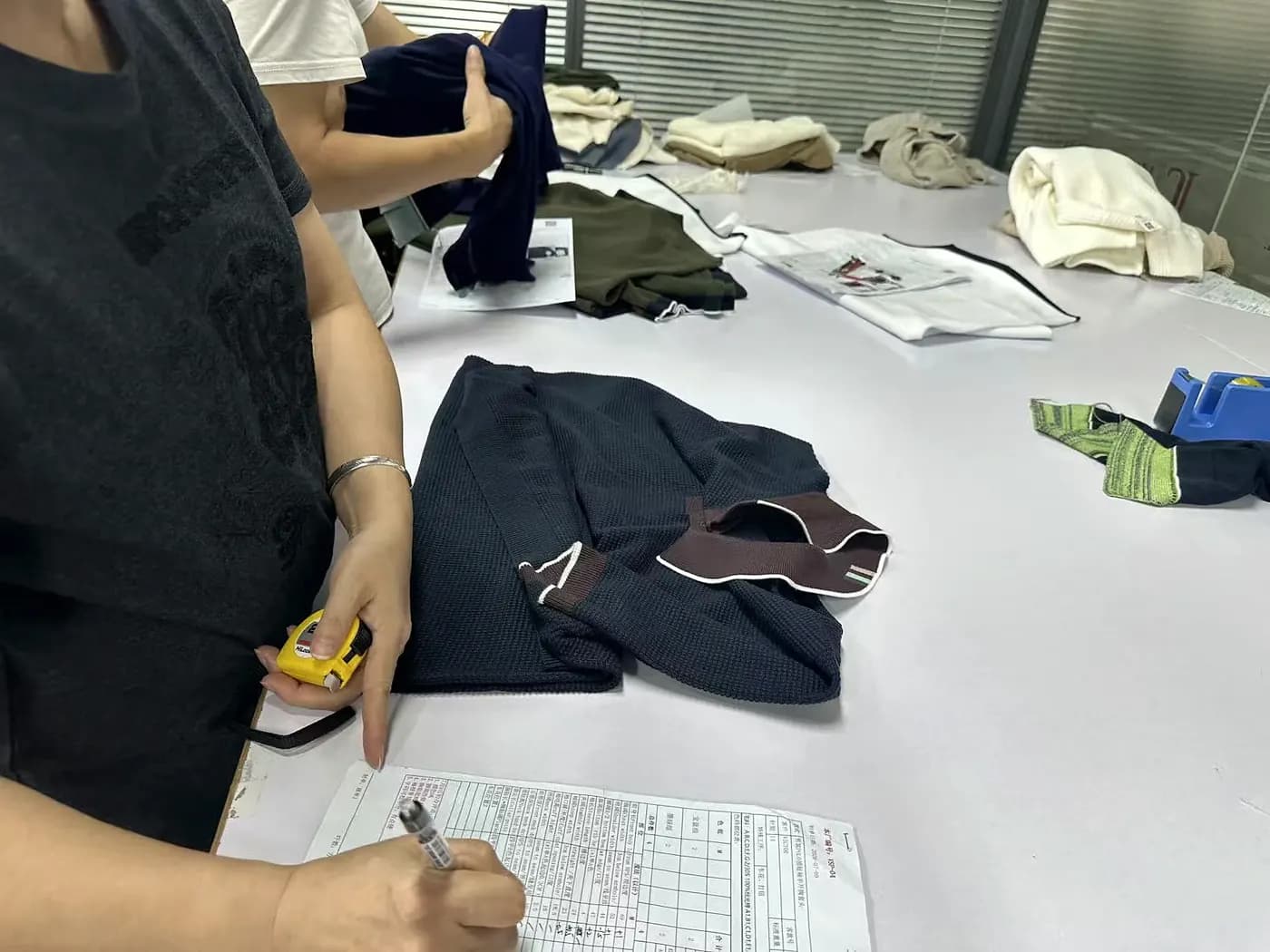
If your question depends on material, gauge, quantity or target price, submit an inquiry so the team can review it properly.
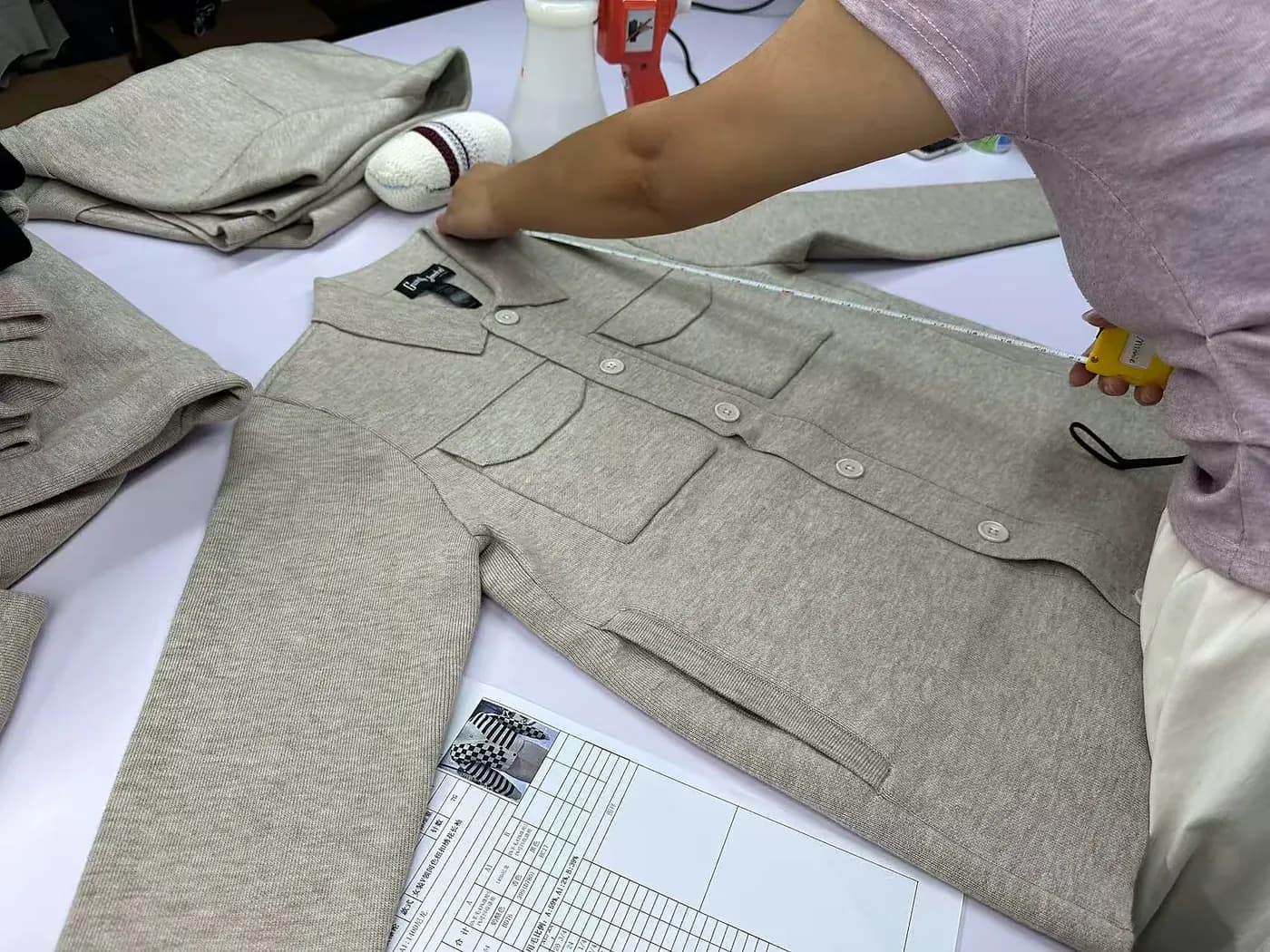
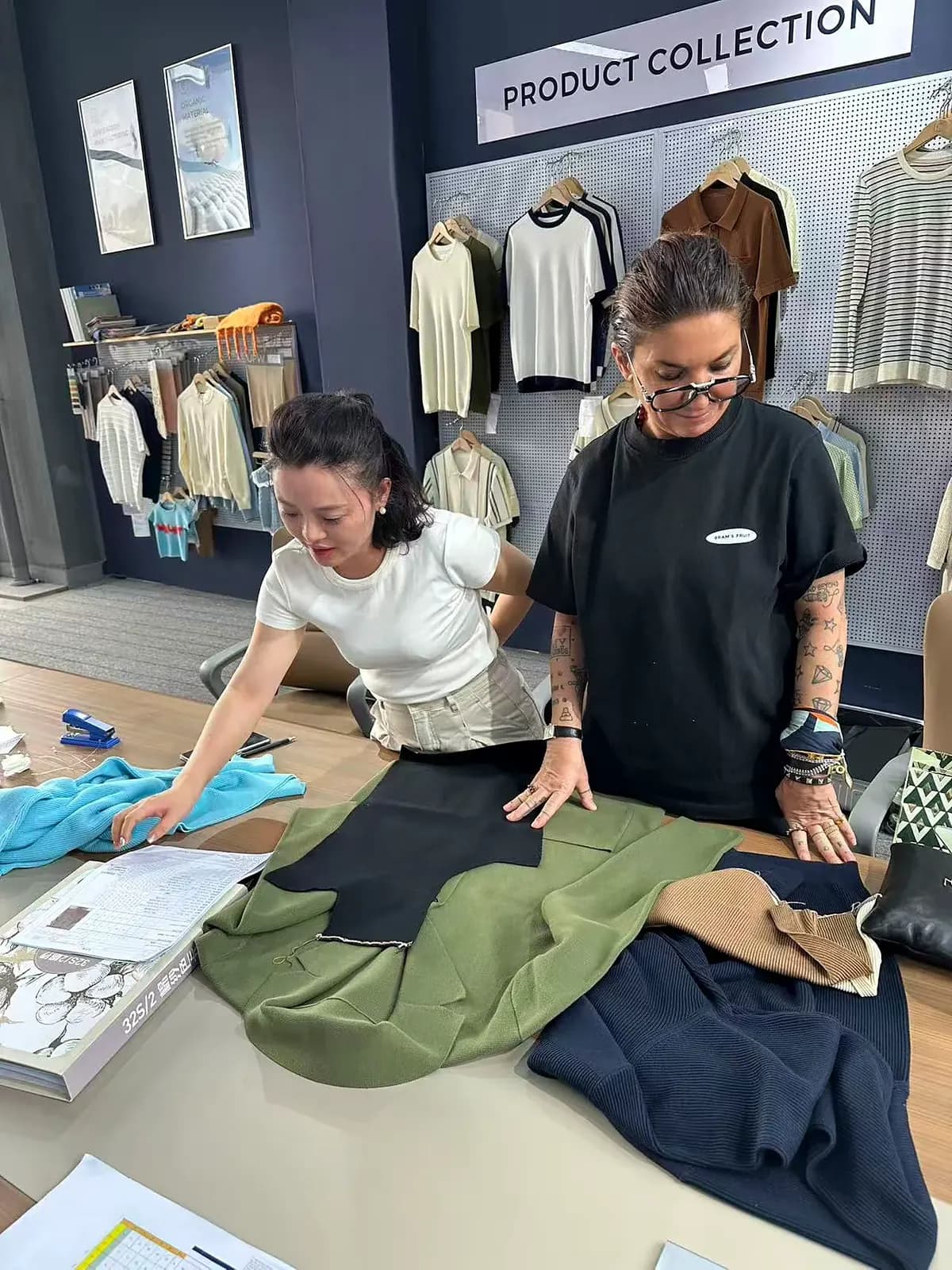
MOQ, plazos, rangos de coste, elección de galga y puntos de control de calidad en los programas OEM/ODM habituales para Norteamérica y Europa. Deje su correo y le enviamos el enlace en 30 segundos.
Sin spam. Cancele la suscripción con una sola respuesta. Usamos su correo únicamente para enviarle el informe y, si lo desea, continuar la conversación de sourcing.
Las marcas mostradas son socios OEM/ODM a los que hemos prestado servicio anteriormente. Los logotipos son decorativos y no implican ningún respaldo actual.