Climate & Season
Select weight and warmth for your target season.
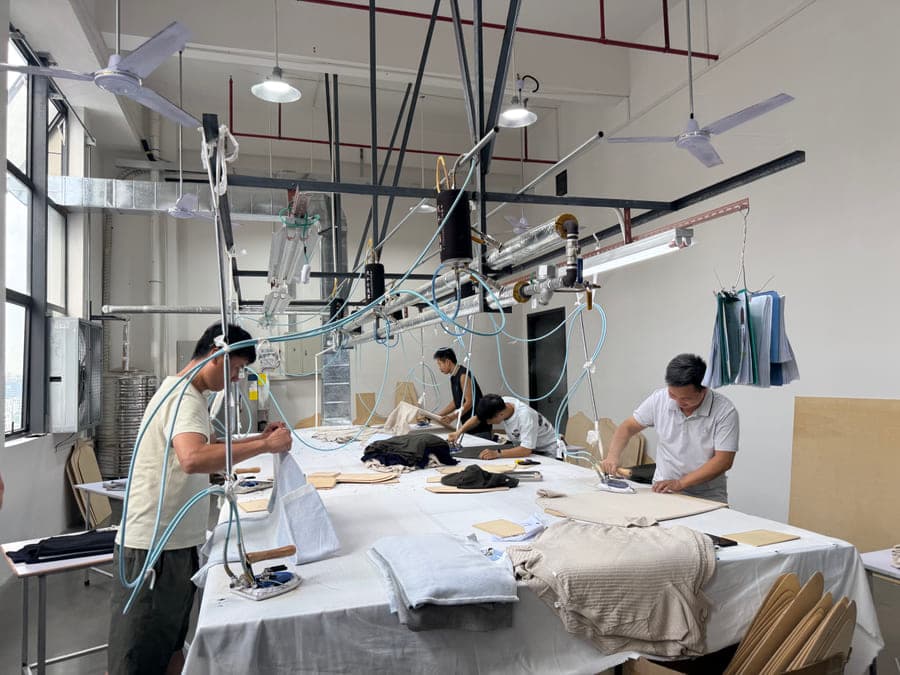
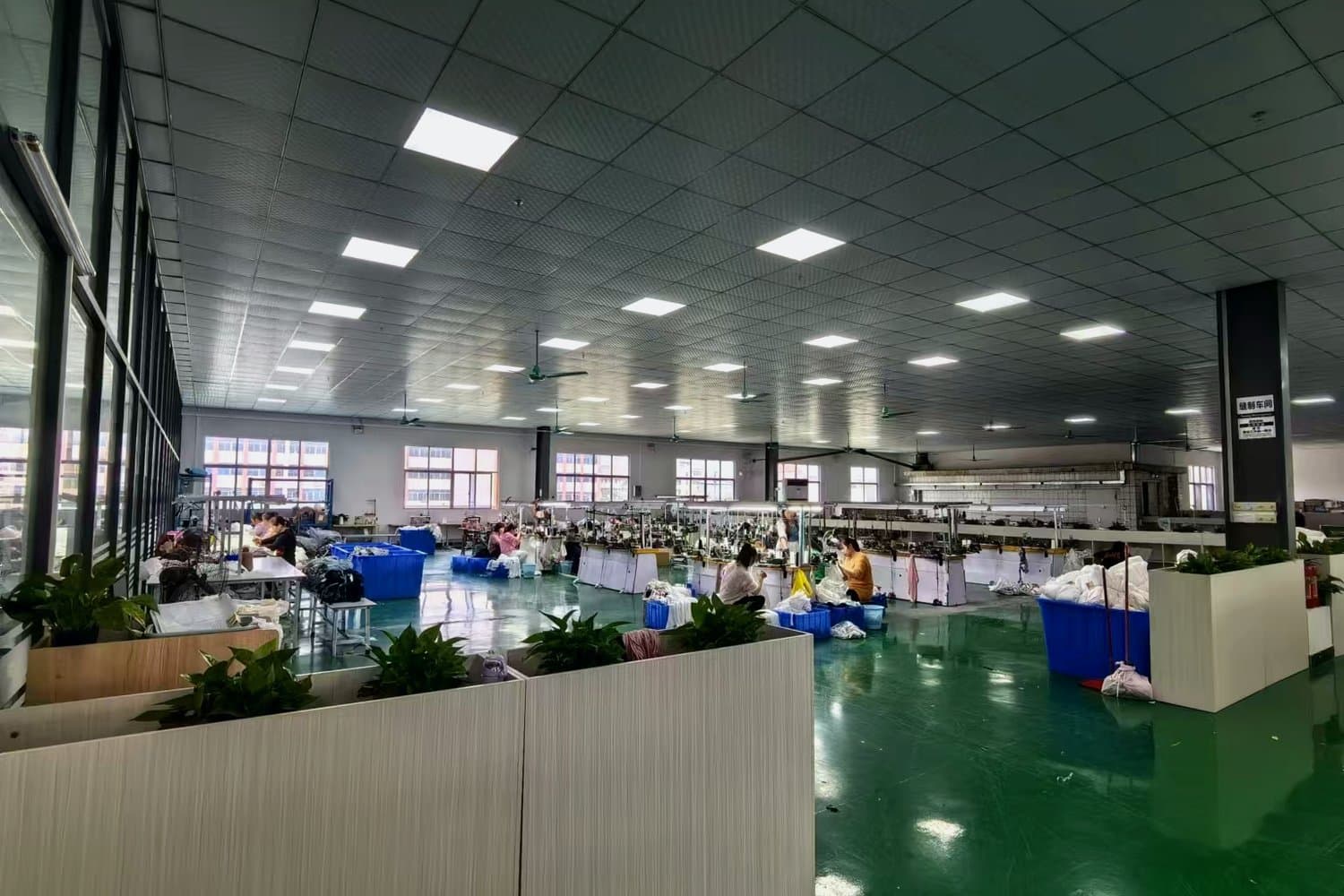
Licheng Knitwear produces custom knitwear from a minimum of 30 pieces per colour per style, and sizes may be mixed inside those 30 - so a first collection can launch with a full size run rather than thirty identical mediums. That single rule is what most small brands are actually asking about when they contact a knitwear factory, and it is the same across all 462 published styles in our catalogue. This page sets out what a brand gets at that quantity and what it does not: the same 3GG to 18GG machines, the same OEKO-TEX Standard 100, ISO 9001, GRS and GOTS certified production, and the same 15 to 25 day sampling as an eight-thousand-piece programme. It is written for founders placing a first production order, small labels testing one style before committing, and established brands adding a capsule outside their main range.
Galga
3GG - 18GG
Calidad
Controles por etapa
Fabricacion
Soporte knitwear custom
Mercados
USA, Europa y mas
Considere factores practicos antes del muestreo. La capacidad elegida afecta textura, coste, tacto, plazo y mercado.
Select weight and warmth for your target season.
Match texture, drape and premium handfeel.
Plan sweaters, cardigans, polos or jackets.
Align with buyer preference and price point.
Licheng Knitwear produces custom knitwear from a minimum of 30 pieces per colour per style, and sizes may be mixed inside those 30 - so a first collection can launch with a full size run rather than thirty identical mediums. That single rule is what most small brands are actually asking about when they contact a knitwear factory, and it is the same across all 462 published styles in our catalogue. This page sets out what a brand gets at that quantity and what it does not: the same 3GG to 18GG machines, the same OEKO-TEX Standard 100, ISO 9001, GRS and GOTS certified production, and the same 15 to 25 day sampling as an eight-thousand-piece programme. It is written for founders placing a first production order, small labels testing one style before committing, and established brands adding a capsule outside their main range.
Minimum order quantity is 30 pieces per colour per style. Sizes may be mixed within those 30, so a run of 30 can be split across a full S-XXL size curve; the 30 applies to the colour, not to each size. Quantity tiers are 30 / 100 / 1,000 / 8,000 pieces, and a quotation is normally given at the tier above and below a buyer's target so the cost of moving up is visible before committing. Sampling takes about 15 to 25 days from a confirmed tech pack and yarn, and bulk production 30 to 45 days depending on quantity - both figures are identical at 30 pieces and at 8,000. Published index medians at MOQ 30 per colour are USD 17.36 for wool blends, USD 19.48 for polo sweaters, USD 19.73 for cardigans, USD 21.61 for knit jackets, USD 22.73 for sweaters and pullovers, and USD 26.48 for mohair and alpaca. Those are figures from our own yarn cost index rather than quotations: the final price moves with yarn lot, gauge, colour count and quantity. What actually changes at low volume is colour count rather than piece count - each additional colour is its own 30-piece minimum and its own dye lot, so three colours at 30 is a 90-piece order and prices accordingly. Machine access does not change: the full 3GG to 18GG in-house gauge range, jacquard and intarsia, linking, embroidery and appliqué are all available at 30 pieces. To get an accurate small-batch quotation, send a reference photo or tech pack, the target colour count, the size curve, the yarn or handfeel direction and the market the pieces are going to.
Suitable for first production runs, capsule collections, pre-order and crowdfunded launches, test styles ahead of a larger buy, club, school and team programmes, and replenishment of a single colour that has sold through. Product types include sweaters and pullovers, cardigans, knit jackets, polo sweaters, vests and sleeveless knits, and knit accessories. It fits brands that need a real production garment - correct linking, correct trims, their own woven label and care label - rather than a modified blank, and it fits buyers who would rather prove one style at 30 pieces than commit to a full range before the first customer has seen it.
Recommended for North America, the Nordics, the United Kingdom, Germany and the wider EU, where a large share of new knitwear labels start with small, well-specified runs rather than volume commitments. Nordic and Canadian buyers usually arrive with heavier gauges and wool or wool-blend directions for cold-weather layering. UK, German and other European buyers tend to lead with handfeel, restrained styling and documentation - certificates, composition and care labelling - because the pieces go into markets where those are checked. North American buyers more often lead with landed cost, size curve and how quickly a proven style can be repeated. The 30-piece minimum applies identically in every one of these markets; shipping and duty do not change it, though they do change the landed cost per piece at small volumes, which is worth modelling before the size curve is fixed.
At 30 pieces the constraint that matters is colour count, not piece count: every colour carries its own minimum and its own dye lot, so adding colours multiplies the order faster than adding sizes does. Brands starting out generally get further by proving one colourway across a full size run than by splitting the same budget across three colours. Yarn availability is the other small-batch constraint - a stock yarn ships immediately, while a custom-dyed shade carries its own lead time and minimum, so ask about yarn before locking a launch date.
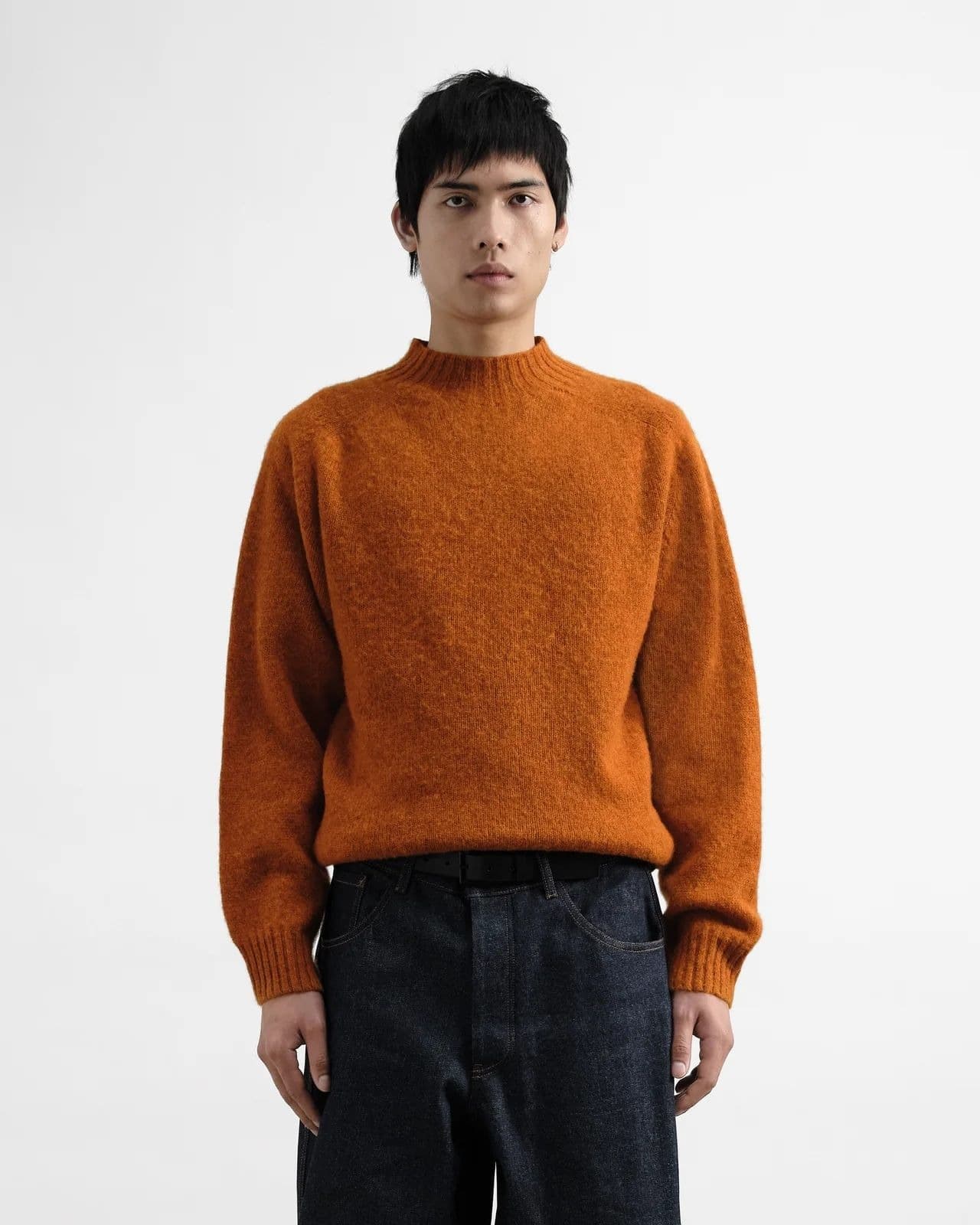
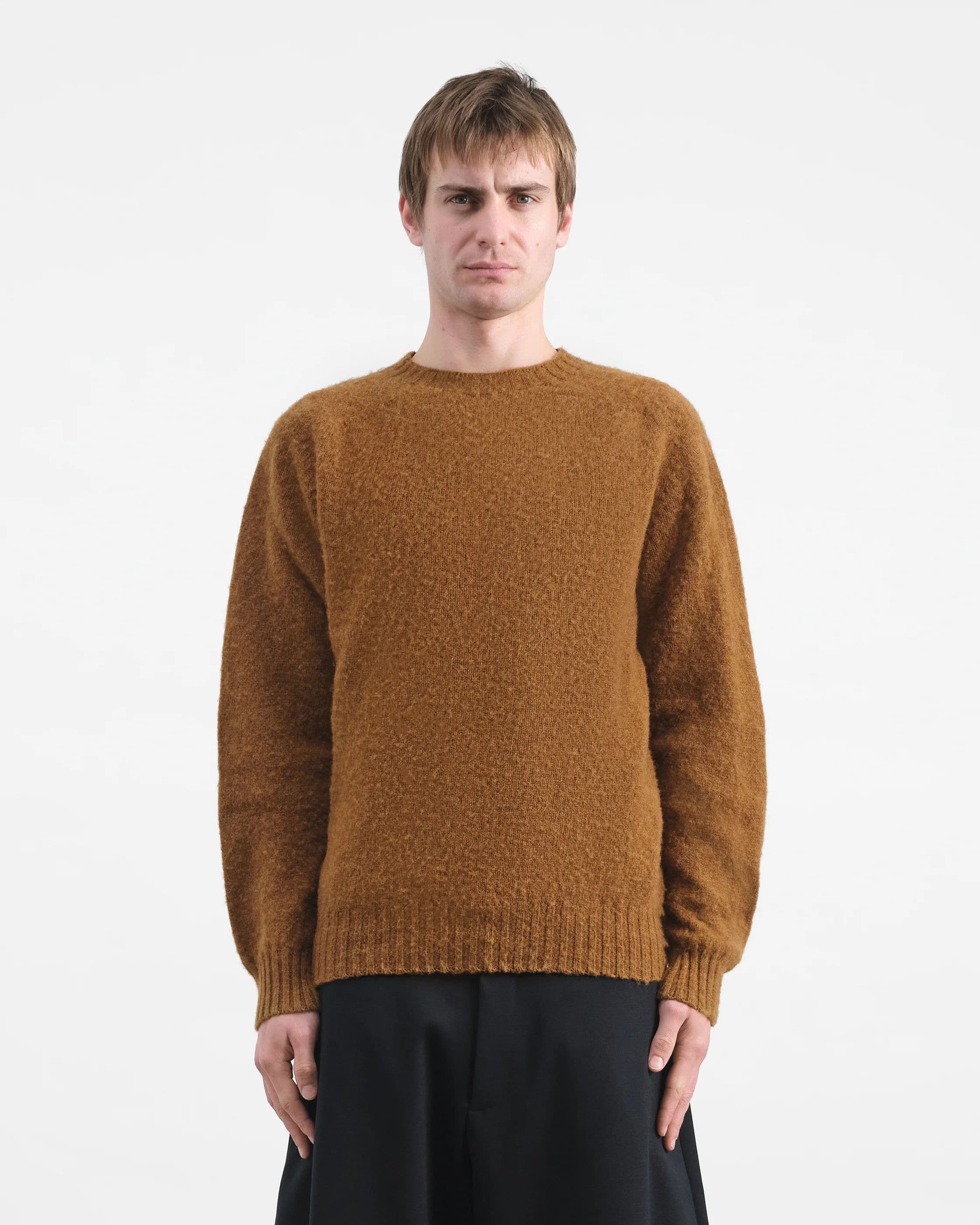
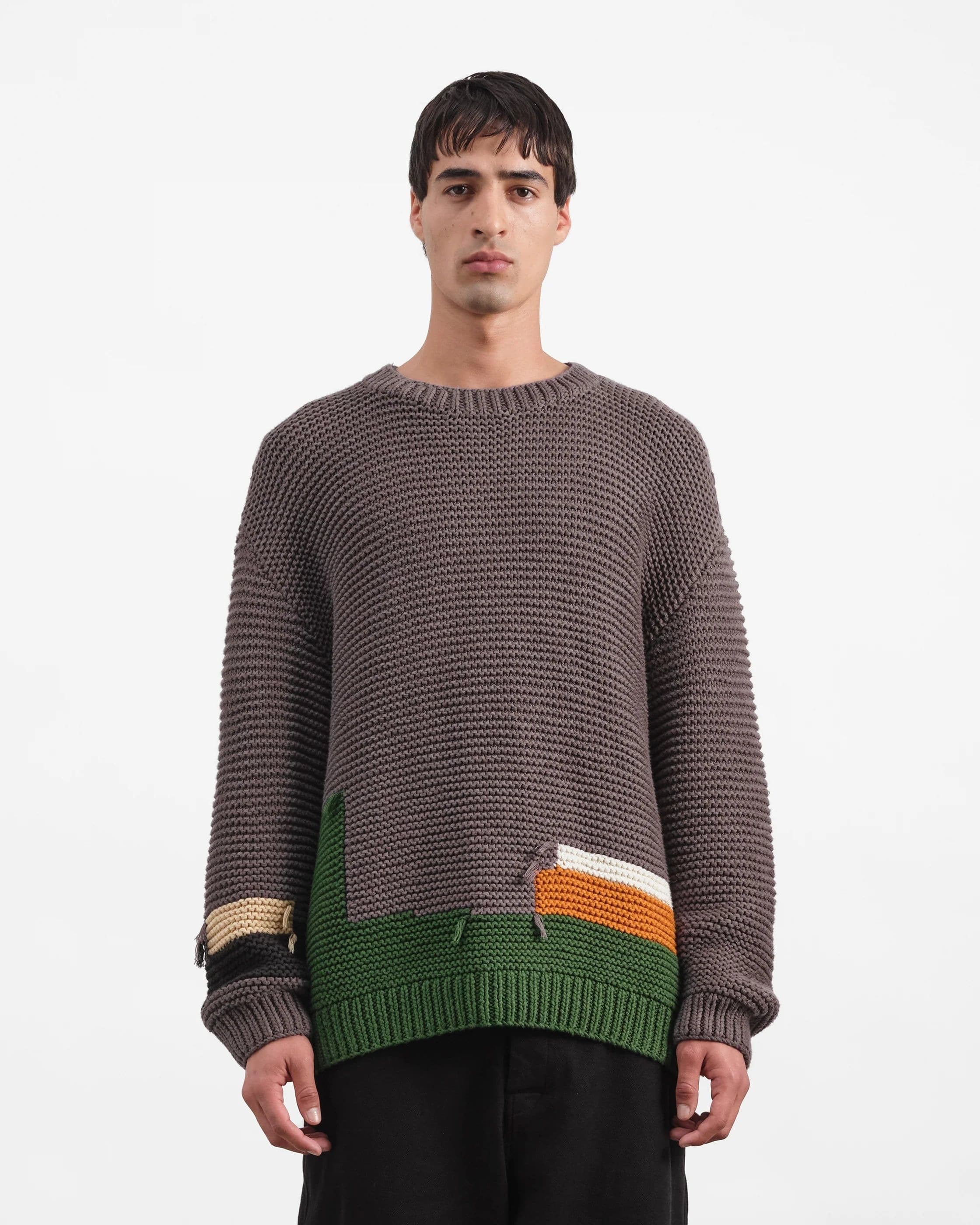
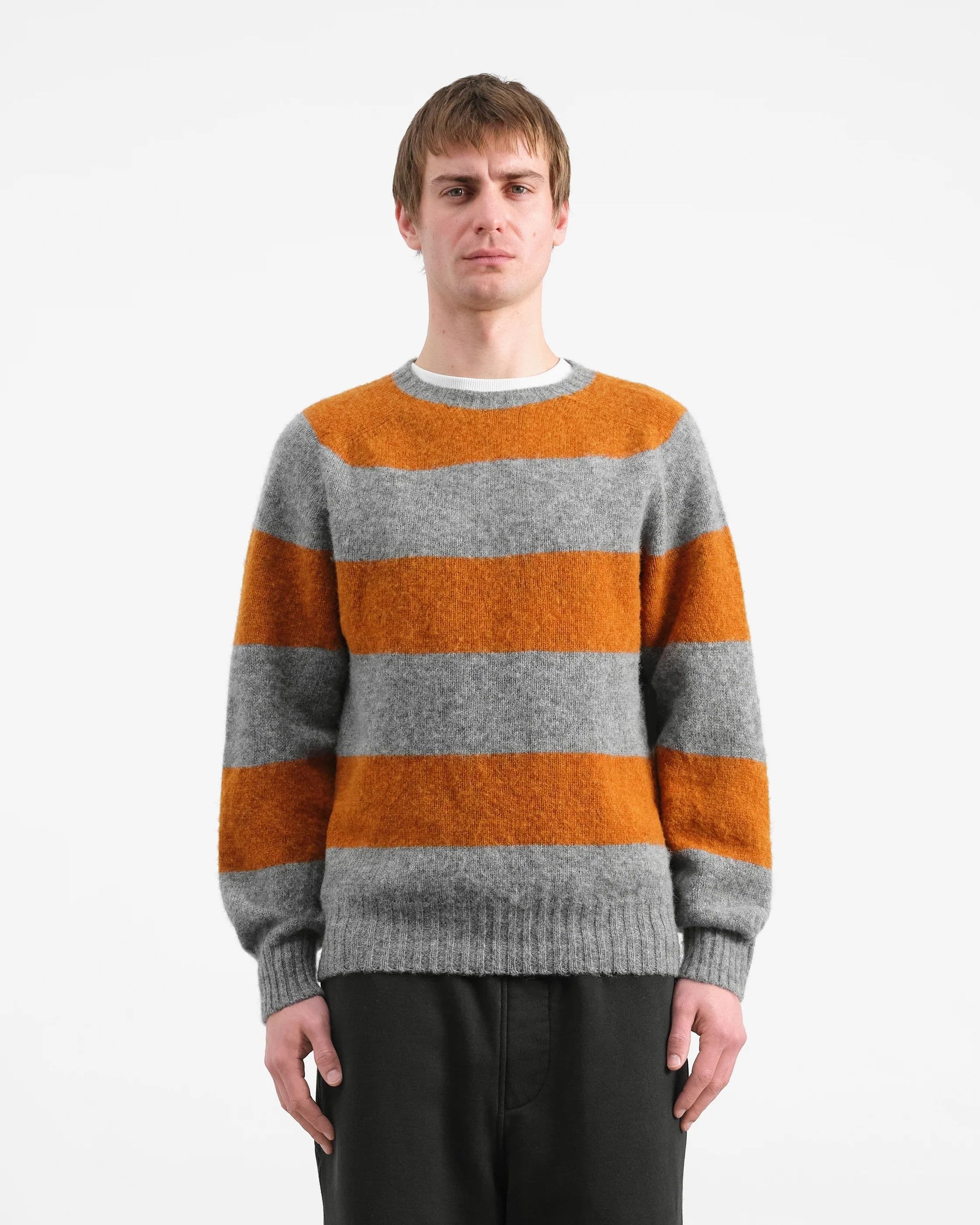
Direcciones de producto existentes que pueden usar esta capacidad.
Other capabilities
Share your concept, sketch or reference.
We recommend gauge, yarn and construction.
We develop samples and refine until approved.
Confirm details, size specs and production plan.
Quality manufacturing with on-time delivery.
Materiales relacionados
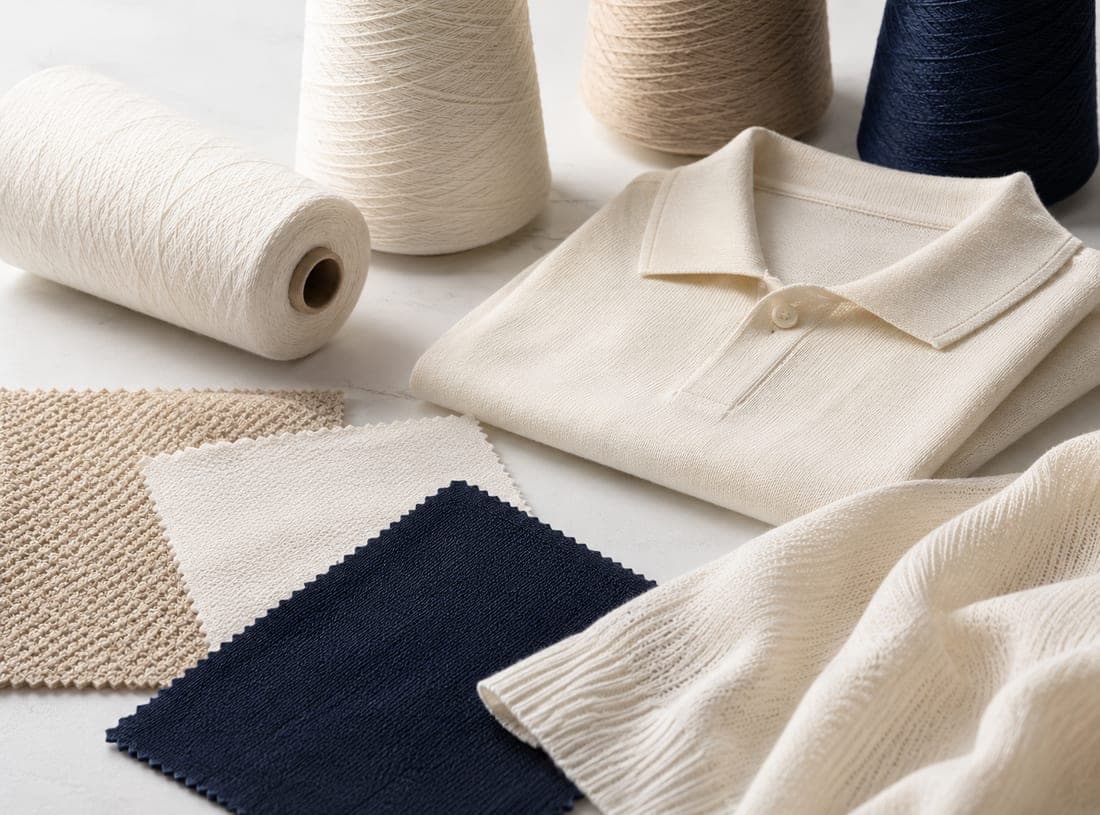
Dirección de hilo de algodón transpirable para prendas de punto personalizadas de primavera, verano y entretiempo.
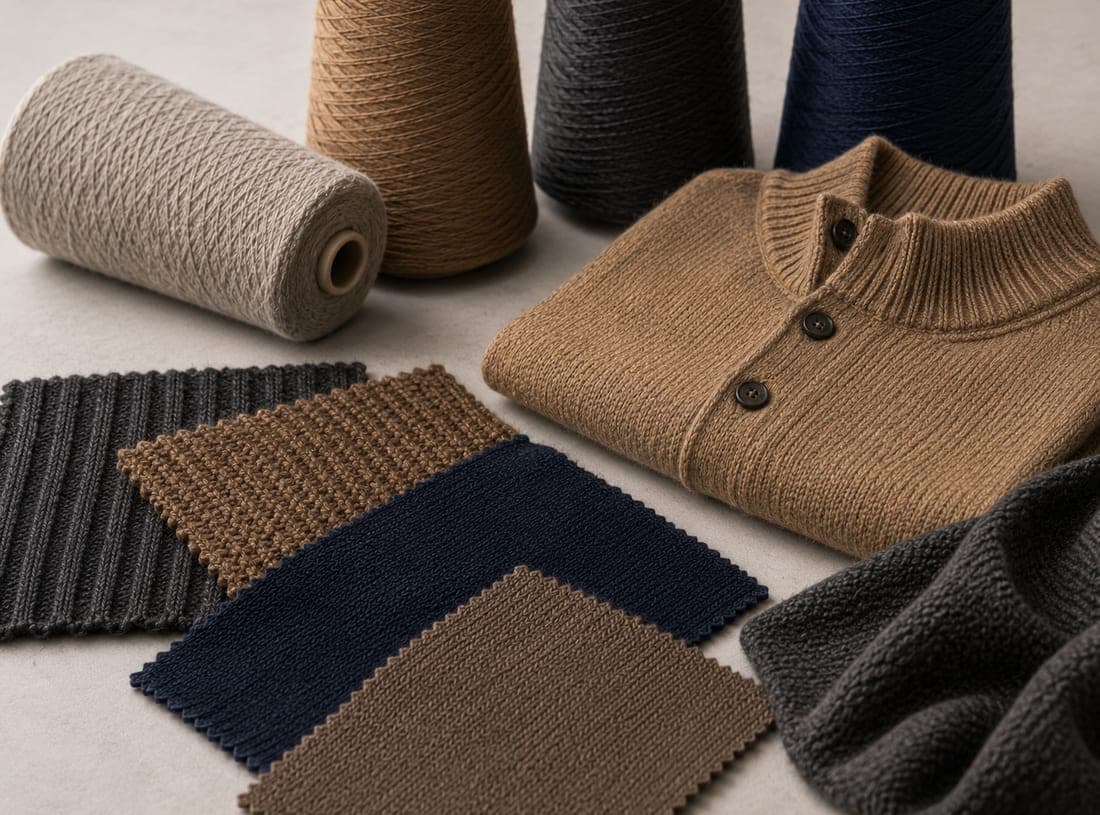
Calidez equilibrada, control de costes y tacto premium para programas de prendas de punto de otoño e invierno.
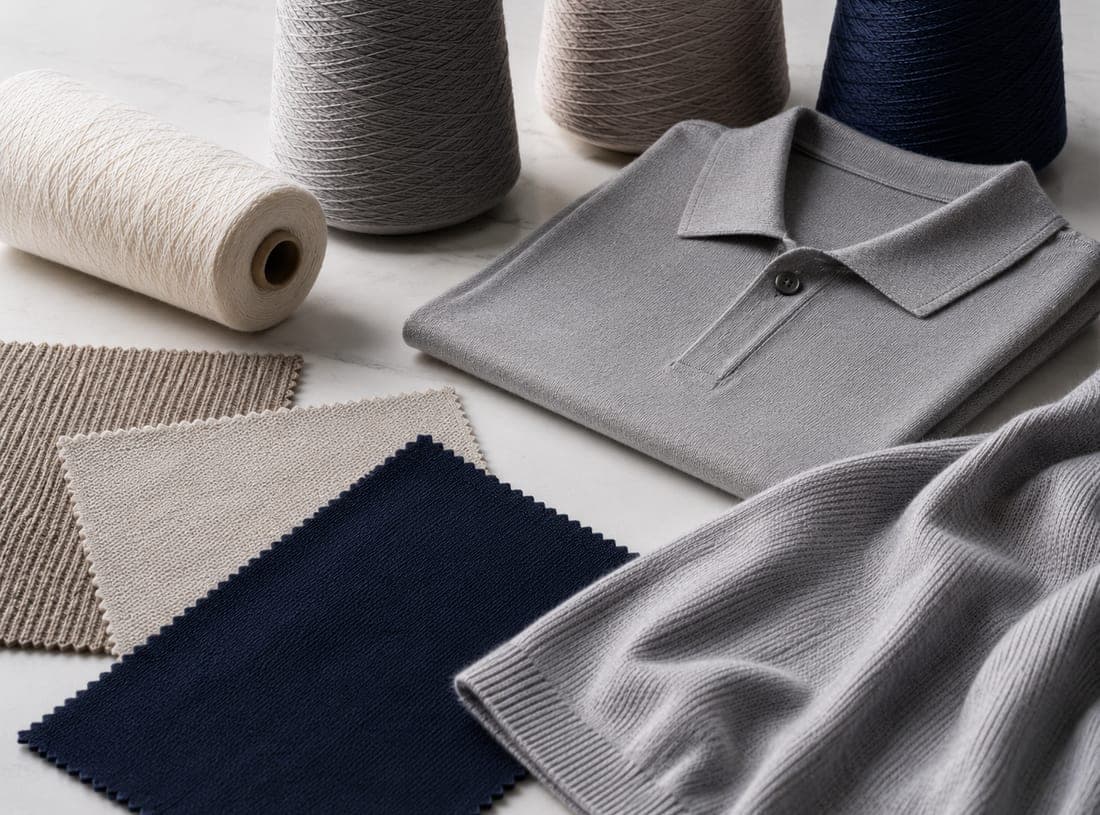
Propuesta en lana fina para suéteres premium ligeros y prendas de punto refinadas de hombre.
Guias relacionadas
Benchmark Report
Strategy
Sourcing Guide
Nos especializamos en suéteres de hombre, cárdigans, chaquetas de punto, prendas de punto jacquard y prendas de punto de marca privada. Apoyamos a compradores B2B con desarrollo OEM/ODM, desarrollo de muestras y planificación de producción en serie.
Los modelos de muestra disponibles y determinados programas personalizados permiten realizar pedidos de prueba de menor riesgo antes de los pedidos estacionales de mayor volumen.
Sí. Las marcas, incluidas las nuevas que preparan su primera colección, pueden pagar una muestra y verla antes de hacer un pedido de producción. Dos opciones: una muestra lista de un modelo publicado por USD 60 la pieza en unos 7 días, o una muestra de desarrollo a partir de su ficha técnica por USD 150 por modelo (incluye abastecimiento de hilo, programación de tejido, un prototipo y una ronda de ajustes) en 15-25 días. Los modelos de cachemira y mohair se cotizan aparte y el envío se cobra a coste. La producción comienza solo después de aprobar la muestra física, con un mínimo de 30 piezas por color y tallas combinables dentro de las 30. Una muestra no le compromete a producir; no fabricamos prendas para uso personal.
Nuestra tarifa de muestra no es reembolsable. El abastecimiento de hilo, la programación de tejido, la preparación de máquina y el remallado a mano cuestan aproximadamente lo mismo tanto si después viene una pieza como quinientas, y por eso existe la tarifa. Se descuenta de su primer pedido en volumen realizado dentro de los seis meses posteriores a la aprobación de la muestra: el 100% de una muestra de desarrollo y el 50% de una muestra lista.
Sí, para marcas que desarrollan un modelo. Una sola pieza de desarrollo es posible y no implica compromiso de producción: la muestra de desarrollo cuesta 150 USD por modelo e incluye la búsqueda de hilo, la programación del tejido, un prototipo y una ronda de cambios, en 15-25 días (el cachemir y el mohair se cotizan aparte). Si después pasa a producción, el mínimo es de 30 piezas por color con tallas combinables dentro de las 30, y los 150 USD se descuentan íntegramente de un primer pedido realizado en los seis meses siguientes a la aprobación de la muestra. No fabricamos prendas para uso personal.
Nuestro MOQ publicado es de 30 piezas por color, y esa cifra viene de la partida de tintura, no del tiempo de máquina: el hilo se tiñe por lotes, y unas 30 prendas de hilo es el lote más pequeño que mantiene estables a la vez el coste y el tono. Como ese mínimo depende del hilo teñido y no del modelo, los modelos que comparten un mismo hilo en un mismo color se suman contra él. Cuatro modelos de 25 piezas cada uno, todos en el mismo hilo y el mismo color, son 100 piezas en una sola partida de tintura y se aceptan. Lo que no se suma es un segundo color o un segundo hilo: cada uno es su propia partida con su propio mínimo. Así que la primera pregunta no es cuántos modelos tiene, sino a cuántas combinaciones de hilo y color equivalen.
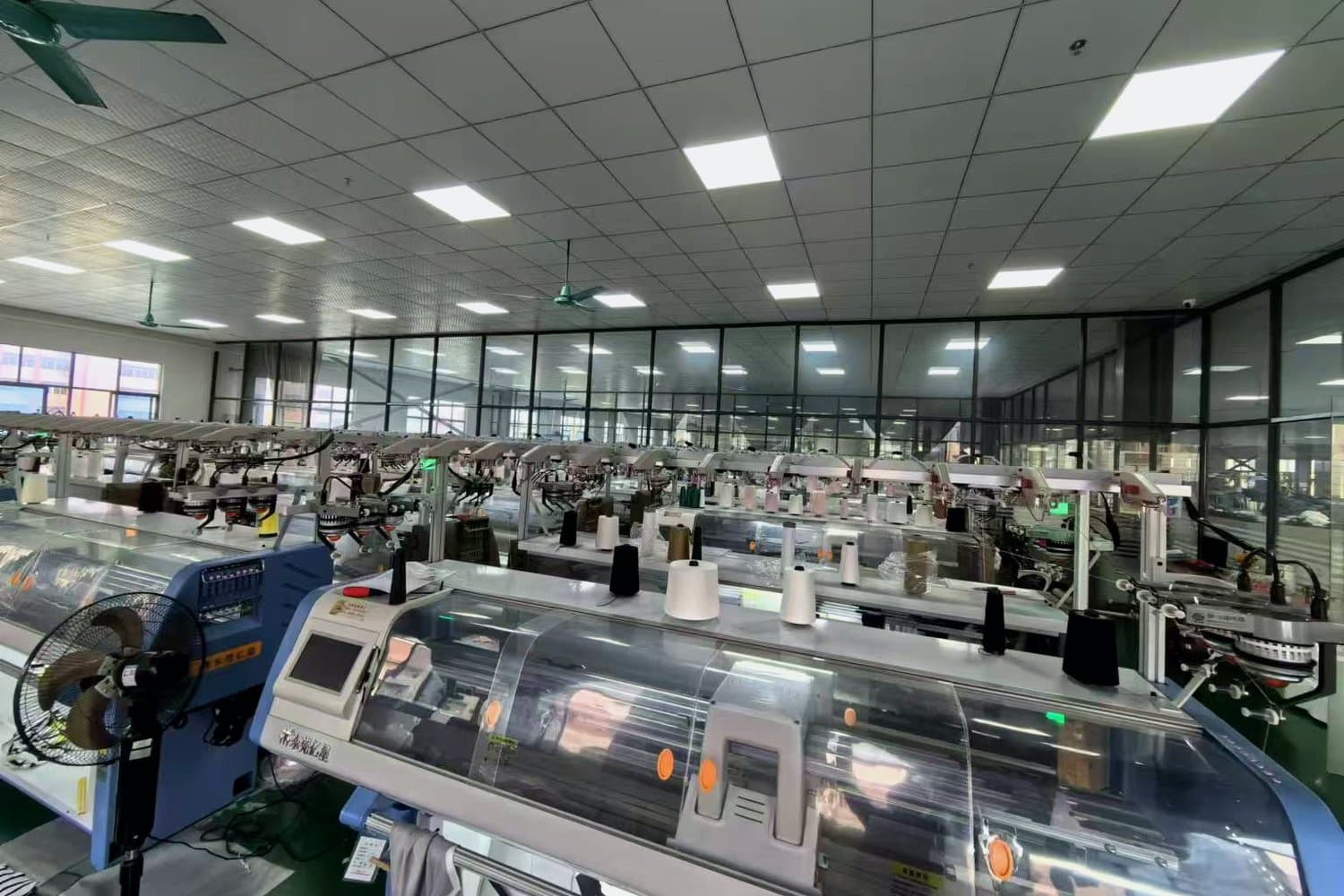
We partner with your team to turn ideas into best-selling knitwear. From concept and sampling to bulk production and delivery, our experts guide every step.
MOQ, plazos, rangos de coste, elección de galga y puntos de control de calidad en los programas OEM/ODM habituales para Norteamérica y Europa. Deje su correo y le enviamos el enlace en 30 segundos.
Sin spam. Cancele la suscripción con una sola respuesta. Usamos su correo únicamente para enviarle el informe y, si lo desea, continuar la conversación de sourcing.
Las marcas mostradas son socios OEM/ODM a los que hemos prestado servicio anteriormente. Los logotipos son decorativos y no implican ningún respaldo actual.