Knit Co-ord Sets: Developing a Sweater or Zip Top with Matching Knit Trousers
Aktualisiert 19.11.202612 min readVon Simon Liu · Licheng Knitwear
A knitted set is two garments, but it does not have to be two minimum orders. How the 50-piece-per-colour minimum counts across a top and matching knit trousers, which trouser shapes work on a flat-knit machine, and the four things to agree at sample stage so the two pieces match.
Quick answer: A knitted co-ord set — a sweater, cardigan or zip top with matching knit trousers — is made on the same flat-knit machines as the top, with each trouser panel knitted to shape. Plain and striped pieces made in the same yarn and colour count together toward one 50-piece minimum, sizes mixed, so 25 tops and 25 trousers in one yarn and colour meet it. Jacquard and intarsia count 50 pieces per pattern. Straight, wide-leg and flared trouser shapes are all possible; what needs most attention at sampling is the waistband, the hem finish and making sure both pieces come from the same yarn lot.
This month a large share of the enquiries we received were not for a single sweater but for a set: an oversized jumper with wide-leg trousers, a fitted zip top with flared trousers and a pattern knitted into both, a hoodie with joggers for a lounge line. This explains how we approach those projects.
What a knit set is, on our side
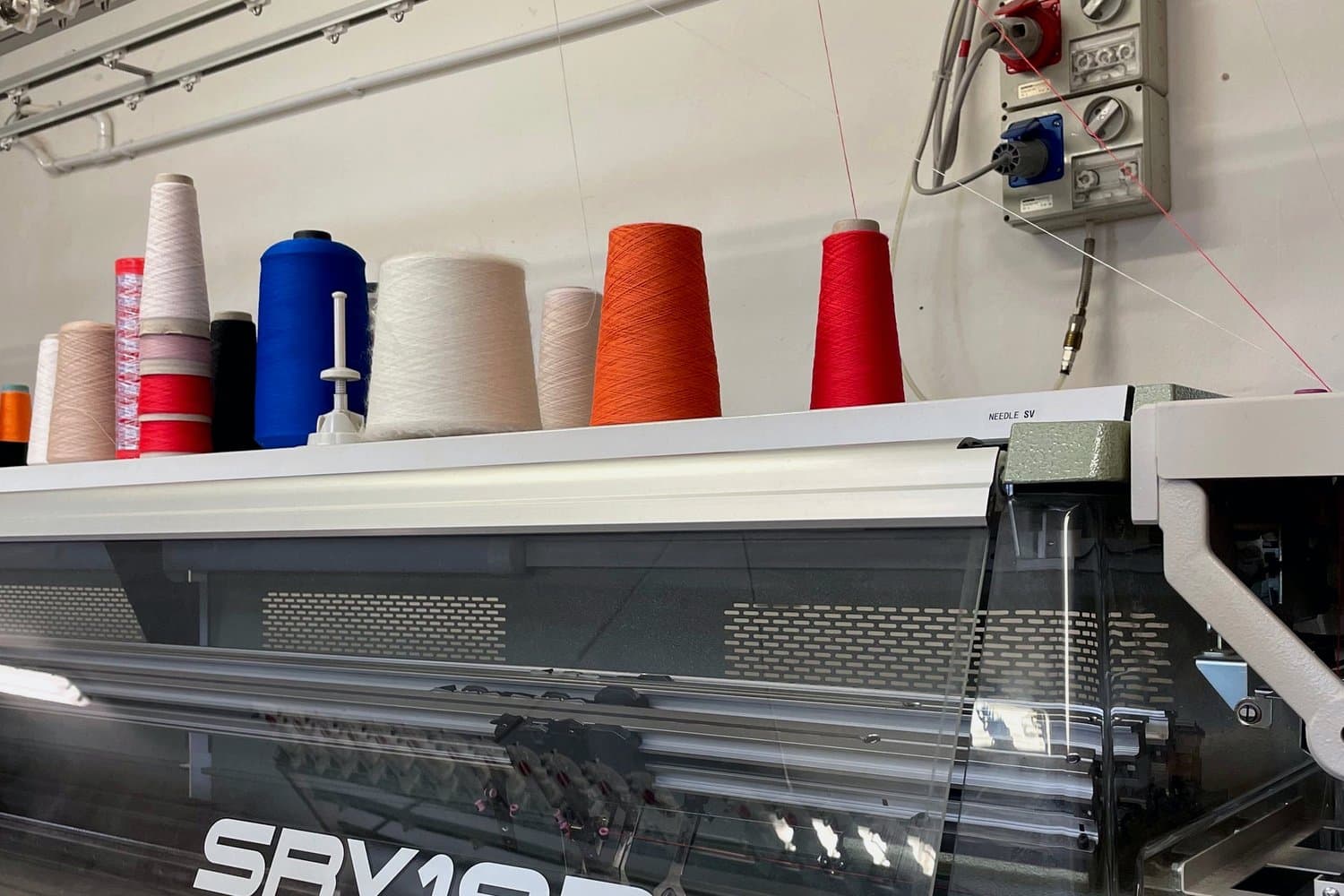
The trousers are knitted, not cut from knitted fabric. Each panel — the legs, the waistband, any pocket — is knitted to its shape on the same computerised flat-knit machines we use for sweaters (3GG to 18GG), then linked together. That is why a set can be developed as one programme: the top and the trousers share the yarn, the gauge planning and the finishing.
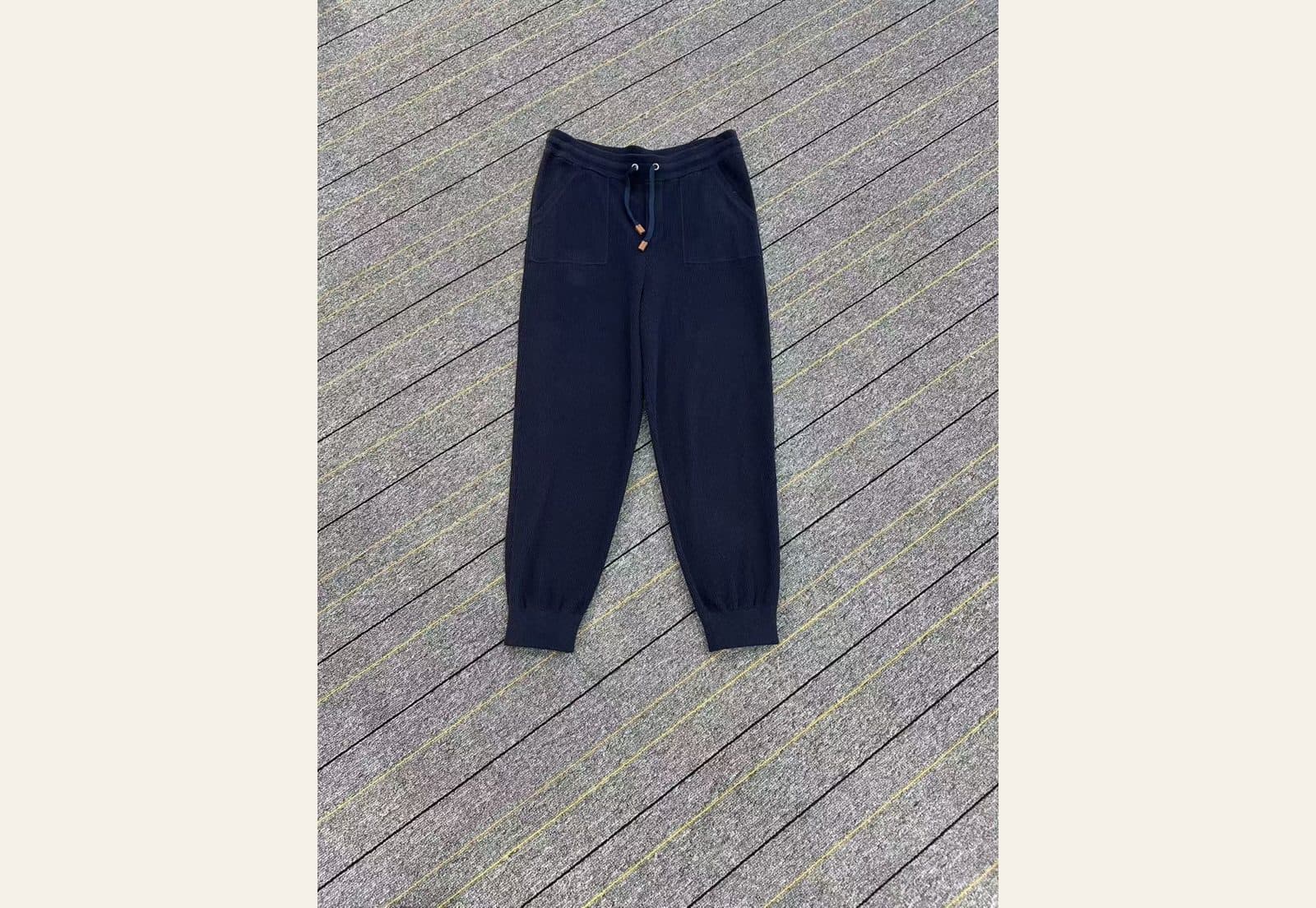
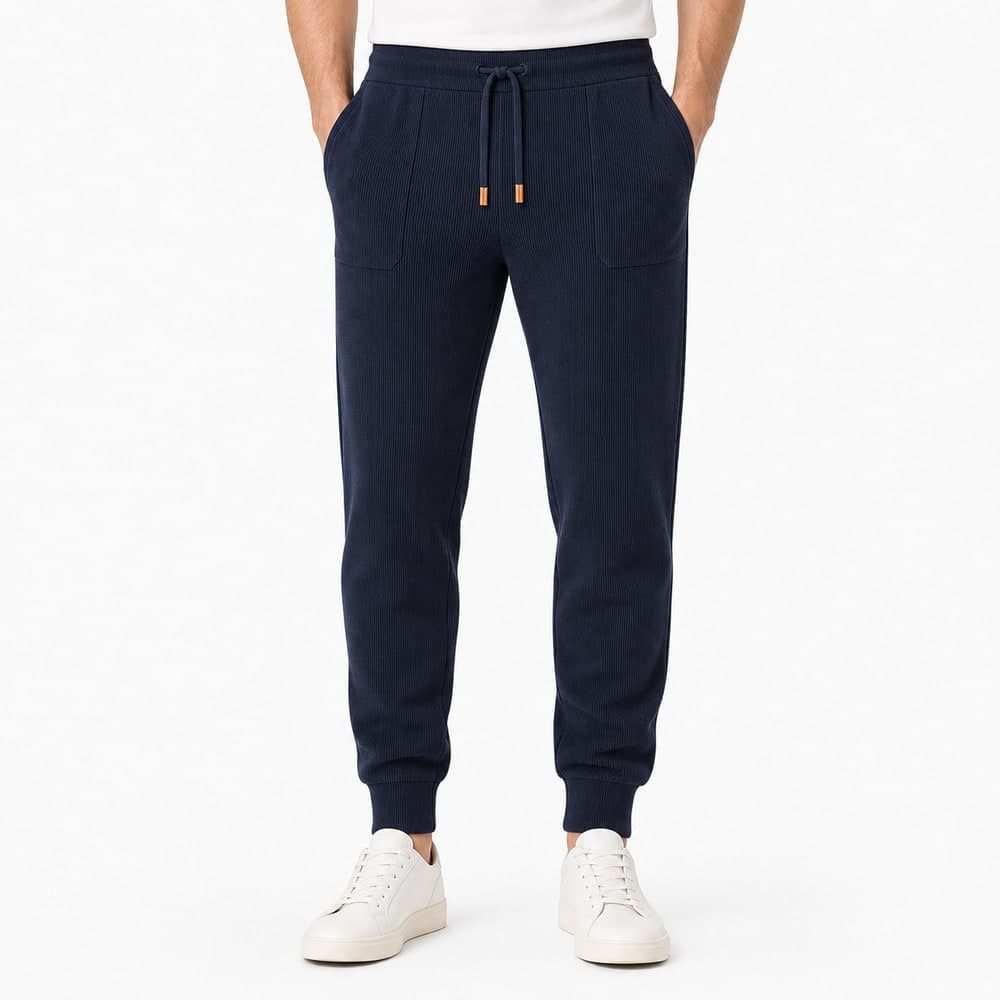
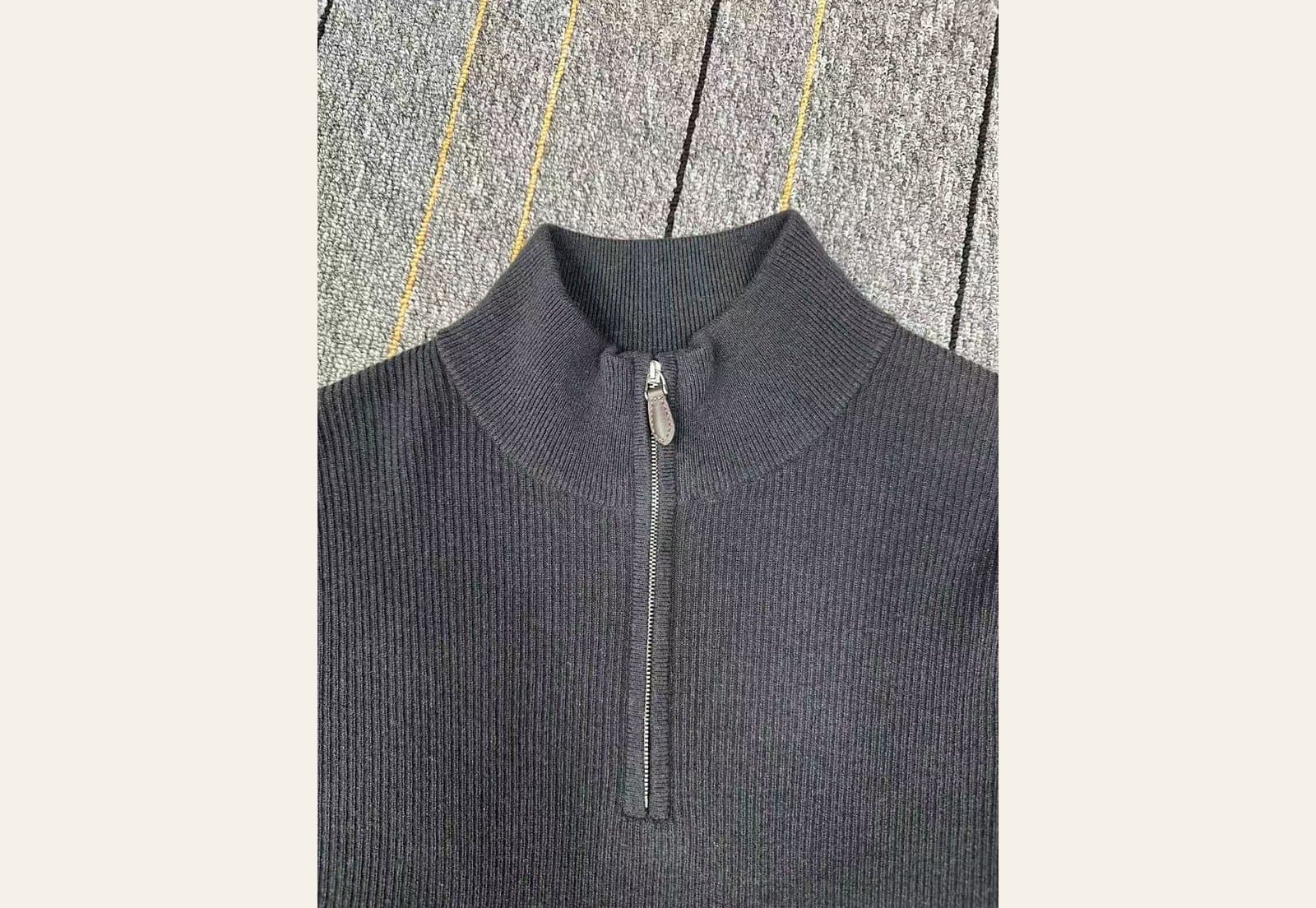
The photo above is a pair of knitted trousers from our own development range: a rib structure, a drawcord waist, patch pockets and ribbed ankle cuffs.
How the minimum counts across a set
Our minimum is 50 pieces per colour, with sizes mixed inside the 50. For sets, the rule that matters is this:
Plain and striped pieces in the same yarn and colour combine. 25 zip jackets and 25 matching trousers in the same yarn and colour are 50 pieces and meet the minimum.
A second colour is counted separately. The same set in black and in oatmeal is two lots of 50, because each colour is its own yarn lot.
Jacquard and intarsia count 50 pieces per pattern. Different patterns cannot be added together to reach the minimum.
If the first run is small, the usual way to stay inside the rule is one colour for the whole set, with variety coming from the size range rather than from extra colourways.
Trouser shapes that work
All three common shapes are knitted to shape:
Straight leg — the most forgiving fit and the easiest to match to a relaxed or boxy top.
Wide leg — popular for lounge and modest-fashion ranges; the extra width is knitted in, so the drape depends on the yarn weight and stitch.
Flared — fitted through the hip and knee, widening below; it suits a fitted zip top.
Joggers with a ribbed cuff, like the pair in the photo, are a fourth option and the easiest one to size.
Four things to agree at sample stage
1. The waistband. How it should feel against the top's rib, whether it carries a drawcord, and where the top's hem will sit on it when the set is worn.
2. The hem finish. Whether the trouser hem should echo the top's cuffs and hem — the same rib, a ribbed ankle cuff, or an open hem on a wide leg.
3. One yarn lot for both pieces. The top and the trousers should be knitted from the same lot so the colour matches when they are worn together. This is the main reason a set should be ordered together rather than topped up later.
4. Pattern placement. If a motif is knitted into the fabric, decide where it falls on each piece and which parts must stay recognisable — for example a repeat that continues from the top onto the trouser leg, or a motif on the top only.
Write these four points next to your reference photos. Most set briefs we receive arrive as photos rather than tech packs, and that is a fine place to start.
Sampling and timing
You can start with one development sample of the set before committing to bulk. Our development sample is USD 150 including one revision; a ready sample from an existing style is USD 60. Sampling takes about 15–25 days from a confirmed design and yarn, and bulk about 30–45 days after the sample is approved.
For colour, stock yarn colours are the fastest. A custom colour is possible from 50 pieces per colour with a small-lot dye fee and about 7–15 extra days; from 100–300 pieces per colour it can be mill-dyed without that fee.
If you are planning a set, send a photo of each piece and tell us the trouser shape, the colour and roughly how many sets you need. We will tell you how it counts against the minimum before anything else.
Yes. Knit trousers are knitted to shape on the same flat-knit machines as the top, so they can be made in the same yarn and colour and developed as one set. Straight, wide-leg, flared and jogger shapes are all possible.
50 pieces per colour, sizes mixed. Plain and striped pieces in the same yarn and colour count together, so 25 tops and 25 trousers in one yarn and colour meet it. A second colour is counted separately, and jacquard or intarsia count 50 pieces per pattern.
Yes. A development sample is USD 150 including one revision and takes about 15–25 days from a confirmed design and yarn. Bulk takes about 30–45 days after sample approval.
Wir konzentrieren uns auf Herrenpullover, Cardigans, Strickjacken, Jacquard-Strickwaren und Private-Label-Strickwaren. Wir unterstützen B2B-Käufer bei OEM/ODM-Entwicklung, Mustererstellung und Serienproduktionsplanung.
Verfügbare Musterstile und ausgewählte kundenspezifische Programme ermöglichen risikoärmere Testläufe vor größeren Saisonaufträgen.
Ja. Marken, auch neue Labels vor ihrer ersten Kollektion, können ein Muster bezahlen und es ansehen, bevor sie einen Produktionsauftrag erteilen. Zwei Wege: ein Ready-Sample eines veröffentlichten Modells für USD 60 pro Stück in etwa 7 Tagen, oder ein Entwicklungsmuster nach Ihrem Tech-Pack für USD 150 pro Modell – inklusive Garnbeschaffung, Strickprogrammierung, einem Prototyp und einer Korrekturrunde – in 15-25 Tagen. Kaschmir- und Mohair-Modelle werden einzeln kalkuliert, der Versand wird zum Selbstkostenpreis berechnet. Die Produktion startet erst nach Freigabe des physischen Musters, ab 50 Stück pro Farbe, Größen innerhalb der 50 mischbar. Ein Muster verpflichtet Sie nicht zur Produktion; Kleidung für den privaten Gebrauch fertigen wir nicht.
Bereit, Ihr Projekt zu starten?
Fordern Sie einen Katalog an oder senden Sie heute eine Anfrage. Unser Team antwortet innerhalb von 24 Stunden.