Was beeinflusst die Kosten von maßgefertigten Strickwaren?
Aktualisiert 24.8.202612 min readVon Simon Liu · Licheng Knitwear
Ein B2B-Leitfaden zur Kostenplanung für maßgefertigte Strickwaren, der Garn, Feinheit, Maschenstruktur, Anzahl der Farben, Stückzahl, Etiketten, Verpackung und Musterentwicklung behandelt.
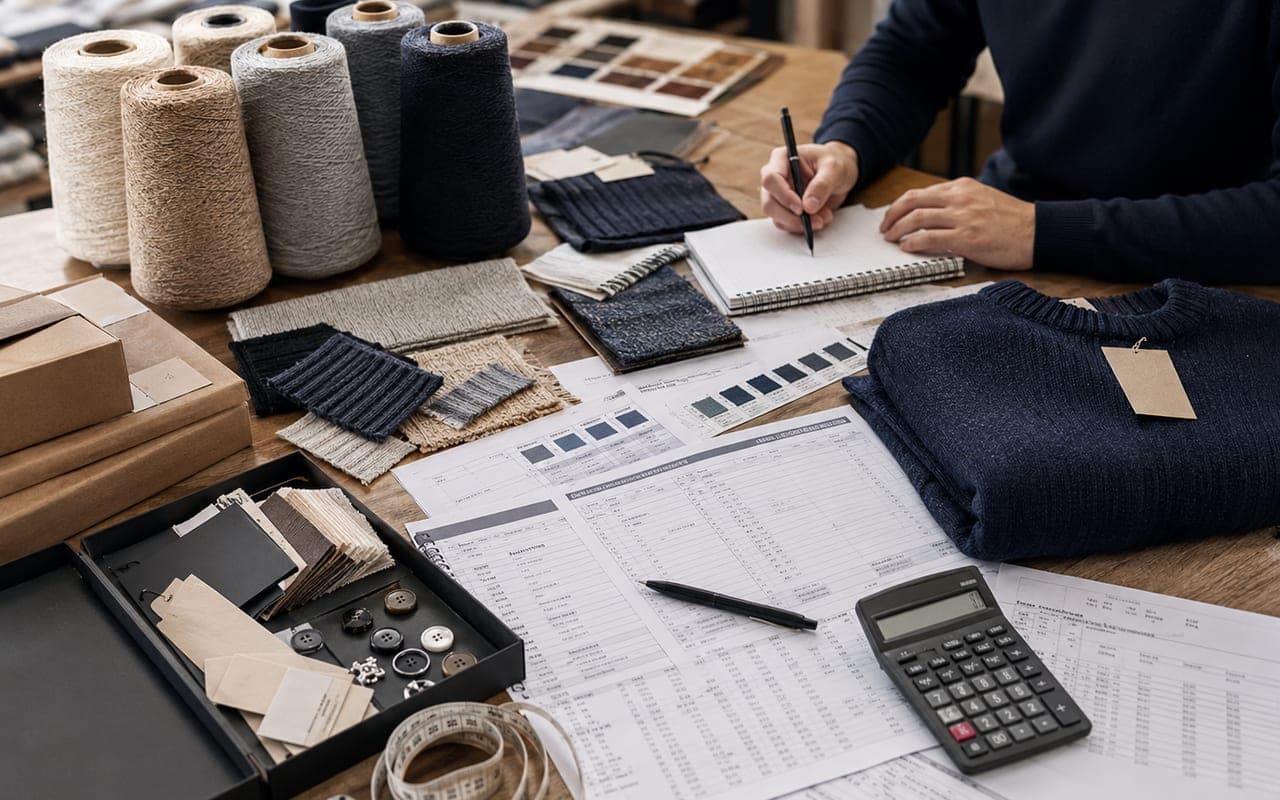
Zwei Fabriken können für scheinbar denselben Pullover völlig unterschiedliche Preise nennen, und keine von beiden betrügt Sie zwangsläufig. Die Preisgestaltung für maßgefertigte Strickwaren setzt sich aus einer ganzen Reihe von Kostentreibern zusammen, und wer diese versteht, verwandelt ein verwirrendes Angebot in eine verhandelbare, planbare Zahl. Dieser Leitfaden schlüsselt auf, wofür Sie tatsächlich bezahlen, damit Sie Margen kalkulieren und gezielt für einen Zielpreis gestalten können.
Sie können keinen Preis verhandeln, den Sie nicht verstehen. Kennen Sie die Kostenstruktur, und jedes Angebot wird zu einem Gespräch statt zu einem Ratespiel.
Zöpfe, Jacquard und Intarsia erhöhen Maschinen- + Arbeitszeit
Anzahl der Farben
Mittel
Jede Farbe = Färbepartie + Einrichtung
Stückzahl
Hoch (umgekehrt)
Mehr Einheiten = niedrigerer Stückpreis
Etiketten & Verpackung
Niedrig-Mittel
Individuelle Accessoires und Kartons summieren sich bei großen Mengen
Garn ist das Fundament
Die Faserwahl ist der größte einzelne Hebel. Kaschmir und feine Merinowolle stehen ganz oben; Lammwolle und Baumwolle in der Mitte; Acryl und Acrylmischungen am unteren, preiswerten Ende. Derselbe Stil aus Kaschmir gegenüber Acryl kann sich um das 3- bis 5-Fache im Preis unterscheiden.
Die Faserwahl ist der größte einzelne Kostenhebel; sie bestimmt sowohl den Griff als auch die Untergrenze Ihres Stückpreises.
Um den Faserhebel grob einzuordnen (relativ zu einer schlichten Baumwoll-Basislinie von 1,0):
Faser
Relative Garnkosten
Typische Positionierung
Acryl / Acrylmischung
0,6–0,9
Preiseinstieg, Promotion
Baumwolle / Baumwollmischung
1,0
Alltag, Übergangszeit
Lammwolle / Wollmischung
1,3–1,8
Kern-Wintersortiment
Merino
2–3
Premium, Performance
Kaschmir & Mischungen
4–6+
Luxus
Feinheit, Gewicht und Struktur
Ein schwerer, grobgestrickter 3GG-Pullover verbraucht weitaus mehr Garn und Strickzeit als ein feines 12GG-Teil und kostet daher mehr, selbst aus derselben Faser. Aufwändige Maschenarbeit wie Zöpfe, Fair Isle und Intarsia erhöht den Programmieraufwand und verlangsamt die Maschinengeschwindigkeit. Ein einfacher Jersey oder Rippstrick ist immer die wirtschaftlichste Konstruktion.
Stückzahl: Der Hebel, den Sie steuern
Der Stückpreis sinkt mit steigender Stückzahl, weil sich Fixkosten wie Garn-Färbepartien, Maschineneinrichtung und Musterung auf mehr Teile verteilen. Deshalb sind MOQ und Preis miteinander verknüpft. Siehe unseren MOQ-Leitfaden. Eine grobe Veranschaulichung:
Kleine Auflage (100-200 pcs): höchster Stückpreis; einrichtungsintensiv
Große Auflage (1.000+ pcs): bester Stückpreis; Garn im Großeinkauf bezogen
Individualisierung und Veredelung
Gewebte Etiketten, individuelle Hangtags, spezielle Waschungen und Markenverpackungen verursachen jeweils geringe Kosten pro Einheit sowie Einrichtungskosten. Einzeln betrachtet geringfügig, können sie zusammen ein Angebot um 5-15 % verschieben. Entscheiden Sie, welche Details für Ihren Kunden wirklich wichtig sind und welche nur ein Nice-to-have sind.
Eine beispielhafte FOB-Kostenaufschlüsselung
Es hilft zu sehen, wohin das Geld innerhalb eines einzelnen FOB-Stückpreises fließt. Die genaue Aufteilung verschiebt sich mit Faser und Komplexität, doch ein Wollmisch-Pullover im mittleren Preissegment sieht oft ungefähr so aus:
Komponente
Anteil am FOB
Was sie abdeckt
Garn
45–55 %
Der größte Einzelposten; Faser und Stückzahl dominieren
Ein Angebot auf diese Weise zu lesen verrät Ihnen, an welchem Hebel Sie ziehen sollten: Wenn Sie über dem Budget liegen, lautet die Antwort fast immer Garn oder Stückzahl — nicht das Beschneiden der Fabrikmarge.
Kosten, die Einkäufer zu budgetieren vergessen
Der FOB-Preis ist nicht Ihr Landed Cost. Planen Sie diese Posten von Anfang an ein:
Mustergebühren — werden in der Regel pro Muster berechnet und oft bei einer Großbestellung gutgeschrieben.
Fracht & Zoll — See- versus Luftfracht verändert sowohl Kosten als auch Zeitplan; der Einfuhrzoll hängt von Ihrem Markt und der HS-Codierung ab. Siehe unseren Leitfaden zu Landed Cost.
Revisionsrunden — zusätzliche Musterrunden kosten Zeit und manchmal Geld; ein vollständiges Tech Pack reduziert sie.
Fehler- / AQL-Toleranz — kalkulieren Sie einen kleinen Prozentsatz für die Toleranz des annehmbaren Qualitätsniveaus ein.
Konformitätsprüfungen — Berichte zu Pilling, Schrumpfung und Farbechtheit, falls Ihr Markt sie verlangt.
So gestalten Sie für einen Zielpreis
Gehen Sie von Ihrem Verkaufspreis aus und rechnen Sie rückwärts zu einem Ziel-FOB-Preis.
Wählen Sie zuerst die Faser, denn sie legt die Untergrenze für alles andere fest.
Vereinfachen Sie die Struktur, wenn Sie über dem Budget liegen, bevor Sie die Faserqualität reduzieren.
Konsolidieren Sie Farben und bündeln Sie Stile auf gemeinsamem Garn, um Mindestmengen zu verteilen.
Verpflichten Sie sich zu einer realistischen Stückzahl für den benötigten Stückpreis.
Teilen Sie einer guten Fabrik Ihren Zielpreis offen mit; die besten Partner schlagen vor, wie man ihn erreicht, statt einfach nur Nein zu sagen. Kombinieren Sie dies mit unserem Leitfaden zur Garnauswahl und unserem Leitfaden zur Herstellerauswahl.
Häufige Fragen zu Kosten
Warum ist mein Angebot höher als das eines Wettbewerbers? Meist liegt es an einer anderen Garnqualität oder Stückzahlannahme — bitten Sie um eine detaillierte Aufschlüsselung, damit Sie Gleiches mit Gleichem vergleichen.
Lohnt sich Kaschmir immer den Aufpreis? Nur, wenn Ihr Kunde dafür bezahlt. Eine feine Merinowolle oder eine Kaschmirmischung liefert oft den größten Teil des Griffs zu einem Bruchteil der Kosten.
Was ist der schnellste Weg, Kosten zu senken, ohne das Produkt zu verbilligen? Erhöhen Sie die Stückzahl und konsolidieren Sie Farben, bevor Sie Faser oder Konstruktion antasten.
Licheng Knitwear bietet transparente, detaillierte Angebote und unterstützt B2B-Einkäufer dabei, für einen Zielpreis zu gestalten. Fordern Sie ein Angebot an mit Ihrem Zielpreis und Ihrer Stückzahl, um die vollständige Aufschlüsselung zu erhalten.
---
Sprechen Sie mit unserem Team darüber
Wenn Sie ein konkretes Projekt rund um einen der oben genannten Punkte planen, schauen wir gerne kurz drüber. Senden Sie uns ein kurzes Briefing, und wir melden uns innerhalb eines Werktags mit einer praktischen Richtung, einer Schätzung zu MOQ + Lieferzeit sowie einem Musterplan, falls dieser sinnvoll ist.
Garnzusammensetzung, Feinheit, Stilkomplexität, Farbanzahl, Menge, Finish und Verpackung sind wesentliche Kostenfaktoren.
Fixed costs - yarn dye-lot minimums, machine setup and line changeovers - are spread over fewer pieces, so the per-unit cost is higher at low volumes. The trade-off is much lower upfront inventory risk.
Yes. Acrylic and cotton blends are the most economical; merino, alpaca and cashmere blends raise the unit cost significantly.
Wir konzentrieren uns auf Herrenpullover, Cardigans, Strickjacken, Jacquard-Strickwaren und Private-Label-Strickwaren. Wir unterstützen B2B-Käufer bei OEM/ODM-Entwicklung, Mustererstellung und Serienproduktionsplanung.
Verfügbare Musterstile und ausgewählte kundenspezifische Programme ermöglichen risikoärmere Testläufe vor größeren Saisonaufträgen.
Ja. Marken, auch neue Labels vor ihrer ersten Kollektion, können ein Muster bezahlen und es ansehen, bevor sie einen Produktionsauftrag erteilen. Zwei Wege: ein Ready-Sample eines veröffentlichten Modells für USD 60 pro Stück in etwa 7 Tagen, oder ein Entwicklungsmuster nach Ihrem Tech-Pack für USD 150 pro Modell – inklusive Garnbeschaffung, Strickprogrammierung, einem Prototyp und einer Korrekturrunde – in 15-25 Tagen. Kaschmir- und Mohair-Modelle werden einzeln kalkuliert, der Versand wird zum Selbstkostenpreis berechnet. Die Produktion startet erst nach Freigabe des physischen Musters, ab 30 Stück pro Farbe, Größen innerhalb der 30 mischbar. Ein Muster verpflichtet Sie nicht zur Produktion; Kleidung für den privaten Gebrauch fertigen wir nicht.
Bereit, Ihr Projekt zu starten?
Fordern Sie einen Katalog an oder senden Sie heute eine Anfrage. Unser Team antwortet innerhalb von 24 Stunden.